Our readers keep the lights on and my smoothie glass nicely filled. As an Amazon Associate, I earn from qualifying purchases.
Choosing a coat for Antarctica is not about style — it is about engineering a survival barrier against wind chills that can drop past -60°F. The wrong jacket means frostbite within minutes, while a properly designed parka keeps you functional through hours of exposure. The market is full of “winter coats,” but only a handful of models are truly built for the polar plateau.
I’m Mohammad Maruf — the founder and writer behind WellFizz. I have spent hundreds of hours dissecting down fill powers, waterproof membrane technologies, baffle construction, and insulation density to identify the jackets that actually hold up in extreme polar conditions. This guide is the result of that deep spec analysis.
Whether you are embarking on a guided expedition or simply want the absolute warmest garment possible, this research will help you identify the right coat for antarctica based on real technical specifications and field-proven performance.
How To Choose The Best Coat For Antarctica
An Antarctic coat must perform across three distinct enemies: extreme cold, piercing wind, and wet precipitation that can freeze instantly on the fabric. A jacket that fails on any one of these fronts is a liability. Here is what matters most.
Insulation Type and Fill Weight
Down insulation offers the highest warmth-to-weight ratio, but it loses nearly all insulating power when wet. For Antarctica, you want either high-fill-power down treated with a water-repellent finish (like 800-fill or above) or premium synthetic insulation like PrimaLoft Gold that retains warmth even when damp. The raw fill weight in grams is a more reliable warmth metric than fill power alone — look for at least 190 grams of 800-fill down for a primary expedition layer.
Shell Fabric and Membrane
The outer shell must be both waterproof and windproof. A coated nylon or polyester face fabric with a membrane like GORE-TEX, DryVent 2L, or Pertex Quantum Pro provides the necessary barrier. Seam-sealed construction prevents moisture ingress through stitch holes, which is critical in snow melt conditions. A durable water repellent (DWR) finish is non-negotiable because wet fabric conducts heat away from the body 25 times faster than dry fabric.
Hood and Hem Design
An Antarctic coat needs a helmet-compatible hood with wire-reinforced brim and one-hand adjustment to seal out spindrift. The hem should extend below the hips and include a drawcord to prevent cold air from rushing up from below. Look for a two-way front zipper that allows ventilation without fully opening the coat, and internal snow skirts or draft flaps behind the zipper to block wind penetration.
Quick Comparison
On smaller screens, swipe sideways to see the full table.
| Model | Category | Best For | Key Spec | Amazon |
|---|---|---|---|---|
| Rab Neutrino Pro | Premium | Mountaineering & Alpine Climbing | 800FP Down, 212g fill weight, 585g total | Amazon |
| The North Face McMurdo | Premium | Urban & Sub-Zero Commuting | 600FP Down, DryVent 2L, Long length | Amazon |
| Fjällräven Nuuk Parka | Mid-Range | Variable Weather & Daily Wear | Synthetic padding, 8 pockets, Fleece hood | Amazon |
| Rab Electron Pro | Mid-Range | Winter Climbing & Backcountry | 800FP Down, 190g fill, 523.5g total | Amazon |
| Helly-Hansen Tromsoe Down | Mid-Range | Freezing Temperatures & Rain | Down insulation, Helly Tech waterproof | Amazon |
| The North Face Arctic Parka | Mid-Range | Women’s Extreme Cold & Snow | Recycled down, Adjustable hood, Waterproof | Amazon |
| Marmot Chelsea Down | Mid-Range | Women’s Cold City Winters | 700FP Down, MemBrain waterproof shell | Amazon |
| Fjällräven Expedition Pack Down | Mid-Range | Packable Insulation Layer | Ethical down, Recycled polyamide, Lightweight | Amazon |
| Helly-Hansen Reine Parka | Mid-Range | Urban Travel & Rain Protection | Helly Tech waterproof, Primaloft insulation | Amazon |
| SITKA Blizzard Aerolite | Premium | Extreme Cold Hunting & Stationary Use | Primaloft Gold Cross Core, 45.5oz total | Amazon |
| Moose Knuckles Stirling | Premium | Luxury Polar Style & Extreme Cold | Shearling trim, 74% Cotton shell, Slim fit | Amazon |
In‑Depth Reviews
1. Rab Neutrino Pro Hoody
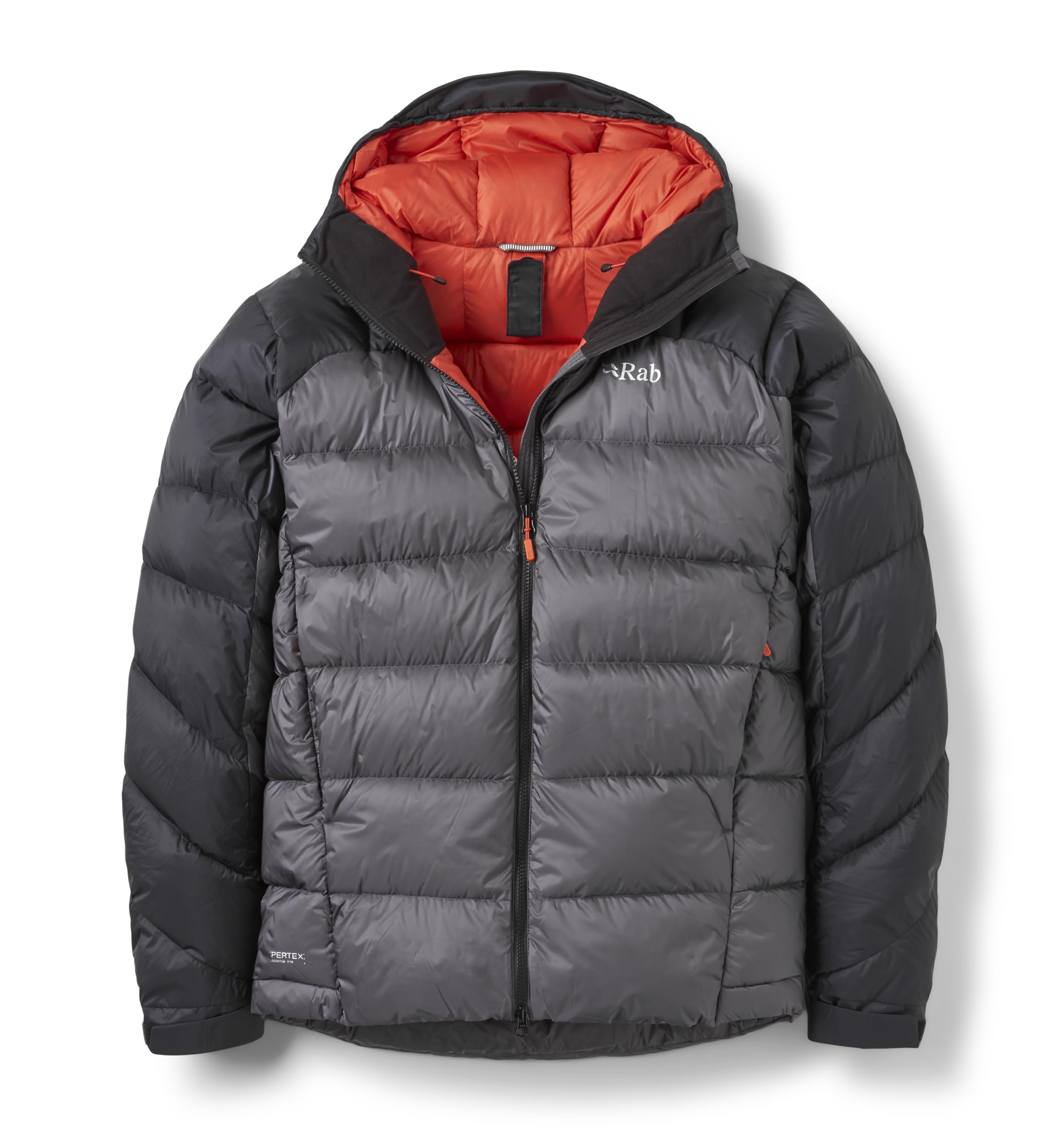
The Rab Neutrino Pro is the gold standard for mountaineering insulation. It packs 212 grams of 800-fill down treated with a water-repellent finish, wrapped in a Pertex Quantum Pro shell that sheds wind and light precipitation. The total weight is just 585 grams in size Medium, making it one of the lightest truly polar-capable jackets available. This is a jacket designed for climbing, where every gram matters but warmth cannot be compromised.
The zoned baffle construction places more down over the core and less under the arms to reduce bulk while maintaining thermal efficiency. The hood is helmet-compatible with a wire-reinforced peak and one-hand adjustment, critical for maintaining visibility in spindrift. The two-way front zipper allows ventilation during high-output approaches without fully exposing the torso to freezing air.
Reviewers consistently note that this jacket runs slim — users who plan to layer a heavy base and mid-layer may need to size up one full size. The hood is non-removable and bulky when rolled down, which some find awkward for casual wear. But for its intended purpose — belaying at 15,000 feet in winter — the Neutrino Pro is nearly unmatched in its warmth-to-weight ratio, landing it firmly as the premium pick for serious Antarctic layering.
Why it’s great
- Industry-leading 800-fill down with 212g fill weight for serious warmth
- Pertex Quantum Pro shell resists wind and light moisture effectively
- Lightweight 585g total weight makes it ideal for packable layering
Good to know
- Non-removable hood is bulky when not in use
- Trim athletic fit requires sizing up for heavy layering
- Premium price point reflects technical construction
2. The North Face McMurdo Parka
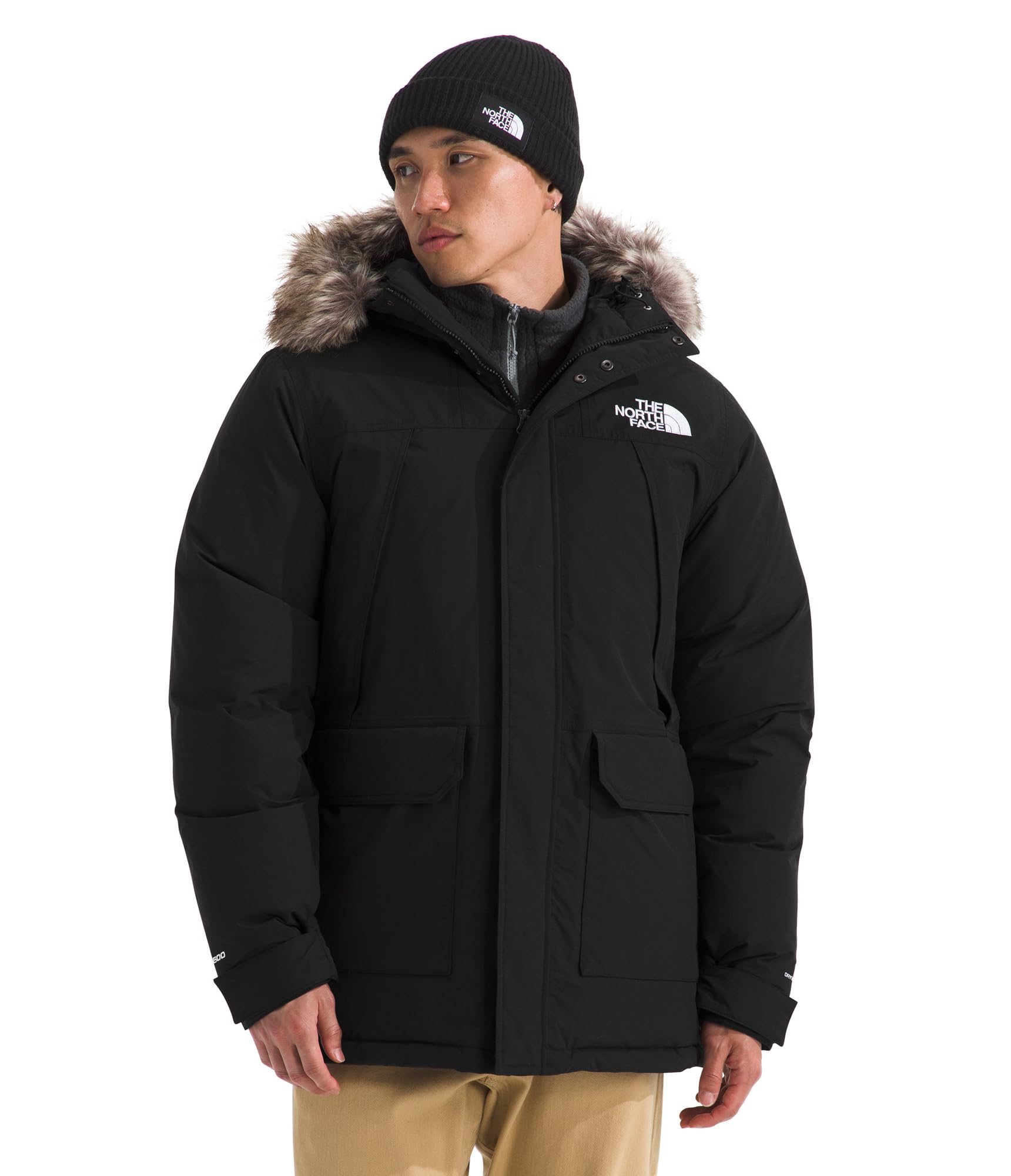
The McMurdo is The North Face’s longest, warmest men’s parka, designed specifically to handle the worst winter throws. It uses 600-fill recycled waterfowl down inside a seam-sealed DryVent 2L shell with a non-PFC DWR finish. The relaxed fit allows generous layering underneath, and the three-piece adjustable hood with removable faux-fur ruff seals out spindrift effectively. Reviewers have tested it in -48°F wind chill and reported being comfortable.
The outer fabric is 100% recycled nylon with a heavyweight weave that resists abrasion from pack straps and ice tools. The coat includes two secure-zip chest pockets and two dual-entry hand pockets, plus an internal pocket for electronics. The hem extends well below the hips, and the internal drawcord prevents cold air from rushing up from below. The two-way zipper allows sitting in a sled or tent without fully unzipping.
Several reviewers note that the hood does not fold completely flat when not in use, creating a bulky roll that can block peripheral vision. The coat runs large — most users recommend sizing down one full size for a proper fit. While the 600-fill down is less lofty than 800-fill options, the sheer volume of insulation and the long cut make the McMurdo a formidable choice for standing guard on the ice for hours at a time, earning it the title of top cold-weather parka for daily Antarctic base camp life.
Why it’s great
- Longest cut in the men’s lineup provides extensive hip and thigh coverage
- Seam-sealed DryVent 2L shell is fully waterproof and windproof
- Tested by reviewers in -48°F wind chill with positive results
Good to know
- Runs large; most users need to size down one full size
- Hood folds bulkily and can obstruct side vision
- 600-fill down is less thermally efficient per gram than 800-fill alternatives
3. Fjällräven Nuuk Parka
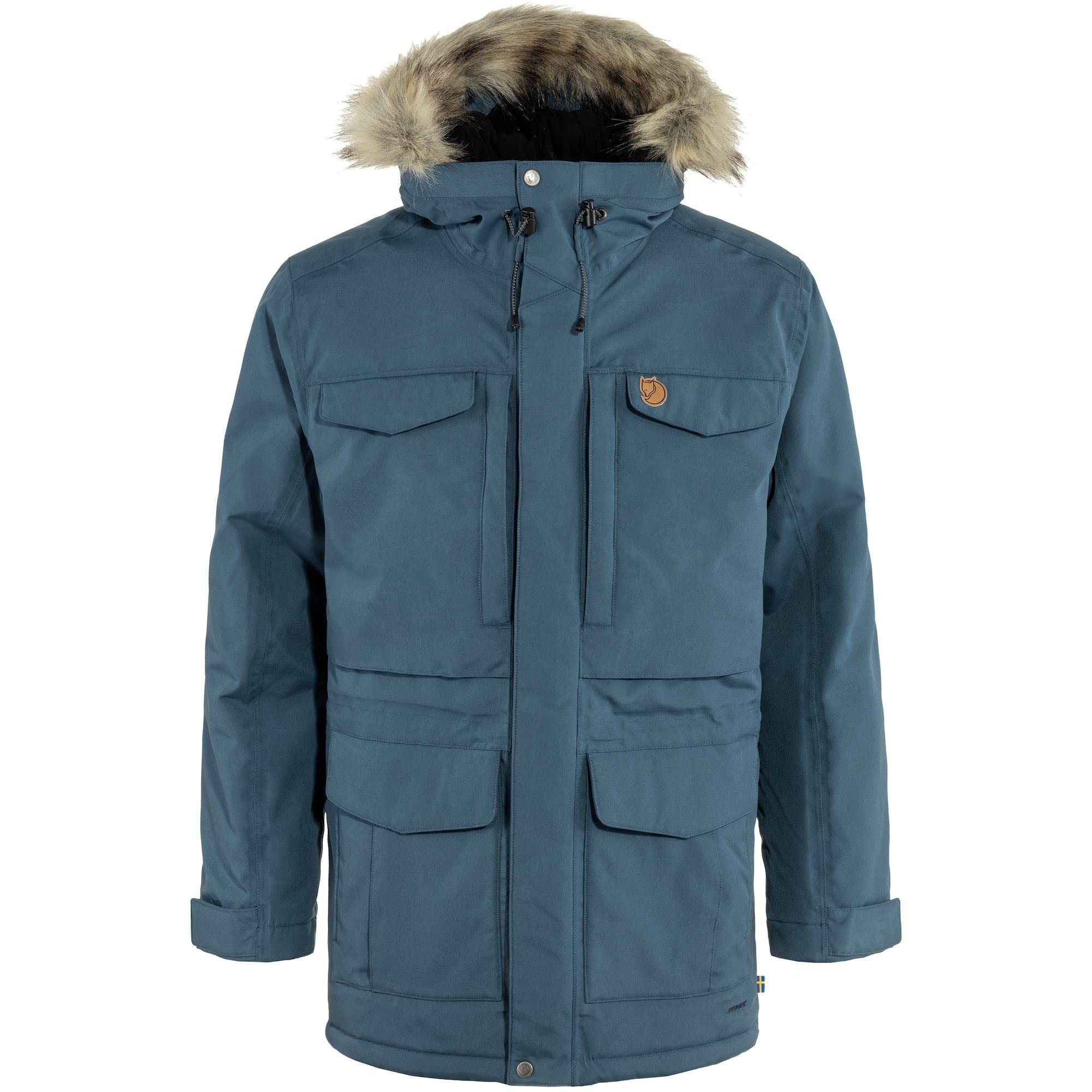
The Nuuk Parka from Fjällräven is a heavy-duty synthetic-insulated coat built for the harshest winter conditions. It uses synthetic padding rather than down, so it maintains its insulating properties even when wet — a crucial advantage in Antarctica’s coastal snow zones where precipitation is constant. The long cut reaches down over the rear and thighs, and the fleece-lined storm hood includes a metal wire brim and detachable faux fur edging to block wind.
The coat features eight total pockets, including fleece-lined hand warmers, zippered inner security pockets, and elastic pouches for tools. The two-way zipper has a protective storm flap behind it, and the waist drawcord lets you seal the coat tight against the body. The outer fabric is a durable polyamide that resists snags and abrasion from crampons and ice axes. Reviewers praise the warmth and the sheer number of storage options.
Sizing is notably oversized — a 6’3″ 185-pound reviewer had to drop to a Small for a proper fit. The zipper can be finicky if the two halves are not aligned perfectly before zipping. Some users report the coat is too warm for high-exertion activities like pulling sleds, making it better suited for stationary observation or base camp duty. For a synthetic-insulated parka that can handle wet snow without failing, the Nuuk is a reliable mid-range workhorse.
Why it’s great
- Synthetic insulation retains warmth even when soaked through
- Long cut and eight pockets offer excellent coverage and utility
- Fleece-lined hood with wire brim seals out wind effectively
Good to know
- Sizing runs very large; most users need to go down two sizes
- Zipper alignment can be tricky and occasionally jams
- Heavy and bulky for active use or packing
4. Rab Electron Pro Hooded Jacket
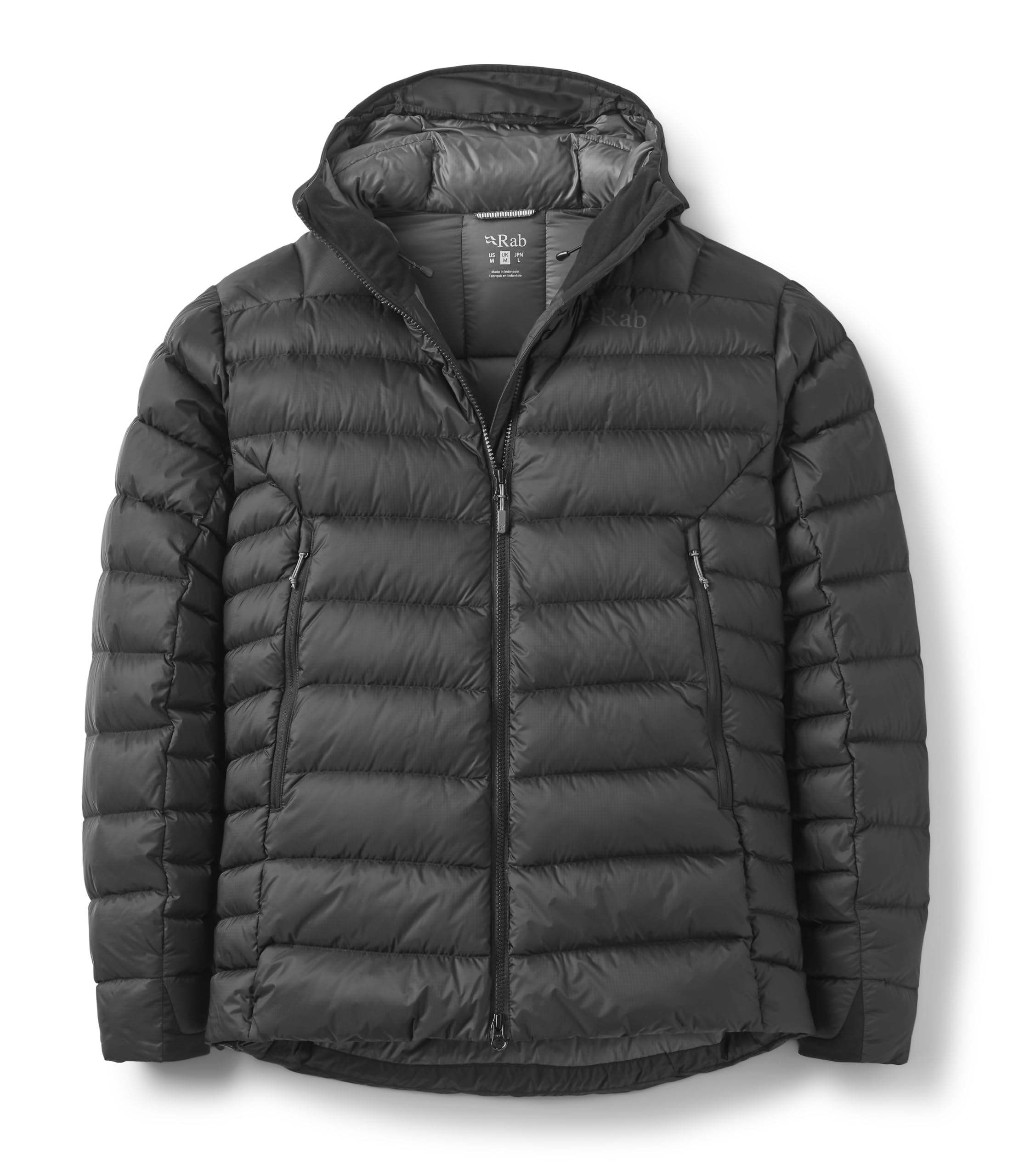
The Rab Electron Pro bridges the gap between an expedition parka and a lightweight belay jacket. It uses 190 grams of 800-fill down with a water-repellent treatment, housed in a Pertex Quantum Pro shell that is highly wind-resistant yet breathable. At just 523.5 grams in size L, it is lighter than the Neutrino Pro but still provides enough insulation for winter alpine objectives. The midi-baffle design zones insulation to the core while keeping the arms and sides slimmer for climbing mobility.
The hood is helmet-compatible with a wired peak, and the two-way front zipper works easily with a harness. The elastic cuffs seal against drafts without restricting wrist movement. Reviewers praise the slim athletic fit that layers well under a hard shell — a key feature for Antarctic climbers who need a modular system. The jacket packs down small enough to fit into a summit pack alongside a water bottle and radio.
The trim fit can be problematic for users who need heavy mid-layers — size up if you plan to wear a thick fleece underneath. The hood is non-removable, and some reviewers find the cuffs could be slightly tighter. The Electron Pro is not a standalone polar parka; it shines as a high-loft mid-layer or light belay jacket in a multi-layer system designed for the Antarctic Peninsula.
Why it’s great
- Lightweight 523g design with 800-fill down for excellent warmth-to-weight
- Helmet-compatible hood with wired brim for storm protection
- Slim athletic fit layers cleanly under a waterproof shell
Good to know
- Trim fit may require sizing up for heavy layering
- Hood is non-removable and slightly bulky when stowed
- Not designed as a standalone coat for extreme still cold
5. Helly-Hansen Tromsoe Down Jacket
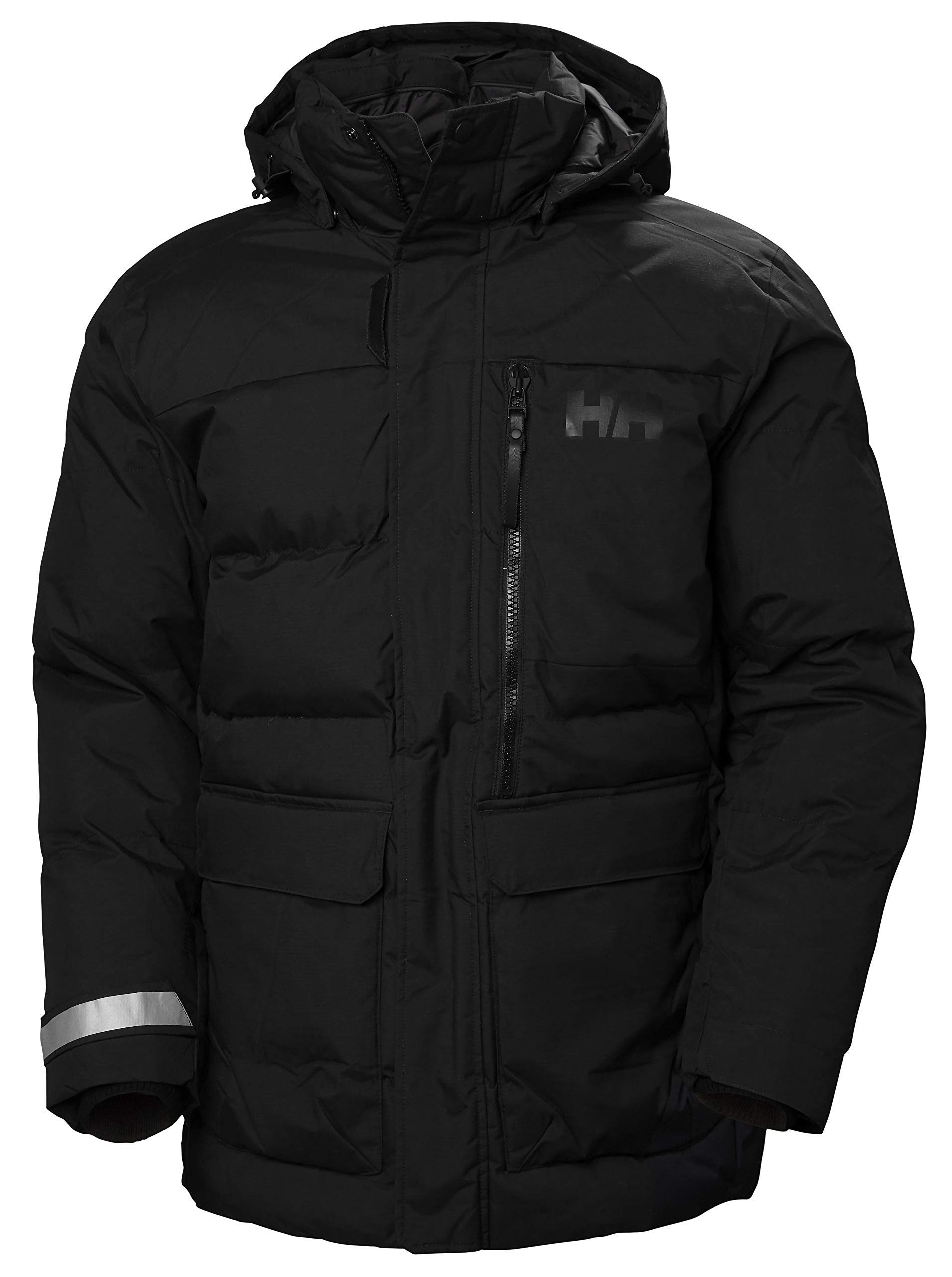
The Tromsoe Down Jacket from Helly-Hansen is designed for the freeze-thaw cycles of maritime Antarctic climates, where temperatures hover around freezing but moisture is constant. It uses a Helly Tech waterproof and breathable outer fabric paired with down insulation that handles temperatures down to 0°F with proper layering. The coat features a hood, zippered cuffs, and a two-way front zipper for ventilation control.
Reviewers consistently highlight the comfort and quality of the fit — a 5’10” 185-pound user reports that the jacket feels custom-made in size Large. The water repellency is strong, and the jacket handles rain and snow without wetting out. The longer back panel provides extra coverage when bending or sitting, and the inner collar seals against drafts effectively. Users report staying warm on chairlifts and during ski touring with just a base layer underneath.
The jacket is not lightweight or packable — it has a substantial feel that some users prefer for daily wear. Sizing runs slightly generous, so slim-built users may want to size down. The down fill is not treated with a water-repellent finish, so it is best used in dry cold conditions or under a waterproof shell. The Tromsoe works best as a robust mid-range option for those who need a do-everything winter coat that is not expedition-specialized.
Why it’s great
- Helly Tech outer fabric is fully waterproof and windproof
- Comfortable, true-to-size fit that layers well
- Effective down to 0°F with proper base and mid-layers
Good to know
- Down is not treated for water resistance; avoid soaking
- Not packable — bulky for travel or summit packs
- Sizing runs slightly large for slim frames
6. The North Face Arctic Parka
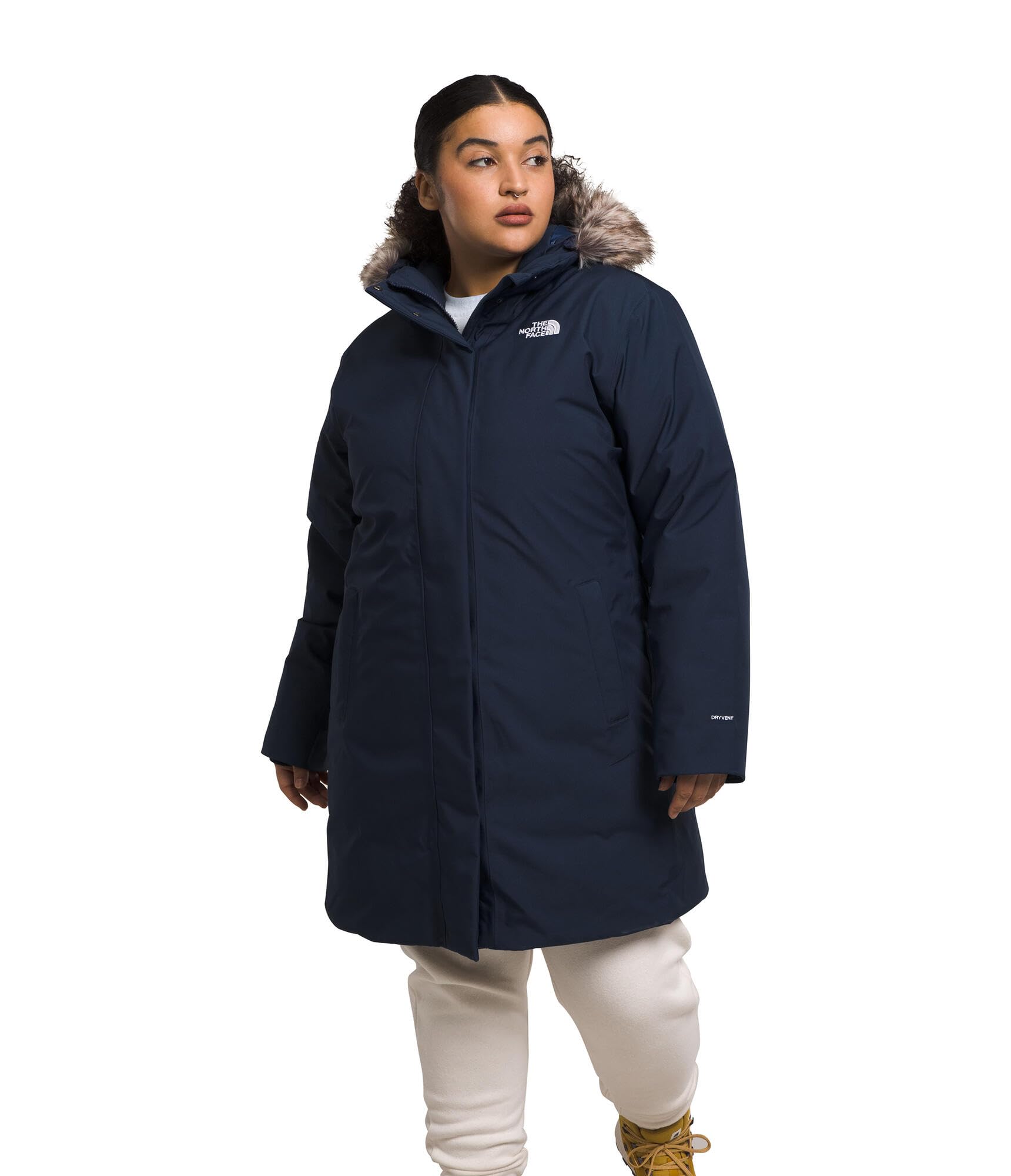
The Arctic Parka is The North Face’s women’s flagship cold-weather coat, updated with recycled down insulation and a non-PFC DWR finish. The waterproof DryVent shell is seam-sealed to keep snow melt out, and the adjustable hood with removable faux fur provides versatile coverage. The parka has soft inner cuffs that seal against the wrists, and the hand-warmer pockets are lined for comfort in deep cold. Tested in northern Colorado winter conditions, it keeps wearers warm without feeling restrictive.
The coat includes handy internal loops for hanging and a waist cinch cord tucked inside the pockets to adjust the fit. The removable hood and detachable faux fur add flexibility for different conditions — the full hood for snowstorms, just the shell for milder days. Reviewers note that the coat is not dramatically warmer than thinner competitors in windy conditions, but it excels when the air is still and temperatures drop into the teens. The double zipper makes it easy to sit in a vehicle without fully opening the coat.
Older versions of this parka had fleece-lined pockets and a zippered inner pocket, while the current iteration has unlined pockets and an unzippered inner stash pocket — a downgrade some long-time users lament. The fit is roomy, which is fine for layering but may look boxy on slimmer frames. At the mid-range price point, the Arctic Parka delivers solid cold-weather performance for women who want a stylish but functional polar-grade coat without paying expedition prices.
Why it’s great
- Seam-sealed DryVent shell is fully waterproof and windproof
- Removable hood and faux fur add adaptability for varying conditions
- Roomy fit allows for heavy layering underneath
Good to know
- Pockets are unlined and lack zippered inner compartments in current version
- Fit can look boxy on slender frames
- Not markedly warmer than lighter parkas in windy conditions
7. Marmot Chelsea Down Coat
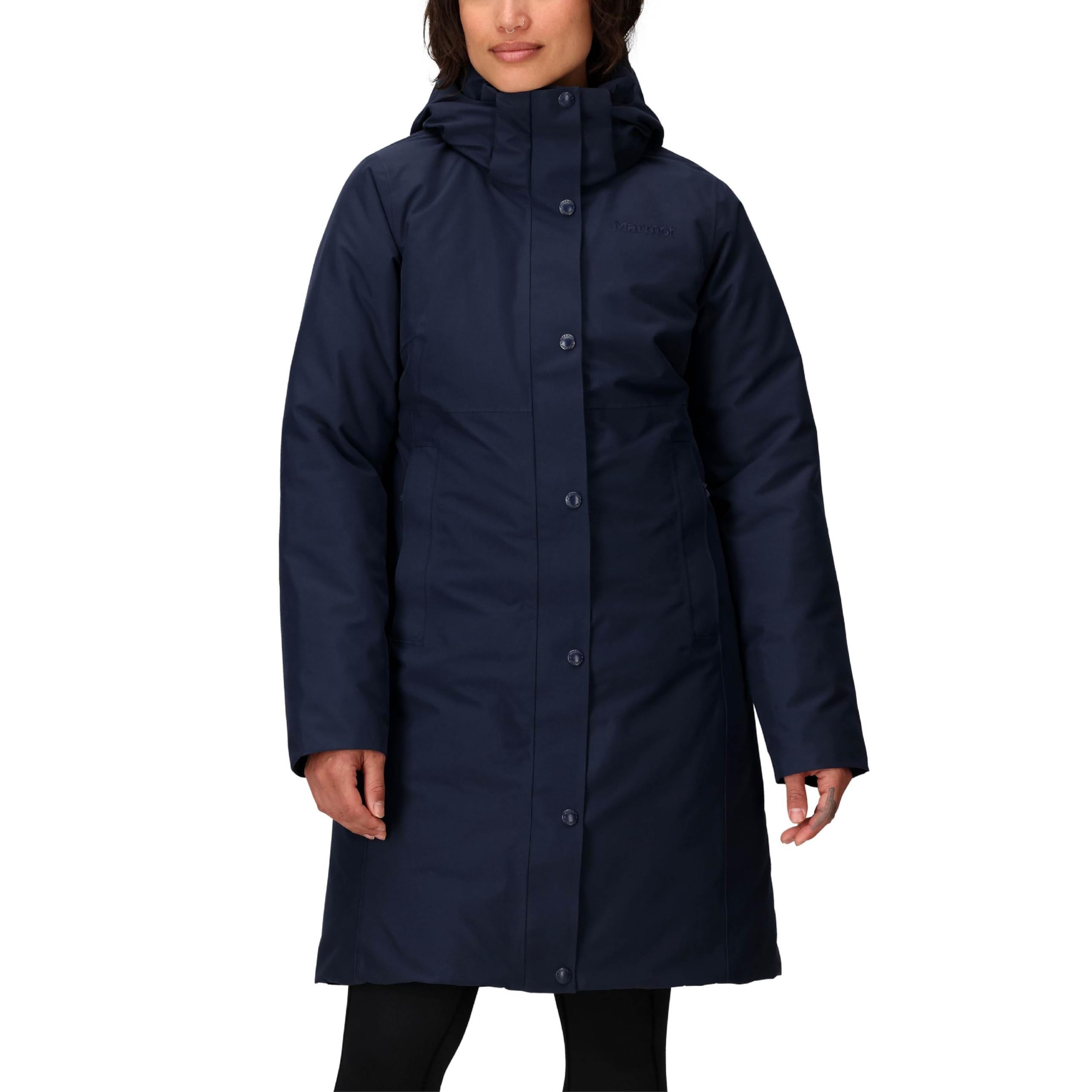
Marmot’s Chelsea Down Coat combines 700-fill down insulation with a MemBrain waterproof shell, creating a women’s parka that handles Chicago winters with confidence. The outer fabric is a durable polyester herringbone that resists snags and abrasion, while the membrane hydrophilic lamination repels water and reduces internal moisture buildup. The coat hits at mid-thigh, providing substantial coverage for the core and upper legs.
The inner elastic cuffs seal cold air from entering the sleeves, and the hood is adjustable with a removable faux fur trim. Reviewers praise the coat’s ability to stay completely dry and warm in rain and snow. The fit runs slightly generous, allowing room for a sweater or fleece underneath. The down fill is not treated with a water-repellent finish, so the coat relies on the shell for moisture protection — if the outer fabric gets fully saturated, the down can absorb water.
Some reviewers note that the coat is shapeless and boxy, lacking the tapered waist found in more fashion-forward parkas. The bulkiness can make it feel heavy, and the overall style is utilitarian rather than sleek. For women who prioritize warmth and weather protection over silhouette, and who are shopping in the mid-range bracket, the Chelsea Down is a reliable choice that has proven itself in real winter cities.
Why it’s great
- 700-fill down with MemBrain waterproof shell stops rain and snow
- Durable herringbone polyester face resists snags and abrasion
- Elastic inner cuffs block drafts effectively
Good to know
- Shapeless, boxy silhouette that lacks waist definition
- Down is not waterproof; saturation risk if shell breaches
- Bulky and heavy for packing or active wear
8. Fjällräven Expedition Pack Down Hoodie
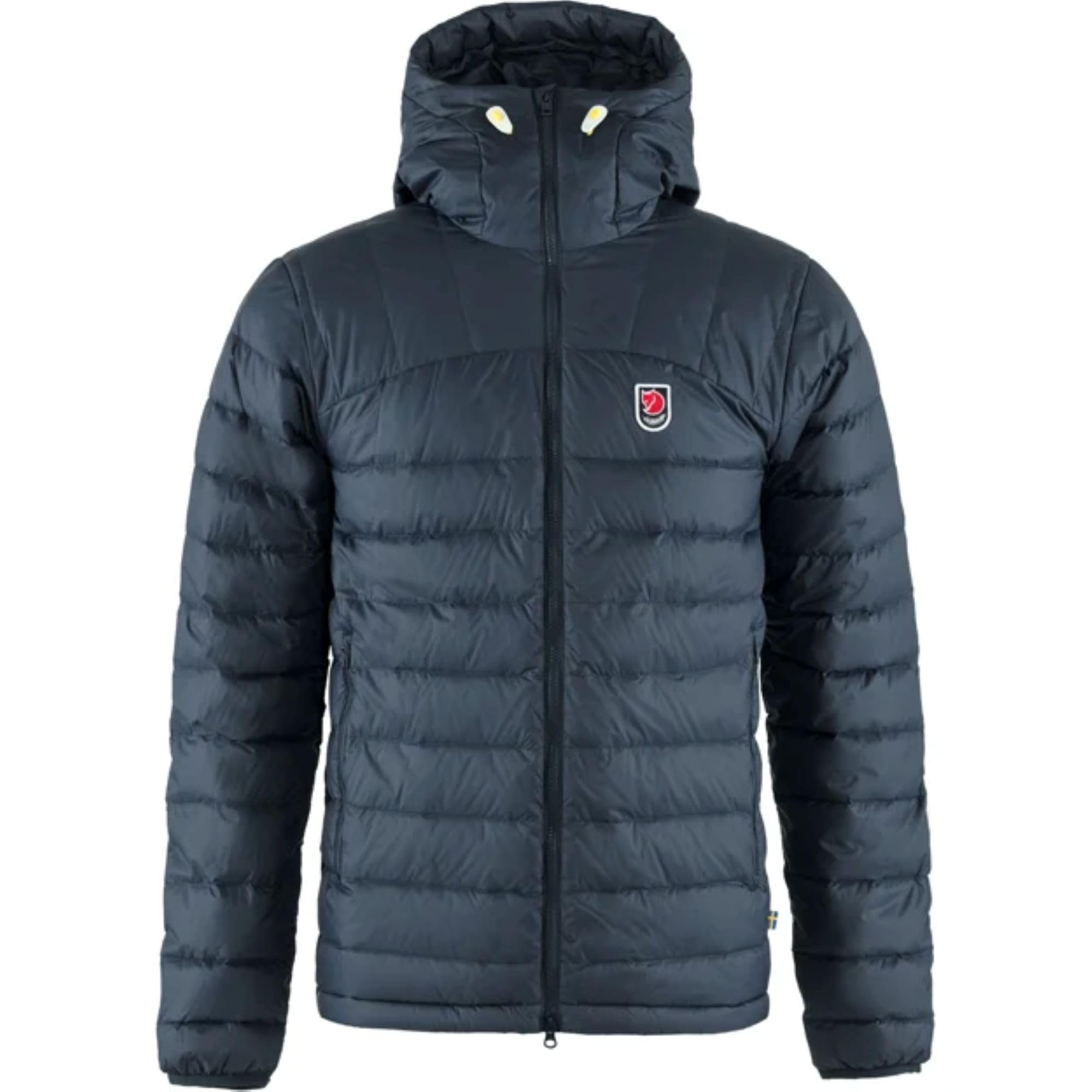
The Expedition Pack Down Hoodie is Fjällräven’s lightweight, packable down insulator designed for trekking and hiking. It uses high-quality ethically produced down fill inside a shell made from 100% recycled polyamide. The jacket is reinforced with synthetic padding over the shoulders — a smart feature for backpackers whose straps compress standard down. The adjustable hood and two zippered hand pockets add practicality for field use.
Reviewers emphasize the warmth-to-weight ratio — users have worn it comfortably down to 25°F with just a flannel shirt underneath. The coat is lightweight and packs into its own pocket or a small stuff sack, making it ideal for multi-day traverses. The hip-length cut is shorter than most parkas, so it works best as a high-loft mid-layer under a waterproof shell rather than as a standalone polar coat. The 100% acrylic fabric feel is soft and comfortable against the skin.
Sizing runs small — most users report needing to go up one to two sizes from their normal fit. A 5’10” athletic reviewer found the Large tight across the chest and shoulders and preferred the XXL for a relaxed fit. The jacket lacks a two-way zipper and the hood is not helmet-compatible, limiting its technical climbing applications. For base camp or low-exertion treks where weight and packability are paramount, the Expedition Pack is a fine mid-range insulator that pairs well with a hardshell.
Why it’s great
- Lightweight and highly packable for multi-day expeditions
- Synthetic shoulder reinforcement prevents down compression from pack straps
- Ethically sourced down with recycled shell fabric
Good to know
- Runs small; size up by at least one full size
- Hip-length cut leaves lower body exposed without a parka
- Not designed for extreme still cold without a shell over it
9. Helly-Hansen Reine Parka

The Reine Parka is Helly-Hansen’s updated urban winter coat, combining Helly Tech waterproof and breathable fabric with Primaloft synthetic insulation. The synthetic fill is a key advantage for Antarctic coastal conditions where melting snow can wet out down — Primaloft retains warmth even when damp. The parka has a detachable faux fur hood, large hand pockets, and an internal mesh pocket for storage. The flap over the YKK zipper blocks wind effectively.
Reviewers report that the coat keeps them warm down to 0°F with only a t-shirt underneath, and the addition of a down vest extends comfort far below zero. The black colorway has a sharp, modern cut that looks good in the city. The zip-off hood is a useful feature when moving into warmer indoor spaces. The coat has a noticeable length that covers the hips, providing good coverage without being as long as a full expedition parka.
The primary drawback is the lack of an internal waist drawstring — cold air can rush up from below, which users have fixed by wearing a belt. The hood lacks wire support in the brim, so it collapses in strong winds. Sizing runs large; a 5’8″ 185-pound reviewer chose Large over Medium for chest room, but noted the length was similar between sizes. For urban travel in sub-freezing temperatures, the Reine is a strong mid-range contender that prioritizes weather protection over expedition-specific features.
Why it’s great
- Primaloft insulation retains warmth when wet — key for wet snow
- Helly Tech shell is fully waterproof and breathable
- Detachable hood adds versatility for variable conditions
Good to know
- No internal waist drawstring; cold air leaks from below
- Hood lacks wire brim and collapses in high wind
- Runs large and fits boxy on some body types
10. SITKA Blizzard Aerolite Parka

The SITKA Blizzard Aerolite is purpose-built for extreme cold where movement is minimal — think glassing ridges at -20°F or riding into howling wind on a snowmobile. It uses PrimaLoft Gold Insulation with Cross Core technology, which mimics the warmth and compressibility of down while maintaining insulating performance when wet. The GORE-TEX 2-layer fabric with a highly durable polyester face provides a waterproof, windproof barrier that is bombproof in whiteout conditions.
The parka weighs 45.5 ounces total, making it lighter than many heavy down parkas while offering synthetic insulation that will not fail if the shell gets compromised. It has a fully adjustable drop-away hood with water-sealing cuffs and a fleece-lined handwarmer pocket. Zippered chest pockets store radio or GPS devices securely. The design is optimized for hunting, meaning it is cut to accommodate a harness and has reinforced shoulders for rifle sling wear.
One reviewer reported that the insulation is not sufficient for 9°F without an extra jacket underneath, suggesting that the Cross Core technology may be overhyped for its warmth-to-weight ratio. The price point is steep, and cheaper alternatives from Rab and The North Face offer more warmth per dollar. The SITKA is a premium niche product for stationary hunters in the far north, but it is not the best value for general Antarctic expedition use where maximum warmth is the priority.
Why it’s great
- Primaloft Gold with Cross Core retains warmth when wet
- GORE-TEX shell is fully waterproof and completely windproof
- Lightweight for the level of synthetic insulation provided
Good to know
- Some reviewers found it insufficient below 10°F without heavy layering
- Premium price does not correspond to best-in-class warmth
- Niche hunting cut may not fit all body types well
11. Moose Knuckles Stirling Parka

The Stirling Parka from Moose Knuckles is a luxury winter coat designed for extreme cold with a strong focus on style. The shell is 74% cotton and 26% nylon, which gives it a soft hand feel but sacrifices the waterproof membrane found in expedition-grade competitors. The down insulation is high-loft and has earned the brand’s “Level 4: Canada Cold” warmth rating, meaning it is intended for temperatures that would frostbite exposed skin in minutes.
The detachable black fox fur trim on the hood adds a classy aesthetic, and the slim fit gives the parka a tailored silhouette that is rare in the extreme-cold category. The coat has a slightly longer 3/4 length with a dip in the back, covering the lower back and hips better than a short jacket. Reviewers mention receiving many compliments on the coat’s appearance, and one user reported that their son, who never wears coats, now refuses to take it off.
Several users note that the fit runs tight — most recommend sizing up at least one full size. The zipper can be difficult to latch, and the coat is exceptionally heavy, with one reviewer describing it as feeling like “stones in down.” The cotton shell is not waterproof, which is a serious limitation for Antarctic use where melting snow and ice are constant. The Stirling is a premium fashion statement for extreme cold that looks the part, but it is functionally outclassed by technical parkas from Rab and The North Face for actual polar work.
Why it’s great
- Luxurious shearling and fur trim for high-end aesthetic
- Level 4 warmth rating indicates serious cold-weather capability
- Tailored slim fit is rare in the extreme-cold parka market
Good to know
- Cotton shell is not waterproof; fails in wet snow conditions
- Heavy weight is uncomfortable for extended wear
- Zipper can be difficult to latch and align
FAQ
Is down or synthetic insulation better for Antarctic conditions?
Can a single parka handle Antarctic summer and winter conditions?
How should a coat for Antarctica fit in the shoulders and chest?
Why do some Antarctic coats use two-way zippers?
Final Thoughts: The Verdict
For most users, the coat for antarctica winner is the Rab Neutrino Pro because it delivers the highest warmth-to-weight ratio in a technical package that layers easily under a shell, with 212 grams of 800-fill down and a Pertex Quantum Pro shell that handles wind and light precipitation. If you want a long, bombproof parka for standing guard in still cold, grab the The North Face McMurdo. And for wet Antarctic coastal conditions where synthetic insulation is non-negotiable, nothing beats the Fjällräven Nuuk Parka.

Mo Maruf
I created WellFizz to bridge the gap between vague wellness advice and actionable solutions. My mission is simple: to decode the research and give you practical tools you can actually use.
Beyond the data, I am a passionate traveler. I believe that stepping away from the screen to explore new environments is essential for mental clarity and physical vitality.