Our readers keep the lights on and my smoothie glass nicely filled. As an Amazon Associate, I earn from qualifying purchases.
Specs are compiled from manufacturer listings and verified buyer reviews and can change over time — please confirm the key details on the product page before buying.
Getting lush, thriving aquarium plants often depends on one thing — a steady supply of CO2 (carbon dioxide, the gas plants need to grow). But CO2 reactors come with confusing acronyms, pressure gauges, and solenoid valves that can make a beginner feel lost. This guide cuts through the confusion. It focuses on steady gas flow, leak-free parts, and models that keep plants pearling while staying affordable.
This guide compares manufacturer specs and verified customer reviews to reveal each pick’s real strengths and trade-offs.
After analyzing hundreds of buyer experiences and specs, these are the picks I trust for a planted tank. Read on to find the right co2 reactor for your aquarium.
Our Picks at a Glance

How To Choose The Best CO2 Reactor
Choosing a CO2 reactor is about matching hardware to your tank size and tinkering tolerance, not brand names. These three factors matter most.
DIY Generator vs. Inline Reactor
A DIY CO2 generator — like a stainless steel bottle that uses citric acid and baking soda — is a complete, self-contained system. You mix the chemicals, and it produces gas. An inline reactor, by contrast, is a device that you connect to your existing filter output. It does not produce CO2; it just dissolves the CO2 you already have from a separate tank. Choose a generator for a full system in one box, or a reactor if you already have a CO2 cylinder.
Capacity and Refill Frequency
The liquid volume of the bottle (measured in liters) directly determines how much raw material it holds and how often you refill. A 2.5-liter bottle gives you about a month of run time at one bubble per second for eight hours a day. A 4-liter equivalent can stretch that to two months. Larger tanks and busier schedules benefit from a bigger capacity to reduce refill frequency.
Safety and Precision Controls
Every CO2 generator builds pressure inside the bottle. You want an automatic pressure relief valve that vents gas when the internal pressure exceeds the safe limit — this prevents accidents. You also need a precision needle valve paired with a bubble counter. The needle valve lets you fine-tune the gas flow (as low as one bubble per second), and the bubble counter gives you a clear visual reading of that rate. A solenoid valve (an electric switch that opens and closes the gas line) that plugs into a timer lets the system automatically turn the gas on and off with your lights, saving you a daily manual chore.
Quick Comparison
| Model | Best For | Liquid Volume | Item Weight | Safety Valve | Amazon |
|---|---|---|---|---|---|
| Fzone 2.5L★ Best Overall | Best Overall | 2.5 Liters | 2.36 kg | Yes | Amazon |
| ZRDR 2LComplete Kit Value | Complete Kit Value | 2 Liters | — | Yes | Amazon |
| Clscea G700S | Extended Runtime | 600 mL | — | Yes | Amazon |
| Sera Flore Active 500 | Inline Dissolving | 160 Gal | 0.34 kg | N/A | Amazon |
| FZONE 2.5L Upgraded | Refined Controls | 2.5 Liters | 4.47 lb | Yes | Amazon |
| MagTool 4L | Large Tank Power | 4 Liters | 3.26 kg | Yes | Amazon |
In‑Depth Reviews
1. Fzone 2.5 L Aquarium CO2 Generator System
Our pick — over 4★ from 950+ verified ratings; the strongest balance of quality and price.
The Fzone 2.5L gives you a sturdy SUS304 (a type of stainless steel) tank and a month of CO2 per fill, making it the best value for most planted tanks.
This Fzone kit weighs 2.36 kilograms — a full 6.9x heavier than the Sera inline reactor — because it is built from 1.5mm thick SUS304 graded stainless steel. The maker says it is 25% thicker than competitors, and that mass translates directly into durability. The bottle has a liquid volume of 2.5 liters, and when you fill it with 300-400 grams of raw material, it generates CO2 for about one month at one bubble per second running eight hours a day. This means you refill roughly every month for a medium tank.
Buyers report that setup is mostly straightforward, though the included instructions require some math without a scale. One reviewer shared their exact recipe: “Used 13.8 tbsp baking soda, 8.3 tbsp citric acid with 300ml water; plants and fish healthy after weeks.” The needle valve is precise enough to hold a steady one bubble per second, and the 12-volt solenoid lets you plug it into a timer so the gas turns on and off with your lights automatically. A safety valve opens when internal pressure exceeds the threshold, which gives you a layer of protection if the reaction runs hot.
The honest trade-off here is that some buyers have reported the solenoid failing after a couple of months. One reviewer called the rest of the kit “garbage except the canister” after the solenoid broke twice. The brand offers a one-year warranty and round-the-clock customer service, and several reviews praise Fzone for replacing missing parts quickly. If you get a good unit, it is a powerful, cost-effective system that keeps your plants thriving — just budget the possibility of replacing the solenoid down the road.
Solid performer with a caveat: The 2.5L steel tank and precise needle valve deliver consistent CO2 for a month per fill, but the solenoid is the weakest link. If you are comfortable replacing a solenoid every year or two, this is the best all-around value.
Best for: a medium planted tank (20-40 gallons) where you want a complete DIY system with a month of runtime. Skip if: you hate the idea of replacing a solenoid valve or need a system that works perfectly with zero maintenance for years.
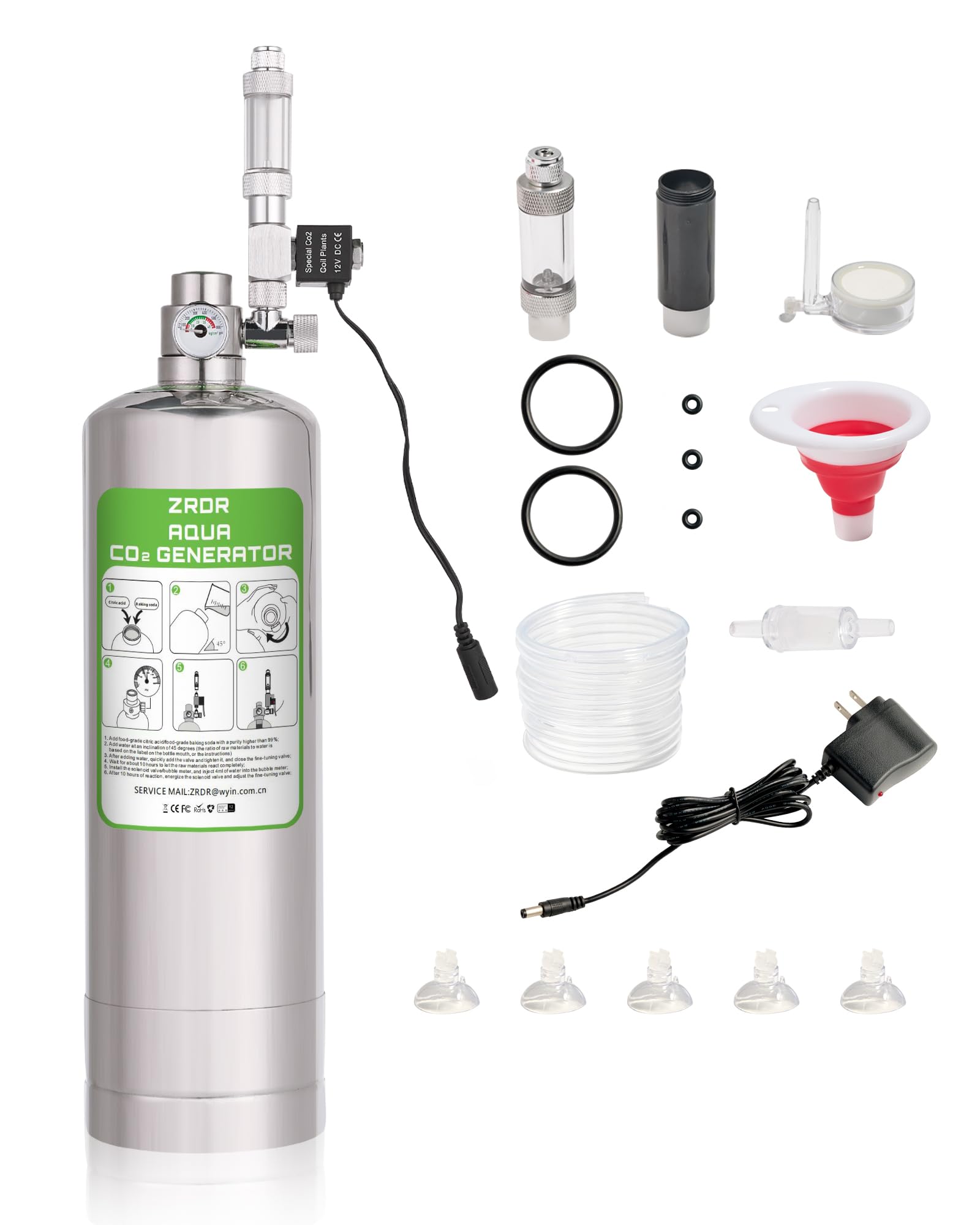
2. ZRDR 2L Co2 Generator System
The ZRDR 2L kit bundles an atomizer (a device that makes tiny bubbles for better absorption) with a 2-liter steel tank, giving you more in the box than the Fzone for about the same money.
This ZRDR kit packs everything into one box — a 2-liter 304 stainless steel bottle, a pressure reducing valve, a filter, a bubble counter, a solenoid valve, a stainless steel atomizer, tubing, a funnel, and even a wrench. The atomizer is the standout piece here: it creates very fine bubbles that dissolve into the water more easily, which means your plants absorb the CO2 faster. The maker claims the bottle is “far better than a simple plastic bottle generator” thanks to the durable steel construction.
One thing buyers consistently mention about this ZRDR system is the refill cycle. Reviewers report that a single charge “lasts 2-3 weeks per charge” of CO2, and that bulk reactants costing around can fuel more than five refills. That makes the ongoing cost quite low compared to buying disposable CO2 cartridges. The automatic pressure relief valve vents the bottle when internal pressure exceeds 30 kg, and the solenoid valve is waterproof. The bubble counter gives you a clear view of injection rate, and the needle valve allows fine adjustments.
The catch is that setup is not as plug-and-play as some expect. Several owners mention that the gauge shows no pressure initially and that some parts (like the drop checker) are defective from the start. One review noted it “lasts 2-3 weeks per charge” but also warned that the directions are outdated. If you are comfortable doing a little trial-and-error during the first setup, the ZRDR delivers excellent value per dollar. Just be prepared to seal the lid immediately after adding water to build pressure — a tip several experienced buyers shared.
What arrives in the box
- 304 stainless steel bottle with regulator and safety valve
- Atomizer that produces fine bubbles for better dissolution
- Includes a solenoid valve, bubble counter, tubing, funnel, and base
What to watch for
- Initial setup is tricky — gauge may show no pressure, and instructions are outdated
- Some components like the drop checker can be defective
- Must seal the lid right after adding water to start building pressure
Best for beginners who love a project: If you enjoy figuring out the initial setup kinks and want the most complete parts bundle for the money, this kit gives you everything except the chemicals. Not for you if: you want a turnkey system that works perfectly on the first try with zero fiddling.
3. Clscea Aquarium CO2 Generator Double Runtime 4L, G700S

The Clscea G700S holds a 2.4-liter liquid volume but the maker claims it produces 4-liter equivalent gas, stretching your refill cycle to two months rather than one.
Clscea calls this the G700S, and its defining trick is a larger gas capacity than its physical size suggests. The bottle holds a 2.4-liter volume of liquid, but the maker claims a 4-liter equivalent gas capacity, so you can “low-maintenance” for up to two months between refills. That makes it a compelling option if your schedule leaves you no time for weekly maintenance. It also has a 3-layer stainless steel filter that blocks debris before it reaches the solenoid, which is a common failure point on cheaper generators.
Buyers have put this system through real long-term use. One reviewer who has been using it for a very long time says, “It works very effectively, it’s easy to fill and maintain.” Another noted, “I pump about 6 bubbles per second into it and it churns them up and spits out clear water,” though that was about a different reactor. The bubble counter here is self-cleaning — each time you top up the water, it flushes the valve pathways, so you do not have to disassemble anything to keep it running. The John Guest quick-connect fittings (push-to-connect tube ends) let you snap tubing on and off without any tools, which makes maintenance faster.
There is a known risk, though. One long-term review originally gave it five stars but later changed to one star after the bubble counter valve randomly opened wide on the first day after a recharge, dumping all the CO2 into the tank and killing every fish. That is a catastrophic failure. The company does sell replacement parts individually (solenoid, bubble counter, diffuser), so you are not stuck buying a whole new system. If you use this kit, check the bubble counter valve closely after each refill before you let it run unattended.
Great runtime, but verify the valve: A two-month refill cycle is genuinely convenient, and the self-cleaning bubble counter reduces maintenance. Just make a habit of watching the bubble counter closely for the first 24 hours after each refill.
Choose this for: the longest refill interval in this lineup — perfect if you want to refill less often and appreciate the quick-connect fittings. skip it if: you cannot afford the risk of a valve failure flooding your tank with CO2, or if you want a system with a spotless long-term reliability record.
4. Sera Flore Active CO2 Reactor 500
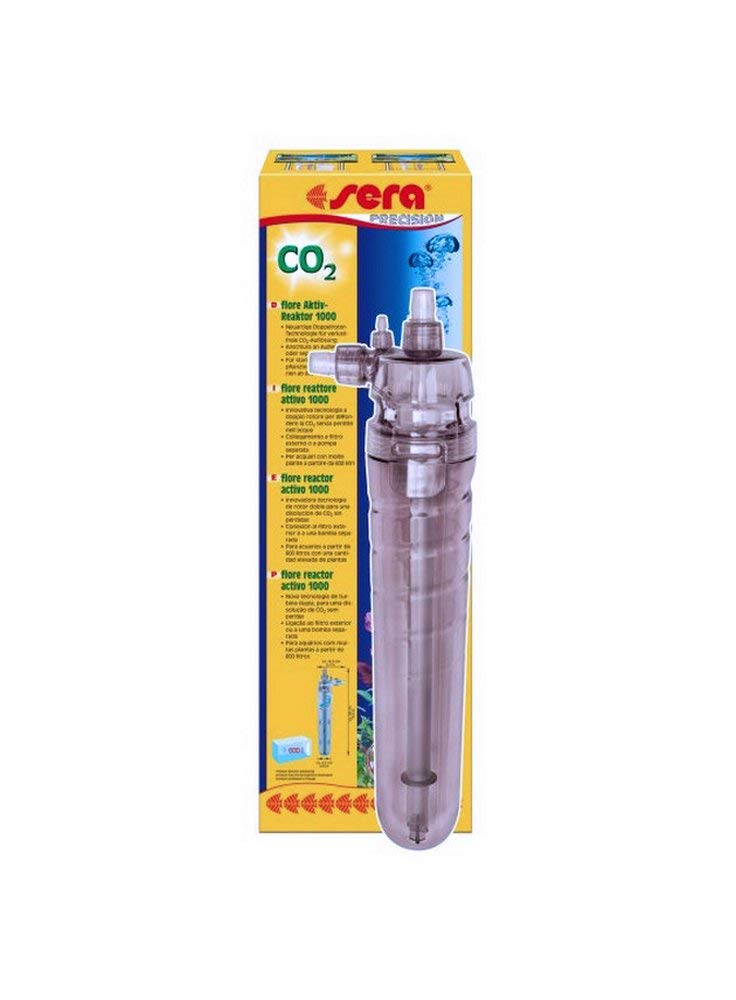
A lightweight inline reactor at 0.34 kg that dissolves 500 to 1000 bubbles per minute without any visible bubbles in your display tank.
The Sera Flore is not a generator. It is a reactor you install inline with your canister filter. It weighs only 0.34 kilograms — a fraction of the 2.36 kg Fzone system — and mounts internally or externally to your water pump. The hose size is 5/8-inch outer diameter and 1/2-inch inner diameter. The maker says it dissolves 500 to 1000 CO2 bubbles per minute, and the rated liquid volume is 66 to 160 gallons. One buyer confirms: “I pump about 6 bubbles per second into it and it churns them up and spits out clear water. One single 500 at 6bps feeds enough for a 125g tank.”
This design is best for anyone who already owns a pressurized CO2 cylinder and a regulator. Instead of sending CO2 through a diffuser or atomizer inside the tank, you inject it into this inline reactor, where a small internal impeller turbulently mixes the gas into the water. The result is a supersaturated solution that leaves no visible bubbles in the display tank. One buyer called it “the best way to disperse co2 period” and reported that plants started pearling immediately after installation.
The down sides are real, though. Several customers note that the unit reduces filter flow significantly. One reviewer noted it “reduced my 1300 gph dc pump to a trickle” and returned it. Another noted that the threads where the two halves join do not seal correctly, requiring plumbers tape to stop a slow leak. It is made of acrylic, so it is not as tough as stainless steel. If you have a powerful canister filter and are okay adding plumbers tape to the threads, this reactor can give you the most efficient CO2 dissolution possible without any visible hardware in your tank.
Where it shines
- Completely dissolves CO2 with no visible bubbles in the display tank
- Lightweight at 0.34 kg — easy to mount on any filter line
- Rated for large tanks up to 160 gallons
Where it stumbles
- Reduces filter flow noticeably — may need a dedicated pump
- Threads can leak; most buyers apply plumbers tape to fix
- Acrylic body less durable than stainless steel options
Perfect for pressurized system owners: If you already have a CO2 cylinder and want invisible, complete dissolution in a large tank, this tiny reactor is the most effective inline option. Not for you if: you run a low-flow filter or want a self-contained generator that does not require external CO2.
5. FZONE 2.5L Upgraded Aquarium CO₂ System
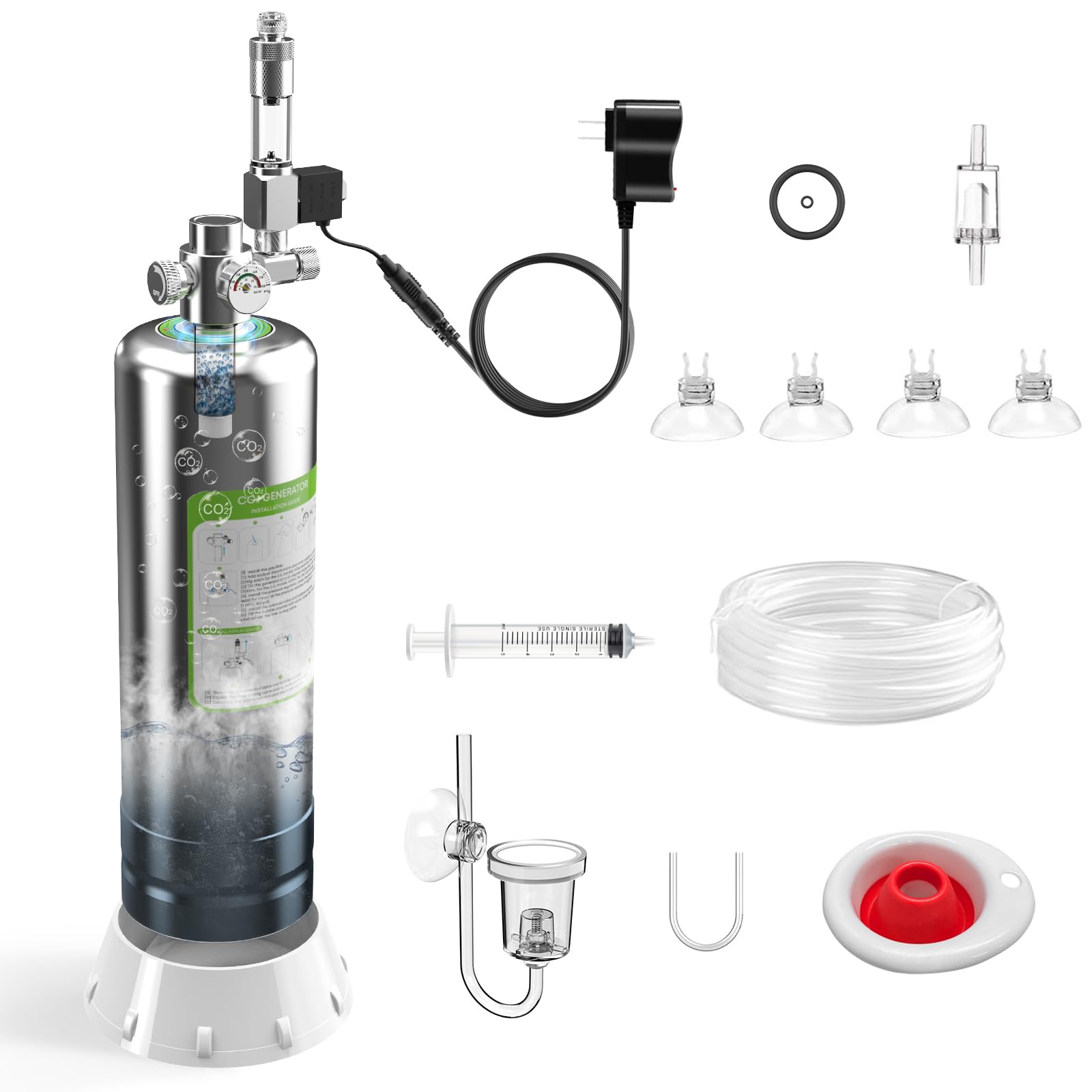
The FZONE upgraded kit adds a manual shut-off valve and a built-in fill port, solving the biggest annoyances of the original — and it holds a steady one bubble per second.
This is the newer version of the Fzone 2.5L kit, and the upgrades address several of the original’s pain points. The bottle is now made from food-grade 304 stainless steel with a body that the maker claims is 50% thicker than standard. It includes a manual shut-off valve so you can stop the gas flow entirely when you are working on the tank, and an automatic pressure relief valve that vents if pressure rises above the safe limit. The all-in-one solenoid has fewer connection points than the original, which reduces the risk of leaks.
Buyers consistently call out the build quality. One buyer mentioned, “Build quality is solid with tight seals and precise connections,” and another noted the “upgraded kit has vastly improved instructions and reduced height for cabinet fit.” The external thread design prevents the bottle from getting stuck from residue buildup, and the built-in fill port lets you add water with a syringe without unscrewing the cap. That is a small detail that saves time and mess every refill. The precision needle valve holds a steady rate down to one bubble per second.
The weak spot here appears to be the plastic one-way check valve. One owner reported that the whole system “stopped working due to a leaking plastic one-way valve” and had to order a metal replacement. The solenoid, bubble counter, and diffuser are all high quality, but that one plastic part can cause a failure. If you buy this kit, order a brass or stainless steel check valve at the same time as a precaution. When it works, it delivers consistent CO2 output that reviewers point out produces “explosive growth and reduced algae” in planted tanks.
Smart upgrades, one weak part: The thicker steel, improved instructions, and fill port show FZONE listened to feedback. Replacing the plastic check valve with a metal one is a cheap fix that prevents a frustrating failure.
Pick this if: you want the most refined version of the classic Fzone 2.5L design with fewer connections and a realistic maintenance-improvement fill port. pass on it if: you are not willing to swap a plastic check valve for a metal one — you can get the same performance for less money with the standard Fzone kit.
6. MagTool 2025 Upgraded 4L DIY Aquarium CO2 Generator Kit

A 4-liter stainless steel tank that holds 600-800g of raw material, giving you the longest runtime in this lineup for large planted tanks.
MagTool’s upgraded kit comes in a 4-liter size, which is the largest capacity in this roundup. The bottle is made from food-grade 304 stainless steel and is 50% thicker than previous versions. The 4-liter tank holds 600 to 800 grams of raw material, which means fewer refills for larger tanks. At 3.26 kilograms, it is heavier than the smaller 2.5L bottles, but that weight comes from the thicker steel and larger volume. It includes a complete set of accessories: diffuser, check valve, U-connector, suction cups, tubing, funnel, syringe, ceramic disc, sealing rings, and power adapter.
Buyers who have used this kit for a while report positive experiences. One reviewer who owns both the 2.5L and 5L versions says, “Excellent build quality with 304 stainless steel tank. DIY citric acid/baking soda fill is cheap and easy.” Another noted that the “compact solenoid + bubble counter reduces leaks.” The dual safety system includes a manual shut-off valve and an automatic pressure relief valve. The external thread design prevents the bottle from seizing up due to residue, which is a common problem with older reactors.
The biggest warning sign is a one-star review that says, “NOT good long-term. Multiple parts break over 6 months. Some parts unavailable, requiring full system replacements.” That is a genuine concern with a system at this price point. The company offers a one-year warranty on essential components like the solenoid and regulator, so your first year is covered. This is a great choice if you have a large tank (say 60+ gallons) and want the longest-running DIY system available — just be aware that component failures after the warranty period are a known risk mentioned by some users.
Best things about it
- 4-liter capacity holds 600-800g for long refill intervals
- 50% thicker 304 stainless steel for durability
- Complete accessory set included — no extra purchases
Honest downsides
- Some components can break after 6 months with limited replacement parts
- Heavier than smaller kits at 3.26 kg
- One-year warranty may not cover long-term failures
For big-tank owners who want maximum runtime: This 4-liter kit is the best option if you run a large planted tank and want to minimize refill frequency. Pass it by if: you have a smaller tank (under 40 gallons) or want a system with a proven long-term parts ecosystem — a 2.5L kit from a more established brand may serve you better.
Understanding the Specs
Liquid Volume (Liters)
This is the capacity of the chemical reaction chamber — the bigger the liter number, the more citric acid and baking soda the bottle can hold. A 2.5-liter bottle at one bubble per second for eight hours a day gives you about a month of CO2. A 4-liter bottle can stretch that to two months. It is the single best predictor of how often you will be mixing chemicals and refilling. Match it to your tank size: larger tanks need more CO2 and therefore benefit from a larger bottle to avoid frequent refills.
Safety Valve (Pressure Relief)
A CO2 generator builds pressure as the chemical reaction creates gas. The safety valve is a mechanical release that opens automatically when the internal pressure exceeds the safe limit — usually around 30 kg per square centimeter for these DIY bottles. Without one, a clogged or overactive reaction could cause the bottle to rupture. Every generator on this list has one, and you should never buy a generator that lacks this feature.
Needle Valve and Bubble Counter
The needle valve is the tiny precision screw that controls how much gas escapes the bottle each second. A good needle valve lets you dial in one bubble per second — the minimum rate that many planted tanks need. The bubble counter is a clear chamber filled with water or glycerin that gives you a visual count of bubbles passing through the line. Together, they give you the ability to set your CO2 rate with repeatable precision and see it at a glance.
Solenoid Valve
A solenoid is an electrically controlled valve that opens and closes the gas line. When you plug it into a timer, you can program it to turn the CO2 on when your aquarium lights turn on and off when the lights go out. Plants only need CO2 during the day for photosynthesis, and running CO2 at night wastes gas and can lower the pH too much. A solenoid is the only way to automate this chore, and the 12-volt DC versions on these generators are safe around water.
FAQ
Will a CO2 reactor fit my existing aquarium filter?
How long does a CO2 generator last between refills?
What chemicals do I need for a DIY CO2 generator?
Can I use a CO2 reactor with a freshwater planted tank?
Is a CO2 generator safe for my fish?
What is the difference between a CO2 reactor and a diffuser?
Do I need a solenoid valve for my CO2 reactor?
Why does my bubble counter keep leaking?
How often should I clean my CO2 generator?
Can I use an inline reactor without a pressurized CO2 tank?
Final Thoughts: The Verdict
Across the board, the co2 reactor winner is the Fzone 2.5 L because it combines a thick stainless steel bottle, precise needle valve, and month-long runtime at a price that beats most competitors on value. If you want a complete kit that leaves almost nothing to buy separately, grab the ZRDR 2L. And for large tanks or anyone tired of monthly refills, the Clscea G700S stands out for its two-month runtime and quick-connect convenience.
How We Picked
We do not accept paid placement. Every pick is matched to a real buyer and a real use-case; we do not hands-on test units.
Sources & Methodology
Specifications: manufacturer listings and product documentation. Review insights: verified customer reviews, as of July 2026. Pricing: not shown on this page (it changes often); check the current price via the retailer link.
As an Amazon Associate, WellFizz earns from qualifying purchases. This does not affect which products we feature.
Related Guides

Mo Maruf
I created WellFizz to bridge the gap between vague wellness advice and actionable solutions. My mission is simple: to decode the research and give you practical tools you can actually use.
Beyond the data, I am a passionate traveler. I believe that stepping away from the screen to explore new environments is essential for mental clarity and physical vitality.