Our readers keep the lights on and my smoothie glass nicely filled. As an Amazon Associate, I earn from qualifying purchases.
That grinding sound and weak pull-off in your kid’s go kart or your own mini bike project usually traces back to one small part: the clutch. A centrifugal clutch that can’t handle the torque or fails to engage at the right RPM turns a fun ride into a frustrating push home. Getting the correct bore size, tooth count, and chain pitch from the start saves you the headache of swapping parts twice.
I’m Mohammad Maruf — the founder and writer behind WellFizz. I have spent many hours analyzing product specs, cross-referencing engine fitment charts, and combing through real-world user reports to identify which clutches actually hold up on the track and the trail.
This guide breaks down the essential specs, compares seven contenders across common use cases, and helps you land on the right clutch for go kart without overspending on features you do not need.
How To Choose The Best Clutch For Go Kart
A go kart clutch is a small but decisive component. Pick the wrong bore or chain pitch and your engine shaft will either wobble or the chain will skip. The choices come down to three mechanical rules that every builder needs to check before clicking buy.
Bore Size Must Match Your Crankshaft
The hole in the center of the clutch (the bore) must slide perfectly over your engine’s output shaft. The vast majority of small engines like the Predator 212cc, Honda GX160, and GX200 use a 3/4-inch shaft with a 3/16-inch keyway. Some Briggs & Stratton or Tecumseh engines use a 0.787-inch (20mm) shaft — those will not fit a standard 3/4-inch bore. Measuring the shaft diameter with a caliper is the single most reliable way to avoid a return.
Tooth Count and Chain Pitch Determine the Drive
Tooth count (10T or 12T) changes your final drive ratio. A 12-tooth sprocket gives lower top speed but better torque for hills and heavy karts, while a 10-tooth sprocket increases top speed at the cost of acceleration. Chain pitch must match: #35 chain uses a 9.525mm pitch, while #40/41/420 chain uses a 12.7mm pitch. Using the wrong chain pitch will destroy both the sprocket and the chain within minutes.
Engagement RPM Affects Ride Feel
Most centrifugal go kart clutches engage between 2,000 and 2,600 RPM. A lower engagement speed (around 2,000 RPM) gives smoother starts and is ideal for kids or relaxed cruising. A higher engagement speed (2,300–2,600 RPM) suits more aggressive riding and high-torque engines because it lets the engine rev before the clutch grabs, reducing bogging on launch.
Quick Comparison
On smaller screens, swipe sideways to see the full table.
| Model | Category | Best For | Key Spec | Amazon |
|---|---|---|---|---|
| Podoy 30 Series Torque Converter | Torque Converter | Premium upgrade for smoother acceleration | 3/4″ bore, 203589 drive belt | Amazon |
| KIKITE 12T Clutch | Centrifugal | Reliable mid-range for daily riding | 3/4″ bore, #35 chain, 5 ft | Amazon |
| LotFancy 12T Clutch | Centrifugal | Value pick for Predator 212 builds | 3/4″ bore, #35 chain, 4 ft | Amazon |
| CORINTH 10T Clutch | Centrifugal | High-speed builds using #40 chain | 3/4″ bore, #40/41/420 chain | Amazon |
| ILONPA 12T Clutch | Centrifugal | Budget-friendly for Honda GX engines | 3/4″ bore, #35 chain, 4 ft | Amazon |
| caqeg 10T Clutch | Centrifugal | Direct swap for Coleman mini bikes | 3/4″ bore, #40/41/420 chain | Amazon |
| TadaMark 12T Clutch | Centrifugal | Entry-level kit with long chain | 3/4″ bore, #35 chain, 4 ft | Amazon |
In‑Depth Reviews
1. Podoy 30 Series Torque Converter Clutch
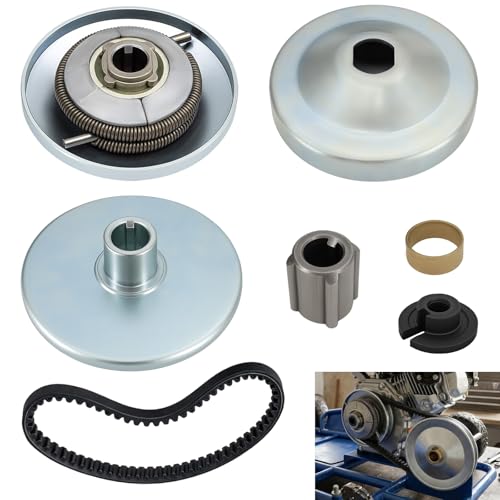
The Podoy 30 Series Torque Converter replaces a standard centrifugal clutch with a variable-ratio belt system that transforms how power reaches the wheels. Instead of a fixed gear that forces the engine to rev to a single engagement point, this torque converter lets the engine stay in its power band by changing the drive ratio automatically. The result is significantly better acceleration off the line and a higher effective top speed on the straights.
This unit comes with a 3/4-inch bore and 3/16-inch keyway that matches Predator 212 and Honda GX engines directly. It is compatible with Comet 30 Series and TAV2 30-75 systems, which makes it a straightforward upgrade for anyone who already owns a kart set up for that bolt pattern. The included 203589 asymmetrical drive belt is designed for reliable heat dissipation under sustained load.
Users report that installation required minor modification on some mini bike frames, but once dialed in, the torque converter provides smoother power delivery and reduces weak starts. The belt does produce a slight jingle on some builds. For anyone who wants the best possible performance from a 6.5HP to 7HP engine, this torque converter is the clear winner.
Why it’s great
- Variable-ratio design boosts both acceleration and top speed
- Easy bolt-on for Comet 30 Series compatible frames
Good to know
- May need minor frame modification on non-standard karts
- Some users noted a light jingle sound during operation
2. KIKITE Go Kart Clutch 12T
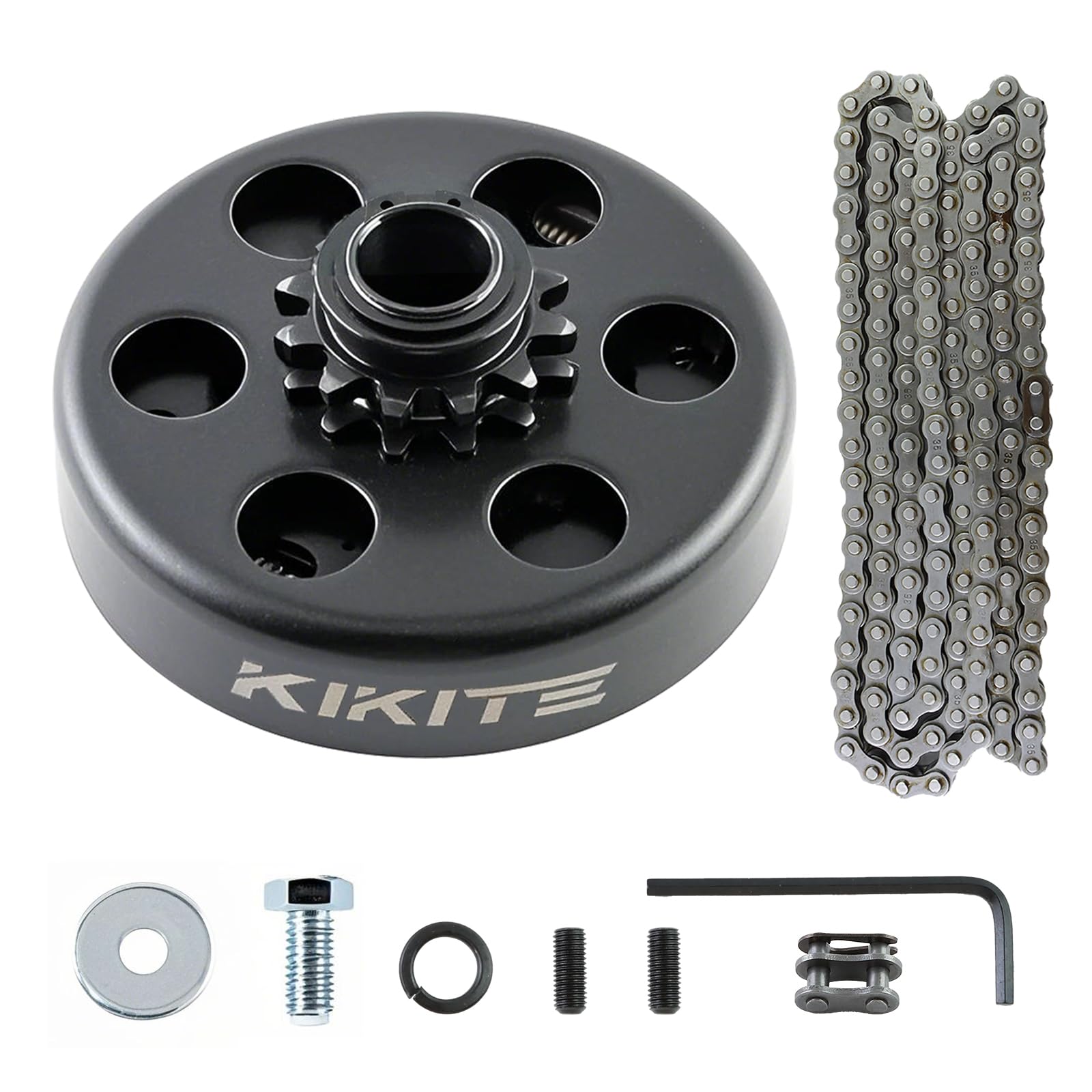
The KIKITE 12T clutch offers a strong middle ground for riders who need a reliable #35 chain setup without stepping into a torque converter system. Its 3/4-inch bore fits Honda GC/GX and Predator 212 engines, and the included 5-foot chain gives extra reach for karts with longer frame distances. The engagement RPM of 2,000±200 is lower than most competitors, which helps produce smooth, jerk-free starts — ideal for youth karts and recreational mini bikes.
Build quality centers on heat-resistant steel shoes that are designed to handle 2–7 HP engines. The drum runs with minimal out-of-round wobble from the factory, which reduces the wear-on-shoes during the break-in period. Users who followed the recommended lubricating procedure and break-in cycles reported clutch life extending well past six months under daily use.
One verified buyer reported grinding and stalling after three hours on a single unit, which suggests quality control can vary between batches. But the overwhelming majority of long-term reviews describe it as a solid daily driver that delivers good value. For builders who prioritize easy starts and a quiet engagement, the KIKITE earns its place.
Why it’s great
- Lower engagement RPM for smooth, kid-friendly starts
- Includes a generous 5-foot #35 chain for longer karts
Good to know
- Occasional quality control inconsistency reported
- Not meant for sustained high-RPM racing sprint sessions
3. LotFancy Go Kart Clutch 12T

The LotFancy 12T clutch has built a strong reputation among DIY builders who want a dependable centrifugal unit for moderately modified engines. It shares the same 3/4-inch bore, 12-tooth sprocket, and #35 chain pitch as the budget options, but the steel drum and shoe assembly show tighter machining tolerances out of the box. Several users ran this clutch on a 5HP Briggs Intek mini bike at 45 mph and reported no slippage after a full month of hard launches and burnouts.
One standout feature is the set screws that bite firmly into the shaft without wobbling or stripping. The included 4-foot #35 chain is enough for most standard go karts but may be too short for stretched frames. Regular lubrication is necessary to prevent the chain from getting noisy after a few hours of riding. The engagement speed of 2,300±300 RPM feels responsive on Predator 212 engines without being overly aggressive.
Kids’ karts benefit from the predictable engagement, and adult riders pushing a stage 5 Predator 212 note that the clutch stays consistent under heat. The 3.63-pound weight is typical for this category. If you want the most performance per dollar in a centrifugal #35 clutch, the LotFancy is hard to beat.
Why it’s great
- Holds up well on built engines up to 30+ HP
- Set screws provide a tight, wobble-free fit on the shaft
Good to know
- Included chain is too short for extended frames
- Requires frequent lubrication to keep chain quiet
4. CORINTH 10T Centrifugal Clutch

The CORINTH 10T clutch is the right choice when your build calls for a #40/41/420 chain rather than the narrower #35. The 10-tooth sprocket produces a higher top speed compared to a 12-tooth clutch when paired with the same axle sprocket, which matters for flat-track karts and mini bikes where acceleration takes a back seat to terminal velocity. The bore is standard 3/4-inch with a 3/16-inch keyway, so it drops onto Predator 212 and Honda GX engines without modification.
The iron drum handles heat well during sustained runs, and internal bushing material resists galling better than cheaper zinc-based alternatives. Users describe the installation as straightforward, taking about 30 minutes on a Coleman BT200X as a direct replacement. The clutch runs with minimal jerking or grabbing, which keeps chain wear low and ride comfort high.
One thing to note: this clutch does not come with a bolt for retaining the clutch on the shaft, so you will need to use the one from your old clutch or purchase one separately. The 4.6-pound weight reflects the heavier #40-series sprocket. For anyone running a #40 chain setup who wants a sturdy clutch that does not break the bank, this is the top contender.
Why it’s great
- Higher top-end speed from the 10-tooth sprocket design
- Heavy-duty iron construction handles heat well
Good to know
- No retaining bolt included in the package
- 10-tooth gearing reduces low-end acceleration
5. ILONPA Centrifugal Clutch 12T

The ILONPA 12T clutch is the budget-friendly entry point for anyone building a first go kart or mini bike on a tight build sheet. It uses the same 3/4-inch bore, 12-tooth sprocket, and #35 chain configuration found on the more expensive options, making it a direct fit for Honda GX160, GX200, and Predator 212 engines. The engagement speed sits at 2,300±300 RPM, which matches the industry standard for 2–7 HP engines.
The painted exterior keeps rust at bay during garage storage, and the 3.65-pound weight makes it one of the lightest options in this roundup. The package includes a 4-foot #35 chain plus extra set screws and a connecting link. The included chain length is sufficient for most standard karts. Users consistently report easy installation and good initial performance on kids’ karts and light-duty recreational bikes.
Long-term durability is the main trade-off at this price tier. Some users note that the clutch shoes wear faster than premium alternatives when used on higher-HP engines or aggressive terrain. The break-in procedure — dripping lubricant above the circlip and running three no-load cycles — must be followed to avoid smoking the shoes on the first ride. For a budget-conscious builder who is not racing, the ILONPA gets the job done reliably.
Why it’s great
- Lowest entry price for a complete clutch-and-chain kit
- Lightweight and rust-resistant painted exterior
Good to know
- Shoe wear accelerates faster on higher-HP engines
- Break-in procedure is critical; skipping it causes early failure
6. caqeg 10T Centrifugal Clutch

The caqeg 10T clutch targets owners of mini bikes and karts that use #40/41/420 chain, like the Coleman BT200X and Baja MB165. Its 3/4-inch bore and 3/16-inch keyway are standard, and the 10-tooth sprocket offers the same top-speed bias seen in the CORINTH unit. The drum is made from quality iron that dissipates heat quickly during extended runs, and the 4.55-pound weight reflects the beefier chain type.
Users describe this as a direct replacement for factory clutches on Coleman bikes, installing in roughly 30 minutes without any modifications. The chain stretches slightly during the first few rides — that is normal and requires a simple tension adjustment. The clutch runs without jerking or grabbing, which keeps the ride smooth for both kids and adults. The set screws included do not strip easily and hold the clutch firmly on the shaft.
The main limitation is the 2–6.5 HP rating. Pushing this clutch beyond that range with a heavily modified engine will cause premature wear. For stock or mildly tuned engines, it is a reliable part that delivers consistent performance. If you need a drop-in replacement for a factory #40-series kart, the caqeg is the most straightforward option here.
Why it’s great
- Direct bolt-on replacement for Coleman BT200X and Baja MB165
- Quality iron construction for good heat dissipation
Good to know
- Chain stretches during break-in; expect to adjust tension
- Rated for 2–6.5 HP; not suited for high-horsepower builds
7. TadaMark 12T Go Kart Clutch

The TadaMark 12T clutch rounds out the budget tier with a straightforward #35 chain kit that works well for light off-road karts and casual neighborhood riding. The 3/4-inch bore fits the usual suspects: Predator 212cc, Honda GC160, and GX120 engines. The engagement RPM matches the 2,300±300 standard found on most entry-level clutches. The 130-link #35 chain included in the package gives you enough links to fit slightly longer frames.
One detail that stands out is the two-year report from one user who ran this clutch on an 8.5 HP motor over hilly terrain and found it engaged well without slipping. That level of longevity from a budget clutch is unusual. The painted exterior holds up well against mud and moisture, and the internal shoes do not glaze over prematurely when the break-in steps are followed correctly.
There is a note of caution: one user reported sparking and slipping after 32 days on a Predator 212 engine. This likely indicates a defective unit or improper break-in rather than a systemic flaw, but it is worth mentioning. For the price, the TadaMark delivers good overall value as long as you adhere to the pre-lubrication and three-cycle break-in process. It is a safe bet for entry-level karts.
Why it’s great
- Has held up for years on higher-HP engines for some users
- 130-link chain provides extra length for larger frames
Good to know
- Occasional reported premature failure on Predator 212 engines
- Strictly requires full break-in procedure for best life
FAQ
Can I use a 10-tooth clutch with a #35 chain?
How do I break in a new centrifugal clutch?
What happens if my clutch is not engaging until high RPM?
Final Thoughts: The Verdict
For most users, the clutch for go kart winner is the Podoy 30 Series Torque Converter because it replaces the limitations of a fixed-ratio clutch with smooth, variable-ratio power delivery that suits both acceleration and top speed. If you want a drop-in replacement with great value for a standard #35 chain setup, grab the LotFancy 12T Centrifugal Clutch. And for a no-nonsense #40 series swap on a Coleman or Baja mini bike, nothing beats the caqeg 10T Clutch for straightforward fitment and reliable operation.

Mo Maruf
I created WellFizz to bridge the gap between vague wellness advice and actionable solutions. My mission is simple: to decode the research and give you practical tools you can actually use.
Beyond the data, I am a passionate traveler. I believe that stepping away from the screen to explore new environments is essential for mental clarity and physical vitality.