Our readers keep the lights on and my smoothie glass nicely filled. As an Amazon Associate, I earn from qualifying purchases.
Specs are compiled from manufacturer listings and verified buyer reviews and can change over time — please confirm the key details on the product page before buying.
You want a food plot that actually fills your freezer without wasting time on seeds that die in one season. Most clover blends sprout weeds instead of forage or fade before deer find them. This guide picks five mixes that deliver dense, protein-packed stands deer return to year after year.
I’m Mohammad Maruf — the founder and writer behind WellFizz. This guide is built by comparing the manufacturers’ published specifications and the patterns across verified customer reviews, so you get each pick’s real strengths and trade-offs instead of marketing spin.
After weighing germination rates, cold tolerance, drought resistance, and shade versus full sun performance, the clover to plant for deer that earns the top spot is the one that stays green all season with minimal replanting.
Quick Picks
- Crooked Bend Four Clover Combo Blend, 5LB — Top Performer
- Hit List Seed Triple Threat Clover Food Plot Seeds [Perennial] – 3 lbs — Best Value
- Eretz White Clover Seed – Premium Willamette Valley, 10lb — Premium Pick
- Outsidepride Perennial White Ladino Clover Seed – 5 lbs — Drought Champion
- SeedRanch Durana Food Plot Clover Seeds – 3 Lbs. — Best Overall
How To Choose The Best Clover To Plant For Deer
Picking the right clover seed depends on four decisions that separate a thriving year-round food plot from a thin, weed-filled patch. Here is what matters most.
Perennial vs Annual Lifespan
A perennial blend lives multiple years from a single planting — the most cost-effective move for a long-term plot. Annual clover must be reseeded every season. The data shows that some perennial blends like the Triple Threat Clover Food Plot Seeds claim up to 5 years of regrowth with proper maintenance. That means more time watching deer and less time dragging a spreader.
Protein Content for Antler Growth
Deer need high protein to build antlers and support lactation (milk production for fawns). Look for blends that deliver around 25-30% crude protein (the total protein in the forage). The Triple Threat blend, for example, promises up to 30% antler-building protein. A high-protein clover turns a food plot into a nutrition station, not just a snack bar.
Cold Tolerance and Drought Resistance
Clover that dies in a freeze or withers in a dry spell leaves deer with nothing. Blends that handle cold snaps (freezing temperatures that kill tender plants) and need little watering survive longer and attract more consistently. The Outsidepride Ladino Clover is labeled drought-tolerant and thrives across USDA Zones 3 to 10, meaning it handles both northern winters and southern dry spells.
Shade Tolerance for Woodland Plots
Not every plot sits in an open field. Many are under canopy or along timber edges. Clover that grows in low light keeps deer visiting the shaded parts of your property. The Crooked Bend Four Clover Combo Blend is noted for its ability to grow in low-light and shady planting areas, making it a strong pick for woods-edge plots.
Quick Comparison
| Model | Best For | Weight | Coverage | Plant Type | Amazon |
|---|---|---|---|---|---|
| Crooked Bend Four Clover Combo | Shady no-till plots | 5 lbs | 0.45 acre | Perennial | Amazon |
| Hit List Seed Triple Threat | Longest lifespan | 3 lbs | 0.5 acre | Perennial | Amazon |
| Eretz White Clover Seed | Pure seed quality | 10 lbs | — | Perennial | Amazon |
| Outsidepride Ladino Clover | Drought tolerance | 5 lbs | — | Perennial | Amazon |
| SeedRanch Durana Clover | Quick spring start | 3 lbs | 0.5 acre | Perennial | Amazon |
In‑Depth Reviews
1. Crooked Bend Four Clover Combo Blend, 5LB
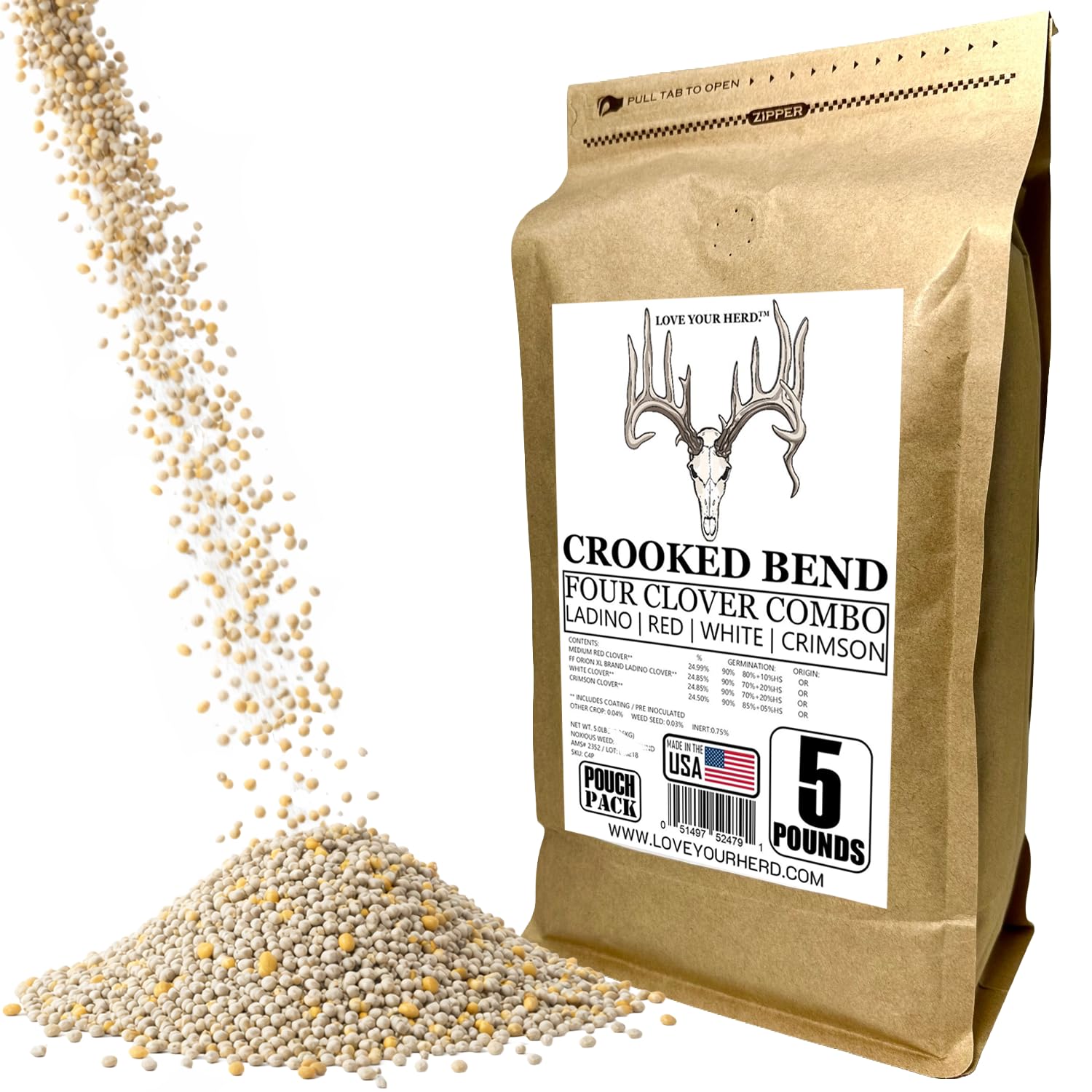
This blend handles shady, no-till spots where most clovers fail.
If your food plot sits under a timber canopy or on a hill that is tough to plow, this blend is your answer. The Crooked Bend Four Clover Combo is designed for low-light areas and grows without tilling (turning over the soil), disking, or heavy equipment — you simply broadcast (scatter on the surface) or use a spreader. It drills (plants in rows) up to 0.45 acre or sows 0.29 acres via throw-and-grow, giving you flexibility for odd-shaped plots.
Buyers report the seed germinates well and produces a lush, dense clover stand that stays green all season. One reviewer on a horse property in California saw a very good sprouting rate after a simple yard-rake prep. The 5-pound bag is a lighter option compared to the 10-pound Eretz bag, but the four-clover mix spreads further and handles more site conditions. So you get a versatile seed for tricky spots.
The catch is that, like any broadcast seed, it needs some rain to get going — a reviewer mentioned it would have been even better with more moisture. The plant height tops out at 18 inches, so it stays manageable and does not shade out itself. Unlike the Triple Threat blend that prefers full sun, this one thrives in partial shade.
What Works Best
- Grows in shade where many clovers fail
- No-till saves time and equipment costs
- Drought and cold resistant for season-long growth
Where It Falters
- Needs consistent moisture for best germination
- Heavier bag will not stretch as far as some 10lb options
Best for shady plots: Grab this if your plot is under trees or on a hill you cannot till.
One real limitation: The lighter 5-pound bag means less seed in hand for large open fields.
2. Hit List Seed Triple Threat Clover Food Plot Seeds [Perennial] – 3 lbs
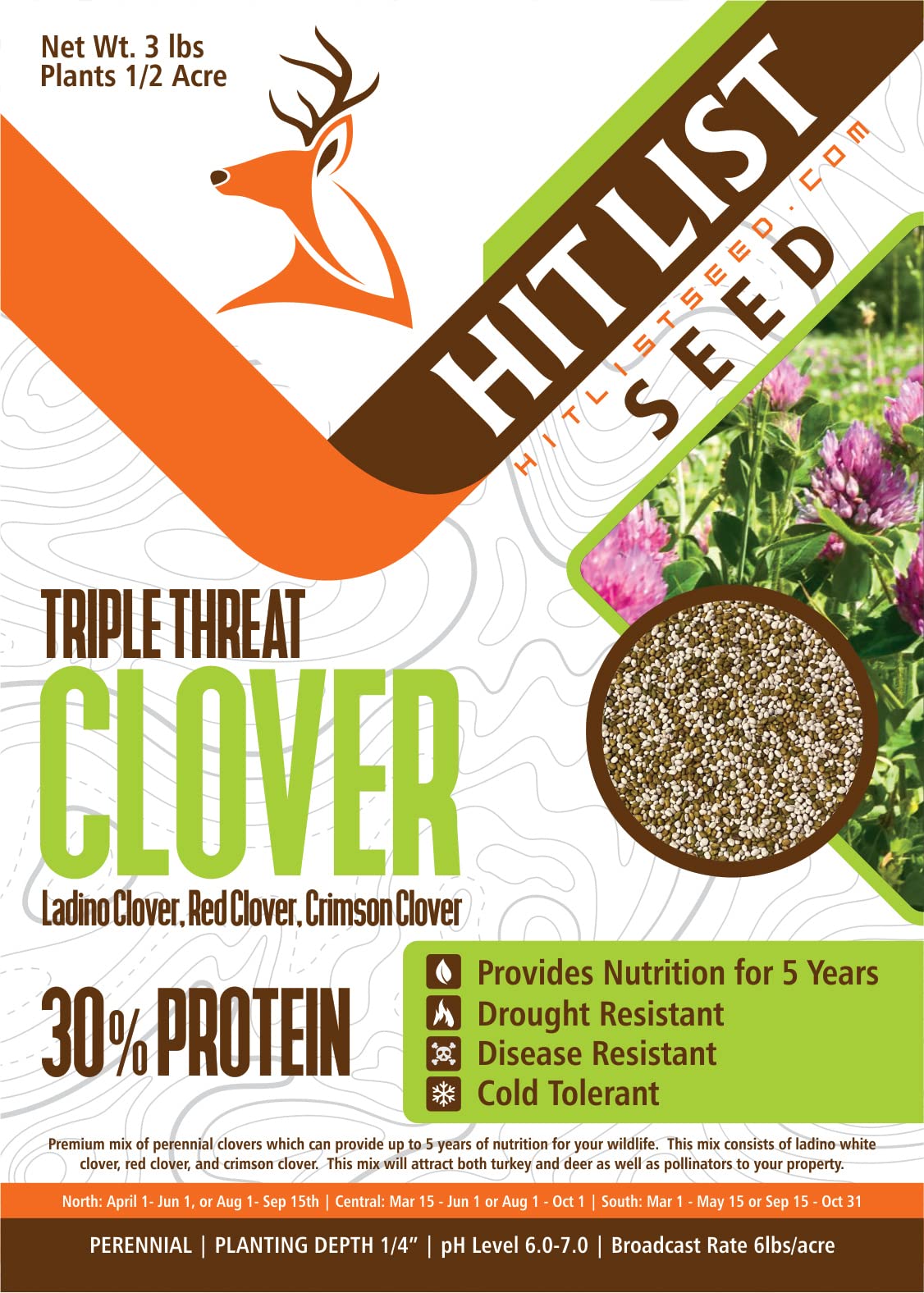
A 30% protein blend that claims to last up to 5 years — designed to build antlers, not just fill bellies.
This blend combines Ladino, Red, and Crimson clovers into a single bag that provides up to 30% antler-building protein for whitetails, blacktails, and mule deer. That protein number is a standout — it directly supports the nutrition serious deer managers want. The bag claims one planting can last up to 5 years with proper annual maintenance, which saves you from reseeding every spring. So you get two seasons of forage from one planting.
Owners mention that the seeds have a white coating resembling lime (a calcium-based amendment that adjusts soil pH), which helps germination — one reviewer noted that even when planted late, some seeds germinated after a delay and confirmed as clover. Another reviewer warned to plant it in late summer or early fall when rain is expected, calling spring planting a mistake. The bag also has a self-sealing closure for touch-ups, a small but practical detail.
The blend is extremely cold tolerant and resistant to drought and heat, making it a versatile pick for northern and southern properties alike. Compared to the Crooked Bend blend which excels in shade, this mix prefers full sun for best performance. So pick it for open fields, not timber edges.
Why It Wins
- High 30% protein for antler building
- Perennial lifespan up to 5 years per the brand
- Cold, drought, and heat tolerant
Watch Out For
- Best results with fall planting and rain
- Bag covers only 0.5 acre at 3 lbs
Ideal for long-term plots: Choose this if you want one planting that keeps feeding deer for years.
Trade-off: The small 3-pound bag forces you to buy multiple for larger fields.
3. Eretz White Clover Seed – Premium Willamette Valley, 10lb
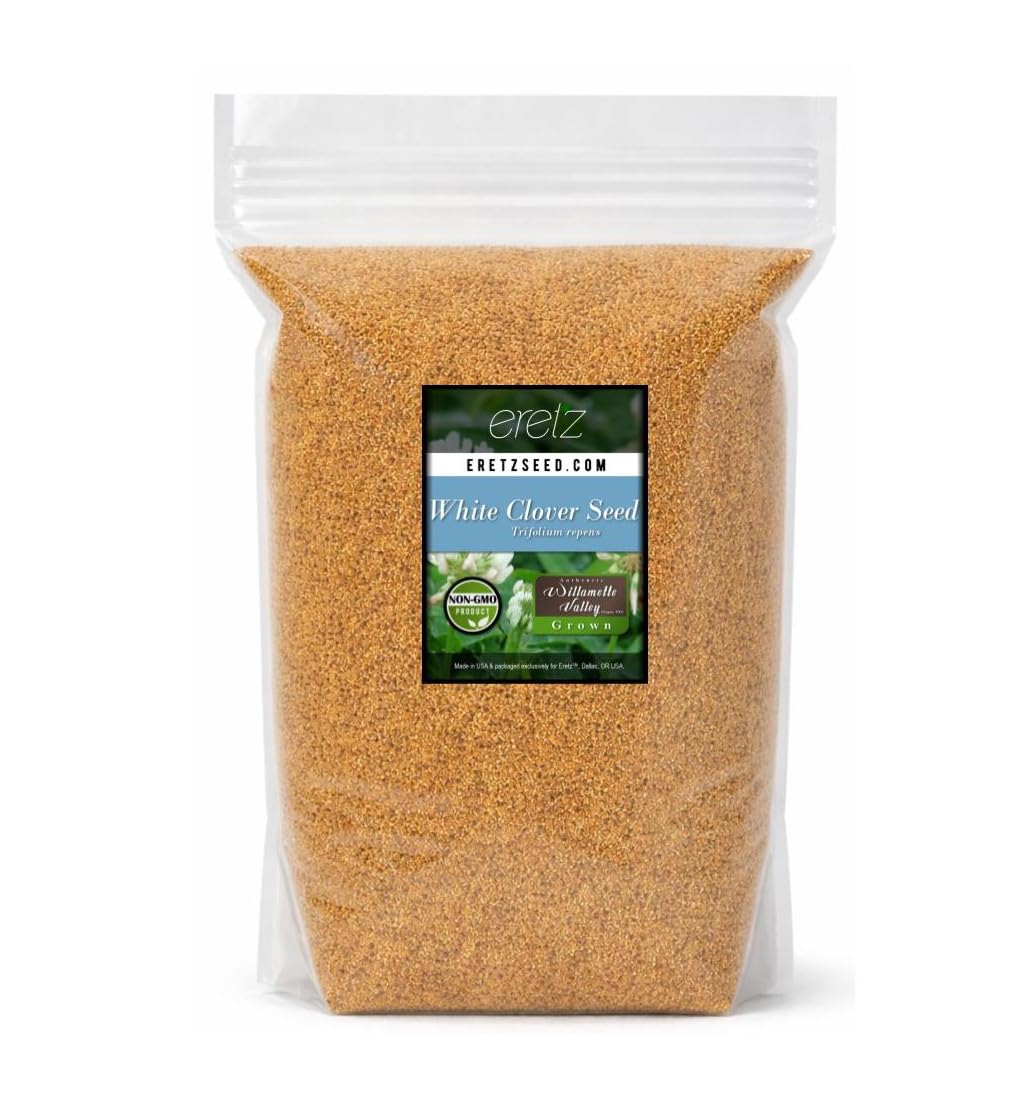
Oregon-grown, uncoated white clover seed that customers note sprouts clean and weed-free.
This is the straight-talk pick for anyone fed up with blends that fill the soil with weed seeds. The Eretz White Clover Seed is grown in the Willamette Valley, Oregon, with no coatings and no weed seeds mixed in. Reviewers point out the clover sprouts quickly and they do not see any weeds coming up with the baby clover — one reviewer called it a better product despite the higher cost. So you get a pure, predictable start.
The 10-pound bag gives you significantly more seed for large plots, berry patches, vineyards, or erosion control compared to the 5-pound Crooked Bend bag. It handles full sun, partial shade, and partial sun, making it adaptable to varied light conditions. Unlike the Triple Threat blend that offers 30% protein, this is a single white clover variety — simpler but proven for wildlife attraction.
The seed requires moisture and soil prep. A reviewer noted that burying it 1-2 inches deep caused swelling and failure — it needs to be planted just under the surface and kept wet. It fixes nitrogen (converts nitrogen from the air into plant food) naturally, improving soil health over time without synthetic fertilizers. That means better soil for future plots.
Cleanest seed on the list: No weed seeds, no coatings, just pure Willamette Valley clover.
The biggest risk: Requires careful shallow planting and consistent moisture — dry conditions or deep burying kills germination.
Best for pure quality: Pick this if you want the cleanest seed possible and have time for proper soil prep.
When to pass: skip it if you need a multi-clover blend for diverse soil and light conditions.
4. Outsidepride Perennial White Ladino Clover Seed – 5 lbs
A giant white clover bred to survive dry spells and build soil as it feeds deer.
If you live in a region where summer droughts hit hard, this Ladino (a large-leafed white clover variety) clover is built for your conditions. It thrives across USDA Zones 3 to 10 and is specifically described as drought-tolerant, requiring little to no watering once established. That is a major advantage over the Eretz seed, which needs moderate watering and careful moisture management. So you get a reliable stand even in dry years.
The seeds arrive nitrocoated (a lime coating that holds moisture near the seed) and inoculated (treated with beneficial bacteria that help the plant fix nitrogen from the air) — a treatment that improves water retention and germination. You sow at 1/2-3/4 lb per 1,000 sq ft or 8-10 lbs per acre, then rake lightly and keep moist until germination in about 14 days. It captures nitrogen from the air, boosting soil fertility naturally and promoting healthier plant growth without synthetic fertilizers — a real benefit for low-maintenance plots.
This blend attracts rabbits, turkey, and deer, and its blooms bring in bees and other pollinators. Unlike the Triple Threat’s five-year claim, this is a straightforward perennial that regrows each season without the multi-clover complexity. One limit: it is best in full sun and sandy soil, so it is less suited for the shady edge plots where the Crooked Bend excels.
Key Strengths
- Drought-tolerant — needs little watering after establishment
- Nitrocoated and inoculated for better germination
- GMO free and soil-improving nitrogen fixer
Weak Points
- Prefers full sun and sandy soil
- No multi-year regrowth guarantee
Ideal for dry, sandy plots: This is your bet if you need a no-fuss, drought-hardy clover.
The compromise: It performs poorly in shade and heavy clay soil.
5. SeedRanch Durana Food Plot Clover Seeds – 3 Lbs.

Shoppers say this Durana clover sprouts fast and gets deer in the field immediately.
This 3-pound bag covers half an acre when broadcast, and it is described as excellent deer food plot seeds. Buyers repeatedly call it fast-sprouting — one buyer mentioned it was super green and sprouted fast, while another noted the clover is big, thick, and deer, doves, and groundhogs love it. That sort of real-world result sets this seed apart from theoretical claims.
Durana (a specific clover variety bred by Pennington Seed for deer persistence) has a Phase 1 (first 14 days) germination rate of 70-75% in ideal conditions, with Phase 2 (second 14 days) dropping to about 40% during a hot, dry spell — so timing matters. Plant in spring after a soil test and lime/fertilizer application for the best start. Unlike the Eretz 10-pound bag which is pure white clover, Durana is a single Durana variety bred specifically for deer forage and persistence under grazing pressure. That means it bounces back when deer keep nibbling.
One honest complaint involves packaging: a buyer reported a bag split open when cutting with scissors, causing seed loss. Not a dealbreaker, but worth handling carefully when opening. The brand counts on moderate watering and summer blooming, so it is best for plots you can monitor through dry periods.
Why It Leads
- Fast, heavy sprouting that deer find immediately
- Proven 70-75% Phase 1 germination rate from the data
- Perennial that comes back with proper care
Watch For
- Phase 2 germination drops hard in dry heat
- Bag packaging can split during opening
Most proven performer: This is the seed to beat for fast, reliable forage that deer hit hard.
One warning: It needs consistent moisture through summer, or second-phase germination drops sharply.
Understanding the Specs
Germination Rate
The percentage of seeds that actually sprout under normal conditions. A Phase 1 (first two weeks after planting) germination rate of 70-75%, like the Durana blend shows, means roughly three-quarters of the seeds will produce clover. Lower rates mean you need to seed heavier to get the same stand.
Seed Coating and Inoculation
A nitrocoating is a layer of lime (calcium-based soil amendment) and nutrients on each seed that helps it hold moisture and germinate consistently. Inoculation adds beneficial Rhizobium bacteria (microorganisms that convert atmospheric nitrogen into plant-usable nitrogen) that help the clover fix nitrogen from the air. Both treatments, which the Outsidepride Ladino seed has, improve success in poor or dry soil.
Cold Tolerance and USDA Zones
A clover’s cold tolerance is rated by the USDA Hardiness Zones (geographic zones based on average winter low temperatures) it survives in. A rating of Zones 3 to 10, like the Outsidepride Ladino, means it handles winter freezes in northern states and summer heat in the south. A narrower zone range limits where the seed thrives.
Coverage per Pound
How much area a bag covers depends on whether you drill (plant in rows at precise depth) or broadcast (scatter on top). The same 3-pound bag that covers half an acre when broadcast would cover a full acre if drilled. Always check the suggested rate for your planting method to avoid under-seeding.
FAQ
What is the best time of year to plant clover for deer?
How long does a single clover planting last?
How much protein does clover provide for deer?
Can I plant clover without tilling the soil?
What is the difference between Ladino clover and Durana clover?
Will clover grow in shade or does it need full sun?
How deep should I plant clover seeds?
What does inoculated clover seed mean?
Why is nitrocoating added to clover seed?
How do I prevent weeds from taking over my clover plot?
Final Thoughts: The Verdict
If you want one dependable pick, the clover to plant for deer winner is the Crooked Bend Four Clover Combo Blend because it handles shade, requires no tilling (soil turning), and stays green all season with minimal effort. If you want the highest protein content for antler growth, grab the Hit List Seed Triple Threat. And for a pure, weed-free seed that germinates clean in prepared soil, the Eretz White Clover Seed from Willamette Valley is the cleanest option.
How We Picked
We do not accept paid placement. Every pick is matched to a real buyer and a real use-case; we do not hands-on test units.
Sources & Methodology
Specifications: manufacturer listings and product documentation. Review insights: verified customer reviews, as of July 2026. Pricing: not shown on this page (it changes often); check the current price via the retailer link.
As an Amazon Associate, WellFizz earns from qualifying purchases. This does not affect which products we feature.

Mo Maruf
I created WellFizz to bridge the gap between vague wellness advice and actionable solutions. My mission is simple: to decode the research and give you practical tools you can actually use.
Beyond the data, I am a passionate traveler. I believe that stepping away from the screen to explore new environments is essential for mental clarity and physical vitality.