Our readers keep the lights on and my smoothie glass nicely filled. As an Amazon Associate, I earn from qualifying purchases.
Specs are compiled from manufacturer listings and verified buyer reviews and can change over time — please confirm the key details on the product page before buying.
If you are tired of pushing a mower every weekend and watching your grass turn brown in the first dry spell, a clover grass seed mix is the simple swap that gives you a green, forgiving yard with almost no work. These blends fix nitrogen (a natural fertilizer) into your soil, stay short without trimming, and stay green through heat that kills regular turf.
I’m Mohammad Maruf — the founder and writer behind WellFizz. This guide is built by comparing the manufacturers’ published specifications and the patterns across verified customer reviews, so you get each pick’s real strengths and trade-offs instead of marketing spin.
The right clover grass seed mix saves you water, fertilizer, and hours behind the mower while keeping your yard thick and green — whether you are covering a bare patch, replacing a high-maintenance lawn, or planting a pollinator-friendly ground cover (one that attracts bees and butterflies).
Quick Picks
- BuildASoil No-Till 60% Clover Seed Mix – 12 Species Cover Crop Seed Blend — Best Overall
- Mountain Valley Seed Co Clover Trio Seed Blend – Premium 1 Lb 179,200 Seeds — Top Performer
- Ferry-Morse EcoEase Microclover and Fescue Low Maintenance Ground Cover Grass Seed Mix — Lawn Upgrade
- Tri-Clover by Eretz – Three Part Blend of Clovers — Budget Champion
How To Choose The Best Clover Grass Seed Mix
Clover seed mixes vary a lot in what varieties they include, how much area they cover, and whether they are meant for a no-mow lawn or a farm cover crop (a crop grown to protect and enrich soil). These four points will help you narrow down the right blend for your yard or garden.
Variety Blend — Single Type vs. Trio vs. Multi-Species
A pure microclover blend (a small-leaved white clover that stays short) keeps a tidy look and blends into an existing lawn. A three-variety mix (red, white, and crimson clover) gives you flowers, height, and deeper soil benefits. A multi-species mix with 12 plants builds the most biodiversity (variety of life) for a no-till garden system (gardening without plowing). Your choice depends on if you want a neat lawn appearance or an all-out soil regeneration tool.
Coverage and Seed Count
Different blends cover very different areas per pound. One mix might cover around 900 square feet, while another covers only 310 to 387 square feet at similar density. Higher seed count per pound (like 179,200 seeds in the Mountain Valley blend) means more plants per square foot, which fills in bare ground faster.
Growing Height and Mowing Needs
Some clover varieties grow up to 24 inches tall and produce large flowers, which is excellent for pollinators (bees and butterflies) but may not suit a neat front lawn. Others stay short and need little or no mowing. Check the expected growing height and whether the label says “no mow” to match your tolerance for letting it grow.
Hardiness Zone and Sunlight
Most clover mixes thrive in zones 3 through 10 (a USDA climate rating from coldest to warmest), but your local climate matters. Some blends need full sun to partial shade, while others tolerate partial shade better. If you have deep shade or a very short growing season, double-check the recommended zone range and sunlight exposure on the package.
Quick Comparison
| Model | Best For | Varieties | Coverage (per lb) | Growing Height | Amazon |
|---|---|---|---|---|---|
| BuildASoil No-Till 60% Clover | No-till gardens & lawns | 12 species (60% clover) | 900 sq ft | Low (no-mow) | Amazon |
| Mountain Valley Seed Co Clover Trio | Cover crop & pollinators | Red, White, Crimson | Seed count: 179,200 | Up to 24″ | Amazon |
| Ferry-Morse EcoEase Microclover & Fescue | Low-maintenance lawn | Microclover + Fescue | 310–387 sq ft | 4–24″ | Amazon |
| Tri-Clover by Eretz | Budget lawn patches | Green, Red, White | Not listed | Up to 2 ft | Amazon |
In‑Depth Reviews
1. BuildASoil No-Till 60% Clover Seed Mix – 12 Species Cover Crop Seed Blend
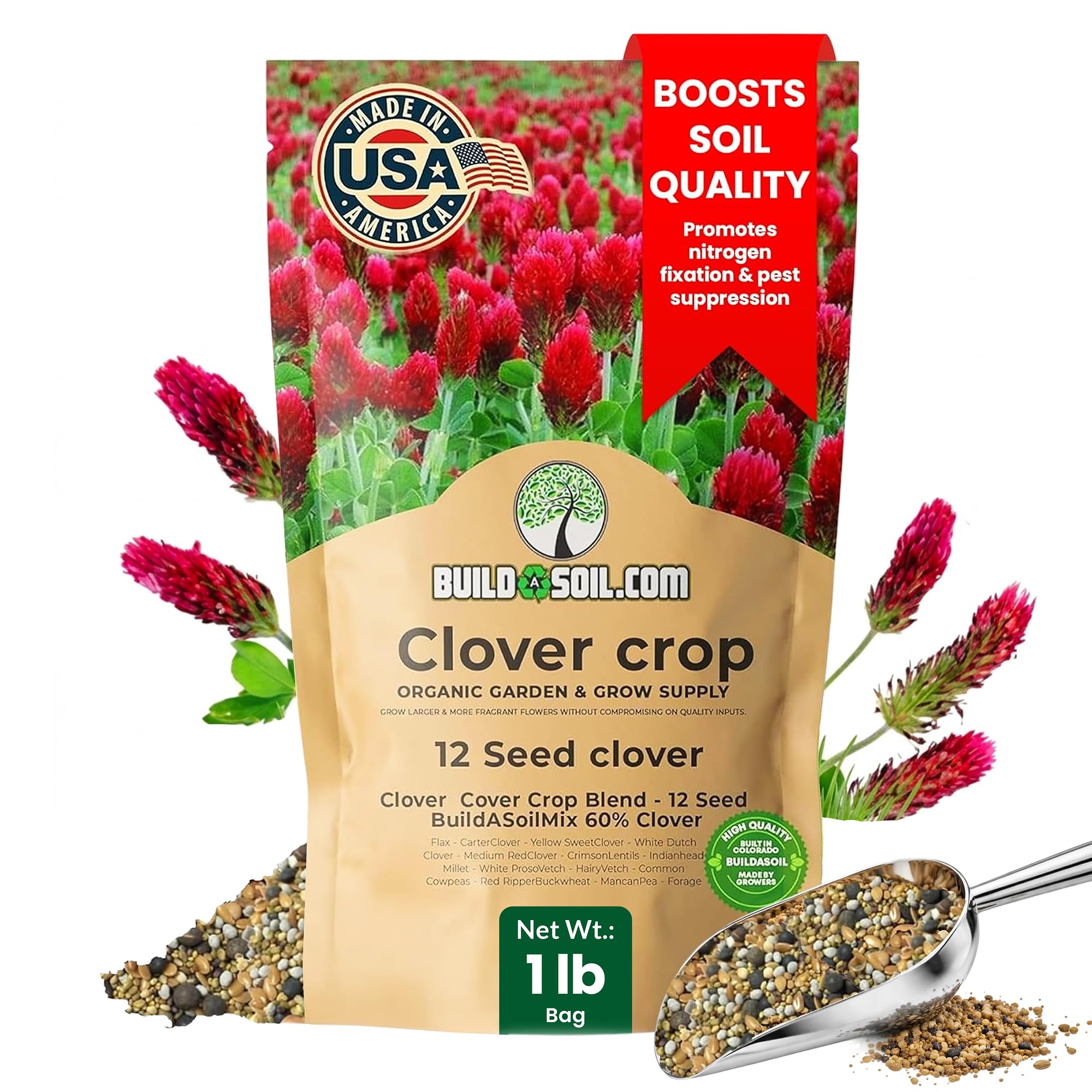
With 12 species and 60% clover, this is the only blend that builds a living soil system (microbes, worms, and nutrients) while needing zero mowing.
This is the blend if you want more than just a green lawn — you want a regenerative ground cover that feeds the soil as it grows. It contains 60% premium clover seeds (white, red, and crimson varieties) plus 10 other plant species, all designed for no-till gardens and raised beds where biodiversity is the goal. One pound covers 900 square feet, which is roughly double the coverage of a standard grass seed mix of the same weight. That means you need fewer bags than the Ferry-Morse blend, which covers 310 to 387 square feet per pound.
Buyers report planting it and seeing “sprouts everywhere” within a week, even with minimal soil prep — one reviewer simply cleared debris, raked, and walked on the seeds for soil contact. The clover stays manageable and non-invasive, fixing nitrogen (pulling nitrogen from the air and making it available in the soil) and feeding soil microbes without needing mowing or fertilizer. The 100% Non-GMO (not genetically modified) and chemical-free sourcing from a US brand trusted since 2013 adds confidence for organic gardeners.
The one-pound bag is plenty for small lawns and raised beds, but larger properties will want the 3-pound or 10-pound options to handle big plots. Unlike the Mountain Valley blend, this one includes non-clover species for deeper soil diversity, so it is less suited to a uniform monoculture look (a single plant type).
Living soil machine: 12 species, 60% clover, 900 sq ft coverage per pound — class-leading biodiversity for no-till systems.
The trade-off: The multi-species blend means you get a varied look, not a uniform clover lawn.
Reach for this if: You are building a no-till garden, raised bed, or pollinator lawn and want the most diverse living mulch available.
Look elsewhere if: You need a perfectly uniform, manicured clover lawn with no other plant species mixed in.
2. Mountain Valley Seed Co Clover Trio Seed Blend – Premium 1 Lb 179,200 Seeds

A pure clover trio packing 179,200 seeds per pound — the highest seed count in this lineup for thick, fast cover.
If you want a straight clover-only blend with high seed density, this Mountain Valley Trio delivers a balanced mix of red clover, white clover, and crimson clover. The 179,200 seeds per pound is a massive count, meaning you get dense coverage from a single bag — one buyer described the crimson clover germinating fast and creating a “lush green and red carpet.” That high seed count gives you more plants per square foot compared to blends that list coverage by weight alone, like the Eretz Tri-Clover.
The resealable bag is a practical touch for home gardeners who want to sow in stages or save seed for another season. It thrives in zones 3-10 (a USDA climate rating, meaning it works from very cold to very warm regions) with moderate watering and adapts to various soil types. The nitrogen-fixing cover crop also enriches depleted soil, making it a solid choice for farmers and large-scale growers who want to improve soil fertility between food crops.
One honest trade-off: a few buyers reported only the white clover sprouted, with the red and crimson failing to germinate in their conditions. This is a risk with any multi-variety blend — local soil and weather affect each type differently. Unlike the BuildASoil mix, this one stays purely clover, which suits uniform cover better but lacks the deep biological diversity of a 12-species blend.
High seed density
- 179,200 seeds per pound for dense coverage
- Three clover varieties for staggered bloom and color
- Resealable bag for multiple sowing sessions
Uneven germination risk
- Some buyers reported only white clover sprouted
- No non-clover species for deeper soil diversity
Best for: Gardeners and farmers who need a high-density, clover-only mix for cover cropping, soil enrichment, or pollinator plots.
skip it if: You need guaranteed germination of all three varieties in challenging soil or a diverse multi-species blend.
3. Ferry-Morse EcoEase Microclover and Fescue Low Maintenance Ground Cover Grass Seed Mix

This microclover-fescue blend gives you a traditional lawn look with clover’s drought tolerance — but covers only 310 to 387 square feet per pound.
This is the one to grab if your neighbors would side-eye a pure clover lawn but you still want the drought tolerance and nitrogen fixing that clover brings. The EcoEase blend pairs microclover (a small-leaved white clover that stays short) with fescue grass (a fine-bladed, drought-tolerant grass), so you get a uniform green carpet that looks like a conventional lawn but needs less water and mowing. The approximate seed count of 570,000 to 610,000 seeds per pound is the highest raw count in this comparison, though coverage is just 310 to 387 square feet per pound because fescue spreads differently than clover alone. That means a single pound covers about one-third the area of the BuildASoil mix.
Buyers in zone 9 (a warm climate, like Oregon) reported successful germination using the cardboard and compost method, with sprouts reaching 8 to 10 inches tall. One reviewer noted germination in 10-14 days at an average rate, while another said all planted seeds germinated. That 10-14 day window is slower than the pure clover blends (which can sprout in 2 days), but the trade-off is a more familiar lawn aesthetic that handles foot traffic better than straight clover.
Hardiness zones 4a through 9b limit this mix compared to the zone 3-10 range of the Mountain Valley blend, so very cold northern growers may need a different option. It requires regular watering and partial to full sun, making it less forgiving than drought-hardy pure clover in neglectful conditions.
Lawn-friendly clover: Microclover + fescue blend for a traditional look with clover’s benefits. 570k-610k seeds per pound.
The catch: Slower germination (10-14 days) and smaller coverage area per pound than pure clover mixes.
Choose this for: Replacing or overseeding a conventional lawn with a low-maintenance, drought-tolerant alternative that still looks like grass.
Avoid if: You want fast germination or maximum coverage per dollar — pure clover blends beat it on both.
4. Tri-Clover by Eretz – Three Part Blend of Clovers
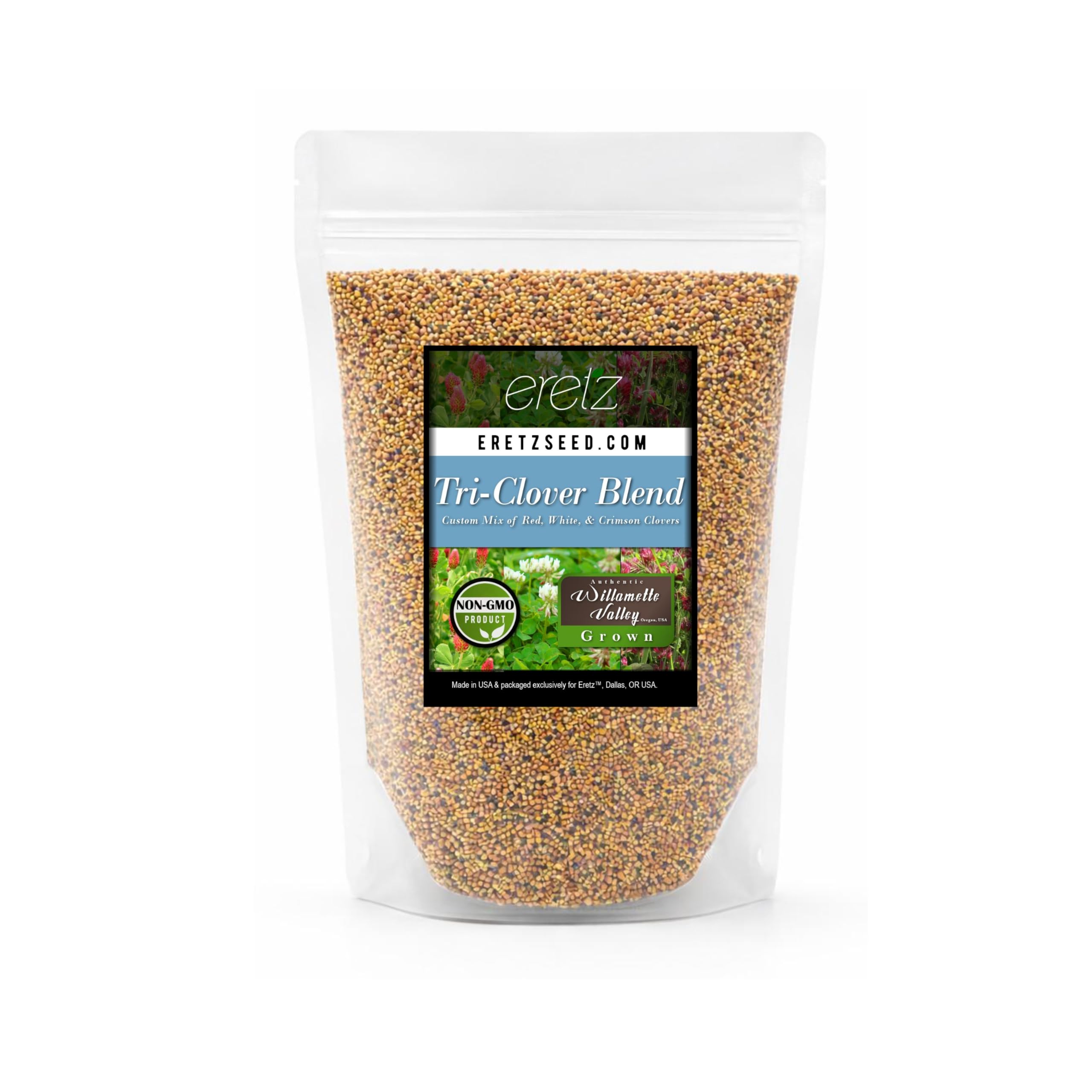
Sprouted within two days per buyers — the fastest germinating clover here, but it grows to 2 feet and needs mowing.
If you just need a cheap, fast-growing clover to cover a bare spot or a side yard where grass refuses to grow, this Eretz blend gets the job done with zero fuss. Owners mention it “sprouted within 2 days” when raked in and kept watered, and one Florida user who “couldn’t get grass to grow” raved that it “popped up overnight.” The three-part blend of green, red, and white clover provides natural beauty and flowers that attract honey bees and other pollinators.
It grows up to two feet tall and survived a cold Northeast winter, producing crimson clover flowers good for cut flowers in spring. The 16-ounce bag is grown in the Willamette Valley, Oregon, with no weed seeds, no fillers, no coatings, and a Non-GMO (not genetically modified) guarantee. Hardiness zone 3 means it handles cold climates as well as warm ones, but the 16-ounce weight is light compared to the pound-based blends like the Mountain Valley trio.
One thing to know: this clover grows vigorously — one buyer mentioned it “grew to over two feet tall, turned into thick bushes,” and they are now getting rid of it. Unlike the BuildASoil mix which stays low and no-mow, this one can get bushy if you do not mow it. Also note there are no detailed coverage specs per pound here, so you are buying by weight rather than seed count or square-foot coverage.
Lightning-fast sprouting
- Germinated in 2 days per buyer reports
- No weed seeds, no fillers, no coatings
- Non-GMO and grown in USA (Oregon)
Grows tall and bushy
- Can reach 2 feet and require mowing
- No coverage area specs per pound — buy by weight alone
- One variety may dominate in some zones
Best for: Covering hard-to-grow bare patches on a budget where you want fast results and do not mind a taller, less manicured look.
Not ideal for: A tidy front lawn replacement — it grows bushy and will require regular mowing to keep short.
Understanding the Specs
Seed Count vs. Coverage Area
Some blends list seeds per pound (like 179,200 or 570,000), while others list coverage in square feet. High seed count means more plants per square foot and faster fill-in, but the actual coverage depends on how dense you sow and whether the mix contains fescue or other grasses. A pure clover blend covers roughly 900 square feet per pound, while a microclover-fescue blend might cover only 310-387 square feet for the same weight because fescue needs more seeds per area to form a thick lawn.
Growing Height and Mowing
Growing height ranges from low-growing clover that stays under 4 inches and requires no mowing, to varieties that reach 24 inches with showy flowers. If you want a no-mow lawn, look for blends that specify “no mow,” “low grow,” or microclover varieties. Taller clover is excellent for pollinators and soil building but will need occasional mowing if you want a neat appearance.
FAQ
Will clover grass seed mix take over my existing lawn?
How long does clover seed take to germinate?
Can I overseed my existing grass lawn with clover seed?
Does clover need fertilizer or nitrogen?
Is clover safe for pets to play on?
Will clover survive in full shade?
How much area does one pound of clover seed cover?
Does clover die in winter or come back every year?
Is clover grass seed mix better than regular grass seed?
What is the difference between microclover and regular white clover?
Final Thoughts: The Verdict
For most people, the clover grass seed mix winner is the BuildASoil No-Till 60% Clover because its 12-species biodiversity combined with 900 sq ft coverage per pound gives you the best of both worlds — a living soil system that needs no mowing and no fertilizer. If you want a pure clover-only blend with high seed density for fast cover cropping, grab the Mountain Valley Seed Co Clover Trio. And for a traditional lawn look with clover perks, the Ferry-Morse EcoEase Microclover and Fescue is your best bet.
How We Picked
We do not accept paid placement. Every pick is matched to a real buyer and a real use-case; we do not hands-on test units.
Sources & Methodology
Specifications: manufacturer listings and product documentation. Review insights: verified customer reviews, as of July 2026. Pricing: not shown on this page (it changes often); check the current price via the retailer link.
As an Amazon Associate, WellFizz earns from qualifying purchases. This does not affect which products we feature.

Mo Maruf
I created WellFizz to bridge the gap between vague wellness advice and actionable solutions. My mission is simple: to decode the research and give you practical tools you can actually use.
Beyond the data, I am a passionate traveler. I believe that stepping away from the screen to explore new environments is essential for mental clarity and physical vitality.