Our readers keep the lights on and my smoothie glass nicely filled. As an Amazon Associate, I earn from qualifying purchases.
Specs are compiled from manufacturer listings and verified buyer reviews and can change over time — please confirm the key details on the product page before buying.
You are about to buy a security camera, and the big question isn’t just where to put it—it’s whether you’ll be forced to pay a monthly subscription just to see what happened last night. The best cloud security cameras let you choose: save footage to a memory card for free or subscribe to a cloud plan for remote backup. You can start with no recurring fees and add cloud storage later if you want. This guide covers five cameras that work that way, from a compact indoor/outdoor model to a four-camera solar-ready system, so you can match the right one to your home without the marketing spin.
I’m Mohammad Maruf — the founder and writer behind WellFizz. This guide is built by comparing the manufacturers’ published specifications and the patterns across verified customer reviews, so you get each pick’s real strengths and trade-offs instead of marketing spin.
The key to picking the right camera is matching features like night vision range and power source to your property. This roundup of the best cloud security cameras breaks down the real specs and honest buyer feedback to help you pick with confidence.
Quick Picks
- Tapo 2K+ Indoor/Outdoor Wired Security Camera C120 — Best Overall
- Tapo 1080P Outdoor Wired Pan/Tilt Security Wi-Fi Camera C500 — Top Performer
- JESIOO 2K Solar Powered Security Cameras Wireless Outdoor (2 Pack) — Best Value
- realhide 2K Security Cameras Wireless Outdoor (2-Pack) with Free Cloud Storage — Premium Pick
- GMK 2K Security Cameras Wireless Outdoor (4 Pack) — Best Overall
How To Choose The Best Cloud Security Cameras
The right camera depends on where you put it, how much detail you need, and if you want to pay a monthly fee. Here are the three decisions that matter most.
Resolution and Night Vision
Resolution determines how clear the image is. 2K (about 2560 pixels wide) gives you sharper detail than 1080p, which is useful for reading a license plate or identifying a face. Night vision range varies widely—some cameras see clearly up to 30 feet while others reach 98 feet, so match the range to the size of your yard or driveway. Color night vision uses a spotlight to show full-color footage at night, while standard night vision shows black-and-white footage using infrared (IR, or invisible light) LEDs.
Power Source and Battery Life
Wired cameras plug into an outlet and run continuously, but you need an outdoor outlet nearby. Battery-powered cameras give you more placement freedom, but you need to recharge them every few weeks or months depending on activity. Solar-powered cameras use a small panel to keep the battery topped off, which is ideal for spots that get at least a couple hours of direct sun each day. Check whether the camera supports 2.4GHz Wi-Fi (a common wireless band for older and less power-hungry devices) only, as most battery-powered models do not connect to 5GHz networks.
Storage: Cloud vs Local
Cloud storage saves footage to the manufacturer’s servers, which means the video is safe even if the camera is stolen. It often costs a monthly or yearly fee. Local storage uses a microSD card (a small memory card) inside the camera—you own the footage with no recurring cost, but the card can be taken along with the camera. Some cameras offer both, letting you start with a card and add cloud storage later for a small fee.
Quick Comparison
| Model | Best For | Resolution | Night Vision Range | Power Type | Amazon |
|---|---|---|---|---|---|
| Tapo C120 | Best Overall Value | 2K QHD (4MP) | 30 ft | Wired (USB) | Amazon |
| Tapo C500 | Pan/Tilt Coverage | 1080p Full HD | 98 ft | Wired (DC) | Amazon |
| JESIOO CG6 (2 Pack) | Solar No-Wire Setup | 2K UHD | — | Solar + Battery | Amazon |
| realhide 2K (2-Pack) | Free Cloud Storage | 2K (2000P) | — | Battery | Amazon |
| GMK 2K (4 Pack) | Multi-Camera System | 2K (3MP) | — | Battery | Amazon |
In‑Depth Reviews
1. Tapo 2K+ Indoor/Outdoor Wired Security Camera C120

For the price, no other camera in this guide gives you sharper 2K video plus color night vision in a weatherproof body—that is why it is the top pick.
The Tapo C120 earned a 2024 PCMag Editor’s Choice award for a reason. It delivers 2K QHD (Quad High Definition, about 4 megapixels) resolution, so you can zoom in on a face or a package without the image turning into a blur. The camera works both indoors and outdoors thanks to an IP66 weatherproof rating (Ingress Protection, meaning it blocks dust and handles strong water jets), so you can put it on a porch or a fence post without extra housing. A magnetic base lets you stick it to a metal surface like a railing or even the fridge.
At night, the built-in Starlight sensor (a sensor that works well in very dim light) and two spotlights give you color night vision instead of the typical black-and-white infrared image. That means you can see what color a car or a person’s jacket is after dark. The night vision range is 30 feet, which is much shorter than the 98 feet of the Tapo C500 below, so this camera works best on a porch or a compact yard rather than a large open driveway. Buyers report that they have had the cameras for almost a year and could not be happier, noting the crisp daytime and nighttime video and very few false alarms. The AI detection (artificial intelligence that tells the difference between motion types) distinguishes between people, pets, and vehicles at no extra cost, and you can store footage on a microSD card up to 512GB or subscribe to the Tapo Care cloud plan.
What stands out
- 2K QHD 4MP resolution gives sharper detail than 1080p cameras for identifying faces and objects
- Color night vision with Starlight sensor and two spotlights provides vivid nighttime footage, not grayscale
- IP66 weatherproof rating allows outdoor installation without extra protection from rain or dust
- Free person/pet/vehicle AI detection with no subscription required
What to consider
- Night vision range of 30 feet is much shorter than the 98 feet of the Tapo C500, making it less suited for large yards
- Wired design needs a nearby USB outlet or extension cable; no battery option for distant placement
- Continuous recording requires a microSD card (not included); the free cloud plan records only motion-triggered clips
Your best bet if: You want a single versatile camera with sharp 2K detail, color night vision, and free AI detection for a porch, entryway, or small backyard.
One real limitation: The 30-foot night vision range means you should pair it with a longer-range camera if you need to monitor a big driveway or the far end of a yard.
2. Tapo 1080P Outdoor Wired Pan/Tilt Security Wi-Fi Camera C500

With a 98-foot night vision range—more than triple the C120’s—and a full 360-degree view, one C500 can cover a large yard without needing a second camera.
If you need to cover a large area with a single camera, the Tapo C500 is the clear pick. It provides 360 degrees of horizontal rotation and 130 degrees of vertical tilt, so you can pan across your entire backyard, driveway, or patio from the app without moving the camera. At 1080p resolution, it is not as sharp as the 2K C120 above, but it still delivers clear images during the day and at night. The major advantage here is the night vision range: up to 98 feet, which is more than triple the 30-foot range of the C120, making this camera ideal for a long driveway or a large yard. One reviewer noted that “the pan/tilt feature gives excellent coverage without needing multiple cameras,” which is the core strength of this unit.
Motion tracking is built in—once the camera detects a person, it follows the movement automatically, which is useful for tracking someone walking across the property. The camera has a physical privacy mode that rotates the lens behind the housing, so you know for sure that you are not being recorded. Storage options include a microSD card up to 512GB or the Tapo Care cloud subscription. One buyer pointed out that the panning motor makes a slight sound when it rotates, which is noticeable during quiet nights but not during the day. Like the C120, it works with Alexa and Google Assistant for voice control.
Key advantages
- Full 360° pan and 130° tilt coverage lets one camera do the work of two or three fixed cameras
- Night vision reaches 98 feet, which is more than three times the range of the C120 and ideal for monitoring long driveways
- Motion tracking automatically follows detected people, reducing the need to manually steer the camera
- Physical privacy mode physically blocks the lens so you know recording has stopped
Things to be aware of
- 1080p resolution is lower than the 2K output of the C120, so digital zoom will not be as crisp on details like license plates
- The pan/tilt motor makes an audible sound when moving, which some buyers found distracting in quiet outdoor spaces
- Connects only to 2.4GHz Wi-Fi, not 5GHz, which can be an issue if your home router uses a combined network
Reach for this if: You need one camera to cover a large outdoor area—its 360° rotation and 98-foot night vision range mean fewer blind spots and no need for multiple units.
Just keep in mind: The motor makes a soft noise when it rotates, and the 1080p resolution is a step down from the 2K detail of the C120 if you plan to zoom in a lot.
3. JESIOO 2K Solar Powered Security Cameras Wireless Outdoor (2 Pack)
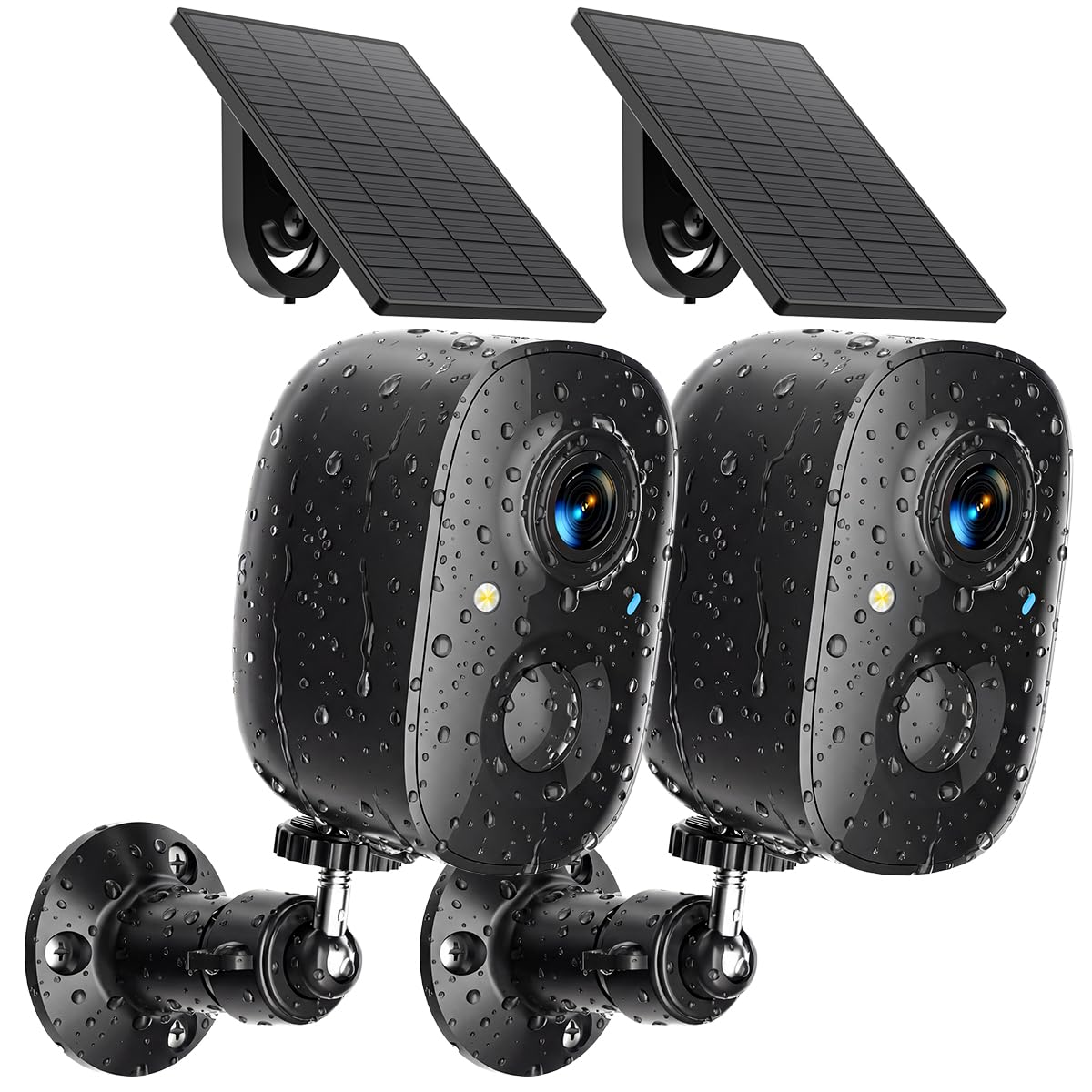
These solar-powered cameras need just 2 hours of direct sun a day to run continuously—no wiring, no recharging, and no monthly fees for the AI detection that distinguishes people from pets.
If you want to place cameras far from any outdoor outlet, the JESIOO CG6 two-pack is a smart starting point. Each camera has a built-in rechargeable battery paired with a high-efficiency solar panel, so as long as the panel gets about 2 hours of direct sunlight a day, the camera runs continuously without needing to be taken down for charging. At 2K UHD (Ultra High Definition) resolution, the daytime footage is sharp, and the built-in spotlight enables full-color night vision rather than simple black-and-white infrared. You can also use a 3x digital zoom to get a closer look at faces or license plates.
AI motion detection can distinguish between people, vehicles, and pets—a feature that typically requires a subscription on many other brands but is free here. When motion is detected, the camera can trigger a siren alarm and a spotlight to deter intruders. Two-way audio lets you talk to delivery drivers or visitors through the camera. Storage is handled by a microSD card (up to 128GB, not included) for local recording, or you can add an AI cloud subscription for cloud storage and smarter alerts with a 7-day free trial for new users. The IP65 weatherproof rating (Ingress Protection 65, meaning it resists dust and water jets) means it can handle rain, snow, and dust without issue. A reviewer noted that the solar panel works perfectly and eliminates the worry of frequent charging.
One trade-off is that the cameras connect only to 2.4GHz Wi-Fi, and the cloud subscription is needed if you want cloud backup beyond the free trial period. The dimensions are compact at 2.56 x 2.28 x 3.5 inches per camera, making them discreet enough for a fence post or eave.
Why it wins on value
- Solar panel keeps each camera charged with just 2 hours of sun a day, no wiring or recharging needed
- 2K UHD resolution and color night vision via built-in spotlight deliver clear day and night footage
- Two cameras included in the pack at a very affordable per-unit cost
- Free AI detection for people, vehicles, and pets without a subscription
The compromises
- MicroSD storage limited to 128GB per camera, which is less than the 512GB capacity of the Tapo models
- Cloud storage requires a subscription after the 7-day free trial, whereas the Tapo cameras offer a free cloud tier
- Only works with 2.4GHz Wi-Fi, so your phone or router must support that band for setup
Ideal for: Anyone installing cameras in spots without a power outlet—the solar panels keep them running with no ongoing maintenance cost.
One point to note: The 128GB SD card limit is lower than many competitors, so if you want weeks of continuously recorded footage, you may need to clear or manage it more often.
4. realhide 2K Security Cameras Wireless Outdoor (2-Pack) with Free Cloud Storage
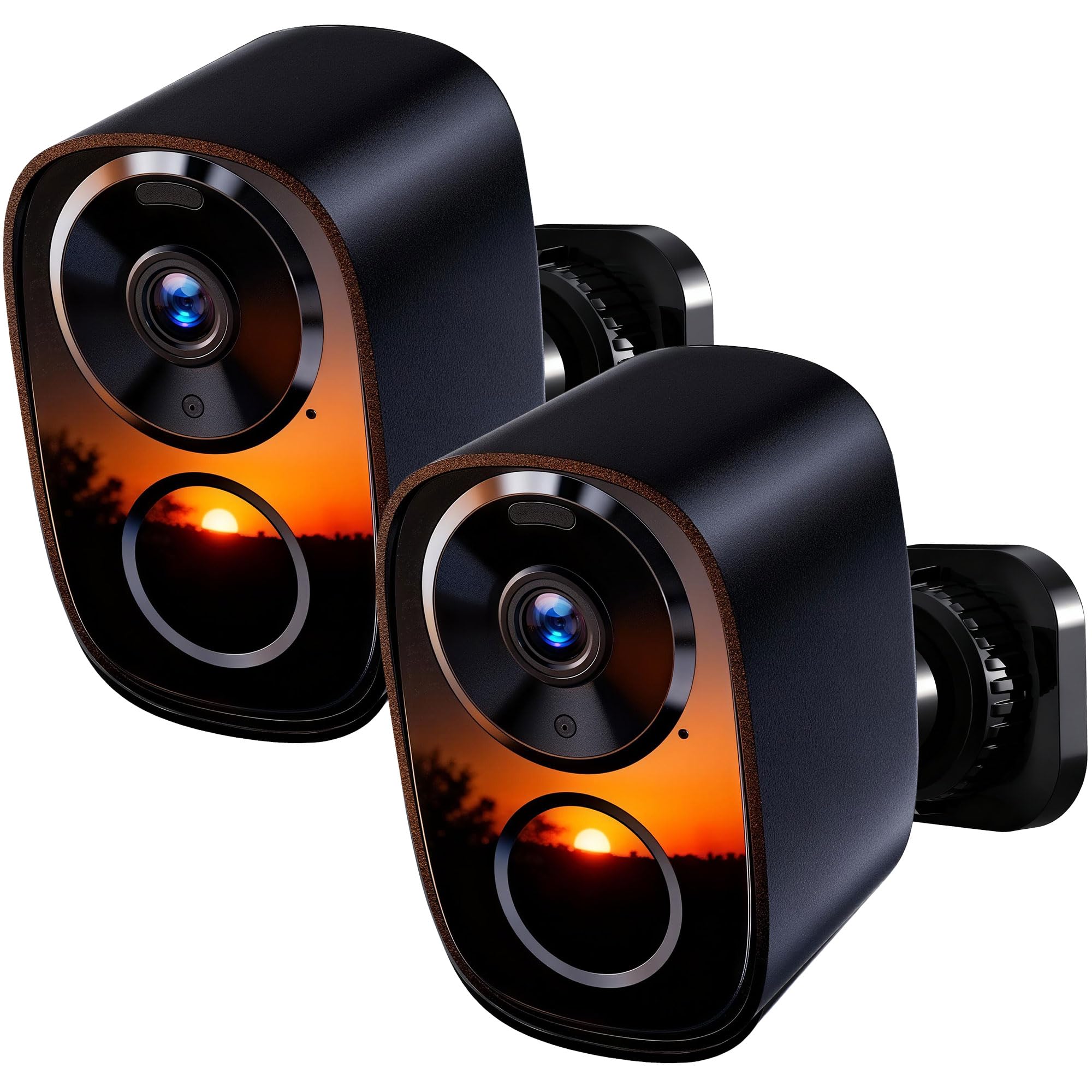
You get free 3-day cloud storage with no subscription needed—plus a battery that reviewers report stays at 97% after a full week of use, which is stronger than the JESIOO’s solar-dependent setup.
The realhide cameras stand out because they include free 3-day encrypted cloud storage for every event they record. You do not need to buy a microSD card or sign up for a monthly plan—the footage is saved remotely and accessible through the app for quick playback. That alone saves most users from the typical decision of either paying for a subscription or buying a memory card. The camera shoots in 2K (2000-pixel) resolution with a built-in spotlight for color night vision, so you can see full-color footage even in the dark. The cloud videos are saved in 720p to keep uploads fast, but the live stream is in full 2K quality.
Battery life is another strong point. The manufacturer claims the efficient battery and intelligent power-saving design allow the camera to last 1 to 5 months on a single charge, depending on how often it detects motion. One buyer mentioned that after a full week of use, the battery was still at 97% from the initial charge. If you want continuous power without ever taking the camera down, you can add a compatible solar panel (sold separately). The camera connects to both 2.4GHz and 5GHz Wi-Fi, which is a notable advantage over many battery-powered models that only support 2.4GHz. An IP66 weatherproof rating means it can handle rain, dust, and wind outdoors, and the built-in siren can be triggered remotely to scare off unwanted visitors.
One owner reported that the motion detection has no noticeable lag compared to a previous camera that was slow to alert, calling the night view “perfect.” The only catch is that the free cloud storage is limited to 3 days of clips, so if you need to keep footage for weeks at a time, you will need a TF card (a TransFlash card, the same as a microSD card, up to 256GB) or a solar panel if you want truly continuous operation.
What earns it this spot
- Free 3-day cloud storage for every event with no subscription needed—just set up and go
- Battery lasts 1 to 5 months per charge, and reviewers noted 97% remaining after a week of use
- Supports both 2.4GHz and 5GHz Wi-Fi networks, giving you more flexibility with your home router
- 2K video with full-color night vision via built-in spotlight for vivid nighttime footage
Trade-offs to know
- Free cloud storage is limited to 3 days, so older clips are automatically deleted unless you add a TF card for local backup
- Solar panel is sold separately, so unlimited battery life requires an extra purchase
- Cloud clips are saved in 720p rather than full 2K, though the live stream remains sharp
Grab this for: No-fuss cloud access without a monthly bill—the free 3-day storage and long battery life let you set up and monitor without thinking about subscriptions or cables.
Be aware that: If you need to keep footage longer than 3 days, you will need to install a TF card, and the solar panel is an extra cost if you want to avoid recharging.
5. GMK 2K Security Cameras Wireless Outdoor (4 Pack)

For the price of two singles, you get four 2K cameras that one customer observed took about an hour to set up—enough to cover every entry point on a typical home.
If you want to monitor multiple entry points, the GMK four-pack delivers four 2K (3MP, or 3 megapixels) cameras with color night vision, all powered by rechargeable batteries. You can cover your front door, back door, garage, and driveway with matching units in one box, which is much more convenient than buying individual cameras one at a time. Each camera has a 3.3mm focal length lens (a wide-angle lens) for a broad view, and the color night vision uses infrared and spotlight technology to keep footage in full color even in pitch-black conditions. One user highlighted that setup for four cameras took about one hour, and the video quality is “excellent with vibrant colors day and night.”
Battery life is strong—the manufacturer states the cameras can last 1 to 6 months on a single charge and support up to 3,000+ motion triggers before needing a recharge. That is enough for most homes, and when you do need to recharge, the process takes 6 to 8 hours. The VicoHome app manages all four cameras from one interface, and you can share view-only access with family members. Storage is handled through a microSD card or a cloud subscription. The cameras have an IP65 weatherproof rating for outdoor use and work only with 2.4GHz Wi-Fi.
The catch is that there is no included solar charging option, so you will need to take each camera down to recharge it a few times a year depending on activity levels. The cloud subscription is also required for remote cloud backup, though you can use local SD storage without any monthly fee. Owners mention that the motion detection is very sensitive and can trigger notifications from passing cars or wind-blown branches, so you may want to fine-tune the motion zones.
The system advantage
- Four 2K cameras in one box cover multiple angles at a lower per-unit cost than buying singles
- Color night vision via infrared and spotlight keeps every camera view in full color after dark
- Battery lasts up to 6 months and handles over 3,000 motion triggers per charge, reducing maintenance
- Smart Privacy Sleep Mode lets you schedule when cameras are active vs in deep sleep for privacy
What to plan for
- No solar panels included, so you will need to recharge each camera every 1 to 6 months
- Connects only to 2.4GHz Wi-Fi, which may require adjusting your router settings if you have a mesh system
- Sensitive PIR (passive infrared, a heat-sensing motion detector) motion detection may produce false alerts from cars or animals unless you tweak the detection zones
Perfect for: Covering a whole property at once—the four-camera kit pairs well with a single microSD card per camera to avoid any monthly fees for home security.
Just be ready for: Recharging each camera a few times each year, and setting up motion zones to reduce notifications from street traffic or swaying trees.
Understanding the Specs
Resolution: 1080p vs 2K
Resolution refers to the number of pixels in the video image. 1080p (1920 x 1080 pixels) is the standard for clear, watchable footage—good for seeing general activity and faces from a few feet away. 2K (roughly 2560 x 1440 pixels or 4MP) packs about 1.8 times as many pixels, which lets you zoom in digitally on a face or license plate without the image turning into a blur. If the camera will be far from the action or you want to see small details, 2K is worth the extra cost.
Night Vision: Range and Color
Night vision range tells you how far the camera can see clearly in total darkness. A 30-foot range works for a porch or small yard, while a 98-foot range covers a long driveway or large backyard. Standard night vision uses infrared LEDs to produce black-and-white footage. Color night vision adds a white spotlight to the camera, illuminating the scene so that faces, car colors, and clothing details stay in vivid color even at night. Color night vision consumes more power and may attract attention to the camera, but it gives you a much clearer picture of what happened.
Pan/Tilt vs Fixed Camera
A pan/tilt camera has a motorized head that rotates from side to side (pan) and up and down (tilt). This lets one camera cover a wide area that would otherwise require two or three fixed cameras. You can steer the camera from your phone or set it to automatically track motion. The trade-off is that the motor can make a faint sound when moving, and these cameras are typically wired rather than battery-powered because the motor draws more power. Fixed cameras are simpler, quieter, and easier to set up on battery power, but they need to be pointed exactly where you want them at installation time.
Storage: SD Card vs Cloud
Local storage uses a microSD card inside the camera. You buy the card once, and it records footage continuously or when motion is detected. The footage is yours, but if the camera is stolen, the card goes with it. Cloud storage sends footage over Wi-Fi to the manufacturer’s servers, so it is safe even if the camera is gone. Most cloud plans charge a monthly fee, though some cameras offer a free tier that saves a few days of motion clips. The best approach is to look for a camera that supports both: start with an SD card for free local recording, and add cloud storage later if you want the extra security of off-site backup.
FAQ
Do I need a subscription for a cloud security camera?
Will a cloud security camera work without internet?
How long do battery-powered security cameras last?
Can I use a wireless security camera without a solar panel?
What is the difference between color night vision and infrared night vision?
Do all cloud security cameras work with Alexa or Google Assistant?
Can I mount a wired camera without a nearby power outlet?
How many cameras do I need for my home?
What is the best resolution for a security camera?
Can I share camera access with my family?
Final Thoughts: The Verdict
Across the board, the best cloud security cameras winner is the Tapo C120 because it delivers sharp 2K detail, color night vision, and free AI detection at a price that undercuts most competitors while offering both local and cloud storage flexibility. If you need to cover a large outdoor area without a second camera, grab the Tapo C500 with its 360° pan, tilt, and 98-foot night vision range. And for a full property system, the GMK 4-pack gives you four 2K cameras in one box so you can monitor every entry point without juggling multiple brands or purchases.
How We Picked
We do not accept paid placement. Every pick is matched to a real buyer and a real use-case; we do not hands-on test units.
Sources & Methodology
Specifications: manufacturer listings and product documentation. Review insights: verified customer reviews, as of July 2026. Pricing: not shown on this page (it changes often); check the current price via the retailer link.
As an Amazon Associate, WellFizz earns from qualifying purchases. This does not affect which products we feature.

Mo Maruf
I created WellFizz to bridge the gap between vague wellness advice and actionable solutions. My mission is simple: to decode the research and give you practical tools you can actually use.
Beyond the data, I am a passionate traveler. I believe that stepping away from the screen to explore new environments is essential for mental clarity and physical vitality.