Our readers keep the lights on and my smoothie glass nicely filled. As an Amazon Associate, I earn from qualifying purchases.
Specs are compiled from manufacturer listings and verified buyer reviews and can change over time — please confirm the key details on the product page before buying.
Finding cloth scissors that actually cut fabric cleanly—without snagging, fraying, or giving you hand cramps mid-project—can feel like a hunt. Some pairs arrive sharp but dull fast, while others are heavy enough to wear you out before you finish a hem. This guide walks you through six serious contenders, from spring-assisted shears that reduce hand fatigue to forged-steel blades built to handle denim and canvas.
I’m Mohammad Maruf — the founder and writer behind WellFizz. This guide is built by comparing the manufacturers’ published specifications and the patterns across verified customer reviews, so you get each pick’s real strengths and trade-offs instead of marketing spin.
Whether you are a dressmaker, a quilter, or just tired of reaching for the kitchen drawer, the right pair means the difference between a clean line and a torn edge. Here is my detailed look at the best cloth scissors for real sewing work and everyday use.
Quick Picks
- Fiskars Easy Action Scissors — Top Performer
- Gingher Featherweight Bent Handle Scissors — Premium Pick
- LIVINGO Professional Sharp Fabric Scissors — Best Value
- Fiskars RazorEdge Fabric Scissors — Reliable Choice
- Gingher Scissors Knife-Edge Dressmaker Shears 7″ — Heavy Layers
- Professional Tailor Scissors Heavy Duty — Budget Champion
How To Choose The Best Cloth Scissors
The right fabric scissors come down to three things: the blade material and coating, the handle shape and grip, and the overall weight and balance. A pair that is too heavy strains your wrist, while a pair with a loose pivot snags mid-cut. Here is what to check before you buy.
Blade Steel and Edge Retention
High-carbon steel keeps a razor edge longer than basic stainless, but it can rust if not dried. Titanium coatings add rust resistance and reduce friction, helping the blades glide through multiple fabric layers without sticking.
Handle Design and Comfort
Bent handles let the blade stay flat against your cutting surface, which gives you cleaner lines. Ergonomic or spring-assisted handles reduce the work your thumb has to do — a big deal if you are cutting for more than a few minutes.
Weight and Balance
Heavier shears cut through thick materials like denim or canvas with less effort, but they can fatigue your hand over a long session. Lighter pairs work better for detailed trimming and all-day quilting, as long as the blade steel is still sharp.
Quick Comparison
| Model | Best For | Blade Material | Weight | Handle Type | Amazon |
|---|---|---|---|---|---|
| Fiskars Easy Action Scissors | Reducing hand fatigue | Stainless Steel | Not listed | Spring-assisted, bent | Amazon |
| Gingher Featherweight | Lightweight precision | Stainless Steel | 0.2 pounds | Bent, ergonomic | Amazon |
| LIVINGO Titanium | Anti-rust durability | Forged Steel, Titanium Coated | 152 grams (5.36 oz) | Rubber ergonomic | Amazon |
| Fiskars RazorEdge | Clean cuts to the tip | Stainless Steel | 0.12 kg (4.2 oz) | Ergonomic SoftGrip | Amazon |
| Gingher Dressmaker Shears | Multiple layers, heavy fabric | Stainless Steel | 5.12 ounces | Bent, chrome-over-nickel | Amazon |
| Professional Tailor Scissors | Budget-friendly cut | High Carbon Steel | Not listed (hefty feel) | Rubber comfort-grip | Amazon |
In‑Depth Reviews
1. Fiskars Easy Action Scissors, No. 8, Spring-Assisted & SoftGrip Bent Handle

The spring-loaded shears that do the thumb-work for you on long cutting days.
If your hands ache after a sewing session, the spring-assisted design on these Fiskars is the feature you want. A gentle spring pushes the blades back open after each cut, so you are only squeezing to close — your thumb and fingers do far less work than with a standard pivot. This keeps hand fatigue low even when you are trimming all day, and buyers report they are especially helpful for arthritic hands.
The bent handle keeps the fabric flat on your cutting surface, giving you clean, controlled tabletop cuts. And unlike most fabric shears, these work for both right- and left-handed users because of the ambidextrous design. The precision-ground stainless steel blades hold their edge well, cutting cleanly to the tip without snagging. Unlike the simple ergonomic handle on the LIVINGO, the spring mechanism here actively reduces muscle effort on every single cut.
One reviewer noted they use these on their horse’s mane, which says a lot about their durability on coarse material. They are lightweight and far easier on your hands than traditional heavy shears.
What Makes It Stand Out
- Spring-assisted action opens blades for you, reducing hand strain
- Bent handle keeps fabric flat for precise cuts
- Works for both right- and left-handed users
- Stainless steel blades hold a sharp edge
One Thing to Know
- Handle is plastic and metal, not a full rubber grip
Best for all-day cutting: If you have long sewing sessions or hand pain, this is the pair to reach for — the spring assist makes a real difference.
Consider something else if: You prefer a heavier, all-metal feel; these are noticeably light and plastic-handled.
2. Gingher Featherweight Bent Handle Scissors – 8″ Stainless Steel Shears

The featherlight shears that still cut through layers like a heavyweight.
At only 0.2 pounds, these Gingher Featherweights are nearly weightless in your hand, yet they slice through multiple layers of fabric with ease. The secret is the premium forged steel blades paired with a glass-filled nylon frame — strong where it matters, light everywhere else. The bent handle design holds the fabric flat for smooth cutting, which is a big help when you are following a pattern line.
Owners mention these are “so lightweight” and “make crisp, clean cuts every time,” making them a favorite for quilters and dressmakers who cut a lot. One reviewer even mentioned using a previous pair as kitchen scissors for years without them going dull — until they broke the tip on a paint can. That kind of edge retention is rare. They come with a full lifetime warranty, which speaks to the confidence Gingher has in their craftsmanship.
Unlike the heavier Fiskars RazorEdge (0.12 kg) or the weighty Gingher Dressmaker Shears, the Featherweight excels when you need to cut for hours without your hand tiring. The steel blades and black nylon handles are both durable and stylish.
The Payoff
- Extremely lightweight at 0.2 pounds for fatigue-free cutting
- Forged steel blades stay sharp exceptionally long
- Bent handle design for accurate tabletop cuts
- Full lifetime warranty included
The Catch
- Not ideal for extremely heavy materials like thick leather
Ideal for quilters and detail work: If you cut fabric for hours each week and want something that disappears in your hand, this is your pair.
skip it if: You need to regularly cut through heavy denim stacks or leather — the featherweight frame isn’t built for that.
3. LIVINGO Professional Sharp Fabric Scissors – Titanium Coated Forged Steel, 9.5 Inches

A titanium-coated workhorse that resists rust and costs less than a takeout lunch.
You get extra reach for cutting large pattern pieces with these LIVINGO shears at 9.5 inches long. The titanium coating (a hard, non-stick layer) resists rust and corrosion better than bare steel, and it reduces friction so the blades slide through fabric without sticking or snagging. The forged steel body makes them noticeably hefty — customers note they are “sharp, heavy-duty scissors” that deliver “clean, precise cuts on fabric without snagging.”
The rubber ergonomic handles provide a soft, secure grip, and reviewers point out the handles are “comfortable for long use.” At 152 grams (about 5.36 ounces), they are heavier than the Gingher Featherweight but lighter than the all-metal Gingher Dressmaker Shears. One buyer mentioned these perform better than their multiple pairs of Fiskars, calling them “nicely balanced.” The 9.5-inch length and 3.46-inch width give you roughly 17% more length than the 8.12-inch Fiskars RazorEdge, so you get more blade stroke per cut.
They are a right-handed only design, so lefties should check out the ambidextrous options. Another thing to note: the soft rubber handles can attract lint over time, but they clean up easily with a damp cloth.
Why It Squares Up
- Titanium coating prevents rust and adds smooth glide
- Forged steel is strong and long-lasting
- Comfortable rubber grip for extended sessions
- Great price for the build quality
The Limitation
- Right-handed only — not for left-handed users
Smart money move: If you want anti-rust performance and a solid forged steel build without spending more, this is the one to grab.
Look elsewhere if: You are left-handed or prefer a lighter, spring-assisted action.
4. Fiskars RazorEdge Fabric Scissors, Heavy Duty Fabric Shears, 8″, White/Orange
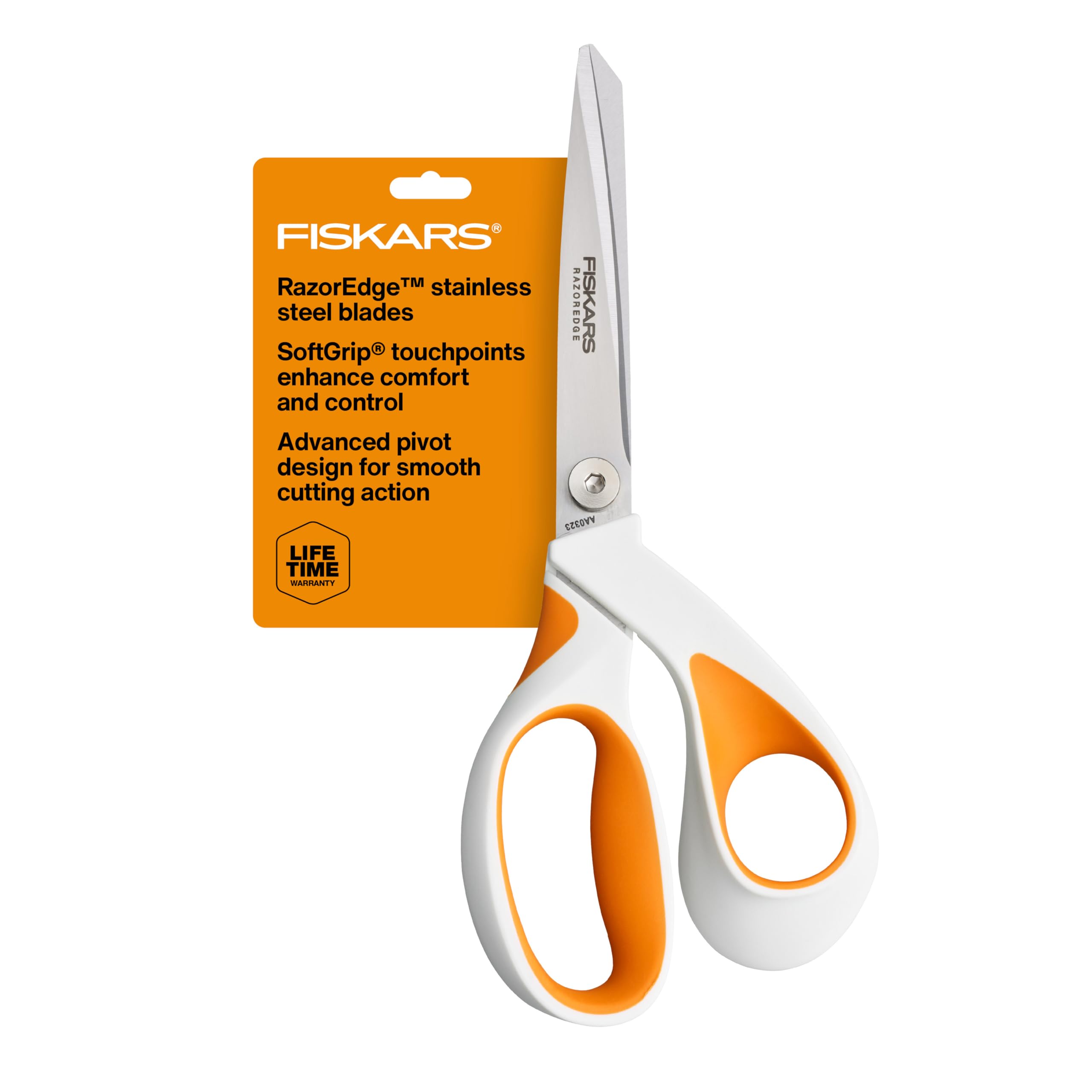
Ultra-sharp stainless steel blades with a pivot that glides through fabric like butter.
What sets the RazorEdge apart is the advanced pivot design — it delivers an exceptionally smooth cutting action that buyers confirm works “really great” on double layers of fabric. The premium-grade stainless steel blades are precisely honed to keep their edge all the way to the tip, so you never have to stop and re-cut the last inch of a seam. The thumb and finger loops have ergonomic sculpting that matches the natural shape of your hand, and the SoftGrip touchpoints add comfort and steady control.
At just 0.12 kg (about 4.2 ounces), these are lighter than the 152g LIVINGO shears, making them easier to maneuver for long projects. One owner reported they bought these to replace an old pair that “just wasn’t doing the job even after resharpening” and found the Fiskars “really great” with a smooth cutting action. The 8.12-inch length is slightly more compact than the 9.5-inch LIVINGO, which some users prefer for detailed work. A protective sheath is included for safe storage.
These are right-handed only, and the white/orange color scheme is bold if you prefer classic black. The pivot is sealed, so you cannot adjust tension if it loosens over time.
What Works
- Exceptionally smooth pivot action for easy cutting
- SoftGrip ergonomic handle reduces fatigue
- Sharp to the very tip for clean lines
- Comes with a blade cover for safe storage
What to Consider
- Right-handed design only
- Pivot tension is not adjustable
Grab these for: A smooth, no-nonsense cutting experience from a brand that sewing enthusiasts have trusted for years — the pivot action is noticeably fluid.
Pass if: You need ambidextrous or left-handed shears, or you prefer a heavier tool for cutting thick materials.
5. Gingher Scissors Knife-Edge Dressmaker Shears 7″

The classic all-metal shears that cut through four layers of duck canvas like room-temperature butter.
At 7 inches with a knife-edge blade, these Gingher Dressmaker Shears are built to handle heavy stuff. One reviewer confirmed they “cut 4-5 layers duck canvas easily,” making them ideal for upholstery, denim, and quilting projects where you need serious bite. The double-plated chrome-over-nickel finish protects against rust and gives them a classic silver look. At 5.12 ounces, they are heavier than the Featherweight above, but that weight helps power through tough stacks of material.
The bent handles keep your fabric flat against the cutting surface, which is crucial for pattern cutting. They are ambidextrous, so lefties can use them comfortably too. One reviewer who owns multiple Gingher pairs calls them “scissors with guaranteed quality” and notes they are made in Italy and sharpened in South Carolina. Unlike the plastic-handled Fiskars options, these are all-metal except for the bent handle shape, which gives them a premium, balanced feel in the hand. A protective sheath is included to keep the knife-edge safe.
Because they are all metal, they can show rust if left in a damp environment — one customer observed the risk depends on your climate. They are also heavier than the Featherweight, so they are better suited for cutting sessions on thick fabrics rather than all-day detail trimming.
Where It Excels
- Cuts through 4-5 layers of heavy fabric with ease
- Knife-edge blade stays sharp for over a year with fabric-only use
- Ambidextrous design works for left- and right-handed users
- Classic chrome-over-nickel finish resists corrosion
The Downside
- Heavier than the Featherweight — can tire your hand on long sessions
- All-metal can rust in humid environments if not dried
Best for tough fabrics: If you regularly cut through multiple layers of denim, duck canvas, or upholstery fabric, these shears are the workhorse you need.
Not for you if: You prefer ultra-light shears for all-day quilting — the all-metal construction is heavier than the Featherweight.
6. Professional Tailor Scissors Heavy Duty – Multi-Purpose Sewing Fabric Scissors (10 Inch) Pink
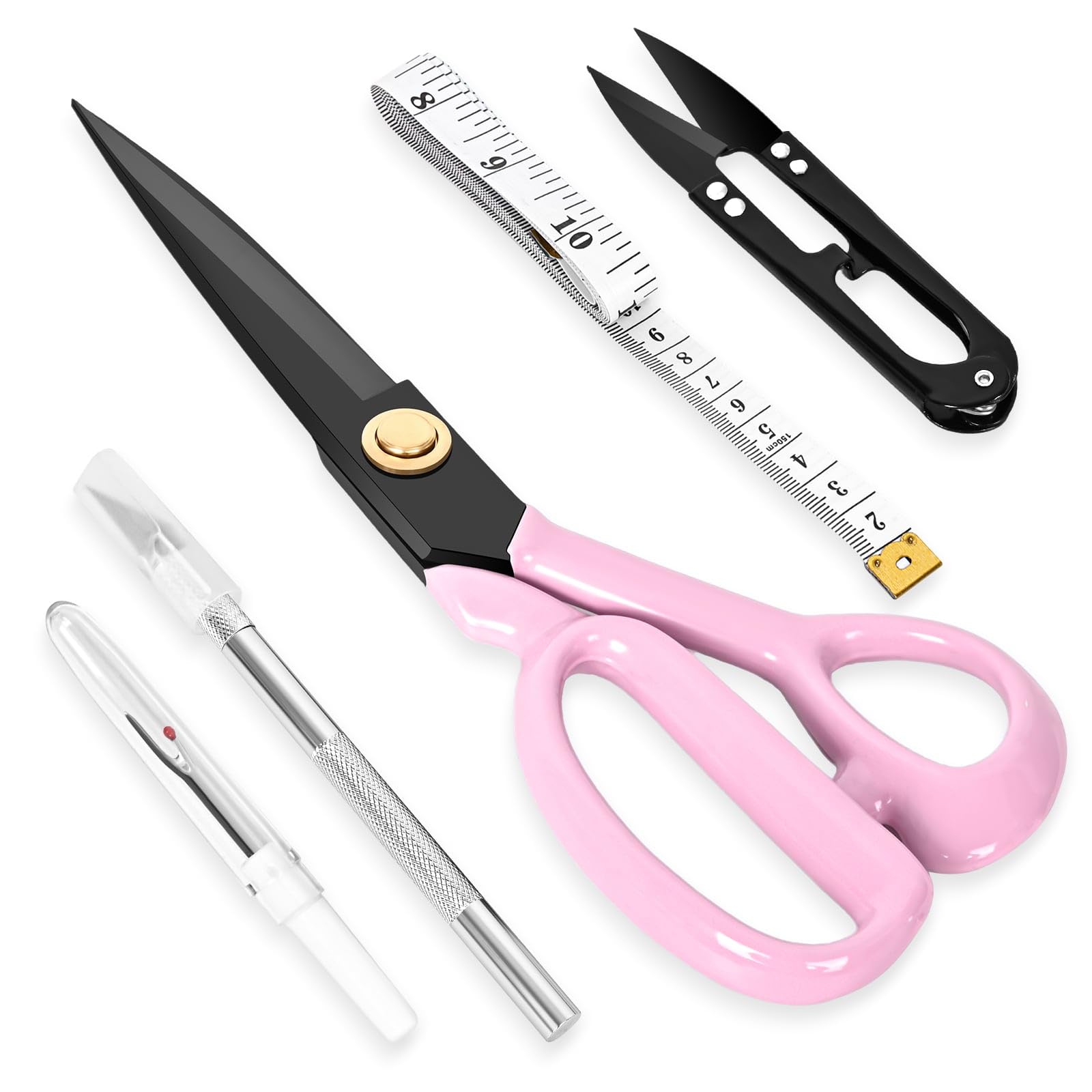
A 10-inch blade pair that is ridiculously sharp and arrives with the oil still on it.
These KNPXSET tailor scissors are a solid entry-level pick if you want maximum blade length for the lowest spend. At 10 inches, they give you the longest cutting stroke of any pair on this list, which is great for long pattern cuts in cotton, denim, silk, or canvas. The blades are crafted from premium hardened and tempered high-carbon steel, which holds a sharper edge than basic stainless — though it does need to be dried after use to prevent rust.
Shoppers say they “arrive oily (shows care)” and have “excellent heft and weight for cutting fabric.” The rubber comfort-grip handles help reduce hand soreness, and the ambidextrous design means lefties can use them too. One reviewer called them “ridiculously sharp” and said they “caused bleeding from a light touch,” so be careful when handling the blades. The included accessories like an extra measuring tape add value, though one review noted the flimsy plastic sheath tore immediately.
Unlike the Gingher Dressmaker Shears, which are forged from stainless steel and built to last years, these are a more budget-friendly option where you might see edge dulling sooner with heavy use. For light to medium sewing projects, however, they deliver impressive performance for the price.
What Makes It a Bargain
- 10-inch blade length is the longest in this guide — great for long cuts
- High-carbon steel is extremely sharp from the start
- Rubber grip handles reduce hand strain
- Ambidextrous and includes bonus accessories
The Compromise
- Plastic sheath is flimsy and tore immediately according to buyers
- High-carbon steel needs drying to avoid rust
A solid starter choice: If you are new to sewing or need a backup pair for coarse cuts, these deliver great sharpness and length without a big investment.
Consider upgrading if: You cut fabric daily or professionally — the budget steel and plastic sheath won’t last as long as the Gingher or Fiskars options.
Understanding the Specs
Blade Material
High-carbon steel holds the sharpest edge but can rust if left damp. Stainless steel resists rust but may not stay as razor-sharp as long. Titanium coatings add friction reduction and corrosion resistance, helping blades glide through fabric without sticking.
Bent vs. Straight Handles
Bent handles angle the blades so they sit flat against your cutting surface — this gives you cleaner, more accurate cuts because the fabric does not lift as you close the blades. Straight handles work fine for snipping thread or quick cuts, but for pattern cutting, bent handles are the better choice.
Spring-Assisted Action
Scissors with a spring mechanism gently push the blades back open after each squeeze, so your thumb does not have to work to open them. This significantly reduces hand fatigue during long cutting sessions and is especially helpful if you have arthritis or hand pain.
Weight and Balance
Heavier shears (over 5 ounces) muscle through thick layers with less effort but can tire your hand over time. Lighter shears (under 3 ounces) are better for detailed work and all-day use, as long as the blade quality is still high enough to cut cleanly without excessive force.
FAQ
Can I use cloth scissors on paper?
What is the difference between bent and straight handled scissors?
How often do I need to sharpen fabric scissors?
Can I sharpen cloth scissors at home?
Are titanium coated scissors better than stainless steel?
What size fabric scissors should I buy?
Can left-handed people use right-handed scissors?
How do I clean sticky residue off my scissors?
Why do my fabric scissors leave frayed edges?
Are expensive fabric scissors worth the money?
Final Thoughts: The Verdict
For most buyers, the best cloth scissors winner is the Fiskars Easy Action Scissors because the spring-assisted mechanism (a lever that opens the blades for you) dramatically reduces hand fatigue while still delivering clean, precise cuts on fabric. If you want featherlight precision for all-day quilting, grab the Gingher Featherweight Bent Handle Scissors. And for heavy-duty layers like denim and canvas, the Gingher Dressmaker Shears handle the thickest stacks without bending.
How We Picked
We do not accept paid placement. Every pick is matched to a real buyer and a real use-case; we do not hands-on test units.
Sources & Methodology
Specifications: manufacturer listings and product documentation. Review insights: verified customer reviews, as of July 2026. Pricing: not shown on this page (it changes often); check the current price via the retailer link.
As an Amazon Associate, WellFizz earns from qualifying purchases. This does not affect which products we feature.
Related Guides

Mo Maruf
I created WellFizz to bridge the gap between vague wellness advice and actionable solutions. My mission is simple: to decode the research and give you practical tools you can actually use.
Beyond the data, I am a passionate traveler. I believe that stepping away from the screen to explore new environments is essential for mental clarity and physical vitality.