Our readers keep the lights on and my smoothie glass nicely filled. As an Amazon Associate, I earn from qualifying purchases.
Specs are compiled from manufacturer listings and verified buyer reviews and can change over time — please confirm the key details on the product page before buying.
Most people grab a white bedsheet for a makeshift projector screen, but that usually ruins the picture. A real projection cloth reflects light evenly across the whole surface and blocks light bleeding through the back, so your movie looks punchy, not washed out. The material you pick — polyester, PVC-coated textile, or high-contrast grey vinyl — needs to fit your room and your projector’s brightness without costing too much.
I’m Mohammad Maruf — the founder and writer behind WellFizz. This guide is built by comparing the manufacturers’ published specifications and the patterns across verified customer reviews, so you get each pick’s real strengths and trade-offs instead of marketing spin.
The best cloth for projector screen should arrive without wrinkles, stay taut when hung, and deliver better contrast than a blank wall. Here are the six fabrics that earned a spot after looking at what thousands of actual owners experienced.
Our Picks at a Glance

How To Choose The Best Cloth For Projector Screen
The material is the most important part. A good projection cloth needs a tight weave or a coating that bounces light back evenly — not a loose weave that scatters it. You also need something that hangs flat without creases, because a wrinkled screen ruins the image no matter how good your projector is.
Material type: polyester vs PVC
Polyester fabrics are lightweight, washable, and foldable. That makes them great for portable setups you take to the backyard or a campsite. PVC-coated textiles (polyvinyl chloride-coated) are heavier and more rigid. They resist stretching over time, so they suit permanent or semi-permanent DIY frames. PVC also blocks light penetration better than polyester.
Black backing and contrast
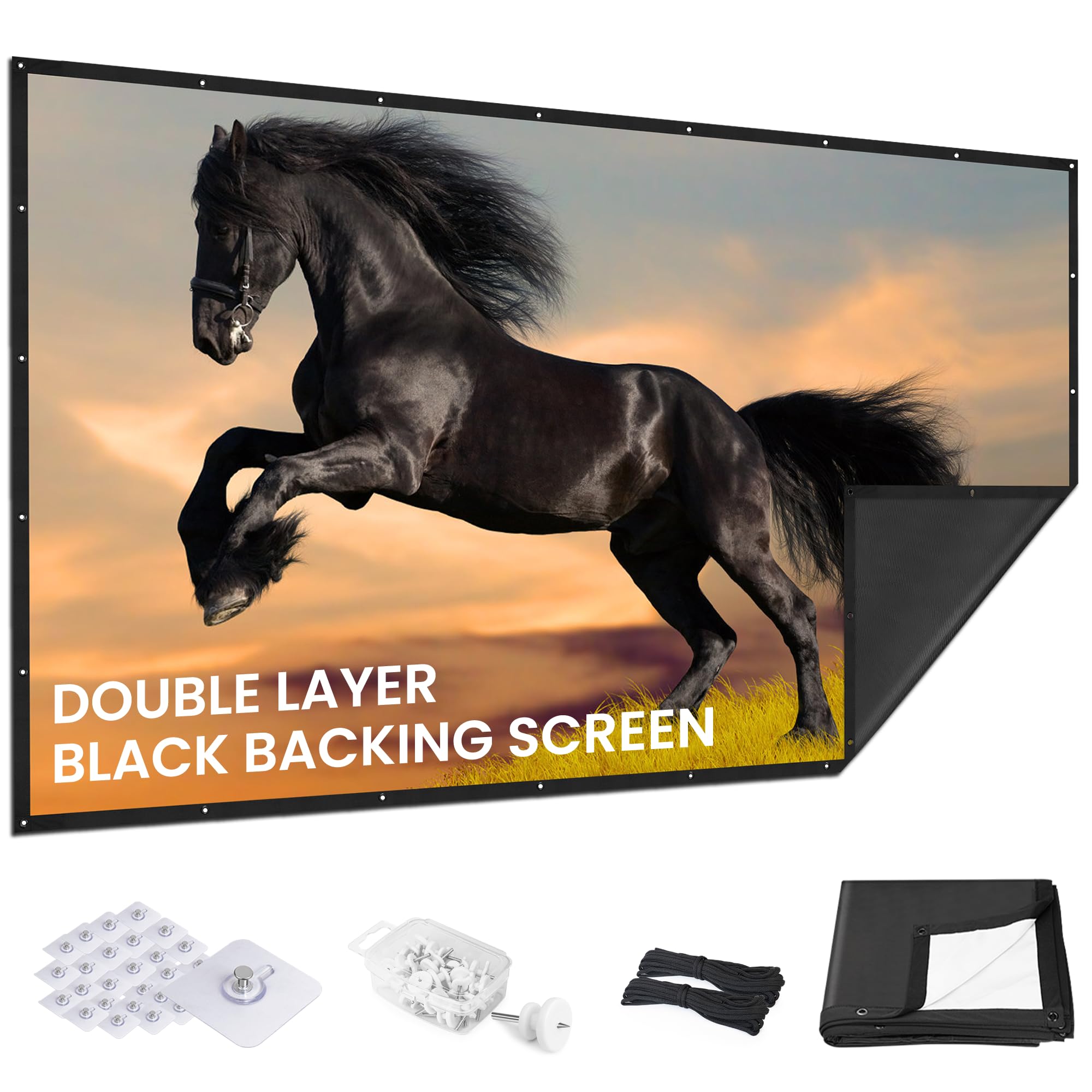
A black backing is a dark layer on the rear of the fabric that stops light from shining through the screen. This matters most if your projector sits behind the screen (rear projection) or if ambient light hits the back of the fabric. Without it, the image looks faded and grey.
Gain and viewing angle
Gain measures how much light the screen reflects toward you. A gain of 1.0 is neutral — it does not amplify or reduce the projector’s brightness. Higher gain (1.2–1.5) makes the image brighter but narrows the viewing angle (the widest angle you can sit off-center and still see a clear picture). A 160-degree viewing angle means almost anyone in the room gets the same brightness.
Quick Comparison
| Model | Best For | Material | Screen Size | Viewing Angle | Amazon |
|---|---|---|---|---|---|
| Mdbebbron 120 inch★ Best Overall | Best Overall | Polyester | 120″ / 104″x58″ | — | Amazon |
| IOLIEO 84 inchBest Value | Best Value | Polyester | 84″ / 73″x41″ | 180° | Amazon |
| Pyle 50 inch Tripod | Compact Travel | Matte White Fabric | 50″ / 40″x30″ | 160° | Amazon |
| AAJK 150 inch | Large Portable | Polyester | 150″ / 124″x72″ | 160° | Amazon |
| Yescom 177 inch PVC | DIY Build | PVC Coated Textile | 177″ / 154″x86″ | 160° | Amazon |
| Elite Screens CineGrey 135 inch | High Contrast | Multi-layer PVC | 135″ / 124″x70″ | 160° | Amazon |
In‑Depth Reviews
1. Mdbebbron 120 inch Projector Screen
Our pick — 4.5★ from 39,500+ verified ratings; the strongest balance of quality and price.
Tens of thousands of owners say this cloth really arrives without creases — a rare promise that holds up in real life.
This screen shows that a budget fabric can outperform expectations. It is made from natural polyester, which is thick and smooth. Buyers report it truly arrives without creases. Even if it picks up folds during storage, a quick pass with a hairdryer on low heat removes them. The matte surface (a non-shiny finish) reflects light evenly, so movies, game consoles, and presentations look sharp without hotspots — bright spots caused by uneven reflection.
Setup is simple. Strong reinforced eyelets (metal-ring holes) let you hang it with hooks, nails, rope, or double-sided tape. It weighs 1.7 pounds, light enough to fold into a backpack. The 120-inch diagonal (104 by 58 inches) gives a cinematic scale for living rooms or backyards. Owners consistently call the picture bright and clear. The material is machine-washable if it gets dirty. The recurring theme in buyer accounts: the no-wrinkle fabric is real, the image is sharp, and the value is tough to top.
What wins people over
- Genuinely wrinkle-free polyester fabric — folds flat after storage
- Large 120-inch viewing area (104 by 58 inches) without high cost
- Machine-washable and lightweight at 1.7 pounds
- Versatile mounting with strong eyelets and included hardware
Where it falls short
- Included strings and connectors are not strong enough for windy outdoor use — best after sunset or indoors
- Adhesive hooks may fail on textured surfaces like stucco
Grab it for: Anyone who wants an easy, portable, wrinkle-free screen for indoor movies or calm outdoor nights at a price that leaves room for a better projector.
Think twice if: You need a rigid, permanently taut surface — this is foldable fabric, not a tensioned frame.
2. IOLIEO 84 inch Projector Screen
This 84-inch cloth gets better contrast than the Mdbebbron because it adds a black backing layer the competition leaves out.
The black backing is the standout feature. It stops light bleed — the washout that happens when projector light passes through thin fabric — so the image keeps its contrast even with a lamp on in the room. The viewing angle hits 180 degrees, which means every seat gets the same brightness without the picture dimming at the edges.
Buyers rate the build quality and picture quality highest among all the aspects mentioned. The material is foldable, machine-washable, and resists wrinkles. The included accessories let you install it with sticky hooks, invisible nail hooks, ropes for trees, or a DIY PVC frame (polyvinyl chloride pipe frame). Owners mention that the black backing noticeably improves image quality, and that it works well for outdoor movie nights. The occasional downside: hanging it without a frame makes it tricky to keep perfectly stretched, which can cause a slight wrinkle on one side — a frame solves it.
Contrast champion: The black backing delivers visibly deeper blacks than any white-only fabric at this price — a real upgrade if your projector has modest contrast.
Reach for this if: You want noticeably better contrast than a plain white screen, with a full 180-degree viewing angle and easy machine-washable care.
Look elsewhere if: You need a no-frame, perfectly taut surface right out of the package — a lightweight frame or careful stretching is recommended.
3. Pyle 50-Inch Outdoor Projector Screen with Tripod Stand
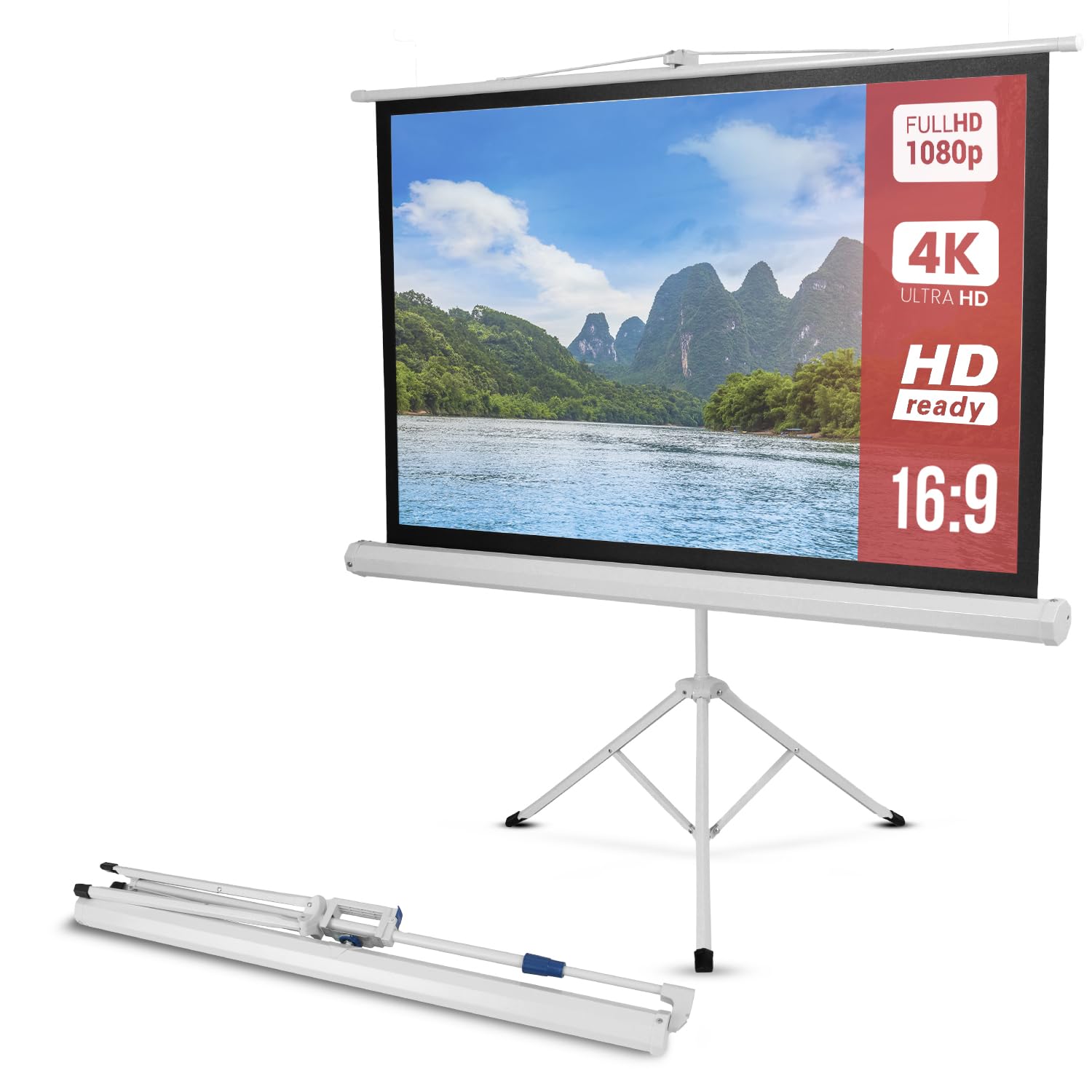
The tripod-mounted roll-up that sets up in minutes and folds into a case small enough for a trunk — no wrinkles, ever.
This is the go-to for anyone who needs a screen that disappears between uses. It rolls out of an aluminum alloy case, attaches to a sturdy tripod, and is ready to go — customers note it takes under two minutes. The matte white fabric delivers clear, lump-free images with no distortion. The black masking border (a dark frame around the screen edge) helps frame the picture precisely for a cleaner look.
Picture quality is the top-rated aspect by owners, and ease of setup is close behind. The roll-up design means it stays wrinkle-free by nature — no folding, no creases. The tripod height adjusts from 25 to 48 inches. The screen is rigid enough that it does not flap in a breeze. A few reviewers point out that the maximum usable height is slightly lower than stated, so check your viewing angle if you need the screen improve for a crowd. It comes with a carrying case, making it genuinely portable for classrooms, patios, and campsites.
Travel-friendly perks
- Under-2-minute setup with built-in tripod — no hardware to lose
- Roll-up design prevents wrinkles permanently
- Sturdy enough for outdoor use without flapping
- Compact carrying case included for storage
Compact-size trade-offs
- 50-inch diagonal (4:3 ratio) is smaller than most home-theater builds — best for intimate groups or classrooms
- Maximum height is lower than the spec suggests; verify your setup before buying
Best for: Portable use — classroom lessons, patio movie nights, or any scenario where you set up and tear down frequently.
skip it if: You want a large cinematic experience; the 50-inch size is better suited to small groups and presentations.
4. AAJK 150in Outdoor Projector Screen with Stand

A 150-inch giant that goes up in five minutes with no tools — but it needs a calm day to stay upright.
This screen is for the backyard cinema enthusiast who wants a huge image without building a permanent frame. The fabric is soft, elastic polyester that stays wrinkle-free even after folding. The freestanding frame uses lightweight aluminum poles and plastic connectors — no tools required. Shoppers say that two people can assemble it in around five minutes. The included carry bag makes transport easy.
At 160 degrees the viewing angle is wide enough for everyone on the lawn. The double-sided fabric (designed to block light from both directions) blocks most light bleed, delivering vibrant colors and visible night scenes. The aspect that gets the most praise is build quality, followed closely by ease of setup. The honest trade-off: the frame is best for indoor or calm outdoor use — wind can destabilize it, and some buyers report that plastic parts are fragile. Several recommend adding sandbags or stakes for outdoor stability. Buyers sum it up as excellent value if you keep it in a sheltered spot.
Massive scale, modest frame: The 150-inch image (124 by 72 inches) is genuinely cinematic, but the tripod legs and plastic joints work best on a patio or indoor space rather than a gusty field.
Grab it for: A huge, wrinkle-free screen that packs down for transport — ideal for deck movie nights or garage cinemas.
Think twice if: Your setup spot regularly catches wind; this frame needs calm conditions or additional anchoring.
5. Yescom 177″ 16:9 DIY Projection Screen Material

The raw PVC roll that DIY builders trust for a permanent, taut, pro-looking screen — you cut it to any size you want.
This is not a pre-assembled screen. It is a 9-pound roll of high-strength PVC-coated textile (polyvinyl chloride-coated fabric) measuring 154 by 86 inches (177-inch diagonal). It is for people who build their own frame. The matte white surface diffuses light uniformly and protects eyes, while the standard black back prevents light penetration. You cut it to the exact size you need, then stretch and staple it to a wooden frame (or directly to the wall).
Quality is the top-rated aspect by a wide margin. Owners consistently describe the fabric as thick, non-stretch, and free of ripples when installed properly. The 160-degree viewing angle keeps the image bright across a wide seating area. Buyers recommend stapling it directly to the wall for the flattest surface. Several mention that you can discard a creased end section if damage occurs during delivery — the roll is long enough to spare. The honest challenge: delivery tubes can dent the edges, and the material is heavy enough that a wooden frame is the safest method. It is not for quick setups — this is a weekend-project material that pays off with a professional-looking permanent screen.
DIY dream material
- High-strength PVC textile that resists stretching over time
- Cuttable to any size — make a custom screen for any frame
- Black backing eliminates light penetration completely
- Thick fabric stays flat when properly stapled or stretched
Not for casual users
- Requires a frame or wall mounting — no quick-clip portability
- Delivery tube can cause creases; inspect and cut to avoid damage
- Heavy (9 pounds) and rollable, not foldable — storage requires space
Best for: DIY builders who want a large, permanent, taut screen and are comfortable with a staple gun and a wooden frame.
pass on it if: You need a portable or ready-to-hang screen — this is a raw material, not a finished product.
6. Elite Screens Designer Cut CineGrey 135 inch
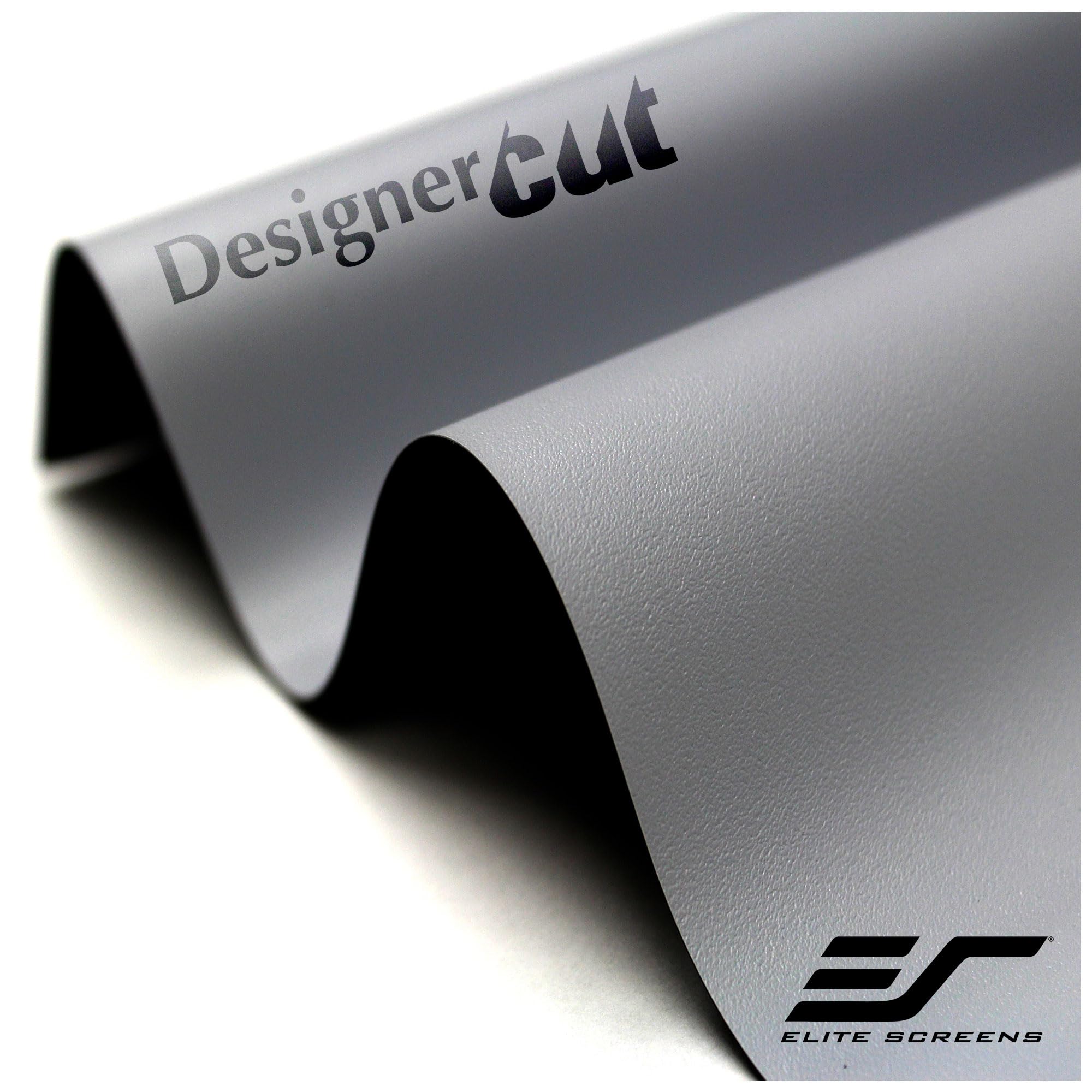
The grey PVC material boosts black levels for low-contrast projectors — a specialist fabric for critical viewers who want deeper darks.
This is a different type of projection cloth. Instead of a white surface, Elite Screens uses a grey multi-layer PVC (polyvinyl chloride) material called CineGrey with 1.0 gain — neutral, so it does not amplify or reduce brightness. The grey color absorbs ambient light better than white, which improves perceived black levels and color contrast. That is especially useful for DLP (digital light processing) and LCD (liquid crystal display) projectors that struggle with deep blacks. The black backing prevents any light penetration, and the 160-degree viewing angle keeps the image consistent across the room.
Picture quality is the highest-rated aspect among owners. The material ships rolled to avoid wrinkles. Owners confirm that a careful steam press removes any residual creases. Build a frame from lumber, wrap the material around it, and you get a screen that rivals much more expensive fixed-frame models. The material is also washable with mild soap. The downsides: the fabric is not perfectly uniform — a few owners mention ripples in bright uniform scenes. The stretchability is mixed, meaning it requires patience and two people to install without distortion. It is also not compatible with triple laser projectors, so verify your projector type before ordering.
Contrast specialist: The CineGrey material is the right choice if your projector produces decent brightness but weak blacks — the grey surface hides ambient light and makes dark scenes look three-dimensional.
Reach for this if: You have a DLP or LCD projector with mediocre black levels and you want a permanent DIY screen that boost contrast.
Look elsewhere if: You want a quick, simple to use install — this material rewards careful work and may show ripples if stretched unevenly.
Understanding the Specs
Viewing angle
This is the widest angle you can sit off-center and still see a bright, accurate image. A 160-degree viewing angle means people at the far left and right seats get roughly the same picture quality as the person in the middle. Narrower angles (around 120 degrees) force everyone toward the center.
Black backing
A black layer on the rear of the fabric prevents light from passing through the screen. Without it, projector light creates a glow behind the screen that washes out the front image — especially noticeable if the projector is behind the screen or if there is ambient light in the room.
FAQ
Can I machine wash a projector screen cloth?
Does a grey screen work better than a white screen?
How do I remove wrinkles from a projector screen cloth?
Can I cut projection screen fabric to a custom size?
What does a black backing do for image quality?
Do I need a stand or can I hang the cloth on a wall?
How long does a projector screen cloth last?
Is a 120-inch screen too big for a living room?
Final Thoughts: The Verdict
For most buyers, the cloth for projector screen winner is the Mdbebbron 120 inch because it delivers genuine wrinkle-free polyester, a huge cinematic image, and proven performance from tens of thousands of owners. If you want a black backing for better contrast without spending extra, grab the IOLIEO 84 inch. And for the DIY builder who wants a permanent, cut-to-size screen with pro-grade materials, the Yescom 177 inch PVC is the roll to start with.
How We Picked
We do not accept paid placement. Every pick is matched to a real buyer and a real use-case; we do not hands-on test units.
Sources & Methodology
Specifications: manufacturer listings and product documentation. Review insights: verified customer reviews, as of July 2026. Pricing: not shown on this page (it changes often); check the current price via the retailer link.
As an Amazon Associate, WellFizz earns from qualifying purchases. This does not affect which products we feature.
Related Guides

Mo Maruf
I created WellFizz to bridge the gap between vague wellness advice and actionable solutions. My mission is simple: to decode the research and give you practical tools you can actually use.
Beyond the data, I am a passionate traveler. I believe that stepping away from the screen to explore new environments is essential for mental clarity and physical vitality.