You want to sleep warm and comfortable on the ground without worrying about a puncture ruining your night. A closed cell foam pad is the simplest way to do that — it never deflates, never needs a pump, and just works. This guide compares five of the most popular options, from ultralight backpacking to budget car camping, so you can pick the one that matches your actual sleeping style and trip plans.
I’m Mohammad Maruf — the co-founder and writer behind WellFizz. This guide is built by comparing the manufacturers’ published specifications and the patterns across verified customer reviews, so you get each pick’s real strengths and trade-offs instead of marketing spin.
A closed cell foam sleeping pad is a simple, reliable layer of insulation and cushion between you and the cold ground. No valves, no pumps, no risk of a leak. The right one can mean the difference between a restless night and waking up ready for the trail.
How To Choose The Best Closed Cell Foam Sleeping Pad
Closed cell foam pads are simple — no valves, no pumps, no punctures — but picking the right one still comes down to a handful of key trade-offs. Here is what to look at before you buy.
R-Value: The Warmth Number
R-value measures how well the pad resists heat loss to the ground. A higher number means more insulation. For three-season camping (spring through fall), an R-value of 2.0 or 2.1 is enough to keep you warm down to around freezing, assuming you have a sleeping bag rated for those temps. If you camp in snow or below-freezing conditions, you may want to pair a foam pad with an inflatable pad for extra insulation, or look for a thicker foam pad with a higher R-value.
Thickness and Node Design: The Comfort Factor
Closed cell foam pads range from about 0.38 inches thick (very thin, like a yoga mat) to 0.78 inches or more. Pads with taller nodes — those egg-crate or hexagonal bumps — provide more cushion because the raised sections compress under your weight while the valleys stay stable. The catch is that thicker pads take up more space when packed, even when folded or rolled tightly.
Weight and Packed Size: The Backpacking Test
If you carry your pad on your back, every ounce and every cubic inch counts. Ultralight backpackers typically want a pad under 14 ounces that folds or rolls down to fit inside or strapped to a pack. For car camping, weight and packed size matter less, so you can prioritize thickness or width for better comfort.
Width and Length: The Fit Check
Most pads are about 72 inches long and 19 to 24 inches wide. A pad that is 20 inches wide works fine for side sleepers who stay on their back, but if you toss and turn or sleep on your side with arms stretched out, a wider pad (24 inches) prevents your elbows or knees from slipping off the edge onto the cold ground.
Quick Comparison
On smaller screens, swipe sideways to see the full table.
| Model | Category | Best For | Key Spec | Amazon |
|---|---|---|---|---|
| NEMO Equipment Switchback | Premium | Best overall warmth & comfort balance | R-Value 2.0 / 14.8 oz | Amazon |
| Featherstone Outdoor El Cordion | Premium | Highest R-value for insulation | R-Value 2.1 / 16 oz | Amazon |
| FOCHIER F | Mid-Range | Best value for portability & durability | 13.75 oz / 72″ x 20″ | Amazon |
| Stansport Pack Lite | Budget | Lightest weight for backpacking | 8.48 oz / 0.38″ thick | Amazon |
| BKS Foam Egg Crate | Value | Wide pad for side sleepers | 24″ wide / 11 oz | Amazon |
In‑Depth Reviews
1. NEMO Equipment Switchback Foam Sleeping Pad
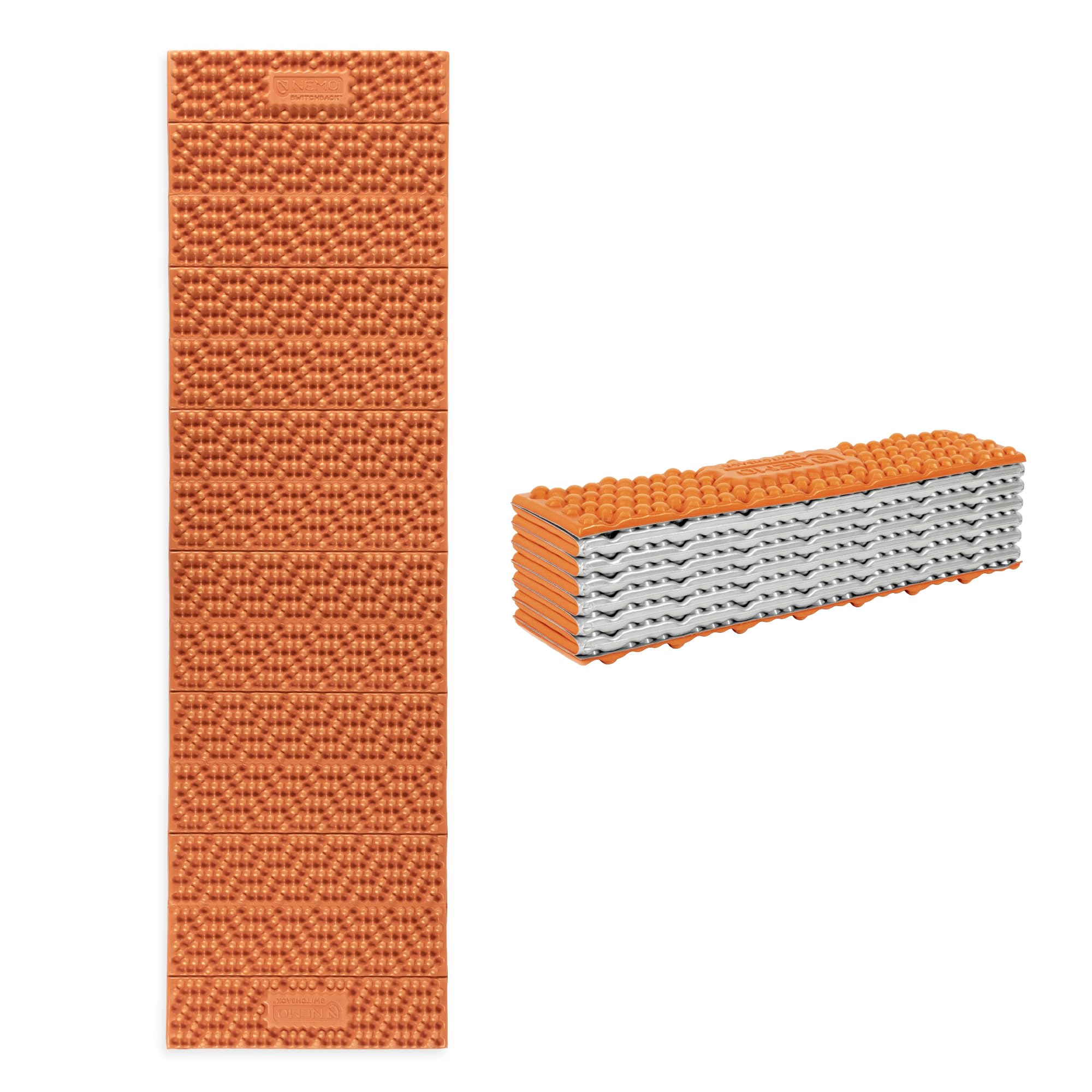
The NEMO Switchback beats the rest of the pads here on comfort per packed size — its hexagonal nesting pattern gives you taller, wider nodes (the raised bumps) that provide noticeably more cushion than basic egg-crate foam, yet it folds down to 20 by 5 by 5.5 inches. The pad uses dual-density Axiotomic foam, which means a soft top layer for comfort and a firmer bottom layer for support, plus a metallized thermal reflective film inside that bounces your body heat back at you so you feel warmer even on concrete or cold tent floors. Its R-value of 2.0 (a measure of how well it resists heat loss to the ground) keeps you warm down to about freezing. The pad weighs 14.8 ounces (0.42 kilograms), and reviewers report it blocks pressure points well enough for side sleepers to get a decent night’s rest. The honest limit is that, like any foam pad, it is less cushioned than an inflatable pad — if you are used to a thick air mattress, this will feel firm. But it is more reliable (no leaks), doubles as a sit pad, and comes with a lifetime warranty against defects. Confident verdict: the Switchback sets the standard for what a closed cell foam pad can be.
Why it’s great
- Tall hexagonal nodes provide noticeably better cushion than basic egg-crate foam pads
- Metallized film reflects body heat, boosting effective warmth
- Lifetime warranty from a proven outdoor brand
Good to know
- Less comfortable than an inflatable pad for those who prefer a plush feel
- Fold pattern takes up noticeable space on the outside of a pack
2. Featherstone Outdoor El Cordion Insulated R-Value 2.1 Sleeping Pad

The Featherstone El Cordion beats the NEMO Switchback on raw insulation, with an ASTM-tested (an industry standard test method) R-value of 2.1 — the highest on this list. That extra insulation comes from its irradiation cross-linked polyethylene foam plus a dual-density heat reflective film that traps body heat and circulates warmth. Buyers report that the R-value of 2.1 effectively blocks ground cold even during overnight trips in the eastern sierras, which makes it the pick for cold alpine trips or shoulder-season camping where ground temperatures hover around freezing. The hexagonal node design delivers 40% more coverage and height above the ground than traditional egg-crate pads, meaning your hips and shoulders get more clearance from rocks and roots. At 16 ounces, it is just 1.2 ounces heavier than the Switchback, but its folded dimensions are larger (22 by 5.5 by 5.5 inches), so it takes up more space strapped to your pack. A reviewer noted that the nubs are stiffer and more dispersed than on the NEMO Switchback, making it slightly less comfortable for side sleepers who want cushion under bony spots. Choose the Featherstone over the Switchback if you prioritize maximum warmth per ounce for cold-weather backpacking and don’t mind a stiffer feel under your hips.
Where it shines
- Highest R-value (2.1) among the pads reviewed, verified by ASTM testing
- Dual-density heat reflective film traps warmth effectively in cold conditions
- Limited lifetime warranty from a U.S.-based company
Worth noting
- Stiffer nubs feel less plush than the NEMO Switchback
- Folded size is larger, taking up more space on a pack
3. FOCHIER F Ultralight Closed Cell Foam Sleeping Pad

If you want a capable foam pad without spending premium money, the FOCHIER F hits a sweet spot — it offers a peanut-shaped accordion design that folds compactly, weighs only 13.75 ounces (0.39 kilograms), and uses IXPE foam (a dense, flexible closed-cell foam that is waterproof). One buyer called it “the best lightweight, compact foam pad in 7 years,” noting that it balances comfort and portability well enough to survive multiple Army field events without damage. The pad measures 72 inches long and about 20 inches wide, and its moisture-proof construction protects you from damp ground whether you use it solo or as a protective layer under an inflatable mattress. Reviewers highlight that it blocks rocks and twigs effectively, sets up instantly (no inflation required), and folds neatly with included bands for storage. Compared to the NEMO Switchback and Featherstone El Cordion, it delivers insulation and durability that hold up in demanding conditions (military training, rough alpine terrain) at a fraction of the cost. The FOCHIER F is for value-conscious backpackers who need a reliable, ultralight pad for three-season use and want to keep their budget in check.
What stands out
- Accordion folding design packs down smaller than rolled foam pads
- Extremely durable — holds up through military field events, per buyer reports
- Waterproof IXPE foam prevents moisture from seeping through
The trade-offs
- Slightly narrow for side sleepers who move around during the night
- No published R-value, so warmth is harder to compare directly
4. Stansport Pack Lite Camping & Backpacking Sleeping Pad

The single number that matters most in the ultralight closed cell foam pad category is weight — and at 8.48 ounces, the Stansport Pack Lite is the lightest pad here, beating the FOCHIER F by about 5.3 ounces and the Featherstone by about 7.5 ounces. That featherweight makes it a natural fit for gram-counting backpackers who need a minimal barrier between themselves and the ground without adding meaningful pack heft. The downside you accept at this weight is thickness — at only 0.38 inches (about the thickness of two stacked credit cards), this pad provides very little cushion on its own. Multiple owners mention that it offers decent insulation and moisture protection but feels like sleeping on the ground for average adults, especially on rocky or uneven tent sites. One reviewer noted that using it under a sleeping bag alone is rough, but paired with a sleeping bag and a tent footprint, they went “from 2-5 hours of sleep camping to nearly 8.” The Stansport is the right choice for ultralight hikers who already use an inflatable pad and want a reliable backup or a ground sheet, not for campers who need cushion for a good night’s sleep.
The upsides
- Extremely lightweight (8.48 oz) — least weight penalty in your pack
- Waterproof and puncture-proof closed cell foam provides reliable ground protection
- Straps included for easy roll-up storage and carrying
Keep in mind
- Very thin (0.38 inches) — offers minimal cushion on rough, rocky ground
- Works best as a backup or ground sheet under an inflatable pad, not as a primary sleep surface for most adults
5. BKS Foam Egg Crate Sleeping Folding Pad

At the entry-level price point, the BKS Foam Egg Crate pad gives you the widest sleep surface on this list — 24 inches across, which is 5 inches wider than the Stansport and the FOCHIER F pads. That extra width matters for side sleepers and toss-and-turners who don’t want their elbows or knees sliding off the pad onto cold tent floor. What you give up at this price is polished node design and thermal reflectivity. The egg crate pattern provides basic cushion, measuring about 0.78 inches thick at the peaks and 0.39 inches thick at the valleys, but it cannot match the hexagonal node comfort of the NEMO Switchback or the heat-reflective insulation of the Featherstone. One reviewer who used it for 10 days as a backup layer under a deflated air mattress said it “does the job nicely” as a thin cushion layer, but noted the pad is very thin for primary sleep use. The exact budget buyer this is perfect for: car campers who want a wide, cheap foam pad for occasional use, ultralight hikers on a tight budget who need a backup pad that packs small and weighs only 11 ounces, or anyone adding a foam layer under an inflatable pad for extra puncture protection and warmth without spending more than necessary.
Why we’d pick it
- Widest pad in the lineup (24 inches) prevents elbow and knee slip-off
- Only 11 ounces — lighter than the NEMO Switchback and Featherstone pads
- Egg crate peaks and valleys trap air for basic insulation from the ground
A few caveats
- Basic egg crate cushion is less comfortable than the hexagonal node pads from NEMO and Featherstone
- No metallized heat reflective layer, so warmth on cold ground is more limited
Understanding the Specs
R-Value (Insulation Rating)
R-value measures how well the pad resists heat loss through conduction to the ground. A higher number means you lose less body heat to the cold earth. An R-value of 2.0 to 2.1, which is the range covered by the NEMO Switchback and Featherstone El Cordion pads, is adequate for three-season camping down to around freezing (32°F / 0°C) when paired with an appropriate sleeping bag. If you plan to sleep on snow or in below-freezing temperatures, consider stacking a closed cell foam pad on top of an inflatable pad, or choose a foam pad with a higher R-value.
Closed Cell Foam
Closed cell foam is a dense, waterproof foam where each tiny air bubble is fully sealed off from the next one. That design means the foam does not absorb water (so it stays dry even on wet ground), it does not deflate or leak (unlike air pads that rely on valves and seals), and it provides consistent insulation by trapping still air inside the sealed cells. The trade-off is that closed cell foam is firmer than open cell foam or inflatable pads, so it provides less plush cushion by itself.
FAQ
Can I use a closed cell foam sleeping pad in winter or below freezing temperatures?
How do I clean and store my closed cell foam sleeping pad?
Is a closed cell foam pad more durable than an inflatable sleeping pad?
Final Thoughts: The Verdict
For the majority of shoppers, the closed cell foam sleeping pad winner is the NEMO Switchback because it delivers the best balance of warmth (R-value 2.0), comfort from its hexagonal nodes, and a lifetime warranty from a trusted outdoor brand. If you want the highest insulation rating and cold-weather capability, grab the Featherstone El Cordion with its R-value of 2.1 and ASTM testing. And for budget-conscious backpackers who need a durable, ultralight pad that folds compactly, the FOCHIER F is the smart mid-range value pick that holds up in demanding conditions.

Mo Maruf
I created WellFizz to bridge the gap between vague wellness advice and actionable solutions. My mission is simple: to decode the research and give you practical tools you can actually use.
Beyond the data, I am a passionate traveler. I believe that stepping away from the screen to explore new environments is essential for mental clarity and physical vitality.