Our readers keep the lights on and my smoothie glass nicely filled. As an Amazon Associate, I earn from qualifying purchases.
Specs are compiled from manufacturer listings and verified buyer reviews and can change over time — please confirm the key details on the product page before buying.
You want to hear every detail of your music without leaking sound into the room, and you need the noise around you to disappear without cranking the volume. That is exactly what closed-back headphones do—they use sealed earcups to keep your audio in and the outside world out. The challenge is that “closed back” covers everything from pro studio tools to gaming headsets, and the wrong pair can sound cramped, muddy, and disappointing.
I’m Mohammad Maruf — the founder and writer behind WellFizz. This guide is built by comparing the manufacturers’ published specifications and the patterns across verified customer reviews, so you get each pick’s real strengths and trade-offs instead of marketing spin.
The right closed back headphones will transform your listening for music, gaming, or studio work—and this guide breaks down the seven models worth your attention.
Our Picks at a Glance


How To Choose The Best Closed Back Headphones
Closed back headphones live in two worlds—professional monitoring and personal immersion. The first thing to decide is which world you need. Studio engineers prize a flat, uncolored frequency response (the range of bass, mids, and treble the headphones reproduce evenly) that reveals every flaw in a mix. Listeners and gamers often prefer a “fun” V-shaped signature (a sound with boosted bass and treble, but less midrange) for excitement. Neither is wrong, but the wrong flavor for your use case leads to disappointment.
Impedance and sensitivity: the power match
Impedance, measured in ohms (Ω), tells you how much electrical resistance the headphones present to your source. Low-impedance models (32Ω or less) are designed for phones, tablets, and laptops—they get loud without a separate amplifier. Higher-impedance models (150Ω or more) often sound cleaner and more detailed but need a dedicated headphone amp (a device that boosts the audio signal) or audio interface (a recording device) to reach their potential. A pair of 32Ω headphones will work plugged straight into your phone; a 150Ω pair will likely sound quiet and thin without an amplifier.
Driver size and materials: the sound engine
The driver (the small speaker inside each earcup) determines the sound’s character through its size, material, and magnet type. Larger drivers (45mm and above) generally produce deeper, more effective bass, but material matters more than sheer inches. Rare-earth magnets (powerful magnets made from neodymium or samarium-cobalt) and copper-clad aluminum wire voice coils (the wire coil that moves the driver) improve transient speed (the ability to start and stop quickly) and detail. Titanium-coated diaphragms (the thin membrane that pushes air) add stiffness for cleaner highs. Wood-fiber composite cones (a mixed-material cone made partly from wood) aim for a natural, non-metallic timbre (tone quality). Don’t shop by driver size alone—a well-tuned 40mm driver can outperform a sloppy 50mm unit.
Build quality and comfort: the longevity test
Closed back headphones live on your head for hours at a time, so weight, clamping force (the pressure the headband applies to your head), and pad material determine whether you can wear them for a full work session without fatigue. Over-ear (circumaural) pads that fully enclose your ears provide better isolation and comfort than pads that press directly on your ears (supra-aural pads). Materials like velour (a soft, velvet-like fabric) and protein leather (a synthetic material that feels like real leather) breathe better than pure synthetic leather, reducing heat buildup. Detachable cables are a non-negotiable durability feature—a damaged cable on a non-detachable pair often kills the whole headphone. Replaceable ear pads extend the lifespan even further. A pair with a metal headband and sturdy hinge mechanism will outlast an all-plastic build by years.
Quick Comparison
| Model | Best For | Driver Size | Impedance | Cable Type | Amazon |
|---|---|---|---|---|---|
| Audio-Technica ATH-M50X★ Best Overall | Versatile studio & everyday listening | 45mm | 38Ω | Detachable (3 cables) | Amazon |
| AKG K371Neutral Reference | Neutral reference & mobile use | 50mm | 32Ω | Detachable (mini-XLR) | Amazon |
| Sony MDR7506 | Industry-standard monitoring | 40mm | 63Ω | Non-detachable (9.8 ft) | Amazon |
| Audio-Technica ATH-M40x | Budget neutral studio sound | 40mm | — | Detachable (coiled & straight) | Amazon |
| FiiO FT1 | Audiophile entry with wood cups | 60mm | 32Ω | Detachable (3.5mm & 4.4mm) | Amazon |
| beyerdynamic DT 770 Pro X | Durable studio workhorse | 45mm | 48Ω | Detachable (mini-XLR) | Amazon |
| Sennheiser HD 620S | Spacious closed-back for desk setups | 42mm | 150Ω | Detachable (1.8m) | Amazon |
In‑Depth Reviews
1. Audio-Technica ATH-M50X
Our pick — over 4.5★ from 33,500+ verified ratings; the strongest balance of quality and price.
The studio staple that earned its legend status—and still delivers across music, gaming, and daily listening.
You get proprietary 45mm large-aperture drivers (the speaker unit inside the earcup) with rare-earth magnets and copper-clad aluminum wire voice coils, so every instrument sounds separate and punchy. The circumaural design (over-ear pads that fully surround your ears) blocks ambient noise without any electronics—ideal for a noisy coffee shop or a shared home office. The three detachable cables included (a straight long cable, a coiled cable, and a short cable for portable gear) mean you never need to hunt for the right wire. The 90-degree swiveling earcups let you drop one side for single-ear monitoring, which is handy in a studio session.
Owners consistently highlight the clarity and depth, noting that the sound reveals differences in source quality. A few note that the fit can be snug—some find the earcups small for their ears, which is the main thing to check before buying. The build uses plenty of metal, giving it a solid, confidence-inspiring heft. Compared to the Sony MDR7506, the M50X delivers a stronger, slightly less detailed bass, while the Sony leans brighter and more analytical. Reviewers praise the staging: for a closed-back pair, the soundstage (the perceived width and depth of the sound) feels spacious.
What wins people over
- Balanced, detailed sound that improves with a good DAC/amp (a digital-to-analog converter and amplifier).
- Detachable cables in three lengths for every scenario.
- Metal-reinforced build feels ready for years of use.
The fit note
- Earcups can feel small for larger ears; try before committing if you have a wide head.
- Headband padding is adequate but not plush for marathon sessions.
Who this is for: The all-rounder buyer who wants studio-grade detail with a touch of fun—works for mixing, gaming, and daily listening without needing an amp.
Think twice if: You have extra-large ears and a sensitive scalp; the smaller earcups and moderate headband padding may cause fatigue after a few hours.
2. AKG K371
The largest-in-class 50mm titanium-coated driver tuned to a reference curve—no amp needed.
At a low 32Ω impedance, the K371 delivers full, authoritative sound straight from a phone or laptop. This makes it the pick for anyone who wants pro-level accuracy without desktop gear. The 50mm titanium-coated transducers (the drivers) use pure oxygen-free copper voice coils (the wire that helps create the magnetic field). The closed-back, oval over-ear pads improve isolation while naturally extending low frequencies (bass). The detachable mini-XLR cable system (a small, locking connector often used in pro audio) is a pro touch: it is locking and durable. The package includes a 3m coiled cable plus a 1.2m straight cable, a 3.5mm to 6.3mm adapter (a plug converter), and a carrying pouch.
What wins owners over is the absence of harsh treble peaks—the sound is detailed and neutral without fatigue. The sub-bass (very low frequencies) has a gentle bump that adds weight without muddying the mids (the midrange frequencies). The foldable, notched headband makes storage simple, and the replaceable ear pads extend service life. On the downside, a few buyers report the headband can press on the scalp over long sessions, and the cable transmits some handling noise (microphonics, where vibrations from the cable become audible noises in the earcups). Build quality gets mixed marks: the materials feel lighter than the Audio-Technica ATH-M50X, and isolated QC issues (quality control problems) have been noted, but the tuning is tough to top at this price point.
The tuning advantage: Engineered to match the AKG reference response curve (the brand’s target frequency balance), so it gives you a neutral, transparent window into the mix. If you want to hear your music flat without spending hundreds more, this is the front-runner.
Reach for this if: You need a neutral, reference-grade pair that runs off any device and folds into a small bag for transport.
Who this isn’t for: Listeners who prefer a warm, bass-heavy sound signature; the K371 is analytical, not cuddly.
3. Sony MDR7506

The decades-old reference that still beats newer rivals—owners mention it outperforms the ATH-M50X in a direct A/B test for detail and comfort.
Sony’s MDR7506 has been a studio fixture since the 1990s, and for good reason. The 40mm neodymium drivers (using a powerful rare-earth magnet) deliver a brighter treble with more detail than the ATH-M50X, with clearer mids and a tight, detailed bass that is less boosted but more accurate. The closed-ear design provides outstanding passive noise reduction (blocking noise without electronics). The 9.8-foot cord—while non-detachable, which is the main trade-off—includes a gold-plated plug and a screw-on 1/4-inch adapter (a connector for larger audio jacks), and the collapsible design stores in the included soft case.
Owners consistently call this the best wired pair under the midrange price tier, noting the extremely detailed sound, rugged build, and comfortable soft earpads that work for 8 to 12 hours of wear. The non-detachable cable is the recurring practical gripe: if the cord frays, repair is more involved than on modular designs. The earpads also wear out over time, but velour replacements from Beyerdynamic are a common, low-cost upgrade that the community swears by. If you prioritize analytical clarity and all-day comfort over a built-in cable, this is the one.
The insider take: One buyer’s A/B test (a side-by-side comparison) confirmed the 7506 has “brighter treble with more detail, clearer mids, and tight detailed bass” versus the ATH-M50X, plus a lighter frame and a lower price. It’s not a knockout—the M50X punches harder on bass—but for critical listening, the 7506 stays king.
Best for: Studio engineers, podcasters, and anyone who values treble detail and long-wear comfort over replaceable cables.
Note: The fixed cable limits portability; keep a cable sleeve or tie it up if you move between stations regularly.
4. Audio-Technica ATH-M40x

The neutral sibling that some owners prefer over its famous M50X brother—more accurate, less hyped.
The M40x uses 40mm drivers with rare-earth magnets and copper-clad aluminum wire voice coils, tuned to a flatter, more neutral response than the ATH-M50X. This makes it the top pick for budget studio monitoring: it reveals bass and mids with less coloration (added flavor in the sound), so your mix decisions translate more reliably to other playback systems. The circumaural (over-ear) design seals well against ambient noise, and the 90-degree swiveling earcups make one-ear monitoring easy. Two detachable cables (a coiled cable and a straight cable) are included, plus a screw-on 6.3mm adapter (a plug for larger jacks).
Owners praise the tonal accuracy, with many calling it superior to the M50X and the M70x for pure neutrality—one calls it “the best value for neutral frequency response without EQ” (equalization, the process of adjusting audio frequencies). The stock earpads are thin, and some buyers swap to Brainwavz pads for improved comfort and seal without altering the sound. The build is mostly plastic, which keeps weight low but means it feels less premium than the metal-reinforced M50X. The headband can feel tight on larger heads initially, though most report it loosens with use. At its price tier, the M40x offers the most accurate tuning you can get.
Pros
- Flatter, more neutral tuning than the M50X—ideal for critical listening.
- Detachable cables add longevity and convenience.
- Excellent passive sound isolation for the price.
Cons
- Stock ear pads are thin and may pinch large ears; aftermarket pads are a near-universal upgrade.
- Plastic build feels less sturdy than pricier options.
Verdict: The go-to pair for budget-minded producers or anyone who wants to hear the mix without a built-in smile curve (a sound boost in the bass and treble). Swap the pads and you have a headphone that punches well above its price.
One real limitation: The mostly plastic construction and tight connector on newer units mean it is not built for the road; treat it as a desk-only tool.
5. FiiO FT1

A 60mm wood-fiber driver in solid wood cups that delivers bass texture and midrange magic at a startling price.
FiiO stepped into the over-ear arena with the FT1, and the headlines are the materials: a nano wood-fiber composite diaphragm sourced from 90-year-old Northern European spruce, reinforced with carbon fiber, and housed in solid wood cups. The 60mm driver is massive, and the W-shaped independent suspension design increases the effective vibrating area by 25.8% compared to standard diaphragms. This lets the driver store more energy for deeper, more controlled bass. The package includes two oxygen-free copper silver-plated cables—one 3.5mm single-ended (a regular stereo plug) and one 4.4mm balanced (used with high-end audio gear)—so you can plug into standard sources or balanced gear from the start.
Owners are emphatic about the bass extension and texture: deep, tight, non-muddy low end that competes with headphones costing much more. The mids are “mesmerizing,” as one listener put it, and the treble stays smooth without peakiness. The headband uses a ball-slide rail design with up to 11 adjustment notches, and the suede fabric contact area stays breathable. At a low 32Ω impedance it drives easily from any source. The trade-offs are moderate isolation (the wood cups look beautiful but don’t seal as aggressively as pure plastic designs) and a microphonic cable (one that transmits handling noise) that some owners replace. For pure musical enjoyment, the FT1 is the most notable closed-back newcomer in years.
The magic moment: Buyers hearing this for the first time write things like “I am blown away. How is this possible?” The FT1 does not measure like a clinical studio tool; it measures like an instrument you want to keep listening to.
Reach for if: You want an audiophile-level closed-back experience with natural, full-bodied sound—especially for electronic, ambient, or vocal-driven music.
Skip if: You need maximum noise isolation for a loud environment; the wood cups let a bit more sound through than plastic alternatives.
6. beyerdynamic DT 770 Pro X

Handmade in Germany with a STELLAR.45 driver and replaceable everything—built to outlast your career.
The DT 770 Pro X is the latest evolution of the legendary DT 770 series. It now features the new STELLAR.45 driver technology and a detachable cable—a feature the original line famously lacked for decades. The 45mm dynamic driver (a traditional moving-coil speaker) delivers a detailed V-shaped sound (boosted bass and treble): present bass, clear mids, and a lively treble that reveals fine detail. The 48Ω impedance strikes a versatile middle ground—loud enough from a laptop or interface, clean enough from a dedicated amp. The closed-back design and velour ear pads (a soft, fabric-like material) deliver excellent passive noise isolation, described by owners as “best passive noise cancellation of any ANC headphone” (Active Noise Cancellation headphones that use electronics to block noise). The 3-meter straight cable with locking mini-XLR (a locking connector) and threaded 1/8-inch to 1/4-inch adapter (a plug converter) ensures a secure connection in studio racks.
Comfort is the headline: the soft velour pads and ergonomic headband make all-day wear genuinely fatigue-free, and owners routinely wear them for 4 to 6 hours without complaint. The build is fully serviceable—every component is replaceable, from the pads to the headband to the driver itself. The catch is the treble, which some find too bright for relaxed listening; this is not a laid-back, warm pair. It is tuned for analytical focus, not background tunes. The long cable can also be excessive for a desk setup. If you want a pair that never quits and sounds exceptional for mixing, gaming, and critical listening, the DT 770 Pro X is it.
Why it stands out
- Detachable cable finally brings the DT 770 line into the modern era, solving a decades-old complaint.
- Velour pads and ergonomic design mean hours of zero-pain wear.
- German-made with full parts availability—this is a lifelong headphone.
What to know
- Bright treble may fatigue sensitive listeners; not a warm, forgiving tuning.
- 3-meter cable is too long for typical desktop use, and the plug location can bump against the neck.
Best for: Studio professionals and serious gamers who prioritize durability, comfort, and detail retrieval over a smooth, easy listen.
Think twice if: You are treble-sensitive or want a casual, all-day background headphone; the DT 770 Pro X demands focused listening.
7. Sennheiser HD 620S
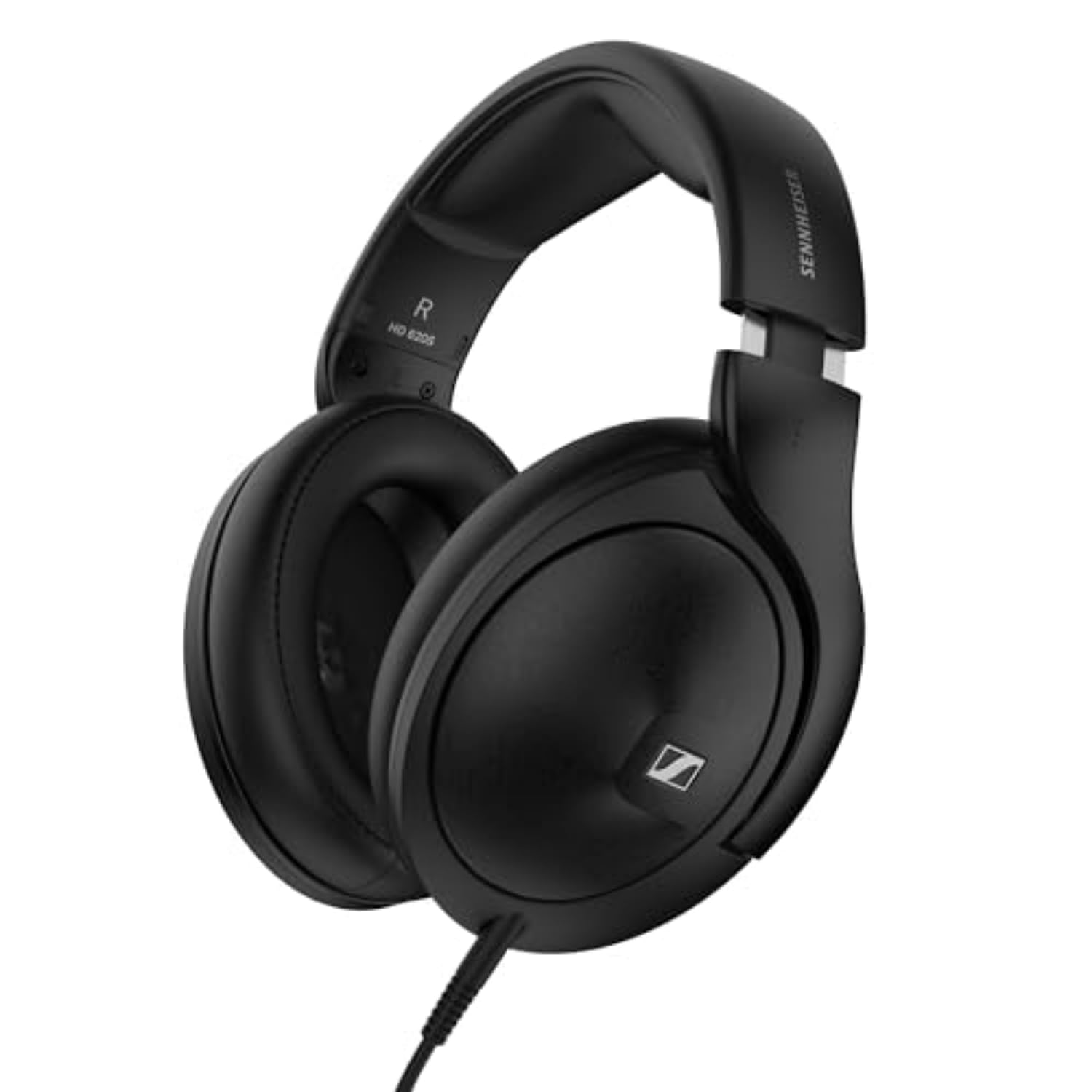
A closed-back that sounds open—Sennheiser’s acoustic wizardry brings an airy stage to an isolated design.
The HD 620S is Sennheiser’s answer to a persistent complaint about closed-back headphones: they often sound cramped. An open baffle system (a design that lets some air pass through the driver’s backside) and angled 42mm transducers (drivers that tilt to direct sound at your ears) featuring 38mm diaphragms create a wide, natural soundstage that mimics a well-placed pair of speakers. Meanwhile, the closed cups keep sound contained and block external noise. The 150Ω impedance is high, meaning this pair is tune for desktop DACs (digital-to-analog converters) and amplifiers—plug it into a phone and it will sound quiet and thin; feed it from a FiiO KA11 (a USB DAC dongle) or a decent audio interface and it blooms into something special. The 1.8-meter detachable cable includes a 3.5mm to 6.3mm adapter, and the steel-reinforced headband slider feels reassuringly solid.
Owners are consistently impressed by the spaciousness and instrument separation—some call it a revelation for closed-back headphones. The sound is on the warmer side, with smooth, silky treble and a balanced bass that avoids muddiness. Critics note that the stock tuning has a wonky mid-bass region (the upper part of the bass range) that improves significantly with EQ (equalization, or adjusting the sound frequencies), and that the headband is not replaceable, limiting long-term repairability. For the right buyer—someone with a desktop amp who craves open-back air (the spacious, airy sound of open headphones) without open-back bleed (sound leakage)—the HD 620S is a unique and satisfying pick.
What makes it special: “Revelation for closed-back headphones,” writes a buyer describing the non-claustrophobic soundstage. It manages to keep the noise inside and still breathe like a Sennheiser 600-series open-back headphone.
Reach for this if: You have a headphone amplifier and want a closed-back that sounds as wide and detailed as many open-back alternatives.
Skip if: You plan to use these from a phone or laptop without an amp; the 150Ω impedance will leave you underwhelmed.
Understanding the Specs
Impedance vs. Sensitivity
Impedance (measured in ohms, Ω) determines how much power a headphone needs to reach a given volume. A low-impedance pair (around 32Ω) can be driven loudly by a phone, tablet, or laptop. Higher-impedance models (150Ω and above) often deliver cleaner, lower-distortion sound, but they require a dedicated headphone amplifier or audio interface (recording gear) to get loud enough. Sensitivity (measured in decibels per milliwatt, dB/mW) tells you how efficiently those headphones convert power into sound volume. A high-sensitivity headphone can get very loud with very little power, making it a better match for battery-powered devices. The combination matters: a 150Ω headphone with high sensitivity might still work from a laptop, while a 300Ω pair with low sensitivity will sound quiet and thin without an amp.
Driver Technology and Materials
The driver is the miniature speaker inside each earcup. Its diameter (40mm to 60mm in this guide) influences bass depth and overall power handling, but the materials matter more. Rare-earth magnets (neodymium, samarium-cobalt) provide stronger magnetic flux for better transient response (speed and impact) and detail. Voice coil materials like copper-clad aluminum wire reduce mass for faster, cleaner sound. Diaphragm materials range from polymer to titanium-coated to wood-fiber composites—each imparts a different character (sound flavor). Titanium-coated diaphragms are stiff and lightweight, producing clean, extended highs. Wood-fiber diaphragms aim for a natural, warm timbre (tone quality) closer to a live instrument. A large driver with cheap materials will always sound worse than a smaller driver with premium materials and careful tuning.
FAQ
Can I use 150-ohm headphones like the Sennheiser HD 620S without an amplifier?
What is the difference between closed-back and open-back headphones?
How long do closed-back headphones typically last before the earpads wear out?
Is a detachable cable important on closed-back headphones?
Which closed-back headphones are best for small heads or glasses wearers?
Can I use studio monitor headphones like the ATH-M50X for gaming?
What does “neutral” sound mean and why would I want it?
What is the difference between the Sony MDR7506 and the Sony MDR-V6?
Do I need to “burn in” new closed-back headphones?
What are the benefits of a coiled cable versus a straight cable?
Final Thoughts: The Verdict
Across the board, the best closed back headphones winner is the Audio-Technica ATH-M50X because it delivers the most versatile balance of accurate, detailed sound, sturdy build, and practical features like three detachable cables—all without requiring a headphone amplifier. If you want a neutral reference that works straight from your phone for mixing, grab the AKG K371. And for pure musical joy with heirloom-quality wood cups and bass that defies expectation, the FiiO FT1 is the one to reach for.
How We Picked
We do not accept paid placement. Every pick is matched to a real buyer and a real use-case; we do not hands-on test units.
Sources & Methodology
Specifications: manufacturer listings and product documentation. Review insights: verified customer reviews, as of July 2026. Pricing: not shown on this page (it changes often); check the current price via the retailer link.
As an Amazon Associate, WellFizz earns from qualifying purchases. This does not affect which products we feature.
Related Guides

Mo Maruf
I created WellFizz to bridge the gap between vague wellness advice and actionable solutions. My mission is simple: to decode the research and give you practical tools you can actually use.
Beyond the data, I am a passionate traveler. I believe that stepping away from the screen to explore new environments is essential for mental clarity and physical vitality.