Our readers keep the lights on and my smoothie glass nicely filled. As an Amazon Associate, I earn from qualifying purchases.
A muddy, distant voice instantly kills a podcast, no matter how engaging the content is. The fix is a single hardware swap: a clip-on microphone that puts the capsule inches from your mouth, capturing the warmth and presence your audience craves. Without one, you’re fighting room echo, clothing rustle, and laptop fan noise with every edit.
I’m Mohammad Maruf — the founder and writer behind WellFizz. I’ve spent countless hours analyzing wireless transmission stability, noise-cancellation algorithms, and battery endurance across dozens of lavalier systems to find the models that actually solve the real-world problems podcasters face.
This guide breaks down the specific specs that separate a professional-sounding recording from a tinny, distracted mess so you can confidently pick the best clip on microphone for podcasting that matches your workflow and budget.
How To Choose The Best Clip On Microphone For Podcasting
Picking the right wireless lavalier for podcasting is about more than just price. You need a system that delivers clean vocal reproduction, suppresses the background noise of your recording environment, and stays reliable for the duration of a long session. The three specifications below are the ones you should prioritize.
Audio Quality and Bit Depth
A 48kHz/24-bit recording chain captures the full frequency range of the human voice with enough headroom to avoid harsh clipping during loud laughs or emphatic statements. A lower sample rate or 16-bit depth can introduce a thin, digital edge that is difficult to fix in post-production. Look for a maximum sound pressure level (SPL) of at least 120 dB to ensure the microphone can handle sudden peaks without distortion.
Noise Cancellation Type
Not all noise cancellation is equal. Basic wind muffling uses a foam cover to cut out puffs of air, while active noise cancellation (ENC) uses a dedicated chip and algorithm to separate your voice from HVAC hum, traffic, or crowd chatter. For a podcast recorded in a home or cafe environment, a system with adjustable ENC levels gives you control over how aggressively the background is filtered.
Wireless Stability and Battery Endurance
2.4GHz wireless is the standard, but transmission range varies wildly. A reliable system should hold a clean signal at 100 feet in open space and not drop out when you turn your back to the receiver. Battery life is equally critical — a pair of transmitters should last through a full recording day, and the charging case should provide at least two full recharges so you never have to plug in individual units mid-session.
Quick Comparison
On smaller screens, swipe sideways to see the full table.
| Model | Category | Best For | Key Spec | Amazon |
|---|---|---|---|---|
| RODE Wireless Micro | Premium | Smartphone-only podcasters | 122 dB SPL, GainAssist | Amazon |
| DJI Mic Mini (2 TX + 1 RX + Case) | Premium | Multi-device creators | 48h battery w/ case | Amazon |
| MAONO Wave T5 Mini | Premium | AI noise cancellation | 48kHz/24-bit, 4 voice filters | Amazon |
| DJI Mic Mini (2 TX + 1 Mobile RX) | Mid-Range | Budget DJI ecosystem | 300m transmission range | Amazon |
| FIFINE Wireless Lavalier M9 | Mid-Range | Camera + mobile hybrid | 20Hz-20kHz frequency response | Amazon |
| BOYA V30 Wireless Lavalier | Mid-Range | Long-range outdoor recording | 328 ft transmission range | Amazon |
| YUANRAN Mini Wireless Lavalier | Budget | Entry-level plug-and-play | Magnetic + clip attachment | Amazon |
In‑Depth Reviews
1. RODE Wireless Micro
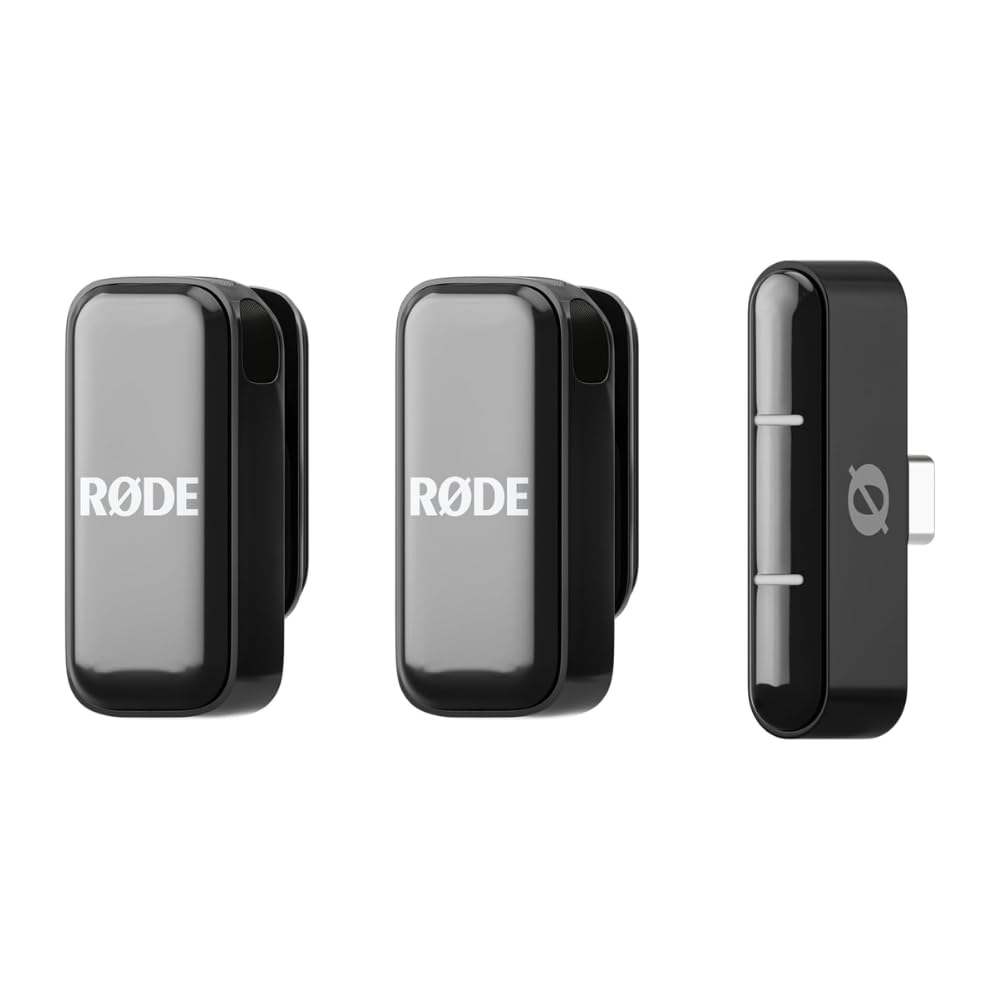
RODE engineered the Wireless Micro specifically for the smartphone podcaster who refuses to compromise on audio. The integrated 122 dB SPL handling captures the full dynamic range of a conversation without distortion, while the intelligent GainAssist algorithm automatically rides the gain so you never clip a loud segment or disappear into a whisper. The entire system — two transmitters, one receiver, and the charging case — fits in a palm and connects directly to a USB-C phone with zero cables needed.
In real-world use, the magnetic clip attaches firmly to a collar or shirt placket, and the included furry windshields eliminate breath pops and light breeze noise during outdoor recording. Reviewers consistently report that the noise cancellation filters out city traffic so effectively that your voice remains the only audible signal. The charging case provides two full top-ups, bringing total runtime to 18 hours — enough for multiple back-to-back episodes.
Where this system truly shines is simplicity. There is no app required for basic operation, no pairing sequence, and no batteries to swap. The receiver snaps into the phone’s USB-C port and the transmitters pair automatically. For the podcaster who wants professional-grade sound without any technical friction, this is the definitive choice.
Why it’s great
- GainAssist prevents clipping automatically
- Ultra-compact, cable-free smartphone connection
- Excellent noise cancellation in city environments
Good to know
- USB-C dongle may need an extender with thick phone cases
- Software download recommended for full feature access
2. DJI Mic Mini (2 TX + 1 RX + Charging Case)

The full-kit version of the DJI Mic Mini delivers the most endurance in this roundup: 48 hours of total battery life thanks to a generously sized charging case. Each transmitter weighs only 10 grams, making it essentially unnoticeable on a collar, and the 120 dB SPL ceiling combined with 48kHz sampling produces audio that matches larger, more expensive studio mics. The 400-meter open-air transmission range gives you complete freedom to move around a studio or stage.
DJI’s dual-level noise cancellation is a standout feature for podcasters who record in inconsistent environments. The Basic mode handles quiet home studios, while the Strong mode cleanly slices out HVAC rumble and street noise during mobile sessions. The automatic limiting circuit prevents distortion when a guest suddenly speaks louder, preserving a clean waveform that requires minimal post-processing.
For creators who shoot video alongside audio, the direct OsmoAudio connection to DJI cameras and gimbals streamlines the workflow. The pocket-sized charging case doubles as a storage organizer, and the included camera audio cable (3.5mm TRS) makes it compatible with DSLRs and mirrorless bodies. This is the most flexible all-around kit for podcasters who work across multiple platforms.
Why it’s great
- Exceptional 48-hour total battery life
- Automatic limiting prevents audio clipping
- Dual-level noise cancellation for varied environments
Good to know
- Windscreen necessary for windy outdoor use
- Small size can be easy to misplace without the case
3. MAONO Wave T5 Mini Magnetic

The MAONO Wave T5 brings a level of audio processing usually reserved for post-production software directly into the microphone hardware. Its dedicated ENC chip offers 3 noise cancellation modes across 14 levels of intensity, adjustable through the Maono Link App, so you can precisely dial in the amount of background rejection needed for your recording environment. The 48kHz/24-bit recording chain with an 80 dB signal-to-noise ratio delivers a low noise floor and clean vocal isolation.
What sets the T5 apart for podcasters is the four one-tap voice filters: Vocal Enhancer for balanced everyday speech, Brightness for lively social media clips, Warmth for storytelling, and Magnetic Radio for that deep broadcast presence. Each filter applies genuine EQ shaping, saving you time in post-production. The transmitters last 9 hours each, and the charging case pushes total runtime to 40 hours, which covers multi-day shoots without a recharge.
The kit includes three receiver types — USB-C, Lightning, and 3.5mm camera adapter — making it the most universally compatible system here. The magnetic necklace and collar clips offer flexible mounting options, and the frequency-hopping wireless technology maintains a stable connection even when the transmitter is behind your back. For the podcaster who wants granular control over their sound signature, this is the premium choice.
Why it’s great
- 14-level adjustable ENC for precise noise control
- Four broadcast-quality voice filters built-in
- Includes USB-C, Lightning, and 3.5mm receivers
Good to know
- Requires Maono Link app for full filter control
- Pairing sequence slightly involved if connection drops
4. DJI Mic Mini (2 TX + 1 Mobile RX)
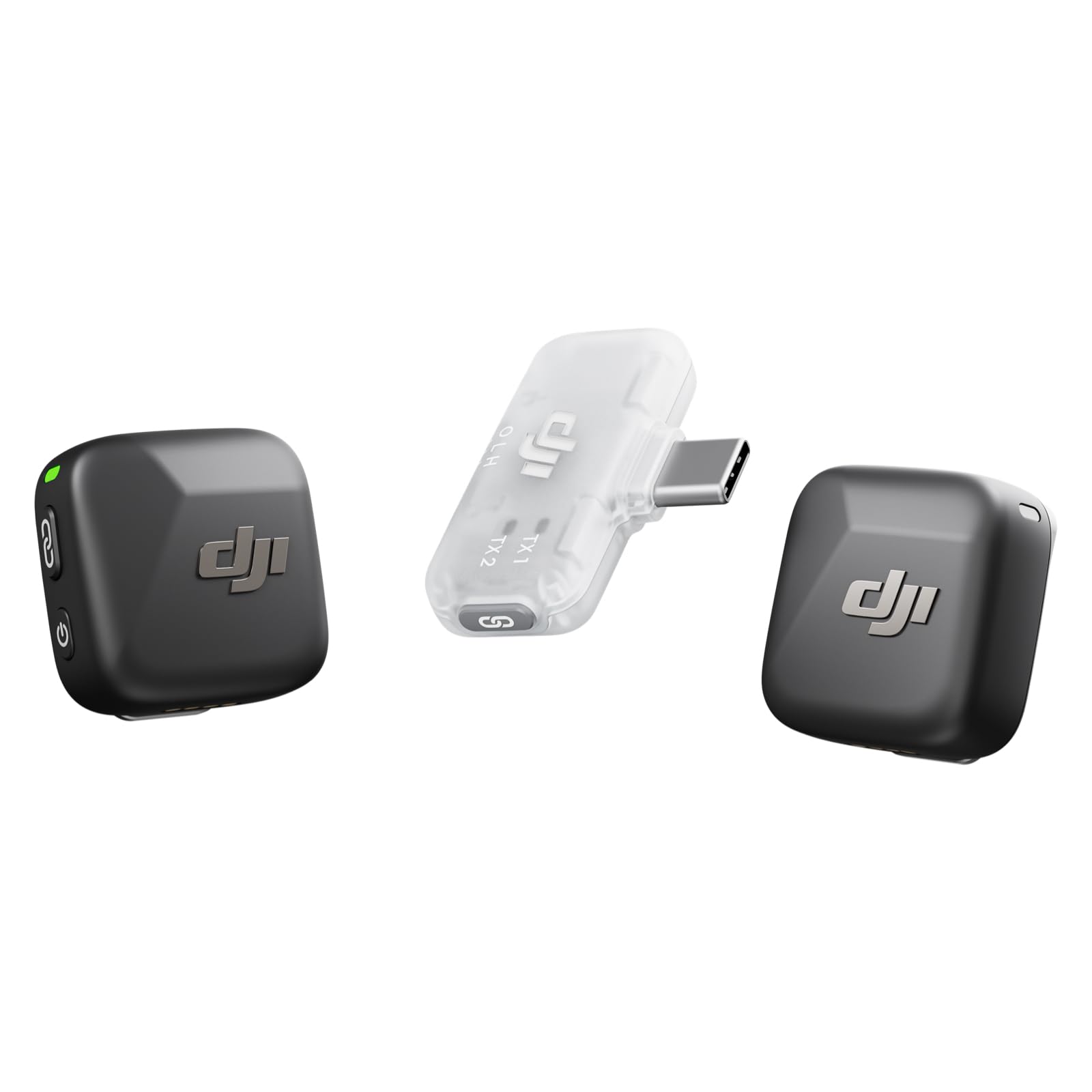
This entry-level version of the DJI Mic Mini delivers the core audio performance and 10-gram transmitter design of its full-kit sibling at a lower price point, perfect for podcasters who don’t need the extended charging case. The 300-meter transmission range is still generous for studio and outdoor use, and the dual-level noise cancellation — Basic for quiet rooms and Strong for busy environments — works exactly as it does on the more expensive model.
The transmitters provide up to 11.5 hours of operation on a single charge, which is sufficient for a full day of recording. The mobile receiver plugs directly into any USB-C device, and the direct OsmoAudio connection means it pairs wirelessly with DJI cameras and gimbals without needing the receiver at all. Users consistently report that the audio quality is indistinguishable from larger stock microphones and that the magnetic clip holds securely during active movement.
For the podcaster who owns DJI camera gear or wants to keep their kit minimal, this is the smartest value. The automatic limiting circuit prevents distortion during loud segments, and the compact carrying pouch keeps everything organized. The only trade-off is the lack of a charging case, so you will need to plug the transmitters in individually between sessions.
Why it’s great
- Full DJI audio quality without the premium price
- 300m stable wireless range
- Direct OsmoAudio connection to DJI cameras
Good to know
- No charging case — transmitters charge separately
- Mobile RX only works with USB-C devices
5. FIFINE Wireless Lavalier M9

FIFINE’s M9 system bridges the gap between smartphone and camera recording more effectively than most competitors. The receiver includes both a USB-C output and a 3.5mm TRS jack, letting you connect directly to a DSLR or mirrorless camera while still being able to use the system with a smartphone via the included cables. The 20Hz-20kHz frequency response captures the full spectrum of vocal nuance, and the -38dB sensitivity ensures your voice stays strong in the mix.
The charging case provides three full recharges for the two transmitters, totaling 30 hours of use. The 164-foot working range is sufficient for most indoor and outdoor recording scenarios, and the display screen on the receiver gives you real-time feedback on volume levels and which mic is active. Reviewers note that the noise cancellation is slightly better than similarly priced alternatives and that the furry windscreens effectively tame outdoor wind noise.
For podcasters who record video with both a camera and a smartphone and want a single system that works with both, the M9 is the most practical option. The volume and mute controls are accessible via physical buttons on the receiver, and the system supports dual-channel recording so you can interview a guest without sacrificing audio quality.
Why it’s great
- Works with DSLR cameras via 3.5mm jack
- Receiver screen shows real-time audio levels
- Solid 30-hour total battery with charging case
Good to know
- 3.5mm to USB-C cable quality is subpar
- Use USB-C to USB-C for best phone connection
6. BOYA V30 Wireless Lavalier
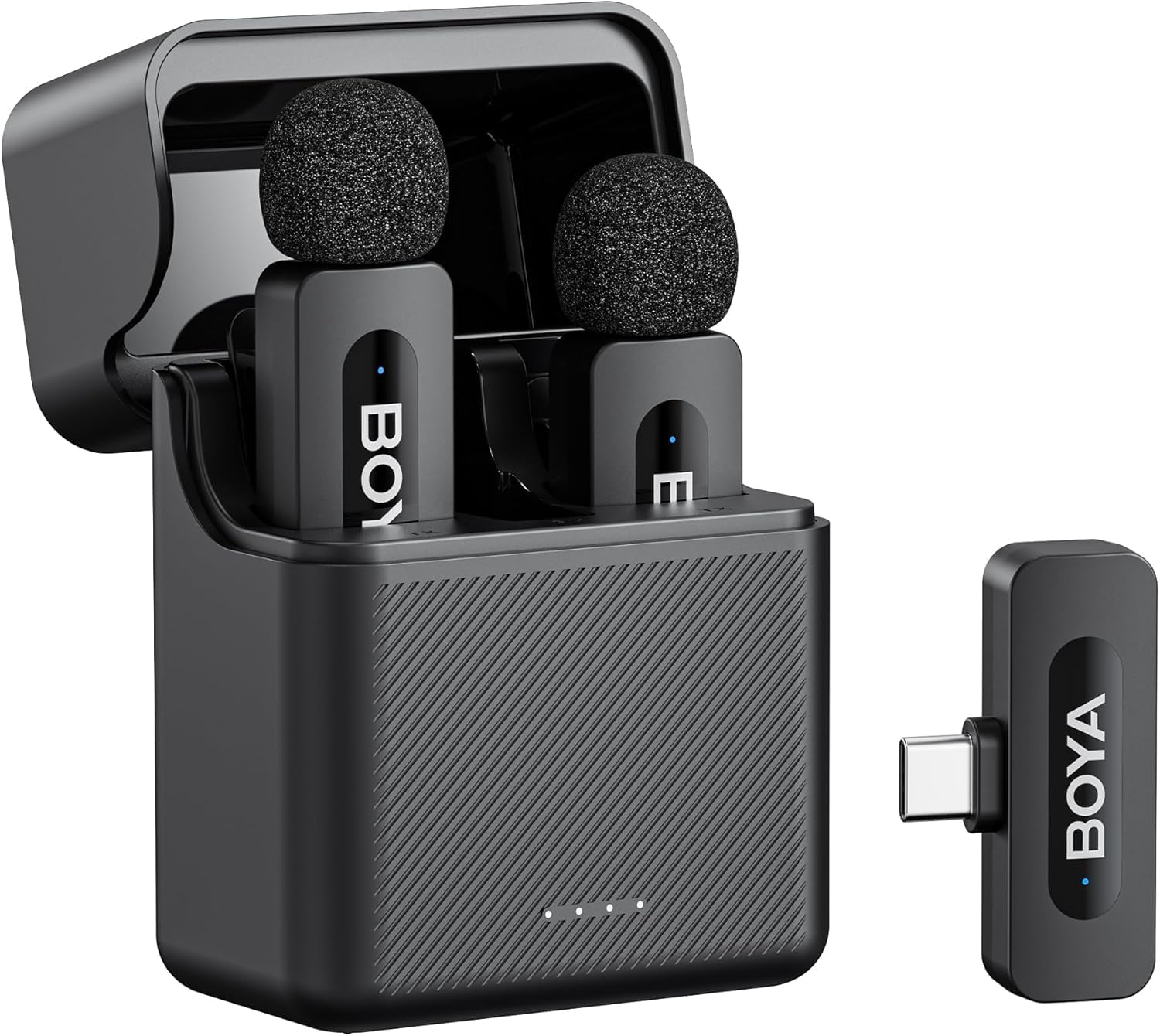
The BOYA V30 punches above its weight with a 328-foot wireless transmission range that matches premium systems costing much more. The 80 dB signal-to-noise ratio and 120 dB maximum SPL deliver clean, professional-grade audio even in noisy outdoor settings, and the 48kHz/16-bit recording ensures sufficient detail for podcast dialogue. The transmitter weighs just 10.5 grams and features a 360-degree rotatable clip for easy positioning on any collar.
The dual-mode noise cancellation combines a one-touch electronic filter with a dense foam windscreen, effectively reducing wind interference and ambient rumble. Battery life is strong at 9 hours per transmitter, with the charging case extending total runtime to 36 hours — enough for multi-day recording trips. The USB-C receiver supports playback without unplugging, so you can review clips on the go without interrupting the connection.
Where the V30 stands out is reliability. Reviewers consistently praise the plug-and-play setup, auto-pairing functionality, and stable connection even at the edge of its range. The audio quality is described as surprisingly good for the price tier, with clear, natural voice reproduction that requires minimal EQ adjustment. For the budget-conscious podcaster who needs long-range flexibility, this is a compelling option.
Why it’s great
- Exceptional 328-foot wireless range
- 36-hour total battery with charging case
- Easy plug-and-play with USB-C devices
Good to know
- High treble can emphasize sibilance
- Mic clip is stiff and difficult for larger hands
7. YUANRAN Mini Wireless Lavalier
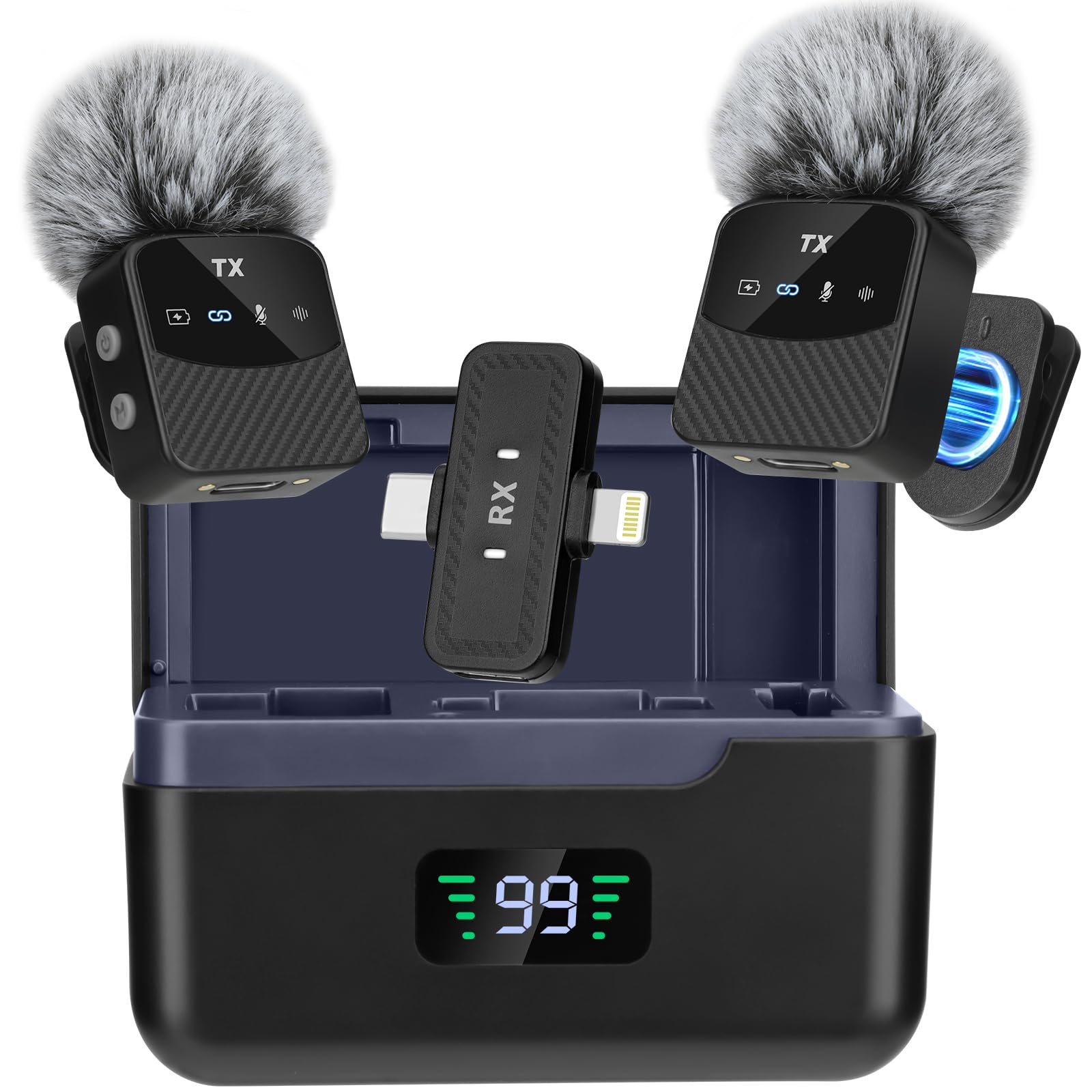
The YUANRAN Mini is the most affordable entry point into wireless lavalier podcasting, offering a magnetic attachment system alongside the traditional clip for flexible mounting on metal surfaces or clothing. The one-touch noise reduction button engages an electronic filter that reduces background hum, and the included windscreen prevents plosive pops during close-mic speech. The 2-in-1 receiver supports both USB-C and Lightning devices, making it compatible with the widest possible range of smartphones.
Battery life is rated at 5 hours per transmitter, with the charging case providing enough reserve for a total of 25 hours of operation. The auto-pairing system connects instantly with no app or Bluetooth required — simply plug the receiver into your device and speak. Reviewers highlight the clear sound quality and effective noise reduction for the price, noting that the system works well for beginner content creators and casual podcasters.
It is important to acknowledge the durability concerns reported by some users. A small number of units experienced charging dock failure after a month of use, and customer support was not responsive in those cases. For the podcaster on a tight budget who needs a functional system today and is willing to accept a higher risk of early failure, this mic delivers acceptable audio performance at the lowest possible cost.
Why it’s great
Why it’s great
- Lowest price among all reviewed systems
- Magnetic attachment adds mounting flexibility
- Dual USB-C/Lightning receiver included
Good to know
- Reported charging case failures in some units
- Customer support response is inconsistent
FAQ
Can I use a clip-on microphone with a DSLR camera for podcasting?
How does active noise cancellation affect voice quality for podcasting?
What wireless range do I actually need for a podcast recording?
Final Thoughts: The Verdict
For most users, the best clip on microphone for podcasting winner is the RODE Wireless Micro because it combines professional-grade 122 dB SPL handling with an effortless cable-free smartphone connection and intelligent GainAssist that eliminates clipping entirely. If you need the absolute longest battery life and the most flexible device compatibility, grab the DJI Mic Mini full kit. And for granular control over your sound signature with built-in voice filters and adjustable noise cancellation, nothing beats the MAONO Wave T5 Mini.

Mo Maruf
I created WellFizz to bridge the gap between vague wellness advice and actionable solutions. My mission is simple: to decode the research and give you practical tools you can actually use.
Beyond the data, I am a passionate traveler. I believe that stepping away from the screen to explore new environments is essential for mental clarity and physical vitality.