Our readers keep the lights on and my smoothie glass nicely filled. As an Amazon Associate, I earn from qualifying purchases.
The jump from rental shoes to your first performance pair is the most critical gear decision an intermediate climber makes. Too soft and you’ll struggle on dime edges. Too aggressive and your toes will scream before you finish your warm-up. The right shoe bridges that gap — precise enough to trust on steep terrain, forgiving enough to wear through a full session.
I’m Mohammad Maruf — the founder and writer behind WellFizz. I’ve spent countless hours dissecting rubber compounds, last shapes, and midsole stiffness ratings to help intermediate climbers cut through the noise and find the shoe that matches their current footwork and future goals.
Whether you’re sending your first 5.11 or projecting V4-V5 boulders, this guide will help you find the best climbing shoes for intermediate climbers that suit your foot shape and climbing style.
How To Choose The Best Climbing Shoes For Intermediate Climbers
At the intermediate level, your footwork is becoming deliberate — you’re edging on small holds, smearing on slabs, and hooking on overhangs. The shoe you pick needs to amplify those skills without causing pain that cuts your session short. Focus on four factors: rubber compound and thickness, midsole stiffness, last shape and asymmetry, and closure system.
Rubber and Midsole — The Edge vs Sensitivity Tradeoff
Thicker rubber like Vibram XS Edge at 4mm delivers precise edging support on tiny footholds, making it ideal for vertical and slab climbing. Thinner or stickier formulas like Vibram XS Grip 2 offer more smearing sensitivity but wear faster. A stiffer midsole (Flexan 1.0mm or full-length nylon) transfers power to the toe, while softer midsoles let you feel the rock but fatigue quicker on steep terrain.
Asymmetry and Downturn — Performance vs Comfort
Flat or slight downturn shoes with low asymmetry (like the Scarpa Helix or La Sportiva Finale) allow all-day wear and work well for trad, multi-pitch, and gym sessions. Moderate downturn and asymmetry (like the SCARPA Vapor V or Instinct VS) give you a precision edge for bouldering and steep sport routes but demand a tighter fit. Most intermediates do best with a slight-to-moderate profile — enough performance to project, not so aggressive you can’t recover between burns.
Sizing — The Biggest Pitfall
Intermediate climbers often oversize for comfort or undersize thinking tight equals performance. The real answer depends on last shape and materials. Leather stretches up to a half size; synthetic shoes hold their shape. Brands like Evolv and Ocun often require one to two sizes up from your street shoe, while La Sportiva and SCARPA generally run true to climbing shoe sizing — expect a snug, non-painful fit with toes slightly curled. Always read recent reviews for sizing consistency before ordering.
Quick Comparison
On smaller screens, swipe sideways to see the full table.
| Model | Category | Best For | Key Spec | Amazon |
|---|---|---|---|---|
| SCARPA Instinct VS | Premium | Bouldering & steep sport | Vibram XS Edge 4mm | Amazon |
| SCARPA Vapor V | Premium | All-around intermediate | Vibram XS Edge 3.5mm | Amazon |
| EVOLV Kronos | Mid-Range | Gym to crag progression | TRAX SAS sole | Amazon |
| La Sportiva Finale | Premium | All-day edging comfort | Vibram XS Edge 4mm | Amazon |
| SCARPA Helix | Mid-Range | Beginner-to-intermediate transition | Vibram XS Edge 3.5mm | Amazon |
| Ocun Bullit | Mid-Range | Bouldering performance | CAT rubber 1.5 4mm | Amazon |
| EVOLV Defy | Budget | Entry-level intermediate | Downturned toe design | Amazon |
| SCARPA Origin (Women’s) | Budget | Beginner gym climber | Vision 5mm rubber | Amazon |
| La Sportiva Tarantula (Women’s) | Budget | Entry-level all-around | Frixion RS 5mm | Amazon |
In‑Depth Reviews
1. SCARPA Instinct VS Rock Climbing Shoes

The SCARPA Instinct VS is the gold standard for intermediate climbers who want to project hard without switching shoes every route. Its 4mm Vibram XS Edge outsole delivers unshakeable edging performance on micro holds, while the moderate downturn and Bi-Tension rand system give you power on steep terrain without punishing your arches during a long session.
Real users consistently praise the precise, snug fit that molds quickly after a few wears, and the secure heel cup — a critical detail for heel hooks on boulder problems. The shoe runs tight at first, so experienced climbers recommend ordering a full size up from your street shoe. The suede and Microsuede upper offers good durability, though breathability is average.
For the intermediate climber splitting time between gym bouldering and outdoor sport routes, this shoe is a versatile weapon. It edges, smears, and hooks with confidence, and the construction is solid enough to survive a resole or two. If you can handle the break-in period, it will be your go-to pair for grades that matter.
Why it’s great
- Exceptional edging precision from Vibram XS Edge 4mm sole
- Bi-Tension rand relieves Achilles pressure even when downturned
- Heel hook security rivals specialty bouldering shoes
Good to know
- Requires careful sizing — go at least one full size up from street shoe
- Sticky rubber less ideal for smearing on polished gym volumes
2. SCARPA Men’s Vapor V

The SCARPA Vapor V hits a sweet spot for intermediates who need a shoe that performs on both vertical terrain and moderate overhangs. Its 3.5mm Vibram XS Edge outsole is slightly more sensitive than the Instinct VS, giving you better feedback on smears and volumes, while the moderate asymmetry keeps your toes aligned for precise edging on small footholds.
Reviewers note that the Vapor V feels almost broken-in from the first wear, with a comfortable suede upper that molds to your foot shape after a couple of sessions. The heel cup is snug for most foot shapes, though some users with narrow heels report slight slipping during aggressive heel hooks. The dual Velcro straps make on/off quick between burns.
This shoe shines as an everyday gym companion for the climber projecting 5.11 to 5.12. It edges reliably, smears decently, and handles overhangs with enough aggression to feel secure. Durability is solid for a synthetic shoe, and the resole potential extends its lifespan beyond a single season of heavy use.
Why it’s great
- Comfortable out of the box with minimal break-in
- Excellent edging performance for vertical and slab routes
- Dual Velcro straps for easy adjustment between climbs
Good to know
- Heel cup may feel baggy for narrow heels during heel hooks
- Not aggressive enough for steep bouldering projects
3. EVOLV Kronos Rock Climbing Shoe

The EVOLV Kronos was built for the climber who has outgrown rental shoes and wants a performance upgrade without breaking the bank. Its TRAX SAS rubber is one of the stickiest compounds available at this tier, giving you confident grip on slab smears and steep edges alike. The slight camber design and downturned toe provide just enough aggression to tackle overhanging routes without sacrificing all-day comfort.
Users report that the synthetic upper stretches minimally, so the fit you get out of the box is the fit you keep. Sizing is consistent for most — ordering a half size up from your street shoe yields a snug but not painful fit. The dual-strap closure system locks your heel in place securely, and the shoe feels responsive on volumes and small edges.
For intermediate climbers who do most of their climbing in the gym with occasional outdoor trips, the Kronos is a reliable all-rounder. It edges well on vertical terrain, smears decently on volumes, and handles moderate overhangs. The rubber wears faster than premium Vibram compounds, but the lower price point makes replacement less painful.
Why it’s great
- TRAX SAS rubber offers excellent grip for the price
- Comfortable for full sessions even with slight downturn
- Dual-strap closure ensures secure heel lock
Good to know
- Rubber wears faster than XS Edge or XS Grip compounds
- Sizing can be inconsistent between batches — check recent reviews
4. La Sportiva Men’s Finale Rock Climbing Shoes

The La Sportiva Finale is designed for climbers who want performance without the pain. Its flat last and low asymmetry make it one of the most comfortable performance shoes you can wear for hours at a time, while the 4mm Vibram XS Edge outsole delivers reliable edging support on small footholds. The unlined leather upper stretches about half a size, allowing you to dial in the fit with the full lace system.
Owners consistently describe the Finale as a shoe that performs well above its comfort-first design. It handles vertical and slab climbing with precision, and the leather molds to your foot shape over time, eliminating hot spots. The shoe is resoleable, extending its lifespan significantly. Some users note that the orange leather dye can stain heels initially, but this has no effect on performance.
For intermediate climbers who spend long days at the crag or multi-pitch routes, the Finale is a top-tier choice. It edges confidently, smears adequately, and stays comfortable through multiple sessions. If your priority is a shoe that you can wear all day without counting the minutes until you take it off, this is the pick.
Why it’s great
- Exceptional all-day comfort with low asymmetry and flat last
- Leather upper molds to foot for custom fit
- 4mm XS Edge rubber delivers reliable edging
Good to know
- Not enough downturn for steep bouldering or overhangs
- Lace closure takes longer to tighten compared to Velcro
5. SCARPA Men’s Helix Lace

The SCARPA Helix is a workhorse that bridges the gap between beginner comfort and intermediate performance. Its flat profile and slight asymmetry make it approachable for climbers who are still dialing in their footwork, while the 3.5mm Vibram XS Edge outsole gives you enough edging support to trust small holds. The full-length lace system lets you micro-adjust tension across the entire foot.
User reviews highlight the Helix’s impressive comfort right out of the box — minimal break-in required and no painful pressure points. The heel cup is secure for most foot shapes, and the suede upper stretches just enough to conform without losing structure. Durability is solid for a mid-range shoe; one reviewer noted the rubber wore out after a few months of frequent gym use, which is typical for this price tier.
For the intermediate climber who wants a shoe that can handle gym sessions, outdoor sport routes, and even some trad climbing, the Helix is a versatile, budget-conscious choice. It won’t excel on steep overhangs or micro edges, but for the vast majority of intermediate climbing, it delivers reliable performance without breaking the bank.
Why it’s great
- Excellent comfort with minimal break-in required
- Adjustable lace system for precise fit
- Versatile enough for gym, sport, and trad climbing
Good to know
- Flat profile limits performance on steep terrain
- Rubber wears faster than premium compounds under heavy use
6. Ocun Bullit Bouldering Shoe

The Ocun Bullit is a dedicated bouldering shoe that punches above its price point. It features a moderate downturn and asymmetrical last that positions your big toe for maximum power on small edges and pockets. The 4mm CAT rubber 1.5 sole is sticky right out of the box, giving you confidence on volumes and smears that demand precise weight distribution.
Reviewers report that the Bullit lasts about nine months for V8-level bouldering before the rubber needs attention — a solid lifespan for a mid-range performance shoe. Sizing is where the Bullit demands attention: most users recommend going one to two sizes up from your street shoe. The microfiber upper is vegan-friendly and holds its shape well, though some users note that the seams can separate under extreme stress like bat hangs.
For intermediate climbers focused on bouldering, the Bullit offers a compelling mix of edge precision, smearing sensitivity, and value. It handles slab, vertical, and overhang with equal competence, though the heel cup can feel baggy for narrow heels. If you’re projecting in the gym or on outdoor boulders, this shoe deserves a close look.
Why it’s great
- Sticky CAT rubber provides excellent grip on volumes and smears
- Moderate downturn aids power on overhangs
- Vegan-friendly microfiber construction
Good to know
- Sizing is tricky — typically requires 1-2 sizes up from street shoe
- Heel cup can be loose for narrow-footed climbers
7. EVOLV Defy Rock Climbing Shoe
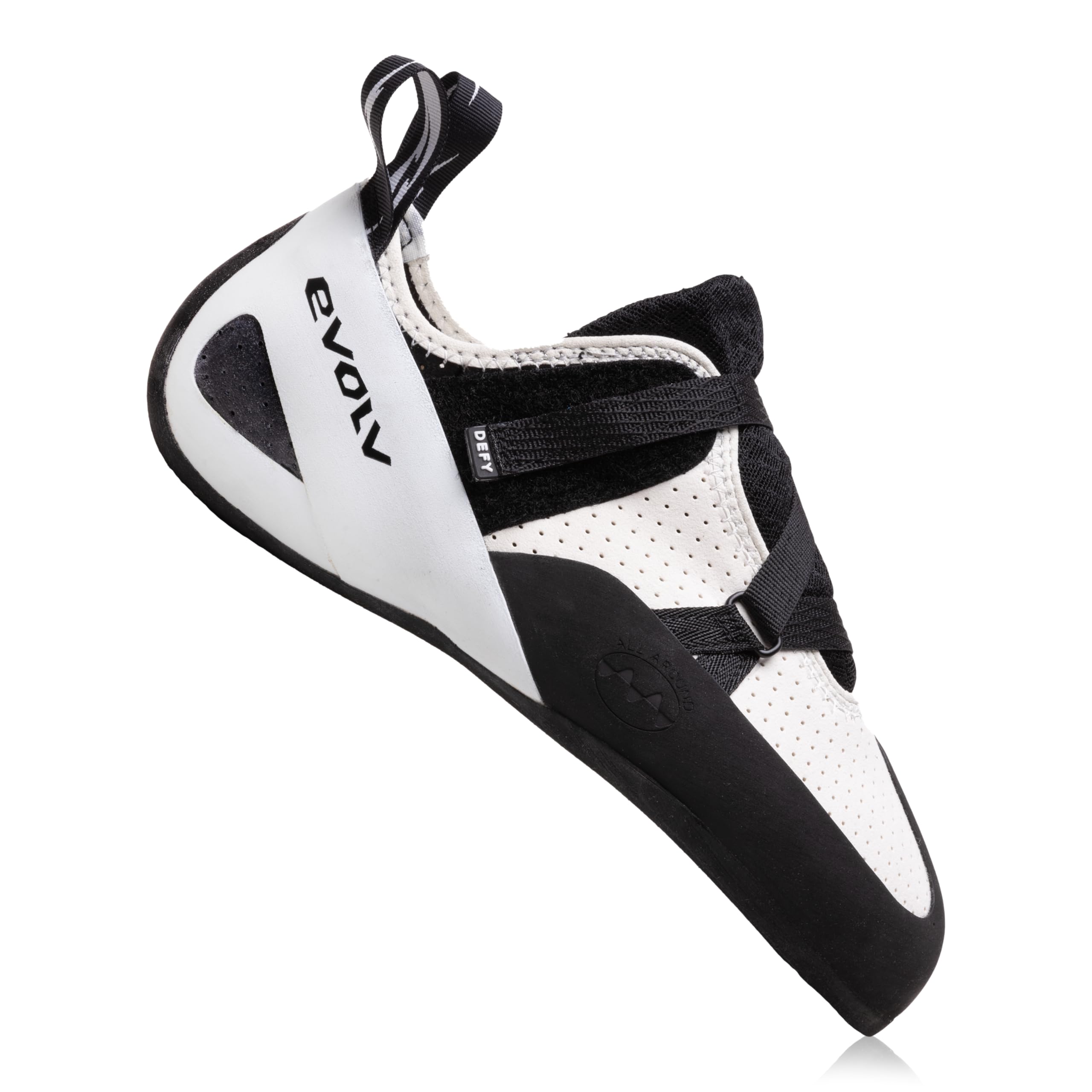
The EVOLV Defy brings a downturned toe design to the budget tier, giving intermediate climbers a taste of performance features without the premium price tag. The toe shape helps with hooking on overhangs and transferring power to small footholds, while the synthetic upper holds its shape over time. It’s a notably wide-friendly shoe, making it a rare find for climbers with broader forefeet.
Users consistently note that sizing is the Defy’s biggest challenge — many recommend ordering two full sizes up from your street shoe for a performance fit. The rubber is soft and grippy, ideal for smearing on volumes, but less precise on tiny edges compared to stiffer competitors. Durability is good for the price, with several reviewers reporting months of heavy gym use without significant wear.
For the intermediate climber on a budget who prioritizes comfort and a wide toe box, the Defy is a solid option. It’s not going to help you send your hardest project on micro edges, but for general gym climbing, bouldering, and outdoor sport routes at the 5.10-5.11 level, it delivers dependable performance.
Why it’s great
- Wide toe box accommodates broader forefeet comfortably
- Downturned toe aids hooking and power transfer
- Affordable entry point for performance features
Good to know
- Requires sizing up 1.5-2 sizes — check reviews before ordering
- Soft rubber lacks precision on tiny edges and pockets
8. SCARPA Women’s Origin Rock Climbing Shoes
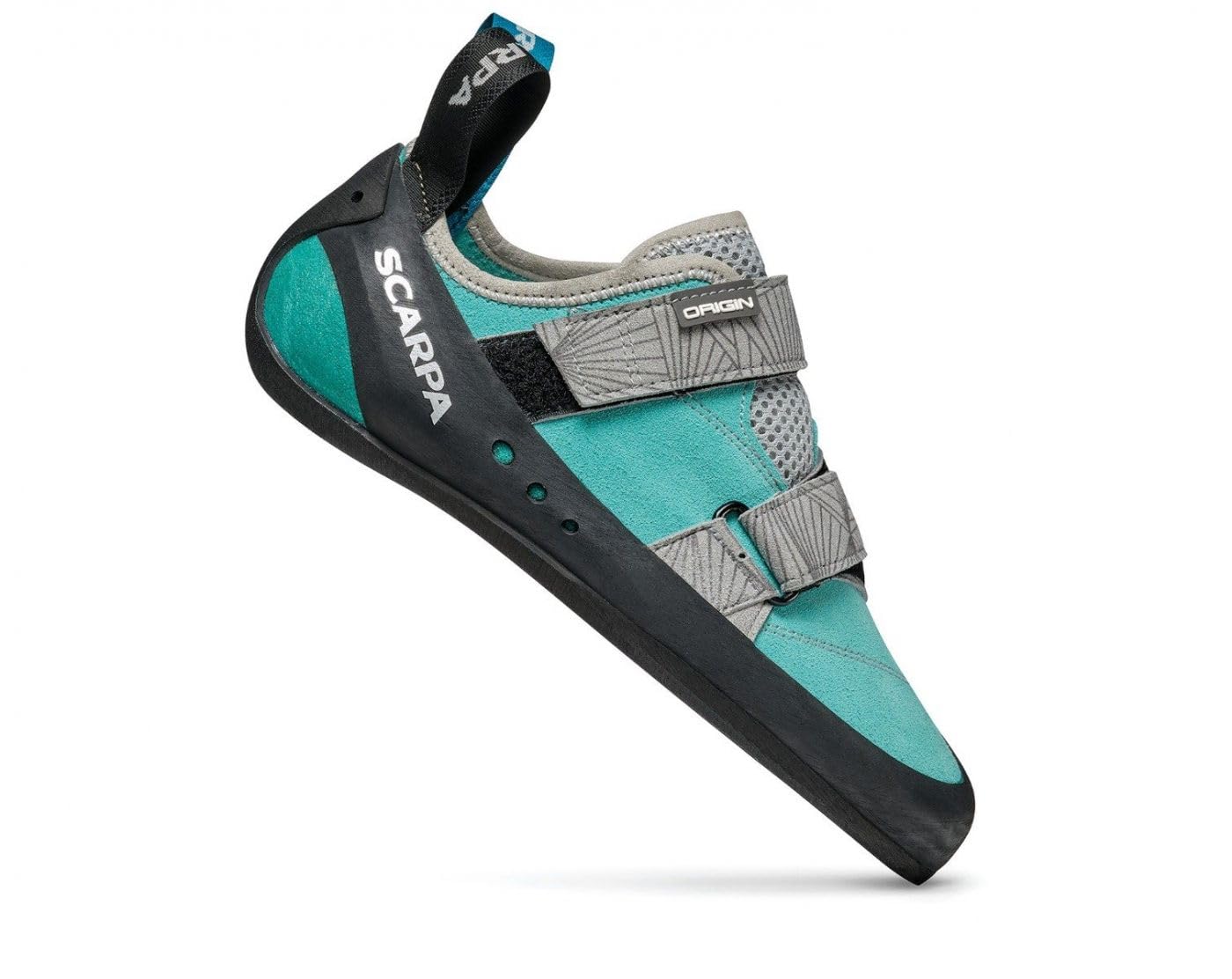
The SCARPA Origin is built for climbers who are still developing their footwork and need a forgiving, comfortable shoe that won’t punish mistakes. Its flat profile and slight asymmetry make it one of the most accessible performance shoes on the market, while the 5mm Vision outsole provides plenty of rubber for smearing on gym volumes and outdoor slabs.
Reviewers appreciate the Origin’s wide toe box, which accommodates bunions and wider forefeet without discomfort. Sizing is tricky — many users recommend ordering half to a full size up from your street shoe. The suede upper stretches slightly over time, allowing the shoe to mold to your foot. Durability is decent for the price, though the soft rubber wears faster on abrasive gym holds.
For the intermediate climber who is still building technique and comfort on the wall, the Origin is a smart budget-friendly choice. It won’t perform on steep overhangs or micro edges, but for gym sessions and easy outdoor routes, it offers the comfort and reliability you need to focus on improving your footwork without distraction.
Why it’s great
- Wide toe box is comfortable for bunions and broader feet
- Thick 5mm outsole provides good smearing surface
- Minimal break-in required for all-day wear
Good to know
- Soft rubber wears quickly on abrasive gym holds
- Not suitable for steep bouldering or overhangs
9. La Sportiva Women’s Tarantula
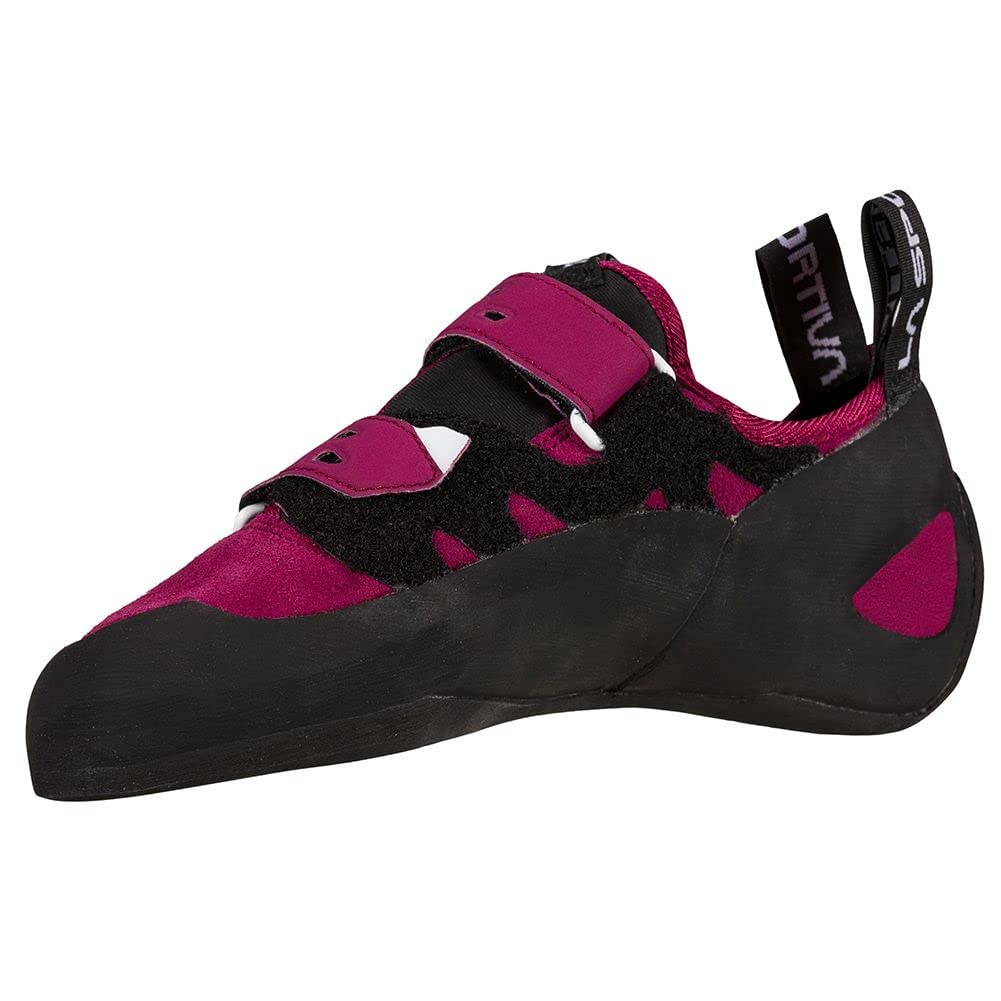
The La Sportiva Tarantula is a classic entry-level shoe that has introduced thousands of climbers to the sport. Its flat last and liberal stretch allow for all-day comfort, while the 5mm Frixion RS outsole gives you a generous smearing platform that forgives less precise foot placements. The unlined leather upper stretches about half a size, allowing you to find a comfortable snug fit.
User reviews consistently mention that the Tarantula is incredibly comfortable for long sessions — you can wear them for hours without needing to take them off between climbs. Sizing is straightforward for most: order your street shoe size or a half size down for a snug fit. The rubber is durable enough for gym climbing but soft enough to smear confidently on volumes. Some users report that the inner lining can peel after many wears, but this doesn’t affect performance.
For the intermediate climber who wants a backup pair, a budget-friendly option, or a shoe for long multi-pitch routes where comfort is king, the Tarantula is hard to beat. It won’t help you send your hardest project, but it will keep your feet happy while you build mileage and technique.
Why it’s great
- Excellent all-day comfort for long sessions or multi-pitch
- Generous smearing platform forgives less precise footwork
- Durable rubber for a budget-friendly price
Good to know
- Not enough precision for small edges or overhanging terrain
- Inner lining may peel after extended use
FAQ
How tight should intermediate climbing shoes feel?
Should intermediate climbers buy flat or downturned shoes?
How do I know if I need a women’s specific shoe?
Are resoleable climbing shoes worth the extra cost?
How long do climbing shoes last for an intermediate climber?
Final Thoughts: The Verdict
For most climbers, the climbing shoes for intermediate climbers winner is the SCARPA Instinct VS because it delivers exceptional edging precision, secure heel hooking, and enough aggression for bouldering and sport climbing without sacrificing comfort for long sessions. If you want a comfortable all-day shoe that still edges well, grab the La Sportiva Finale. And for the best value-to-performance ratio in a gym-to-crag shoe, nothing beats the EVOLV Kronos.

Mo Maruf
I created WellFizz to bridge the gap between vague wellness advice and actionable solutions. My mission is simple: to decode the research and give you practical tools you can actually use.
Beyond the data, I am a passionate traveler. I believe that stepping away from the screen to explore new environments is essential for mental clarity and physical vitality.