Our readers keep the lights on and my smoothie glass nicely filled. As an Amazon Associate, I earn from qualifying purchases.
Specs are compiled from manufacturer listings and verified buyer reviews and can change over time — please confirm the key details on the product page before buying.
Finding a climbing rose that survives a zone 7 winter and actually covers that ugly fence by June is harder than it sounds. Many so-called hardy roses sulk through spring, produce a few weak blooms, and end up looking like twigs with delusions of grandeur. This guide stacks the varieties that earned their spot — from a 10-pound beast that arrived blooming despite a battered box, to the nearly thornless vine you can run your hands along without wincing, to the antique rambler that has been pleasing gardeners since the 1800s.
I’m Mohammad Maruf — the founder and writer behind WellFizz. This guide is built by comparing the manufacturers’ published specifications and the patterns across verified customer reviews, so you get each pick’s real strengths and trade-offs instead of marketing spin.
Here are the climbing roses that actually earn a permanent spot on your trellis, wall, or arbor — the best climbing roses for zone 7 that balance winter hardiness, bloom power, and genuine owner satisfaction.
Our Picks at a Glance

How To Choose The Best Climbing Roses For Zone 7
Not every rose with “climber” in the name will survive a zone 7 winter or cover your arch the way you envision. You need to match the plant’s natural cold tolerance, growth habit, and bloom timing to your specific garden goals. Here is what to look for.
Hardiness Zones — Why 5-9 Is Your balance
Zone 7 experiences winter lows around 0 to 10 degrees Fahrenheit. A rose rated for zones 5 through 9 will handle that cold without extra fuss. Roses rated only for zones 6-9 or 7-9 are riskier during a harsh winter. Stick with varieties that list your zone number in their hardiness range — ideally with a buffer on the cold side if you live in zone 7a.
Own Root vs. Grafted — A Survivor Difference
An own-root rose is grown from a cutting of the original plant, so the entire plant — roots, stems, and flowers — is the same variety. If winter kills the top growth, new shoots come from the roots and stay true to the rose you bought. A grafted rose has a different rootstock, and if the top dies back, what regrows from the root may be something entirely different. For zone 7 winters, own-root gives you an extra layer of insurance.
Bloom Cycle — Once, Repeat, or Continual
Some climbing roses bloom once in late spring with a massive show, then stop. Others bloom in flushes through the growing season. A few bloom continually from spring to fall. Decide how much color you want across the summer. A once-blooming rambler like Seven Sisters delivers one incredible burst; a repeat bloomer like Eden Climber keeps sending flowers in waves.
Mature Height and Spread — Match Your Structure
Check the expected height and width at maturity, not the size of the starter plant. A rose that tops out at 10 feet will barely cover a 6-foot fence, while a rambler reaching 15 feet needs a tall arbor or a large pergola. Spread numbers tell you how much lateral coverage to expect — important if you are covering a wall rather than a post.
Quick Comparison
| Model | Best For | Mature Height | Bloom Period | Hardiness Zones | Amazon |
|---|---|---|---|---|---|
| New Dawn★ Best Overall | Overall reliability & fragrance | 12 feet | Spring, winter | 5-8 | Amazon |
| Eden ClimberTop Performer | Fast repeat growth | 10 feet | Spring to Fall | 5-10 | Amazon |
| Peggy Martin | Low-maintenance survivors | 10-15 feet | Spring to Summer | 4-9 | Amazon |
| Seven Sisters | Antique charm & disease resistance | 15 feet | Spring to Summer | 6-9 | Amazon |
| Rise Up Ringo | Compact spaces & containers | 36-60 inches | Spring to Fall | 4-9 | Amazon |
| Cherry Garland | Continual dark red blooms | 11 feet | Spring to Fall | 6-9 | Amazon |
| Zéphirine Drouhin | Thornless handling & fragrance | 10 feet | Spring to Fall | 6-10 | Amazon |
In‑Depth Reviews
1. Rosa ‘New Dawn’ Climbing Rose
Our pick — 4.5★ from 218 verified ratings; the strongest balance of quality and price.
The 10-pound box that arrived battered yet still packed blooms and a scent that stops you mid-step.
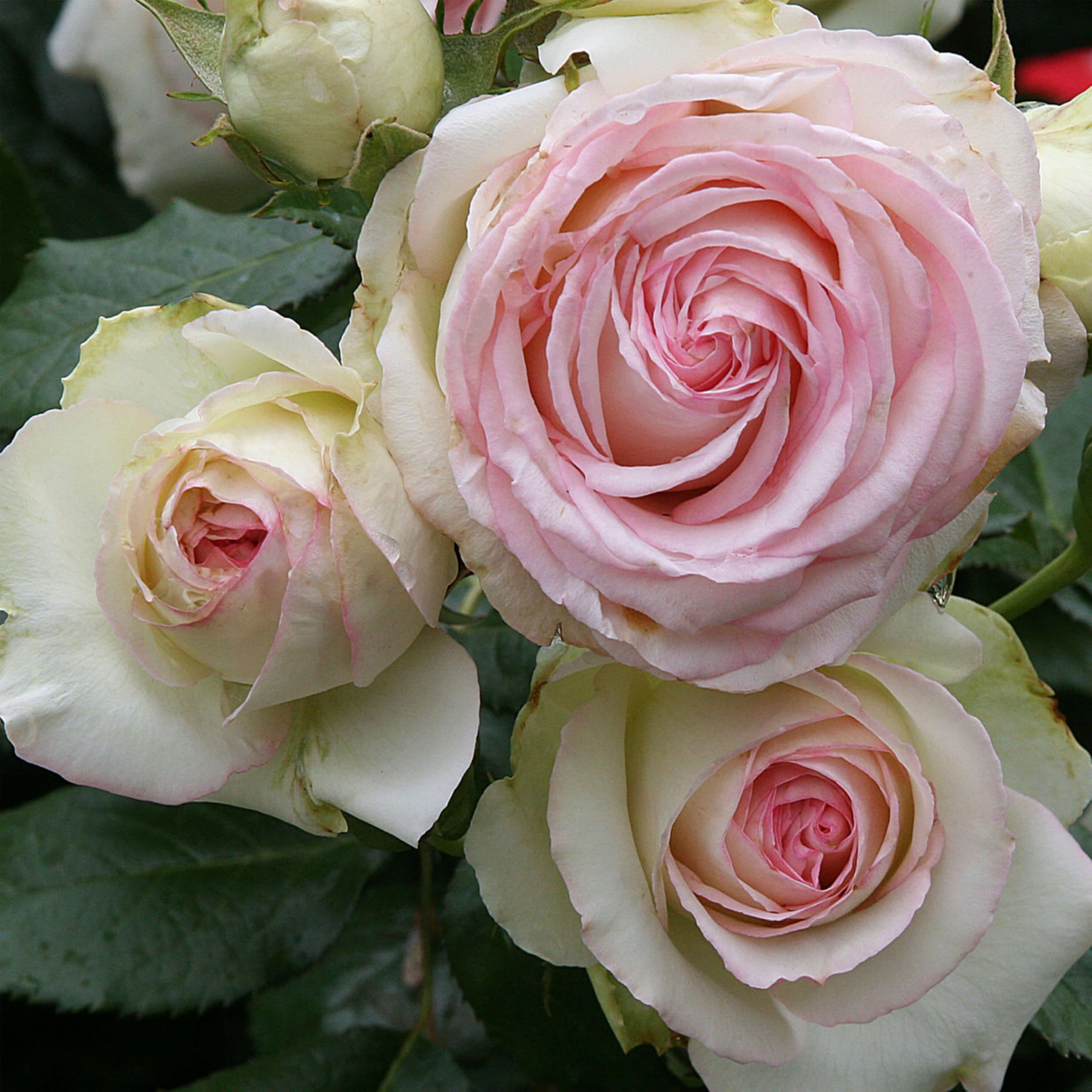
This is the pick that earns its top spot through brute force of owner satisfaction. At 10 pounds, it shipped as a fully rooted #3 container plant (a large nursery pot that keeps roots intact) — not a delicate twig — and buyers consistently report a large, healthy bush with buds already forming. The blush pink double flowers carry a pleasant smell that attracts butterflies. It reaches a mature height of 12 feet with a 3-6 foot spread, making it a proper climber that needs a sturdy trellis or arbor, not just a fence post.
The hardiness range is zones 5-8, which covers zone 7 with a comfortable cold buffer. It arrives dormant in late fall through winter with no leaves — that is normal. It leafs out in spring and blooms in spring and winter. The biggest real-world caveat: one famously battered box arrived open, yet the rose inside was large and blooming. That sums up the consensus — the plant is tough enough to shrug off shipping mishaps. A few buyers noted that it smelled wonderful right away, and several bought a second one the same day.
What wins people over
- Shipped as a large #3 container with roots established — not a bare-root stick (dormant roots with no soil)
- Fragrant double blush pink blooms that attract butterflies
- 12-foot mature height with a 3-6 foot spread covers arches and walls well
- Hardy for zones 5-8, giving zone 7 a solid cold-weather margin
The honest trade-off
- Goes fully dormant (no leaves) late fall through winter — normal, but surprises new gardeners
- At 10 pounds, shipping is heavy; a few boxes arrive beat up, though the plant inside is usually fine
Grab this if: you want the most proven, fragrant, and generously sized climbing rose that can handle zone 7 winters with a cushion — and you value a large established plant over a cheaper starter.
Think twice if: you need a rose that stays evergreen through winter or you only have a tiny trellis that cannot support a 12-foot climber.
2. Heirloom Climbing Roses – Eden Climber
The fast grower that pushed out buds within weeks while surviving strong winds in a starter pot.
The Eden Climber is hands-down the most-reviewed rose on this list, and the dominant theme across those thousands of experiences is speed: it grows quickly, sprouts new leaves within two weeks, and blooms in flushes (short bursts of flowers) throughout the growing season. Mature size is 10 feet tall by 6 feet wide, which fits a medium trellis or a wide wall section. It is a live own-root plant in a 1-gallon container, 12-16 months old, and it ships at 12-15 inches tall — partially defoliated on purpose so the plant stays healthy in transit.
Hardiness zones 5-10 cover zone 7 with a generous cold buffer. The lightly fragrant blooms arrive in flushes, not all at once, so you get waves of color. The most common reservation: value perception is split. Some owners feel the price is fully earned by the fast growth and repeat blooms; others find it expensive for the initial size. An occasional plant struggles for a full season before blooming. But the majority report seeing buds within two weeks and full flowers soon after.
Fast-start edge: of all the roses here, this one has the strongest owner consensus on rapid early growth — it simply takes off after planting.
Who should skip it: if you are budget-conscious about starter size, or you want a rose that blooms nonstop rather than in flushes.
Reach for this if: you want a proven, fast-climbing rose that covers a trellis quickly and keeps sending blooms through the season — with a wide hardiness range that comfortably includes zone 7.
Look elsewhere if: you want massive flowers on first arrival; this one takes a season to show its full potential.
3. Peggy Martin Climbing Rose
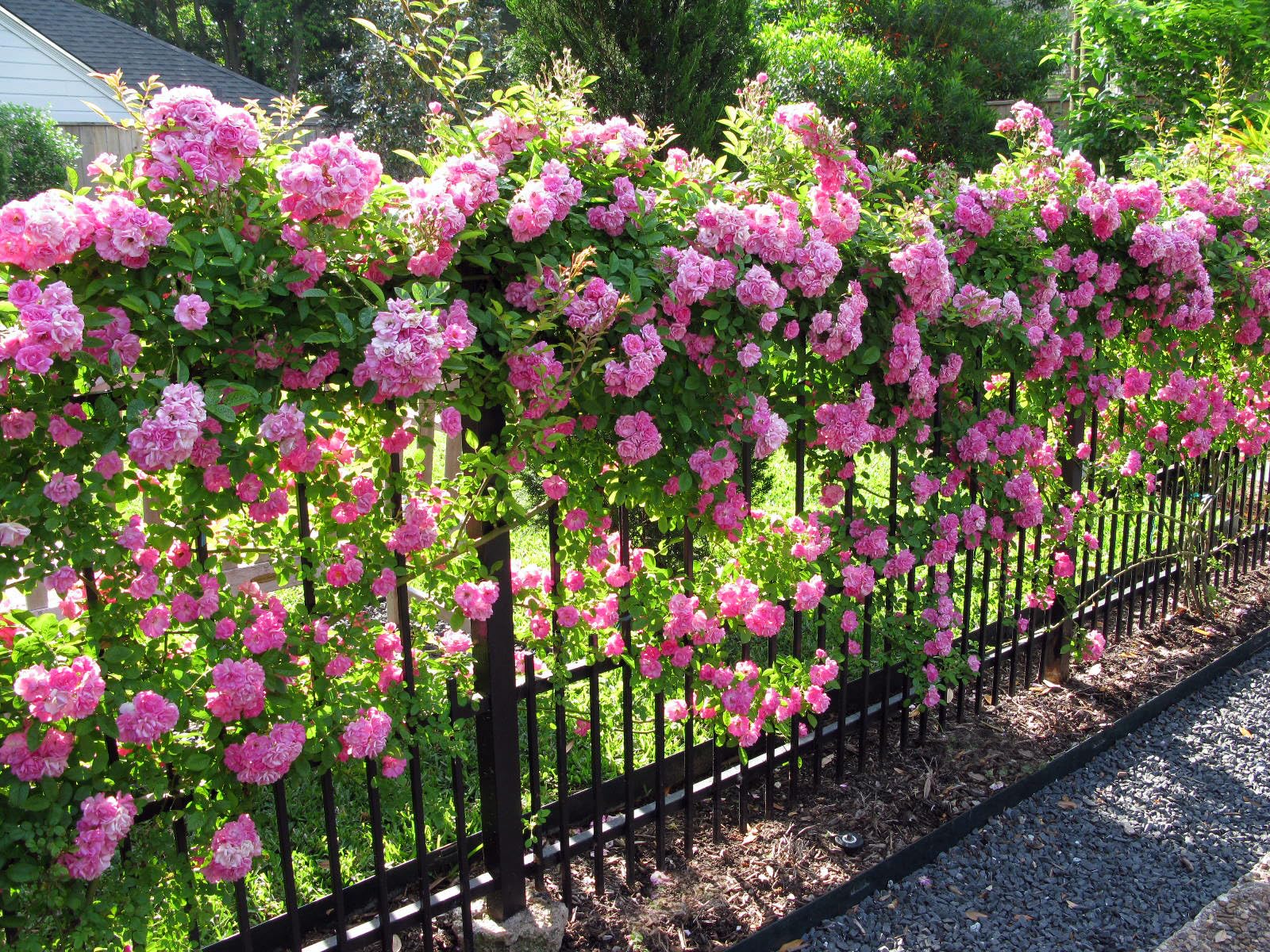
The rose that survived Hurricane Katrina — 2 pounds of starter with a reputation for vigorous comeback.
Peggy Martin has a backstory that matches its behavior: it is famously vigorous, easy to maintain, and armed with very few thorns. The mature height is 10-15 feet with a 12-15 foot spread, making it a wide, sprawling climber that covers fences and walls with hundreds of 2-inch blush pink blooms in spring and fall. It ships as a live plant in a fabric grow bag from a 1-quart nursery pot — the plant is only 2 pounds, so it is a true starter size.
Hardiness zones 4-9 make it the most cold-tolerant rose here, comfortably exceeding zone 7 requirements on both ends. The top praise from owners is its healthiness, with many noting it arrived lush with green leaves. One reviewer noted that after 8 months, it reached 5 feet tall. On the flip side, some find the initial size very small (7-8 inches), and a few in colder zone 6b reported winter losses. The mix of feedback on size is real: some call it nice; others call it tiny. But the growth rate gets consistent praise once it is in the ground.
Tough-to-match strength: its 4-9 hardiness range is the widest here, so it handles zone 7 winters and hot summers without drama.
Honest starter reality: at 2 pounds and 7-8 inches, this is a small plant — it needs a season to establish before it takes off.
Best for: the gardener who wants a low-thorn, wide-spreading climber with a proven survival instinct and the widest zone tolerance.
skip it if: you expect a large plant at delivery or you have no patience for a 1-quart starter to size up.
4. Zéphirine Drouhin Climbing Rose

The vine you can actually run your hands along — thornless stems with a fragrance that fills the walkway.
Zéphirine Drouhin is the rose for anyone tired of scratched forearms. It is marketed as nearly thornless, and owners confirm that any thorns present are soft, not snagging. The fragrance is described as exceptional, with continual blooming through spring to fall. It is an own-root rose delivered in a 1-gallon container at 12-16 months old, reaching a mature size of 10 feet tall by 6 feet wide — perfect for a garden arch or a wall where you brush past it.
Hardiness zones 6-10 put zone 7 right in the middle of its comfort range. The main complaint is that an occasional plant arrives with broken main shoots, though one owner updated that the damaged plant produced 11 flower buds in under 2 months. The mixed feedback on blooming is worth noting: some see flowers quickly, others wait. The 30-day warranty is void if you use granular fertilizer (dry pellets that release nutrients slowly), so follow the included instructions carefully.
Why it stands out
- Nearly thornless with soft prickles — safe for high-traffic garden areas
- Exceptionally fragrant, with blooms that keep coming spring through fall
- Own-root plant in a 1-gallon container with a strong root system
- Vigorous growth; one damaged plant rebounded to 11 buds in under 2 months
One thing to know
- Half-size feedback on blooming: some owners get flowers fast, others wait a season
- Occasional shipping damage to shoots; warranty voided if granular fertilizer is used
Reach for this if: you want a thornless climbing rose with classic old-rose fragrance that you can plant near a walkway or arch.
Think twice if: you need guaranteed blooms the first season or you plan to use granular fertilizer from day one.
5. Heirloom Climbing Roses – Cherry Garland
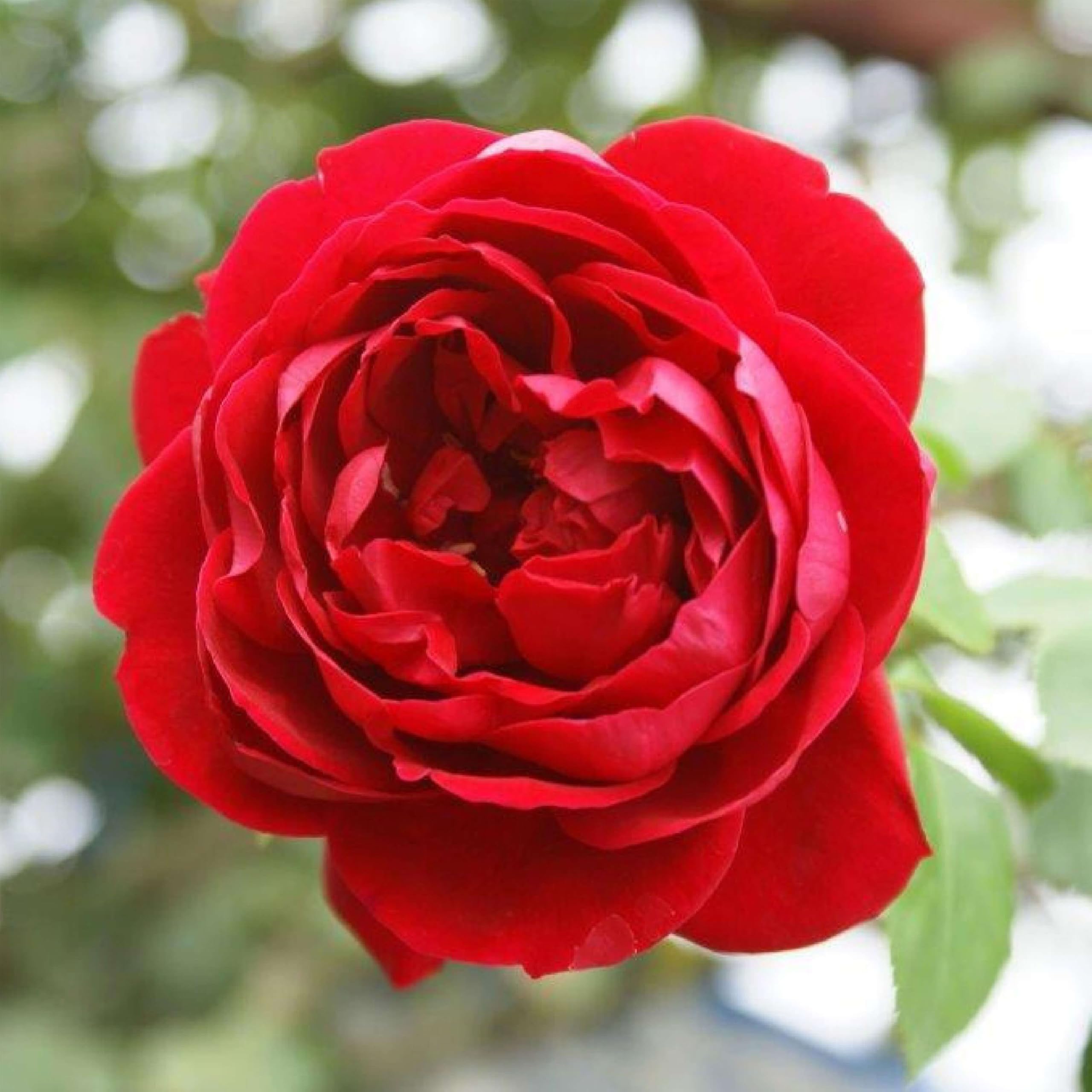
The dark red climber that one owner says looks straight out of a Disney movie — continual blooms year after year.
Cherry Garland is the pick for rich, dark red flowers that keep coming. It is a moderately fragrant, continual-blooming own-root rose that reaches 11 feet tall and spreads 9-10 feet wide. It ships as a 12-16 month old plant in a 1-gallon container, arriving at 12-15 inches tall and potentially partially defoliated — that is normal. Hardiness zones 6-9 cover zone 7 comfortably.
The strongest owner story here spans multiple years: one buyer mentioned that the rose was an aggressive climber, outperforming Don Juan (another popular climber) and New Dawn in height and bloom count despite only 4 hours of direct sun. By year 4, it had overgrown a trellis and showed no black spot disease (a common fungal issue). Another owner bought a second one because the first looked “like the roses from Snow White movie.” The trade-off is that some plants arrived and struggled after a year, and a few found customer service unresponsive. The majority, however, describe gorgeous, healthy growth that multiplies each season.
Standout stamina: several multi-year owner accounts show this rose outgrowing classic varieties with minimal disease issues.
One caution: a minority report poor survival after a year; local garden center may be a safer bet if you are risk-averse.
Best for: the gardener who wants dark red, continual blooms on a tall climber with proven multi-year performance from real owners.
pass on it if: you want guaranteed customer support for post-planting issues; Heirloom’s service gets mixed owner reviews.
6. Seven Sisters Climbing Rambler Rose

The 1817 heirloom that climbs 15 feet, changes color as it matures, and shrugs off most soil types.
The Seven Sisters is a living piece of garden history, introduced to Europe between 1815 and 1817. It is a rambler (a type of climbing rose with flexible canes that blooms once on old wood) that peaks at 15 feet tall — the tallest in this lineup — producing clusters of double flowers that shift from carmine to mauve to creamy white as they age. It is an own-root rose bred for toughness, with a nematode-resistant root system (nematodes are tiny soil worms that damage roots) and a natural ability to resist common rose problems without regular chemical spraying.
Hardiness zones 6-9 cover zone 7 with no problem. The most-discussed theme among owners is healthiness — most report a green, thriving plant that sprouts climbing shoots. The recurring mixed point is condition at arrival and size: some get a healthy, perfectly packed plant, while others find it smaller than expected. A few plants arrived and later died. The company recommends repotting into a 4-6 inch pot immediately upon arrival, which matters for success. If you choose this one, follow the included instructions closely.
Why it is special
- 15-foot height beats the rest here — ideal for tall pergolas and large arches
- Disease-resistant and tolerates most soil types except poor drainage
- Color-changing blooms offer a unique visual effect through the season
- Own-root heirloom with deep roots that resist nematodes
What to watch for
- Arrival size and condition vary — some plants are smaller than anticipated
- Needs immediate repotting into a 4-6 inch pot, not a plant-and-forget starter
Grab this if: you want a tall, antique rambler with color-changing blooms and natural disease resistance for a large structure.
Look elsewhere if: you want a predictable, guaranteed large starter plant — this one’s arrival size is inconsistent.
7. Proven Winners – Rise Up Ringo Climbing Rose

The compact golden-yellow shrub that reaches 3-5 feet — perfect for a container or a small garden accent.
Rise Up Ringo is the odd one out in a climbing list because it is technically a shrub that climbs to 36-60 inches, not a 15-foot rambler like the Seven Sisters. But that compact size is exactly why it belongs here: if you garden in a small space, a container, or a tight border, this is the climber that works. The double golden yellow flowers feature a bright red eye, blooming from spring through fall. It is a low-maintenance deciduous shrub (it loses leaves in winter) from Proven Winners, shipped in a 2-gallon container at 8.8 pounds.
Hardiness zones 4-9 give it the widest cold range alongside Peggy Martin — safe for even the coldest zone 7 winter. Owner feedback is strongly positive on health and appearance: one reported the bush arrived perfect with blooms forming within two days, and another said it more than doubled in size in two months. The minority experience: a plant arrived nearly leafless and never recovered, and another survived but did not bloom the first summer. On balance, the health consensus is very strong.
Perfect niche: for patio pots, small borders, or anyone who wants a “climber” that does not overwhelm the space.
Honest limitation: at 36-60 inches, it may not cover a tall trellis or an arch — think of it as a mounded accent climber.
Reach for this if: you love the idea of a climbing rose but only have a container, a small garden, or a low wall — this one actually fits.
it’s not for you if: you expect a traditional tall climber that reaches the top of a 6-foot fence.
Understanding the Specs
Hardiness Zones — The Cold-Weather Boundary
This number tells you the coldest climate a rose can survive in, based on the USDA plant hardiness map. Zone 7 covers areas where winter lows drop to 0 to 10 degrees Fahrenheit. A rose rated for zones 5-9 has a comfortable buffer on the cold side, while a rose rated only for zones 7-9 is riskier if a deep freeze hits. Always pick a rose whose zone range includes your number, ideally with at least one zone colder than yours to be safe.
Own Root vs. Grafted — What Survives Winter Dieback
An own-root rose is grown from a cutting, so the entire plant genetically matches the parent variety. If the top growth dies in a harsh winter, new shoots from the root are the same rose you planted. A grafted rose has a different rootstock, and if the top dies, the rootstock may sprout a different rose entirely. For zone 7, an own-root rose gives you more confidence during unpredictable winters.
Mature Height and Spread — Real Coverage for Your Structure
These numbers show what the rose will reach in 3-5 years, not what arrives in the box. A 10-foot climber barely covers a 6-foot fence; a 15-foot rambler will swallow a tall arbor. Spread matters too — a 6-foot wide rose covers a wall, while a 3-foot wide rose is better for a single post. Check your structure’s size before picking a rose, and give it the space it needs to reach those numbers.
Bloom Cycle — When and How Often You See Flowers
Roses fall into three bloom patterns. Once-blooming roses put on one massive show in late spring, then stop. Repeat-blooming roses send flowers in waves across the growing season. Continual-blooming roses produce flowers from spring to frost with no big gaps. For a zone 7 garden, a repeat or continual bloomer extends the color well into fall, while a once-bloomer delivers a spectacular single moment that you look forward to all year.
FAQ
Can I plant a climbing rose in a container in zone 7?
How long does a climbing rose take to reach its full height in zone 7?
Will a climbing rose bloom in partial shade in zone 7?
Should I prune climbing roses in zone 7 before winter?
What is the difference between a climbing rose and a rambling rose?
Can I grow climbing roses along a wall that gets no direct sun in zone 7?
Why did my climbing rose arrive looking like a dead stick?
How often should I water a newly planted climbing rose in zone 7?
Final Thoughts: The Verdict
For most people, the climbing roses for zone 7 winner is the Rosa ‘New Dawn’ because it arrives as a substantial #3 container, carries a reliable 12-foot mature height, and earns consistent praise for its fragrance and bloom quality across hundreds of owners. If you want the widest hardiness range and a low-thorn, wide-spreading growth habit, grab the Peggy Martin. And for those who need a fast-starting, repeat-blooming climber with strong multi-year owner stories, the Eden Climber is the one to reach for.
How We Picked
We do not accept paid placement. Every pick is matched to a real buyer and a real use-case; we do not hands-on test units.
Sources & Methodology
Specifications: manufacturer listings and product documentation. Review insights: verified customer reviews, as of July 2026. Pricing: not shown on this page (it changes often); check the current price via the retailer link.
As an Amazon Associate, WellFizz earns from qualifying purchases. This does not affect which products we feature.
Related Guides

Mo Maruf
I created WellFizz to bridge the gap between vague wellness advice and actionable solutions. My mission is simple: to decode the research and give you practical tools you can actually use.
Beyond the data, I am a passionate traveler. I believe that stepping away from the screen to explore new environments is essential for mental clarity and physical vitality.