Our readers keep the lights on and my smoothie glass nicely filled. As an Amazon Associate, I earn from qualifying purchases.
A bare chain link fence is just a utility divider — but wrap it in living green, and that same grid becomes a privacy wall, a windbreak, and a backdrop of seasonal color. The challenge is choosing plants that actually thrive on the metal mesh without damaging it, while delivering the coverage you want.
I’m Mohammad Maruf — the founder and writer behind WellFizz. I’ve spent countless hours analyzing plant hardiness, growth patterns, and anchoring hardware to identify which combinations truly transform a chain link fence into a living screen.
After digging into the growth rates, support needs, and anchoring systems that work best with this fence type, I’ve built this guide to the best climbing plants for chain link fence — covering both the vines and the stakes that keep everything upright in wind and weather.
How To Choose The Best Climbing Plants For Chain Link Fence
A chain link fence is a unique trellis — its open diamond pattern offers built-in climbing support, but it also conducts heat, reflects harsh sunlight, and can be vulnerable to wind lift at the bottom. The right plant and anchor combination turns this raw grid into a lush vertical garden. Here are the three key decisions to make.
Self-Climbers vs. Twining Vines vs. Anchored Supports
Some plants like Carolina jasmine naturally twine their stems through the fence diamonds without any extra structure. Others, like wisteria, are heavy twiners that need a strong vertical support to latch onto before they can spread across the mesh. For vines that don’t cling, a lightweight expandable wooden trellis mounted to the fence gives them the foothold they need. Understanding whether your chosen vine climbs by tendrils, twining, or adhesive pads determines how much prep work is required.
Growth Rate and Mature Weight
Fast-growing vines like wisteria can cover a 6-foot fence section in a single season, but they become heavy — their mature wood adds significant downward pull on the fence top. Lighter options like clematis or annual morning glory are gentler on the mesh. If your fence is a standard 9-gauge chain link, heavy perennials are fine; if it’s lighter residential-grade mesh, stick with smaller vines and supplement with ground anchors to prevent the fence from bowing or lifting.
Sun Exposure at the Fence Line
Full-sun fences bake the metal surface, which can scorch tender vine leaves that press directly against the hot steel. Carolina jasmine and wisteria tolerate this heat well, while shade-preferring vines like climbing hydrangea will struggle. Measure how many hours of direct sun the fence face receives before picking your plants — a mismatch here is the most common reason vine plantings fail along chain link.
Quick Comparison
On smaller screens, swipe sideways to see the full table.
| Model | Category | Best For | Key Spec | Amazon |
|---|---|---|---|---|
| VVOKGO Rebar Stakes | Ground Anchor Set | Securing fence base against wind | 32 stakes, 12″ length, 5/16″ diameter | Amazon |
| Perfect Plants Amethyst Falls Wisteria | Perennial Vine | Fast purple coverage on trellis or mesh | Mature height 15 ft, zones 5-9 | Amazon |
| Carolina Jasmine Vine | Evergreen Climber | Year-round green screen with fragrant blooms | 4 plants, 1 ft height, zones 3-10 | Amazon |
| Expandable Garden Trellis | Wooden Lattice | Adding climbing structure to bare fence sections | 13″ x 68″, 0.35″ thick cedar | Amazon |
| ASDFGHT J Hook Stakes | Budget Anchor Set | Budget-friendly fence bottom securing | 6 stakes, 12″ length, 0.36″ diameter | Amazon |
In‑Depth Reviews
1. VVOKGO Rebar Stakes 12 Inches J Hook Heavy Duty Set
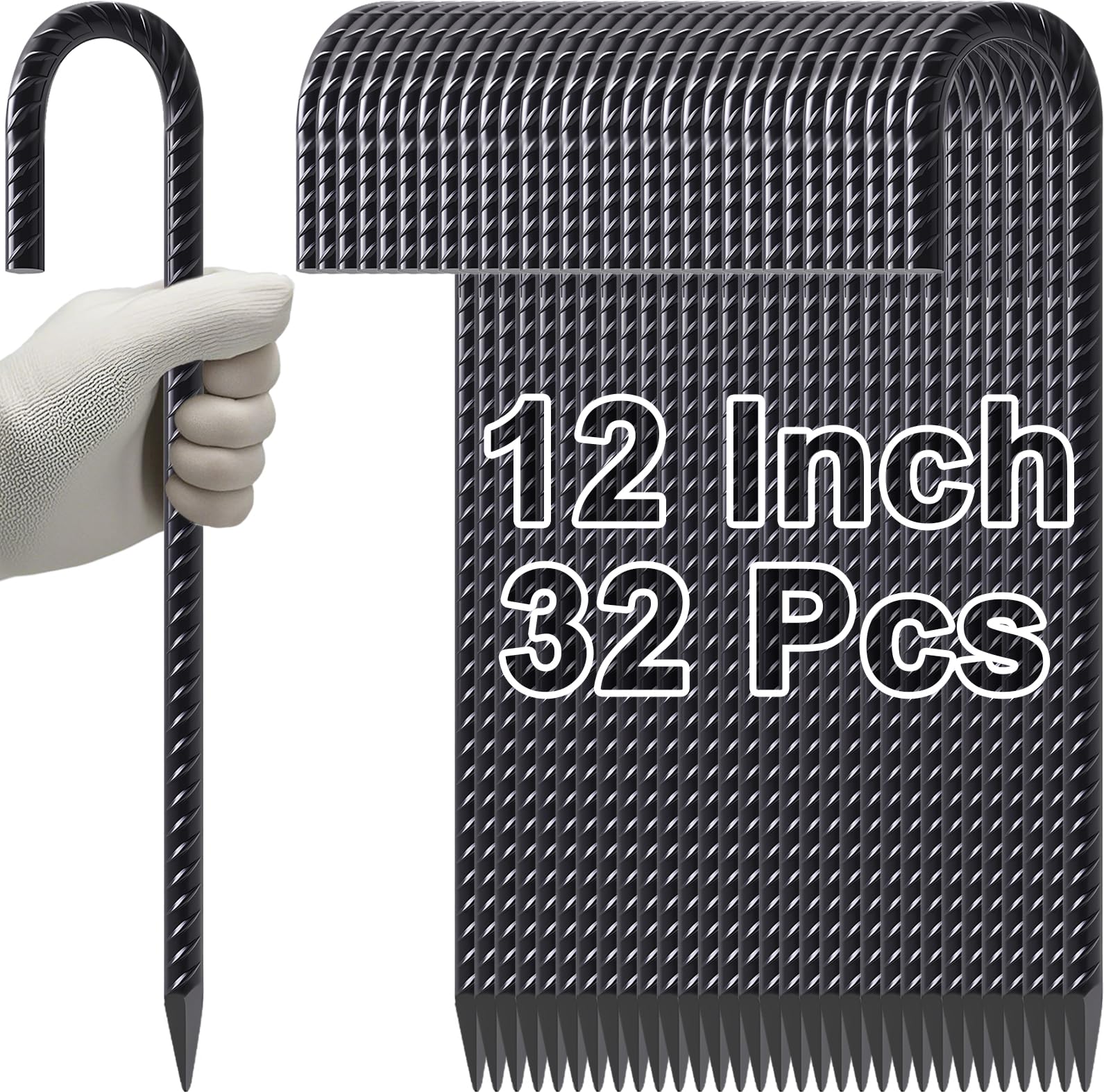
This 32-piece bundle of 12-inch rebar stakes is the anchor foundation every chain link fence vine project needs. Each stake is constructed from hot-dip galvanized alloy steel with a 5/16-inch diameter — thick enough to resist bending when driven into compacted or rocky soil, yet slim enough to slip through tarp grommets and fence bottom loops. The J-hook design provides a 1-inch opening, ideal for catching the bottom edge of a chain link panel to prevent wind lift that can uproot young vines.
The black coating adds corrosion resistance, and the chisel-pointed 45-degree tip penetrates ground quickly with a sledge or mallet. Customer reports describe these stakes holding shade canopies steady during 50 mph storms, and users securing fence bottoms report zero pull-out even in loose sand. The sheer quantity — 32 stakes — covers a full fence run or large greenhouse base without needing a second purchase.
For anyone layering climbing plants on a chain link fence, these stakes address the hidden structural weakness: the fence bottom. Without them, wind pressure at the base can loosen the mesh and snap tender vine stems before they ever establish. This set transforms a vulnerable fence into a stable trellis that can support the weight of mature wisteria or Jasmine.
Why it’s great
- Generous 32-stake pack covers long fence runs without restocking
- Hot-dip galvanizing resists rust far better than painted or plain steel
- Chisel tip drives into hard clay and rocky soil with minimal effort
Good to know
- Black coating can rub off on bare hands — wear work gloves during installation
- 5/16-inch diameter is stiff; a heavy hammer or sledge is recommended for deep soil
2. Perfect Plants Amethyst Falls Wisteria Vine 1 Gallon
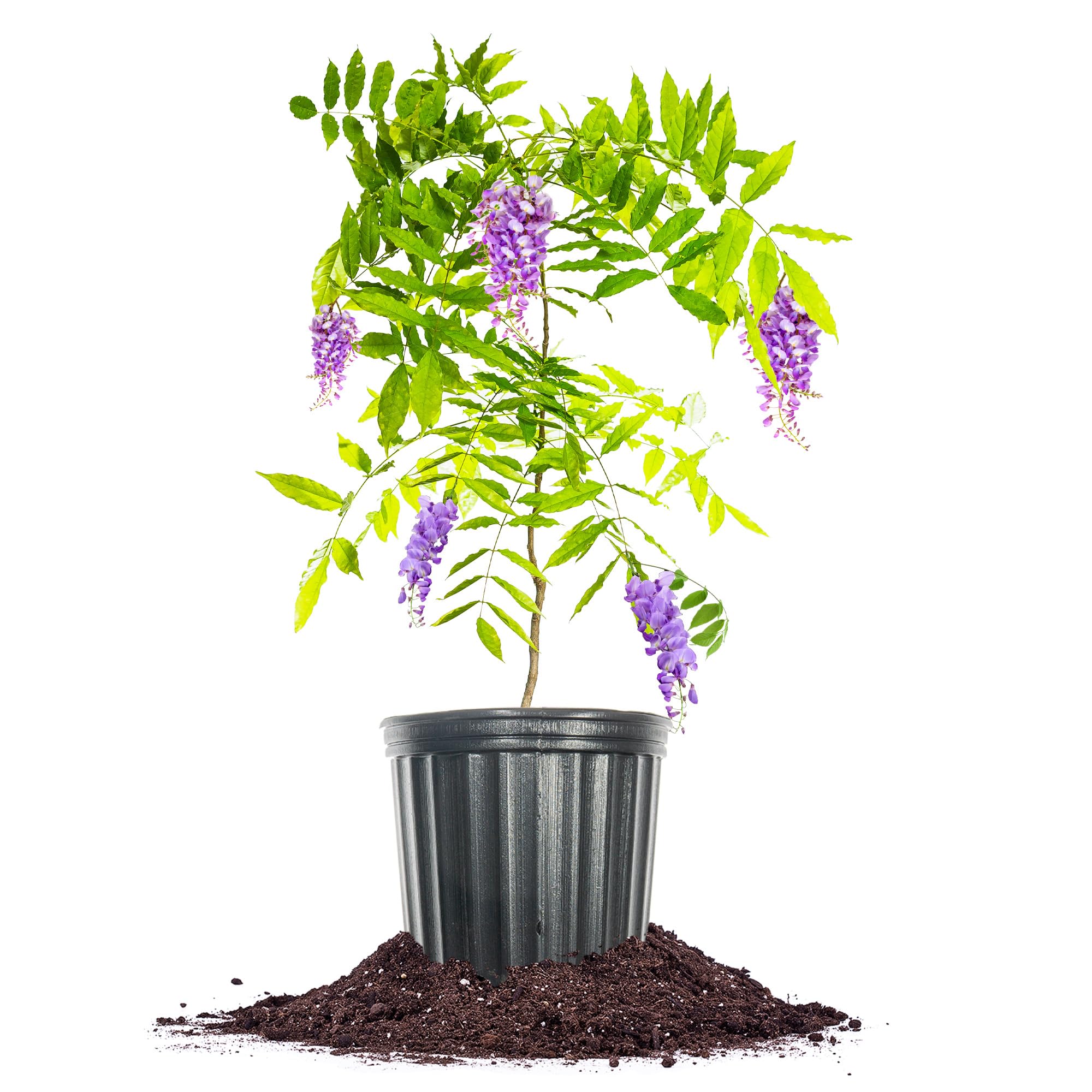
The Amethyst Falls variety of wisteria is a controlled, non-invasive alternative to its aggressive Chinese cousin — making it safe for chain link fence planting without fear of it ripping apart the mesh as it matures. This 1-gallon potted vine ships with a full root system and a small starter trellis, giving it a head start over bare-root plants. Its lavender-purple blooms appear in late spring and early summer, attracting butterflies and hummingbirds directly to the fence line.
Hardy in zones 5 through 9, this wisteria is drought-tolerant once established — one customer reported it survived three weeks without water plus a hard freeze, then bloomed the following season. It does need a strong support structure because the mature vines become heavy. Pairing it with the VVOKGO ground anchors at the fence base prevents the weight of the wisteria from bowing the chain link outward during high winds.
The fragrance is notable — the blooms carry a sweet grape-like scent that fills a small yard. Because this wisteria twines rather than uses adhesive pads, it will not damage the fence coating. Just provide a vertical string or light trellis at the base to guide it up to the chain link mesh, then let it weave through the diamonds naturally.
Why it’s great
- Non-invasive Amethyst Falls cultivar is safe for fences — won’t tear apart links
- Ships with a mini trellis and structural ties for immediate vertical training
- Powerful fragrance and rich purple blooms that attract pollinators
Good to know
- Does not ship to California or Arizona due to state agricultural restrictions
- Requires a strong trellis or tension wire to support mature vine weight (over 15 ft)
3. Carolina Jasmine Plant Live Evergreen Vine (4 Bags)

Carolina jasmine (Gelsemium sempervirens) is a fast-growing evergreen vine that naturally twines through chain link fence diamonds, providing year-round green coverage rather than just seasonal interest. This 4-bag set delivers young plants that stand about 4 to 5 inches at shipping and have demonstrated rapid growth — customer reports show an inch of new growth within the first 20 days. Its bright yellow trumpet-shaped blooms appear in summer and carry a strong, sweet fragrance that carries across the yard.
Hardy across an exceptionally wide range of USDA zones (3 through 10), this vine handles both full sun and partial shade, making it adaptable to fence orientations that get inconsistent light. The biodegradable container lets roots grow out directly into the soil, reducing transplant shock. Multiple customers noted the plants arrived healthy and well-packed, with personalized care instructions included — the seller even follows up to confirm successful arrival.
Because Carolina jasmine is a twining vine, it grips the chain link mesh without needing adhesive pads or extra trellising. Simply plant at the fence base and guide a few stems toward the mesh — the plant does the rest. It’s also deer-resistant and tolerates moderate watering once established, making it one of the lowest-maintenance options for a permanent fence screen.
Why it’s great
- Self-twining vine — no trellis needed, wraps directly into chain link diamonds
- Evergreen foliage keeps fence covered in all four seasons, not just summer
- Extreme cold-hardiness (zone 3) works for northern fence lines
Good to know
- Young plants start small (4-5 inches) — initial coverage requires patience
- Needs consistent moisture during establishment; drought tolerance comes after rooting
4. Expandable Garden Trellis 13″ x 68″ Thickened Cedar Wood
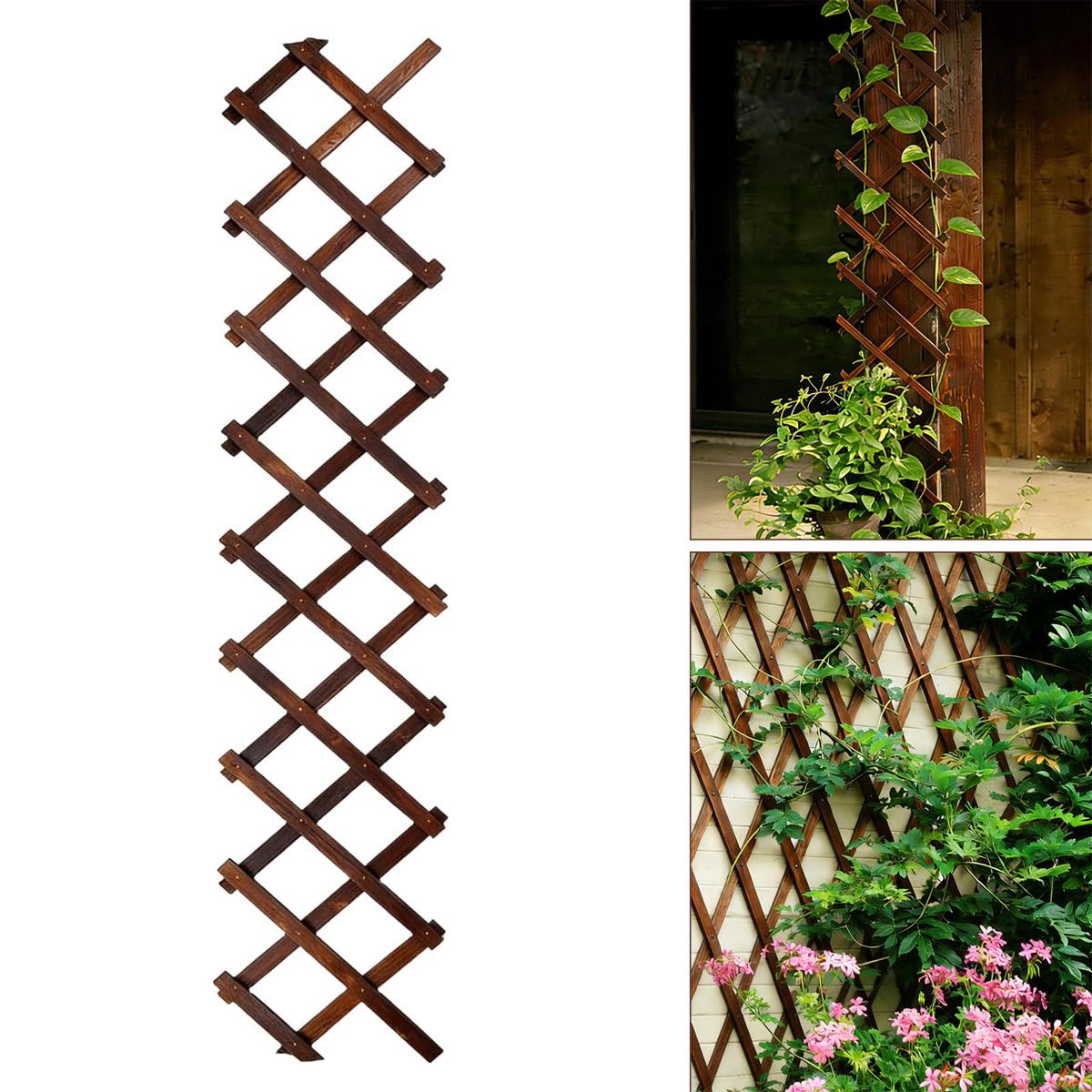
Not every climbing vine can self-attach to chain link. Heavy twiners like wisteria and grapevines need a vertical structure to climb before they spread laterally across the fence. This expandable cedar trellis provides exactly that — a 13-inch-tall by 68-inch-wide wooden lattice that mounts at the base of the fence and gives vines a stable climbing grid. At 0.35 inches thick, the cedar slats are 30 percent thicker than standard lattice, resisting warping and cracking after rain and sun exposure.
The carbonized cedar finish retains natural wood grain and can be painted to match the fence color. It expands and contracts like an accordion, so you can adjust the width to fit fence sections of varying lengths without cutting. Multiple customers describe using it at a 45-degree angle against the fence to train clematis and grape vines upward, with the lattice providing both support and a decorative backdrop even before the leaves fill in.
Installation is straightforward — attach the lattice to the fence bottom using zip ties or wire, then plant your vine at the base. The open diamond pattern provides excellent airflow and light penetration, reducing mildew risk on dense foliage. For renters or gardeners who redesign annually, the expandable design means zero permanent modification to the chain link itself.
Why it’s great
- Thickened 0.35-inch cedar slats won’t warp or crack like cheap lattice
- Expandable design adjusts to fence section widths without cutting tools
- Can be painted to match fence color or left natural for a wood accent
Good to know
- Dangling end pieces on the outer slats can be tricky to secure — use zip ties at corners
- Only 13 inches tall, so it serves as a base starter trellis rather than full fence coverage
5. ASDFGHT J Hook Rebar Stakes 12 Inch 6-Pack

This 6-pack of 12-inch J-hook rebar stakes is an entry-level anchoring solution for chain link fence bottoms, designed for smaller projects — securing a single fence panel, a greenhouse base, or a lamp post planter. Each stake is 0.36 inches in diameter with a sharp chiseled point and a 2.8-inch hook length, providing a 1.7-inch opening to grab the bottom fence wire. The alloy steel construction includes a rust-proof coating that holds up against rain and soil moisture.
Customer tests show these stakes held a tent steady in fierce Florida wind while neighboring tents failed, and another user anchored a 10×20 greenhouse through multiple high-wind storms over a full year. The J-hook design allows installation by hand or with a mallet, and removal is just as easy — pull straight up when the season changes. For budget-conscious gardeners, this set provides enough anchors for one to two standard fence sections, with the option to buy additional packs for longer runs.
Where they differ from the premium VVOKGO set is quantity — six stakes is enough to secure the corners and middle of a single panel, but covering an entire backyard perimeter will require multiple packs. The steel diameter (0.36 vs. 5/16 inch) is slightly thicker than the VVOKGO option but similar in feel. The rust coating is effective, though some users noted it wears at the impact point if driven with a steel sledge.
Why it’s great
- Budget-friendly intro pack for securing one fence panel or small greenhouse
- Sharp chisel tip drives into tough soil and compacted ground with ease
- Rust-proof coating survives wet soil and rain without visible corrosion
Good to know
- Only 6 stakes per pack — covering a full fence run requires multiple purchases
- Coating can chip at the strike point if driven aggressively with a steel mallet
FAQ
Will climbing vines damage the coating on my chain link fence?
How many ground anchors do I need per fence section?
Can I plant Carolina jasmine and wisteria on the same fence?
Do I need to paint or seal the cedar trellis before mounting it?
Final Thoughts: The Verdict
For most users, the climbing plants for chain link fence winner is the VVOKGO Rebar Stakes 32-Pack because it solves the fundamental weak point — fence bottom lift — while providing enough stakes for a full project. If you want fast, fragrant green coverage, grab the Carolina Jasmine 4-Pack for self-clinging evergreen growth. And for dramatic purple blooms that transform the fence into a focal point, nothing beats the Perfect Plants Amethyst Falls Wisteria trained up an expandable trellis.

Mo Maruf
I created WellFizz to bridge the gap between vague wellness advice and actionable solutions. My mission is simple: to decode the research and give you practical tools you can actually use.
Beyond the data, I am a passionate traveler. I believe that stepping away from the screen to explore new environments is essential for mental clarity and physical vitality.