Our readers keep the lights on and my smoothie glass nicely filled. As an Amazon Associate, I earn from qualifying purchases.
A climbing helmet is the single most critical piece of safety gear you can carry up a route. It protects against falling rock, ice, and gear, but also cushions the skull during a fall or a slip on approach. The wrong helmet feels heavy, fits poorly, or lacks essential side coverage, turning a day at the crag into a constant distraction.
I’m Mohammad Maruf — the founder and writer behind WellFizz. This guide is the result of dozens of hours spent cross-referencing shell materials, foam densities, weight specs, and real-world user reports across the full spectrum of climbing helmets available today.
Whether you’re projecting hard sport routes, leading trad splitters, or squeezing through tight cave passages, choosing the right head protection is a deeply personal decision. Let this guide help you find the absolute best climbing helmets for your specific style and head shape.
How To Choose The Best Climbing Helmets
Choosing a climbing helmet isn’t just about grabbing the lightest model on the shelf. You need to balance protection, weight, fit, and ventilation based on your primary climbing discipline. A traditional hard-shell ABS helmet will shrug off repeated rockfall on a big wall, while an in-mold polycarbonate helmet disappears on your head during a long alpine approach. The key is matching the construction to your use case.
Shell Construction: ABS vs. In-Mold vs. Hybrid
ABS helmets feature a hard plastic outer shell bonded to an EPS foam liner. They are the most durable against dings and scratches, making them ideal for caving, canyoneering, and alpine climbing where gear gets bashed. In-mold helmets bond the outer polycarbonate shell directly to the EPS foam during manufacturing, resulting in a lighter helmet at the cost of lower abrasion resistance. Hybrid helmets sandwich a thin ABS layer over an in-mold core, offering a middle-ground balance of weight and toughness. For pure rock climbing where weight matters, many prefer in-mold or hybrid; for multi-day wall and cave adventures, a full ABS shell offers peace of mind.
Side and Rear Coverage
Older helmet designs focused almost exclusively on top-of-head impacts, but modern certification standards and climbing accidents have shown that lateral impacts are just as dangerous. Look for helmets explicitly labeled with “Top and Side Protection” — these extend the foam and shell lower around the temples and the back of the skull. The Petzl BOREO and the Black Diamond Capitan both prioritize extended coverage in these zones, offering a noticeable safety advantage over minimalist designs for bouldering, trad climbing, and via ferrata.
Quick Comparison
On smaller screens, swipe sideways to see the full table.
| Model | Category | Best For | Key Spec | Amazon |
|---|---|---|---|---|
| Petzl BOREO | Premium | Caving & All-Round Climbing | Dual EPP+EPS liner / 410g | Amazon |
| Petzl Meteor | Premium | Lightweight Alpine & Ski Touring | In-Mold PC shell / 240g | Amazon |
| Black Diamond Capitan | Mid-Range | All-Day Trad & Sport Climbing | Dual density foam / 300g | Amazon |
| Mammut Skywalker 3.0 | Mid-Range | Bouldering & Hiking Protection | Hybrid ABS/EPS / 330g | Amazon |
| EDELRID Zodiac | Mid-Range | Caving & Multi-Pitch | Wing-Fit system / Folds flat | Amazon |
| POC Tectal | Premium | Mountain Biking & Trail Running | Unibody PC+EPS / 350g | Amazon |
| Kask Superplasma HD | Premium | Industrial & Technical Rescue | ANSI Z89.1/CSA Z94.1 / 51-62cm | Amazon |
In‑Depth Reviews
1. Petzl BOREO Durable Helmet

The Petzl BOREO sets a new benchmark for all-around climbing protection by coupling a thick ABS outer shell with a dual-foam liner of EPS and EPP. This hybrid approach absorbs shock from multiple vectors while keeping the overall profile compact. The extended lower rear coverage is a standout feature for anyone who has taken a rock to the back of the head on a steep descent.
Four integrated headlamp clips hold lights securely during night climbs or long cave trips, and the soft headband conforms closely without pressure points. Weighing 410 grams, it is not the lightest helmet here, but the trade-off for rugged durability and expanded protection zones is clear. Users who have taken falls report the helmet barely shows a scratch.
Where the BOREO truly shines is in high-abuse environments like caving and canyoning, where the shell must resist scraping against rock. The ventilation holes are generous, though they lack a close-off mechanism for cold weather. If you need a single helmet that covers trad routes, big wall objectives, and underground exploration, this is the choice.
Why it’s great
- Top and Side Protection label covers lateral impacts
- Dual EPP+EPS foam absorbs repeated hits
- Compact shell folds nicely for pack storage
Good to know
- No vent closure for cold weather descents
- Heavier than in-mold competitors at 410g
2. Petzl Meteor Helmet
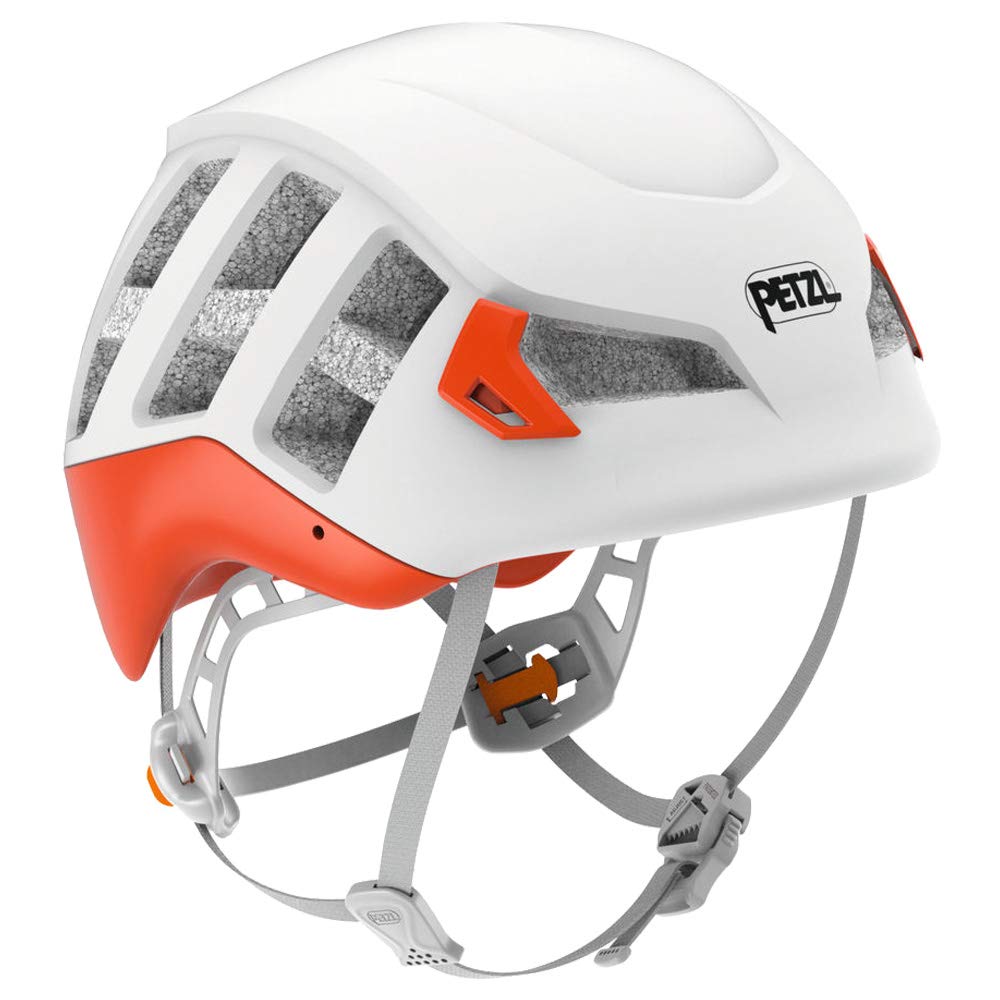
The Petzl Meteor is the featherweight champion of the climbing helmet world, tipping the scales at just 240 grams in the M/L size. This is achieved through an in-mold polycarbonate shell bonded directly to the EPS foam, eliminating heavy overlays. The result is a helmet you can wear all day on an alpine approach or a multi-pitch sport route without even noticing it.
Specifically CE-certified for ski touring (PCSR-002), the Meteor integrates seamlessly with ski goggles and features massive ventilation ports that dump heat during strenuous ascents. The magnetic buckle is a clever touch — it clicks shut one-handed even with thick winter gloves on. Front clips and a rear elastic band keep headlamps secure for early starts and late descents.
A few users with larger heads (7 1/2 hat size or more) have reported that the M/L size sits a bit high on the head, compromising front and rear coverage. This is an important fit consideration — try it on before buying if you have a larger cranium. For everyone else, the Meteor delivers unparalleled weight savings without sacrificing impact certification.
Why it’s great
- Extremely light at 240g for fatigue-free wear
- Ski touring certified and goggle compatible
- Magnetic buckle works effortlessly with gloves
Good to know
- Sits high on larger head shapes
- In-mold shell less resistant to scrapes and dings
3. BLACK DIAMOND Capitan Helmet
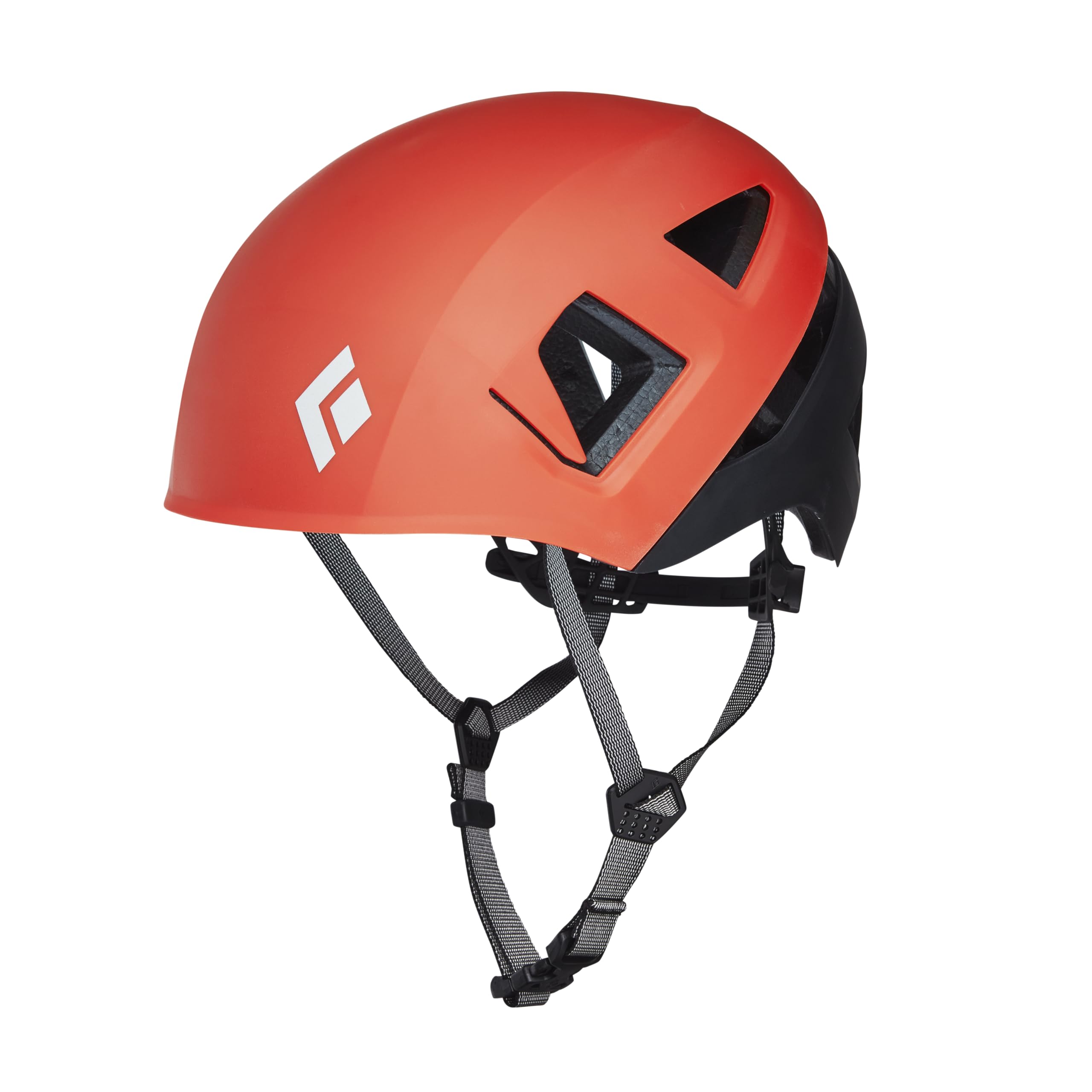
Black Diamond’s Capitan hits a sweet spot between durability and weight, using a dual-density foam core inside a hard ABS shell. The extended side and back coverage provides added protection in the temple and occipital zones — areas often neglected in minimalist designs. The external shell resists abrasion from rock contact and gear slings, making it a solid companion for sustained trad climbing.
Strategic ventilation ports keep air moving on hot approaches, and the fit adjustment system is intuitive and secure. The headlamp clips are robust and compatible with most standard lights, staying put during dynamic movement. Users consistently praise its lightweight feel (around 300 grams) and comfortable fit for all-day wear.
One minor ergonomic quirk: some users report that the chin strap slants and pinches the cheek, especially during long sessions. Also, the ear coverage is not deep enough for everyone — the helmet edges can rub against the ears during repeated movement. Despite these fit nuances, the Capitan offers excellent protection and value for the majority of head shapes.
Why it’s great
- Dual-density foam for enhanced shock absorption
- Extended coverage at temples and rear
- Lightweight at 300g for an ABS model
Good to know
- Chin strap can pinch the cheek
- Ear coverage may be shallow for some
4. Mammut Skywalker 3.0 Helmet
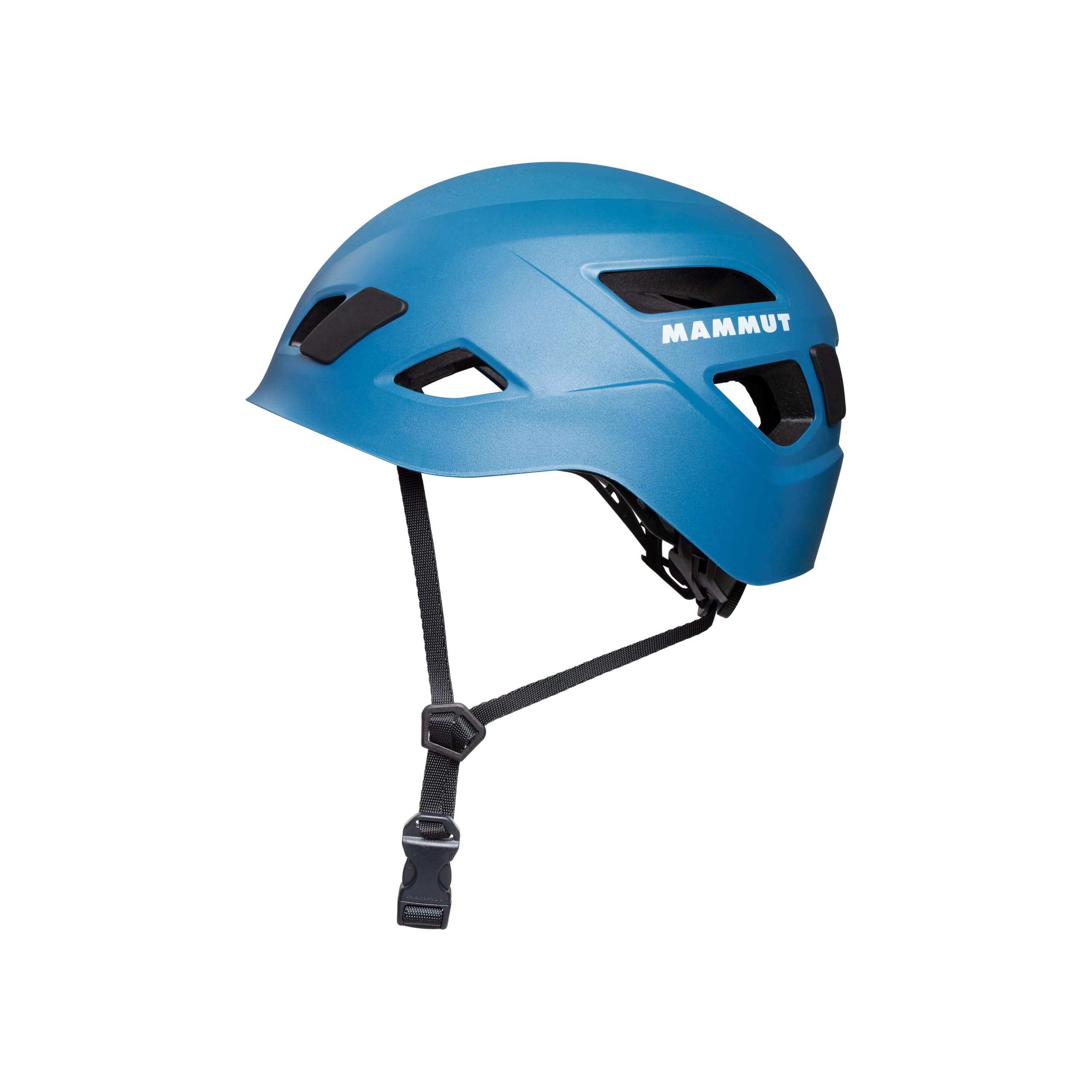
The Mammut Skywalker 3.0 is a low-profile hybrid helmet that bridges the gap between bulky hard shells and ultra-light in-mold designs. Its robust hybrid construction combines an ABS outer with an EPS foam liner, offering solid resistance against dings while keeping the silhouette compact on the head. The rear thumb-dial adjustment system allows for quick micro-tuning of the fit, even while wearing gloves.
Nine fixed ventilation channels provide consistent airflow, keeping you cool on strenuous climbs and hot crag days. The headlamp attachment clips are well-positioned and secure, making this a solid choice for early morning starts and evening descents. At 330 grams, it splits the difference between the Featherlight Meteor and the bombproof BOREO.
Durability has been a mixed bag in the user feedback — while many report the helmet performs well over months of use, a small number of units have shown structural failure at the adjustment mechanism within six months. This appears to be an occasional manufacturing variance rather than a widespread flaw, but it is worth noting for buyers who plan to abuse their gear heavily.
Why it’s great
- Low-profile hybrid construction reduces bulk
- Rear thumb dial for one-handed fit adjustment
- Nine fixed vents for continuous airflow
Good to know
- Occasional reports of adjustment mechanism failure
- Not as durable as full hard-shell ABS models
5. EDELRID Zodiac Climbing Helmet
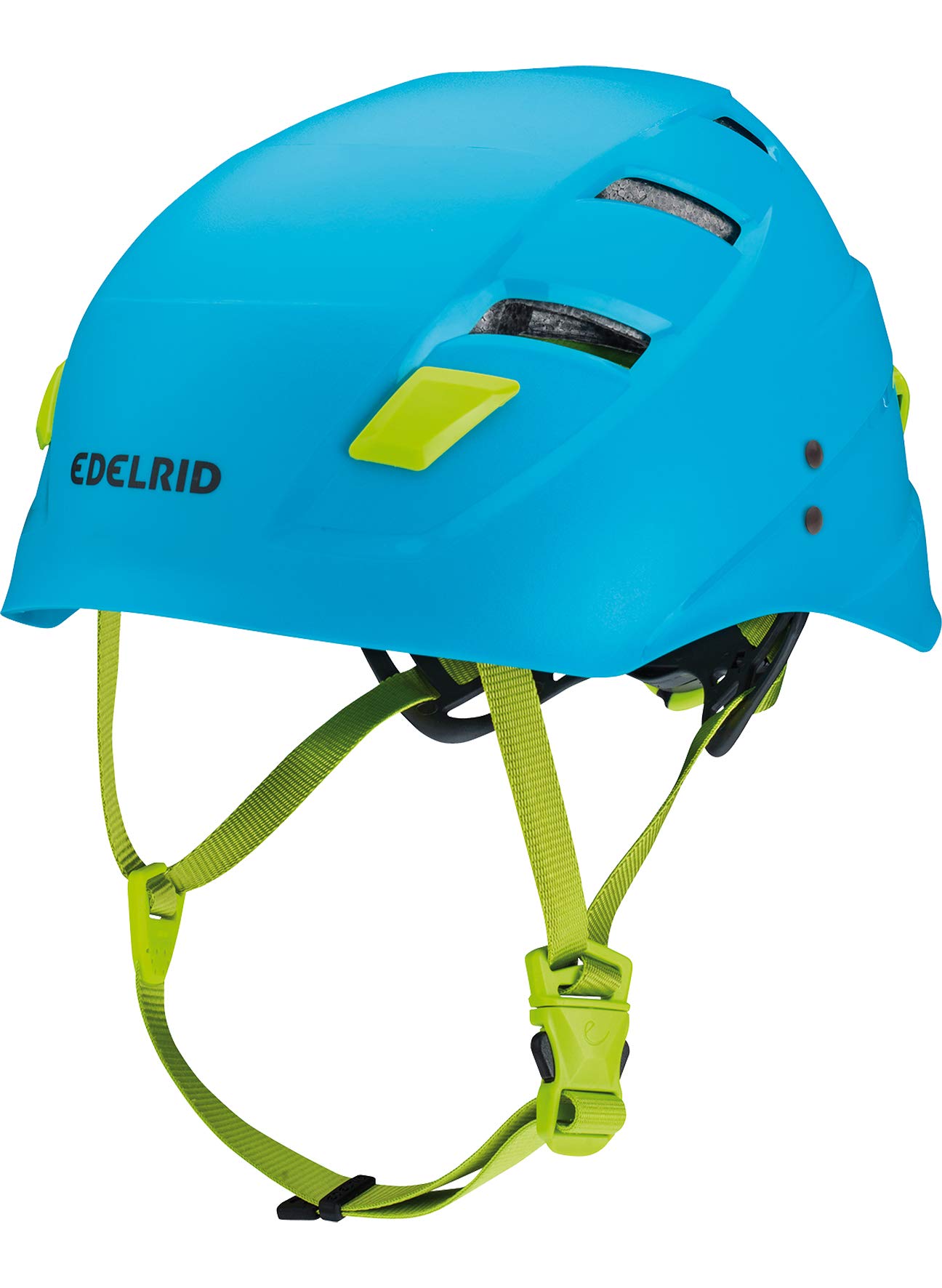
EDELRID’s Zodiac stands out for its folding design — the entire cradle folds into the shell, reducing pack size significantly when clipped to the outside of your bag. This is a major advantage for multi-pitch climbers and alpinists who need to conserve space without sacrificing protection. The one-size Wing-Fit system adjusts via a rear dial and fits a wide range of head shapes securely.
The ABS outer shell is tough against abrasion, and the EPS foam liner provides reliable shock absorption during impacts. Large ventilation ports keep air moving, and the integrated headlamp clips are effective for caving and night climbing. The chin strap fastens under the ear for a more comfortable and stable position compared to traditional side-mounted buckles.
A few users note that the wide profile of the Zodiac makes it feel broader on the head than slim Petzl models, which some prefer for stability and others find less streamlined. The strap loop-throughs also slant in a way that can pinch the cheek during extended wear. For caving and multi-pitch objectives where packability is critical, these are minor trade-offs for a very practical design.
Why it’s great
- Cradle folds into shell for compact packing
- Wing-Fit system fits a wide size range
- Chin strap positioned under ear for comfort
Good to know
- Wide profile feels bulky on small heads
- Strap loops can pinch the cheek
6. Kask Safety Helmet SUPERPLASMA HD

The Kask Superplasma HD is built for the most demanding technical rescue and industrial applications, exceeding both ANSI Z89.1 and CSA Z94.1 standards while also meeting the EN 12492 climbing helmet norm. This triple-certified design features a thick ABS outer shell with an HD polystyrene inner liner, providing extreme impact resistance for high-angle rescue, cave rescue, and rope access work.
The UP&DOWN 2.0 adjustment system allows the helmet to move naturally with the wearer, and the 2DRY fabric padding wicks moisture away rapidly. The massive adjustment range (51 to 62 cm) comfortably accommodates even the largest head sizes — a standout feature for users who struggle to find climbing helmets that fit. The orange color provides high visibility in emergency situations.
However, this helmet is heavy at 15.84 ounces (approximately 449 grams) and is overbuilt for standard sport climbing. The price point also places it at the high end of the spectrum. For technical rescue teams and climbers with exceptionally large heads, the Superplasma HD is a premium, certified workhorse. For casual crag outings, its weight and cost are overkill.
Why it’s great
- Triple certified (EN 12492, ANSI, CSA) for peace of mind
- Exceptional size range from 51 to 62 cm
- Moisture-wicking 2DRY padding stays comfortable
Good to know
- Heavier than consumer climbing helmets
- Premium price targets professional users
7. POC Tectal

The POC Tectal is a specialized mountain biking helmet that blurs the line between climbing and cycling protection. Its unibody polycarbonate shell and reinforced EPS liner prioritize structural integrity, while the extended coverage at the temples and back of the head mirrors the lateral protection modern climbers demand. The integrated RECCO reflector is a unique safety feature that aids in search and rescue.
The adjustable visor lifts to accommodate goggles or sunglasses underneath, and the 360° size adjustment system ensures a precise, rattle-free fit. Ventilated airflow channels keep your head cool on hot, technical trails. At around 350 grams, it is light enough for all-day wear and comfortable enough that you might forget you are wearing it.
It is essential to note that the POC Tectal is not CE-certified for climbing — it is a dedicated mountain bike helmet. While its protective features overlap with climbing helmets, you should not substitute it for a climbing-specific model if you are doing vertical rock work. For trail runners, e-bike riders, and enduro racers, however, it is a top-tier choice with excellent build quality and comfort.
Why it’s great
- RECCO reflector aids in search and rescue
- Adjustable visor fits goggles/sunglasses
- Lightweight and very comfortable for all-day wear
Good to know
- Designed for mountain biking, not climbing certification
- Premium price reflects specialized MTB construction
FAQ
How often should I replace a climbing helmet?
Can I use a climbing helmet for other activities like caving or kayaking?
What does “top and side protection” actually mean?
Final Thoughts: The Verdict
For most users, the best climbing helmets winner is the Petzl BOREO because its dual-foam liner and extended side protection set a new standard for all-around safety without being overly heavy. If you want a featherlight alpine helmet that disappears on your head, grab the Petzl Meteor. And for a versatile ABS helmet that balances durability and weight for trad climbing, the Black Diamond Capitan is a reliable choice you can trust.

Mo Maruf
I created WellFizz to bridge the gap between vague wellness advice and actionable solutions. My mission is simple: to decode the research and give you practical tools you can actually use.
Beyond the data, I am a passionate traveler. I believe that stepping away from the screen to explore new environments is essential for mental clarity and physical vitality.