Our readers keep the lights on and my smoothie glass nicely filled. As an Amazon Associate, I earn from qualifying purchases.
Specs are compiled from manufacturer listings and verified buyer reviews and can change over time — please confirm the key details on the product page before buying.
Your climbing rope spends half its life coiled and crammed inside a bag — and if that bag collapses, spills grit, or forces you to stuff a wet rope into a dark corner, every trip starts with a headache. A purpose-built rope bag changes that: it keeps the line clean, the gear organized, and your shoulder comfortable on the walk from the car to the crag.
I’m Mohammad Maruf — the founder and writer behind WellFizz. This guide is built by comparing the manufacturers’ published specifications and the patterns across verified customer reviews, so you get each pick’s real strengths and trade-offs instead of marketing spin.
The options here range from a classic duffel that doubles as a gym bag to dedicated rope totes with removable tarps (a fabric sheet you spread on the ground to keep the rope clean) and self-standing bucket designs, and this guide helps you pick the best climbing gym bag for your gear load and how you carry it.
How To Choose The Best Climbing Gym Bag
Not every bag is built for the same kind of climbing. A gym session with a 60-meter rope and a harness is a different carry than hauling a 200-foot arborist line (a thick, heavy rope used for tree work) through the woods. Here is what separates a good rope bag from one you will replace in a season.
Size and rope capacity
The right size depends on the length and diameter of your rope and whether you also stow shoes, a harness, quickdraws (pairs of carabiners with a sling used to connect the rope to protection), and chalk. A bag that holds 200 feet of 1/2-inch rope comfortably is a balance for many; anything smaller works for single gym ropes, and anything larger can swallow multiple lines for multi-pitch days (a climb on a long route where you stop at ledges to belay again).
How it stands and opens
A self-standing bag with a wide mouth makes flaking the rope (coiling it loosely back into the bag) a one-hand job. Roll-top closures seal out dirt and moisture; drawstring tops are faster to access but let in grit. Zippered bags protect contents best but take an extra moment to open.
Carry style and comfort
Backpack straps distribute weight best for longer walks. A duffel-style carry bag with a shoulder strap works fine for the gym-to-car shuffle. If you switch between hiking to the crag and a quick gym session, look for detachable or convertible straps.
Material and waterproofing
Coated nylon and TPU (thermoplastic polyurethane, a tough, waterproof plastic material) fabrics resist water and abrasion — important if the bag sits on wet ground or gets dragged across rock. Thicker denier numbers (1000D vs 600D, measuring the weight and thickness of the fabric) point to better durability, but a heavier fabric also adds weight.
Quick Comparison
| Model | Best For | Rope Capacity | Material | Carry Style | Amazon |
|---|---|---|---|---|---|
| Carhartt Classic Round Duffel | Gym carry + overnight | 40L duffel | 600D polyester w/ DWR | Shoulder strap, handle | Amazon |
| Brobantle Rope Bag | Arborist / single rope | 200′ 1/2” rope | 600D Oxford cloth | Backpack straps, handle | Amazon |
| Keepark Rope Bag | Multiple ropes | 70m + 40m + 40m rope | Water-resistant Oxford | Adjustable backpack straps | Amazon |
| Rock-N-Rescue Arbor Bag | Sturdy self-standing bucket | 200′ 5/8” bull rope | 1000D coated nylon | Web handle, crossbody | Amazon |
| Weaver Leather Basic Rope Bag | Collapsible upright design | 150′ 1/2” or 9/16” rope | 1200D polyester | Web straps, handle | Amazon |
| DMM Classic Rope Bag | Full climbing kit carry | 30L (holds 80m rope) | PU-coated ripstop | Detachable backpack / courier | Amazon |
| PETZL BUCKET Rope Bag | Self-standing flake bucket | 15L holds ~45m rope; 30L holds ~110m rope; 45L holds ~185m rope | TPU tarp, waterproof | Carry handles, adjustable shoulder straps | Amazon |
| Rock-N-Rescue Grand Bag | Expedition / multiple lines | 200′ of 1/2” rope | Military-grade 1000D nylon | Backpack straps, sling, handle | Amazon |
| PETZL KLIFF Rope Bag | Sport climbing / two-person kit | 36L (stows up to 100m rope) | Polyester fabric and straps | Adjustable foam shoulder straps | Amazon |
In‑Depth Reviews
1. Carhartt Classic Round Duffel with Utility Pouch
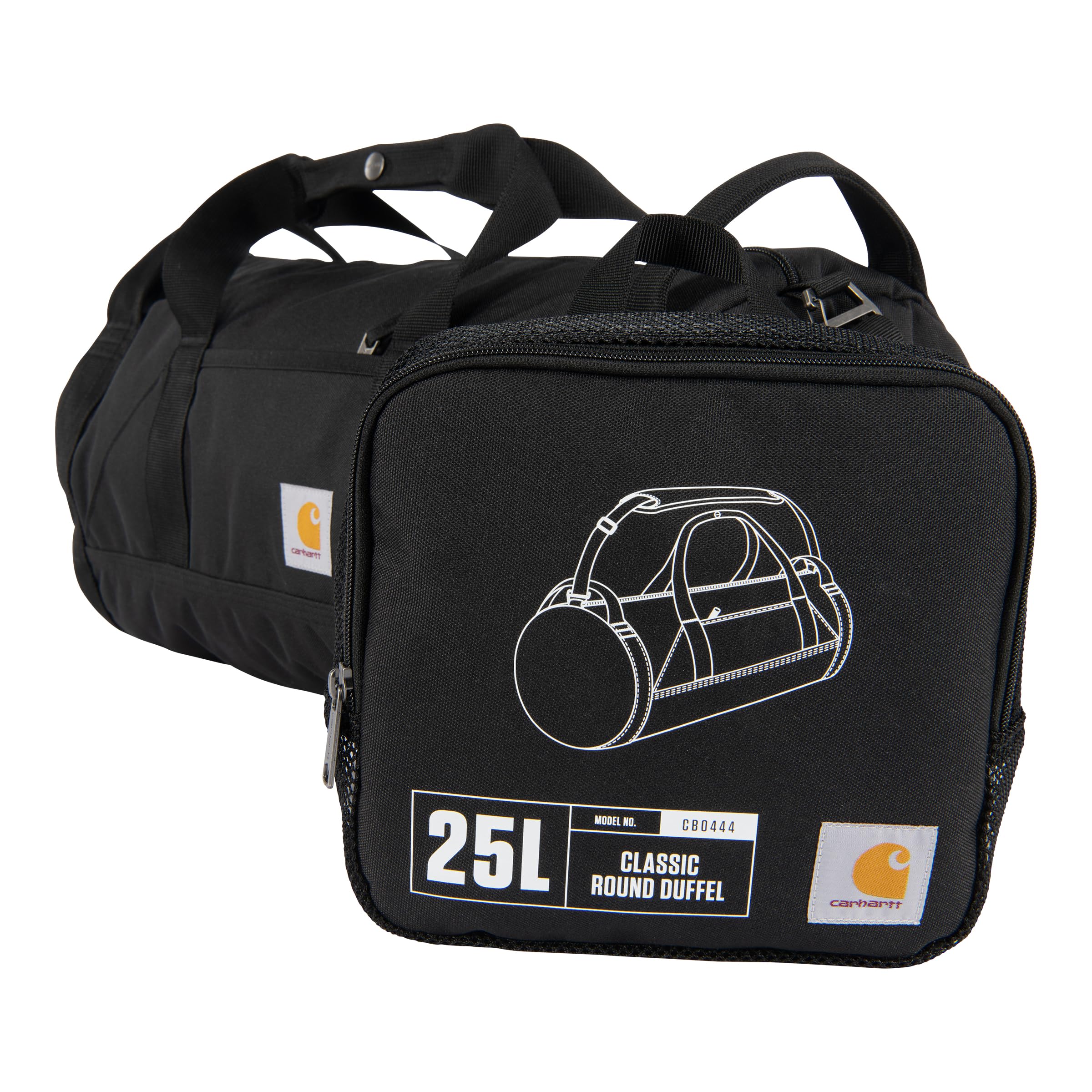
The rugged duffel that bridges the gym floor and the crag without looking out of place at either.
If you are the type who stuffs a rope, a harness, climbing shoes, and a change of clothes into one bag, this Carhartt gives you a 40-liter volume in a classic round shape that fits gym lockers and airline overhead bins. The 600D polyester carries a Rain Defender durable water repellent (DWR) finish so light rain and splashes roll right off the fabric. The included utility pouch swallows items as big as a pair of US 13 sandals, and the adjustable over-the-shoulder strap makes the carry comfortable when the bag is fully packed.
What wins people over is the build: strong material and stitching with well-placed attachment points, plus a heavy-duty zipper that holds up to daily use. The 40-liter size is compact enough for carry-on overhead storage yet roomy enough for four nights of clothing, according to reviewers. The honest trade-off is that this is a general-purpose duffel, not a dedicated rope bag — it has no tarp or self-standing shape. You will coil your rope separately. If you want a bag for only rope management at the crag, the DMM Classic with its removable tarp does that job better.
durable canvas duffel: The duffel shape and DWR coating mean the bag works for a weekend climbing trip, a pool session, or a week of travel without packing a second bag.
bulky when full: It is a single-compartment duffel with no internal organization for rope management — you will need to coil your rope separately or use the pouch for small gear.
all-around workhorse: you want one bag that hauls your climbing gear, gym clothes, and travel essentials without feeling like specialty equipment.
heavy packers: you need a bag that stands upright for easy flaking or comes with a dedicated rope tarp.
2. DMM Classic Rope Bag 2020
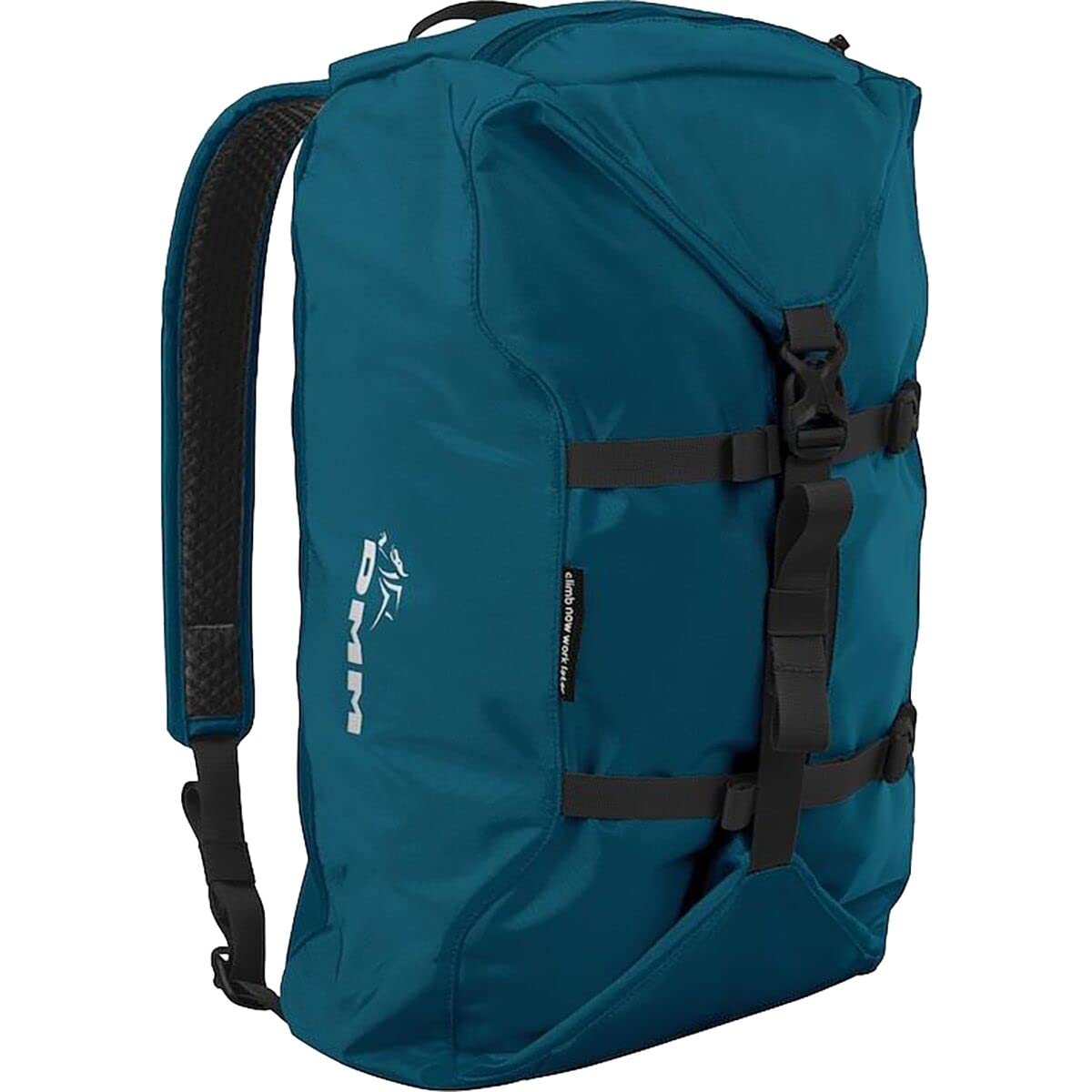
A 30-liter pack that swallows an 80-meter rope plus everything else a climber needs for a day at the wall.
The DMM Classic is designed for the person who wants one bag that does it all — hold a rope, draws, a harness, climbing shoes, a GriGri (a mechanical belay device), and a chalk bag, with a helmet strapped to the outside. The detachable padded straps can be arranged for rucksack carry or across-the-shoulder courier style, so you can choose how the weight sits on a hike to the crag. Inside, a removable inner tarp keeps the rope clean and untangled; it also has corner loops so you can tie the rope end off and flake directly onto the tarp before stuffing it back in.
The crowd points to the capacity and size as the standout traits — the bag comfortably holds a single climber’s full kit or two 50-60m ropes. Compression straps let you cinch the load down, and a small zip pocket hides keys and a wallet. The one catch is the zipper opening faces away from your back in backpack mode, which some prefer because the smooth side rests against your body instead of the zipper track.
lightweight carry: Owners consistently call this the perfect crag bag because it packs everything in a single grab-and-go package — rope, gear, clothes, snacks — without needing a second bag.
no tarp included: The 30-liter volume works best for single-pitch days; if you need to carry two full 80-meter ropes plus a partner’s gear, you will want a larger bag like the Rock-N-Rescue Grand.
quick trips: you want a dedicated climbing bag that organizes rope, shoes, and metal gear in one neat pack that is comfortable for a mile walk.
wet conditions: your primary need is a simple bucket-style bag for flaking rope quickly without unpacking the rest of your kit, like the PETZL BUCKET.
3. PETZL KLIFF Rope Bag

A 36-liter workhorse with a detachable tarp that gives your rope a clean surface at every belay.
The KLIFF is built by PETZL for the sport climber who wants a single bag that does not cut corners. The 36-liter volume stows up to 100 meters of rope along with a harness, quickdraws, and shoes. The detachable protective tarp measures 140 x 140 cm — a 55 by 55-inch clean area that you spread on the ground so the rope never touches dirt or mud. Two internal handles make coiling the rope back into the bag easy without a struggle, and the zippered pocket gives quick access to a topo map, phone, or keys.
The size is the most-discussed feature, and owners confirm it fits a 70-meter rope with room to spare for a full sport rack and helmet. The foam shoulder straps are adjustable with a sternum strap to keep everything in place during a hike. The build quality holds up to extensive use, and the fact that the tarp unzips fully from the bag means you wash only the part that gets dusty instead of the whole bag. The honest limit: a 70-meter rope plus shoes, harness, and rack is a tight fit — if you push beyond that, the zipper gets close to its limit.
built-in rope tarp: The removable tarp keeps the rope off grit and sharp rocks, extending the life of your line and saving you from cleaning it after every session.
narrow opening: Sport climbers who crag two to three times a week and want a purpose-built bag that handles a full single-pitch kit without a second thought.
rope protection: you want a premium bag with a large detachable tarp that protects your rope from dirt and abrasion at the crag.
large coils: you carry more than one long rope for multi-pitch or arborist work — you will bump into the capacity ceiling.
4. PETZL BUCKET Upright Rope Bag
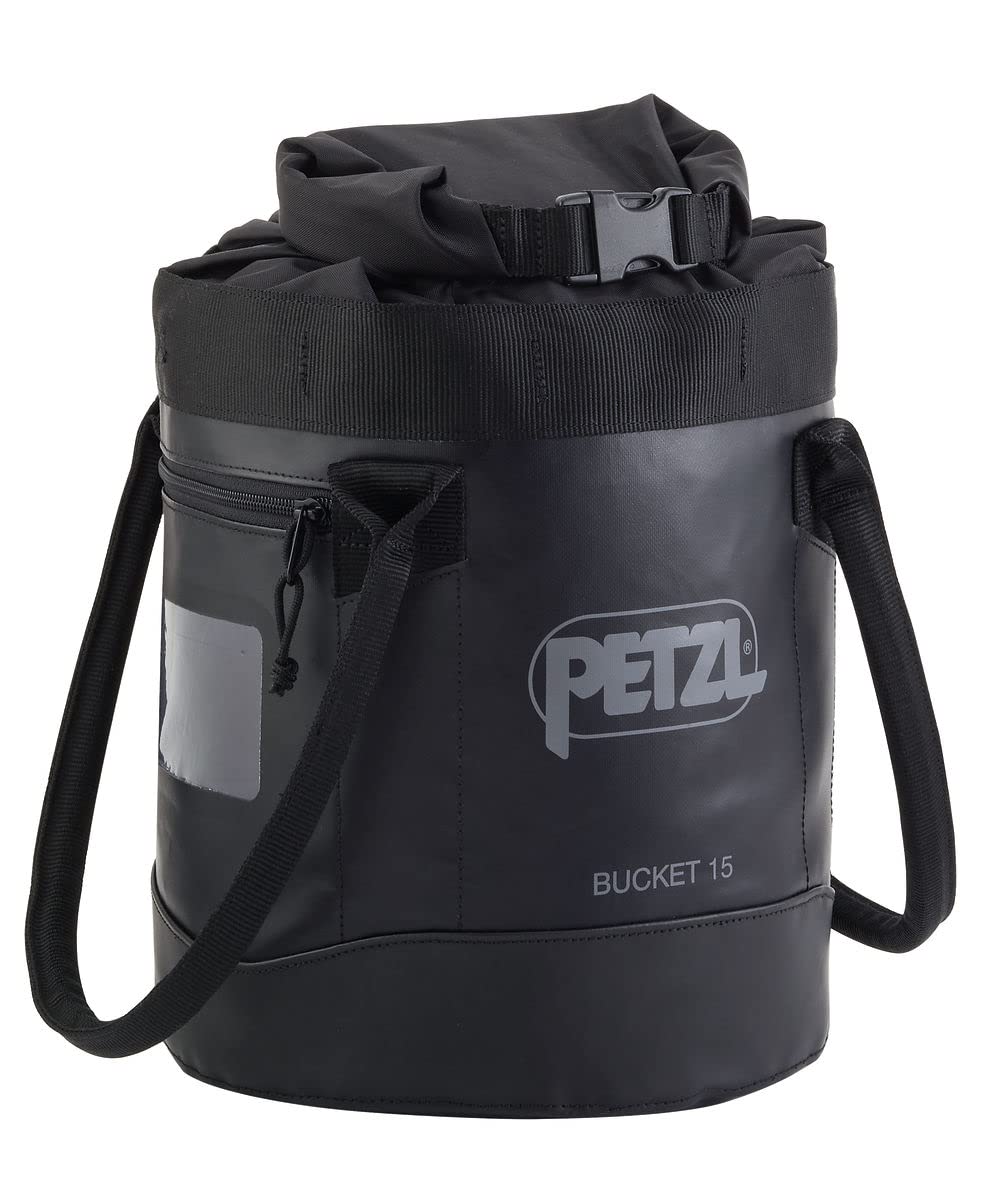
A rigid bucket that stands open on its own so you can feed rope in one-handed without wrestling the bag.
The BUCKET is the answer for anyone who gets frustrated by floppy bags that collapse the moment you let go. The rigid shape keeps the bag upright even when empty — you can flake or feed rope straight into the wide opening without holding it open. The material is high-strength TPU tarp fabric that is fully waterproof, abrasion-resistant, and UV-resistant, so it survives years of being dragged across rock, snow, or wet ground. The roll-top closure seals out moisture and dirt during transport while still opening wide for easy access.
The crowd consensus is that this bag outlasts competing designs. The self-standing structure is what keeps gear organized, and the TPU fabric resists punctures far better than standard nylon. Capacity options let you match the bag to your rope length: the 15-liter holds roughly 45 meters of standard 11mm rope, the 30-liter holds about 110 meters, and the 45-liter holds around 185 meters. The one hiccup: the 15-liter version ships without adjustable shoulder straps, so check the tag before buying if you plan to carry it as a backpack.
upright loading: The rigid walls mean the bag never flops over, making flaking a rope into it a fast, one-handed task even with wet or muddy hands.
takes floor space: The 15-liter variant does not include shoulder straps — if you want backpack carry, go for the 30-liter or 45-liter size.
garage storage: you want a bombproof bucket that stays upright on uneven ground and protects your rope from the elements with true waterproof fabric.
backpacking: you need extra pockets for gear organization — the BUCKET is a single-compartment design focused on rope storage.
5. Rock-N-Rescue Arbor Rope Storage Bag

A durable bucket-style bag with four side pockets that keep carabiners and rings from rattling around with the rope.
Rock-N-Rescue combines a 1000-denier coated nylon body with a weatherproof nylon ripstop lining that holds up to tough jobsite and crag conditions. The wide bucket profile makes it easy to stuff and store climbing line without fighting a narrow opening, and the bag can double as a crossbody if you need hands-free movement. Four side pockets with a hook-and-loop closure keep carabiners, rings, pulleys, and webbing slings separate from the main rope compartment, so your rope never gets tangled in hardware.
The size fits 200 feet of 5/8-inch bull rope with room to spare, and the self-supporting shape sits upright on its own for easy flaking. The clear ID pocket on the front lets you label the bag if you use different lines. At this build-quality level, the bag is often described as a great value — especially for arborists who need a durable storage option without spending top dollar. The most commonly noted shortcoming is the absence of shoulder straps, so this is primarily a crossbody or hand-carry bag.
stackable design: The four base pockets keep rigging hardware separate from the rope, which saves frustration when you need a carabiner in a hurry.
no shoulder strap: There are no backpack straps included — this bag is designed for crossbody or hand carry, not long hikes.
closet organization: you want a budget-friendly bucket with good organization pockets that can hold 200 feet of thick bull rope without tearing.
frequent hauling: you need backpack straps or a padded shoulder harness for longer approaches.
6. Weaver Leather Basic Rope Bag

A collapsible bag that pops open and stays standing thanks to a spiral wire sewn into the exterior.
The Weaver Basic Rope Bag solves the most annoying rope bag problem — a collapsed bag that crumples when you try to feed line into it. A spiral wire attached to the exterior keeps the bag naturally expanded and upright even when empty, so the opening stays wide for easy rope management. The body is made from 1,200 denier polyester, a heavy fabric that stands up to rough handling. The bottom panel is removable, which lets wet rope drip dry instead of sitting in a damp pile. Webbing straps with quick-release buckles let you adjust the bag’s height or collapse it flat when not in use.
Buyers report the bag holds 200 feet of 3/8-inch dyneema with room to spare, plus a separate 150-foot static rope alongside it. The capacity is generous enough for a 1/2-inch rope at 150 feet with space for a longer line. A drawstring top provides quick access. The main critique is the pull-cord hardware — the crimped ring where the drawstring passes through the material can come apart with heavy use, though the bag itself otherwise works perfectly.
sturdy stand: The external spiral wire keeps the bag standing open so you feed rope in without fighting a collapsed bag — a simple but effective solution.
heavy empty: The drawstring closure is fast but does not seal out dust and moisture as well as a roll-top or zipper would.
workshop use: you want a collapsible bag that stands upright when open yet folds flat for storage, built from tough 1200D polyester.
crag carry: you need a fully waterproof closure for wet conditions or a padded backpack harness for long carries.
7. Rock-N-Rescue Grand Rope Bag

A heavy-duty bag built for expedition loads — 200 feet of rope is a starting point, not the limit.
This Grand Rope Bag from Rock-N-Rescue uses military-grade 1000 denier coated nylon with a sealed-seam construction and reinforced base, designed to endure extreme conditions and repeated abuse. The extra-wide profile fits a 200-foot, 10.5mm rope with room to spare, and owners mention it can swallow up to 400 feet of line if needed. A bottom grommet (a reinforced hole in the fabric) secures the rope end and allows water to drain out, so the bag does not trap moisture. The front clear-window pocket fits a rope log and paperwork, and the cushioned shoulder straps with integrated gear loops make the carry comfortable even when the bag is fully loaded.
The wide-mouth opening uses a quick-release drawstring system for fast access, and the bag offers multiple carry configurations — backpack straps, a shoulder sling, and a top handle. This is built in the USA with a focus on professional use: bridge inspectors, arborists, and mountaineers are the typical audience. The main note of caution is that the bag’s small capacity rating (150 feet of 1/2-inch) is conservative; most owners find it holds substantially more.
holds long ropes: The 1000D nylon and reinforced stitching handle 200 feet of rope as a casual load — the bag is overbuilt for reliability in harsh conditions.
hard to fill: The bag’s wide profile and heavy fabric mean it is bulkier than slim rope bags; it is not a compact storage option.
big coils: you need a rugged, made-in-USA bag that can carry multiple ropes and withstand professional-level outdoor use.
single ropes: you want a lightweight, compact bag for short gym trips — this one is built for the heavy haul.
8. Keepark Rock Climbing Rope Storage Bag
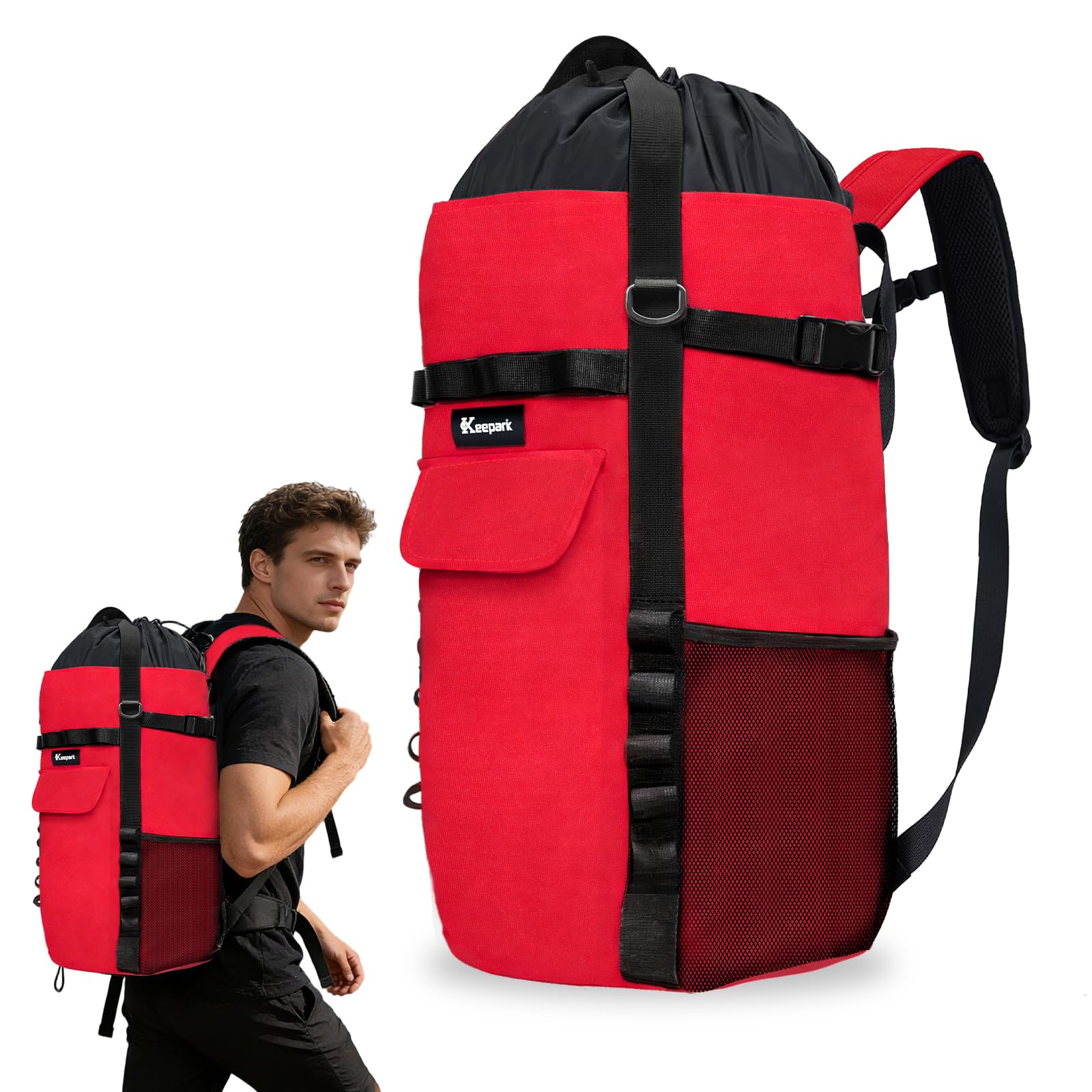
A tall, narrow bag that swallows an impressive amount of rope for a price that stays easy on the wallet.
The Keepark bag measures 10.5″ x 10.5″ x 22.5″ — a notably tall and narrow profile that fits inside tight car trunks or gear lockers. The water-resistant Oxford fabric includes a double-reinforced bottom and high-strength stitching. Internal tie-off loops keep the rope end secured inside, while a large flap pocket and side compartments offer separation for small items. The adjustable backpack straps are comfortable for long walks, and the sturdy side handles let you grab and go on the job site.
Capacity is the standout here: the bag holds 70 meters plus 40 meters plus another 40 meters of rope with room to spare, which is enough for multi-line setups. External clip points let you hang carabiners or other gear, and a deep Velcro pocket keeps small items accessible. The honest trade-off is material thickness — the Oxford fabric is lightweight, so this bag is best suited for controlled environments like gym transport or short approaches rather than repeated harsh outdoor abrasion.
budget friendly: At 22.5 inches tall, the bag packs surprising volume — it swallows three ropes totaling 150 meters without complaint.
thin material: The fabric is thinner than premium bags, so rough outdoor climbs with sharp rock contact will wear it faster than a heavier-duty competitor like the Rock-N-Rescue Grand.
casual climbing: you need a budget-friendly bag that handles multiple ropes with backpack straps for gym to car transport.
daily abuse: your bag will see daily abuse on sharp rock or need to survive through several seasons of hard outdoor use.
9. Brobantle Climbing Rope Bag
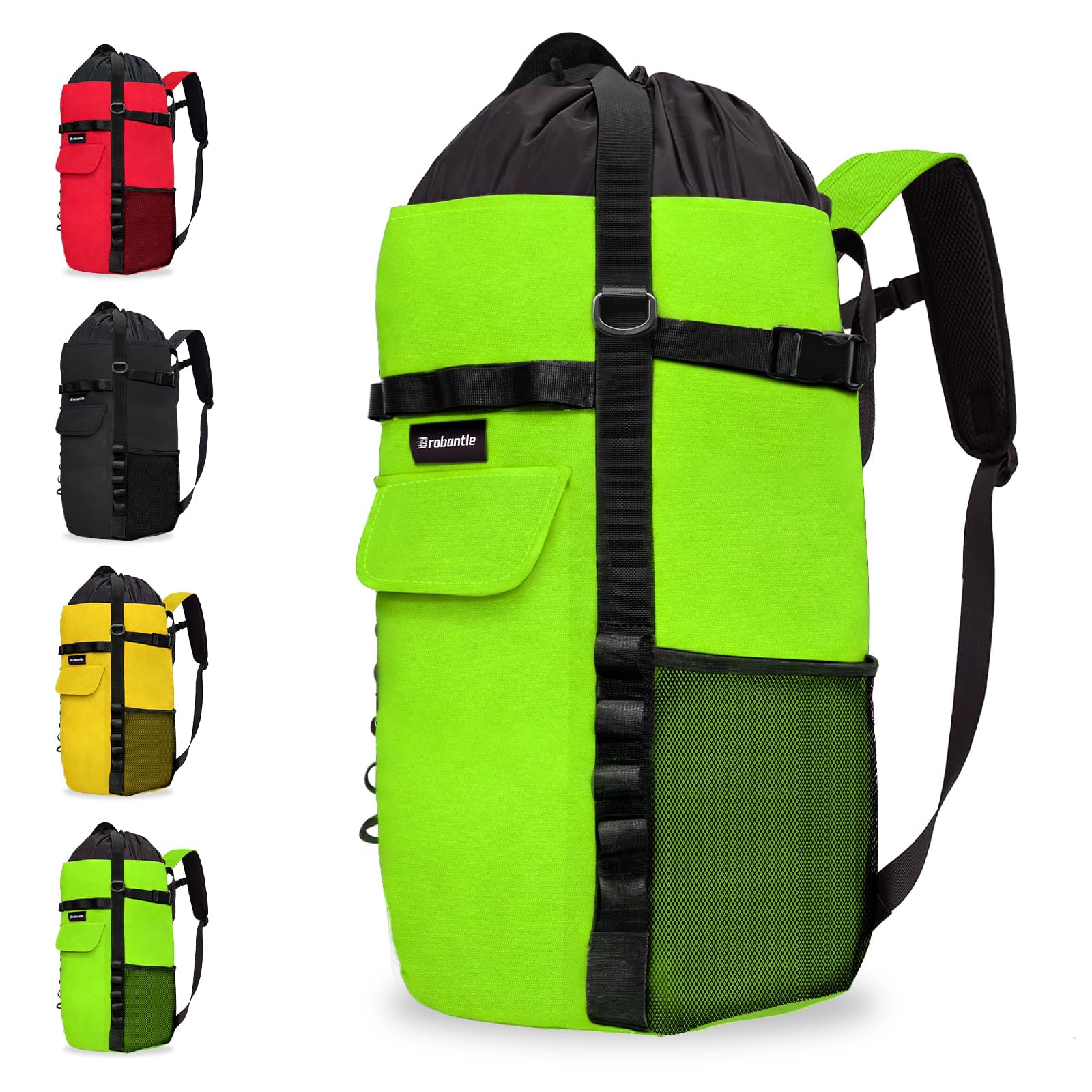
A solid entry-level rope bag that fits 200 feet of half-inch line and keeps the price low enough for a first buy.
The Brobantle bag uses thickened, water-resistant Oxford fabric with a reinforced bottom to hold up to arborist and climbing work. The main compartment fits 200 feet of 1/2-inch rope with room to spare, and the 22.5-inch tall shape keeps the rope from bunching at the bottom. Mesh pockets on both sides work for throw bags, while a front accessory pocket with Velcro closure holds smaller tools or carabiners. Multiple hanging loops let you hang the bag open for inventory checks or storage.
The two-way carry system — adjustable backpack straps plus sturdy side handles — covers both long walks and quick job-site moves. Owners find the 600D fabric durable enough for light outdoor use and indoor climbing but note it is not built for punishing rock abrasion. The drawstring closure is basic but functional, and most customers note the value is solid at this price point. The rare but serious complaint involves the shoulder strap stitching failing under a heavy load, so it is best kept to the rope and harness weight it was designed for rather than overloading.
low price point: Fitting 200 feet of half-inch rope into a bag at this price range makes it a practical first bag for new climbers or arborists.
small capacity: Keep the load reasonable — the 600D Oxford and basic stitching handle a full rope setup well but are not meant for extreme overloading.
starter bag: you want an affordable bag that fits a single 200-foot rope with room for a harness and small gear, with backpack straps included.
pro gear: you plan to haul heavy loads daily in rough outdoor conditions — step up to a 1000D nylon bag for longer durability.
Understanding the Specs
Denier and fabric weight
The denier number (600D, 1000D, 1200D) tells you how thick and abrasion-resistant the fabric is. A higher number means a heavier, tougher material that stands up to rock drag but adds weight to the bag. For occasional gym use, 600D is fine; for regular outdoor climbing or arborist work, look for 1000D or higher coated nylon.
Self-standing vs collapsible design
A self-standing bag — whether through a rigid shape, a spiral wire, or a thick fabric — stays open so you can flake rope into it without holding the bag open with one hand. Collapsible bags fold flat for storage but need two hands to load. For daily use at the gym or crag, a self-standing design saves time and frustration.
FAQ
How much rope can a typical climbing gym bag hold?
Should I choose a roll-top, drawstring, or zippered closure?
What is a rope tarp and do I need one?
Can I use a regular duffel bag for my climbing rope?
What is the benefit of a self-standing rope bag?
How do I clean and maintain a climbing rope bag?
What is the difference between Oxford cloth and coated nylon?
Should I get a rope bag with a bottom grommet?
Final Thoughts: The Verdict
For the majority of shoppers, the climbing gym bag winner is the Carhartt Classic Round Duffel because it balances rugged durability, carry-on-friendly size, and the versatility to handle gym gear, travel, and daily use all at once. If you want a dedicated rope bag with a removable tarp for crag days, grab the DMM Classic Rope Bag. And for pure bucket-style convenience that stands open on its own and seals out the elements, the PETZL BUCKET Upright Rope Bag is the one to reach for.
How We Picked
We do not accept paid placement. Every pick is matched to a real buyer and a real use-case; we do not hands-on test units.
Sources & Methodology
Specifications: manufacturer listings and product documentation. Review insights: verified customer reviews, as of July 2026. Pricing: not shown on this page (it changes often); check the current price via the retailer link.
As an Amazon Associate, WellFizz earns from qualifying purchases. This does not affect which products we feature.
Related Guides

Mo Maruf
I created WellFizz to bridge the gap between vague wellness advice and actionable solutions. My mission is simple: to decode the research and give you practical tools you can actually use.
Beyond the data, I am a passionate traveler. I believe that stepping away from the screen to explore new environments is essential for mental clarity and physical vitality.