Our readers keep the lights on and my smoothie glass nicely filled. As an Amazon Associate, I earn from qualifying purchases.
Specs are compiled from manufacturer listings and verified buyer reviews and can change over time — please confirm the key details on the product page before buying.
Your hands take the worst punishment when climbing — rope burn, sharp rock, cold metal, and the constant need to feel every hold. The right pair of gloves changes that from a painful necessity into a real advantage, letting you stay on the wall longer and climb more often without wearing out your skin. This guide breaks down the best climbing gloves by comparing the specs that actually matter — the leather type, the weight, the fit for belaying versus crack climbing — so you pick the pair that matches your real day on the rock.
I’m Mohammad Maruf — the founder and writer behind WellFizz. This guide is built by comparing the manufacturers’ published specifications and the patterns across verified customer reviews, so you get each pick’s real strengths and trade-offs instead of marketing spin.
Every pair here is rated for a different climbing job — from high-dexterity belay gloves to crack-specific protectors — making this the only best climbing gloves breakdown that matches the glove to your exact style of climbing.
Our Picks at a Glance
How To Choose The Best Climbing Gloves
Not all climbing gloves do the same job. A glove that protects your hands during a long rappel will feel clumsy and thick when you need to tie a figure-eight or clip a quickdraw. Understanding a few key specs — the leather type, the weight, and the cut — is the difference between buying the right pair and wasting money on one that sits in your gear bin.
Leather type and palm material
Goatskin is the gold standard for belay and rappel gloves. It is thinner and more flexible than cowhide, so you keep more rope feel, but it still resists abrasion well. Synthetic leather (faux leather) is cheaper and lighter but wears faster when you are rapping down gritty fixed lines. For crack climbing, microfiber suede with rubber patches gives you sticky friction inside a jam crack without adding bulk that prevents your hand from fitting.
Weight and dexterity trade-off
Heavier gloves (around 0.11 kilograms) last longer under hard use but make your hands feel clumsy for fine rope work. Lightweight gloves (around 0.07 kilograms) let you pick up a coin, tie knots, and operate carabiners naturally — but they wear out sooner. If you are a weekend sport climber, prioritize dexterity. If you are doing multi-pitch or rescue work, the durability of a heavier glove matters more than the small loss in finger feel.
Full finger versus half finger
Full-finger gloves protect your knuckles on rock and keep your hands warmer in cold conditions. Half-finger (fingerless) designs give you bare-finger tactile sensitivity for feeling tiny edge holds and tying knots, but they leave the most vulnerable part of your hand exposed to rope burn and sharp rock. Most climbers start with full-finger gloves and switch to half-finger only for indoor gym sessions or summer trad climbing where rope burn is less likely.
Fit and closure system
A climbing glove must fit snug — no loose fabric gathering in the palm that creates a rope-burn hotspot. Look for a hook-and-loop (Velcro) wrist closure that cinches tight and a carabiner hole on the cuff so you can clip the gloves to your harness between belays. Many climbers buy one size smaller than their work glove size to get that precise climbing fit.
Quick Comparison
| Model | Best For | Weight | Palm Material | Closure | Amazon |
|---|---|---|---|---|---|
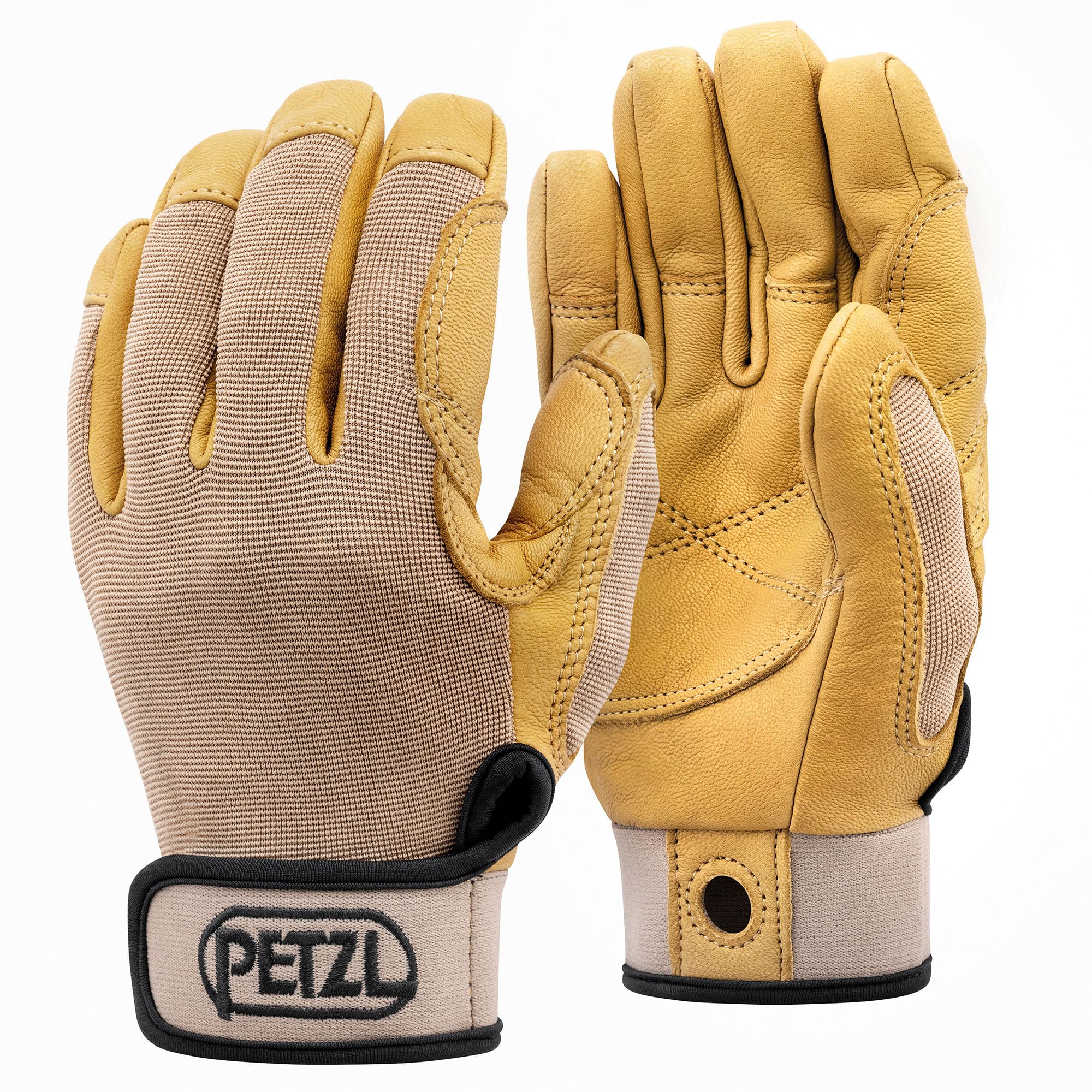
| PETZL CORDEX Lightweight★ Best Overall | Belay / Rappel precision | 0.36 lb | Goatskin leather | Velcro neoprene cuff | Amazon |
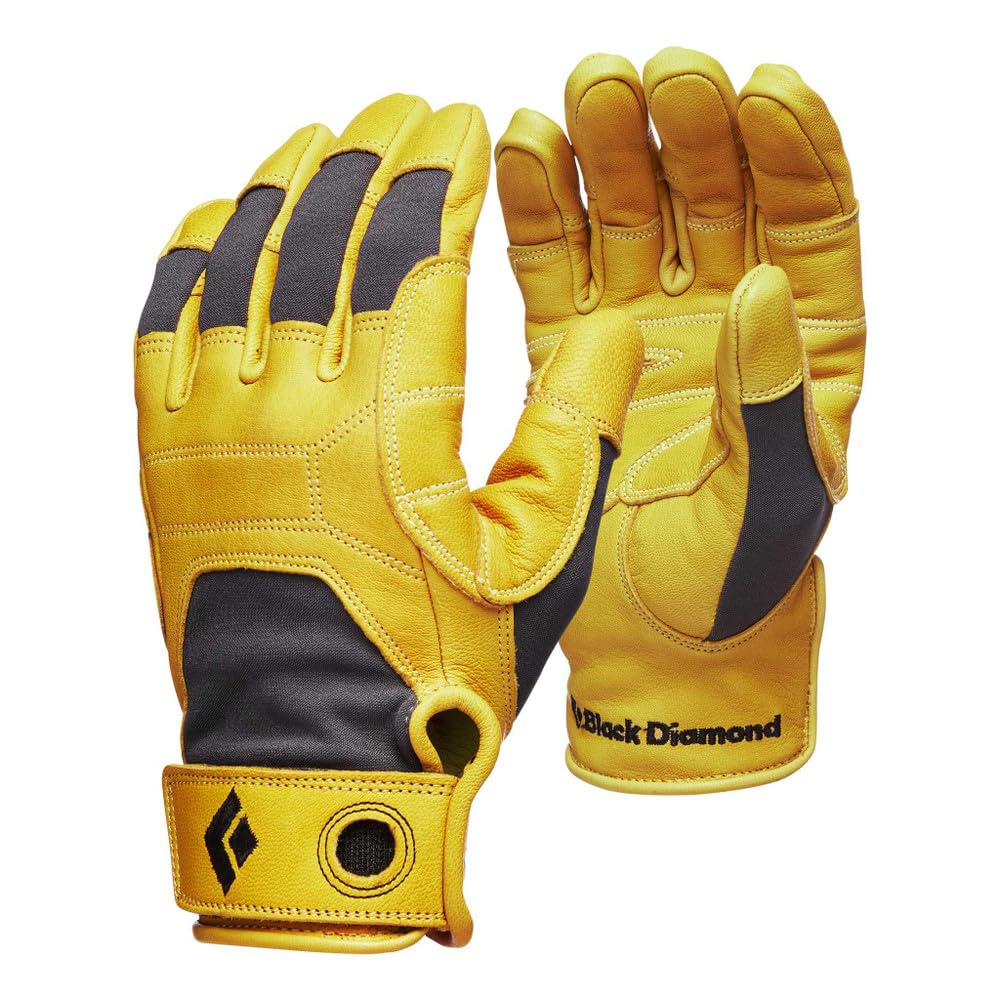
| BLACK DIAMOND TransitionPremium Pick | All-day rope work | 0.11 lb | Goat leather | Hook-and-loop wrist | Amazon |
| Intra-FIT Goatskin Climbing Gloves | Durable rappel / rescue | 0.11 kg | Goatskin leather | Velcro cuff | Amazon |
| BLACK DIAMOND Men’s Crag Gloves | Belay / Via Ferrata | — | Leather | Hook-and-loop | Amazon |
| Ocun Crack Gloves | Hand-jamming in cracks | 52 g | Microfiber suede / Rubber | Tuck-away Velcro | Amazon |
| Intra-FIT Full & Half Finger | Lightweight / Gym climbing | 0.07 kg | Synthetic leather | Hook closure | Amazon |
| EDELRID Work Glove Open II | Arborist / Rigging knots | — | 100% leather palm | Velcro wrist | Amazon |
In‑Depth Reviews
1. PETZL CORDEX Lightweight Belay/Rappel Gloves
Our pick — over 4.5★ from 800+ verified ratings; the strongest balance of quality and price.
You can tie a figure-eight and pick up a quarter without taking this glove off — that is the dexterity a 100% goatskin leather palm gives you.
This is the pair you reach for when you need to run a GriGri (a belay device) all day and still tie knots without fumbling. The 100% goatskin leather palm gives you the best blend of durability and finger feel — thin enough to tie knots, tough enough to handle hundreds of rappels. The stretch nylon back panel and low-profile neoprene Velcro cuff keep the glove locked to your wrist without making you sweat, and the built-in reinforced carabiner hole on the cuff lets you clip them to your harness between belays without fumbling.
Buyers report that these gloves are excellent for indoor and outdoor belaying, with one climber calling them “fantastic for indoor & outdoor belaying” and noting the rope sensitivity is high enough for lead belay work. The honest trade-off is that the smooth leather does not grip slippery objects well — and as one owner pointed out, these gloves are “not warm below 40°F,” so keep a separate pair for cold-weather multipitch. Unlike the heavier Intra-FIT Goatskin pair (0.11 kg versus 0.36 lb), the CORDEX trades some raw abrasion resistance for the precision you want in a dedicated belay glove.
Why it owns the belay
- High-quality goatskin is durable yet flexible enough to tie knots and handle gear
- Breathable stretch back keeps hands from getting clammy during long belay sessions
- Harness-compatible carabiner hole makes clip-and-go easy between pitches
Two honest limits
- Smooth leather palm feels slippery on wet or polished surfaces
- Not warm enough for rappelling in cold weather below about 40°F
Who needs these: Any climber who belays or rappels regularly and wants a glove that disappears on your hand — the dexterity is that good.
Think twice if: You need a warm glove for alpine conditions or you are doing heavy rescue work where a thicker palm would last longer.
2. BLACK DIAMOND Transition Rope Handling Gloves
The goat leather palm is reinforced in the high-wear zones where drag happens — so you can rappel repeatedly without the palm thinning fast.
Black Diamond designed the Transition specifically for belaying, rappelling, and rope management on sport, trad, and multi-pitch routes — and it shows in every detail. The premium goat leather palm is reinforced in the high-wear zones where a rope drags most, giving you serious abrasion resistance without the stiffness of a work glove. The stretch mesh back breathes well on hot crag days, and the hook-and-loop wrist strap adjusts easily between climbs. Weight comes in at just 0.11 pounds, making it noticeably lighter than the PETZL CORDEX while still offering a full leather palm.
Owners mention that these gloves feel comfortable right out of the package, with one firefighter noting they are “well built” for work and intermediate winter tasks, though not suitable for interior firefighting. A few climbers mention the fit runs long and narrow — “long, thin fingers; tight for thick fingers” — so if you have wider hands, size up or look at the PETZL or Intra-FIT options. Unlike the Ocun Crack Gloves (which use rubber and suede for jamming), the Transition is a pure rope-handling glove with no pretense of crack protection.
Rope-work focus
- Goat leather with reinforced high-wear zones stands up to repeated rappels
- Lightweight stretch mesh back keeps hands cool during long belay days
- Ergonomic stitching supports natural hand movement for extended wear
Fit caution
- Fingers run long and narrow — uncomfortable for thicker or wider fingers
- Cuff feels cumbersome if you are not climbing in cold conditions
Grab these for: Guided climbing or long multi-pitch days where you need a dedicated rope glove that protects without adding fatigue.
Hold off if: You have wide hands or short fingers — the narrow cut may cause pressure points during extended wear.
3. Goatskin Climbing Gloves, Rescue & Rock by Intra-FIT

A reinforced padded palm handles the friction heat of long rope descents — so you can rappel 100 feet without feeling the burn through the glove.
Where the PETZL CORDEX prioritizes dexterity, these Intra-FIT gloves lean into durability with a reinforced padded palm that handles friction heat during extended rope descents. The 65% goatskin, 25% polyester, 8% neoprene, and 2% Lycra blend means you get the abrasion resistance of real leather with stretch panels that let your fingers move naturally. Anatomically curved fingers and an adjustable Velcro cuff keep the glove locked in place during technical climbing operations. At 0.11 kilograms, this is the heavier pick in this lineup — compared to the Intra-FIT Full & Half Finger gloves at 0.07 kg — and that weight translates directly into longer wear life.
Customers note that these gloves are “super comfortable and good construction” for recreational use, though one owner noted the brown fabric is “very breathable though, so not appropriate for cold weather.” Tree workers and rescue climbers praise the grip on ropes, calling them “perfect for tree work.” The elastic spandex panels on the back promote airflow to keep you from getting clammy, but the trade-off is that cold wind cuts right through — these are a warm-weather or gym-rappel glove, not an alpine piece.
Built for abuse
- Reinforced padded palm withstands friction heat from long rappels
- Goatskin offers superior abrasion resistance for multi-pitch and rescue work
- Anatomically curved fingers keep full mobility even with thick leather
Cool-weather gap
- Highly breathable panels mean cold air passes straight through
- Heavier than dedicated belay gloves, so less finger feel for fine knot tying
Best for: Climbers doing long rappels, big-wall approaches, or rope rescue where palm protection matters more than bare-finger sensitivity.
Skip for: Gym belaying or sport climbing where you want maximum dexterity — the added durability is unnecessary weight there.
4. BLACK DIAMOND Men’s Crag Gloves
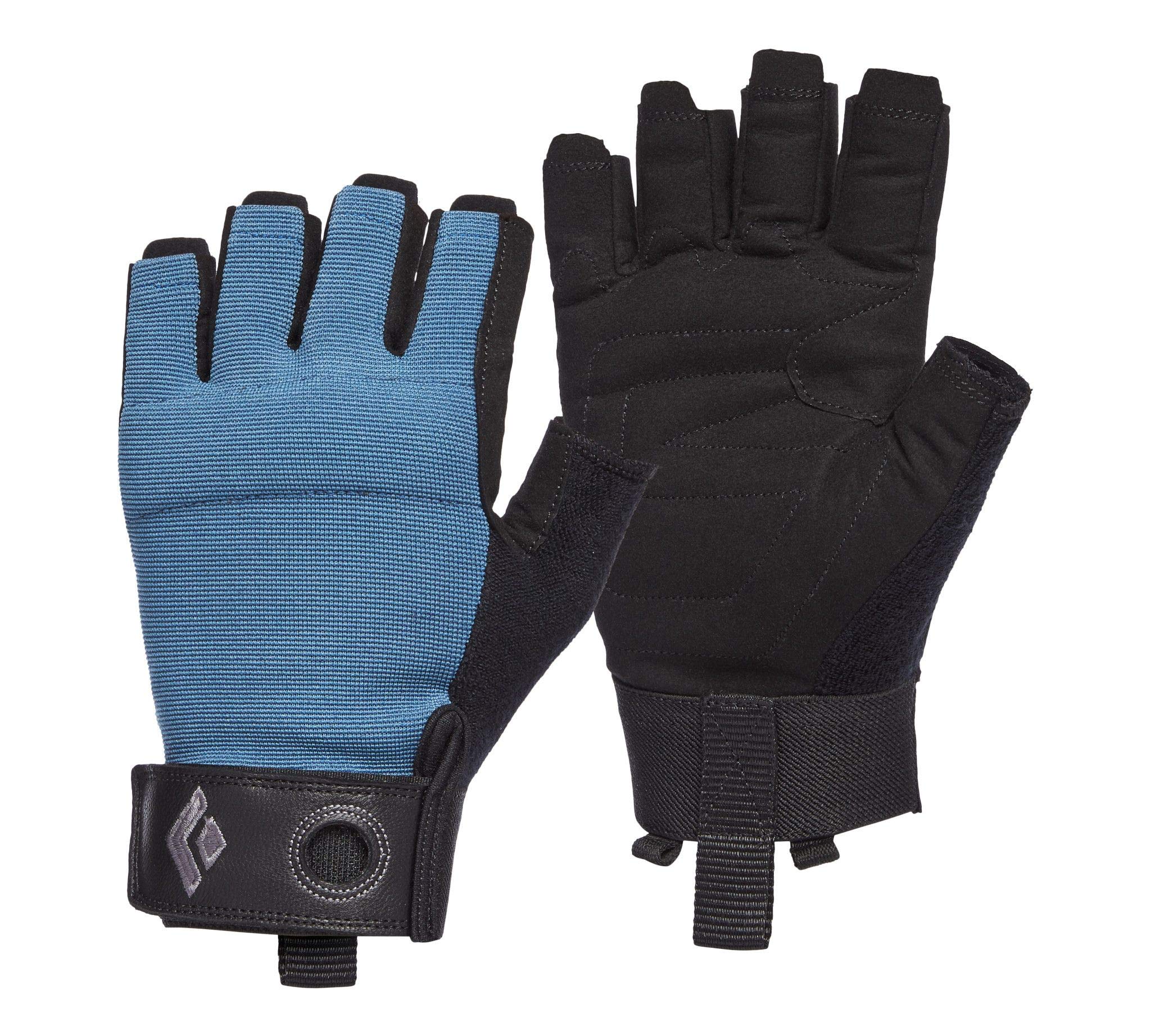
If you have tried four belay gloves and every one squeezed your fingers numb, this is the one that finally fits small hands.
This is the pair you buy when you have tried four other belay gloves and every single one was too tight across your fingers. The Crag glove is built for belaying and Via Ferrata (protected climbing routes with steel cables) work, with a full-finger leather design that protects your palms from rope burn without sacrificing the flexibility needed to grip a rope or a trekking pole. The breathable back keeps sweat from building up during long approaches. One reviewer who had tried the PETZL brand and found it too stiff said these Black Diamonds were “so flexible making them way better for me right now” — a direct fit advantage for climbers with smaller or narrower hands.
Reviewers point out that a set used in sunny Florida lasts “about a year and a half” with daily wheelchair use, which tells you the leather holds up well under constant abrasion. Another climber took them up Half Dome and said they were “thick enough to save my hands from pain and calluses, but thin enough that I still had great grip and control.” The honest reality is that the leather is not as premium as the pure goatskin on the PETZL CORDEX — it uses a blend that some reviewers wish were “real leather or thicker synthetic leather” for extended durability. But at this price point, you get a well-fitting, comfortable belay glove that actually fits small hands.
Small-hands savior
- True Small size fits narrow fingers without the tightness common in other belay gloves
- Leather palm protects against rope burn while staying flexible enough for grip control
- Breathable design works well for warm-weather climbing and long approaches
Material trade-off
- Leather blend is less durable than pure goatskin — expect faster wear under heavy use
- Not ideal for cold-weather belaying; breathable back lets cold air in
Reach for these if: You have small or narrow hands and every other belay glove pinches your fingers — this is the one that finally fits.
Look elsewhere if: You need a glove for heavy rescue work or daily guide use where a thicker goatskin palm would last longer.
5. Ocun Crack Gloves for Crack Climbing
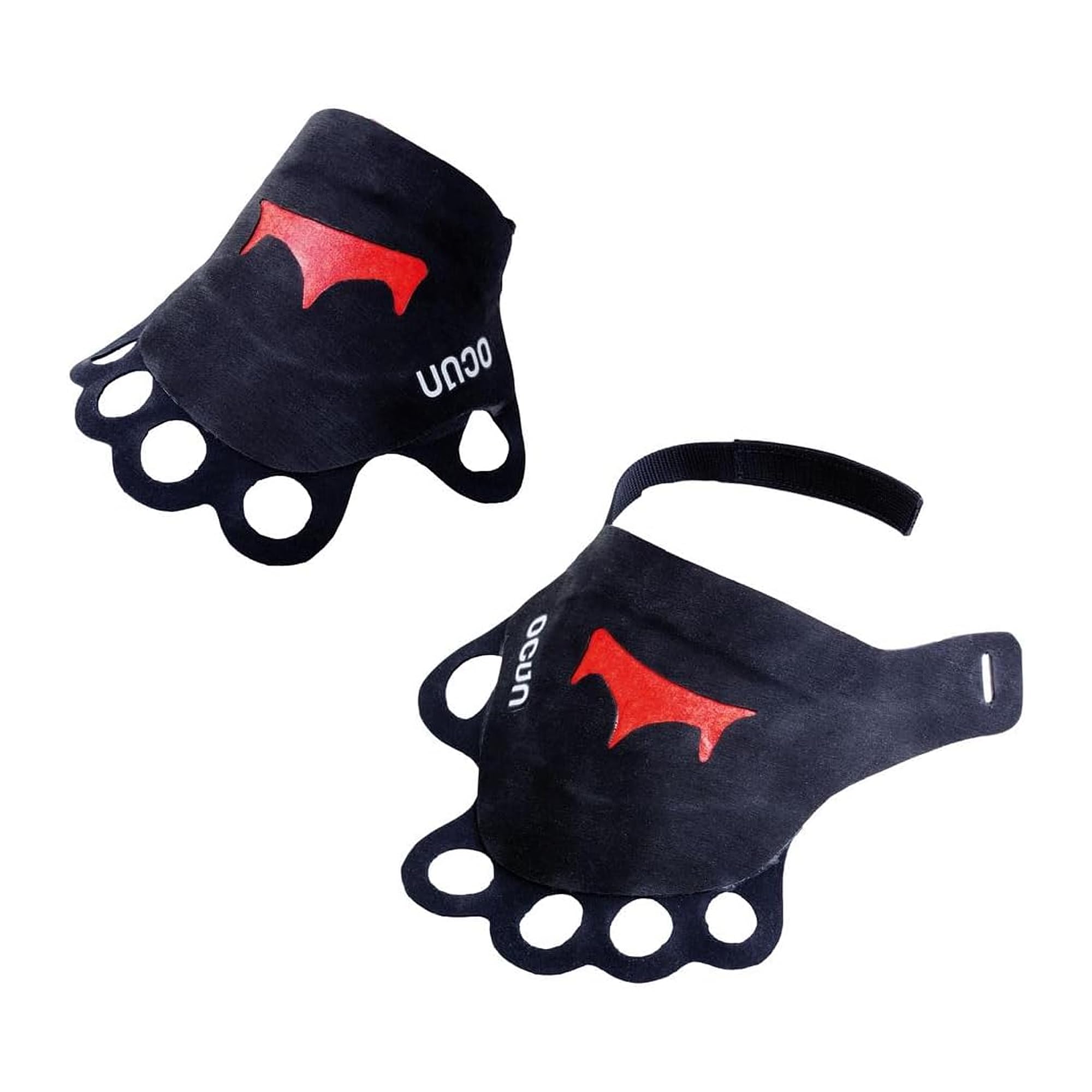
A “super sticky” rubber compound — the brand calls it CAT Rubber 1.1 — lets your hand lock inside a crack without slipping, and at 52 grams, you barely feel it.
This is a completely different animal from the belay gloves above. The Ocun Crack Gloves are engineered for one specific job: protecting the back of your hands while you jam them into rock cracks. Instead of leather, they use microfiber stretch suede with adhesive rubber CAT 1.1 patches — a “super sticky” compound that increases friction inside a crack so your hand locks in place without slipping. At just 52 grams, these are the lightest gloves in this lineup by a wide margin, and the Velcro closure tucks away so it does not create a pressure point inside a tight crack.
Shoppers say that these are “favorite light streamlined crack gloves” that are comfortable and minimal, with one climber saying “now I feel like my hands are naked if I ever try a crack climb without them.” A few owners note that the rubber and suede layers may be glued together at the opening and need to be peeled apart to match the stitched outline for proper fit — a small assembly step that is easy to miss. Unlike the BLACK DIAMOND Crag Gloves which use a standard leather palm for belaying, the Ocun is a specialized tool: outstanding for crack climbs, but not a replacement for a belay glove on rope-work days.
Crack-climbing secret weapon
- CAT Rubber 1.1 compound provides high friction inside jams so your hand stays locked
- Ultra-lightweight at 52 grams — you barely notice they are on your hands
- Tuck-away Velcro strap eliminates pressure points inside tight cracks
Narrow use
- Not designed for belaying or rappelling — the rubber suede lacks rope abrasion resistance
- Rubber and suede layers may arrive glued together and need manual separation first
Buy these for: Crack climbing — the one scenario where leather gloves feel clunky and rubber-and-suede is the right tool.
Do not buy as: A general belay glove. Grab the PETZL CORDEX or BLACK DIAMOND Transition for rope work and keep these for hand-jamming days only.
6. Climbing Gloves, Full & Half Finger by Intra-FIT

At just 0.07 kilograms, this is the lightest full-coverage glove here — and it has a terry cloth thumb panel so you can wipe sweat mid-climb without reaching for a towel.
If you are new to climbing or mostly hit the indoor gym, these Intra-FIT gloves are a smart entry point. They weigh just 0.07 kilograms — the lightest full-coverage glove here — and the half-finger design gives you bare fingertips for feeling holds and tying knots. The synthetic leather palm includes internal padding and reinforcement at the thumb crotch, which is where most climbing gloves split first. A terry cloth panel on the thumb lets you wipe sweat off your brow mid-climb without reaching for a towel. The built-in carabiner hole on the cuff lets you clip them to a harness between routes.
Buyers report that these gloves work well for rope access work — one user cleaning high-rise windows said they have been “great” with a snug fit and adequate protection from rope burn, and after a month of daily use they were “not fraying anywhere yet.” Another parent noted their 12-year-old son could “stay and climb much longer” after getting these for indoor rock climbing. The catch is that the synthetic leather does not grip a rope as well as real goatskin — one reviewer dropped a star because the gloves “don’t grip the rope very good which was why I bought them.” This is a gym-and-light-use glove, not a replacement for the PETZL CORDEX on a serious outdoor belay day.
Perfect starter pick
- Half-finger design gives you bare fingertips for maximum tactile sensitivity
- Synthetic leather with reinforced thumb crotch holds up well for gym climbing
- Terry cloth thumb panel is a simple convenience for sweat management mid-climb
Where it falls short
- Synthetic leather lacks the rope-gripping friction of genuine goatskin
- Not durable enough for regular outdoor rappelling or multi-pitch use
Great for: Indoor gym climbing, zip-lining, and light rope access work where cost and weight are top priorities.
Pass on these if: You need a glove for real outdoor belaying or long rappels where grip and durability matter more than price.
7. EDELRID Work Glove – Work Gloves Open II Unisex Adult

Your fingers stay bare for fine motor tasks while a 100% leather palm protects you from rope burn — arborists report it helps them “tie better rigging knots.”
EDELRID made a glove that solves a specific problem for rope workers: your fingers stay bare for fine motor tasks while a 100% leather palm protects you from rope burn. The back of the hand and fingers use a 4-way stretch fabric (98% polyester, 2% spandex) that moves with your skin, and the Velcro closure tab at the wrist includes a carabiner hole for hanging the gloves on your harness between climbs. This is not a traditional belay glove — the open-finger design means your fingertips are fully exposed, so you get the tactile feel of bare skin on rock and rope.
Owners mention that arborists love these for tree work, with one user saying “the open fingers gives the freedom and dexterity to tie better rigging knots.” The honest catch is sizing: one reviewer with 7.25-inch knuckle hands was recommended a Small based on the size chart but found the fit was actually right for a 9-inch palm — “go down at least one size to avoid floppy fit.” Compared to the Intra-FIT Full & Half Finger gloves above, the EDELRID uses real leather on the palm (not synthetic), so it offers better abrasion resistance against rough rope work, but the fingerless cut means zero protection for your fingertips — choose based on if you need bare fingers or not.
Knot-tiers’ choice
- 100% leather palm protects against rope burn while fingers stay bare for dexterity
- 4-way stretch fabric on the back allows unrestricted hand movement
- Carabiner loop on the wrist cuff for easy storage on harness or gear loop
Sizing trap
- Size chart is inaccurate — ordered Small for 7.25″ hands but fit a 9″ palm instead
- Fingerless design leaves fingertips completely exposed to sharp rock and cold
Ideal for: Arborists, rigging specialists, and trad climbers who tie frequent knots and need bare-finger feel with palm protection.
Not for: Belaying or rappelling where you need full finger coverage to prevent rope burn on your fingertips.
Understanding the Specs
Goatskin vs Cowhide vs Synthetic Leather
The palm material is the single most important decision you make. Goatskin is thinner and more flexible than cowhide — you get better rope feel and dexterity, but it costs more. Cowhide is tougher against abrasion but stiffer, so it takes time to break in and makes knot tying slightly clumsier. Synthetic (faux) leather is the lightest and cheapest option, but it wears faster under repeated rappels and does not grip a rope as well as real leather. For weekly gym climbing or light outdoor use, synthetic works fine. For any real belaying or rappelling, go with goatskin for the best balance of feel and durability.
Weight: Why 0.07 kg vs 0.11 kg Matters
Glove weight tells you where the compromise lands between protection and finger feel. A lighter glove around 0.07 kilograms feels like a second skin — you can pick up a carabiner, tie a figure-eight, or feel a tiny edge hold without thinking about it. The trade-off is that lighter gloves use thinner materials that wear out faster under rope friction. Heavier gloves around 0.11 kilograms add thicker leather and padding that last through dozens of long rappels, but your fingers feel slightly sluggish for fine motor tasks. Match the weight to your climbing: sport climbers who belay a few pitches a day can run light; multi-pitch guides or rescue workers should reach for the heavier option.
FAQ
Will climbing gloves protect my hands during a fall?
Can I use work gloves for climbing?
What size climbing glove should I buy?
How long do climbing gloves last?
Half-finger or full-finger climbing gloves?
How do I clean climbing gloves?
Can I use climbing gloves for Via Ferrata?
What is the difference between crack gloves and belay gloves?
My climbing gloves are too tight — will they stretch?
Are expensive climbing gloves worth the money?
Final Thoughts: The Verdict
For most climbers, the best climbing gloves winner is the PETZL CORDEX because goatskin leather gives you the best combination of dexterity, breathability, and long-term durability for everyday belaying and rappelling. If you want a heavy-duty glove that handles longer rappels and rescue scenarios with more palm protection, grab the Intra-FIT Goatskin Climbing Gloves. And for crack climbing where standard leather gloves are too bulky, the standout is the Ocun Crack Gloves — the rubber-and-suede construction is the only real option that makes hand-jamming actually comfortable.
How We Picked
We do not accept paid placement. Every pick is matched to a real buyer and a real use-case; we do not hands-on test units.
Sources & Methodology
Specifications: manufacturer listings and product documentation. Review insights: verified customer reviews, as of July 2026. Pricing: not shown on this page (it changes often); check the current price via the retailer link.
As an Amazon Associate, WellFizz earns from qualifying purchases. This does not affect which products we feature.
Related Guides

Mo Maruf
I created WellFizz to bridge the gap between vague wellness advice and actionable solutions. My mission is simple: to decode the research and give you practical tools you can actually use.
Beyond the data, I am a passionate traveler. I believe that stepping away from the screen to explore new environments is essential for mental clarity and physical vitality.