Our readers keep the lights on and my smoothie glass nicely filled. As an Amazon Associate, I earn from qualifying purchases.
Specs are compiled from manufacturer listings and verified buyer reviews and can change over time — please confirm the key details on the product page before buying.
You want a trellis covered in lush flowers. But pick the wrong climber and you get a vine that barely grows, dies in winter, or leaves you staring at bare twigs. The secret to a fragrant, full screen is choosing a vine that’s built for your space from day one. This guide compares five proven climbers by their real specs and what buyers actually report, so you know exactly what to plant.
I’m Mohammad Maruf — the founder and writer behind WellFizz. This guide is built by comparing the manufacturers’ published specifications and the patterns across verified customer reviews, so you get each pick’s real strengths and trade-offs instead of marketing spin.
You will find a proven match among these climbing flowers for trellis — each vetted for hardiness, growth habit, and real buyer results. if you want fast coverage or fragrant blooms that linger in the evening air, one of these vines delivers.
Quick Picks
- 2 Star Jasmine Plants in 3.5” Cubes — Best Overall
- Carolina Jasmine Plant, Live Evergreen Vine, Fragrant Yellow Blooms, 2 Bags — Best Value
- Indian Summer Trumpet Vine Plant – Campsis – 2.5″ Pot — Pro Pick
- Fragrant Pink Yellow Climbing Honeysuckle Plant Live Vine, Lonicera Perennial Honeysuckle Plants 5 to 9 Inches Tall — Fragrance Pick
- Coral Honeysuckle | 3 Live Plants | Lonicera Sempervirens — Wildlife Pick
How To Choose The Best Climbing Flowers For Trellis
Not all climbing flowers behave the same way on a trellis. Some twine tightly and need no help, while others need tying or a rough surface to grip. Before you pick, focus on three make-or-break factors that determine whether your vine thrives or just survives.
Mature Height vs. Trellis Size
A small plant in a 2.5-inch pot can grow into a 15-foot vine — or stall at three feet. Always check the listed mature height in the specs. For a standard six-foot trellis, a vine that tops out at 10-15 feet gives you full coverage without overwhelming the structure. A vine listed at “1 Feet” expected height (like some starter plugs) needs years to climb anywhere meaningful.
Sunlight and Zone Match
Every vine has a sunlight preference — full sun (six-plus hours) or partial shade. A “Full Sun” label means the plant gets leggy and blooms poorly in shade. Also cross-check the USDA hardiness zones against your location. A vine rated for Zones 4-10 handles a wide range of winters, while a Zone 7-11 plant may not survive a Chicago freeze.
Evergreen vs. Deciduous
If you want the trellis covered year-round (privacy screen in winter), pick an evergreen climber like Star Jasmine or Carolina Jasmine. If you are okay with bare stems from fall to spring, a deciduous vine like Trumpet Vine or Honeysuckle saves you from winter leaf cleanup and still explodes with flowers each summer.
Quick Comparison
| Model | Best For | Mature Height | Item Weight | Zones | Amazon |
|---|---|---|---|---|---|
| 2 Star Jasmine Plants | Evergreen fragrance | 10 Feet | — | 7-11 | Amazon |
| Carolina Jasmine Plant | Fast coverage on a budget | 1 Feet (starter) | 15 Ounces | — | Amazon |
| Indian Summer Trumpet Vine | Large-scale trellis coverage | 12-15′ | 4.1 Pounds | 4-10 | Amazon |
| Fragrant Pink Yellow Climbing Honeysuckle | Fragrant patio accents | — | — | 3-9 | Amazon |
| Coral Honeysuckle (3 Plants) | Pollinator-friendly screening | — | 5 Pounds | — | Amazon |
In‑Depth Reviews
1. 2 Star Jasmine Plants in 3.5” Cubes
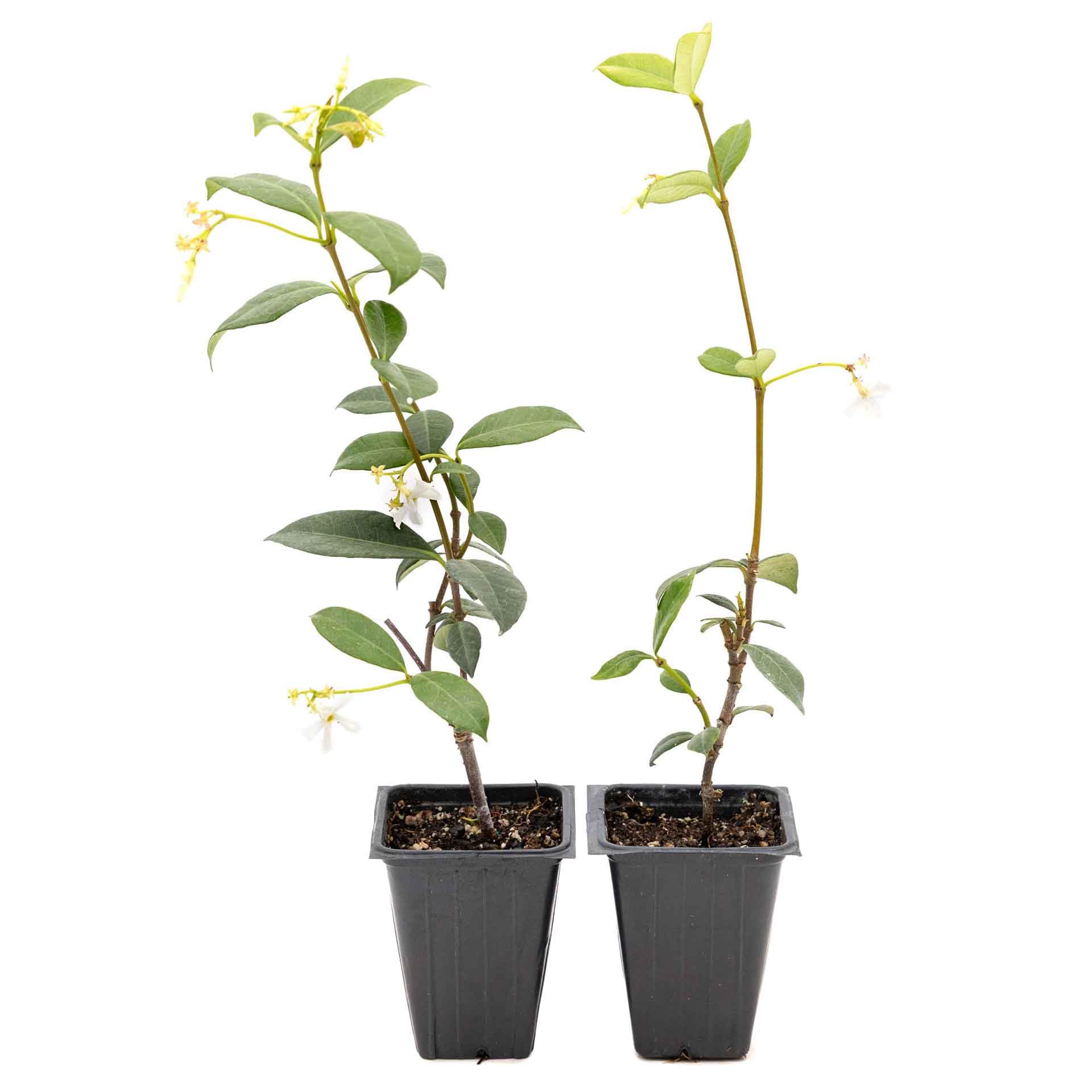
An evergreen climber that fills your trellis with white, fragrant stars for months.
You get year-round green coverage plus flowers that perfume the whole patio. The Star Jasmine (Trachelospermum jasminoides) reaches 10–20 feet tall and 3–10 feet wide at maturity, so a pair of plants in your 3.5″ nursery cubes can quickly blanket a medium trellis or fence. Its glossy leaves stay green in winter, and the star-shaped white blooms appear in spring and summer, releasing a sweet fragrance that carries across the yard.
Unlike the Carolina Jasmine starter plants that are listed at just 1 foot expected height, these come with a 10-foot growth expectation per plant. The vines are drought-tolerant once established and pet-friendly, so they are safe around dogs and cats. Buyers report the plants arrive well-rooted and ready to transplant. The catch is zone limitation: Star Jasmine thrives only in USDA Zones 7–11, so it is not a choice for cold northern winters unless you overwinter it in a container indoors.
Why It Earns the Top Spot
- Evergreen foliage provides privacy year-round, not just summer
- Two starter plants give you faster coverage than a single pot
- Strong jasmine fragrance turns a bare trellis into a sensory anchor
One Real Limitation
- Limited to warmer zones (7-11); not for cold-winter gardens without indoor wintering
The best match for: anyone in zones 7-11 who wants a fast-growing, fragrant, year-round screen on a trellis or arbor.
Reconsider if: your winter temps dip below freezing for long stretches — this vine will not survive a hard freeze unprotected.
2. Carolina Jasmine Plant, Live Evergreen Vine, Fragrant Yellow Blooms, 2 Bags
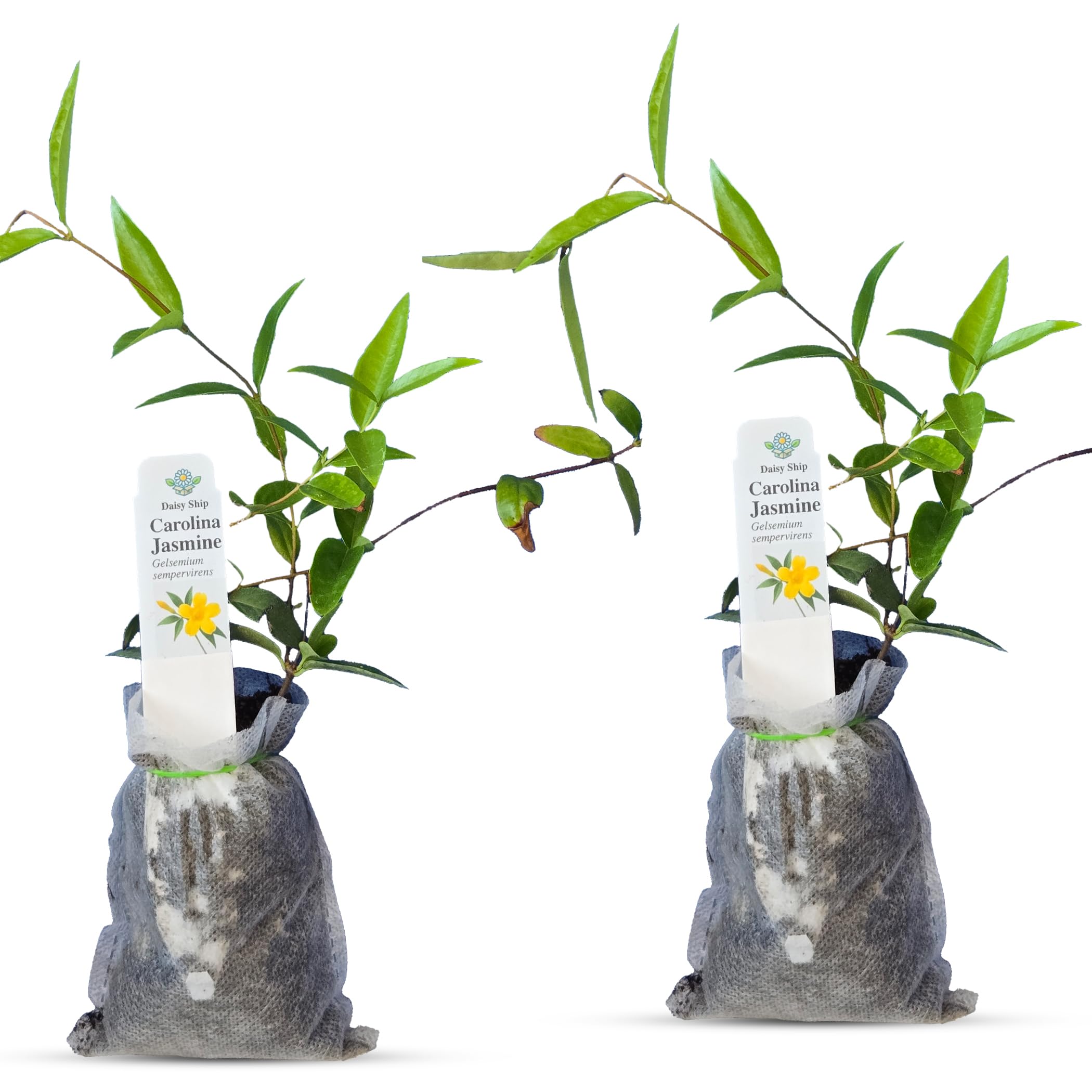
Tiny starter plugs that owners mention arrive healthy and visible grow within weeks.
You get two Carolina Jasmine (Gelsemium sempervirens) starter plants in biodegradable containers at a wallet-friendly price. The listed expected plant height is just 1 foot, so these are very young plants — but buyers consistently report they arrive around 6 inches tall, green, and in excellent condition. Customers note the plants arrive around 6 inches tall and healthy. After 20 days one reviewer noted about 1 inch of new growth, so patience is part of the deal.
This vine tolerates full sun to partial shade, making it more flexible than the full-sun-only Trumpet Vine. The bright yellow blooms are fragrant and appear in summer. The plants come with detailed care instructions and the seller, Daisy Ship, is responsive — one buyer mentioned the seller asked for a photo after delivery. The trade-off is clear: at this price you are buying time. These will not cover a trellis in one season, but they are a low-risk way to start a long-term evergreen screen that outperforms the Star Jasmine on cold tolerance.
What You Get for the Money
- Two plants per order for just over budget-entry cost
- Healthy arrival is the overwhelming reviewer experience
- Flexible sunlight needs — grows in full sun or shade
What You Are Trading
- Starter size at 1 ft expected height means slow first-year coverage
- Needs several seasons to reach trellis-filling size
Grab these if: you are a patient gardener who wants a healthy, affordable start toward a fragrant evergreen trellis.
Skip them if: you need instant coverage this season — look for a more mature, multi-stem vine instead.
3. Indian Summer Trumpet Vine Plant – Campsis – 2.5″ Pot

A heavy, established vine that towers to 15 feet and laughs at cold winters.
This is the climber for anyone who wants a massive trellis statement. The Indian Summer Trumpet Vine (Campsis) ships in a 2.5″ pot but carries a mature height of 12-15 feet, so it is built to dominate. At 4.1 pounds for one potted plant versus 5 pounds for three Coral Honeysuckle plants, this listing suggests a more developed root system per plant. It thrives in Zones 4-10, which means it handles harsh winters that kill the Star Jasmine and Carolina Jasmine options above.
Several call it “healthy” and “larger than expected” with roots growing through the drainage holes. But one reviewer in Zone 9 reported the “vine arrived almost dried out I planted it right away but it never grew” — a warning to inspect on arrival and plant immediately. Full sun is required for the best orange-red trumpet blooms in spring, summer, and winter. The vine is deciduous, so leaves drop in fall, leaving bare stems until spring green-up. Unlike the Star Jasmine, you lose winter coverage.
The Big Advantage
- Massive 12-15′ mature height covers a tall trellis or arbor in one season
- Hardy across a huge zone range (4-10) — survives Midwest winters
- Heavy, established root system gives it a head start over smaller starters
The Risk to Know
- Mixed arrival condition reviews — some plants arrive dried out and do not recover
- Deciduous — provides no winter coverage on your trellis
Your pick if: you want a fast-climbing, cold-hardy vine that covers a large structure quickly.
Better to pass if: you are not comfortable inspecting and babying arrival plants — uneven quality means some arrive struggling.
4. Fragrant Pink Yellow Climbing Honeysuckle Plant Live Vine, Lonicera Perennial Honeysuckle Plants 5 to 9 Inches Tall
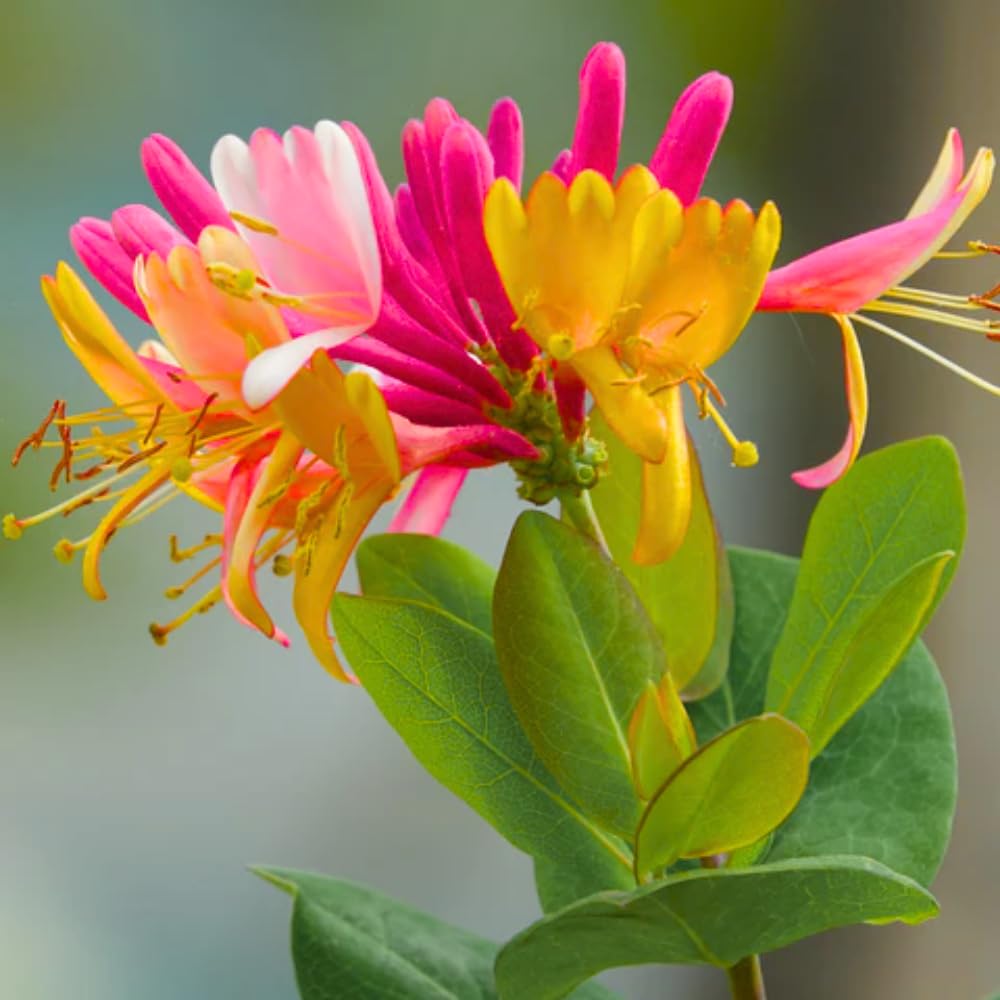
A cold-tolerant honeysuckle that brings fragrance and red berries to a patio trellis.
This Lonicera perennial ships as a single plant sized 5 to 9 inches tall, making it a small but tough start. The standout spec is its hardiness range: Zones 3-9, which is wider than any other vine here — it survives winters that drop well below zero. The pink-yellow flowers are large and fragrant, and the plant sets brilliant red fruits after blooming, adding a second season of visual interest. It needs full sun to perform, and it prefers sandy soil.
Compared to the Coral Honeysuckle that ships as three plants, this single plant is a lighter investment if you only need a single accent vine on a small trellis or patio pot. The big catch is the lack of customer reviews — no buyer feedback is available to confirm arrival condition or growth speed. You are buying based on specs and brand reputation alone. It is also a twining vine, so it climbs by wrapping around narrow supports (a thin trellis or wire) rather than clinging to a wall.
What Makes It Stand Out
- Zones 3-9 hardiness — handles extreme cold no other vine here matches
- Fragrant flowers followed by showy red fruits
- Small starter size keeps it manageable for first-year potting
What Is Missing
- No verified buyer reviews to confirm plant quality on arrival
- Single plant may take longer to fill a trellis than multi-pack options
Choose this for: very cold climates (Zone 5 and below) where most other climbers cannot survive the winter.
Skip if: you prefer the confidence of proven buyer feedback — this one has none to draw from.
5. Coral Honeysuckle | 3 Live Plants | Lonicera Sempervirens
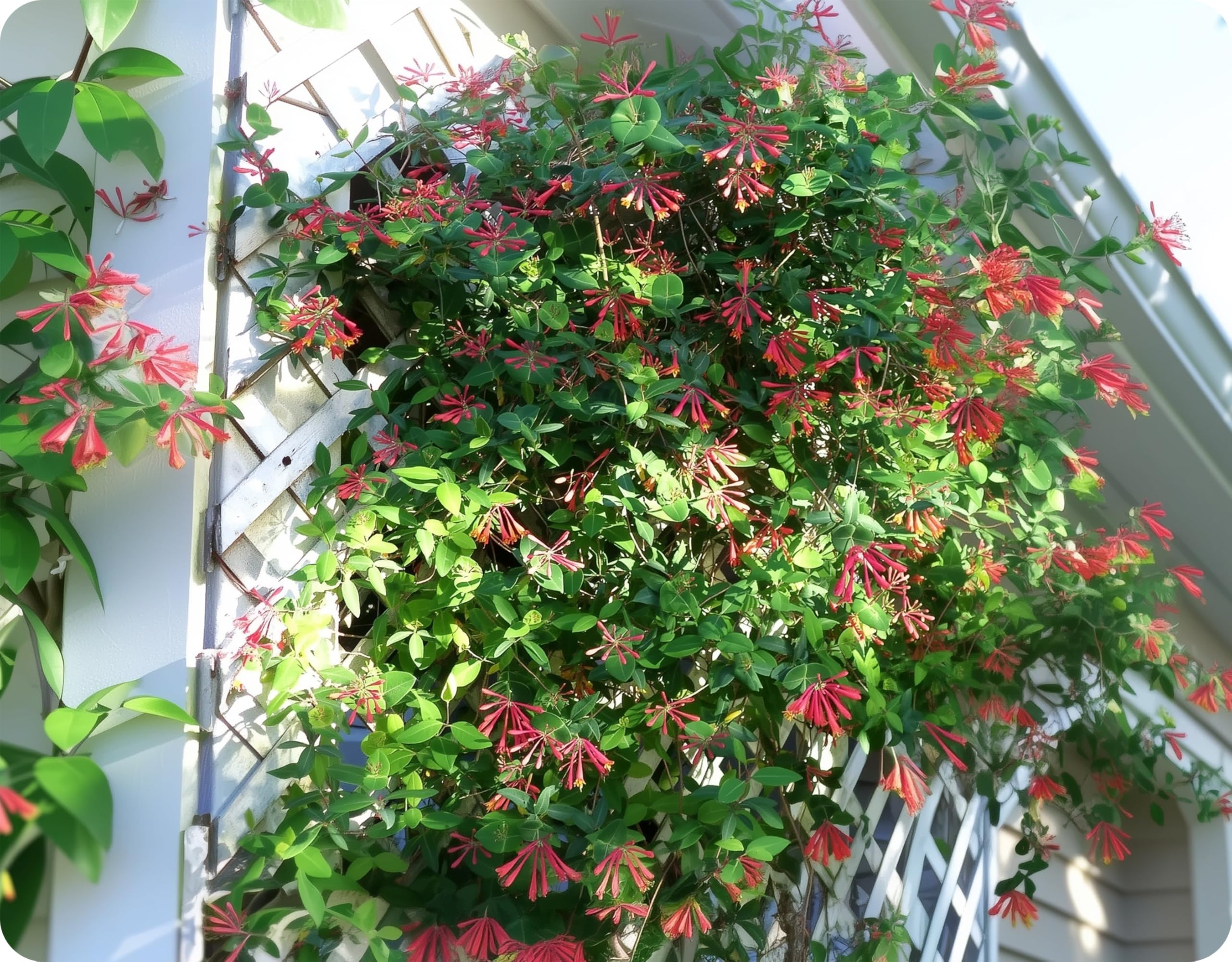
Three native honeysuckles that pull hummingbirds and cover a fence fast.
You get three individual Coral Honeysuckle (Lonicera sempervirens) plants in one order, totaling 5 pounds of root mass — noticeably more volume than any single-plant option here. This is a native vine with red tubular blooms that flower from spring through fall, and the “Attracts Pollinators” feature is not marketing fluff: hummingbirds genuinely seek out the trumpet-shaped flowers. It is a fast-growing climber that works perfectly on trellises, arbors, and chain-link fences.
Arrival quality is mixed. One owner reported all three arrived healthy. Another described them as “3 very small, almost dead sticks.” The seller (Florida Foliage) replaced a small first order with “3 green vibrant plants” that are now thriving. Open the package immediately, water, and give the plants light. Unlike the Trumpet Vine’s 4.1 pounds for a single pot, the 5 pounds across three plants means each individual vine is smaller — but three vines spaced along a trellis fill horizontal space faster than one monster vine.
Three-Vine Advantage
- Three plants give you dense, wide coverage faster than a single vine
- Native status means low maintenance and strong pollinator attraction
- Seller responsive to damaged-plant complaints per buyer reviews
Arrival Gamble
- Some shipments arrive as “almost dead sticks” with no green growth
- Watering and light immediately on arrival is non-negotiable for survival
Best for: anyone who values native plants and wants quick, pollinator-attracting coverage across a wide trellis or fence.
Think twice if: you prefer a single guaranteed-healthy plant over a multi-pack where each individual vine is smaller and arrival condition varies.
Understanding the Specs
Mature Height
This is the single most important number for a trellis vine. It tells you how tall the plant will eventually grow — a vine rated for 15 feet can cover a tall arbor, while a vine listed at 1 foot is basically a ground cover pretending to climb. Always compare the mature height against your trellis or fence height, not the size of the pot it ships in.
USDA Hardiness Zones
A zone range (like “Zones 4-10”) tells you which winter temperatures the plant can survive. Zone 4 means minus 30°F; Zone 10 means never freezes. If you live in a cold climate and pick a Zone 7-11 vine, you will lose it the first winter. This number alone filters out half the wrong choices before you even look at blooms.
Evergreen vs. Deciduous
Evergreen vines keep their leaves all winter, so your trellis stays covered year-round. Deciduous vines drop leaves in fall, leaving bare stems until spring. Check the product description — if it says “Evergreen,” you get privacy in every season. If it does not say it, assume it is deciduous.
Sunlight Exposure
This tells you how many hours of direct sun the vine needs to bloom well. “Full Sun” means six-plus hours of direct light — plant it in shade and you will get lots of leaves and few flowers. “Full Sun to Partial Shade” means it tolerates some shade but still needs a few hours of direct sun for best bloom.
FAQ
How long does it take for a climbing flower to cover a trellis?
Can I grow these climbing flowers in a pot on a patio?
Will Star Jasmine survive winter in Zone 6?
What is the difference between a climbing vine and a twining vine?
Do these vines come back every year?
How fast does Carolina Jasmine grow in its first year?
Which climbing flower attracts hummingbirds most?
Should I buy one plant or multiple plants for a trellis?
Final Thoughts: The Verdict
For most people, the best climbing flowers for trellis winner is the 2 Star Jasmine Plants because it combines year-round evergreen coverage, powerful jasmine fragrance, and a two-pack start that fills a trellis faster than a single vine. If you want a budget-friendly way to start an evergreen screen, grab the Carolina Jasmine Plant. And for a massive, cold-hardy vine that covers a large structure in one season, the standout is the Indian Summer Trumpet Vine.
How We Picked
We do not accept paid placement. Every pick is matched to a real buyer and a real use-case; we do not hands-on test units.
Sources & Methodology
Specifications: manufacturer listings and product documentation. Review insights: verified customer reviews, as of July 2026. Pricing: not shown on this page (it changes often); check the current price via the retailer link.
As an Amazon Associate, WellFizz earns from qualifying purchases. This does not affect which products we feature.

Mo Maruf
I created WellFizz to bridge the gap between vague wellness advice and actionable solutions. My mission is simple: to decode the research and give you practical tools you can actually use.
Beyond the data, I am a passionate traveler. I believe that stepping away from the screen to explore new environments is essential for mental clarity and physical vitality.