Our readers keep the lights on and my smoothie glass nicely filled. As an Amazon Associate, I earn from qualifying purchases.
The right pair of climbing boots is the difference between a confident ascent and a day spent fighting your own equipment. Whether you’re sparring a hundred-foot oak or navigating a crumbling alpine ridge, the boot underfoot must deliver precise edging, reliable ankle support, and a sole stiff enough to transfer every ounce of power to the rock or branch without compromise.
I’m Mohammad Maruf — the founder and writer behind WellFizz. I’ve spent countless hours analyzing the specific hardware specifications, last constructions, and crampon compatibility of the market’s most serious climbing boots to separate the true performers from the look-alikes.
This guide breaks down nine models built for technical terrain, evaluating leather thickness, midsole stiffness, outsole rubber compounds, and waterproof membrane performance to help you find the best climbing boots for your specific needs and budget.
How To Choose The Best Climbing Boots
Choosing a climbing boot is a tactical decision that hinges on the specific vertical environment you’ll face. Whether you are stepping into a tree crotch at fifty feet or front-pointing up a frozen couloir, the boot’s construction directly dictates your safety and performance. Ignoring the relationship between stiffness, last shape, and outsole rubber will leave you with a model that fights you at every step.
Crampon Compatibility and Shank Stiffness
The shank is the backbone of any climbing boot. A full-steel or stiff nylon shank provides the torsional rigidity needed to drive a crampon point into hard snow or ice without the boot folding. Semi-automatic crampons require a heel welt and a stiff enough sole to hold the binding, while fully automatic systems demand a heel and toe welt paired with a rigid shank. For tree work where spikes are less common, a stiff shank still protects the arch when standing on a narrow gaff or limb.
Upper Material and Waterproofing
A climbing boot’s upper must resist abrasion from rock, bark, and crampon points. Full-grain leather in the 2.2 mm to 2.4 mm range offers the best balance of durability and break-in comfort. A Gore-Tex or Sympatex membrane keeps moisture out without trapping sweat, but the membrane’s breathability rating and the lining material determine how quickly the boot dries after a creek crossing or a sweaty approach. A full rubber rand adds a critical layer of protection for toe and sidewall impacts.
Last Shape and Fit for Technical Terrain
A climbing boot’s last — the mold around which the boot is built — dictates how precisely your foot fits inside. A narrower last with a low-volume heel pocket offers superior edging accuracy because the foot moves less inside the boot. Arborists often prefer a slightly wider toe box to accommodate splayed toes during long hours on spikes, while alpine climbers prioritize a snug heel to prevent lift during front-pointing. Trying boots with the exact sock thickness you intend to wear in the field is non-negotiable.
Quick Comparison
On smaller screens, swipe sideways to see the full table.
| Model | Category | Best For | Key Spec | Amazon |
|---|---|---|---|---|
| Asolo TPS 535 LTH V Evo | Mid-Range | Technical backpacking & heavy loads | 2.2-2.4 mm full-grain leather, Vibram T.P.S. outsole | Amazon |
| Salewa Condor EVO GTX | Mid-Range | Alpine via ferrata & snowshoeing | Perwanger suede, Vibram Teton outsole, semi-auto crampon | Amazon |
| Alpina CARABINER | Mid-Range | Fast hiking & technical approaches | Sympatex membrane, Vibram all-weather grip | Amazon |
| Arbpro EVO 2 | Premium | Professional arborist tree climbing | Event waterproof membrane, ‘climbing zone’ Vibram sole | Amazon |
| SCARPA Zodiac Tech GTX | Premium | 3-season technical mountaineering | Full rubber rand, Gore-Tex, semi-auto crampon | Amazon |
| La Sportiva Makalu Leather | Premium | Heavy mountaineering & workboot use | Full-steel shank, 3 mm Perwanger roughout leather | Amazon |
| La Sportiva Aequilibrium ST GTX | Premium | Fast alpine ascents & mixed terrain | Gore-Tex Performance Comfort, ultralight nylon shank | Amazon |
| Zamberlan 996 Vioz GTX | Premium | Backcountry backpacking in steep terrain | Gore-Tex lining, Zamberlan Vibram outsole | Amazon |
| Kenetrek Mountain Extreme | Premium | Harsh alpine & big-game hunting terrain | 10″ height, Windtex membrane, K-Talon outsole, 7 mm nylon midsole | Amazon |
In‑Depth Reviews
1. Asolo TPS 535 LTH V Evo
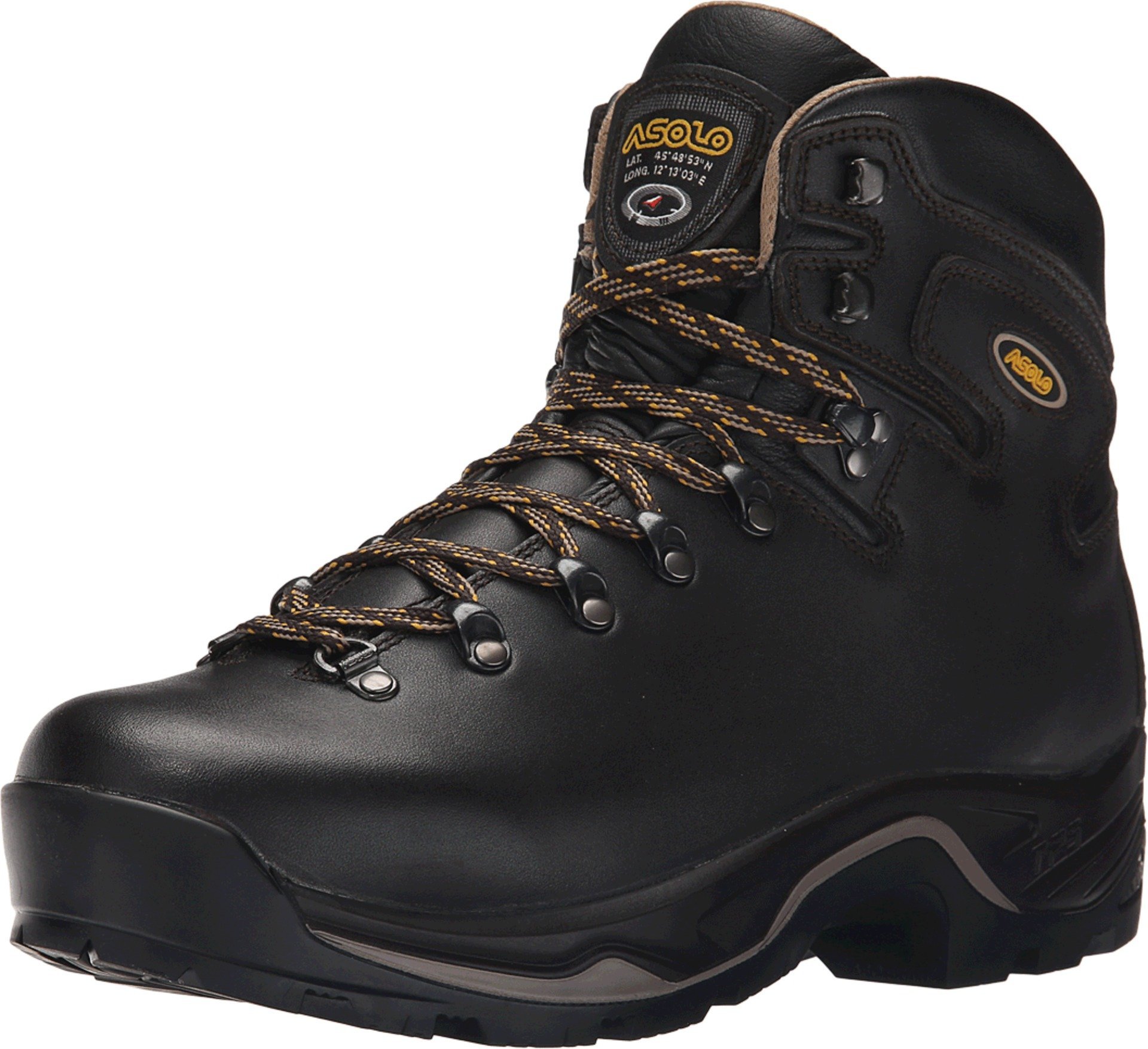
The Asolo TPS 535 LTH V Evo is a classic heavy backpacking boot that has earned a loyal following among mountaineers and arborists alike for its uncompromising durability. The full-grain leather upper, rated at 2.2-2.4 mm, provides a tough exterior that stands up to abrasion from rock, scree, and bark, while the Cambrelle lining creates a breathable microclimate without relying on a Gore-Tex membrane. The boot’s signature feature is the Triple Power Structure (T.P.S.) outsole from Vibram, which incorporates three shock absorbers aligned with the heel, ball, and lateral metatarsal to reduce impact on uneven terrain.
The Asoflex 00 MR lasting board and dual-density PU midsole deliver the stiffness needed for carrying heavy packs over technical ground, yet the boot remains flexible enough for comfortable mile-after-mile trekking. Real-world reports from contractors and backpackers indicate an outsole lifespan of 1,000 to 1,500 miles before needing a resole, and the boot is indeed resoleable — a rarity in the mid-range category. The rubber toe cap adds an extra layer of protection for those who frequently kick into rock or step on roots.
One consistent note is that the boot runs narrow and short, especially in the toe box. Users with wide feet or those typically wearing an EE width should size up by at least a half-size or consider a full size up, paired with a thin liner and a medium-weight wool sock. The break-in period is real — expect a few dozen miles before the leather fully conforms to your foot — but the payoff is a boot that can last five years or more of heavy, daily use.
Why it’s great
- Extremely durable full-grain leather with resoleable Vibram outsole
- Excellent ankle support for heavy loads on technical terrain
- Breathable without Gore-Tex, reducing sweat buildup
Good to know
- Runs narrow and short; wide-foot users may struggle
- Requires a significant break-in period for best comfort
- Not ideal for ultralight or trail-runner-style users
2. Salewa Condor EVO GTX

The Salewa Condor EVO GTX is a purpose-built alpine mountaineering boot that excels in mixed terrain where precision and protection are required. The Perwanger suede leather upper is both durable and lightweight, and it is paired with a Gore-Tex Performance Comfort lining that keeps moisture out without sacrificing breathability during high-output approaches. The 3F System integrates the lacing, heel cup, and sole flex zone to provide lateral heel stability while still allowing the ankle to move naturally — a critical feature for via ferrata and exposed ridge walking.
Underfoot, the Vibram Teton outsole features high, self-cleaning lugs and an undercut heel that bites into mud, grass, and snow, giving you secure braking on descents. The stiff nylon and 27-percent fiberglass insole makes the boot compatible with semi-automatic crampons, so you can transition from trail to glacier without changing boots. The 3D Lacing system allows separate adjustment of the forefoot and midfoot, while the Climbing Lacing zone at the toes enables fine-tuned precision for smearing on small holds.
Users with flat, narrow feet report that the Condor EVO GTX fits perfectly out of the box with minimal break-in required, even after long days with heavy packs. However, the leather upper can shrink if repeatedly soaked and dried with high heat, so proper care — air drying away from direct heat — is essential. Arborists have also used these boots for tree climbing, noting that the stiffness and ankle support translate well to spur work, though the suede upper is less abrasion-resistant than full-grain leather options.
Why it’s great
- Excellent semi-automatic crampon compatibility for alpine use
- 3F System allows natural ankle motion with strong heel hold
- Self-cleaning Vibram Teton outsole with undercut heel for braking
Good to know
- Leather can shrink if dried with high heat after soaking
- Suede upper is less abrasion-resistant than full-grain leather
- Best fit for narrow to medium foot shapes
3. Alpina CARABINER
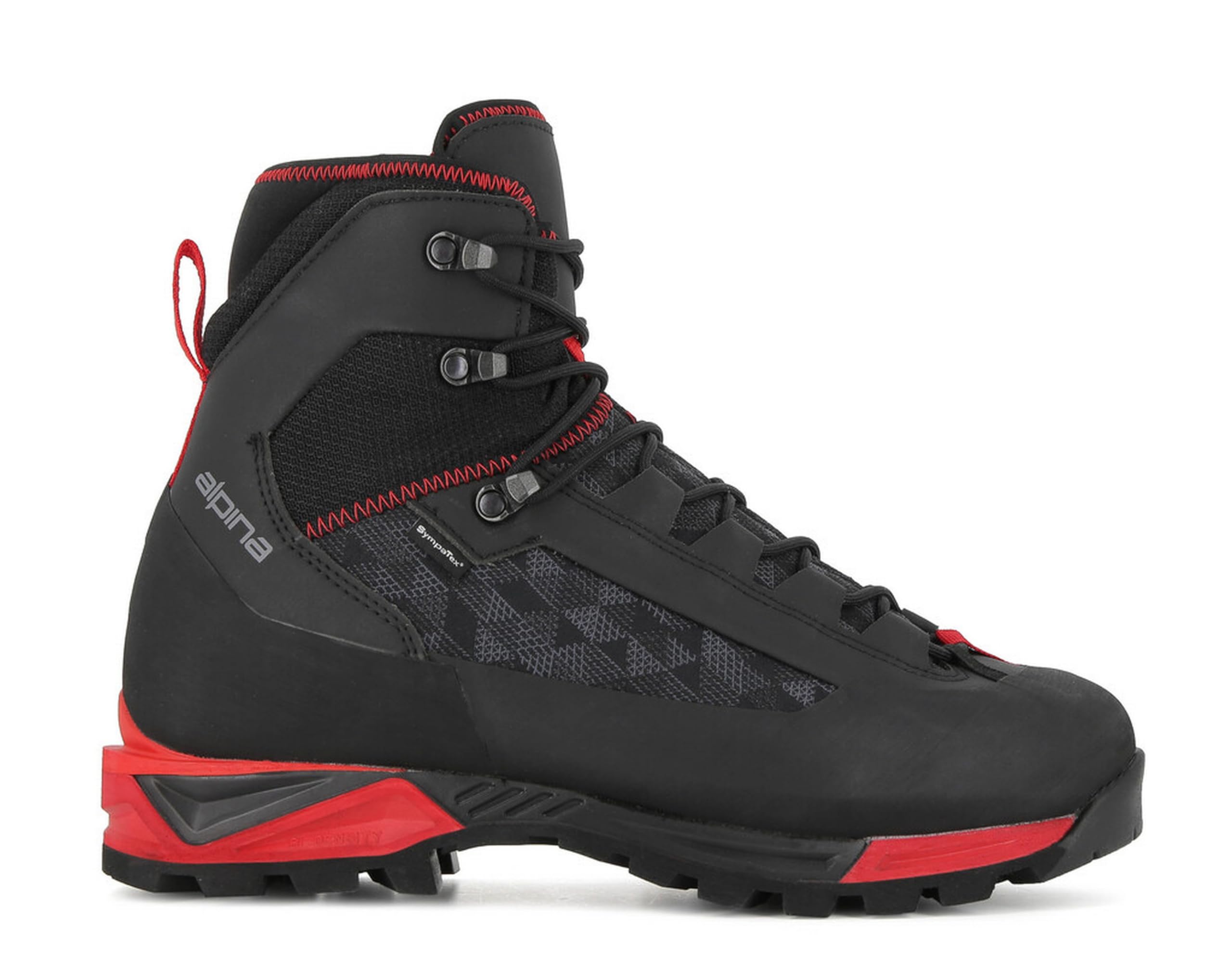
The Alpina CARABINER is a lightweight mountaineering boot designed for those who move fast on technical terrain without the bulk of a traditional leather expedition boot. The upper uses a combination of high-quality materials with a reinforced toe and heel cap, and the boot is sealed with an Alpitex waterproof membrane (Sympatex-based) that keeps feet dry during creek crossings and rain. The Vibram outsole is engineered for mixed terrain grip, with a tread pattern that balances smearing on rock with biting into loose soil and scree.
At just over 3.5 pounds per pair, the CARABINER is noticeably lighter than full-leather alternatives, reducing fatigue on long approaches and multi-day treks. The neoprene collar seals out debris and provides a comfortable fit around the ankle without restricting movement. Arborists who have switched to the CARABINER from traditional logger-style boots report that the comfort and durability are superior for tree climbing, and many note that the boots show minimal wear over extended daily use in the canopy.
One Spanish-language review describes sole delamination and water ingress within a month of light use, which suggests that quality control may vary between production batches. However, the majority of users — particularly those in tree work and alpine hiking — report excellent durability and a great fit right out of the box. The boot runs true to size for most, but European sizing means that those between sizes should consider going up a half-step to accommodate a thick sock.
Why it’s great
- Lightweight design reduces fatigue on long approaches
- Sympatex membrane provides reliable waterproofing
- Neoprene collar keeps out debris while allowing ankle flex
Good to know
- Some reported sole delamination in early production units
- Not as stiff as full-leather expedition boots for heavy loads
- European sizing may require a half-size up for some feet
4. Arbpro EVO 2
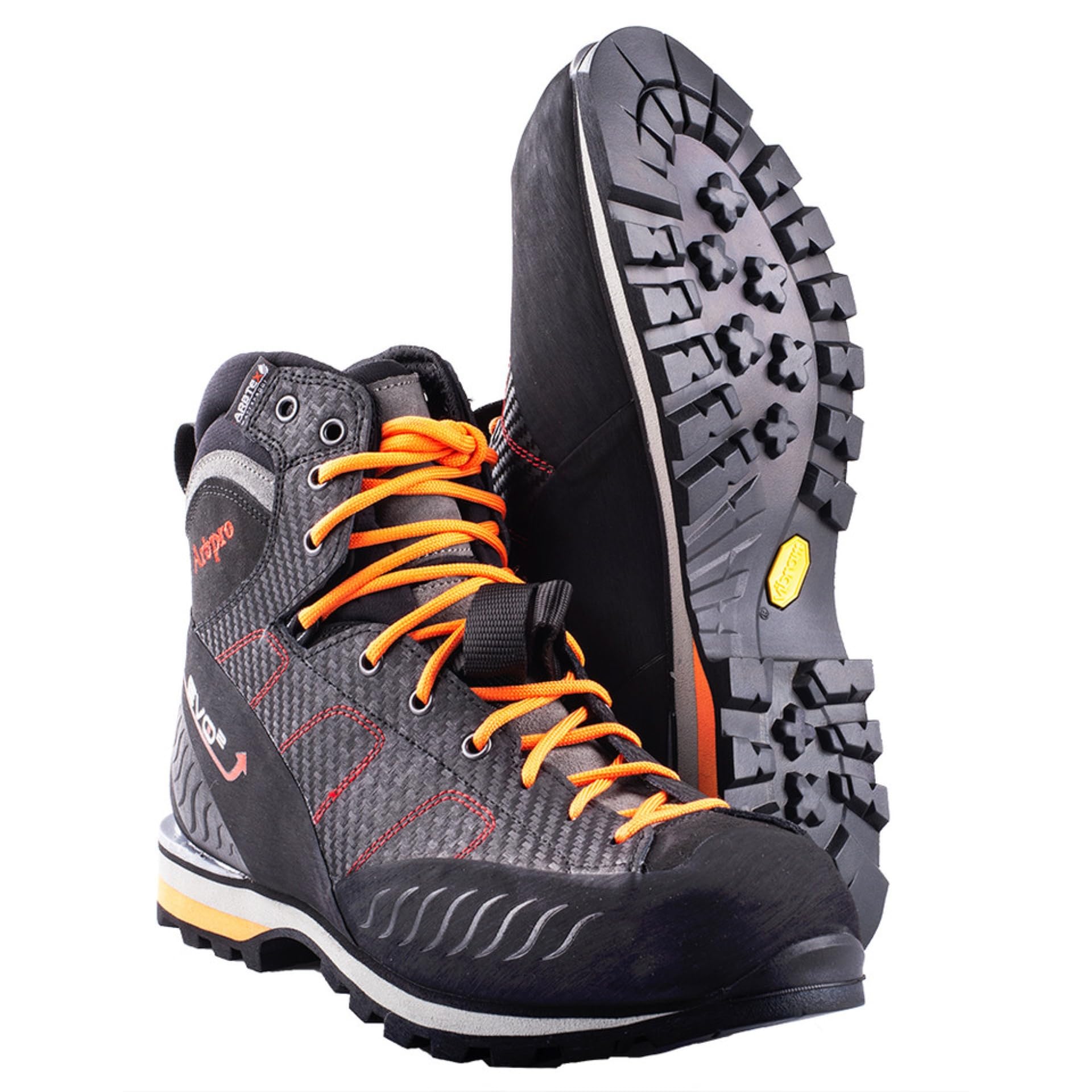
The Arbpro EVO 2 is a purpose-built climbing boot specifically engineered for arborists, and it shows in every design detail. The custom Vibram outsole features a dedicated ‘climbing zone’ at the tip that provides optimal grip on narrow crotches and small branches, giving tree climbers the tactile feedback they need to feel confident at height. The upper is constructed from premium Perwanger leather with a rubber profile, and the boot uses an Event membrane instead of Gore-Tex — a significant advantage because Event is known for higher breathability while maintaining full waterproofness, which reduces sweat accumulation during a full day of physical work.
New for the EVO 2 iteration, the ankle support has been raised by 25 mm with a softer yet taller pad, improving lateral stability without restricting range of motion. The lacing system has been reinforced with stronger stitching and a metal-free design, which is critical for arborists whose ropes can be damaged by exposed metal hooks. There is also a loop attachment point on the boot for devices like the HAAS or SAKA foot ascender, though this is not rated as PPE and should be treated as a convenience feature only.
The boots run slightly smaller than standard US sizing, so ordering a half-size up is a common recommendation. The sole is intentionally softer than traditional work boots to maximize grip while climbing, which means the outsole will wear faster when used on concrete or asphalt for extended periods. Arborists who do both climbing and ground work often buy a new pair every year or have the soles resoled by a cobbler, which is possible due to the boot’s construction. If your primary use is tree climbing, the EVO 2 is a specialized tool that outperforms general hiking boots in the canopy.
Why it’s great
- Climbing zone Vibram sole offers exceptional grip on branches
- Event membrane is highly breathable while waterproof
- Metal-free lacing protects ropes from damage
Good to know
- Runs small; order a half-size up for a proper fit
- Soft outsole wears quickly on hard ground surfaces
- Annual replacement or resoling is common for heavy use
5. SCARPA Zodiac Tech GTX
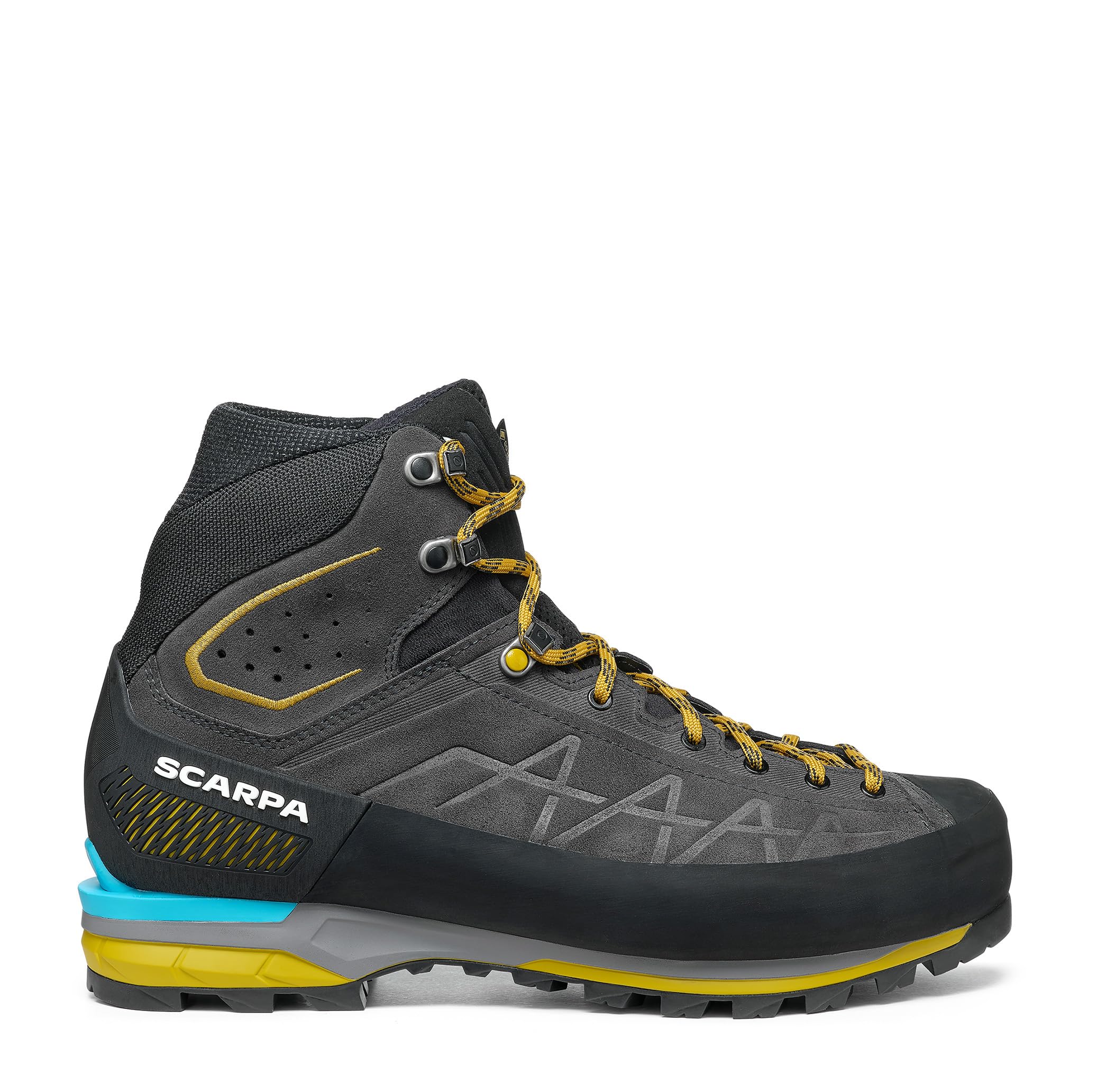
The SCARPA Zodiac Tech GTX is a modern three-season mountaineering boot that bridges the gap between a lightweight approach shoe and a full-shank technical boot. The defining feature is the full rubber rand that wraps completely around the boot’s perimeter, protecting the upper from abrasion during rock scrambling and providing a consistent surface for edging on small footholds. The Sock-Fit Construction uses a one-piece tongue mated to the ankle collar, creating a seamless internal fit that eliminates hot spots and reduces bulk around the ankle — a design borrowed from SCARPA’s higher-end alpine boots.
The boot is lined with Gore-Tex Performance Comfort, which balances waterproofing with breathability for high-output approaches. At 1 pound 8.7 ounces per half pair (size 9 US men), the Zodiac Tech is light enough for fast-moving missions but still stiff enough for semi-automatic crampons. The outsole uses a SCARPA-specific Vibram compound with a lug pattern that offers reliable traction on loose scree, wet rock, and grassy slopes. The midsole strikes a careful balance — stiff enough for edging but not so rigid that it punishes your feet on the flat approach to the climb.
Real-world testers note that the boot fits wide feet particularly well, a somewhat rare characteristic in the technical mountaineering category. The lack of a full steel shank means it is not suitable for fully automatic crampons or extreme ice climbing, but for alpine treks, via ferrata, and glacier travel, the Zodiac Tech GTX provides a comfortable, precise platform. The full rubber rand does make the boot slightly warmer than a non-randed model, but the breathability of the Gore-Tex liner mitigates this in most conditions.
Why it’s great
- Full rubber rand provides excellent durability and edging precision
- Very lightweight for a mountaineering boot with crampon compatibility
- Great fit for wide feet with room in the toe box
Good to know
- Not stiff enough for fully automatic crampons or hard ice
- Full rubber rand reduces breathability slightly
- Some users find sizing inconsistent between half sizes
6. La Sportiva Makalu Leather

The La Sportiva Makalu is a boot that has achieved legendary status among linemen, arborists, and alpine mountaineers who demand a rigid platform for technical work. The defining characteristic is the full steel shank, which makes the boot extremely stiff — it is designed to support heavy loads on steep terrain and to interface seamlessly with fully automatic crampons for ice climbing. The upper is built from a single piece of 3 mm Idro-Perwanger roughout leather, a material that is both highly abrasion-resistant and naturally water-resistant when treated with the appropriate wax or conditioner.
The Makalu is not a boot you slip on and forget. The break-in period is substantial — experienced users report needing 50 miles or more of hiking before the leather fully conforms to the foot. The boot also runs about a half-size to a full-size small compared to US sizing, so sizing up is essential if you plan to wear a thick mountaineering sock. The midsole uses the La Sportiva MPEvo compound, which offers a balance of stiffness and shock absorption, while the Vibram Couloir outsole features aggressive lugs that bite into snow, mud, and loose scree.
For linemen and arborists, the full steel shank provides the support needed for climbing spikes and gaffs, and the leather upper holds up to the abrasion of tree bark and steel hardware. The boot is warm in cold weather but can feel hot in summer conditions due to the thick leather and lack of a breathable membrane. Some users note that the boot is not fully waterproof in heavy, prolonged rain without additional wax treatment, so regular maintenance is required to preserve the leather’s water resistance.
Why it’s great
- Full steel shank provides unmatched rigidity for ice climbing and spikes
- 3 mm single-piece leather upper is incredibly durable and resoleable
- Excellent support for heavy loads and steep, rocky terrain
Good to know
- Long, painful break-in period of 50 miles or more
- Runs small; requires a significant size adjustment
- Not waterproof without regular wax treatment
7. La Sportiva Aequilibrium ST GTX
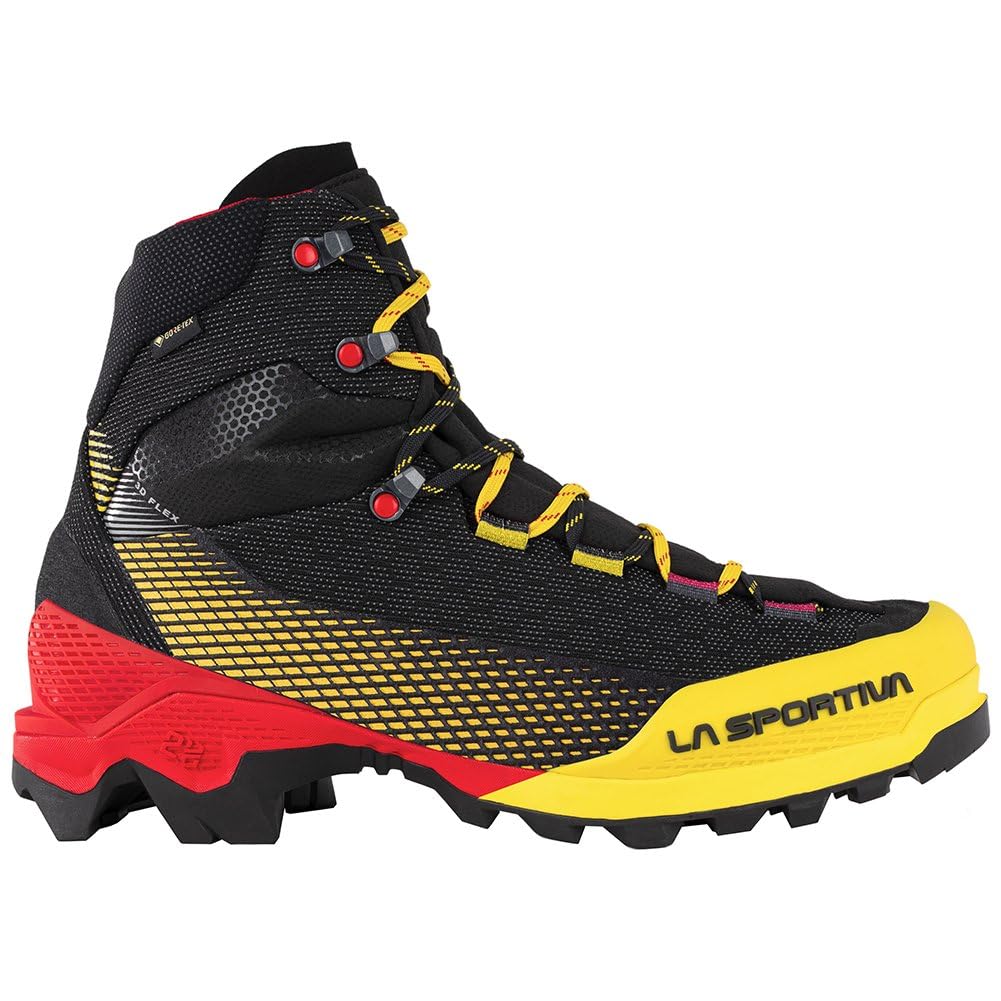
The La Sportiva Aequilibrium ST GTX is a modern technical boot designed for alpinists who prioritize speed without sacrificing climbing performance. Unlike the Makalu, the Aequilibrium uses a nylon shank reinforced with fiberglass, which provides excellent torsional rigidity for edging and crampon use while keeping the weight significantly lower. The Gore-Tex Performance Comfort lining ensures reliable waterproofing during stream crossings and wet snow, while the upper combines a stretchy HoneyComb Guard material with a water-repellent zippered gaiter — a design that keeps out scree and snow without the bulk of a traditional leather cuff.
The outsole is the Vibram SpringLug Tech, a compound that uses a high-density rubber for grip on wet rock and a staggered lug pattern for traction on loose terrain. The boot is designed for semi-automatic crampons, making it suitable for glacier travel and mixed alpine routes, but the lack of a full steel shank means it is not ideal for vertical ice or heavily loaded expeditions. The Aequilibrium is one of the lightest boots in its class, weighing in at less than 19 ounces per boot in a size 9, which translates to less leg fatigue on long approach days.
Users consistently praise the Aequilibrium for its out-of-the-box comfort, with many reporting zero break-in time. The fit is snug through the heel and midfoot while offering enough room in the toe box for splaying on descents. However, the ankle collar is thinner than on traditional mountaineering boots, and some users with low-volume ankles find the fit too loose. The boot also runs about a full size to 1.5 sizes small, so trying them on in-store or ordering multiple sizes is highly recommended.
Why it’s great
- Extremely lightweight for a technical mountaineering boot
- Integrated gaiter keeps out debris and streamlines the profile
- Out-of-box comfort with minimal to no break-in required
Good to know
- Not stiff enough for fully automatic crampons or hard ice
- Runs significantly small; size up 1 to 1.5 sizes
- Thin ankle collar may not suit all ankle anatomies
8. Zamberlan 996 Vioz GTX

The Zamberlan 996 Vioz GTX is one of the most critically acclaimed backpacking boots in the outdoor industry, and its reputation is built on decades of Italian craftsmanship. The boot uses a premium full-grain leather upper that is both durable and surprisingly supple out of the box, with a Gore-Tex lining that keeps moisture out while maintaining breathability. The Zamberlan Vibram outsole features a proprietary rubber compound that offers exceptional grip on wet rock and loose terrain, with a self-cleaning tread pattern that sheds mud effectively.
The midsole uses a nylon and fiberglass shank that strikes a balance between stiffness for load-carrying and flexibility for natural walking motion. This makes the Vioz GTX ideal for rugged backcountry terrain where you might carry a heavy pack one day and scramble over boulders the next. The fit is true to size for most users, with a medium-volume last that accommodates a variety of foot shapes without feeling sloppy. The ankle collar is well-padded and supportive, reducing fatigue on long, uneven descents.
One of the key trade-offs is that the soft Vibram rubber outsole, while excellent for grip, wears faster than harder compounds when used on pavement or rocky trails. Users report that the sole may need replacing before the leather upper shows significant wear, which is a consideration for those who plan to use the boot as a daily driver. The boot is also on the heavier side, weighing in at over 3 pounds per pair, which some fast-and-light enthusiasts may find excessive.
Why it’s great
- Excellent out-of-box comfort with premium leather construction
- Proprietary Vibram outsole offers outstanding wet-rock grip
- True-to-size fit accommodates a wide range of foot shapes
Good to know
- Soft outsole compound wears faster than harder alternatives
- Heavier than many modern backpacking boots
- Not stiff enough for fully automatic crampons
9. Kenetrek Mountain Extreme
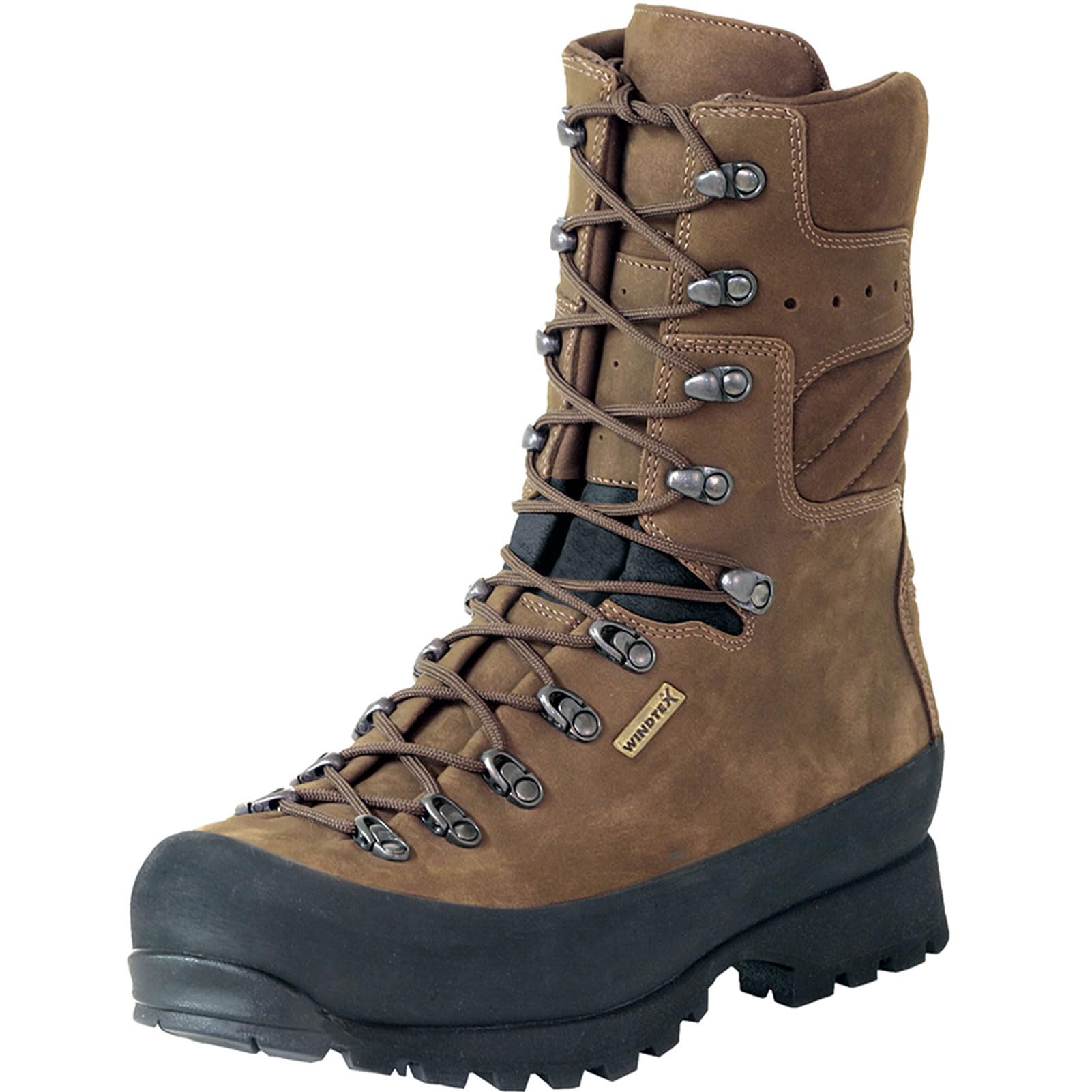
The Kenetrek Mountain Extreme is a 10-inch tall boot built for the harshest alpine environments, where ankle support and protection are non-negotiable. The upper is constructed from full-grain leather with reinforced double and triple stitching in high-wear areas, and the boot features a Windtex waterproof membrane that is both breathable and fully waterproof — several users report wading through water up to 8 inches deep without any ingress. The K-Talon outsole uses aggressive, widely spaced lugs that provide exceptional grip on loose scree, mud, and snow, and the 7 mm nylon midsole delivers the stiffness needed for carrying heavy loads over uneven terrain.
The boot is significantly taller than most climbing boots, which gives it a distinct advantage in deep snow and on steep, loose slopes where debris could otherwise enter the collar. The fit is designed with excellent arch support, a snug heel pocket, and a roomy toe box — a combination that users with wide feet or high-volume insteps consistently praise. The boot is stiff out of the box and requires a two-week break-in period, but once broken in, it molds to the foot and provides a supportive platform that reduces fatigue on long approaches.
Kenetrek recommends using only their own wax for treatment of the leather, as other products may damage the membrane. The boot is on the heavier side, but the height and construction make it a favorite among big-game hunters, alpine guides, and anyone who needs a boot that can handle multiple seasons of abuse. The lack of a full steel shank means it is not ideal for fully automatic crampons, but the stiffness is sufficient for semi-automatic systems and most mixed-terrain applications.
Why it’s great
- 10-inch height provides unmatched ankle and lower-leg protection
- Windtex membrane keeps feet dry in deep water crossings
- Excellent arch support with a roomy toe box for all-day comfort
Good to know
- Heavy construction may feel cumbersome for fast and light missions
- Stiff out of the box; requires a dedicated break-in period
- Must use specific Kenetrek wax to avoid damaging the membrane
FAQ
Can I use fully automatic crampons on any climbing boot?
How often should I resole my climbing boots?
Do climbing boots stretch during break-in?
Final Thoughts: The Verdict
For most users, the best climbing boots winner is the Asolo TPS 535 LTH V Evo because it delivers an exceptional balance of full-grain leather durability, resoleable construction, and proven technical performance at a mid-range investment. If you want a lighter, more specialized tree climbing boot, grab the Arbpro EVO 2. And for alpine ascents requiring semi-automatic crampon compatibility and minimal weight, nothing beats the La Sportiva Aequilibrium ST GTX.

Mo Maruf
I created WellFizz to bridge the gap between vague wellness advice and actionable solutions. My mission is simple: to decode the research and give you practical tools you can actually use.
Beyond the data, I am a passionate traveler. I believe that stepping away from the screen to explore new environments is essential for mental clarity and physical vitality.