Our readers keep the lights on and my smoothie glass nicely filled. As an Amazon Associate, I earn from qualifying purchases.
Clear filament promises glass-like transparency but often delivers foggy, brittle, or impossible-to-print spools that clog nozzles and snap mid-print. Getting true clarity in a 3D print is a battle between light transmission and mechanical integrity — the wrong choice leaves you with either a weak model or a cloudy mess.
I’m Mohammad Maruf — the founder and writer behind WellFizz. I’ve spent dozens of hours dissecting manufacturer spec sheets, researching real-world print profiles, and cross-referencing user feedback to find the clear filaments that actually deliver on their promise.
This buying guide ranks the top material options based on dimensional tolerance, light-diffusing behavior, impact resistance, and heat deflection, so you can pick the best clear filament for your specific printer and project.
How To Choose The Best Clear Filament
Clear filament is a material category defined by its optical properties, but most buyers mistakenly treat it like standard opaque spools. The difference between a showpiece and a dud comes down to polymer chemistry, moisture control, and print technique — not just color name.
Choose the Right Polymer for Your Use Case
PLA-based clear filaments print easily at lower temperatures (220-250°C) and offer the highest possible transparency in vase mode, but they lack heat resistance and impact strength. PETG clear filaments provide a tougher, more durable part with better chemical resistance and lower warping, though they require an all-metal hotend and higher bed temperatures (80-100°C). Polycarbonate clear filaments deliver the highest strength and heat deflection — surviving enclosed car interiors and composite molding — but demand an enclosed printer, high nozzle temps (260-270°C), and aggressive bed adhesion.
Diameter Tolerance Is Non-Negotiable
Clear filament amplifies every extrusion inconsistency. A tolerance of ±0.02mm delivers consistent volumetric flow, uniform layer lines, and fewer surface artifacts that scatter light. Spools with ±0.05mm tolerance or worse produce visible banding, gaps, and over-extrusion that kills transparency. Every product reviewed here meets or exceeds the ±0.03mm threshold — anything looser belongs in prototyping, not light-transmitting prints.
Wall Thickness and Print Mode Define the Final Look
True glass clarity only appears at single-wall thickness (vase mode or one perimeter). Adding a second or third wall creates a frosted, light-diffusing effect — desirable for lithophanes but not for optical transparency. If your project requires a crystal-clear window or lens, you must design your model to print in spiral vase mode with a 0.4mm or smaller nozzle. For lampshades and decorative objects that need soft glow, a double-wall approach with a pearl-white or milky formulation works better.
Moisture Control Preserves Clarity
Clear polymers absorb atmospheric moisture faster than opaque filled variants. Water-laden filament turns cloudy when extruded due to steam bubble formation within the melt. Every premium clear filament ships vacuum-sealed with desiccant. If you live in a humid region, store opened spools in a dry box (<20% relative humidity) and pre-dry for four to six hours at 60-70°C before printing clear parts. Skipping this step guarantees a hazy, brittle final print regardless of the filament’s initial quality.
Quick Comparison
On smaller screens, swipe sideways to see the full table.
| Model | Category | Best For | Key Spec | Amazon |
|---|---|---|---|---|
| Polymaker PC Filament 1.75mm Clear | Polycarbonate | High-heat functional parts | HDT >125°C | Amazon |
| JIUFU Lithophane PLA 1.75mm Pearl White | PLA+ | Backlit art & lampshades | ±0.02mm tolerance | Amazon |
| Bambu Lab PETG Translucent Clear | PETG | Durable enclosures & brackets | ±0.03mm tolerance | Amazon |
| Lotactree Green Translucent PLA | PLA | Vase-mode artistic models | ±0.03mm tolerance | Amazon |
| Prusament PETG Clear 1.75mm | PETG | Precision-driven professional prints | ±0.02mm tolerance | Amazon |
In‑Depth Reviews
1. Polymaker PC Filament 1.75mm Clear

Polymaker’s PolyLite PC in transparent is the strongest clear filament in this lineup, with a heat deflection temperature exceeding 125°C that survives enclosed car interiors and composite mold curing cycles. The material behaves more like a rubber-toughened PBT/PC blend than standard polycarbonate — it bends rather than shattering under load and bonds aggressively to build surfaces.
Printing this filament demands enclosed hardware: a nozzle temperature of 260-270°C, a 100°C bed, and a chamber held below 80°C to prevent heat creep. User reports confirm that a dry box below 18% relative humidity is mandatory, as clear PC absorbs atmospheric moisture within hours of exposure. Once dialed in, the parts resist warping better than ABS and produce minimal stringing — rare for a high-temp material.
The transparent variant exhibits a slight hex-code gray tint (#Dad5d4) rather than water-clear clarity, so it suits structurally demanding parts — like molds, outdoor gym components, and functional prototypes — where optical purity matters less than mechanical survivability. The cardboard spool is recyclable and the resealable vacuum bag includes desiccant for repeat use.
Why it’s great
- Withstands elevated cure temps for composite molding without deformation
- Tough, semi-flexible failure mode instead of brittle shattering
- Low odor during printing despite the high melt temperature
Good to know
- Requires an enclosed printer with a 100°C-capable bed; stock open-frame units cannot print it
- Not optically clear — has a light-diffusing grayish cast
- Absorbs water rapidly; must be kept in a dry box or re-dried frequently
2. JIUFU Lithophane PLA 1.75mm Pearl White
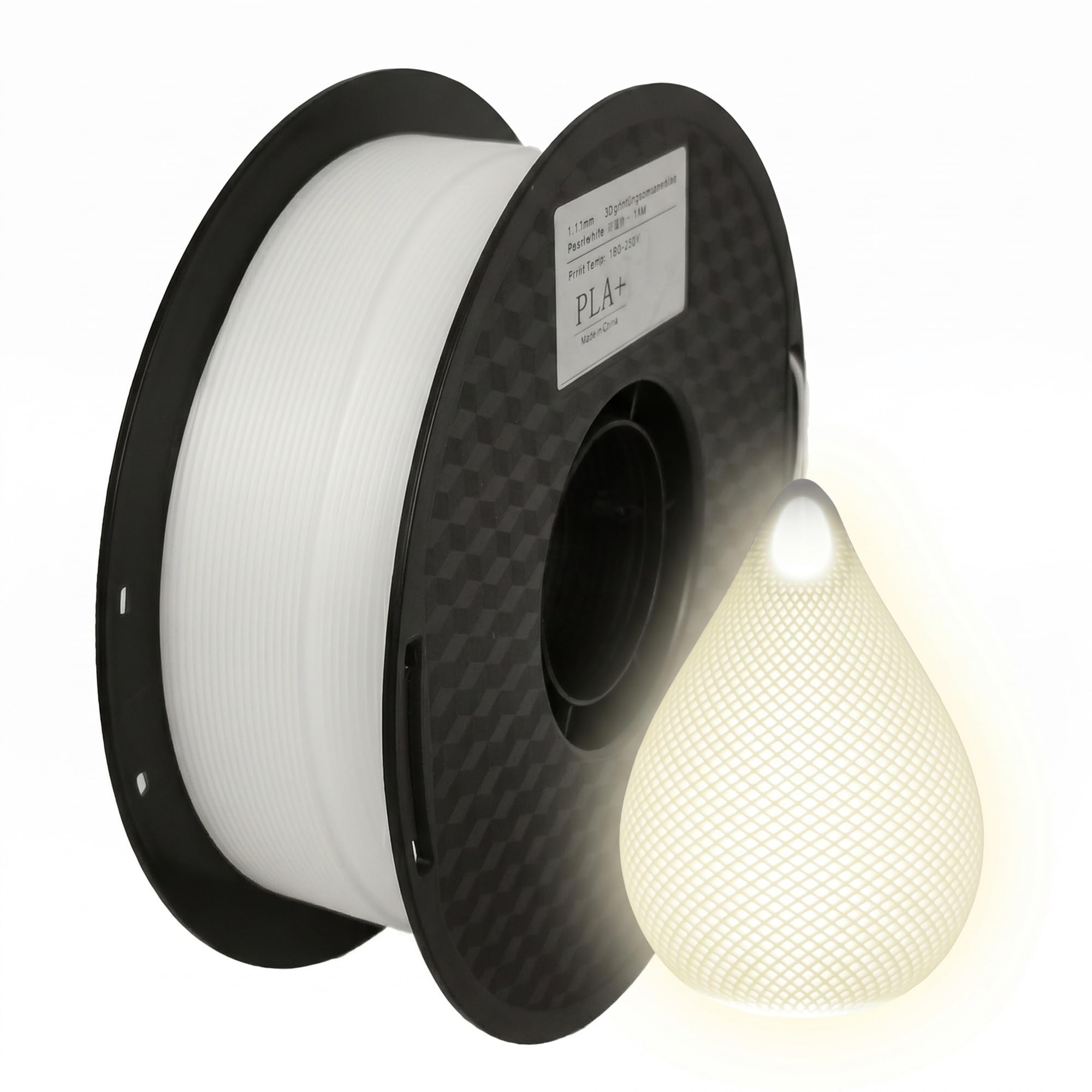
JIUFU engineered this pearl-white PLA specifically for backlit lithophanes and translucent décor, solving the core problem of standard white PLA — which blocks light entirely. The semi-translucent blend diffuses light evenly across the surface, creating smooth shadow gradients and enhanced contrast when printed with varied wall thickness.
The filament ships vacuum-sealed and bone-dry, with a tight ±0.02mm diameter tolerance that prevents the extrusion inconsistencies that ruin lithophane detail. Users report it prints beautifully on Bambu Lab A1 and X1C machines using generic PLA+ profiles, with zero clogs and no tangles across full spool runs. The enhanced PLA+ formula improves layer bonding and adds subtle flexibility compared to standard brittle white PLA, reducing the risk of thin-section breakage in tall lampshades.
This is not a water-clear filament — it delivers a milky, soft-glow finish that obscures internal structures while transmitting sufficient light for photo-quality image reproduction. For lamps, light boxes, and decorative figurines that need the soft warmth of pearl rather than clinical glass, this is the engineered choice. The three-month warranty offers a modest safety net.
Why it’s great
- Specially formulated pearl formula diffuses light evenly, unlike opaque white PLA
- Tight ±0.02mm tolerance preserves fine lithophane detail without banding
- PLA+ toughness prevents thin-wall breakage common in standard PLA lithophanes
Good to know
- Not optically transparent — the milk-white finish is designed for diffusion, not clarity
- Three-month warranty is shorter than industry average
- Requires manual light box testing to dial in ideal backlight intensity
3. Bambu Lab PETG Translucent Filament 1.75mm Clear Refill
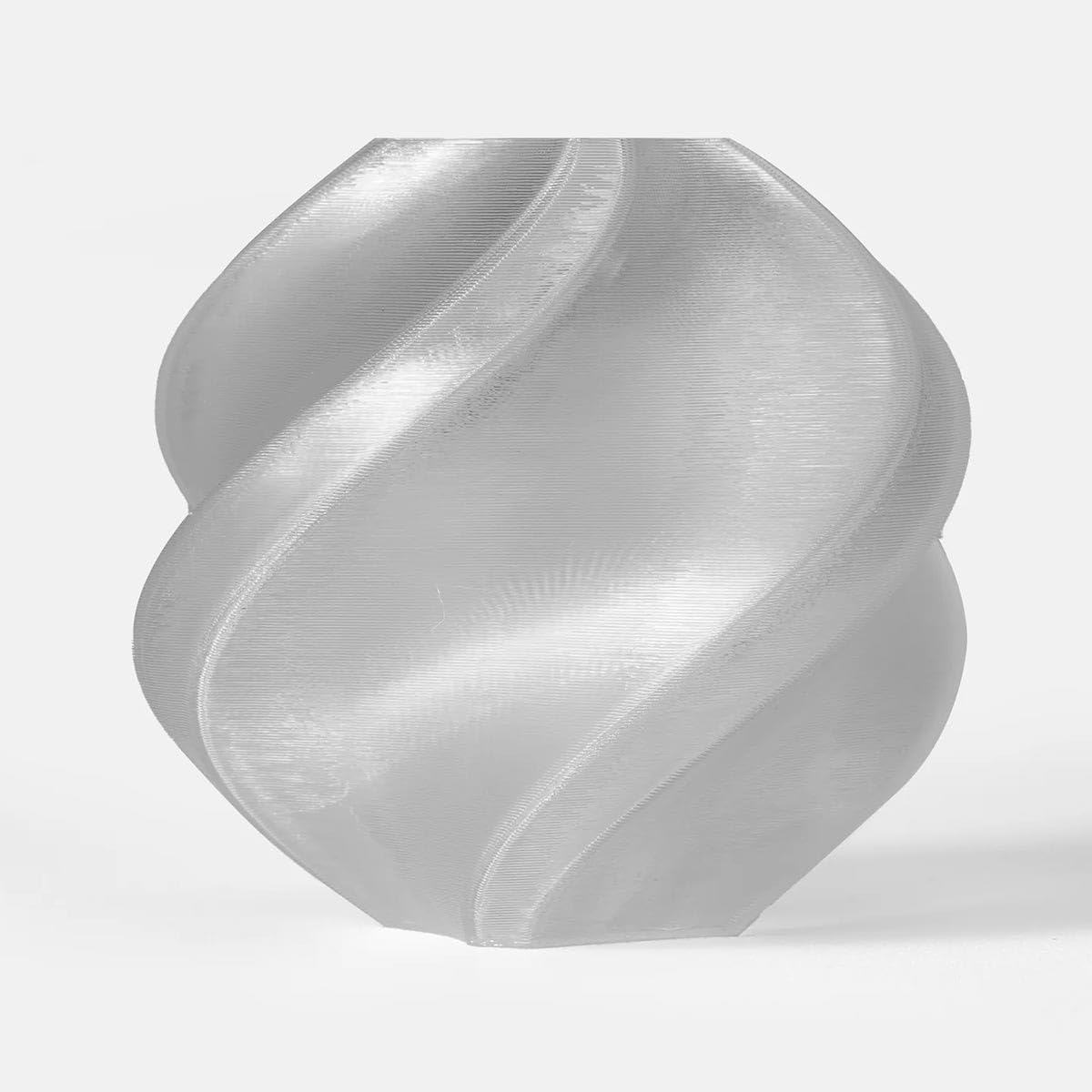
Bambu Lab’s PETG Translucent in Clear closes the gap between PLA’s ease and engineering-grade performance. The material prints with the low-warp behavior that new PETG users fear, and the optical clarity is notably higher than the Polymaker PC variant — offering a glossy, see-through finish that suits enclosures, brackets, and art prints needing both strength and visual access.
The spool-less refill design saves plastic waste and fits the Bambu Lab AMS system with RFID tag recognition that auto-loads the correct preset. Diameter tolerance of ±0.03mm delivers reliable extrusion across long prints, and the vacuum-sealed packaging with desiccant keeps the PETG dry straight out of the box. Beginners report printing successfully on the first try using the default Bambu slicer profiles — no manual tweaking required.
PETG’s glass transition sits around 80°C, making this suitable for car interiors, outdoor fixtures, and parts near warm electronics. The refill format requires a reusable spool (sold separately), so factor in that initial purchase. For users committed to the Bambu ecosystem, this is the drop-in clear filament for functional parts that need to look good.
Why it’s great
- RFID tag auto-configures slicer profiles for hassle-free printing on Bambu Lab machines
- Excellent layer adhesion and low shrinkage for dimensionally accurate parts
- Refill format reduces cardboard waste and spool cost over multiple purchases
Good to know
- Spool-less refill requires a reusable Bambu spool hub — not a standalone spool
- Not as impact-resistant as polycarbonate for load-bearing functional prints
- Optical clarity is good but still has a slight inherent blue-green tint at thicker walls
4. Lotactree Green Translucent PLA Filament 1.75mm
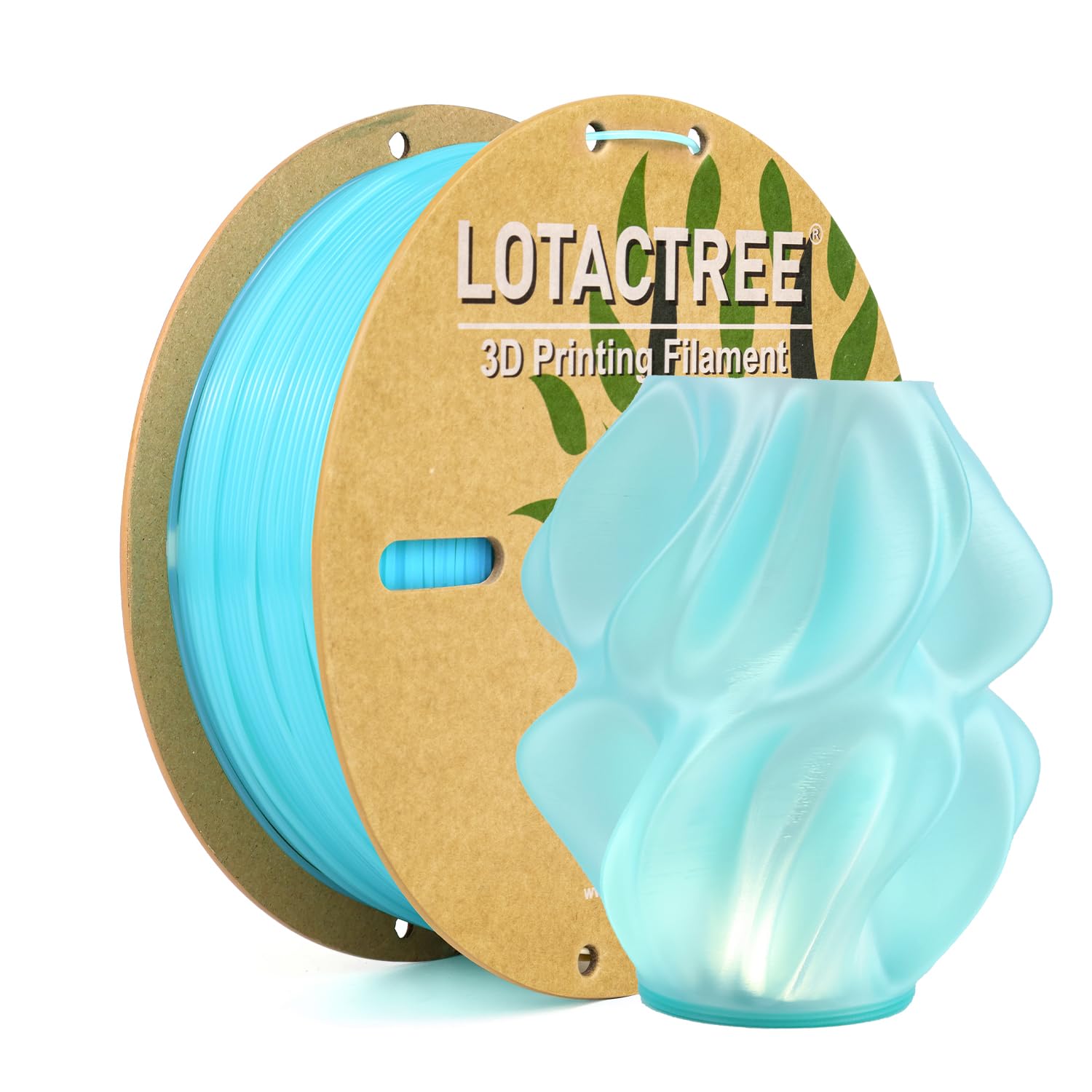
Lotactree’s Crystal PLA formulation uses an ice-translucent compound available in green, blue, pink, and orange — a budget entry point for users exploring transparent decorative printing. The PLA+ / ABS blend (as described by verified reviewers) offers higher impact resistance than standard translucent PLA, bending rather than snapping under moderate stress.
The variable transparency feature allows you to tune the finish from high clarity at single-wall thickness to a frosted jewel effect with multiple perimeters. Recommended nozzle temperatures sit at 220-250°C with a 60°C bed, and the ±0.03mm tolerance keeps clogs and jams rare across most FDM printers. Users on Bambu Lab A1 and P1S report excellent adhesion — almost excessive, with parts bonding more aggressively to build plates than typical PLA.
The green hue is vibrant but not pure clear — this is a tinted translucent, not a color-neutral transparent. Reviewers note that the material requires approx. 1-5% scaling in the slicer due to slight shrinkage, and that white scuff marks appear on surfaces if the filament rubs against rough hardware. For decorative vases, lamps, and character models where color enhances the design, the price-to-quality ratio is hard to beat.
Why it’s great
- PLA+ / ABS blend provides strength closer to ABS without the strong odor
- Four vibrant translucent colors available; not limited to a single hue
- Good light transmission in vase mode with a single perimeter
Good to know
- Tinted color limits optical transparency — not suitable for colorless clear parts
- Requires minor scaling and brims to compensate for slight shrinkage
- Bed adhesion can be overly aggressive, potentially damaging textured surfaces
5. Prusament PETG Clear 1.75mm

Prusament sets the quality benchmark for clear filament, with every spool individually laser-measured and a QR code that links to the exact manufacturing data for that batch. The ±0.02mm diameter tolerance is the tightest of any product here, translating to exceptionally smooth extrusion, consistent layer lines, and minimal surface artifacts that scatter light.
The PETG formulation delivers excellent layer adhesion for mechanical parts, low shrinkage for dimensionally accurate prints, and good chemical resistance for outdoor or workshop use. Unlike the Bambu PETG, the Prusament does not include RFID — you dial in your own profiles, but the base settings in PrusaSlicer work flawlessly on Prusa machines. Users on non-Prusa hardware (Qidi, Creality) also report reliable results after calibrating temperature.
The clear variant has a subtle natural tint that remains nearly colorless at thin wall sections, offering the best optical neutrality in the PETG category. The honeycomb cardboard spool includes a slot to secure the filament end, and the resealable vacuum bag with desiccant supports long-term storage. It commands a premium price reflecting Prusa’s batch-level QC — for professional prints where dimensional reliability and optical consistency are non-negotiable, this is the standard.
Why it’s great
- Industry-best ±0.02mm tolerance with batch-traceable QR code for quality assurance
- Near-colorless clear finish with minimal tint at thin wall sections
- Low shrinkage and warp behavior suitable for large functional prints
Good to know
- Premium price point — significantly more expensive than generic PETG
- Requires high print temperatures (bed 92°C, hot end 250°C) for best results
- No RFID integration; slicer profiles must be manually selected or tuned
FAQ
Can I get true glass-like clarity with clear filament?
Why does my clear print look foggy or hazy?
Is clear PETG stronger than clear PLA?
Final Thoughts: The Verdict
For most users, the best clear filament winner is the Polymaker PC Filament 1.75mm Clear because it combines the highest heat resistance and mechanical toughness available in a consumer-grade spool, making it the only option here that survives functional molding and high-temp environments without deformation. If you want the best optical clarity for a backlit art project, grab the JIUFU Lithophane PLA 1.75mm Pearl White. And for reliable, low-warp PETG that prints out of the box with zero calibration fuss, nothing beats the Bambu Lab PETG Translucent Clear.

Mo Maruf
I created WellFizz to bridge the gap between vague wellness advice and actionable solutions. My mission is simple: to decode the research and give you practical tools you can actually use.
Beyond the data, I am a passionate traveler. I believe that stepping away from the screen to explore new environments is essential for mental clarity and physical vitality.