Our readers keep the lights on and my smoothie glass nicely filled. As an Amazon Associate, I earn from qualifying purchases.
Specs are compiled from manufacturer listings and verified buyer reviews and can change over time — please confirm the key details on the product page before buying.
Finding a clear coat that actually bonds to latex paint without yellowing, peeling, or adding an unwanted glossy glare is the real trick. The wrong clear coat can ruin your project with brush marks, an amber tint, or a tacky surface that never fully cures. This guide cuts through the confusion and shows you which finish style suits your project and how each applies.
I’m Mohammad Maruf — the founder and writer behind WellFizz. This guide is built by comparing the manufacturers’ published specifications and the patterns across verified customer reviews, so you get each pick’s real strengths and trade-offs instead of marketing spin.
The best clear coat over latex paint for you depends entirely on the sheen (the amount of light the finish reflects) you want and how much abuse the surface will take — a dead-flat varnish for antique looks, a tough satin poly for kitchen cabinets, or a budget quart of gloss for outdoor furniture. best clear coat over latex paint isn’t a single product; it’s the one that matches your project’s real needs.
Our Picks at a Glance
How To Choose The Best Clear Coat Over Latex Paint
Latex paint is water-based, so your clear topcoat needs to be water-based too. An oil-based polyurethane over latex turns yellow and becomes brittle; it peels instead of flexing with the paint. This narrows your field to acrylic or polyacrylic clear coats. The next big decision is the level of shine you want, and how tough the finish needs to be. Here are the three most critical factors.
Sheen Level
Sheen (the amount of light the finish reflects) is what makes colors pop or hides imperfections. Gloss finishes reflect the most light, so they wipes clean easily — great for trim, doors, and outdoor furniture. Satin gives a soft, low-luster glow that hides minor bumps and brush strokes, which is why it’s a favorite for kitchen cabinets and shelving. Flat or “dead flat” varnish has almost no shine at all, so the clear coat looks invisible — ideal for decorative furniture, chalk paint projects, and any time you want the bare paint look without a plastic coating. All three are legitimate choices; the right one depends on if you want the clear coat to disappear (flat) or to add a protective shine (gloss).
Durability vs. Appearance
You face a genuine trade-off here. The glossiest clear coats tend to form the hardest, most water-resistant surface — they handle daily wiping, mild chemicals, and light scuffing without complaint. Flat and ultra-flat finishes use more flattening agents (powders that scatter light), which can make the film slightly softer and more prone to marring over time. That doesn’t make flat varnish “bad”; it just means it’s best on surfaces that get looked at more than they get leaned on. If your project is a dining table or a kitchen island, a satin or gloss coat is the tougher choice. If it’s a decorative shelf or a picture frame, the flat finish is the right one.
Application and Dry Time
All four picks here are water-based, so cleanup is with soap and water, and the odor is low enough to use indoors without a respirator. Drying time is where they diverge. The quickest options dry to the touch in 30 minutes and let you recoat in 2 hours, which lets you finish a whole project in a single afternoon. Slower-curing varnishes may need overnight between coats, but they sometimes level out brush strokes better. If you are impatient or have a large project, prioritize the “fast-drying” claim in the specs.
Quick Comparison
| Model | Best For | Sheen | Coverage | Dry to Recoat | Amazon |
|---|---|---|---|---|---|
| Rust-Oleum Painter’s Touch (Gloss)★ Best Overall | Budget-friendly indoor/outdoor | Gloss | 120 sq ft | 30 min to touch | Amazon |
| Minwax 13333 Polycrylic (Satin) | Large premium projects | Satin | 1 gallon | 2 hours | Amazon |
| Minwax 611114444 Polycrylic (Ultra Flat) | True matte over stains | Ultra Flat | 1 quart | 2 hours | Amazon |
| Modern Masters DP609 Dead Flat Varnish | True dead flat decorative finish | Dead Flat | 1 gallon | 2 hours | Amazon |
In‑Depth Reviews
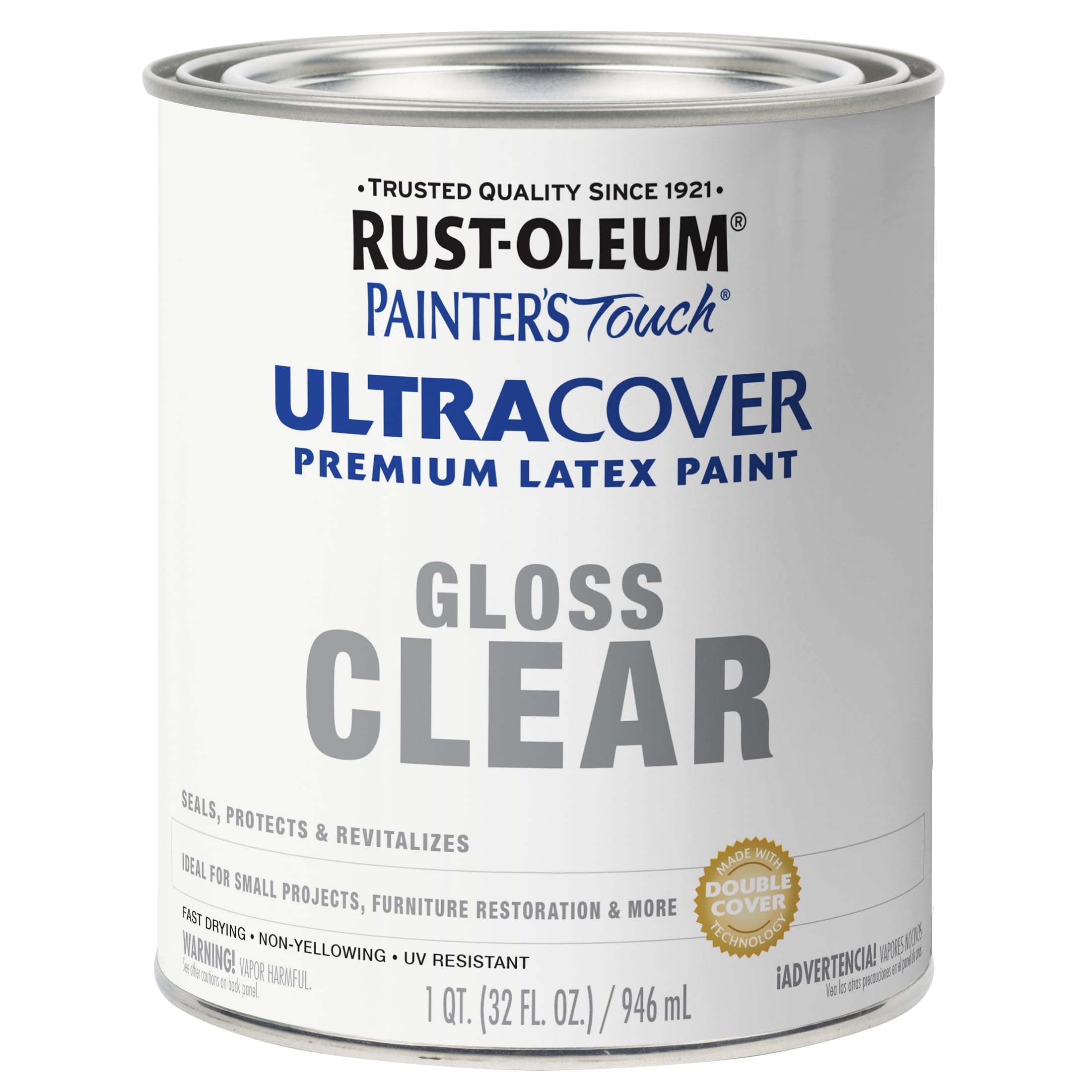
1. Rust-Oleum Painter’s Touch Latex Brush-On Paint (Gloss Clear)
Our pick — 4.5★ from 31,000+ verified ratings; the strongest balance of quality and price.
The most-reviewed clear coat in the category — a budget quart that covers 120 square feet and dries to the touch in 30 minutes.
This is the clear coat you grab when you need to seal an outdoor chair, a set of metal shelving, or a repainted front door without spending the price of a premium gallon. At 120 square feet of coverage from a single quart, and a quick 30-minute dry-to-touch time, it moves fast — you can prime and finish a whole porch set in a weekend. The acrylic formula is water-based and low odor, so you can use it indoors or out without the ventilation demands of an oil-based varnish.
Where this Rust-Oleum pick truly stands apart is the sheer volume of owner experience behind it. The gloss finish goes on smoothly and “provides excellent hide” — meaning you often get good coverage in a single coat over white or light paint, though darker colors may need two. Owners mention the finish is easy to wipe down, it doesn’t drip easily because the paint has a good thickness, and once cured, the surface feels “very durable and hard.” That is useful for high-traffic items like indoor trim and doors. The gloss sheen is unmistakable — it is shiny, which is exactly what you want for surfaces that need to look crisp and cleanable, like bathroom cabinets or a painted bookshelf.
The honest caveat is durability over time: the quality is praised by many, but a smaller group flags that the finish can chip or scratch under heavy abuse. This is not a heavy-duty floor-grade polyurethane, so do not use it on surfaces that take daily foot traffic. The color also gets mixed feedback — the gloss clear is fine, but some buyers ordering a colored version have received the wrong shade, so double-check your cart before checking out.
Fast and affordable: Outstanding coverage of 120 square feet per quart, plus a 30-minute dry-to-touch time. Low odor and soap-and-water clean up.
Gloss is real: The finish is undeniably shiny and glossy — skip this if you want a subtle, modern low-sheen look.
Grab this for: Budget-friendly outdoor projects, repainted metal shelving, or any surface where a high-gloss shine and fast drying time are the priority.
skip it if: You are sealing fine furniture or need a low-sheen or flat finish — the gloss here is bold and unmistakable.
2. Minwax 13333 Polycrylic Protective Finish (Satin)

The gallon-sized standard-setter that balances protection with a soft satin glow for large-scale projects.
The sheer volume of this container — a full 1 gallon (3.79 liters) — changes the equation for anyone refinishing a set of cabinets, a whole piece of furniture, or a built-in bookcase. You are not rationing the finish; you can apply thick coats without worrying about running out halfway. The satin sheen it lays down is the middle ground that most homeowners prefer: enough light reflection to make the paint color feel rich, but low enough to hide dust nibs and minor brush strokes. As owners put it, the finish “dries completely clear,” going on milky and curing invisible.
The toughness here comes from genuine polyacrylic chemistry (a water-based plastic resin that is harder than plain acrylic) — it resists damage from abrasion, scuffing, chipping, water, alcohol, and other common household chemicals. That makes it a legitimate choice for surfaces that see daily contact, like a kitchen table or a child’s desk. The downside is the price tag, which is the steepest per-gallon of the group. But if you compare it to buying three or four quarts of a smaller brand for the same project, the larger volume starts to make more economic sense. It dries fast — recoat after 2 hours — and cleans up with soap and water, which keeps the mess contained.
Buyers who used this on bare wood and over latex paint both note the same pattern: three coats produce a smooth, protected finish that mops or wipes clean without marring. The one consistent caution is that the liquid runs thin — it is “runny, watery” when applied, so vertical surfaces need careful, even brushing to avoid drips. Plan for three even coats rather than one thick one.
Large-project workhorse: The 1-gallon volume pairs with a satin sheen that’s protective enough for daily-use furniture and attractive enough for display pieces. Best for anyone refinishing a whole room’s worth of trim or cabinets.
Thin formula: The watery consistency takes a steady hand on vertical surfaces. Requires three coats for maximum durability and a smooth final look.
Reach for it if: You have a large indoor project (a desk, kitchen cabinets, or a whole shelving unit) and want a tough, crisp satin finish that won’t yellow.
Think twice if: You need the absolute lowest-gloss, barely-there look, or if you are working on a single small item where a quart is more practical.
3. Minwax 611114444 Polycrylic Protective Finish (Ultra Flat)

The barely-there finish that protects the natural look of light wood and light-colored latex paint without adding glare.
If you have ever painted a piece of furniture white or a pale pastel and then sealed it with gloss, you know the problem: the clear coat makes it look like it is wrapped in plastic. This is the fix for that. The “ultra flat” label is accurate — it is non-ambering (won’t turn yellow) and non-yellowing, so white paint stays white rather than shifting warm. The sheen is low enough that the finish essentially disappears, which is rare for a protective poly.
Buyers report applying three coats over latex paint and finding that the product “self-levels well, dries transparent, and builds a film.” The protection is real — water beads up on the surface rather than soaking in, and it resists stains from common items like modeling clay. Where this pick beats the premium satin pick above is on price per quart — it costs significantly less for a 1-quart can, making it the smarter buy for a single furniture piece or a smaller project. The trade-off, as some owners note, is that the “ultra flat” label is not truly the flattest finish available; it reads more as a matte, with a faint whisper of sheen. If your goal is an absolutely zero-shine, velvety flat surface, the Modern Masters dead flat varnish is the more extreme option.
Application note: you must stir this product thoroughly before using — owners consistently mention lumps settling at the bottom of the can. Use a high-quality synthetic bristle brush, and work in thin, even layers. The fast drying (recoat after 2 hours) means you can knock out three coats in an afternoon.
True low-sheen protection: Ideal for light woods and white latex projects where yellowing or gloss would ruin the look. Self-levels well and dries transparent.
Stir thoroughly: Settled clumps at the bottom of the can are a known issue. Mix vigorously before each coat to get a smooth, streak-free result.
Best for: Anyone painting white, pale, or pastel latex who wants clear protection without changing the paint’s natural appearance.
Not ideal if: You need true zero-shine “dead flat” — this reads as a matte, not a total absence of sheen.
4. Modern Masters DP609 Clear Decorative Painter’s Acrylic Dead Flat Varnish

The most extreme anti-shine varnish on the market — a dead flat that leaves no reflection at all.
This is the pick for anyone who has chased “matte” finishes and found them still too shiny. “Dead flat” is a specific category: it has the least possible sheen of any water-based varnish, and the Modern Masters product delivers on that promise. Owners who applied it over raw wood, chalk paint, and even high-gloss base coats report that it “removes undesirable variations in sheen” and unifies the whole surface into a consistent, non-reflective state. The 100% acrylic formula (a pure plastic resin without added polyurethane) is non-yellowing, non-flammable, and stable, which makes it safe for indoor decorative work.
Application is straightforward, but has a learning curve. The varnish goes on milky white and looks uneven while wet — that is normal. It dries completely clear and levels out. The consistency is thicker than the Minwax satin, which helps it bridge small gaps and conceal brush strokes. One owner used it on a dining table with two years of daily ice water glasses and reported “no scratches, water damage, or sheen” — so the durability is real for decorative and moderate-use furniture. The catch is purely cost: this is the most expensive gallon of the group, and its natural home is on decorative pieces, not high-traffic flooring or playroom furniture.
It is not recommended for use over Modern Masters Metallic Paint or Metal Effects Reactive Paints, but it works beautifully over standard latex, chalk paint, and raw wood. The finish is truly streak-free for those who take their time.
True dead flat: Delivers on its promise of zero reflection. Works over gloss paint, chalk paint, and raw wood without altering the underlying color.
Premium price, decorative use: The cost is the highest per gallon. Best reserved for statement furniture and decorative projects rather than utilitarian surfaces.
Perfect for: Chalk paint projects, antique-style furniture, raw wood shelving, or any situation where you want the paint to look like paint, not plastic.
Not for: High-traffic horizontal surfaces — the flat finish trades a tiny amount of abrasion resistance for its matte appearance.
Understanding the Specs
Sheen Level: Gloss vs. Satin vs. Flat
The sheen determines how much light bounces off your finished surface. Gloss finishes are the toughest and easiest to wipe clean, which is why they’re popular on trim and outdoor furniture. Satin is the middle road — soft enough to hide small imperfections but shiny enough to feel protected. Flat and dead flat finishes have added flattening agents that scatter light, making the clear coat nearly invisible. The trade-off is that flatter finishes can be slightly softer and more prone to visible wear over time on heavily used surfaces.
Dry Time and Recoat Window
Water-based clear coats dry fast because the water evaporates quickly. The fastest options dry to the touch in 30 minutes and let you recoat in 2 hours. Slower-drying products give you more time to work the finish smooth before it tacks up, which helps on large surfaces where you need to keep a wet edge. Always check the recoat window — if you leave it too long between coats without sanding, the new layer may not bond properly to the cured finish below.
Coverage per Volume
Coverage is usually stated in square feet per quart or gallon, and it varies based on the surface porosity and how thickly you apply it. A quart covering 120 square feet is standard for a clear coat. If your project has a lot of nooks, paneling, or raw edges you may use more than the label suggests. Buying a gallon for a single bookshelf is overkill, but for a full dining table or built-in cabinets the volume is justified.
Yellowing Resistance
All four picks here are water-based and advertised as non-yellowing. This matters for latex paint because even a slight amber tint can change a white or pastel color to a dirty cream. Oil-based polyurethane will yellow over time, especially in low-light rooms. Water-based acrylic and polyacrylic formulas stay clear for the life of the finish when applied correctly and kept out of direct extreme UV.
FAQ
Can I put a clear coat over latex paint without sanding first?
How long should latex paint cure before applying a clear coat?
Will a clear coat make latex paint look darker?
What is the difference between polycrylic and polyurethane for latex paint?
Can I use a spray clear coat over latex paint?
How many coats of clear coat do I need over latex paint?
Will a clear coat prevent latex paint from chipping?
Can I use a gloss clear coat on a flat latex paint?
Final Thoughts: The Verdict
For the majority of shoppers, the best clear coat over latex paint is the Rust-Oleum Painter’s Touch (Gloss Clear), because it covers 120 square feet per quart, dries to the touch in 30 minutes, and offers the strongest balance of quality and price. If you want true zero-shine protection for light-colored paint or decorative furniture, grab the Minwax 611114444 Polycrylic (Ultra Flat). And for a budget-friendly quart that covers 120 square feet, dries fast, and works indoors and out, the crowd-favorite Rust-Oleum Painter’s Touch Gloss Clear is the one to reach for.
How We Picked
We do not accept paid placement. Every pick is matched to a real buyer and a real use-case; we do not hands-on test units.
Sources & Methodology
Specifications: manufacturer listings and product documentation. Review insights: verified customer reviews, as of July 2026. Pricing: not shown on this page (it changes often); check the current price via the retailer link.
As an Amazon Associate, WellFizz earns from qualifying purchases. This does not affect which products we feature.
Related Guides

Mo Maruf
I created WellFizz to bridge the gap between vague wellness advice and actionable solutions. My mission is simple: to decode the research and give you practical tools you can actually use.
Beyond the data, I am a passionate traveler. I believe that stepping away from the screen to explore new environments is essential for mental clarity and physical vitality.