Our readers keep the lights on and my smoothie glass nicely filled. As an Amazon Associate, I earn from qualifying purchases.
A single missed layer on exposed carbon weave doesn’t just dull the visual — it invites moisture creep and UV degradation that turns a high-end part into a yellowed, delaminated shell. The difference between a factory-showroom weave and a chalky failure lies entirely in the chemistry of the topcoat you choose.
I’m Mohammad Maruf — the founder and writer behind WellFizz. I’ve spent countless hours comparing resin formulations, catalyst activation methods, and UV-resistance data across dozens of clear coat options to find the ones that actually preserve carbon fiber’s structural and visual integrity.
From DIY-friendly aerosol formulas to professional-grade two-component systems, this guide breaks down the real-world performance of each option to help you find the best clear coat for carbon fiber parts that need lasting protection and a deep, wet-looking gloss.
How To Choose The Best Clear Coat For Carbon Fiber
Carbon fiber isn’t painted metal — it’s a resin-saturated weave that needs a topcoat capable of bonding chemically, blocking UV without haze, and remaining flexible enough to resist micro-cracks during expansion. The wrong clear coat can trap solvents, yellow under the hood of a parked car, or fail to wet out the weave properly.
2K vs 1K: The Catalyst Factor
One-component (1K) clear coats cure by solvent evaporation alone and remain softer, more prone to yellowing, and chemically vulnerable. Two-component (2K) aerosols contain a built-in hardener that you activate before spraying — they cross-link during curing to form a much harder, more solvent-resistant film that bonds better to cured epoxy. For carbon fiber, 2K is the baseline for serious protection.
UV Resistance and Yellowing Prevention
Carbon fiber laminate exposed to direct sunlight without a UV-stable clear coat will develop a brownish-yellow tint within months. Look for formulas that explicitly list UV resistance as a feature — these contain additives that absorb or block UV radiation before it reaches the resin layer. The SprayMax and Eastwood options in this guide are among the strongest performers on this metric.
Coverage Per Can
A single 400-450ml aerosol typically covers between 3.5 and 8 square feet depending on how you layer it. For a carbon fiber hood (roughly 12-15 square feet), you’ll need three to four cans if you apply three wet coats. The U-Pol product covers up to 6.75 square meters per can, making it one of the most efficient options per dollar.
Quick Comparison
On smaller screens, swipe sideways to see the full table.
| Model | Category | Best For | Key Spec | Amazon |
|---|---|---|---|---|
| Eastwood 2k Aerosol Spray | Premium 2K | Long-term UV/chemical shield | 12-hour full cure at 68°F | Amazon |
| ERA Paints 2K High Gloss | Premium 2K | Showroom gloss sans buffing | 3.5 sq ft coverage per can | Amazon |
| SprayMax 2K Matte Clear | Premium 2K | Matte/satin carbon finish | 12 +-3 gloss units flat | Amazon |
| U-Pol Products 0796 Clear | Mid-Range 2K | Large hood coverage per can | 4.5-6.75 sq meters per can | Amazon |
| Cilajet Quick-Shine Spray | Entry-Level Detail | Quick gloss boost between coats | Low-VOC no-catalyst spray | Amazon |
In‑Depth Reviews
1. Eastwood 2k Aerosol Spray

Eastwood’s 2K formula is the gold standard for carbon fiber topcoats because it sprays evenly, hardens to a high-gloss finish in about 30 minutes, and resists yellowing even after prolonged sun exposure — real users report zero color shift after 18 months in Texas direct sunlight. The recommended application pattern (1-2 passes at 50% overlap with a 1.2-mil per pass target) gives you predictable, repeatable wet coats without guessing.
The pot life sits at approximately 48 hours after button activation, giving you a generous window to finish the job. At 68°F, full chemical cure happens in 12 hours — much faster than many competitor 2K systems — and you can push that down to 35 minutes with IR drying at 140°F. The 11.8 oz can covers roughly 5.4 to 8.1 square feet, meaning a standard carbon hood will take two to three cans for proper three-layer coverage.
Some orange peel may appear on the first pass, but that buffs out quickly with 2000-grit sanding and a light polishing compound. Users who tested it over lacquer-based base coats reported zero compatibility issues and no solvent burn-through. The 12-hour full-cure window means you can lay down all coats in a day and wet-sand the next morning.
Why it’s great
- No yellowing after extended UV exposure
- Fast 12-hour full cure at room temp
- Buffable orange peel smoothens to glass
Good to know
- Requires respirator for safe spraying
- Coverage is moderate at 5.4-8.1 sq ft
2. ERA Paints 2K High Gloss Clear Coat
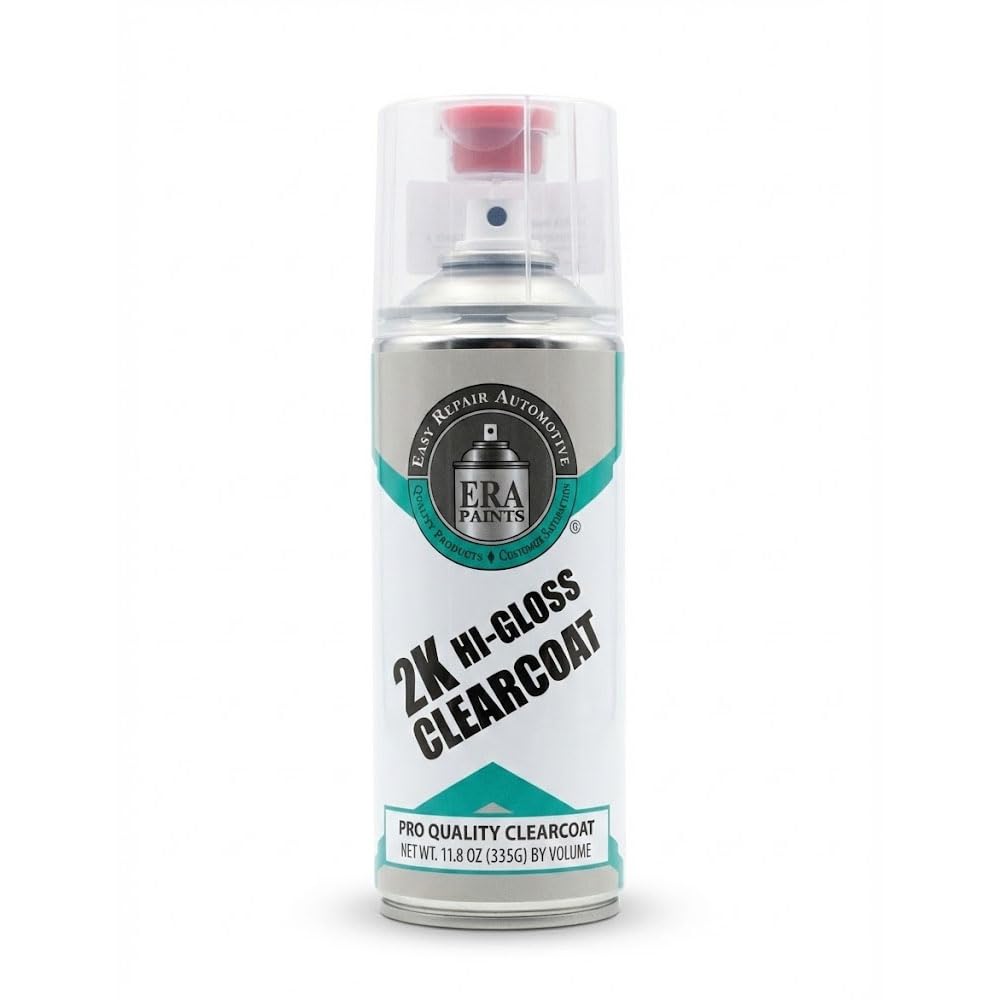
ERA Paints uses a built-in hardener that chemically bonds during curing, creating a film significantly tougher than any 1K single-stage clear. Users report that the finish matches OEM clear coat depth and gloss without requiring any buffing — one reviewer restored a peeling bumper at home and the result looked identical to the factory sides, saving around in dealership refinishing costs.
The fan nozzle produces a wide, even pattern that minimizes runs, which is critical when spraying over the tight curves of a carbon fiber hood or a wing. Coverage sits at about 3.5 square feet per can, so plan for multiple cans if you’re covering a full panel. The dry time to touch is one hour, with full chemical cure at 24 hours — slightly slower than Eastwood but still a single-day workflow.
One thing worth noting: early coats may look thin before the gloss builds. Multiple moderate coats (three light-to-moderate passes) are required before the deep wet shine appears. Once fully cured, the finish resisted a full pressure-wash car wash without any degradation. The formula is made in Oregon with domestic resins, which adds a layer of quality control that import cans don’t always match.
Why it’s great
- No buffing needed for showroom gloss
- Compatible with original factory clear
- DIY-friendly fan nozzle prevents runs
Good to know
- Coverage is limited to 3.5 sq ft per can
- Multiple coats needed before gloss appears
3. SprayMax 2K Matte Clear Coat
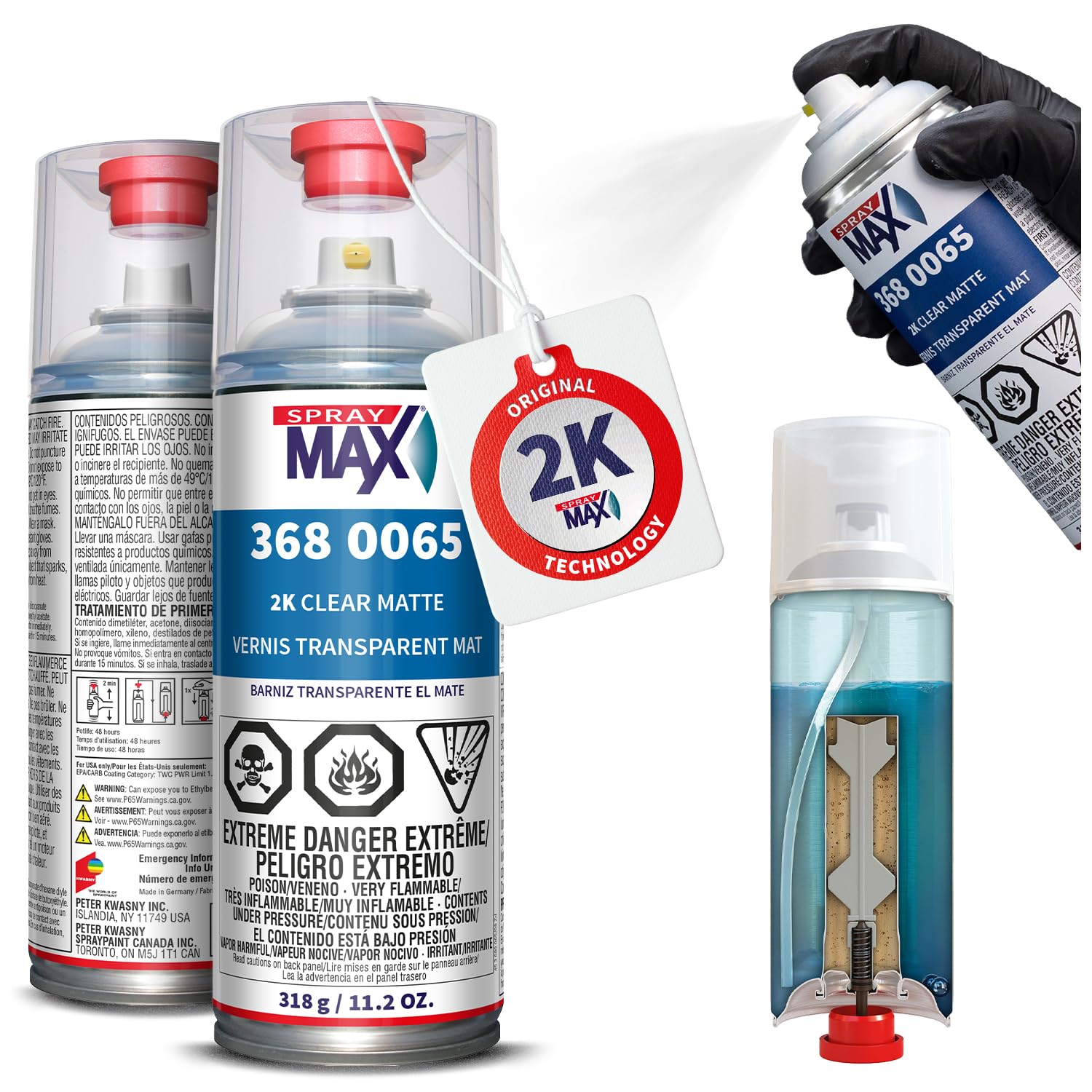
SprayMax’s matte formula is the go-to choice when you want the carbon weave to sit quietly under a UV-resistant flat finish without any gloss reflection. The gloss reading sits at 12 +-3 units, which is a true matte — not a satin that shines up after a single wax. It dries dust-free in 12 minutes and touch-dry in 80 minutes, making it one of the fastest layering clear coats available for a multi-coat session.
The 2K polyurethane formula resists gasoline and chemical exposure, so it’s safe for engine bay carbon pieces where fuel vapors are present. Users have successfully used it on hydrographics, dipped parts, and raw carbon fiber — it lays down hard and doesn’t reactivate under subsequent coats. The fan nozzle gives good control on flat panels, though sharp edges on a carbon spoiler may need lighter passes to avoid pooling.
There is a catch: because it stays matte, you cannot polish or buff it without turning the finish glossy. Prep work needs to be immaculate — any silicone or oil residue will cause fish-eye craters that are visible much more clearly on a flat finish. Proper degreasing and a dedicated respirator are mandatory here, as the 2K isocyanates are potent.
Why it’s great
- True matte at 12 +-3 gloss units
- Gasoline and chemical resistant
- Fast 80-minute touch-dry time
Good to know
- Cannot be buffed or polished
- Requires spotless prep to avoid fish eyes
4. U-Pol Products 0796 Clear #1 High Gloss

The U-Pol 0796 stands apart because of its enormous coverage — 4.5 to 6.75 square meters per can, which is roughly 48 to 72 square feet. That’s enough to coat two full carbon fiber hoods or a full side panel with a single aerosol. The formula blends easily with existing 2K clear coats and works over water-based base coats without lifting, which gives it flexibility for spot repairs on previously cleared carbon parts.
Users describe the finish as crystal clear and hard, matching professional spray-gun results when applied carefully. The spray pattern is round rather than fan-shaped, which takes some adjustment — you need to keep moving to avoid concentrating in one spot. The thin wet layers run easily, so the first coat should be what the user describes as “almost enough” to achieve a glass-like finish, followed by a heavier second coat.
The UV resistance is labeled by the manufacturer, but user feedback over multiple years shows no haze or yellowing on outdoor-stored parts. The 450ml can is extremely smelly and requires outdoor or well-ventilated use with respiratory protection. Some polymer clay artists have used it for years on art projects without tackiness, confirming its chemical stability across different substrates.
Why it’s great
- Massive coverage per can (up to 72 sq ft)
- Crystal clear finish with glass-like shine
- Compatible with water-based base coats
Good to know
- Round spray pattern needs technique adjustment
- Runs easily on first coat if too heavy
5. Cilajet Quick-Shine Car Polish Spray
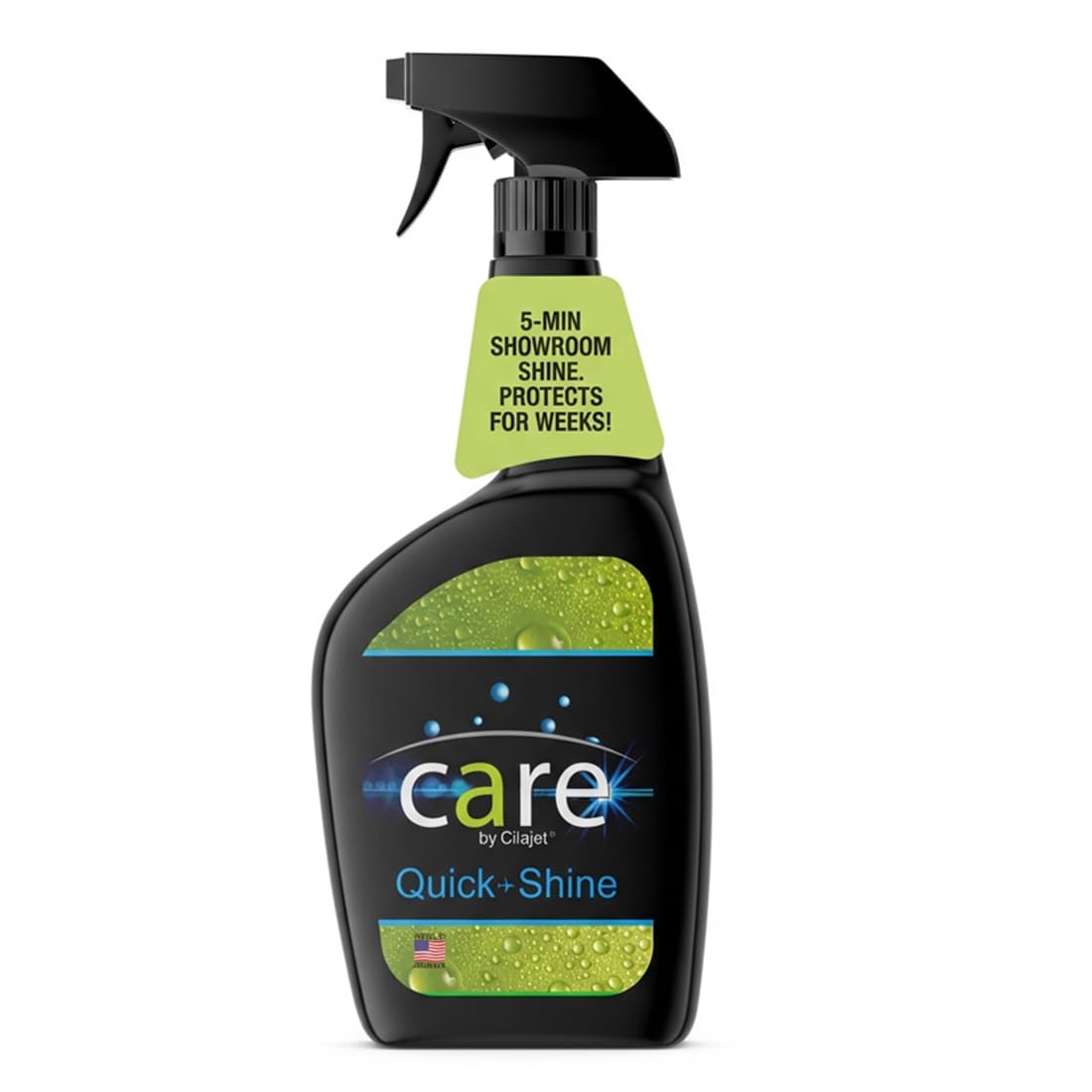
Cilajet’s Quick-Shine is not a 2K clear coat — it’s a low-VOC polymer spray that works as a sacrificial top layer between full clear coat jobs. For carbon fiber parts that already have a proper clear layer underneath, this spray freshens the gloss and forms a slick barrier that makes dirt and bug splatter easier to wipe off without scratching the weave beneath. It’s not a replacement for a proper clear coat; it’s a maintenance enhancer.
Users report that a single application keeps the surface glossy for around two to three weeks with minimal washing. The mirror-like shine works especially well on dark finish cars and carbon panels — one reviewer used it on a black Range Rover for four years as the sole detailing product and still got a deep, wet reflection. The formula uses less than 0% VOC, which means it’s safer to use in enclosed spaces compared to traditional 2K systems.
The main limitation is durability: it won’t protect against UV yellowing or chemical etching like a cured 2K clear would. If you’re applying it over raw carbon that has no clear coat, it won’t provide any long-term structural protection. Think of it as the easiest in-between maintenance step for keeping your already-coated carbon parts looking freshly wet.
Why it’s great
- Excellent for gloss maintenance between coats
- Low-VOC and safe for enclosed garages
- Slick surface repels dust and bug splatter
Good to know
- Not a substitute for 2K clear protection
- Needs frequent reapplication for gloss retention
FAQ
Can I spray 2K clear over raw carbon fiber without primer?
How do I prevent orange peel on a carbon fiber hood?
What’s the minimum temperature for spraying 2K clear on carbon fiber?
Final Thoughts: The Verdict
For most users, the best clear coat for carbon fiber winner is the Eastwood 2k Aerosol Spray because it combines proven long-term UV resistance, a fast 12-hour full cure, and a buffable gloss that matches OEM quality without yellowing. If you want a showroom-grade gloss without any sanding or buffing, grab the ERA Paints 2K High Gloss Clear Coat. And for a true matte finish that resists gasoline and chemicals on exposed carbon engine parts, nothing beats the SprayMax 2K Matte Clear Coat.

Mo Maruf
I created WellFizz to bridge the gap between vague wellness advice and actionable solutions. My mission is simple: to decode the research and give you practical tools you can actually use.
Beyond the data, I am a passionate traveler. I believe that stepping away from the screen to explore new environments is essential for mental clarity and physical vitality.