Our readers keep the lights on and my smoothie glass nicely filled. As an Amazon Associate, I earn from qualifying purchases.
Kitchen cabinets take a daily beating from cooking grease, sticky fingerprints, and airborne dust that settles into a dull film over time. The wrong cleaner leaves a waxy buildup that attracts even more grime, turning a quick wipe-down into a scrubbing session. Finding a formula that cuts through the grease without stripping the wood’s natural finish is the real challenge.
I’m Mohammad Maruf — the founder and writer behind WellFizz. I’ve spent hundreds of hours analyzing the chemical compositions, pH balances, and application methods of wood-safe cleaning products to help homeowners protect their cabinetry investment.
Whether your cabinets are stained oak, painted maple, or vintage thermofoil, the right solvent-free spray makes all the difference. This guide breaks down five seriously effective options so you can confidently select the best cleaner for wood cabinets that matches your home’s specific needs.
How To Choose The Best Cleaner For Wood Cabinets
Cabinet finishes vary widely — from polyurethane-sealed to oil-rubbed or waxed. The wrong pH or solvent can cloud the finish, dissolve the sealant, or leave a film that traps dust. Below are the three most critical factors to weigh before buying.
Formula Base: Oil vs. Wax vs. No-Wax
Oil-based polishes (lemon oil, orange oil) penetrate and condition dry wood, but they can soften cured finishes if the sealant is compromised. Wax-based sprays add a protective layer but build up over multiple applications, requiring periodic stripping. No-wax, plant-derived sprays offer safe daily cleaning without altering the surface chemistry — ideal for sealed, modern cabinets.
Residue Management and Finish Compatibility
Kitchen cabinets demand a cleaner that evaporates cleanly or wipes away streak-free. Silicone-heavy products leave an invisible film that attracts grease, while over-diluted formulas fail to cut through cooking residue. Look for sprays that explicitly say “no residue” or “no rinsing required” and check compatibility with your cabinet’s specific topcoat (lacquer, varnish, shellac, or conversion varnish).
Fragrance and Chemical Sensitivity
Kitchens are enclosed spaces, and strong synthetic fragrances can linger on dishes and in the air. Essential oil-based scents (lemon, almond, orange) provide a fresh aroma without overwhelming the room. If anyone in the household has respiratory sensitivities, prioritize EWG-verified or hypoallergenic formulations with no phthalates or volatile organic compounds (VOCs).
Quick Comparison
On smaller screens, swipe sideways to see the full table.
| Model | Category | Best For | Key Spec | Amazon |
|---|---|---|---|---|
| Bayes High-Performance Cleaner | Oil-Based | Conditioning worn cabinets | 16 oz, oil-based with essential oils | Amazon |
| Goddard’s Cabinet & Wood Wax Spray | Wax + Beeswax | Restoring vintage wood luster | 23 oz spray with beeswax and lemon oil | Amazon |
| Method Wood Polish (Almond, 2-Pack) | Plant-Based | Daily maintenance on sealed wood | 2 x 14 oz, plant-derived almond oil | Amazon |
| Touch Of Oranges Wood Cleaner | Orange Oil | Deep cleaning heavy grease buildup | 32 oz, real orange oil, no wax or silicone | Amazon |
| Aunt Fannie’s All Purpose Wood Spray | No-Wax Natural | Gentle cleaning for sensitive homes | 16.9 oz, plant-based, EWG A-rated | Amazon |
In‑Depth Reviews
1. Bayes High-Performance Furniture, Cabinet Cleaner and Polish

The Bayes formula strikes an ideal balance between cleaning power and conditioning — it penetrates the grain to remove embedded dirt while the lemon and essential oil blend nourishes the wood. Customers report that a single application revived cabinets that were more than 20 years old, restoring a satiny finish without the greasy feel of traditional lemon oils. The thick, emollient consistency means a little goes a long way; you need only a few spritzes for a standard cabinet door.
This cleaner is Leaping Bunny certified and free of harsh chemicals, making it safe for homes with children and pets. Unlike many spray-on polishes, Bayes requires a five-minute dwell time before buffing away the excess — a small extra step that ensures the oils fully absorb into the wood rather than sitting on the surface. The result is a streak-free surface that repels dust for days after use.
The primary consideration is its oil base: it works beautifully on unfinished, oiled, or waxed wood but may cloud polyurethane or lacquer finishes if not wiped thoroughly. For bare wood or hand-rubbed cabinets, this is the standout choice for long-term preservation.
Why it’s great
- Penetrates and conditions dry, aged wood
- Safe around kids and pets, no harsh chemicals
- Very concentrated — one bottle lasts months
Good to know
- Not suitable for most sealed/polyurethane finishes
- Requires 5-minute soak before buffing
2. Goddard’s Cabinet & Wood Wax Spray

Goddard’s harnesses the natural synergy of beeswax and lemon oil to deliver a cleaner that both polishes and protects. The wax component fills microscopic pores in the wood, creating a barrier that resists moisture and prevents future stains. Customers consistently note that this spray outperforms anything they’ve found in brick-and-mortar stores, especially on vintage cabinets where the wood has lost its original luster.
Application is straightforward — hold the bottle six inches from the surface, spray, and wipe along the grain with a clean cloth. No buffing is required, which saves time during routine kitchen cleanups. The beeswax leaves a velvety shine that does not alter the underlying stain color, so your cabinet’s original hue stays true. Users also report that the wax helps repel dust between cleanings, reducing the frequency of touch-ups.
One downside cited by several users is the spray nozzle, which can spurt rather than mist evenly. Decanting into a fine-mist bottle solves the issue, but it is an extra step to consider. Also, because it is a wax-based product, repeated use without occasional stripping can lead to buildup, especially in high-grease kitchen environments near the stove.
Why it’s great
- Beeswax provides genuine moisture protection
- No buffing required — spray and wipe
- Excellent on dry, vintage, or antique wood
Good to know
- Spray nozzle sometimes spurts instead of misting
- Wax buildup possible with heavy repeated use
3. Method Wood Polish, Almond (2-Pack)

Method’s almond-infused polish is a straight-ahead plant-based formula engineered for quick maintenance on pre-sealed wood surfaces. The spray delivers a fine, even mist that wipes away fingerprints, light grease, and dust in seconds, leaving behind a clean almond scent that fades quickly. Customers appreciate that it leaves zero sticky residue — a critical advantage for kitchen cabinets that are touched frequently.
This product performs best as a weekly dust-and-shine step rather than a deep degreaser. In reviews, users mention it restored the polish on dining tables and eliminated heat marks from hot dishes, suggesting the formula has mild restorative properties as well. The two-pack provides good coverage for a medium-sized kitchen and keeps a backup bottle ready for the pantry.
The primary trade-off is strength: built-up cooking grease near the stovetop often requires a second pass or a pre-treatment with a degreaser before Method can deliver its clean shine. Additionally, the almond fragrance, while pleasant, is stronger out of the bottle than some users with sensitivity prefer. On sealed, well-maintained cabinets, this is a reliable low-effort choice.
Why it’s great
- Zero residue — no sticky film after wiping
- Pleasant almond scent, fades quickly
- Great value as a two-pack
Good to know
- Needs extra passes on heavy grease buildup
- Scent may be too strong for very sensitive users
4. Touch Of Oranges 32 oz Wood Cleaner & Polish

Touch Of Oranges differentiates itself with a high-concentration real orange oil formula that aggressively dissolves years of accumulated grease and grime. Customers commonly describe it as the only product that cut through the sticky film on kitchen cabinets they had been fighting for years. The 32-ounce bottle delivers a strong orange fragrance that many associate with a genuinely clean kitchen, not a covering perfume.
The formula contains no wax or silicone, which means there is no risk of layer buildup even after months of regular use. It works on floors, cabinets, paneling, and outdoor wood furniture, making it a versatile addition to the cleaning cabinet. Users report that a single pass restores a lustrous sheen to dull cabinets, and the orange oil acts as a mild conditioner for wood that has dried out from central heating or sunlight.
On the downside, the orange oil aroma is potent and lingers for hours — pleasant for most but potentially overwhelming in small, unventilated kitchens. Additionally, some sealed finishes may appear slightly cloudy if the oil sits too long before wiping, so immediate buffing is recommended. It is the most effective pick here for tackling heavy buildup, but it demands a bit more attention during application.
Why it’s great
- Real orange oil dissolves years of greasy grime
- No wax or silicone — zero buildup risk
- Large 32-oz bottle with good coverage
Good to know
- Strong orange scent lingers for hours
- Must be wiped quickly to avoid cloudiness on sealed wood
5. Aunt Fannie’s All Purpose Wood Spray Cleaner
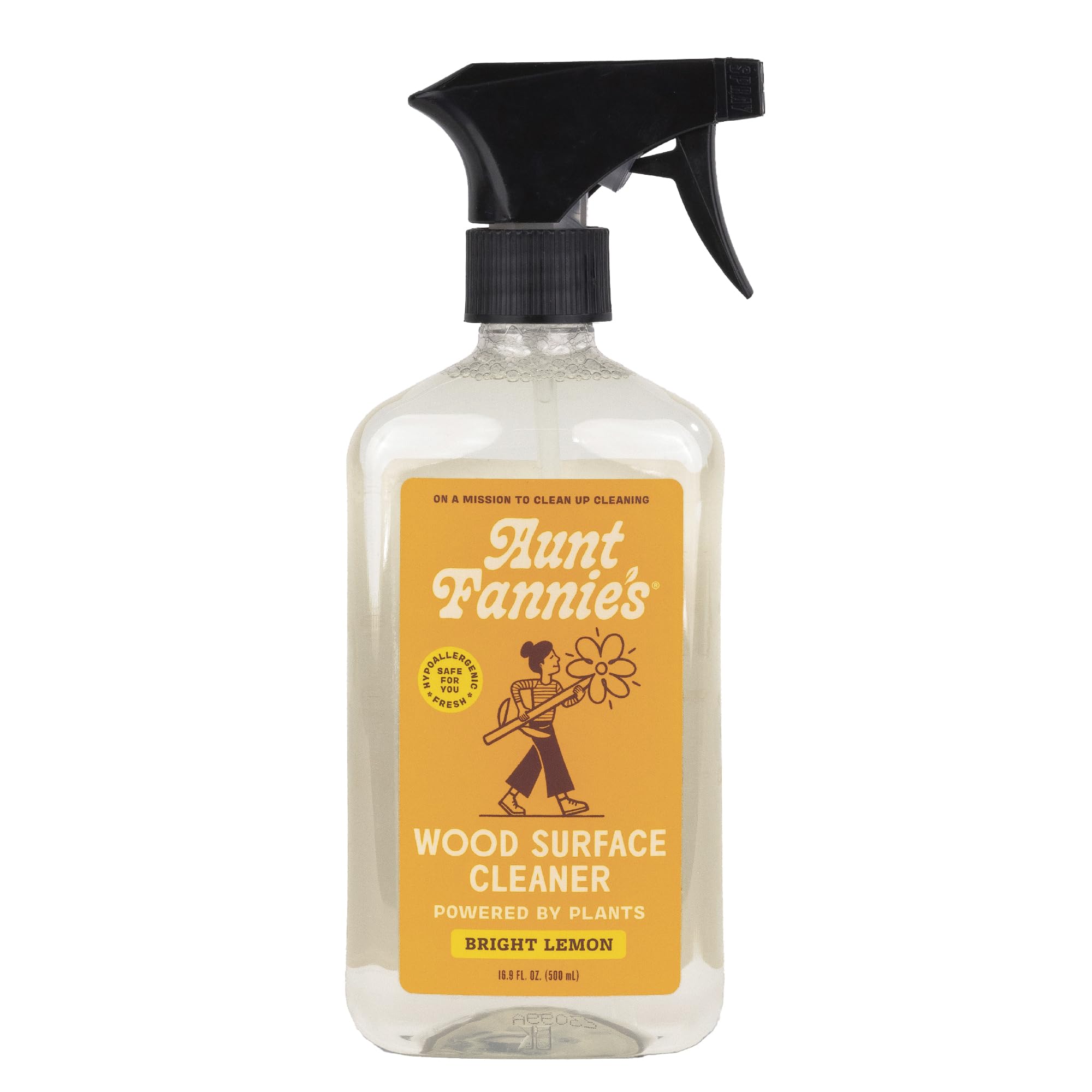
Aunt Fannie’s is built for households where chemical sensitivity is a top concern. This plant-based, no-wax formula is EWG A-rated and dermatologist-tested, meaning it delivers effective cleaning without the respiratory irritation that can come with synthetic fragrances and volatile compounds. Customers with asthma or sinus issues specifically cite this spray as the only wood cleaner they can use indoors without opening windows.
The lemon-scented cleaner handles everyday dust, food residue, and light grease with a simple spray-and-wipe motion — no rinsing required. Users with textured wood tables report that the spray penetrates crevices to lift trapped crumbs and dried messes that scrubbing alone could not dislodge. The no-wax formulation means there is no progressive shine buildup, so the cabinet finish remains exactly as it was when first applied.
The trade-off is that this is a daily cleaner rather than a deep restorer — heavily soiled cabinets near a cooking surface will need a separate degreasing step before Aunt Fannie’s can finish the job. The 16.9-ounce bottle is smaller than some alternatives, but the concentrated plant base ensures you are not paying for watered-down fillers. For allergy-conscious families, this is the safest and most effective option.
Why it’s great
- EWG A-rated, hypoallergenic, safe for respiratory sensitivity
- No wax — will not alter the finish over time
- Penetrates textured surfaces with minimal scrubbing
Good to know
- Not strong enough for heavy grease without pre-treatment
- Smaller 16.9 oz bottle compared to some competitors
FAQ
Can I use orange oil cleaner on painted wood cabinets?
How often should I wax my wood cabinets with a product like Goddard’s?
What is the main difference between oil-based and water-based cabinet cleaners?
Final Thoughts: The Verdict
For most users, the best cleaner for wood cabinets winner is the Bayes High-Performance Cleaner because it combines real conditioning oil with streak-free cleaning on bare and oiled wood surfaces. If you want a no-residue daily spray suitable for sealed cabinets, grab the Method Wood Polish (2-Pack). And for deep-cutting grease removal that restores a factory shine, nothing beats the Touch Of Oranges 32 oz Wood Cleaner.

Mo Maruf
I created WellFizz to bridge the gap between vague wellness advice and actionable solutions. My mission is simple: to decode the research and give you practical tools you can actually use.
Beyond the data, I am a passionate traveler. I believe that stepping away from the screen to explore new environments is essential for mental clarity and physical vitality.