Our readers keep the lights on and my smoothie glass nicely filled. As an Amazon Associate, I earn from qualifying purchases.
Sunbrella fabric is engineered to resist fading and weather, but its porous weave still traps oil, grease, sunscreen, and mildew in a way that all-purpose sprays just can’t lift. A dedicated cleaning agent formulated for this specific acrylic fiber is the only way to break that bond without damaging the water-repellent finish or the fabric’s structural integrity.
I’m Mohammad Maruf — the founder and writer behind WellFizz. To build this guide, I cross-referenced manufacturer care guidelines, analyzed dozens of user-reported stain removal outcomes, and drilled down into pH levels, surfactant load, and the difference between solvent-based and enzyme-based cleaning chemistries used in this narrow category.
Whether you are dealing with set-in cooking grease on a cushion or mildew spots under a boat cover, finding the right cleaner for sunbrella fabric means understanding which formulation actually tackles the specific stain chemistry without stripping the material’s defenses.
How To Choose The Best Cleaner For Sunbrella Fabric
Sunbrella’s acrylic fibers are solution-dyed, meaning the color runs through the core of each strand rather than just the surface. This makes them inherently colorfast, but it also means that the cleaning agent must penetrate the yarn to release trapped oils and particulate without weakening the fiber or the water-repellent coating. Choosing incorrectly can result in residue that attracts more dirt or a cleaner that strips the fabric’s natural protective layer.
Stain Chemistry Match
Not all Sunbrella stains are the same. Water-based stains like coffee, wine, or mud respond well to a mild surfactant blend, while oil-based stains — cooking grease, sunscreen, salad dressing — require a solvent-driven emulsifier. Using a general-purpose cleaner on an oil stain often drives the grease deeper into the fiber. Look for a formula that explicitly states its target stain chemistry, or better yet, one that covers both categories.
Application Method and Dwell Time
The physical delivery system matters. A gel or foam that clings to vertical cushion sides delivers more contact time than a thin liquid that runs off. Products that require a 30-second dwell before scrubbing are designed for light surface grime; those that instruct you to let the formula dry and then vacuum represent a different mechanism — often solvent-based absorption that draws the stain out of the fiber rather than pushing it through the weave.
Fabric Finish Compatibility
Many Sunbrella fabrics come with a factory-applied water and stain repellent finish. Harsh alkaline or acidic cleaners can degrade this finish, causing the fabric to wet out instead of beading water. A pH-neutral or manufacturer-tested cleaner helps preserve that original performance. If your goal is deep cleaning followed by reapplication of a protectant, that is a valid strategy — but the cleaner itself should not be the agent that strips the finish prematurely.
Quick Comparison
On smaller screens, swipe sideways to see the full table.
| Model | Category | Best For | Key Spec | Amazon |
|---|---|---|---|---|
| Sunbrella Clean Multi-Purpose Fabric Cleaner | All-in-One | Everyday stains on cushion covers and umbrellas | 32 fl oz, non-PFAS, Sunbrella tested | Amazon |
| ForceField Fabric Cleaner (2 Pack) | Deep Clean | Old set-in stains on wool and polyester blends | 22 oz each, odorless, deep-penetration | Amazon |
| Sunbrella Extract Oil Stain Remover | Oil-Specific | Grease, butter, sunscreen, and salad dressing | 5 oz, dry-and-vacuum, non-PFAS | Amazon |
| STAR BRITE Outdoor Collection Fabric Cleaner Spray | Versatile | General dirt, pollen, and UV protection | 32 oz, 30-second dwell, UV polymers | Amazon |
| STAR BRITE Ultimate Mildew Stain Remover | Mildew Focus | Mold, mildew, and algae on marine canvas | 16 oz, gel spray, low-scrub formula | Amazon |
In‑Depth Reviews
1. Sunbrella Clean Multi-Purpose Fabric Cleaner
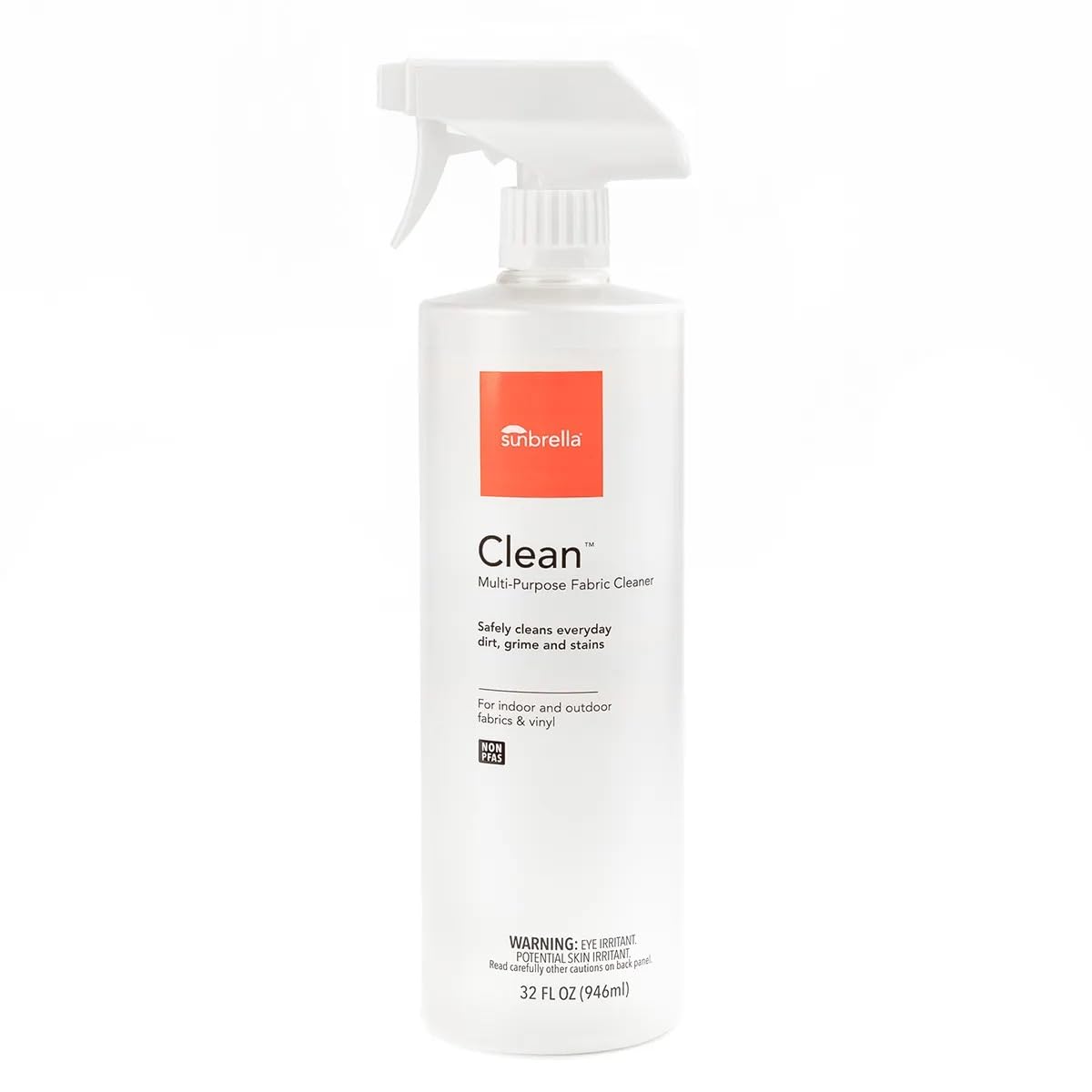
This 32-ounce formula is the all-in-one solution that Sunbrella itself designed and tested for its own fabric line, so the surfactant load is precisely calibrated to lift coffee, wine, ketchup, and dirt without damaging the solution-dyed acrylic fibers. The non-PFAS formulation meets California’s strictest textile standards, making it a strong choice for environmentally conscious households.
Users consistently report that it handles multiple stains across upholstery, umbrellas, and boat covers, though heavy mildew requires a second pass. The liquid consistency is thin enough to trigger a spray bottle effectively but concentrated enough to require only a moderate amount per cushion. It leaves virtually no soap residue when rinsed properly, which is critical for maintaining the fabric’s water-beading ability.
For a buyer who wants one cleaner that covers the widest range of everyday spills — from the patio table to the Bimini top — this is the safest bet. The catch is that set-in oil stains may need a dedicated solvent-based product, but as a daily driver, this multi-purpose formula is the benchmark.
Why it’s great
- Sunbrella-tested and approved formula ensures zero fabric damage
- Non-PFAS composition meets strict environmental regulations
- Large 32 oz bottle offers generous coverage for multiple cushions
Good to know
- Thin formula may run off vertical surfaces before penetrating
- Heavy mildew stains may require a second application
2. ForceField Fabric Cleaner (2 Pack)
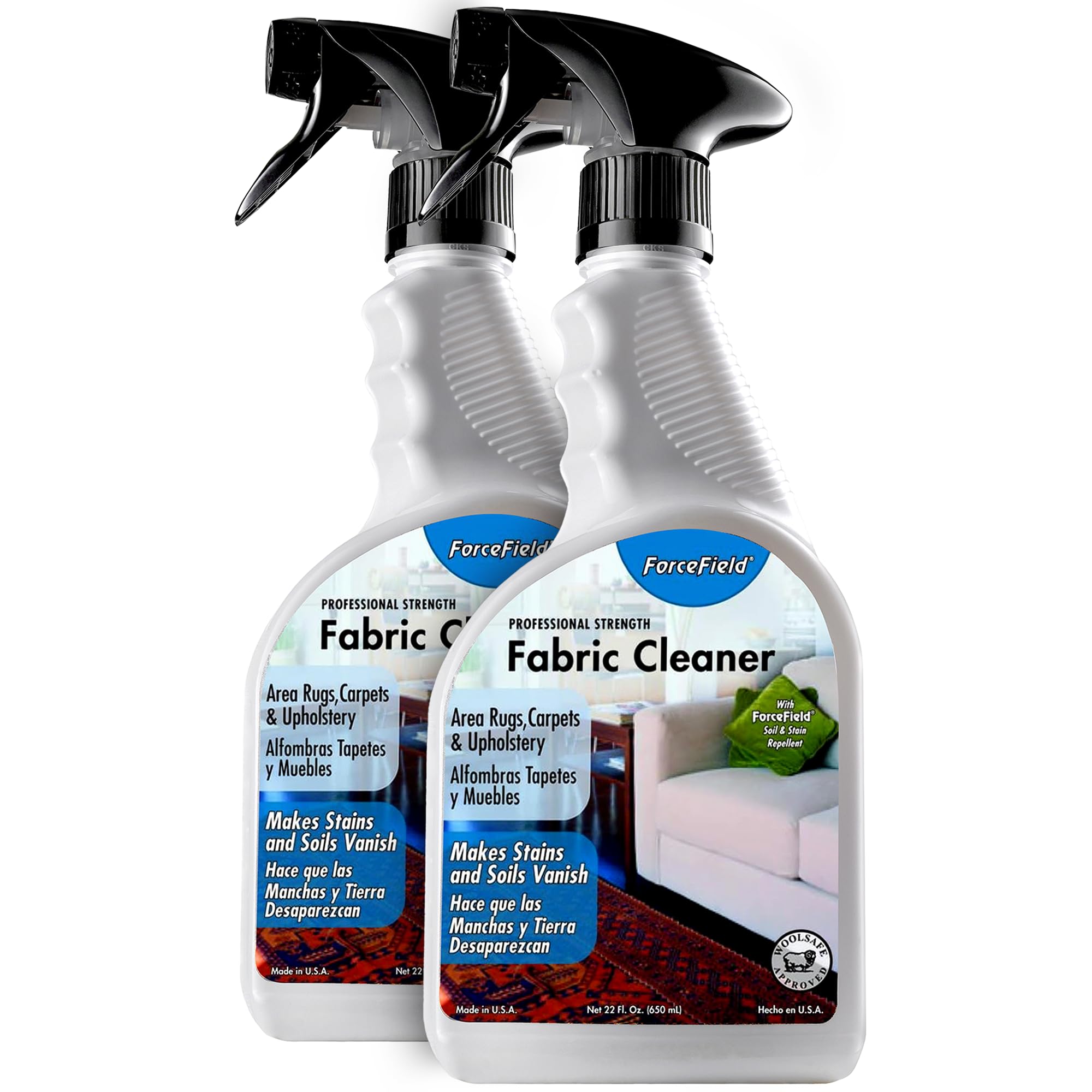
ForceField’s dual-pack delivers 44 total ounces of a deep-penetrating formula that lifts both water-based and oil-based stains from fabrics as varied as wool rugs and Sunbrella upholstery. The key differentiator is its ability to soak into the fiber matrix and release trapped soil without producing the strong chemical odor typical of solvent-heavy cleaners.
Customer reports highlight its effectiveness on old, set-in stains that have resisted multiple previous treatments. The spray nozzle delivers a fine mist that covers evenly, though some users found certain batches had defective sprayers that required transferring to a separate bottle. The absence of any residual fragrance is a subtle but appreciated feature for indoor use.
Where this cleaner excels is in carpet and heavy upholstery that sees constant use. If you have a high-traffic cushion or a boat interior that has accumulated years of embedded grime, the ForceField’s penetrative depth makes the difference. Pack size offers strong value for users who clean multiple large pieces in one session.
Why it’s great
- Penetrates deep to lift old, set-in stains from dense fabric weaves
- Odorless formula makes indoor application comfortable
- Two-bottle pack provides excellent coverage for large jobs
Good to know
- Sprayer quality is inconsistent between batches
- Premium cost per bottle may exceed budget cleaner expectations
3. Sunbrella Extract Oil Stain Remover
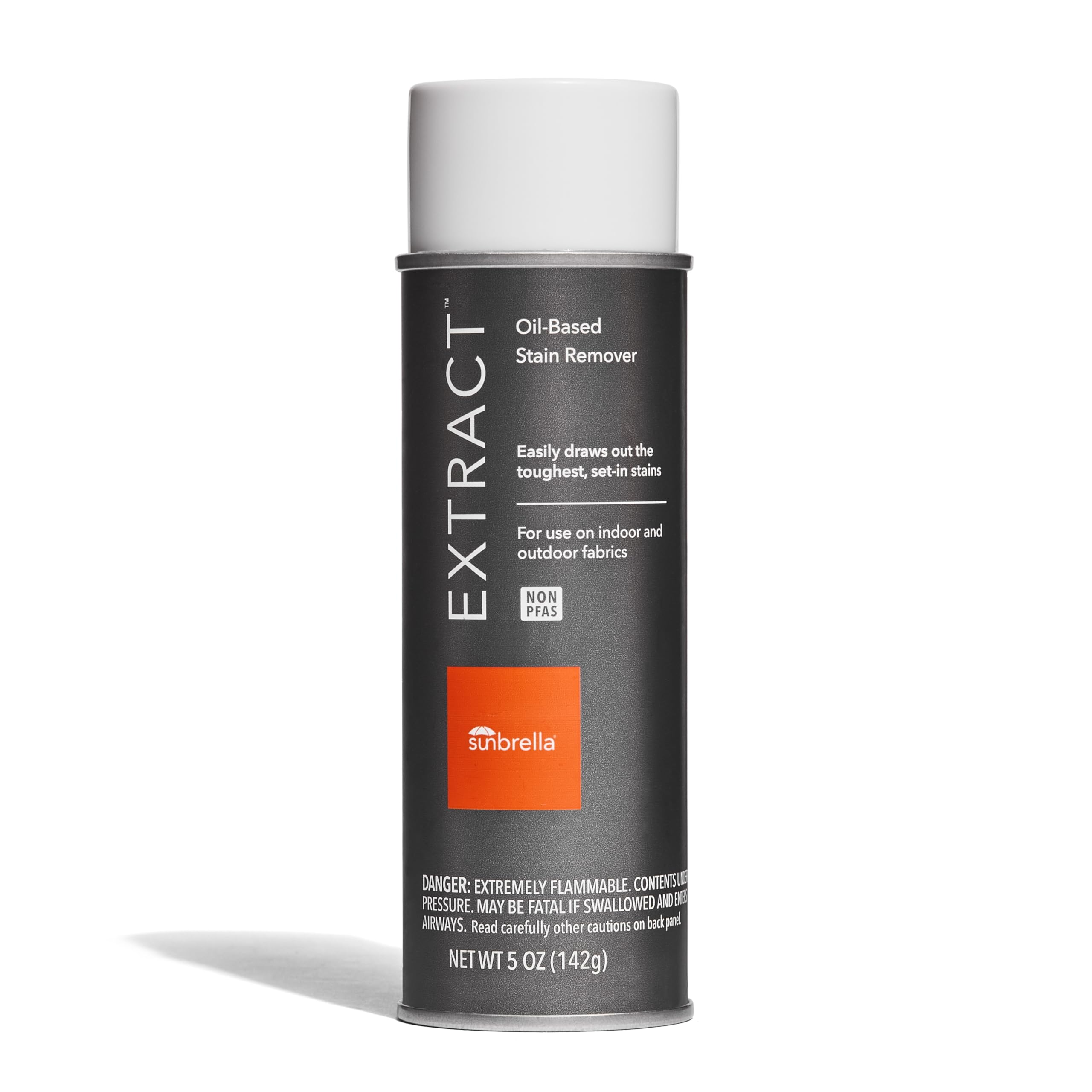
This solvent-based aerosol is the only product on this list that targets oil-based stains exclusively — and it does so with a completely different mechanism. Instead of wetting the stain and pushing it through the fabric, Extract uses a fast-drying solvent carrier that draws the oil out of the fiber as the liquid evaporates. You spray, wait for it to dry, and simply vacuum the residue away.
The 5-ounce can is small, which is its main limitation, but the chemistry is potent enough that a single application erased permanent grease stains from Sunbrella cushions where soap and water had failed completely. Reviews consistently praise its performance on cooking oil, bacon grease, sunscreen, and car wax — the exact stains that ruin outdoor furniture appearance.
Note that the can’s propellant system means it can run out before the liquid is fully used, and the small size makes it impractical for large surface-area cleaning. For targeted spot treatment of oil-based spills, though, this is the most effective dedicated option available. If you mainly deal with water-based stains, choose a multi-purpose cleaner instead.
Why it’s great
- Solvent-based formula removes oil that surfactants cannot touch
- Dry-and-vacuum method leaves no soapy residue on fabric
- Sunbrella-approved chemistry protects fiber integrity
Good to know
- Small 5 oz can runs out quickly on multiple stains
- Propellant may escape before all liquid is used, reducing value
4. STAR BRITE Outdoor Collection Fabric Cleaner Spray

STAR BRITE’s Outdoor Collection cleaner brings a unique bonus that none of the other formulas offer: UV-blocking polymers. While the primary surfactant mix handles dirt, pollen, and moderate staining, the added polymer layer creates a secondary barrier that slows future fading — a meaningful benefit for cushions that sit in direct southern sun all season.
The 30-second dwell time and simple spray-and-rinse process make this the most user-friendly option on the list. Users report dramatic transformations on white or light-colored cushions that had yellowed from years of pollen and grime exposure. The formula is safe for Sunbrella acrylic but also works on polyester, canvas, and vinyl, so it doubles as a general marine cleaner.
It does struggle with deep-set oil stains and heavy mildew infiltration — those require the dedicated formulations above. But for the price point per ounce, the UV protection and versatility make this a strong contender for routine maintenance cleaning. It pairs well with STAR BRITE’s own Fabric Protectant for a complete care cycle.
Why it’s great
- Built-in UV polymers help prevent future fading and staining
- Fast 30-second dwell time requires minimal effort
- Works on multiple fabric types beyond Sunbrella acrylic
Good to know
- Not effective on heavy oil or grease-based stains
- Mildew removal requires a separate specialized product
5. STAR BRITE Ultimate Mildew Stain Remover

When mildew has colonized Sunbrella canvas — especially on boat covers or cushions stored damp over winter — a standard spray cleaner is not enough. STAR BRITE’s gel formula uses a thick consistency that clings to vertical and overhead surfaces, giving the active bleaching agents extended dwell time without running off and leaving drip marks.
The chemical action is fast: users report visible fading of black mold spots within minutes of application. The gel technology is particularly effective on rubber gaskets, vinyl seating, and canvas edges where mildew concentrates. The downside is the strong chemical odor — ventilation is mandatory, and sensitive users should wear a mask during application.
This is a specialist tool, not a daily cleaner. It should be reserved for quarterly deep cleans or seasonal spring restorations. Rinsing must be thorough to prevent any residual bleaching action on stitching. For Sunbrella fabric with visible mildew growth that has resisted soap and water, this is the most effective option in this guide.
Why it’s great
- Gel technology clings to vertical and overhead fabric surfaces
- Fast-acting formula shows results within minutes
- Effective against tough black mold on marine canvas
Good to know
- Strong chemical odor requires good ventilation and a mask
- Bleaching agents may damage stitching if not rinsed thoroughly
FAQ
Can I use bleach on Sunbrella fabric to remove mildew?
How often should I clean Sunbrella cushions to prevent permanent staining?
Will a cleaner remove the water-repellent finish from Sunbrella fabric?
Final Thoughts: The Verdict
For most users, the cleaner for sunbrella fabric winner is the Sunbrella Clean Multi-Purpose Fabric Cleaner because it covers the broadest range of everyday spills with a non-PFAS, fabric-safe formula backed by the manufacturer’s own testing. If you need to tackle a stubborn grease stain that soap cannot touch, grab the Sunbrella Extract Oil Stain Remover. And for seasonal mildew restoration on boat covers or damp cushions, nothing beats the STAR BRITE Ultimate Mildew Stain Remover.

Mo Maruf
I created WellFizz to bridge the gap between vague wellness advice and actionable solutions. My mission is simple: to decode the research and give you practical tools you can actually use.
Beyond the data, I am a passionate traveler. I believe that stepping away from the screen to explore new environments is essential for mental clarity and physical vitality.