Your shower glass looks cloudy no matter how much you clean — the real problem is mineral deposits and soap scum that ordinary sprays just cannot dissolve. You need a cleaner for shower glass that actually removes that white film and hard water scale. The CLR Calcium, Lime & Rust Remover is the one to pick if you have foggy hard water stains; it uses an acid-based formula (it chemically dissolves the alkaline minerals that cause cloudiness) that works in just 1-2 minutes. If your shower has natural stone like marble, go for the Black Diamond Stoneworks acid-free spray instead — and for a no-scrub weekly routine, get the Wet & Forget Shower Cleaner.
I’m Mohammad Maruf — the co-founder and writer behind WellFizz. This guide is built by comparing the manufacturers’ published specifications and the patterns across verified customer reviews, so you get each pick’s real strengths and trade-offs instead of marketing spin.
Matching the right formula to the type of stain on your glass door makes all the difference between a clean that lasts and one that leaves streaks behind.
How To Choose The Best Cleaner For Shower Glass
The right cleaner depends on what kind of grime is stuck to your glass. Soap scum (a greasy white film from body oils and soap) and hard water scale (a crusty white mineral deposit from calcium and lime) each need a different active ingredient. Here is what to look for.
Identify your stain type first
If the glass looks foggy even when dry, that is hard water stains — calcium and lime have bonded to the surface. You need an acid-based cleaner (one containing an acidic ingredient like hydroxyacetic acid that dissolves hard minerals) to break those down. If you see white, greasy streaks that come back after wiping, that is soap scum. A heavy-duty alkaline or surfactant-based spray (a formula that lifts oily dirt without acid) handles that better.
Check the application and effort required
Some cleaners are designed for weekly maintenance: you spray, leave it for hours (often 8-12), then rinse — no scrubbing needed. Others are heavy-duty and require you to apply, scrub with a pad, and rinse after a few minutes. For a first deep clean on a stained door, the scrub route is faster. To keep clean glass clear, the no-scrub approach saves your elbow grease.
Surface safety matters
Most glass cleaners are safe on metal, tile, and acrylic shower parts. But acids can permanently damage natural stone like marble or travertine (they etch the polished surface). If your shower has stone, choose a product labelled “acid-free” or “safe for natural stone.” Also check if it contains bleach, ammonia, or dyes — especially if you have sensitive skin or a small bathroom with poor ventilation.
Quick Comparison
On smaller screens, swipe sideways to see the full table.
| Model | Category | Best For | Key Spec | Amazon |
|---|---|---|---|---|
| CLR Calcium, Lime & Rust Remover | Acid-Based | Hard water stains & rust on glass | 1.92 lbs; 26 oz | Amazon |
| Black Diamond Stoneworks Soap Scum Remover | Acid-Free | Soap scum on glass & natural stone | 2.2 lbs; 9 inch height | Amazon |
| Wet & Forget Shower Cleaner | No-Scrub Maintenance | Weekly upkeep on glass & tile | 4 lbs; 64 oz | Amazon |
| GlassGuard Glass Restoration Stain Remover | Polish Restoration | Stubborn water spots on shower glass | 13.05 oz; 250 ml | Amazon |
| CRL Bio-Clean Water Stain Remover | Heavy-Duty Acidic | Hard water stains on glass & metal | 16 oz; 473 ml | Amazon |
In‑Depth Reviews
1. CLR Brands® Calcium, Lime & Rust Remover Free & Clear
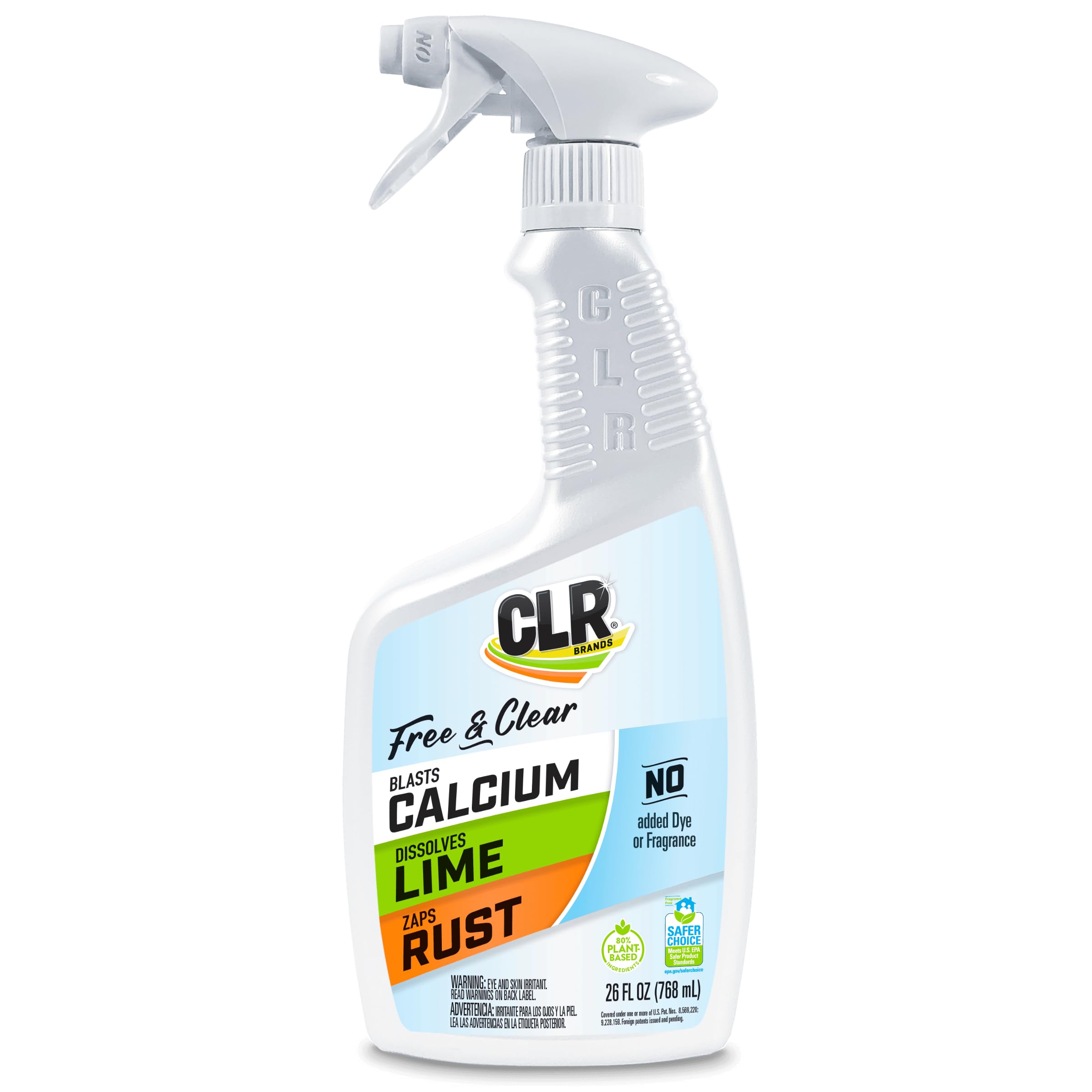
It dissolves foggy hard water stains on glass in just 1-2 minutes of dwell time — the fastest among all picks here — making it the top choice for anyone who wants near-instant clarity without scrubbing. The CLR Calcium, Lime & Rust Remover uses an acid-based formula that breaks down alkaline mineral deposits like calcium and lime. The 26-ounce bottle weighs 1.92 pounds, making it lighter and easier to handle than the 4-pound Wet & Forget jug. It also comes without dyes or fragrances, so there is less irritation if you are sensitive to smells.
Buyers report this is the “greatest soap scum remover for glass shower enclosures.” One reviewer noted that letting it sit for just 1-2 minutes before rinsing removed calcium buildup from a resin sink without damaging the surface — the same approach works on your glass door. Compared to the GlassGuard option, the bottle is 41% larger by volume according to the package dimensions, so you get more product for a similar price point.
The catch is the strong acidic odor. Even the free-and-clear version smells distinct and requires good bathroom ventilation. But for one product that handles calcium, lime, rust, and soap scum across glass, stainless steel, and tile, this is the most versatile cleaner on this list.
Why it’s great
- EPA Safer Choice certified — no phosphates, ammonia, or bleach
- Works on hundreds of surfaces including glass, ceramic tile, and concrete
- Fast-acting — effective with just 1-2 minutes of dwell time
Good to know
- Strong acidic odor requires ventilation during use
- Not a fix-all; multiple applications may be needed on heavy buildup
2. Black Diamond Stoneworks Natural Stone Shower Soap Scum Remover Spray
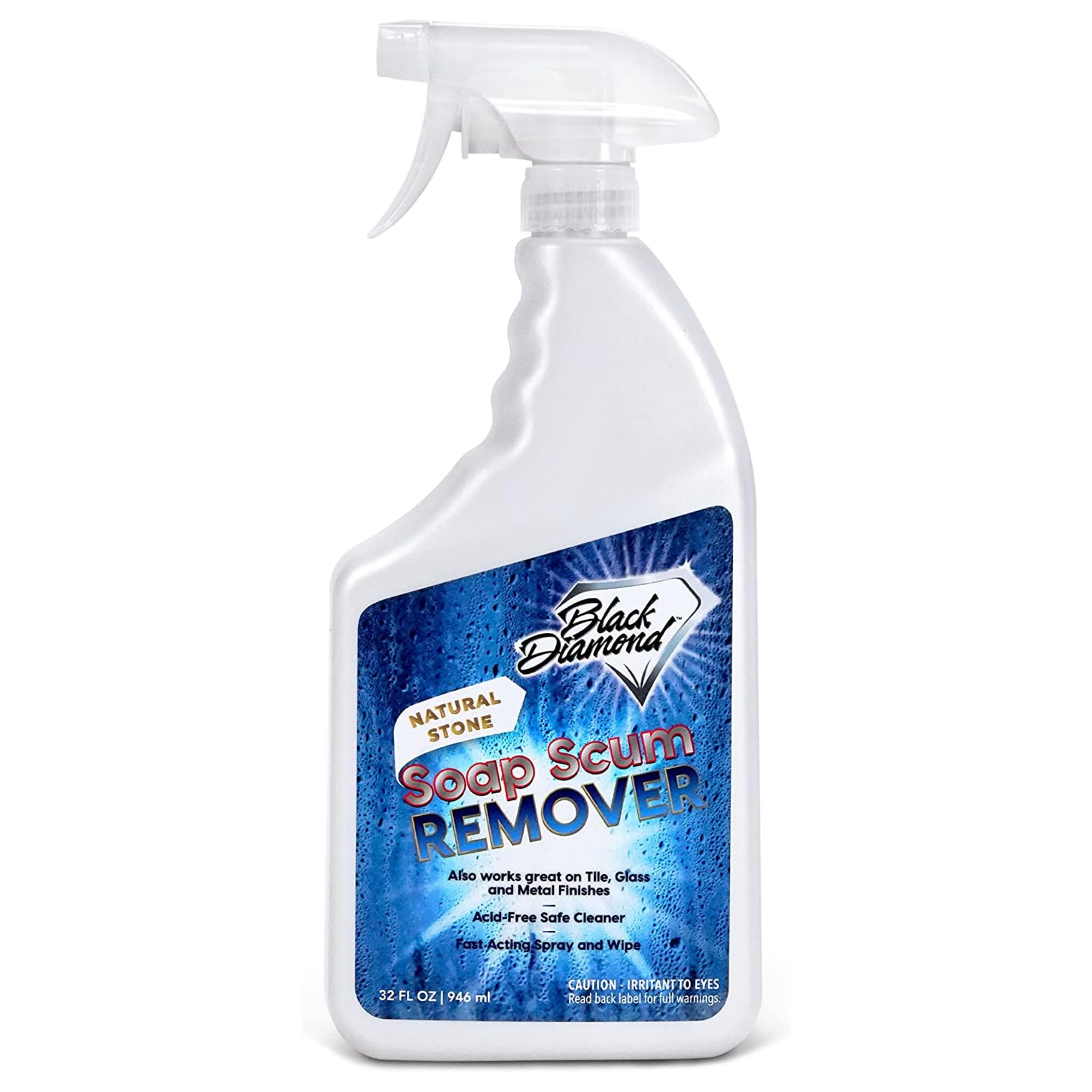
Compared to the top-pick CLR, which relies on acids to dissolve soap scum, this Black Diamond Stoneworks spray uses an acid-free formula (surfactants and mild alkalis) that will not etch natural stone surfaces like marble, travertine, or granite. The bottle stands 9 inches tall, taking up less shelf space than the 16.8-inch Wet & Forget jug.
One buyer mentioned that with a soft microfiber sponge, this spray removed “90% of soap scum after first use” and “100% after second cleaning on lower areas” — without hard scrubbing and without damaging the stone. The formula is designed to leave a streak-free finish that requires no rinsing, which saves you time compared to the soak-wait-rinse routine of Wet & Forget. You spray, wipe, and move on.
Pick this over the top pick if your bathroom has a mix of glass doors and natural stone that one product needs to clean safely. It is less effective on thick years-old hard water scale than the acid-based CLR option, so it works best for regular maintenance and moderate soap scum rather than restoring heavily etched glass.
Where it shines
- Safe for natural stone — won’t etch marble, travertine, or granite
- Streak-free, no-rinse formula saves time on glass doors
- Heavy-duty soap scum removal without hard scrubbing
Worth noting
- Unpleasant smell according to some buyers
- Less effective on thick hard water scale compared to acid-based cleaners
3. Wet & Forget Shower Cleaner Weekly Application

You spray the glass once a week, leave it for 8-12 hours (overnight works well), then rinse the next morning — that is the entire routine. The Wet & Forget Shower Cleaner relies on a slow chemical reaction that breaks down grime without physical abrasion. The 64-ounce bottle weighs 4 pounds, which is more than double the weight of the 1.92-pound CLR bottle, and it lasts roughly 12 weeks when you apply it weekly.
Owners mention strong results on buildup that has been there for months: one 80-year-old user with limited flexibility applied it three times for 8-11 hours each and saw “~95% of months-old soap scum” removed from the tub and tiles, including black and orange grime. Another reviewer noted that it removed “years of grout stains” and left stainless steel taps gleaming after just one overnight soak — with zero scrubbing. The formula is bleach-free, ammonia-free, and dye-free with a light vanilla scent, which makes it much more pleasant to use in a small bathroom than the acidic CLR or CRL Bio-Clean.
The downside is you need to plan ahead: spray before bed, wait until morning. And it is slower to work on thick calcium scale than acid-based cleaners — you might need to pre-clean heavy spots. If you hate scrubbing and want a set-and-forget weekly routine, this is the pick for you.
What stands out
- No scrubbing required — spray, wait 8-12 hours, then rinse
- Bleach-free, ammonia-free, and dye-free with a mild vanilla scent
- Large 64 oz bottle provides roughly 12 weeks of weekly applications
The trade-offs
- Requires planning ahead; not an instant cleaner
- Less effective on severe calcium buildup without a pre-clean
4. GlassGuard Glass Restoration Stain Remover
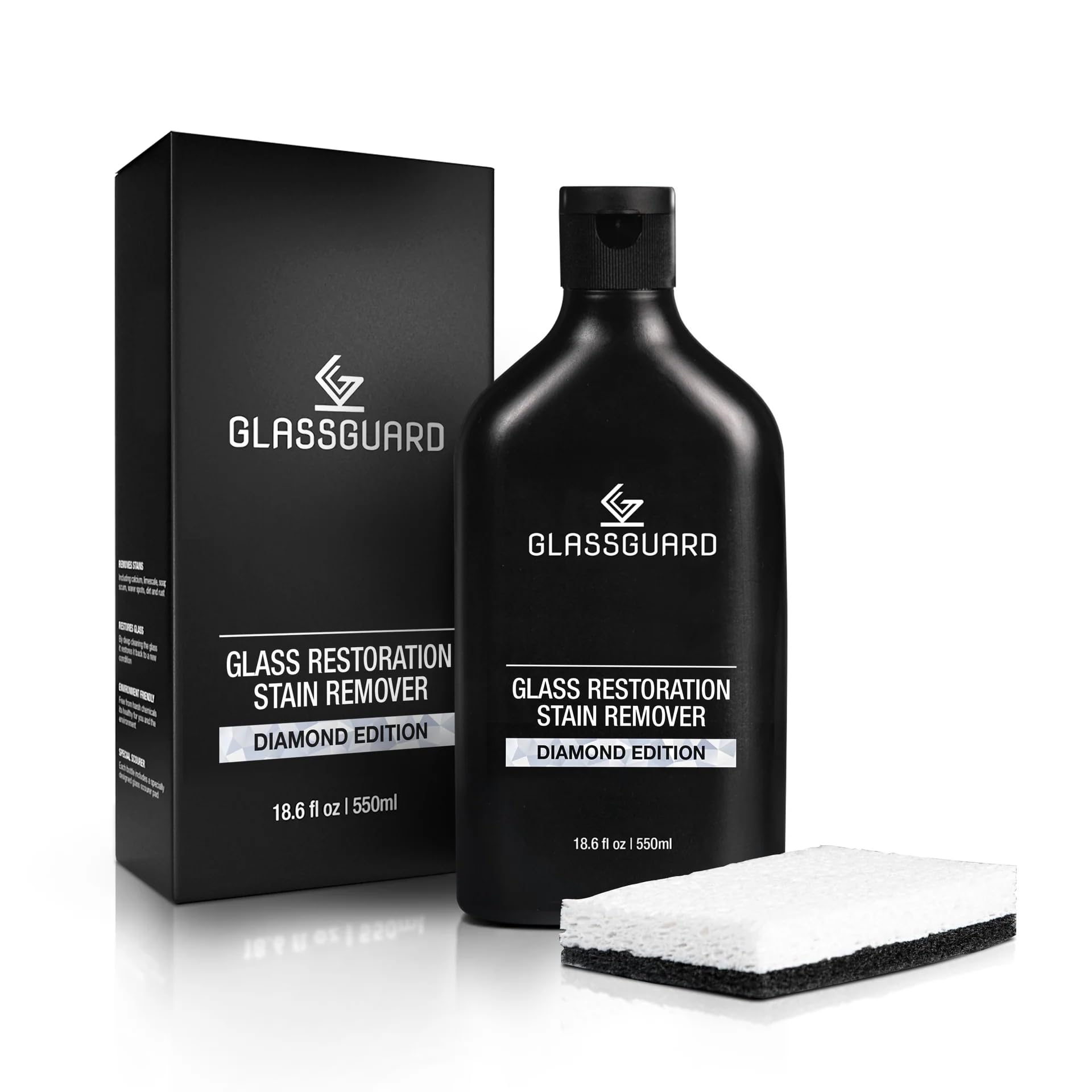
The single number that matters most in this category is 250ml — the bottle size of this abrasive-based product, which scores by offering a physical removal method rather than a chemical spray. When chemical sprays cannot restore your glass because the stain is physically bonded to the surface, this product uses a different approach. GlassGuard contains ultra-fine abrasive particles (microscopic polishing grit) that physically wear away the mineral layer on the glass — like sanding a scratch out of a windshield. The 250ml bottle is compact at 13.05 ounces and comes with a scouring pad designed to work with the abrasive formula.
Customers note that it works where cheaper alternatives failed: one owner reported “hard water stains on shower door removed in one application following directions.” But another noted it “cleaned okay” but did not fully remove years-old stains, and some found a power tool was needed for best results. It is also heavier work than the no-scrub Wet & Forget — you have to scrub with the included pad. For heavily etched glass that looks permanently cloudy, it can restore clarity for a fraction of the cost of replacing the door.
Skip this if you want a spray-and-walk-away product. Grab it if you are willing to put in the effort to polish glass back to transparent — a price-to-value read that positions it as a low-cost alternative to door replacement rather than a casual cleaner.
The upsides
- Ultra-fine abrasive particles polish glass to remove bonded mineral stains
- Includes a specially designed scouring pad for effective scrubbing
- Eco-friendly and free of harsh chemicals
Keep in mind
- Requires elbow grease; not a no-scrub solution
- Less effective on very old, heavily etched glass surfaces
5. CRL Bio-Clean Water Stain Remover

What you actually get at this lower price is a concentrated acidic formula (a liquid with high acid content that breaks down mineral deposits quickly) in a 16-ounce (473ml) bottle — one of the smallest here, but a little goes a long way. Buyers confirm it works where other products fail — one called it “hands down the best hard water stain remover ever.” One reviewer needed three applications to remove 7-year-old stains from truck windows.
What you trade is convenience. This is not a gentle spray — you must scrub vigorously and repeat for heavy stains. The acidic fumes are strong: one customer observed needing a mask because the smell caused a headache. Another buyer mentioned it “caused tiny microscratches” on glass, so it is best reserved for stained doors you are willing to put extra effort into restoring. Compared to the Wet & Forget, this is far more aggressive and faster-acting, but requires more precautions and physical work.
Use this when every other spray in your cabinet has failed. It is not for weekly maintenance — it is the restoration product for hard water stains that nothing else can budge. This is the exact budget buyer it is perfect for: someone who needs a last-resort remover for stubborn, years-old mineral deposits and is willing to trade convenience and gentleness for low cost and serious dissolving power.
Why we’d pick it
- Effectively removes stubborn hard water stains, mineral deposits, and rust
- Works on glass, fiberglass, chrome, porcelain, tile, and stainless steel
- Highly concentrated formula for tough restoration jobs
A few caveats
- Strong acidic fumes require a mask and good ventilation
- May cause microscratches on glass with vigorous scrubbing
Understanding the Specs
Acid-Based vs. Acid-Free
This is the main chemical choice. Acid-based formulas (containing an acidic ingredient like hydroxyacetic acid that dissolves minerals) break down hard water scale on contact — they work on cloudy glass but can etch natural stone like marble or travertine. Acid-free formulas use surfactants (detergent-like compounds) or mild alkalis to lift soap scum without damaging stone or metal. Pick acid for white crusty mineral spots, acid-free for greasy white soap film.
No-Scrub vs. Scrub-Required
No-scrub products (like Wet & Forget) need a long dwell time — you spray, leave it for 8-12 hours, then rinse. They break down grime through slow chemical reaction. Scrub-required products (like GlassGuard or CRL Bio-Clean) need you to wipe or polish with a pad. No-scrub is better for weekly maintenance; scrub-required is better for initial deep cleaning of heavily stained glass.
FAQ
Can I use an acid-based cleaner on my frosted or etched shower glass?
How often should I clean my shower glass to prevent hard water stains?
Why does my glass still look cloudy after using a shower cleaner?
Final Thoughts: The Verdict
When it comes down to it, the cleaner for shower glass winner is the CLR Calcium, Lime & Rust Remover Free & Clear because it dissolves hard water stains, rust, and soap scum in just 1-2 minutes, and the new dye-free formula makes it safer for sensitive households. If you need an acid-free option for natural stone, get the Black Diamond Stoneworks. For a weekly no-scrub routine that keeps glass clear with minimal effort, the Wet & Forget Shower Cleaner applied once a week is your pick.

Mo Maruf
I created WellFizz to bridge the gap between vague wellness advice and actionable solutions. My mission is simple: to decode the research and give you practical tools you can actually use.
Beyond the data, I am a passionate traveler. I believe that stepping away from the screen to explore new environments is essential for mental clarity and physical vitality.