Our readers keep the lights on and my smoothie glass nicely filled. As an Amazon Associate, I earn from qualifying purchases.
Specs are compiled from manufacturer listings and verified buyer reviews and can change over time — please confirm the key details on the product page before buying.
So you point a pressure washer at your vinyl siding, pull the trigger, and are somehow surprised to see green mold, black streaks, and dirt still laughing back at you. The only way to get results fast is to stop spraying plain water and start using a cleaning concentrate that does all the heavy lifting. To find the best cleaner for pressure washing vinyl siding, I read through manufacturer specs and dozens of verified buyer reports for six top formulas, looking for real performance on the kind of grime that actually sticks to your house.
I’m Mohammad Maruf — the founder and writer behind WellFizz. This guide is built by comparing the manufacturers’ published specifications and the patterns across verified customer reviews, so you get each pick’s real strengths and trade-offs instead of marketing spin.
After pouring over the specs and real owner experiences, the Zep House and Siding Pressure Wash Cleaner Concentrate earned the top spot because its 20-gallon yield per jug and construction-grade formula tackle thick algae on vinyl, wood, and brick without needing a second bottle.
Quick Picks
- Zep House and Siding Pressure Wash Cleaner — Best Overall
- Renu Universal House Wash – 2000+ SF Coverage — Longest Protection
- AL-NEW Outdoor Cleaner | 64oz Hose End Sprayer — Easiest Application
- Oxy Solve House and Siding Pressure Washer — Pet & Plant Safe
- Rust-Oleum Jomax 308764 Spray Once, 1 gallon — No-Scrub Time Release
- W M BARR FG581 128OZ Siding/House Wash — Budget Bulk
How To Choose The Best Cleaner For Pressure Washing Vinyl Siding
Picking the right siding cleaner is about matching the formula to the kind of grime on your house, not about brand loyalty. You want something that kills mold and mildew (tiny fungi that stain surfaces) without eating away the paint on your window frames or leaving bleach stains on your concrete driveway. Here are the key specs that separate the good stuff from the pricey disappointments.
Concentrate vs Ready-to-Use
A concentrate (a thick liquid you mix with water) that makes 5 or 20 gallons of finished solution is almost always cheaper per wash than a ready-to-use (RTU) spray bottle. For a typical two-story house, you need several gallons of mixed cleaner — a one-gallon jug of concentrate that dilutes 5:1 (five parts water to one part cleaner) or 10:1 covers a lot more siding and saves you multiple trips to the store.
Bleach-Free vs Bleach-Based
Bleach kills mold fast, but it also damages window seals, bleaches painted surfaces, and kills your grass and flower beds. A non-bleach formula (often using hydrogen peroxide, a chemical that breaks down into water and oxygen) is safer for landscaping and won’t ruin your clothes if it splashes. The trade-off is that some non-bleach cleaners need a little more dwell time (the minutes you let it sit) or a light scrubbing to lift heavy stains.
Coverage Per Gallon
The label usually tells you how many square feet a single bottle covers. This number assumes you mix the concentrate at the standard dilution rate. If your house has 2,000 square feet of siding, you want a cleaner that yields at least that much finished solution from one bottle. Products that claim coverage of 5,000 to 6,400 square feet are designed to be very economical for large homes.
Quick Comparison
| Model | Best For | Concentrate Yield | Formula Type | Item Weight | Amazon |
|---|---|---|---|---|---|
| Zep House and Siding Pressure Wash Cleaner | Heavy-duty deep cleaning | Up to 20 Gallons | Construction-Grade Concentrate | 8 Pounds | Amazon |
| Renu Universal House Wash | Long-lasting protection | 2000+ SF Coverage | Zero VOC Concentrate | 9.8 Pounds | Amazon |
| AL-NEW Outdoor Cleaner Hose End Sprayer | Quick no-mix application | 64 oz per Bottle (RTU) | Non-Bleach Spray | 9.35 Pounds (Pack of 2) | Amazon |
| Oxy Solve House and Siding Pressure Washer Cleaner | Pet and plant-friendly cleaning | Up to 6,400 Sq. Ft. | Non-Toxic Peroxide Concentrate | 9.27 Pounds | Amazon |
| Rust-Oleum Jomax Spray Once | No-scrub time-release cleaning | Up to 5 Gallons | Bleach-Free Concentrate | 3.8 Pounds | Amazon |
| W M BARR FG581 128OZ Siding/House Wash | Budget-friendly large volume | Dilutes 5:1 | EPA Registered Concentrate | 5.7 Pounds | Amazon |
In‑Depth Reviews
1. Zep House and Siding Pressure Wash Cleaner Concentrate – 1 Gallon (Case of 2) ZUVWS128

This jug makes up to 20 gallons of finished cleaner — enough for roughly 5,000 square feet of siding.
The Zep concentrate yields up to 20 gallons of finished cleaner — that is enough for about 5,000 square feet of siding, according to the label. That yield puts it ahead of every other concentrate on this list for raw coverage per dollar. It is safe on vinyl, aluminum, wood, hard coat stucco, brick, and cement (including Hardie Plank siding), so you can tackle the whole house without switching products.
Buyers report that the concentrate mixed per heavy buildup instructions removed thick algae from vinyl siding with very little effort. One reviewer noted they applied it, brushed lightly, and rinsed with a hose, and the “mold and dirt melted away.” That said, some stains require a second application and a bit of scrubbing — it is powerful but not a miracle instant lift.
At 10 x 10 x 10 inches per bottle, this case of two is bulky on the shelf but gives you a 20-gallon batch from each jug. The Zep is the clearer choice over the Renu for heavy whole-house cleaning because its 20-gallon yield means you almost never need a second bottle, while the Renu covers 2,000 square feet.
Why it wins: The highest concentrate yield in the guide (20 gallons per jug) paired with a construction-grade formula that tackles thick algae and mold without damaging multiple siding types.
One trade-off: A 10 x 10 x 10 inch jug takes up storage space, and owners mention tougher stains may need a second coat or light scrubbing.
Reach for this if: Your vinyl siding has heavy, thick algae or mold growth and you want one product that works on every exterior surface of the house.
Look elsewhere if: You need a ready-to-use spray with zero mixing or storage prep.
2. Renu Universal House Wash – 2000+ SF Coverage
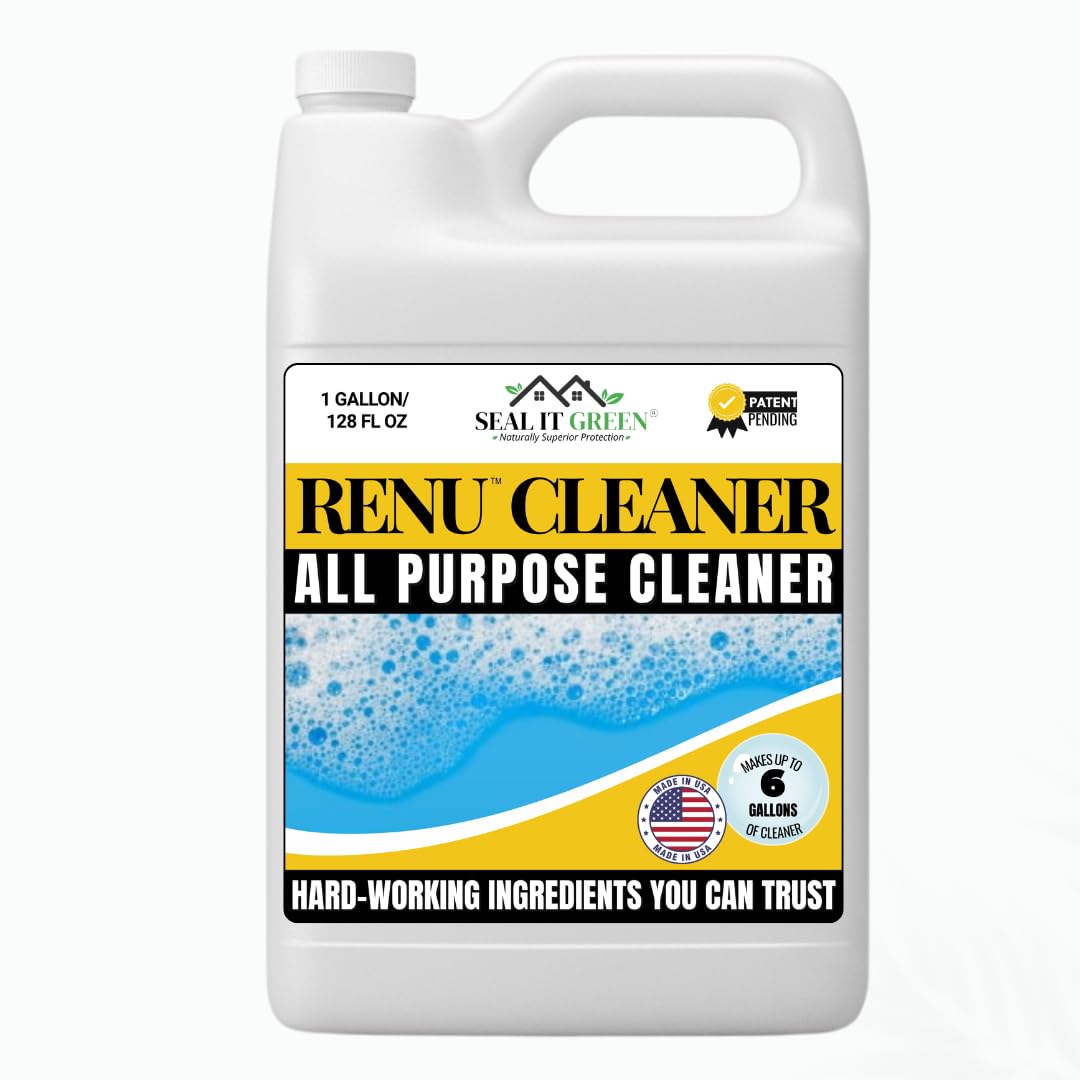
You clean once, and according to the maker, your siding stays clean for up to three years after a single application.
Renu claims surfaces stay clean for up to three years after a single application. It targets oxidation stains (that chalky, sun-damaged look on old vinyl) as well as mold, mildew, and general dirt. The formula has zero VOCs (volatile organic compounds, the chemicals that create strong fumes), making it one of the more environmentally friendly options here.
One buyer mentioned that the cleaner removed “chalky grit from south-side garage siding” after scrubbing and a hose rinse, calling the results excellent. Another reviewer, however, was very disappointed, saying the product failed to remove oxidation from vinyl siding even at full strength. The key difference seems to be that tough oxidation on heavily weathered siding may require elbow grease and possibly Renu’s Restore protector to keep the finish clean.
At 6 x 3 x 10 inches and 9.8 pounds, the bottle is compact relative to the Zep jug. You pay a premium upfront, but if the three-year longevity claim holds on your home, it could mean fewer washes per season.
Long-game value: It is the only cleaner here that claims to keep surfaces clean for up to three years, potentially saving you an entire season of washing.
Split results: Buyer reports range from “best cleaner ever” to “failed on heavy oxidation,” so test a small area before committing to the whole house.
Go for it if: You have mild to moderate oxidation and dirt on vinyl siding and want a low-fume, long-lasting treatment.
skip it if: Your siding is heavily chalked or has a thick layer of organic growth that has built up over many years.
3. AL-NEW Outdoor Cleaner | 64oz Hose End Sprayer (Pack of 2)
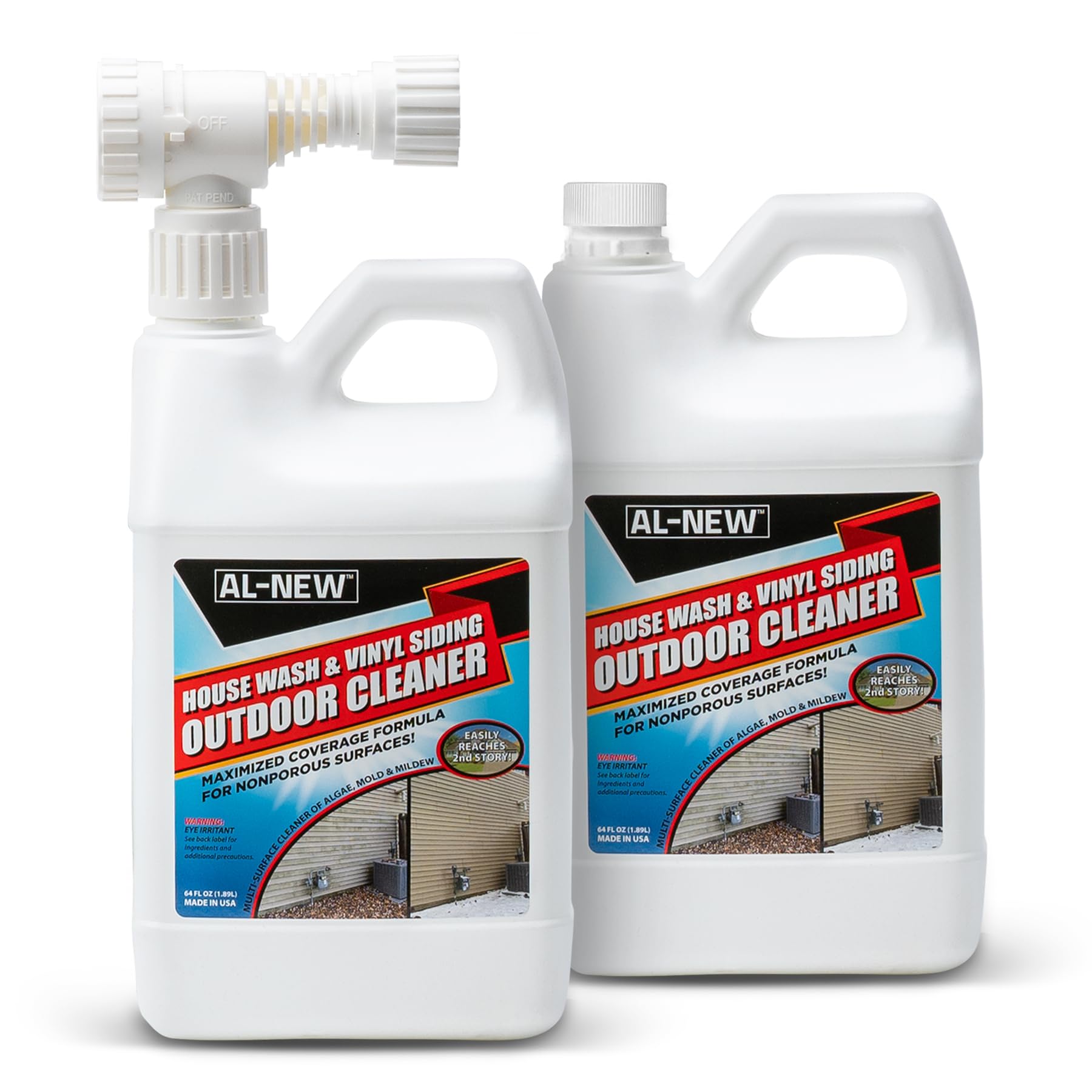
Screw each 64-ounce bottle onto your garden hose, and the built-in sprayer mixes the cleaner as the water flows — no bucket or measuring cup needed.
AL-NEW ditches the concentrate jug and the dilution math. Each bottle screws directly onto your garden hose, and the built-in sprayer mixes the cleaner as the water flows. You get two 64-ounce bottles in the pack, which is convenient for large houses or for saving one for next season. The formula is non-bleach, so it is safe on your clothes and landscape.
Customers note that this cleaner is great for soft washing mobile home siding and saves per professional service. However, the same effectiveness on thick algae requires more work — one owner reported it “doesn’t work well without scrubbing” and another said you “have to use it more than once and scrub the really green parts.” This is a convenience-first product, not a heavy-stain buster.
At 9.35 pounds for the two-pack, the bottles are lightweight and easy to handle compared to the Zep case. Unlike the Zep which is built for deep cleaning, the AL-NEW is the pick for the person who wants to spend five minutes attaching a sprayer rather than ten minutes mixing a concentrate.
No-Fuss Setup
- Attaches to a standard garden hose — no measuring, mixing, or extra equipment required
- Non-bleach formula is safer for grass, flower beds, and pets
Grime Limitations
- Reviewers point out it struggles with heavy algae and thick mold without scrubbing
- One two-pack may only cover a single side of a house if the growth is thick, per a review
Perfect for: Quick maintenance washes where the siding is lightly soiled and you want to avoid the hassle of mixing chemicals.
Not ideal for: Deep-cleaning a house that has years of neglected mold, mildew, or heavy oxidation.
4. Oxy Solve House and Siding Pressure Washer Cleaner – 1 Gal.
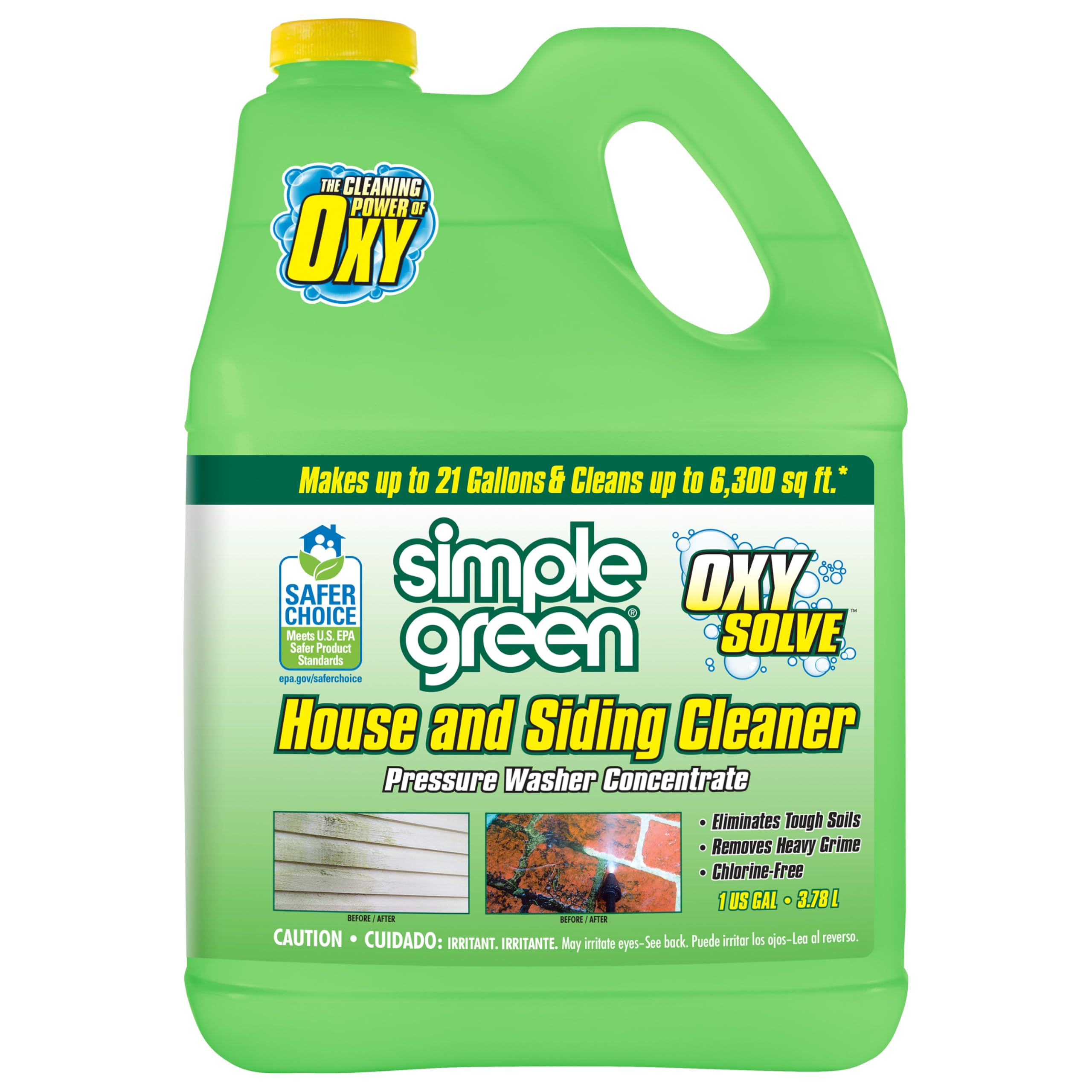
Simple Green’s Oxy Solve uses hydrogen peroxide (a chemical that breaks down into water and oxygen) to clean, and the label says it is orally non-toxic.
Simple Green’s Oxy Solve uses hydrogen peroxide (a chemical that breaks down into water and oxygen) to clean, which makes it orally non-toxic according to the label. It claims to cover up to 6,400 square feet from a single one-gallon jug, which is the highest square-footage claim in this guide. That makes it a strong candidate for a large two-story home without needing a second bottle.
Shoppers say mixed results on tougher stains. One customer observed it was “OK on normal vinyl siding grime but failed on hummingbird feeder residue and shed mold, requiring high pressure.” Another mentioned it was “environmentally friendly, pet friendly, no streaks” and worked perfectly with light scrubbing. A third reviewer was disappointed, saying it showed “no noticeable difference from plain water” when used with a pressure washer.
At 9.27 pounds, the jug is similar in heft to the AL-NEW two-pack, but the 6,400-square-foot yield means it stretches further on mild grime. For a house with light soot, pollen, and road dust, this is a gentle, effective choice — just understand it is not for the caked-on growth that the Zep handles.
Gentle touch: It is the only pick labeled orally non-toxic, using peroxide instead of bleach — ideal if you have pets, kids, or sensitive landscaping around the house.
Reality check: Buyers report it fails on stubborn organic stains (hummingbird feeder residue, shed mold) unless you use high pressure or scrubbing, and one reviewer saw no difference from plain water.
Choose this for: Routine siding cleaning where the grime is mostly dust, pollen, and light mold, and you want the safest possible formula for your yard.
Pass on it if: Your siding has heavy, set-in organic growth from feeders, bird droppings, or deep mold colonies.
5. Rust-Oleum Jomax 308764 Spray Once, 1 gallon

Dilute it 1:5 (one part cleaner to five parts water), spray it on with a pump-up garden sprayer, and walk away — no scrubbing, no rinsing.
Jomax works differently than most of the cleaners here. You dilute it 1:5 (one part cleaner to five parts water), spray it on with a pump-up garden sprayer, and then walk away — no scrubbing and no rinsing required. The bleach-free formula interacts with natural weather conditions over time to break down stains. According to the data, results appear in 1-2 days and the protection lasts a full season.
At just 3.8 pounds per gallon, this is the lightest product in the guide — while the AL-NEW two-pack weighs 9.35 pounds. It makes up to 5 gallons of cleaning solution and covers up to 1,500 square feet. One long-time buyer reported using it for years on manufactured homes in different states, calling it a “great” product. The catch? You still may have to scrub some residue off, as one user highlighted: “Good cleaner for siding but we still had to scrub to get residue off.”
This is a good option if you want to avoid the pressure washer entirely and let the weather do the work — but for heavy buildup, plan on a follow-up scrub.
Hands-Off Approach
- No scrubbing or rinsing needed — spray it on and let rain and sun activate the cleaner over 1-2 days
- Bleach-free formula protects painted surfaces and landscaping
Coverage Limit
- Covers only up to 1,500 sq. ft. per gallon — you may need multiple bottles for a larger house
- Residue may still require light scrubbing for a fully clean finish
Best for: A lighter cleaning job where you want to spray once and walk away, and your siding has only surface-level mold and mildew.
Not for: Heavy, caked-on algae or large houses over 1,500 square feet where you would need multiple gallons.
6. W M BARR FG581 128OZ Siding/House Wash

This EPA-registered concentrate at 5.7 pounds is compact on the shelf but one buyer paired it with a gas power washer for a full-side cleanup.
W M BARR’s 128-ounce concentrate is an EPA-registered formula, which means it meets the Environmental Protection Agency’s standards for antimicrobial efficacy. You dilute it 5:1 (five parts water to one part cleaner) and apply with a pump sprayer or a pressure washer’s detergent tube. The bottle measures 6.16 x 6.16 x 11.82 inches, making it more compact than the Zep jug but delivering a similar volume of concentrated power.
One buyer gave a detailed account: “I used this with my gas power washer on my vinyl siding. I used the detergent tube directly in the product to spray it on then after 10 minutes rinsed it off with the yellow tip. There was a lot of green on the back of the house and this took it off completely.” A second reviewer noted that the bleach-like base is effective but warned against using laundry bleach, which can damage window seals and void warranties.
At 5.7 pounds, it is heavier than the Jomax but lighter than the Zep. For a budget-conscious buyer who wants an EPA-approved cleaner that cuts through green growth, this is the value play — especially compared to the Renu’s premium price point.
EPA muscle: It is the only product here with explicit EPA registration, and at 5.7 pounds it is compact enough to store easily on a garage shelf.
Bleach-adjacent: Owners mention it has a bleach-like base — effective on green mold but something to keep away from painted surfaces and lawn.
Grab it for: A straightforward heavy-cleaning job where you want a compact, EPA-registered concentrate that works fast with a pressure washer.
Think twice if: You have sensitive plants near the house or painted window frames that could be damaged by a chlorine-based solution.
Understanding the Specs
Dilution Ratio
This tells you how much water to mix with the concentrate — shown as a simple ratio like 5:1 (five parts water, one part cleaner). A lower number on the left (like 3:1) means a stronger mix that may strip tougher grime but uses product faster. A higher number (like 10:1) is more economical but may need a second pass on heavy growth. Always follow the label ratio for the specific stain type you are tackling.
Coverage Area
Listed in square feet, this is the total siding area a single bottle or a single mixed batch can treat. A 6,400-sq-ft claim means one jug is enough even for a large two-story home. For a smaller house, a 1,500-sq-ft product might be sufficient. Always measure your house’s total square footage of siding (not just the footprint) before buying multiple bottles.
FAQ
Can I use a cleaner for pressure washing vinyl siding with a standard garden hose?
How long should I leave the cleaner on the siding before rinsing?
Will a bleach-free cleaner remove black mold and mildew from vinyl siding?
What is the difference between a concentrate and a ready-to-use spray for siding?
How do I prevent streaks when cleaning vinyl siding?
Will these cleaners damage my plants and grass?
How much cleaner do I need for a 2,500 square foot house?
Can I mix different brands of siding cleaner together to make a stronger solution?
Final Thoughts: The Verdict
The Zep House and Siding Pressure Wash Cleaner Concentrate is the best cleaner for pressure washing vinyl siding for most people because its 20-gallon yield per jug and construction-grade formula tackle thick algae on multiple surfaces without needing a second bottle. If you want a no-mix, quick application that is safe for pets and plants, grab the AL-NEW Outdoor Cleaner Hose End Sprayer. And the Rust-Oleum Jomax Spray Once is the right pick when you want to spray and walk away, letting rain and sun do the work over a couple of days.
How We Picked
We do not accept paid placement. Every pick is matched to a real buyer and a real use-case; we do not hands-on test units.
Sources & Methodology
Specifications: manufacturer listings and product documentation. Review insights: verified customer reviews, as of July 2026. Pricing: not shown on this page (it changes often); check the current price via the retailer link.
As an Amazon Associate, WellFizz earns from qualifying purchases. This does not affect which products we feature.
Related Guides

Mo Maruf
I created WellFizz to bridge the gap between vague wellness advice and actionable solutions. My mission is simple: to decode the research and give you practical tools you can actually use.
Beyond the data, I am a passionate traveler. I believe that stepping away from the screen to explore new environments is essential for mental clarity and physical vitality.