Our readers keep the lights on and my smoothie glass nicely filled. As an Amazon Associate, I earn from qualifying purchases.
One wrong spray on painted cabinets can dull the finish, strip the paint, or leave a sticky film that attracts more dust. The difference between a cabinet that looks years older and one that maintains its showroom clean lies entirely in the cleaner you choose. Painted surfaces demand a formula that removes grease without softening the paint layer — a balance that commodity all-purpose sprays routinely fail to deliver.
I’m Mohammad Maruf — the founder and writer behind WellFizz. After analyzing the chemical profiles, residue behavior, and real-user feedback across dozens of formulas designed for finished wood and painted surfaces, I’ve assembled the specific cleaners that protect your cabinet paint while actually cutting through kitchen grease.
In this guide, I break down which plant-based sprays, wax blends, and polymer restorers deliver streak-free, paint-safe results. This is the definitive resource for finding the best cleaner for painted cabinets.
How To Choose The Best Cleaner For Painted Cabinets
Painted cabinets require a cleaner that removes grease without dissolving the paint layer. The three most critical factors are formula pH, residue behavior, and the presence or absence of abrasive waxes.
pH Balance: Neutral Is Non-Negotiable
Painted surfaces, especially latex and acrylic-based paints, are vulnerable to alkaline or acidic cleaners that can soften the binder. A pH-neutral formula (around 7) cleans dirt and grease without chemically compromising the paint. Avoid degreasers with high caustic content or vinegar-heavy solutions that etch the topcoat over repeated use.
Residue Profile: Shine Without Stickiness
Many wax-based polishes leave a film that oil paints or lacquers can trap, leading to a tacky feel that collects dust. For painted cabinets, you want a cleaner that evaporates cleanly or absorbs into the existing finish. Residue-free sprays allow for consistent layering if you later apply a dedicated sealer or restorer.
Application Consistency: Spray vs. Wipe-On
Spray formulas are convenient for weekly maintenance, while thicker creams or wax sprays provide deeper conditioning for cabinets that see heavy grease exposure near the stove. If your cabinets show light scratches or fading, a polymer-based restorer can fill micro-abrasions without masking the original paint color.
Quick Comparison
On smaller screens, swipe sideways to see the full table.
| Model | Category | Best For | Key Spec | Amazon |
|---|---|---|---|---|
| Rejuvenate Cabinet and Furniture Restorer & Cleaner | Polymer Restorer | Scratch concealment & long-term protection | 16 oz restorer + 24 oz cleaner | Amazon |
| The Crown Choice Natural Wall Cleaner | Natural Spray | Streak-free grease cutting on painted wood | 24 oz spray | Amazon |
| Goddard’s Cabinet & Wood Wax Spray | Wax + Lemon Oil | Conditioning dry wood while cleaning | 23 oz spray | Amazon |
| Aunt Fannie’s All Purpose Wood Spray Cleaner | Plant-Based No-Wax | Hypoallergenic daily cleaning | 16.9 oz bottle | Amazon |
| Mrs. Meyer’s Multi-Surface Everyday Cleaner | Essential Oil Spray | Gentle multi-surface maintenance | 16 oz x 3 pack | Amazon |
In‑Depth Reviews
1. Rejuvenate Cabinet and Furniture Restorer & Cleaner

The Rejuvenate system combines a 24 oz pH-balanced cleaner with a 16 oz polymer-based restorer that fills scratches and seals the finish against new damage. Users consistently report that it removes years of accumulated wax and dirt in one pass, then restores an even, factory-like sheen without altering the original paint color. The UV barrier is a practical bonus for sun-exposed cabinet faces near windows.
What separates this from standard polishes is the high-performance polymer that bonds to the existing topcoat rather than sitting on top of it. This means the shine lasts up to three months with a single wipe-on application, and subsequent cleaning sessions don’t strip the protection. The fresh lemon scent is mild and dissipates quickly — no chemical hangover in the kitchen.
The cleaner component is powerful enough to cut through stovetop grease and old wax buildup, preparing the surface so the restorer adheres properly. A little goes a long way: users report using a small amount to treat an entire kitchen’s worth of cabinets. The included mitt makes application even easier.
Why it’s great
- Polymer formula fills scratches without altering color
- Protective barrier lasts months, not days
- Includes dedicated cleaner plus restorer in one kit
Good to know
- Restorer is a two-step process, not a single spray
- Premium price point for the combo kit
2. The Crown Choice Natural Wall Cleaner
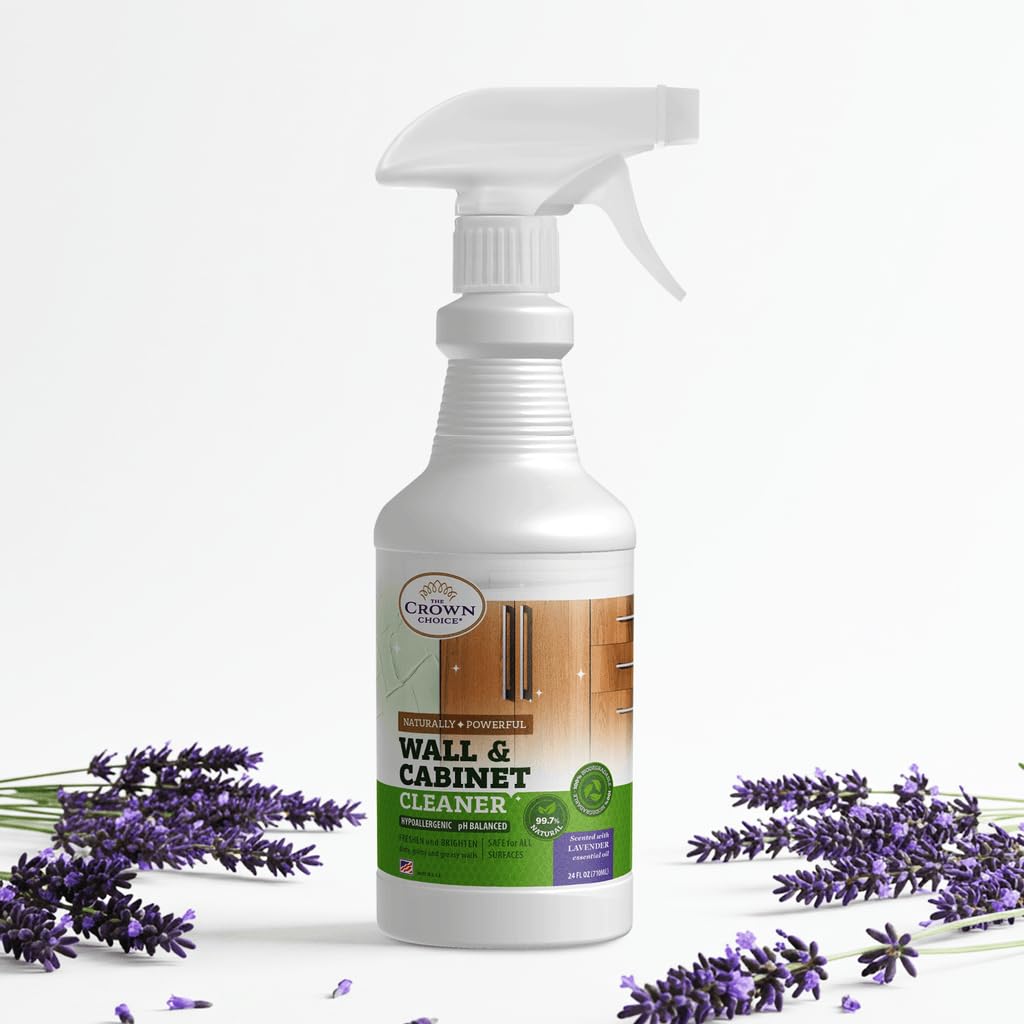
The Crown Choice spray is formulated specifically for painted surfaces — walls, baseboards, and cabinets alike. It cuts through everyday dirt, fingerprints, and cooking grease without introducing harsh chemical fumes. Users with sensitivities report that the lavender essential oil scent is light and pleasant, unlike the synthetic floral bombs found in many mass-market sprays.
The recommended method is to spray, let it sit 15 to 30 seconds, then wipe with a microfiber cloth. This dwell time allows the natural surfactants to emulsify grease before you wipe, producing a streak-free finish that doesn’t require rinsing. For textured painted cabinets, a soft brush can be used without risk of scratching the paint.
Multiple reviews highlight how well this cleaner preps painted cabinets before repainting, suggesting it removes old wax and residue that cause new paint to peel. The 24 oz bottle covers a significant area per spray, so a single container handles multiple deep-cleaning sessions for the average kitchen.
Why it’s great
- Designed for painted surfaces, not generic wood
- Short dwell time eliminates scrubbing
- Safe for use before repainting projects
Good to know
- Lavender scent may not appeal to everyone
- Higher per-ounce cost than basic sprays
3. Goddard’s Cabinet & Wood Wax Spray

Goddard’s brings over 140 years of wood care heritage into a single aerosol spray that cleans, shines, and protects in one pass. The beeswax and lemon oil formula is ideal for painted cabinets that have a worn or dry appearance — it restores natural moisture without altering the stain or paint color. Users report that it revives antique and older cabinets better than any store-bought polish they’ve tried.
The application requires holding the bottle upright 6 inches from the surface, spraying, then wiping along the grain with a soft cloth. No buffing is needed afterward. The wax component provides a subtle protective layer against future stains and sun damage, and the lemon oil leaves a light, authentic citrus scent — not a fake lemon-cleaner smell.
Where Goddard’s excels is on painted cabinets that see moderate grease but are starting to look “thirsty.” The spray absorbs into dry wood and conditioned surfaces, brightening the color without leaving an oily surface film. Multiple reviews note that dust is easier to wipe away after treatment, and the results last several weeks before reapplication is needed.
Why it’s great
- Beeswax provides conditioning without greasy residue
- One-step clean, shine, and protect process
- Excellent for reviving older painted cabinets
Good to know
- Sprayer nozzle can spurt rather than mist
- Over-application on high-gloss paint may require extra buffing
4. Aunt Fannie’s All Purpose Wood Spray Cleaner
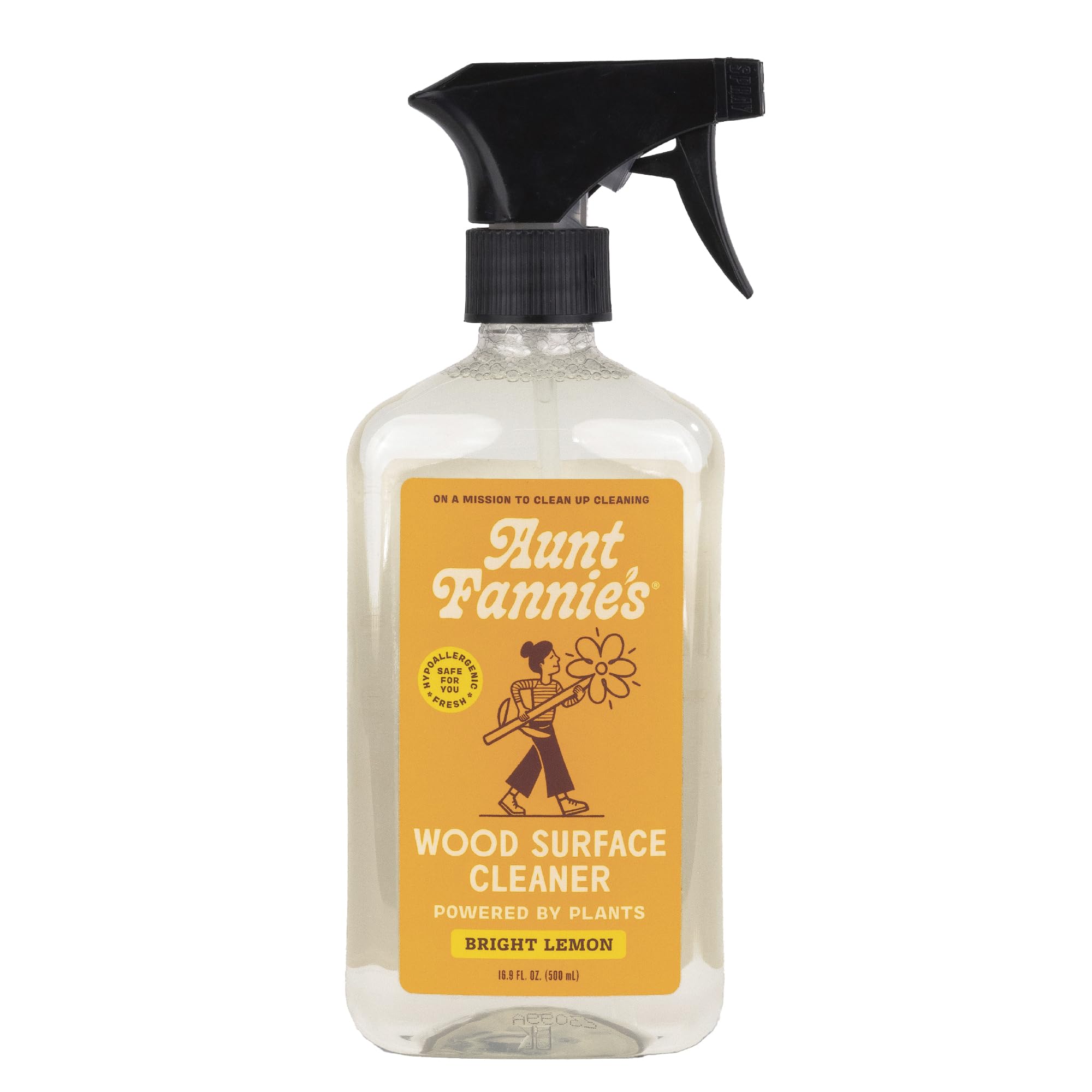
Aunt Fannie’s no-wax formula is engineered specifically for wood surfaces and painted cabinetry, using plant-based surfactants that break down grease, food residue, and everyday grime without harsh chemicals. The EWG A rating means every ingredient is screened for safety, making it one of the few cleaners you can use around kids and pets without worrying about inhalation or skin contact.
The lemon scent is natural and mild — users with chemical sensitivities report it doesn’t trigger sinus irritation like conventional wood polishes. The spray-and-wipe action leaves an ultra-clean, non-sticky finish that doesn’t require rinsing. This is critical for painted cabinets, where leftover residue can yellow the paint over time.
Users with textured or grooved cabinet doors report that the formula penetrates crevices to remove trapped dirt without scrubbing. The Leaping Bunny and vegan certifications add confidence for households that prioritize ethical sourcing. While the 16.9 oz bottle is smaller than some competitors, the concentrated efficiency means each spray covers more surface area than most diluted liquids.
Why it’s great
- Hypoallergenic and safe for sensitive households
- No-wax formula prevents yellowing on white paint
- EWG A-rated with full ingredient transparency
Good to know
- Smaller bottle requires more frequent repurchase for heavy use
- Not designed to fill scratches or condition dry wood
5. Mrs. Meyer’s Multi-Surface Everyday Cleaner
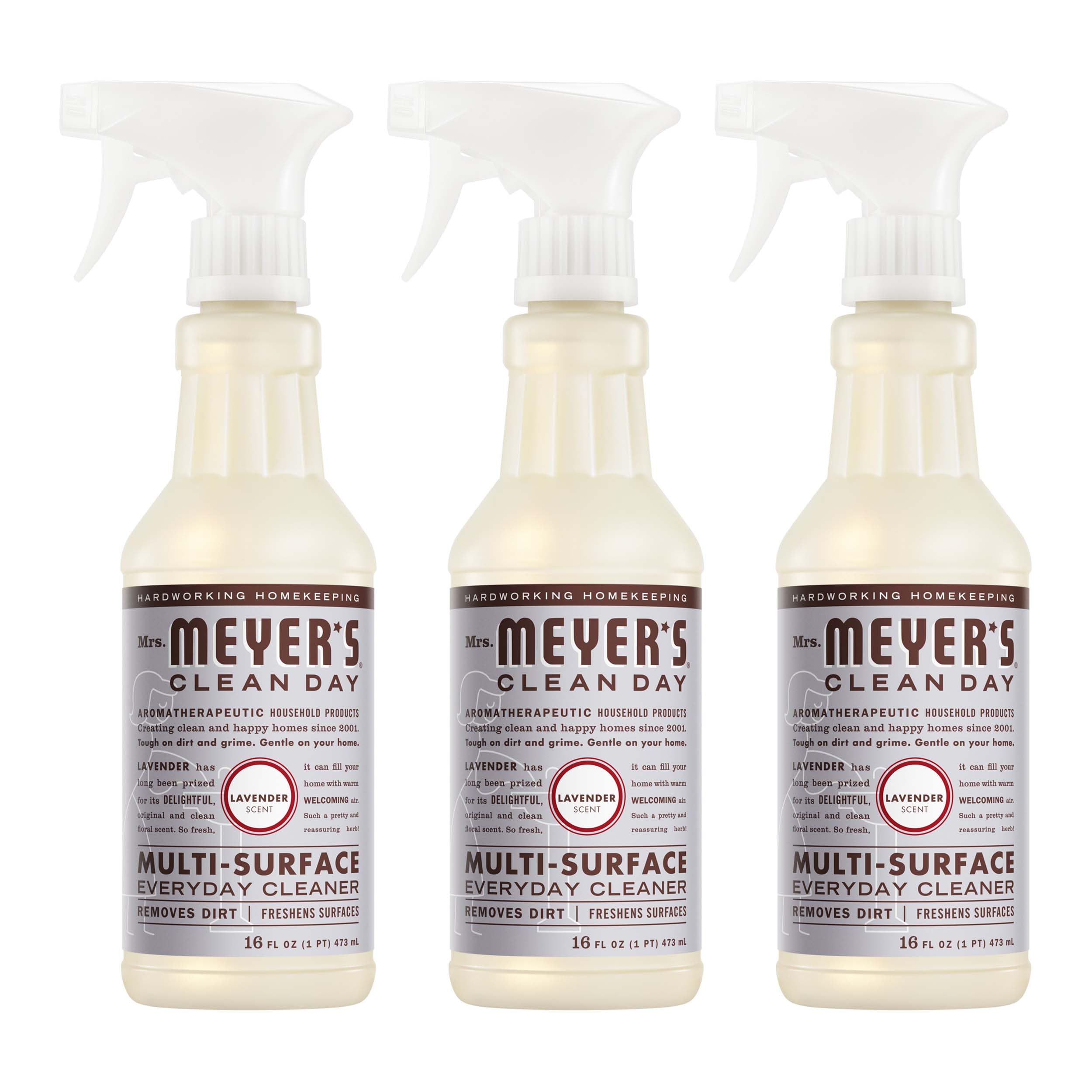
Mrs. Meyer’s has built a reputation around plant-derived ingredients that clean without parabens, phthalates, or artificial colors. The lavender scent is garden-fresh, blending orange peel, cedar, and rose notes that make kitchen cleaning feel less like a chore. The formula is designed for nonporous surfaces, which includes painted cabinets with sealed finishes.
The spray handles light to moderate kitchen grease well — users report it removes fingerprints and food splashes without streaking. It’s not a heavy-duty degreaser, so baked-on grease near the stovetop may require a second pass or pre-soaking with a damp cloth. However, for daily maintenance across the rest of the kitchen, it’s one of the gentlest options available.
The 3-pack provides excellent value for households that also clean countertops, stainless steel, and bathroom surfaces. Several users note that switching to Mrs. Meyer’s eliminated the sticky residue left by their previous cleaner, which improved the appearance of their painted cabinets within a week. The concentrated version is also available for refilling the spray bottles.
Why it’s great
- 3-pack offers cost-effective multi-surface coverage
- No harsh chemical odor — pleasant lavender scent
- Streak-free on nonporous painted finishes
Good to know
- Not formulated for heavy grease removal
- Large bottle design can be awkward to handle
FAQ
Can I use a general all-purpose cleaner on painted cabinets?
Will a wax polish damage the paint on my cabinets?
Final Thoughts: The Verdict
For most users, the best cleaner for painted cabinets winner is the Rejuvenate Cabinet and Furniture Restorer & Cleaner because it combines a powerful grease-cutting cleaner with a polymer restorer that fills scratches and protects the finish for months. If you want a plant-based, hypoallergenic daily spray, grab the Aunt Fannie’s All Purpose Wood Spray Cleaner. And for conditioning older, dry painted cabinets, nothing beats the Goddard’s Cabinet & Wood Wax Spray.

Mo Maruf
I created WellFizz to bridge the gap between vague wellness advice and actionable solutions. My mission is simple: to decode the research and give you practical tools you can actually use.
Beyond the data, I am a passionate traveler. I believe that stepping away from the screen to explore new environments is essential for mental clarity and physical vitality.