Our readers keep the lights on and my smoothie glass nicely filled. As an Amazon Associate, I earn from qualifying purchases.
Specs are compiled from manufacturer listings and verified buyer reviews and can change over time — please confirm the key details on the product page before buying.
A greasy grill spill on your concrete patio, dried cement splatters on your truck bed, or a nasty oil stain in the garage — each needs a different chemistry. The wrong choice means scrubbing for hours or damaging the surface. This guide cuts through the chemical confusion to match the exact formula to your mess, from heavy degreasing to gentle cement removal.
I’m Mohammad Maruf — the founder and writer behind WellFizz. This guide is built by comparing the manufacturers’ published specifications and the patterns across verified customer reviews, so you get each pick’s real strengths and trade-offs instead of marketing spin.
You have dried concrete on iron railings or a fresh oil stain on your driveway, and you need a cleaner that actually works. This breakdown of the best cleaner for cement gives you a clear, honest verdict on what to buy before you spend a dime.
Our Picks at a Glance

How To Choose The Best Cleaner For Cement
Not all cement cleaners are the same. The wrong one means wasted money and unnecessary elbow grease. Focus on what you are actually cleaning off — the chemistry you need changes completely depending on the mess.
Match the Formula to the Stain Type
The biggest mistake is grabbing a general-purpose degreaser for dried concrete splatters, or vice versa. Oil and grease stains need a degreaser (a concentrated soap that breaks down petroleum-based grime). Dried cement, mortar, and grout need a dissolver — an acid or an acid alternative that chemically breaks the cement’s bond. Toss a dissolver at a grease stain and it will do nothing.
Consider Your Surface and Safety
If you are cleaning a painted garage floor, a delicate car finish, or an area near plants, a non-toxic or biodegradable option matters. Muriatic acid is powerful but dangerous — it burns skin and emits harsh fumes. Newer acid alternatives are safer for the user and the environment, though they can be slower. Construction-grade degreasers are tough on stains but heavy — the heaviest pick here weighs 37 pounds, more than a small child.
Check the Time Factor
Some removers work in minutes, others take weeks. A dissolver for cement splatters can show results in 30 minutes or less with just a spray and rinse. A bioremediation powder that eats oil stains can take 2 to 4 weeks. There is no right or wrong — it is about matching your patience and the urgency of the job.
Quick Comparison
| Model | Best For | Weight | Volume | Formula Type | Amazon |
|---|---|---|---|---|---|
| Zep Driveway & Concrete Degreaser★ Best Overall | Heavy grease & oil stains | 37.05 Pounds | 1 Gallon (Case of 4) | Construction-Grade Degreaser | Amazon |
| Akona Concrete & Masonry DissolverCement Dissolver Pick | Dried concrete on iron/glass | 28 Ounces | 28 Ounces | Acid Alternative Dissolver | Amazon |
| Legion Chemicals Spray RemoverFast-Spray Value | Quick splatter removal on vehicles | 2.24 Pounds | 1 Quart | Non-Corrosive Dissolver | Amazon |
| Eco Etch Pro Concrete Cleaner | Efflorescence & surface etching | 9 Pounds | 1 Gallon | Organic Acid Alternative | Amazon |
| Tenon Concrete & Masonry Dissolver | Grout/mortar from tile and tools | 4.15 Kilograms | 1 Gallon | Non-Toxic Dissolver | Amazon |
| ACT Concrete Cleaner Powder | Fresh oil stains with no chemicals | 2.5 Pounds | Bioremediation Powder | Amazon | |
| Crete Away Concrete Remover | Heavy build-up on tools/machinery | 9.34 Pounds | 1 Gallon | Acid-Free Dissolver | Amazon |
| DIY Concrete Remover | Drain clogs from grout/concrete | 10 Pounds | 1 Gallon | Non-Acid Dissolver | Amazon |
In‑Depth Reviews
1. Zep Driveway, Masonry and Concrete Cleaner and Degreaser Concentrate – 1 Gallon (Case of 4)
Our pick — over 4★ from 550+ verified ratings; the strongest balance of quality and price.
The construction-grade heavyweight that melts greasy grill spills off concrete like a pro.
When the stain is oil, tire marks, or years of garage grime, you need a degreaser with serious muscle. This Zep concentrate is what professionals reach for — a case of four gallons weighing 37.05 pounds. It is designed for driveways, patios, brick, and asphalt, making it a versatile workhorse for large exterior surfaces.
You apply it with a mop or pump sprayer, scrub, and rinse — but the manufacturer warns not to let it sit more than 10 minutes. For older or larger stains, a pre-treat step makes the deep clean more effective. The crowd favorite across 500+ ratings is the sheer cleaning power on oil-based stains, though some owners wanted even more “dirt removing power” on heavier messes. It comes in a case of four gallons, so you have plenty of concentrate for multiple jobs or a very large driveway.
What Wins People Over
- Truly construction-grade — the brute force option for grease and oil, backed by consistent results from owners.
- Massive 37-pound case of four gallons means you do not run out mid-job.
- Works on a wide range of surfaces: concrete, brick, asphalt, and pavers.
What to Keep in Mind
- Effectiveness gets mixed reviews — some owners found it underwhelming for very old or thick stains.
- Not made for dried cement or mortar removal; this is a degreaser, not a dissolver.
- At 37 pounds, storing and pouring this case requires real effort.
Reach for this if: you have greasy oil stains on a driveway, patio, or garage floor and want professional-grade concentrate that makes short work of them.
Think twice if: your problem is dried concrete splatters or you only need a small amount for a single quick job — this is a heavy-case investment for big cleaning projects only.
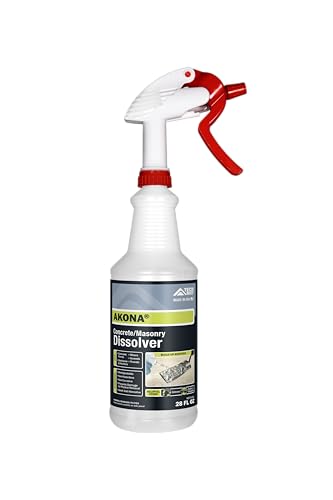
2. Concrete & Masonry Dissolver, 28 Ounces, Akona
A sprayable dissolver that chews through 2-year-old concrete drips without chiseling or acid.
This 28-ounce bottle is for the moment you find dried cement on something you want to keep — iron railings, glass, brick, or tools. It is an acid alternative, so it skips the dangerous fumes and burns of muriatic acid (a strong acid that can burn skin and damage surfaces) but still dissolves concrete, mortar, and grout. Buyers report one owner needed to “remove 2 year old concrete from iron railing” with drips a quarter-inch thick, and after wrapping paper towels soaked in this stuff, “it worked like a charm.” Another used a plastic scraper and finished the job in about ten minutes without any damage to the auto finish underneath.
The manufacturer says results appear in 30 minutes, and the formula is sprayable for easy application. It is non-toxic and safe on a wide range of surfaces including brick, stone, and glass. The main trade-off is consistency — some owners found it didn’t work well for their specific cement type or thickness. A few also flagged poor packaging leading to leaks in transit, so inspect on arrival.
Its Biggest Strengths
- Works on incredibly old, thick concrete deposits — up to two years old and a quarter-inch thick.
- No dangerous acids means safer handling on painted surfaces and around the home.
- Sprayable formula makes application simple and targeted.
The Honest Limits
- Effectiveness can be hit-or-miss — a number of owners mention it didn’t remove cement at all, even following instructions.
- Packaging has been reported as poor, with bottles arriving damaged.
- Requires patience and sometimes a soak-and-wrap method for heavy deposits.
Best for this scenario: you have dried cement, grout, or mortar on metal, glass, or painted surfaces and want a safer chemical alternative to acid.
Not your best bet if: you need guaranteed one-shot removal or are working with polymer-modified concrete, which this may not affect.
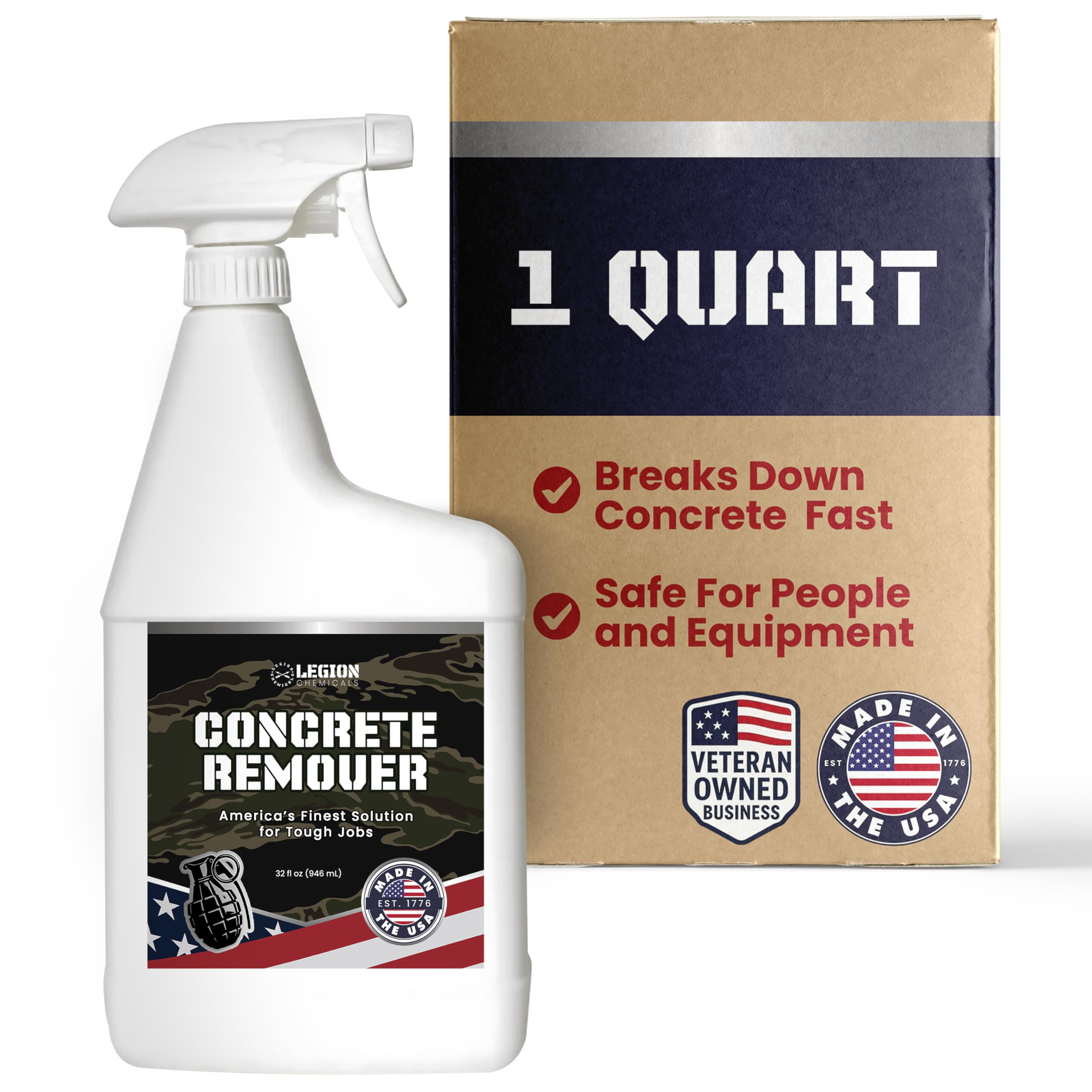
3. 1-Quart Spray Heavy Concrete Remover – Dried Concrete & Cement Dissolver, Legion Chemicals
A 2.24-pound spray that turns concrete splatters into mud in under a minute with no acid burns.
This is the lightest dissolver in the lineup at just 2.24 pounds, and it is designed for speed. Customers note it “removed dried concrete splatters from truck bed and plastic rail in under 1 minute with light spray and toothbrush.” The Gen2 formula is marketed as non-corrosive and biodegradable, so it won’t damage paint, trim, or rubber. A professional detailer used it on mirrors, rims, fenders, and suspension with a simple mist-and-dwell approach, calling it safer than a plastic razor blade. The manufacturer says it is battle-tested in over 200 ready-mix yards across the USA.
The biggest praise is effectiveness — it is the top positive aspect by a large margin. Owners love that it works fast without elbow grease. But it is not a universal cure: a few owners found it completely ineffective on concrete splatter on stamped concrete and metal, even after two applications. The manufacturer also notes it does not work on polymer-based concrete, so check what your mess is made of before relying on this.
Standout Strengths
- Remarkably fast — dissolves splatters in under a minute with minimal effort.
- Safe on vehicle paint, trim, and plastics, with no dangerous fumes.
- Lightweight quart bottle, easy to store and apply.
Watch For
- Does not work on polymer-modified concrete — check your specific material first.
- Some reviewers point out zero results on thick splatters, even after repeated applications.
- Higher price per ounce compared to gallon-sized alternatives.
Ideal for: quickly removing fresh to moderately dried concrete splatters from cars, trucks, tools, and outdoor surfaces with minimal scrubbing.
Skip it for: large areas of heavy build-up or any cement that is polymer-modified — this formula simply won’t touch it.
4. Eco Etch Pro Concrete Cleaner & Etcher Dissolver – 1 Gallon
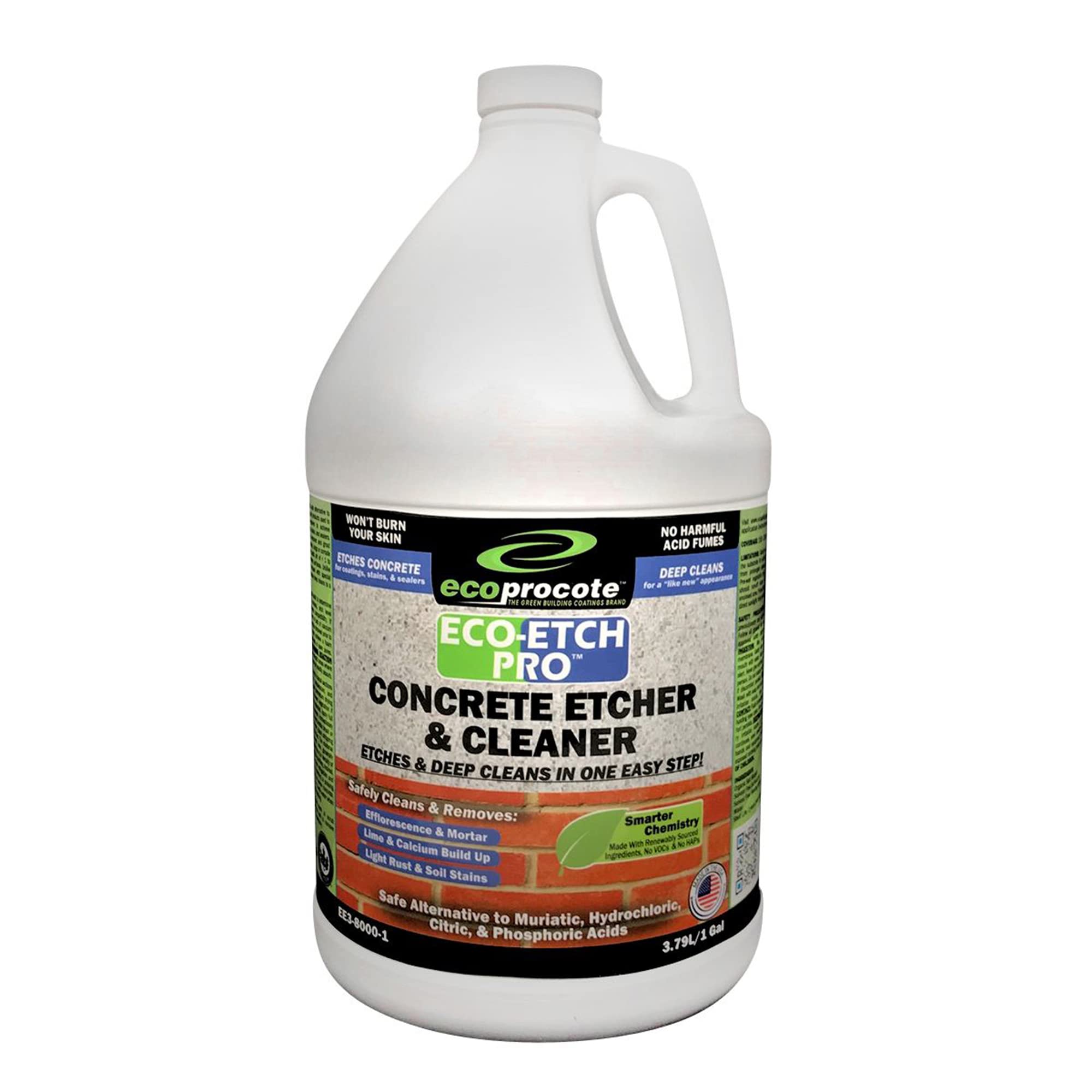
A muriatic acid alternative that etches concrete and removes efflorescence without burning skin or lungs.
If your concrete has white powdery efflorescence (calcium deposits), rust stains, or you need to etch the surface before staining, this gallon jug does the job without the danger of traditional acid. It uses an organic acid formula that is biodegradable and safe around vegetation — it neutralizes on contact with water. Shoppers say it works well on unsealed concrete driveways with efflorescence, foaming up as it reacts with mineral deposits. It is also strong enough to etch concrete for coating adhesion, with the maker claiming it has twice the organic acid content of similar products.
The flip side is that it does not work on sealed efflorescence — the sealer must be removed first. A few owners also report inconsistent results between batches, with one bottle working great and another leaving white residue. It is non-toxic and emits no harsh fumes, making it a solid choice for indoor use or areas where safety is a priority.
Eco Advantages
- Non-toxic, biodegradable, and safe for plants and pets — no hazardous runoff.
- Effectively removes efflorescence and etches concrete for paint or stain prep.
- No harsh fumes or skin burns like muriatic acid.
Trade-Offs
- Ineffective on sealed efflorescence — the sealer must be stripped first.
- Inconsistent results reported between batches by some buyers.
- Slower than acid; requires multiple applications for stubborn deposits.
Choose this for: removing efflorescence, rust, and light mineral deposits from concrete, brick, or patio surfaces with no toxic chemicals.
Pass on this if: your concrete is sealed, or you need a fast-acting dissolver for thick cement splatters — this is more of a surface prep and light-cleaning tool.
5. Tenon Concrete & Masonry Dissolver, 1 Gallon
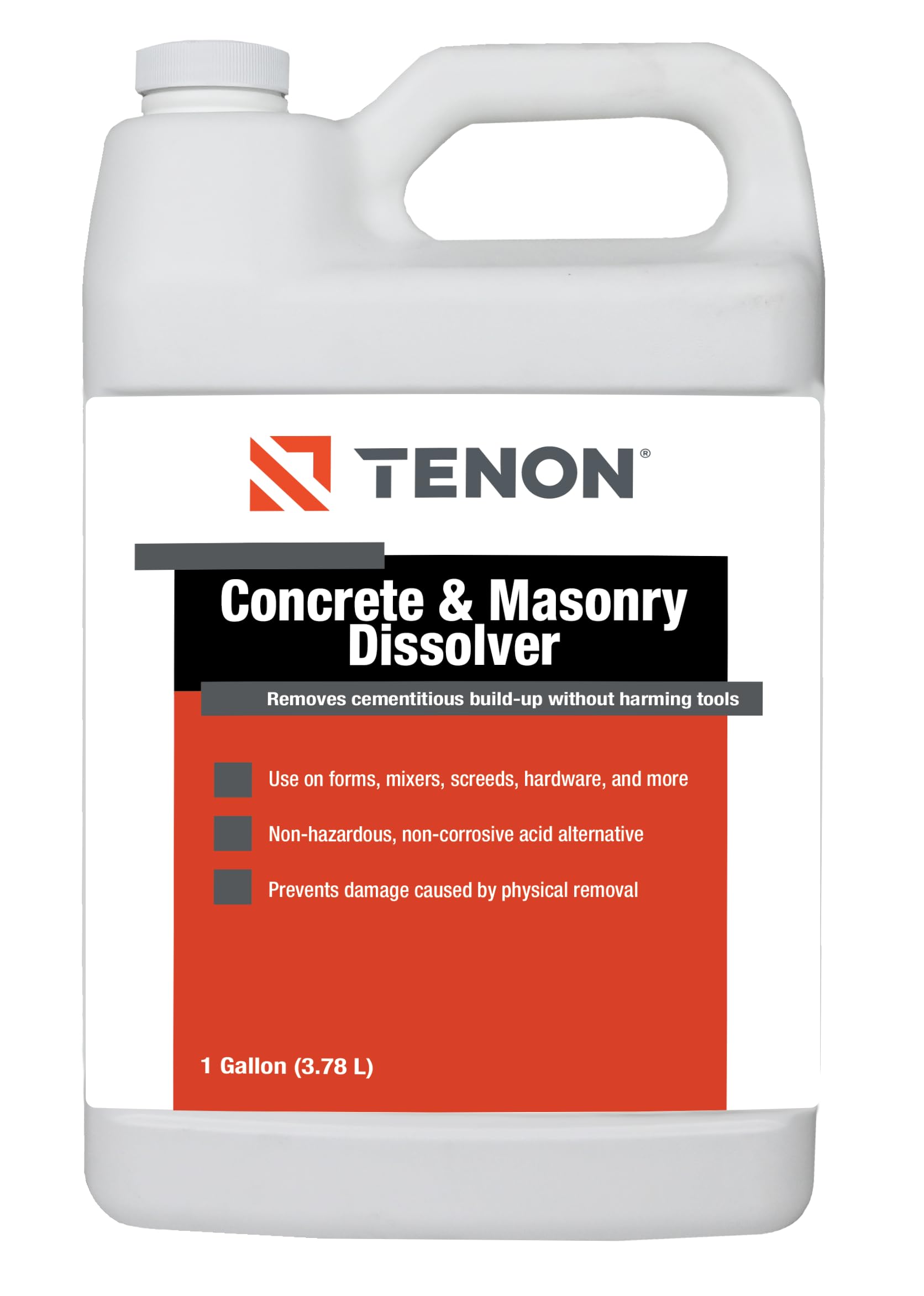
A non-acid gallon that dissolves mortar and grout left for years on tile and tools.
This is a ready-to-use liquid dissolver aimed at mortar, grout, and concrete splatters on tools, forms, and hardware. It contains no harmful acids, is non-corrosive, and doesn’t fume. Buyers report it “removed mortar and grout from tile that had been left for 4 year” with simple application — just follow the directions and the residue wipes away with vinegar and water. Another reviewer used it on a plywood subfloor to soften old mortar, which then came off in large chalky pieces. The maker says it begins working immediately, with results in 30 minutes or less.
Effectiveness is the top positive aspect here, with many owners praising its ability on light masonry removal and driveway cleaning. The catch is that removal results are mixed — some owners found it didn’t make stains come off easily, especially on porous surfaces like work boots, where it left a white residue. A few also considered it expensive for the results on smaller jobs.
What It Does Best
- Non-acid formula means safer handling on delicate surfaces and around the home.
- Works on 4-year-old mortar and grout, softening it for easy removal.
- Full gallon gives plenty of volume for multiple tool-cleaning jobs.
Areas to Consider
- Leaves a white residue on some surfaces that requires additional cleaning.
- Mixed results on stubborn stains — may not fully remove deeply set deposits.
- Some owners felt it was not economical for very small touch-ups.
Perfect for: removing mortar and grout residue from tile, tools, and hardware with a safer, non-acid formula.
Not the strongest choice for: heavy concrete splatters on porous surfaces like fabric or unsealed stone, where residue may stick.
6. ACT Concrete Cleaner – Eco-Friendly Dry Powder Oil Stain Remover, 2.5lb
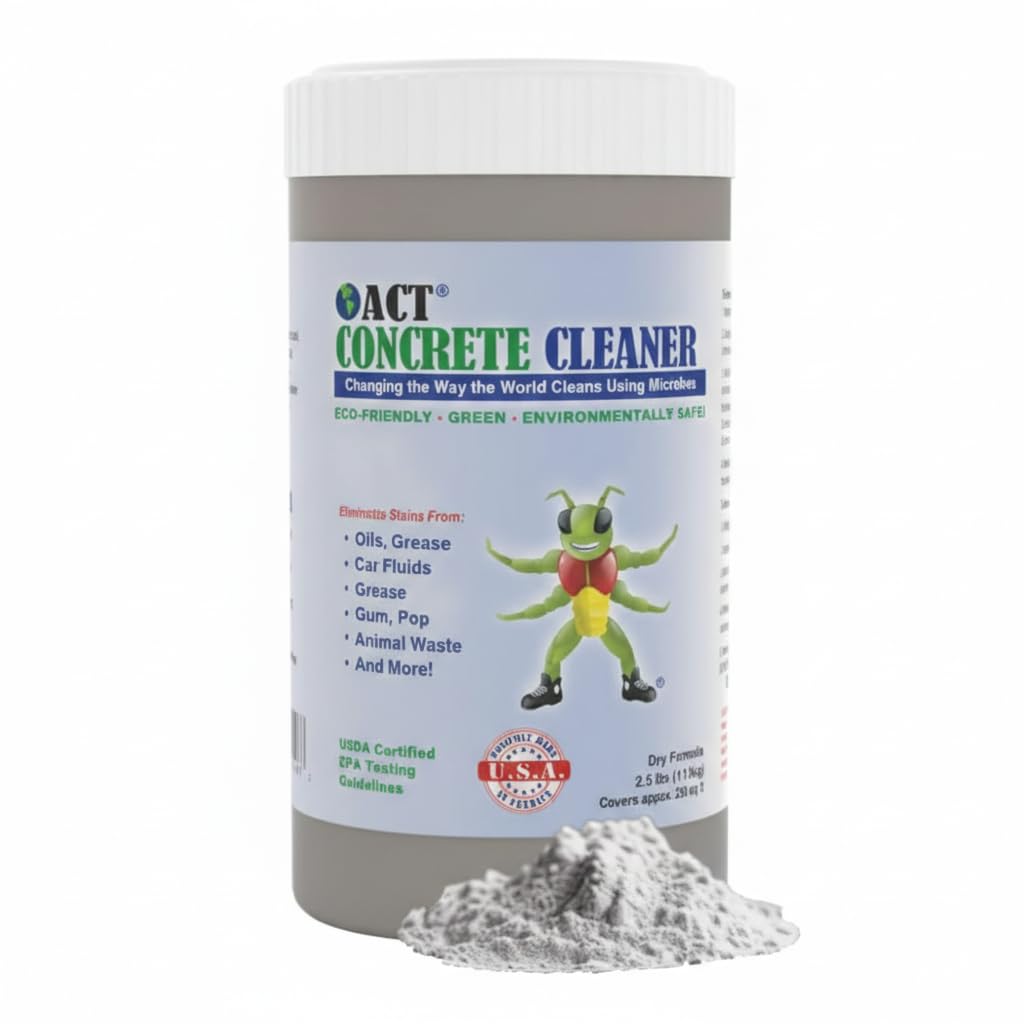
A dry powder that uses microbes to eat oil stains — no scrubbing, no harsh chemicals, just time.
This is the most unique cleaner in the list: a dry powder that uses bioremediation (microbes that naturally break down oil) instead of chemicals. You simply sweep it over the oil stain, mist with water, and wait. The manufacturer says it takes 2 to 4 weeks to completely remove stubborn spills, and the powder covers the stain visually during that time. It is USDA Certified and EPA tested, safe around pets and plants, and works in temperatures from sub-zero to over 200 degrees. Owners who have used it since 2019 swear by it, noting about 90% improvement on fresh oil stains and outperforming professional power washing.
The biggest upside is zero toxic chemicals, no pressure washing, and no dangerous fumes. It works on patios, driveways, garages, and sidewalks. The trade-off is that it is much slower than chemical degreasers and works best on fresh stains — old, heavy oil stains get mixed results. It also leaves a white, chalky residue indoors that requires cleanup, and some owners reported it did nothing on older garage spills even after following directions precisely.
Green Credentials
- Completely non-toxic, pet-safe, and plant-safe — no bleach or harsh chemicals involved.
- Works in extreme temperatures and is HOA approved for visible stain coverage.
- Simple application: sprinkle, mist, and wait — no scrubbing or power washing.
Reality Check
- Takes 2 to 4 weeks for full results — not a quick fix for an immediate need.
- Mixed effectiveness on old, set-in oil stains; best results are on fresh spills.
- Powder is dusty indoors and can leave chalky residue on nearby items.
Go with this if: you want a chemical-free, eco-friendly way to tackle fresh oil stains on your driveway or garage floor and have the patience for a slow biological process.
Avoid it for: urgent stain removal, dried concrete splatters, or heavy old oil spills that need immediate chemical action.
7. Crete Away Concrete Remover & Dissolver – Non Toxic, 1 Gallon
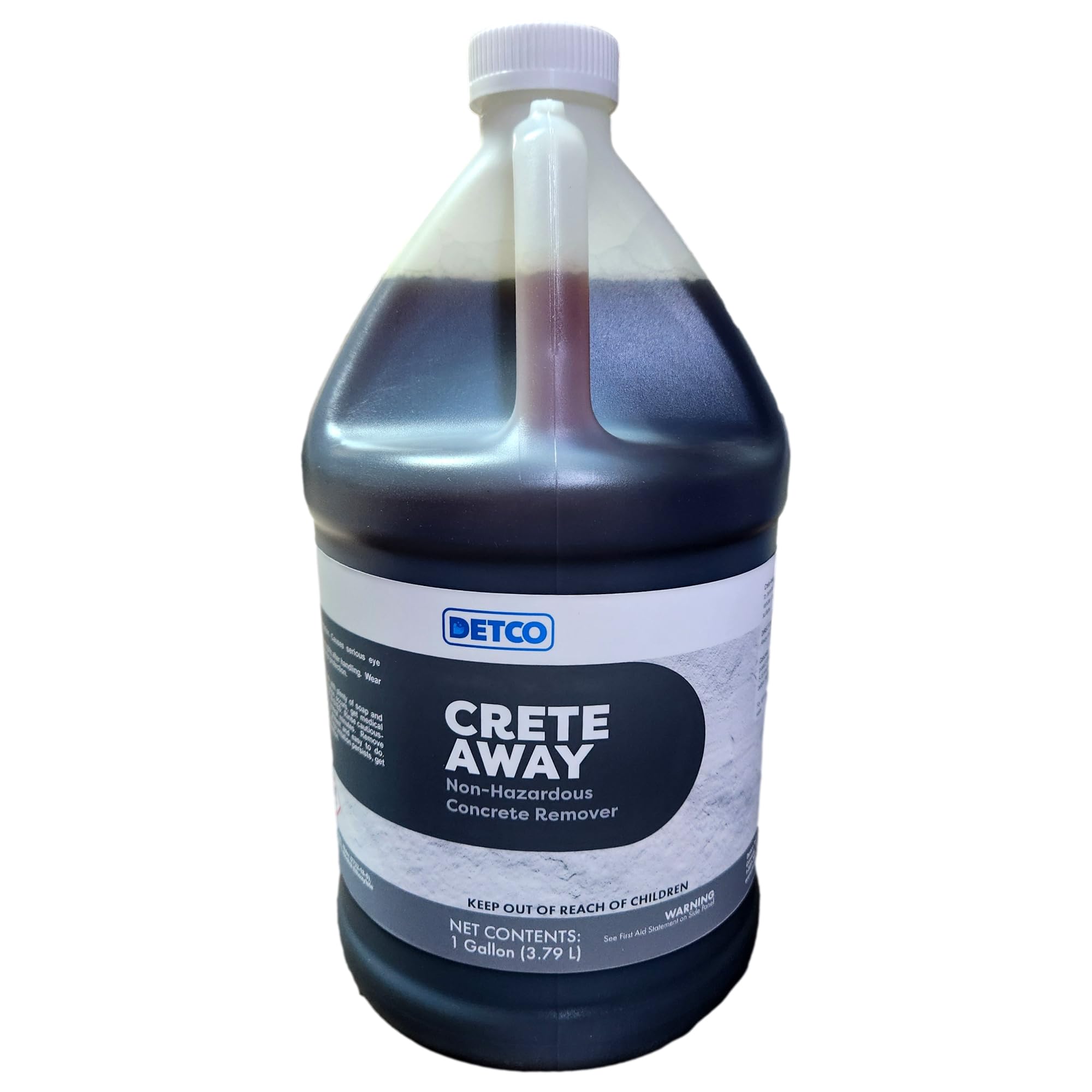
An acid-free gallon that dissolves cured concrete on equipment in 5–15 minutes with no scrubbing.
This dissolver is aimed straight at tools and machinery: mixers, pumps, saws, forms, and screeds. The manufacturer says it breaks down hardened concrete, mortar, and stucco in 5 to 15 minutes, turning it into a rinseable sludge. One owner diluted it 4:1 (four parts water to one part cleaner), sprayed it on cement splatter, let it sit for 5 minutes, then used a 2000psi pressure washer and said it “dissolved cement, removed years of oil, rust, and mold stains.” It is non-corrosive, acid-free, and biodegradable, making it a safer option for high-traffic outdoor environments and enclosed areas.
The catch is significant inconsistency. A number of owners mention it simply did not work on metal doors and siding even after multiple applications, brushing, and pressure washing — the concrete was still there. The manufacturer’s own reviews show a wide spread: some call it “good stuff” while others call it “a waste of our money.” It requires a pressure washer or strong rinse to finish the job, so it is not a spray-and-walk-away product.
What Stands Out
- Fast action on concrete equipment — 5 to 15 minutes dissolves tough build-up.
- No harsh fumes or acid burns, making it safer for enclosed or indoor use.
- Biodegradable and non-flammable, with a wide surface compatibility.
Key Limitations
- Very inconsistent results — some customers note zero removal on concrete splatters.
- Requires a pressure washer or significant rinsing to clear the dissolved residue.
- Not a quick standalone solution; often needs multiple retreatments and scraping.
Ideal for: cleaning concrete tools and machinery with a safer acid alternative when you have the equipment to rinse thoroughly.
Not recommended for: delicate surfaces where you cannot pressure wash, or if you need guaranteed one-shot removal on vertical surfaces.
8. DIY Concrete Remover & Cement Dissolver Heavy-Duty – 1 Gallon

A non-acid dissolver that saved owners thousands by unclogging drains packed with grout and concrete.
This heavy-duty 10-pound gallon is the specialist for a specific misery: concrete and grout clogs in drains. The most dramatic owner story describes dissolving a hardened grout and thinset blockage in a shower drain after 4 days of soaking, saving “thousands” over a plumber’s bill. Another used it to clear an AC drain pipe in just 2 hours. The formula is non-acid and biodegradable — you mix it with warm water, pour it in, and let it work. The manufacturer says results appear in 30 minutes, and it is effective on concrete, mortar, grout, and stucco less than six months old.
The big condition: it does not work on self-leveling polymer-modified cement or polymer-modified binders. That is a critical gotcha — if your drain clog or splatter is from modern polymer-based concrete, this will do nothing. Some owners also report a persistent white film residue on tile that requires additional cleaning. It is the most focused tool in the lineup, not a general-purpose cleaner.
Unique Power
- Can dissolve concrete blockages in drains and pipes, saving hundreds or thousands in plumbing costs.
- Simple mix-and-pour application — no scrubbing required for drain jobs.
- Non-acid and biodegradable for safer indoor use.
Must Know
- Only works on concrete less than six months old — older deposits may not respond.
- Ineffective on polymer-modified cement — check your material first.
- Can leave a white film on tile surfaces that needs additional cleaning.
Get this for: unclogging drains, pipes, and sump pumps where concrete, grout, or mortar has hardened and blocked flow.
skip it if: your concrete or grout is polymer-modified or more than six months old — or if you need a surface cleaner for driveways and patios, as this is a specialty dissolver.
Understanding the Specs
Degreaser vs. Dissolver vs. Bioremediation
These are three completely different tools. A degreaser (like the Zep concentrate) uses soap-like chemicals to break down oil, grease, and tire marks — think of it as super-strength dish soap for concrete. A dissolver (like the Legion or Akona) uses acids or acid-free chemistry to break the chemical bond in dried cement, turning it into a mud you can rinse away. Bioremediation (like the ACT powder) uses live microbes that eat the oil over weeks — no chemicals at all, but no speed either.
Surface Safety and Compatibility
A dissolver strong enough to eat cement can also eat your car’s paint or the sealer on your stamped concrete. Non-acid and biodegradable formulas (like Crete Away or Eco Etch) are safer on painted finishes, aluminum, rubber, and glass, but they are often slower and less potent. If you are cleaning a painted garage floor or the side of your truck, you must use a surface-safe dissolver. If you are cleaning a raw concrete driveway, a construction-grade degreaser or acid-based remover is fine.
FAQ
Can I use a cement dissolver on an oil stain?
How long does a cement cleaner need to sit to work?
Is it safe to use cement cleaner on a painted garage floor?
What does “efflorescence” mean, and which cleaner removes it?
Will these cleaners harm my plants or grass?
Can I use a cement dissolver to unclog a drain?
What if my cement cleaner does not work at all?
Is it cheaper to use a concentrate or a ready-to-use spray?
Final Thoughts: The Verdict
For the majority of shoppers, the cleaner for cement winner is the Zep Driveway and Concrete Degreaser because it is the single best tool for the most common cement mess — oil and grease stains on driveways and patios — with the muscle of a construction-grade concentrate. If you need to remove dried concrete splatters from a vehicle or painted surface, the Legion Chemicals Spray Remover is the fastest and safest pick at just 2.24 pounds. For clearing a grout-clogged drain without an expensive plumber, the DIY Concrete Remover is the specialist that owners say saved them thousands.
How We Picked
We do not accept paid placement. Every pick is matched to a real buyer and a real use-case; we do not hands-on test units.
Sources & Methodology
Specifications: manufacturer listings and product documentation. Review insights: verified customer reviews, as of July 2026. Pricing: not shown on this page (it changes often); check the current price via the retailer link.
As an Amazon Associate, WellFizz earns from qualifying purchases. This does not affect which products we feature.
Related Guides

Mo Maruf
I created WellFizz to bridge the gap between vague wellness advice and actionable solutions. My mission is simple: to decode the research and give you practical tools you can actually use.
Beyond the data, I am a passionate traveler. I believe that stepping away from the screen to explore new environments is essential for mental clarity and physical vitality.