Our readers keep the lights on and my smoothie glass nicely filled. As an Amazon Associate, I earn from qualifying purchases.
Specs are compiled from manufacturer listings and verified buyer reviews and can change over time — please confirm the key details on the product page before buying.
That greasy cooking vapor settles on your cabinets day after day. Over time, the invisible film hardens into a sticky, yellow-brown layer that resists ordinary all-purpose sprays and makes the wood look dull. The right cleaner for cabinets cuts through that film without damaging the finish underneath, saving you from a costly refinishing project.
I’m Mohammad Maruf — the founder and writer behind WellFizz. This guide is built by comparing the manufacturers’ published specifications and the patterns across verified customer reviews, so you get each pick’s real strengths and trade-offs instead of marketing spin.
Are you fighting kitchen grease on oak cabinets or reviving a thrifted dresser? This breakdown of the best cleaner for cabinets points you to the right formula for your wood type and grime level.
Our Picks at a Glance


How To Choose The Best Cleaner For Cabinets
Cabinet cleaners fall into three camps: wax-based conditioners that feed dry wood, daily spray cleaners that lift dust and light smudges, and deep-cleaning oils that dissolve stuck-on grease. Your cabinet’s age and finish determine which type works without causing damage. Picking wrong can strip paint or leave a tacky residue that attracts more dust.
Know Your Cabinet’s Finish First
Sealed, polyurethane-coated cabinets handle most cleaners without issue. Raw or unfinished wood needs a conditioning oil that penetrates the grain rather than sitting on top. Painted cabinets require an entirely different approach — a gentle spray like the Aunt Fannie’s no-wax formula that won’t strip the paint layer.
Wax vs. No-Wax: What Builds Up Over Time
Wax-based formulas like the Howard Products Feed-N-Wax create a protective layer that hides fine scratches and adds shine. The trade-off is that multiple wax applications can cloud over unless you strip and reapply periodically. No-wax sprays, such as the Method Daily Wood Cleaner, leave zero residue so you can use them every week without buildup concerns.
Scent and Sensitivity Matter in a Kitchen
Because cabinets sit in the room where you prepare food, the cleaner’s fragrance and toxicity level matter more than with other furniture. Plant-based options with light essential oil scents (peppermint, almond, lemon) keep the kitchen breathable without competing with cooking smells or irritating sensitive airways.
Quick Comparison
| Model | Best For | Weight | Key Ingredients | Container Size | Amazon |
|---|---|---|---|---|---|
| Howard Products Feed-N-Wax★ Best Overall | Restoring dry, scratched wood | 15.52 oz | Carnauba Wax, Beeswax | 16 oz | Amazon |
| Howard Lemon Oil PolishTop Performer | Adding shine and preventing drying | — | Lemon Oil | 16 oz | Amazon |
| Method Daily Wood Cleaner (Pack of 2) | Everyday dust and light grime | 3.5 Pounds | Plant-Based | 28 oz (per bottle) | Amazon |
| Aunt Fannie’s Wood Spray | Safe cleaning around kids and pets | 1.23 Pounds | Plant-Based | 16.9 oz | Amazon |
| Goddard’s Cabinet & Wood Wax | One-step clean, shine, protect | 1.68 Pounds | Beeswax, Lemon Oil | 23 oz | Amazon |
| Method Wood Polish | Restoring shine after daily cleaning | 14.08 oz | — | 14 oz | Amazon |
| Mighty Mint Wood Cleaner | Deep cleaning with a fresh scent | 1.21 Pounds | Plant-Based | 16 oz | Amazon |
In‑Depth Reviews
1. Howard Products Beeswax Wood Polish & Conditioner, Feed-N-Wax
Our pick — over 4.5★ from 41,000+ verified ratings; the strongest balance of quality and price.
The paste that feeds dry wood back to life and hides scratches in the process.
This is the one you reach for when your cabinets look thirsty — faded, water-stained, or covered in fine scuffs. The combination of Carnauba Wax and Beeswax polishes all wood surfaces to a soft luster while conditioning oils penetrate the grain to prevent further drying and fading. It works on finished and unfinished wood alike, including antiques, dining tables, and kitchen cabinets, and it contains no silicone or linseed oils that could leave a gummy layer.
Buyers report that this stuff straight-up vanishes scratches — one owner wrote, “I even tried it on a two foot long floor scratch and the scratch is no longer visible.” The only catch is that it is a paste, not a spray, so application takes slightly more effort, and a few users note it leaves a slightly oily feel if you use too much. Still, no other product in this lineup both restores color and physically fills imperfections in a single step.
Weighing in at 15.52 ounces with product dimensions of 2.5 x 2.5 x 8.5 inches, this tub is compact enough to tuck under the kitchen sink but carries enough wax for several full-cabinet treatments.
What Feeds the Wood
- Blends scratches and scuffs into the surrounding wood color
- Conditioning oils help keep wood from drying and fading over time
- Contains no silicone, which can block future refinishing attempts
- Works on both finished and unfinished wood surfaces
Where It Loses Points
- Paste format requires more elbow grease than a spray
- Can feel too oily if you apply more than a thin coat
Cabinet revival pick: Reach for this if you are working with dry, scratched, or dull real-wood cabinets that need moisture and scratch concealment. skip it if your cabinets are painted or laminated — the wax paste will sit on top of those finishes and look streaky.
2. Howard Products Lemon Oil Furniture Polish
A spray-on oil that prevents cracking while leaving a natural, non-greasy shine.
This lemon oil acts as both a daily wood cleaner and a furniture polish spray — it removes dust and light grime while depositing a thin layer of oil that stops the wood from drying out and fading. The fresh lemon scent is noticeable but not overpowering, making it a pleasant choice for kitchen cabinets where you do not want a heavy perfume competing with dinner. It is silicone-free, so it will not interfere with future refinishing plans.
One reviewer gave a practical warning: “Be careful when using. When spraying, be sure not to spray directly onto the furniture since the spray will splatter all over. I had to paint over the splatters since I had oil stains on my walls.” The solution is to spray onto your cloth first, then wipe. Unlike the paste-like Feed-N-Wax, this is a ready-to-use spray that covers large cabinet door panels in seconds.
Why It Shines
- Prevents drying and cracking in dry indoor air
- Fresh lemon scent that does not linger too long
- Silicone-free formulation leaves natural wood grain visible
The One Trick
- Spray splatters if directed straight onto the surface — always spray cloth first
- Shine does not last as long as a wax-based polish
Daily shine pick: Choose this for regular maintenance on sealed wood cabinets where you want a quick dust-and-shine routine. pass on it if you have painted cabinets or need to hide existing scratches — that job needs the wax formula above.
3. Method Daily Wood Cleaner, Plant-Based Formula (Pack of 2)
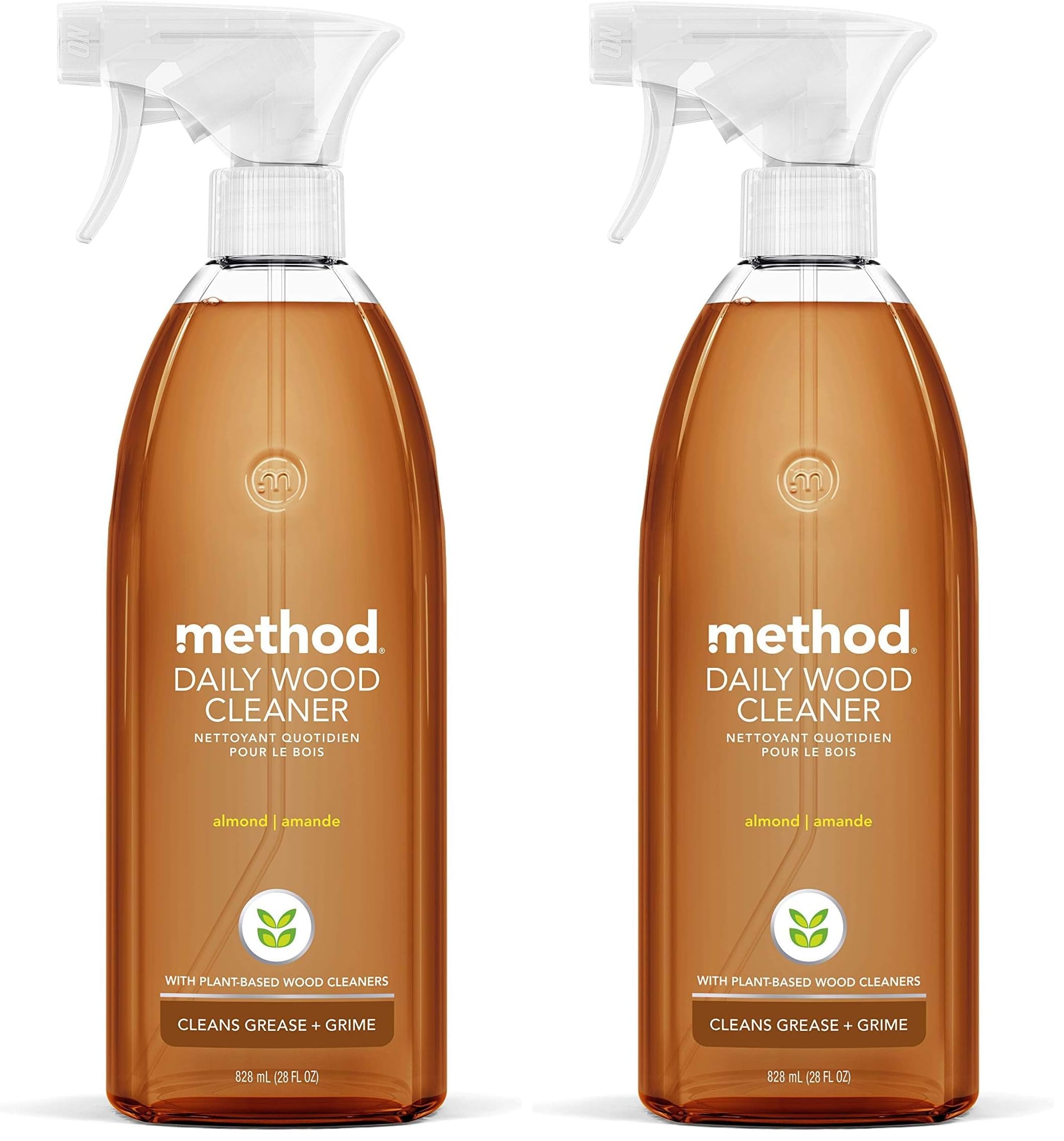
Two big bottles of non-sticky spray that handle the everyday mess without any buildup.
This plant-based cleaner is the one you grab for quick wipe-downs on wood tables, counters, shelves, and kitchen cabinets where the only concern is dust, fingerprints, and light cooking splatter. Each 28-ounce bottle lasts a long time, and the almond scent is light and pleasant — much milder than a chemical cleaner. One reviewer noted, “The spray comes out evenly and wipes off easily without leaving streaks or a sticky layer.” That no-residue promise means you can use it weekly without ever worrying about a cloudy wax buildup building up.
At 3.5 pounds for the two-pack with product dimensions of 3.5 x 3.1 x 10 inches, this is the heaviest entry here by a wide margin — but that is because you are getting 56 ounces of cleaner total. Compare that to the Aunt Fannie’s at 1.23 pounds for a single 16.9-ounce bottle, and the Method pack is clearly the volume champion.
What Makes It Easy
- No streaks, no sticky residue — just wipe and go
- Plant-based formula with no harsh chemical smell
- Two-pack gives excellent value for frequent use
What It Does Not Do
- Will not condition dry wood or hide scratches
- Not strong enough for hardened grease deposits from heavy cooking
Everyday use pick: Perfect for households that wipe down cabinets a few times a week and want a plant-based spray that leaves no film. it’s not for you if you are trying to remove years of baked-on kitchen grease — you need the Mighty Mint or Goddard’s for that job.
4. Aunt Fannie’s All Purpose Wood Spray Cleaner
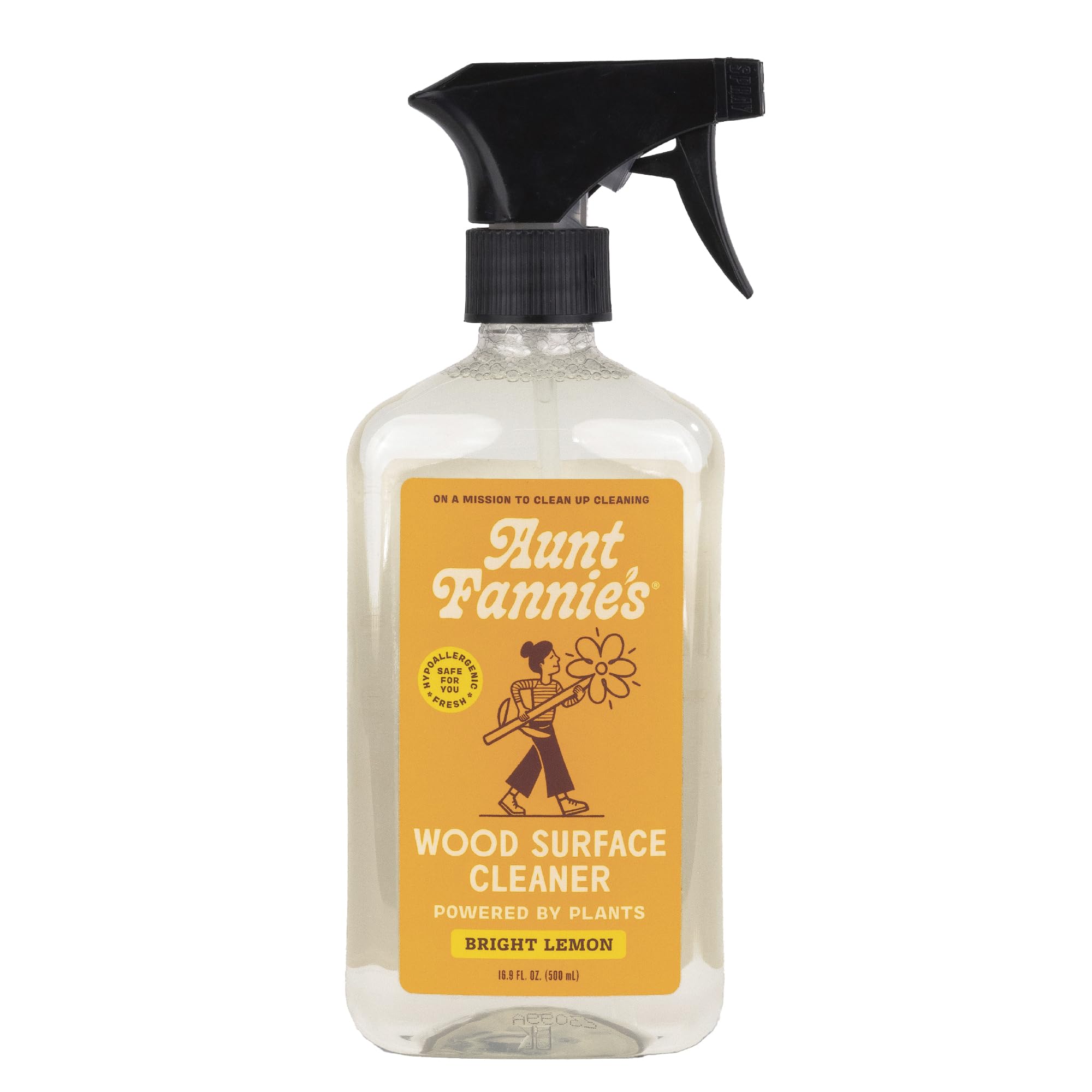
A no-wax spray that cleans deep enough for greasy cabinets but stays gentle on lungs.
This plant-based, no-wax formula breaks down food, grease, and grime on wood tables, walls, counters, and cabinets without leaving any residue behind — no rinsing required. It is dermatologist tested and hypoallergenic with an EWG A-rating, meaning it has been verified as a low-hazard product by the Environmental Working Group. One buyer mentioned, “This product makes my wood kitchen cabinets clean with shine.” The lemon scent is mild and natural, not synthetic.
Weighing just 1.23 pounds with dimensions of 3.25 x 1.75 x 8.88 inches, it is the lightest bottle here — a big contrast to the 3.5-pound Method two-pack. The no-wax formula means it will not cloud your cabinets over time, making it a safe option even if you use it every single week. The downside is that it does not add shine or condition the wood like the oil-based options.
Safe and Effective
- EWG A-rated and hypoallergenic — one of the safest options available
- No-wax formula leaves zero residue
- Works well on textured wood surfaces without scrubbing
Where It Falls Short
- Does not polish or restore color — strictly a cleaner
- Small 16.9 oz bottle runs out faster than larger options
Gentle cleaning pick: Buy this if you have kids, pets, or sensitive lungs in the house and need a cleaner that is truly safe without sacrificing cleaning power. Look elsewhere if you want a formula that also conditions the wood — this is clean-only.
5. Goddard’s Cabinet & Wood Wax Spray

A spray wax that cleans, shines, and protects in one pass without changing the stain color.
Goddard’s combines beeswax and lemon oil into a single spray that you do not need to buff — just spray six inches from the surface and wipe along the grain. The formula protects wood from sun damage, stains, drying, and cracking while locking in natural moisture. Multiple reviewers noted that after degreasing old cabinets, this spray left them “conditioned and beautiful.” It does not alter the stain color, so it works the same way on light maple or dark walnut.
The 23-ounce can is the largest single-bottle spray in this comparison, meaning fewer refill trips than the 16-ounce Howard Lemon Oil spray. However, a few users reported that the sprayer nozzle can spurt instead of misting evenly, which is worth testing on a hidden spot first.
The All-in-One Win
- Cleans, polishes, and conditions in a single spray step
- No buffing required — just spray and wipe
- Protects against sun damage and cracking
The Catch
- Some sprayers spurt rather than mist — test before a large job
- Not ideal for painted cabinets; designed for bare or stained wood
One-step pick: Ideal if you want a single product that handles the entire cleaning-polishing-protecting job for stained wood cabinets. look elsewhere if you already use a separate cleaner and just need a conditioning final step — the Method Wood Polish below might suit you better.
6. Method Wood Polish, Almond
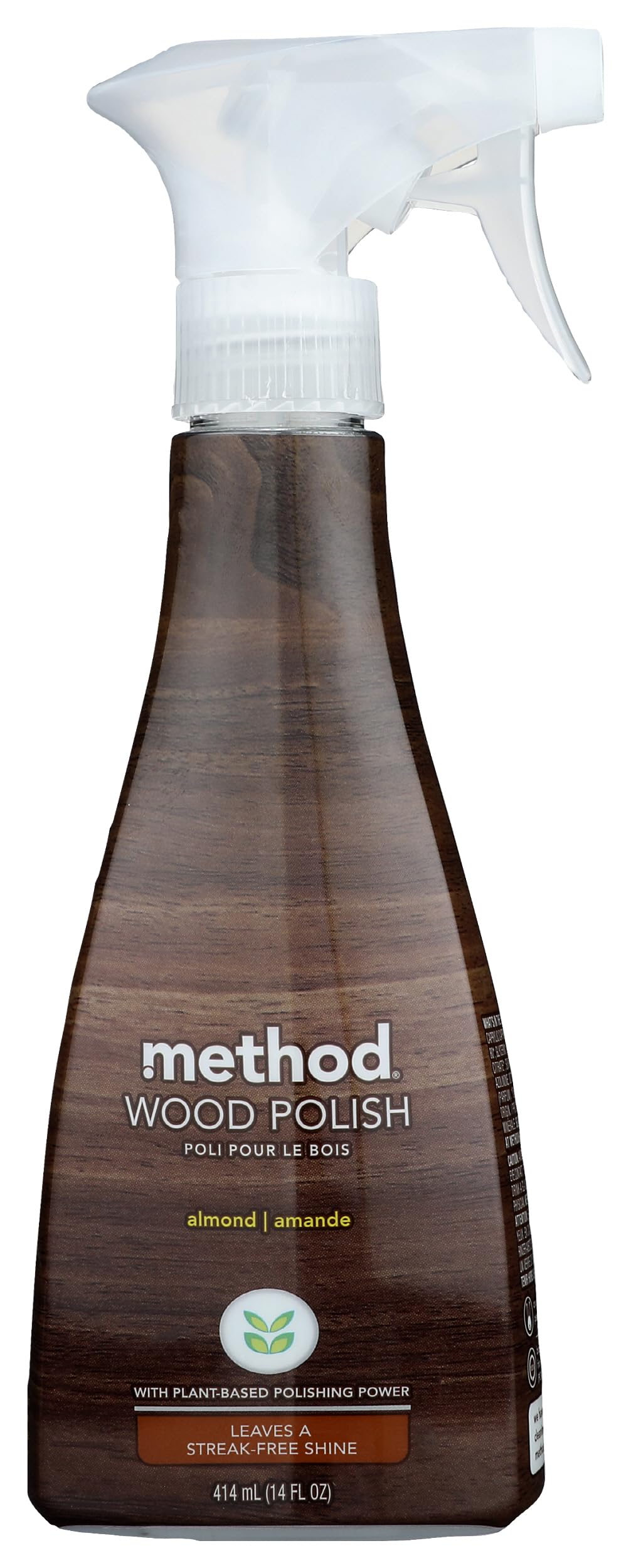
A dedicated polish spray that gives cabinets a visible shine after cleaning.
This is not a cleaner — it is a polish designed to be used after a wood cleaner for a deeper gloss. One owner reported, “I use a Method wood cleaner first then the polish for a great finish. Much better than the chemical loaded wood cleaners that build up on your good wood furniture.” The almond scent is the same light fragrance as the Method Daily Wood Cleaner, so the two products work smoothly as a pair for a weekly cabinet-care routine.
At 14 ounces and dimensions of 2.5 x 8.86 x 3.44 inches, it is a compact bottle that fits easily in a cleaning caddy. The spray works easily and produces a noticeable shine on finished wood furniture and cabinets. The downside is that it needs a separate cleaning step beforehand — it will not remove grease on its own.
The Gloss Factor
- Adds a clear, non-greasy shine to finished wood surfaces
- Pairs perfectly with the Method Daily Wood Cleaner for a two-step routine
- Bottle made from 100% recycled and recyclable plastic
Not a Standalone
- Does not clean — must be used after a separate cleaning step
- Smaller bottle at 14 oz compared to others
Final-shine pick: Grab this if you are already happy with your cleaning method and just want a finishing spray that boosts the gloss on cabinet doors. steer clear if you want a do-it-all product — the Goddard’s or Feed-N-Wax cover cleaning and polishing in one can.
7. Mighty Mint Wood Cleaner & Conditioner Spray
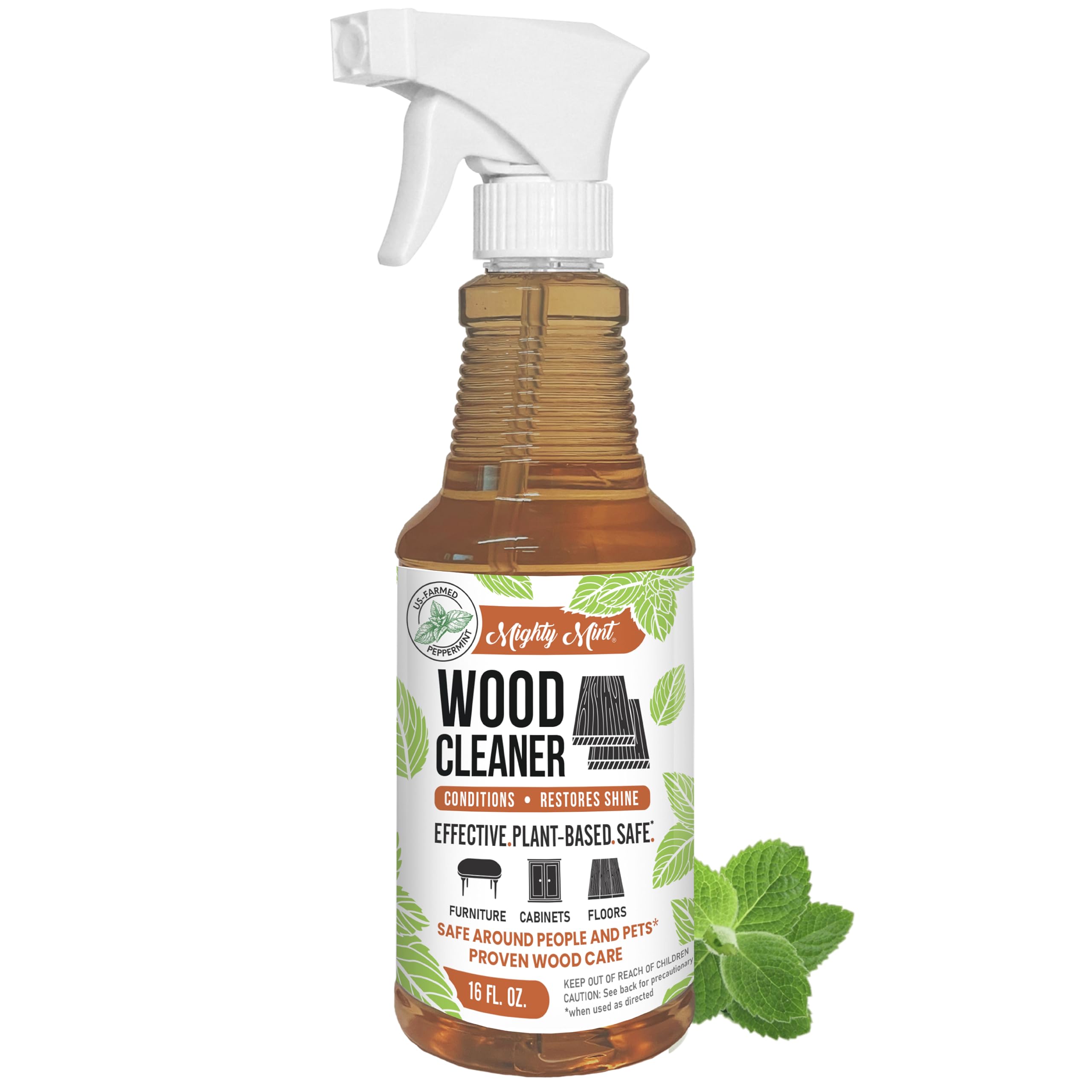
A peppermint-scented spray that cuts through decades-old grime without bleach or ammonia.
This plant-based cleaner is designed to remove everyday dirt and buildup while conditioning the wood to restore a refreshed appearance. One reviewer used it on “wood furniture that had not been cleaned in decades” and reported great results. Another buyer noted it is “effective quick cleaner for butcher block countertops” and that it smells like peppermint, repels pests, and is safe for cats — a rare combination for a wood cleaner. The formula is made without bleach, ammonia, or petroleum distillates.
Weighing 1.21 pounds with dimensions of 2.5 x 2.5 x 9.5 inches, it is only slightly lighter than the Aunt Fannie’s (1.23 pounds) but comes in a taller, narrower bottle. It is also the newest product here, first available in December 2023. Some users note it leaves a slightly oily feel and requires quarterly re-conditioning to maintain the best results, so it is best for periodic deep-clean sessions rather than as a daily spray.
Deep Cleaning Power
- Removes heavy, long-term grime that other sprays cannot touch
- Peppermint scent repels pests naturally — a bonus for kitchens
- Safe for homes with cats when used as directed
The Trade-Offs
- Slightly oily feel on the wood after application
- Not designed for quick daily touch-ups — needs re-conditioning
Grime buster pick: Reach for this when you are moving into a new home or giving neglected cabinets their first deep clean in years. skip it if you just need a light weekly dust-and-shine routine — the Method Daily Wood Cleaner is better for that.
Understanding the Specs
Beeswax vs. No-Wax
Beeswax formulas like the Howard Products Feed-N-Wax add a protective coating that fills fine scratches and provides a soft luster — great for old or dry cabinets that need visual revival. No-wax formulas (Aunt Fannie’s, Method Daily Wood Cleaner) leave zero residue, so you never deal with buildup clouding the finish. If you plan to refinish or repaint your cabinets later, no-wax is the safer choice because wax can block new paint from adhering.
Plant-Based and Safety Ratings
Several sprays here are made from plant-derived surfactants and exclude ammonia, bleach, and petroleum distillates. The Aunt Fannie’s holds an EWG A-rating, meaning an independent third party verified it contains no known hazards. Plant-based formulas generally mean lower fumes and less irritation for people with allergies or chemical sensitivities — a real factor in an enclosed kitchen space where you are leaning over a cabinet breathing in the spray zone.
Spray Pattern and Application
Not every sprayer behaves the same. Buyers of the Howard Lemon Oil polish caution that spraying directly onto the surface causes splatter, so you need to spray the cloth first. The Goddard’s sprayer design was flagged by some users for spurting rather than misting. The Method Daily Wood Cleaner was praised for an even spray pattern that covers a large area without dripping. When reading reviews, pay attention to sprayer complaints — a bad nozzle can turn a 30-second job into a messy one.
Bottle Weight and Volume
The two-pack of Method Daily Wood Cleaner weighs 3.5 pounds total — more than double any single bottle here. For regular users, that weight means fewer trips to the store. For someone who only cleans cabinets once a month, the smaller 16-ounce bottles like the Aunt Fannie’s (1.23 pounds) or Mighty Mint (1.21 pounds) are easier to handle and store. The Goddard’s spray at 23 ounces is the largest single-can option, bridging the gap between economy and convenience.
FAQ
Can I use a wax-based cleaner on painted cabinets?
Which cleaner works best for removing heavy cooking grease from cabinets?
Does lemon oil actually condition wood or just make it smell nice?
How often should I clean my kitchen cabinets with these products?
Will these cleaners damage my cabinet finish if I use them too often?
What is the difference between wood cleaner and wood polish?
Can I use cabinet cleaner on butcher block countertops?
Are there any cleaners here that are safe around pets?
Which product gives the best shine for old, dull cabinet doors?
How do I remove wax buildup from previous applications before switching to a no-wax cleaner?
Final Thoughts: The Verdict
For the majority of shoppers, the best cleaner for cabinets winner is the Howard Products Feed-N-Wax Beeswax Polish because it does what no spray can: it physically fills scratches, restores color to dried-out wood, and leaves a soft luster that lasts. If you want a no-fuss daily spray for light dust and fingerprints, grab the Method Daily Wood Cleaner two-pack for the best value. And for breaking down decades of hardened grease in a fresh peppermint scent, the standout is the Mighty Mint Wood Cleaner.
How We Picked
We do not accept paid placement. Every pick is matched to a real buyer and a real use-case; we do not hands-on test units.
Sources & Methodology
Specifications: manufacturer listings and product documentation. Review insights: verified customer reviews, as of July 2026. Pricing: not shown on this page (it changes often); check the current price via the retailer link.
As an Amazon Associate, WellFizz earns from qualifying purchases. This does not affect which products we feature.
Related Guides

Mo Maruf
I created WellFizz to bridge the gap between vague wellness advice and actionable solutions. My mission is simple: to decode the research and give you practical tools you can actually use.
Beyond the data, I am a passionate traveler. I believe that stepping away from the screen to explore new environments is essential for mental clarity and physical vitality.