Our readers keep the lights on and my smoothie glass nicely filled. As an Amazon Associate, I earn from qualifying purchases.
Sorting through dozens of plant-based protein powders to find one that actually mixes smooth, tastes good, and doesn’t list a chemistry lab’s worth of ingredients is harder than the workout itself. Between chalky textures, hidden sugars, and mysterious “natural flavors,” the clean vegan protein aisle demands a sharp eye and a clear standard.
I’m Mohammad Maruf — the founder and writer behind WellFizz. This guide draws from hundreds of hours spent cross-referencing ingredient lists, analyzing third-party certifications, and mapping amino acid profiles to help you spot the genuine clean picks among the marketing noise.
Whether you need a post-workout recovery shake, a meal replacement that actually fills you up, or a daily protein boost without the bloat, here is the definitive research on the best clean vegan protein powder for your specific goals.
How To Choose The Best Clean Vegan Protein Powder
Not all vegan protein powders are created equal. Many sport a “natural” label while sneaking in stevia blends, gums, or fillers that cause digestive upset. Here is exactly what to scrutinize before you buy.
Protein Source and Amino Acid Profile
Pea protein isolates are common because they deliver a solid leucine hit for muscle synthesis, but they lack methionine. Brown rice protein fills that gap, which is why top-tier blends combine both for a complete profile. Single-source powders like straight hemp or pumpkin seed can be incomplete — look for blends that explicitly list complementary proteins.
Added Ingredients Beyond Protein
The “clean” designation depends heavily on what is not in the tub. Watch for added sugars disguised as “cane syrup” or “brown rice syrup,” as well as thickeners like xanthan gum, carrageenan, or soy lecithin that can trigger bloating. The best picks use minimal ingredients: protein, perhaps a natural sweetener like monk fruit, and digestive enzymes or probiotics for gut support.
Third-Party Certifications
USDA Organic and Non-GMO Project Verified are the baseline trust marks. For heavy metal safety, look for brands that voluntarily test and publish results — some plant proteins naturally accumulate lead and cadmium from soil. A Certified Vegan logo ensures zero animal-derived ingredients, and gluten-free certification matters if you have celiac or a sensitivity.
Quick Comparison
On smaller screens, swipe sideways to see the full table.
| Model | Category | Best For | Key Spec | Amazon |
|---|---|---|---|---|
| Garden of Life Raw Protein & Greens | Mid-Range | All-in-one greens + protein | 20g protein + 6 organic greens | Amazon |
| Orgain Organic Creamy Chocolate Fudge | Mid-Range | Great taste + gut health | 21g protein + 6g prebiotic fiber | Amazon |
| Norcal Organic Peanut Butter | Budget-Friendly | Low-fat peanut butter alternative | 11g protein, 3g fat per serving | Amazon |
| Truvani Organic Chocolate | Premium | Shortest ingredient list | 20g protein, no stevia, monk fruit | Amazon |
| Vega All-in-One Unsweetened | Premium | Unsweetened control | 20g protein + probiotics + fiber | Amazon |
| Ambrosia Planta Banana Maple | Premium | Sensitive stomach | 20g protein, fermented sunflower BCAAs | Amazon |
| MRM Veggie Elite Vanilla Bean | Mid-Range | Highest protein per scoop | 24g protein + digestive enzymes | Amazon |
In‑Depth Reviews
1. Garden of Life Raw Protein & Greens Lightly Sweet
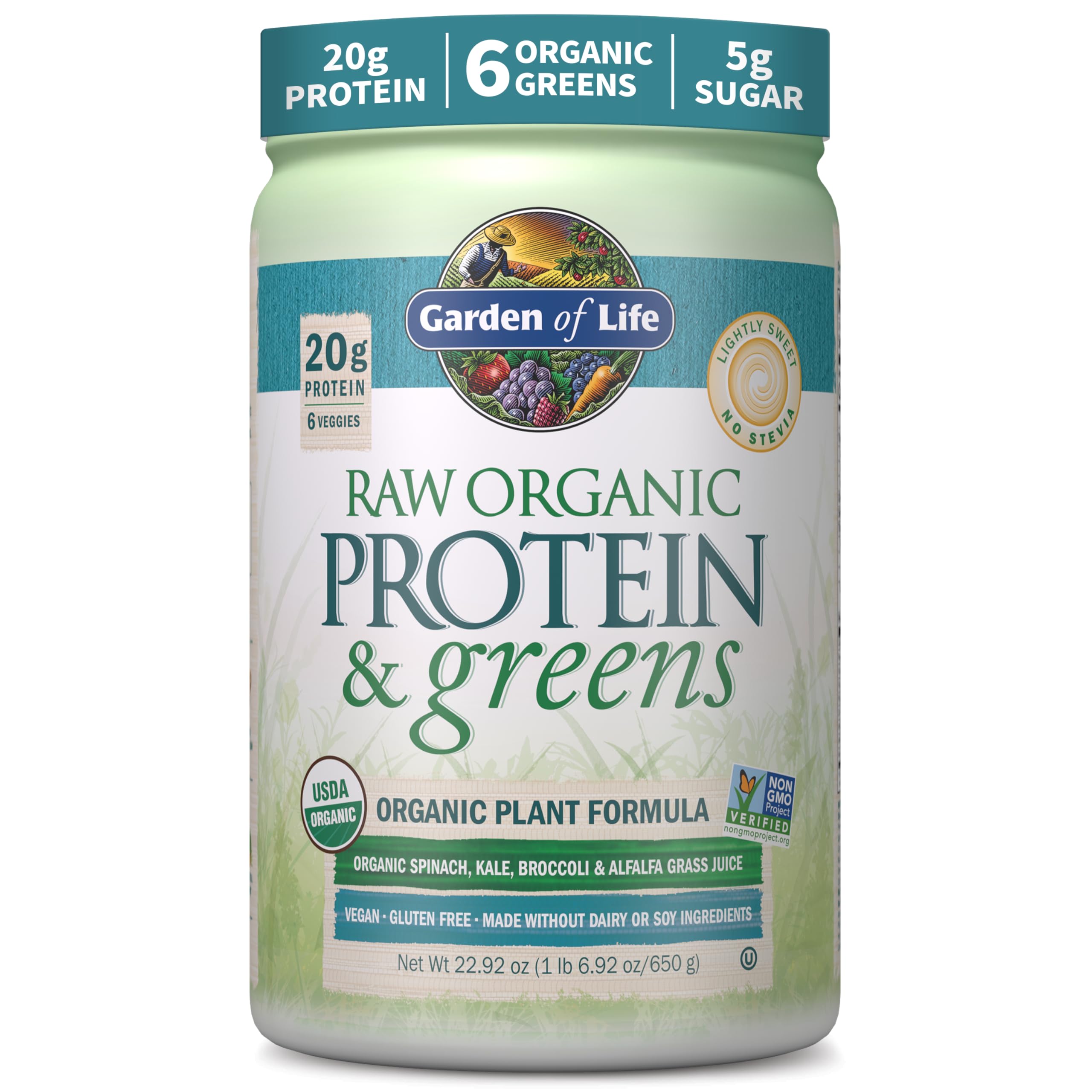
Garden of Life delivers a complete package that goes beyond simple protein. Each serving packs 20 grams of plant protein from organic peas, sprouted grains, and legumes, plus a full spectrum of six organic greens — spinach, kale, broccoli, alfalfa grass, carrots, and beets. That translates to a nutrient-dense shake that supports recovery while adding a serving of vegetables to your day.
The inclusion of 250 million CFU probiotics and 13 non-GMO enzymes makes this a strong choice for anyone with digestion sensitivities. Users consistently report a mild, slightly sweet flavor that avoids the chemical aftertaste common among stevia-heavy competitors. The texture mixes well with water or apple juice, though some find it clumps when paired with almond milk.
Certified USDA Organic, Non-GMO Project Verified, and NSF Gluten-Free, this powder covers every trust mark a clean-label shopper needs. The Lightly Sweet variety uses a small amount of sugar to avoid artificial sweeteners, keeping the profile clean without sacrificing palatability.
Why it’s great
- Includes organic greens and probiotics in one scoop
- Mild taste that works well with water or juice
- Multiple third-party certifications for purity
Good to know
- Can clump when mixed with almond milk
- Not the highest protein-per-scoop count at 20g
2. Orgain Organic Vegan Protein Powder Creamy Chocolate Fudge
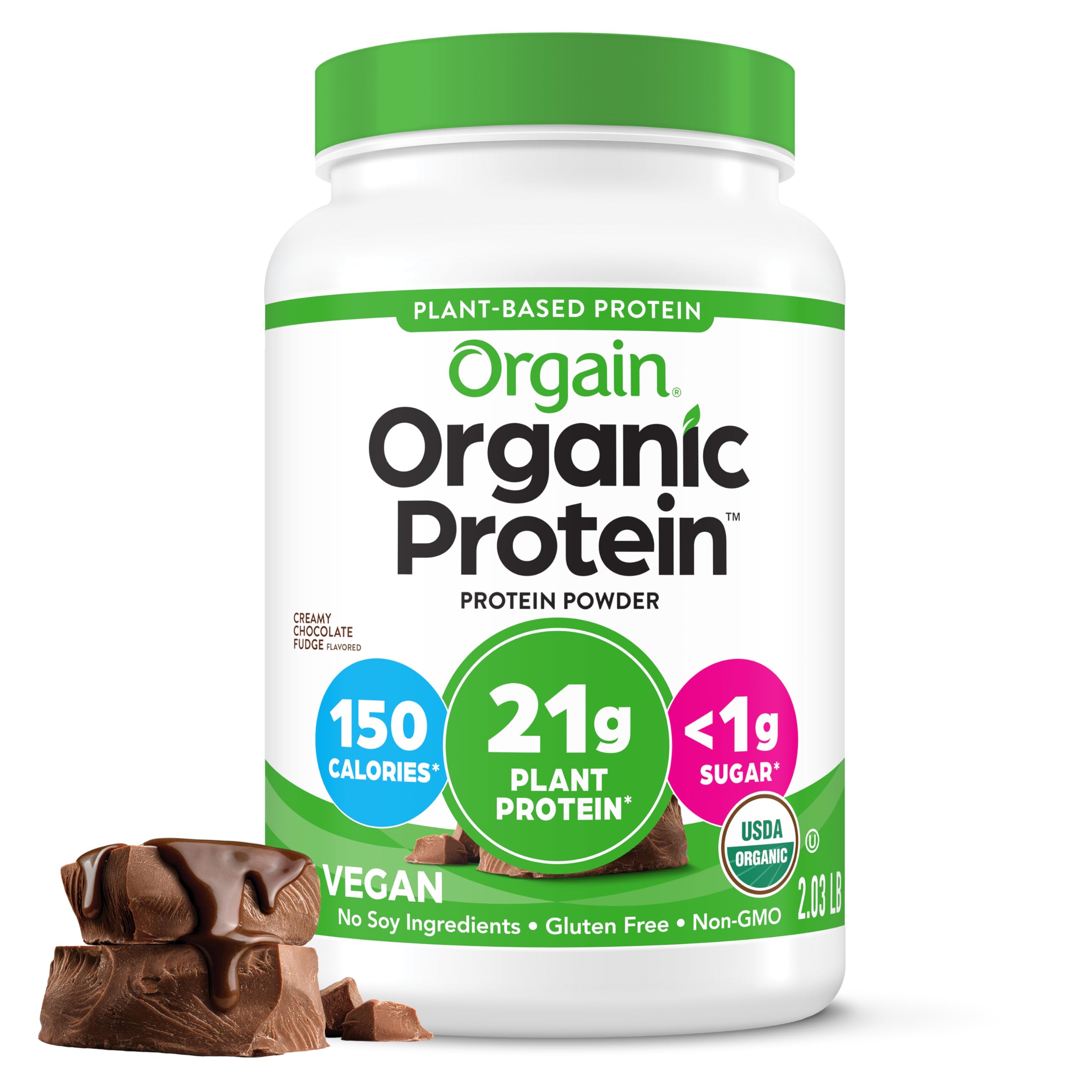
Orgain has built a loyal following for good reason: this Creamy Chocolate Fudge powder delivers 21 grams of organic plant protein from peas, brown rice, and chia seeds, forming a complete amino acid profile without animal products. The real differentiator here is the 6 grams of prebiotic fiber per serving — a meaningful addition for gut health that also extends satiety well beyond a standard protein shake.
Customer reviews consistently praise the rich cocoa aroma and smooth, non-gritty texture. Users mix it with water, almond milk, or oat milk for a dessert-like drink that stays clean — zero added sugar, no carrageenan, and no artificial flavors. Many report using it in baked goods like protein muffins and pancakes without losing the flavor.
At 150 calories per two-scoop serving, this fits neatly into a calorie-conscious diet. It is USDA Organic, Certified Plant Based, and contains no erythritol, making it a safe bet for those avoiding sugar alcohols. The value proposition is strong given the organic certification and fiber content.
Why it’s great
- Excellent chocolate flavor with no chemical aftertaste
- 6g prebiotic fiber supports digestion and fullness
- Versatile for baking and smoothie bowls
Good to know
- Some users find a slight chalky note
- Scoop tends to settle at the bottom of the tub
3. MRM Veggie Elite Performance Protein Vanilla Bean
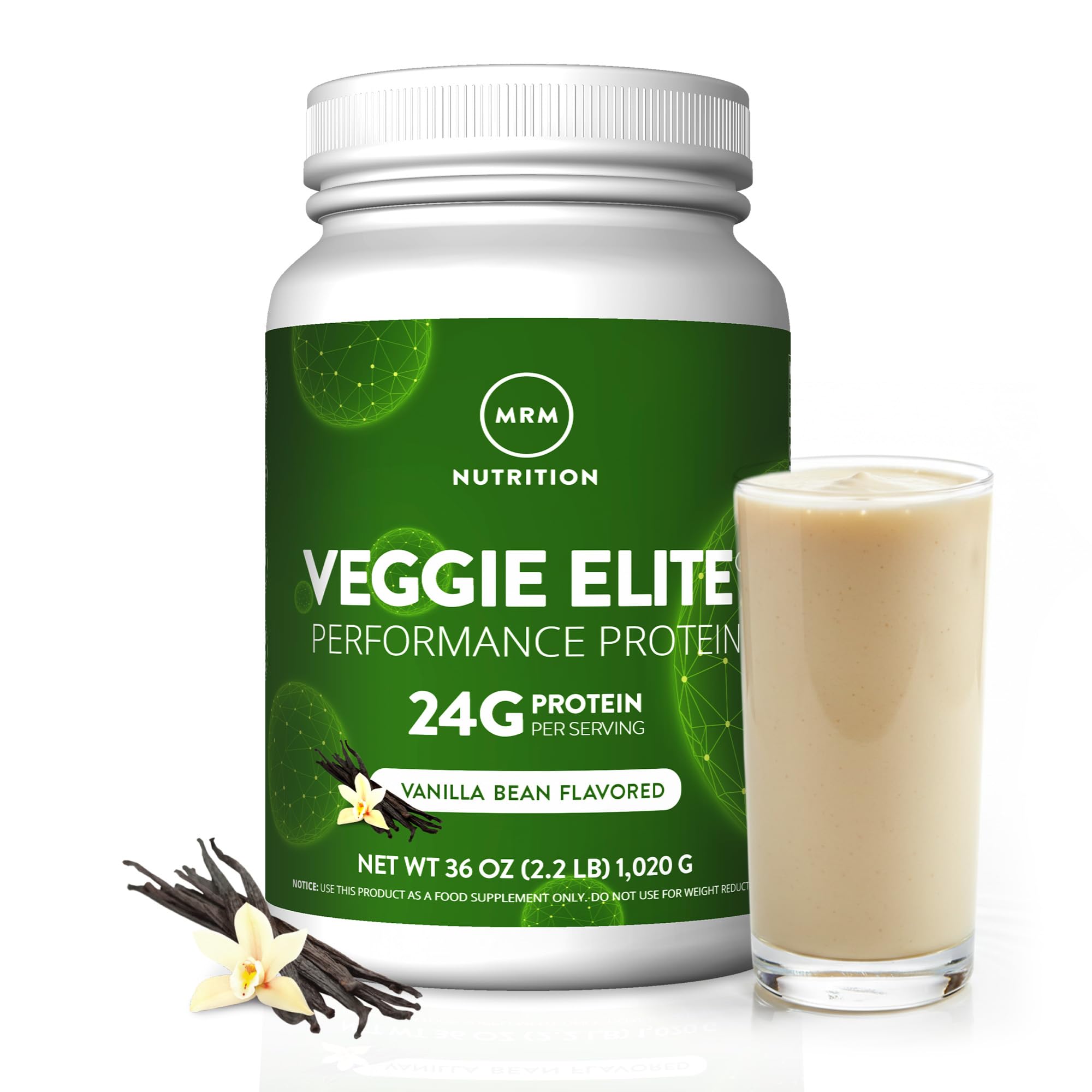
MRM Veggie Elite stands out by delivering 24 grams of plant protein per scoop — the highest count in this lineup — using a clinically validated pea and rice protein ratio. This yields 9.5 grams of total amino acids and 4.5 grams of BCAAs per serving, numbers that compete directly with high-end whey isolates. The addition of sacha inchi provides an omega-3 boost not seen in standard blends.
The formula includes a digestive enzyme complex to improve amino acid absorption and reduce bloating, a common complaint with vegan proteins. Users note that the vanilla bean flavor works well as a neutral mixer for smoothies and pancakes. Some find the mouthfeel slightly gritty if stirred by hand, but blending with ice and more water solves the texture issue.
MRM has been owned by a clinical dietitian since 1996, lending the brand credibility in supplement formulation. The 30-serving tub delivers strong per-scoop protein density, making it a smart option for athletes who want to maximize protein without consuming multiple scoops.
Why it’s great
- Highest protein count at 24g per serving
- Digestive enzymes included for better absorption
- Veteran brand with clinical formulation expertise
Good to know
- Texture can be gritty without a blender
- Stevia sweetness is noticeable and polarizing
4. Truvani Organic Vegan Protein Powder Chocolate
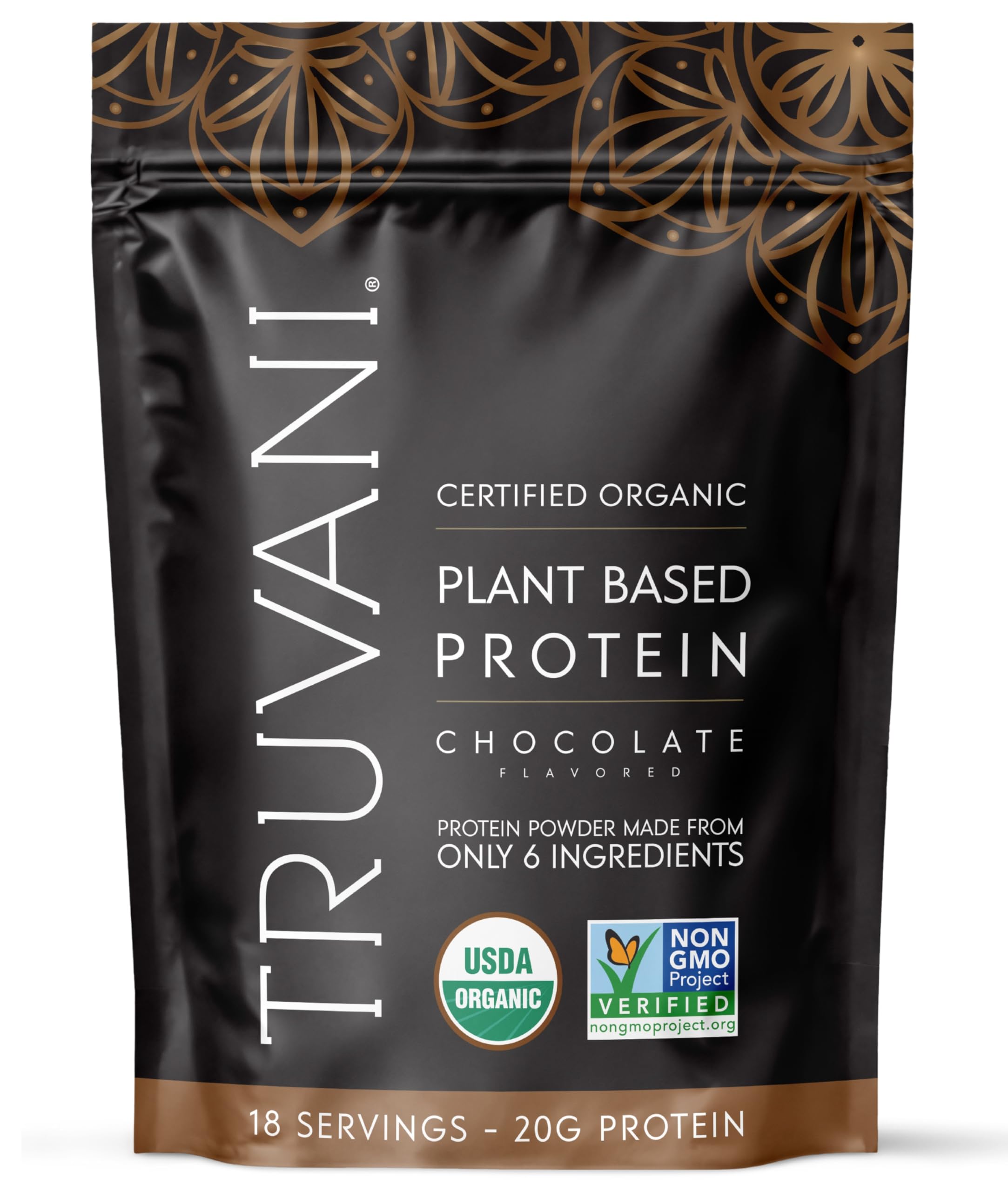
Truvani takes the “clean” descriptor literally. The ingredient list is remarkably short: organic pea protein, organic pumpkin seed protein, organic chia seed protein, organic cocoa, organic monk fruit, and sea salt. No gums, no fillers, no stevia, no soy, no dairy, no gluten. For shoppers who want absolute transparency and do not want to guess what is in their shake, this is the gold standard.
Each scoop provides 20 grams of protein from a triple-source blend that covers the amino acid spectrum. Users consistently report a smooth, non-gritty texture that exceeds expectations for a minimalist formula. Monk fruit sweetness is subtle and does not leave the bitter linger associated with stevia. The chocolate flavor is deep without being cloying.
The premium positioning is justified by the ingredient sourcing and certification costs — every batch is USDA Organic and Non-GMO Project Verified. The 18-serving container is smaller than some competitors, but the quality-to-quantity ratio favors those who prioritize ingredient purity above volume.
Why it’s great
- Extremely short, transparent ingredient list
- No stevia, uses monk fruit for sweetness
- Smooth texture with no gritty residue
Good to know
- Higher cost per serving than most alternatives
- Smaller tub size means fewer total servings
5. Vega All-in-One Nutrition Unsweetened
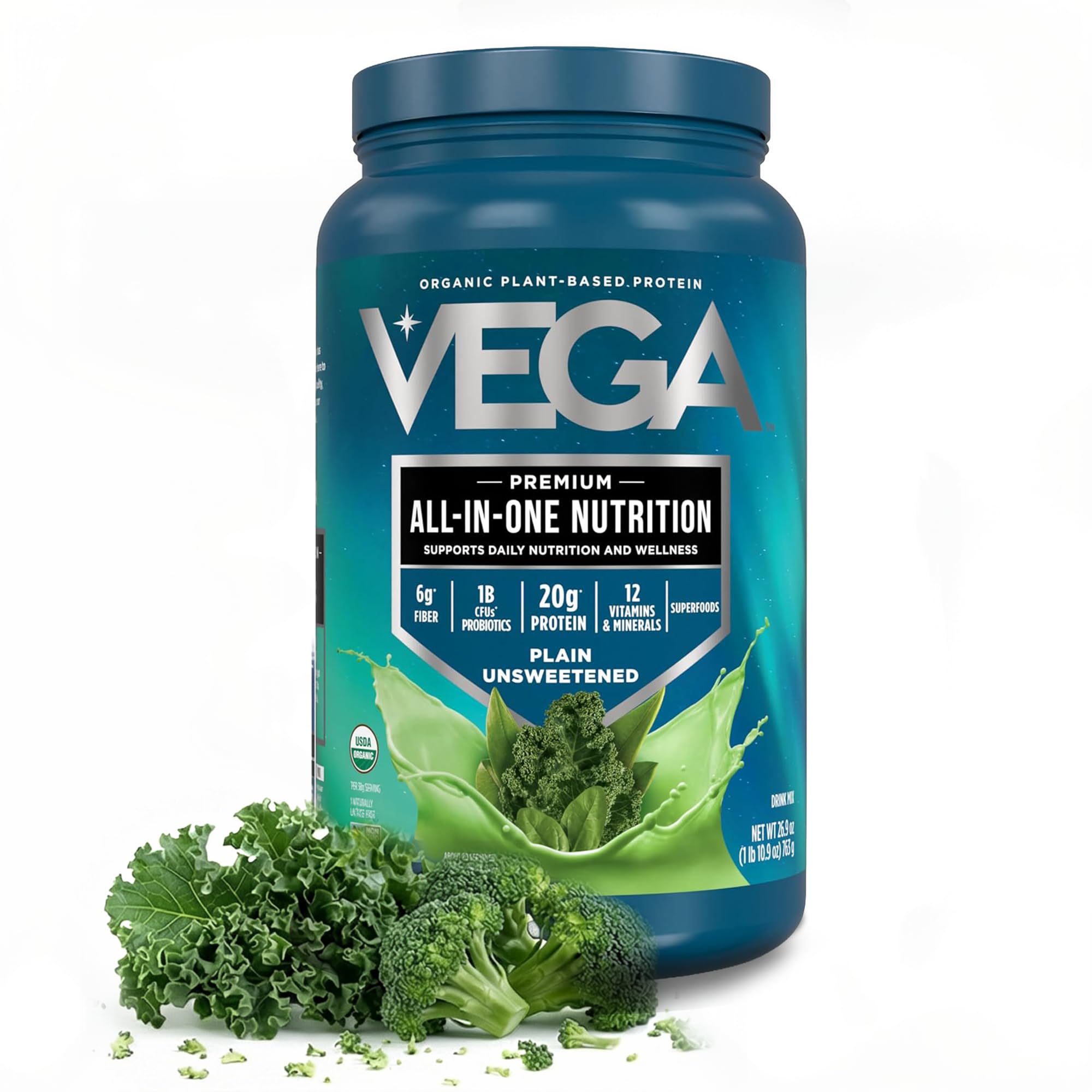
Vega’s All-in-One Unsweetened targets a very specific buyer: someone who wants full control over the sweetness level of their shake. With zero added sugar and no artificial sweeteners, the flavor profile is purely base ingredients — pea protein, hemp seed, flaxseed, and a superfood blend that includes kale, spinach, and spirulina. This is a blank canvas for your own sweeteners, fruit, or flavored milk.
The formula is notably comprehensive beyond protein: it includes a probiotic blend for gut health, fiber for satiety, and a greens mix for micronutrient density. Users report that it dissolves quickly in liquid with minimal clumping, though the taste is decidedly earthy and mild. Many mix it with a sweeter companion powder to balance the flavor.
Vega is a certified B Corporation, appealing to ethically-minded buyers. The 20-serving size is realistic for testing, and the unsweetened format makes it a versatile base for smoothie recipes. If you prefer to control your sweetness profile entirely, this is the pick.
Why it’s great
- Completely unsweetened with no sweeteners at all
- Includes probiotics, fiber, and greens in one scoop
- B Corp certified with strong sustainability practices
Good to know
- Earthy flavor may be unpalatable alone for some
- Not as filling as powders with higher fiber content
6. Ambrosia Planta Banana Maple
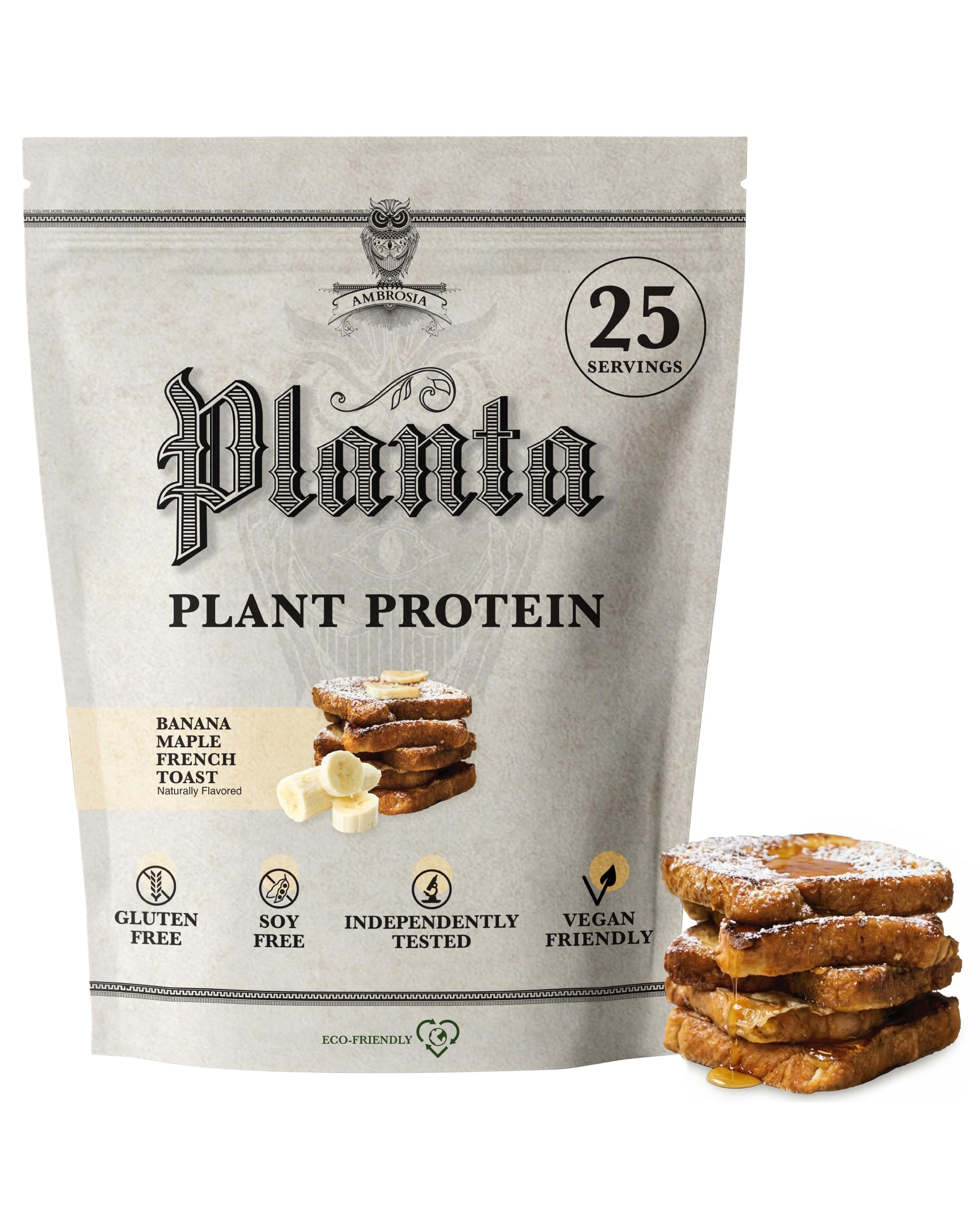
Ambrosia Planta addresses the most persistent complaint against vegan protein: digestive discomfort. The protein blend combines pea, brown rice, and fermented sunflower protein, with the fermentation step reducing gas-producing compounds that cause bloating. Users with sensitive stomachs frequently report this is the only plant protein they can tolerate without issues.
Each serving provides 20 grams of protein and 1 gram of BCAAs from sunflower-sourced amino acids, maintaining low calorie count at 100-110 calories per scoop. The Banana Maple flavor is a unique offering in the category — users describe it as naturally sweet without being candy-like, and the blend avoids the grit that plagues many alternatives. It mixes well in water, a shaker, or a blender.
The brand uses BSCG certification for quality testing, meaning every batch is screened for banned substances and contaminants. This is particularly relevant for athletes. The 25-serving tub offers a reasonable trial size for a premium product.
Why it’s great
- Fermented protein is easier on digestion
- Banana Maple flavor is distinctive and natural
- Low calorie with no added sugar
Good to know
- Higher price point than mid-range competitors
- Limited flavor selection compared to larger brands
7. Norcal Organic Peanut Butter Protein Powder

Norcal takes a different approach by offering peanut butter as the protein source rather than a flavoring. Made from mechanically pressed organic Spanish peanuts without solvents, this powder delivers 11 grams of protein and only 3 grams of fat per serving — a fraction of the fat in standard peanut butter. It provides 21 percent of your daily magnesium and 14 percent of your daily fiber.
This is not a standalone shake powder; it is a mix-in ingredient designed to add peanut flavor and protein to smoothies, oatmeal, or yogurt without the calorie load of regular peanut butter. Users praise its fresh peanut scent and ability to mask the blandness of plain pea protein when blended with chocolate milk. It is best used in combination with another protein powder for a complete shake.
The organic certification holds firm, and the minimal processing ensures no additives, sugars, or preservatives. For those on a low-fat diet or looking to cut peanut butter calories, this is a useful pantry addition rather than a primary protein source.
Why it’s great
- Very low fat compared to regular peanut butter
- No added sugar, natural peanut flavor
- Good magnesium and fiber content
Good to know
- Low protein count — best used as a mix-in
- Not designed for drinking as a standalone shake
FAQ
Why do some vegan protein powders cause bloating and gas?
How many grams of protein do I actually need from a powder?
Is stevia-sweetened protein powder considered clean?
Do I need both pea and rice protein in my powder?
What does “USDA Organic” actually guarantee for protein powder?
Final Thoughts: The Verdict
For most users, the best clean vegan protein powder winner is the Garden of Life Raw Protein & Greens because it combines 20g of protein with probiotics, enzymes, and whole food greens in a single certified-organic scoop. If you want the best-tasting chocolate with prebiotic fiber for gut health, grab the Orgain Organic Creamy Chocolate Fudge. And for the highest protein count per serving and a complete amino acid profile, nothing beats the MRM Veggie Elite Vanilla Bean.

Mo Maruf
I created WellFizz to bridge the gap between vague wellness advice and actionable solutions. My mission is simple: to decode the research and give you practical tools you can actually use.
Beyond the data, I am a passionate traveler. I believe that stepping away from the screen to explore new environments is essential for mental clarity and physical vitality.