Our readers keep the lights on and my smoothie glass nicely filled. As an Amazon Associate, I earn from qualifying purchases.
Specs are compiled from manufacturer listings and verified buyer reviews and can change over time — please confirm the key details on the product page before buying.
You know the feeling — you wash your car, dry it off, run your hand across the hood, and feel that gritty, sandpaper-like texture. That is not dirt you can soap off; it’s bonded contamination like rail dust, tree sap, and industrial fallout. A clay mitt is the tool that lifts all of that off in one pass, without the frustration of a traditional clay bar that you have to keep folding, kneading, and praying does not hit the ground. This guide breaks down the seven best clay mitts on the market so you know exactly which one fits your paint, your skill level, and your budget.
I’m Mohammad Maruf — the founder and writer behind WellFizz. This guide is built by comparing the manufacturers’ published specifications and the patterns across verified customer reviews, so you get each pick’s real strengths and trade-offs instead of marketing spin.
If you want to cut your detailing time in half without scratching your dark paint, the TAKAVU, with the largest cleaning face of any mitt here, lets you cover more surface with each pass.
Our Picks at a Glance

How To Choose The Right Clay Mitt
A clay mitt is a glove covered in synthetic or polymerized rubber that grabs embedded contaminants from your paint. The right one makes the job faster and safer. Here are the two things that actually matter.
Fine vs. Medium Grade — What Your Paint Can Handle
Fine-grade clay mitts are built for lightly contaminated and dark-colored painted surfaces. They are gentle and less likely to leave micro-marring (tiny scratches that show up in direct sun). Medium-grade mitts are formulated for heavily contaminated and light-colored painted surfaces. They remove tougher deposits like old overspray but may leave light marring that you can polish out later. Choose fine for maintenance, medium for correction.
Size and Shape — How Much Ground You Cover
A bigger mitt covers more area per pass, which saves time on a full-size truck or SUV. A smaller mitt gives you better control around mirrors, door handles, and tight body lines. The larger the dimensions, the faster the job — but the harder it is to maneuver into tight spots.
Quick Comparison
| Model | Best For | Grade | Dimensions | Material | Amazon |
|---|---|---|---|---|---|
| Nanoskin AUTOSCRUB Fine Grade (AS-016)★ Best Overall | Pro-grade speed + safety | Fine | 8.7″ x 6″ | Polymerized Rubber, Microfiber | Amazon |
| SPTA Clay MittBudget Champion | Budget entry-level | Fine | 8.5″ x 5.7″ | Microfiber | Amazon |
| TAKAVU Clay Mitt | Large-area coverage | Fine (Mesh) | 9.7″ x 6.3″ | Clay, Microfiber, Mesh | Amazon |
| Suds Lab SC Synthetic Clay Mitt | Value + reusability | Medium | 10″ x 6″ | Synthetic Clay, Microfiber | Amazon |
| Adam’s Clay Mitt Combo | Beginner-friendly kit | Medium | 10″ x 3″ | Moya, Microfiber | Amazon |
| The Rag Company Ultra Clay Mitt | Fine-grade finesse | Fine | 8.7″ x 5.7″ | Synthetic Clay | Amazon |
| Nanoskin AUTOSCRUB Medium Grade (AS-010) | Heavy contamination | Medium | 8.7″ x 6″ | Polymerized Rubber, Microfiber | Amazon |
In‑Depth Reviews
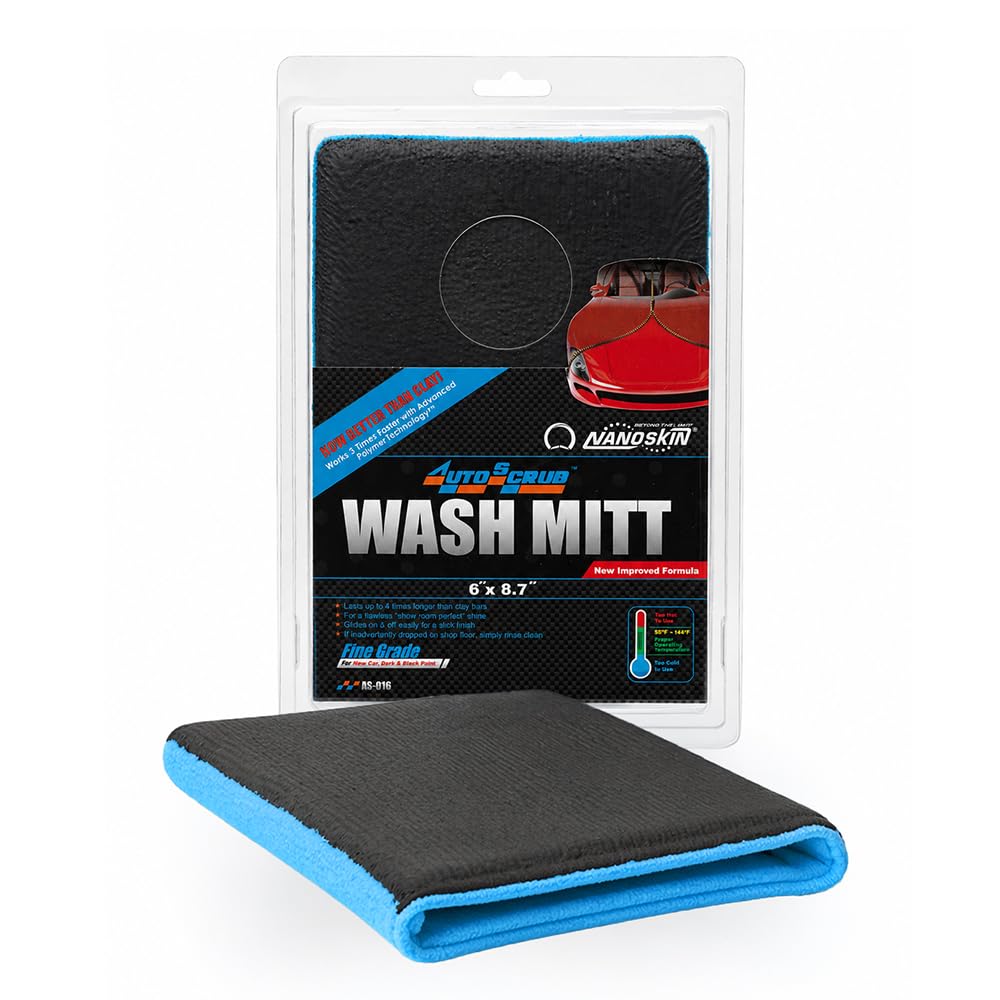
1. Nanoskin AUTOSCRUB Fine Grade Wash Mitt (AS-016)
Our pick — over 4.5★ from 750+ verified ratings; the strongest balance of quality and price.
The speed demon that turns a two-hour clay bar session into a 30-minute glide.
This is the mitt that convinced a lot of detailers to toss their clay bars for good. The Nanoskin AUTOSCRUB is a fine-grade mitt — meaning it is formulated specifically for lightly contaminated and dark-colored painted surfaces — and it combines a polymerized rubber face with a weft knitted microfiber backing. The manufacturer claims it performs work faster and lasts longer than a traditional clay bar. The reason is simple: you never stop to fold, knead, or reform the clay. You just keep gliding. And if you drop it on the driveway, you rinse it with water and keep going — no contamination panic.
At 8.7 inches long by 6 inches wide and weighing just 0.3 pounds, it is a solid, comfortable size that covers a good amount of real estate without feeling bulky. Owners rave about how fast the whole process becomes. The most-discussed theme is how much time it saves. The crowd favorite — with a strong 4.6-star consensus and hundreds of owners behind it — is that this mitt makes the dreaded clay step something you actually look forward to. A few owners note that you need to break in the protective coating on first use, and plenty of lubricant is non-negotiable to avoid marring. One recurring piece of advice: never wring out the mitt, as it damages the tacky surface. Rinse gently.
The Nanoskin’s 8.7 x 6 inch dimensions are larger than the SPTA’s 8.5 x 5.7 inches, meaning you cover more paint per pass. That difference stacks up fast across a full vehicle.
What wins people over
- Fine grade is safe on dark and delicate clear coats when used with enough lube
- Dropping it is not a disaster — rinse and continue without replacing the mitt
- Covers a full car in a fraction of the time a clay bar requires
The honest trade-offs
- Too large for tight spots like door jambs and mirror backs
- Must break in the initial protective coating before it performs at its best
- Medium-to-high price tag for a single mitt
Reach for this if: you want the fastest, most trusted fine-grade option that saves hours across multiple cars or full details.
Think twice if: you are working on heavily contaminated paint that needs the bite of a medium grade — this fine formulation may not lift everything on the first pass.
2. SPTA Clay Mitt
The entry-level mitt that makes claying a one-handed job for under fifteen bucks.
If you have never clayed a car before and you are not ready to sink serious cash into a mitt, the SPTA is where you start. It is a fine-grade microfiber clay mitt measuring 8.5 inches by 5.7 inches and weighing only 2.5 ounces — noticeably smaller and lighter than the Nanoskin above. That smaller footprint means it is less forgiving on large panels but easier to control around tight contours. The material is microfiber, which feels less aggressive than a polymerized rubber face. Owners find it effective for light impurities, and one buyer report confirms it handled a full-size truck using a foam cannon as lubricant for the whole job. Effectiveness is the single most-praised aspect, with quality coming in second.
The honest limit here is that it is not a full replacement for a clay bar on heavier jobs. Several owners note it removes some invisible particles but does not catch every impurity the way a traditional clay bar would. If your paint is moderately contaminated or you are just doing a seasonal decontamination before a wax, this mitt works well. But if you are dealing with years of overspray or industrial fallout on a neglected vehicle, you will want a medium-grade mitt. Store it in the included bag and it should last through three or four cars before the tacky surface starts to fade.
A fair comparison to the Adam’s mitt below: the SPTA does everything the Adam’s does for light-duty claying, at a fraction of the cost. The catch is you do not get a bundled detail spray, so you will need to buy lubricant separately.
Why owners like it
- Very low entry cost for trying the clay mitt format
- Lightweight and easy to handle one-handed, especially on vertical panels
- Durable enough to last several cars with proper care and storage
Where it falls short
- Not aggressive enough for heavily contaminated or never-clayed paint
- Smaller surface area means more passes on a truck or large SUV
- Does not include any lubricant or spray
Grab this if: you are a first-time clay mitt user on a budget, working on a car with light seasonal contamination.
Pass this by if: you need to tackle heavy overspray or rail dust — the fine grade will leave some contamination behind.
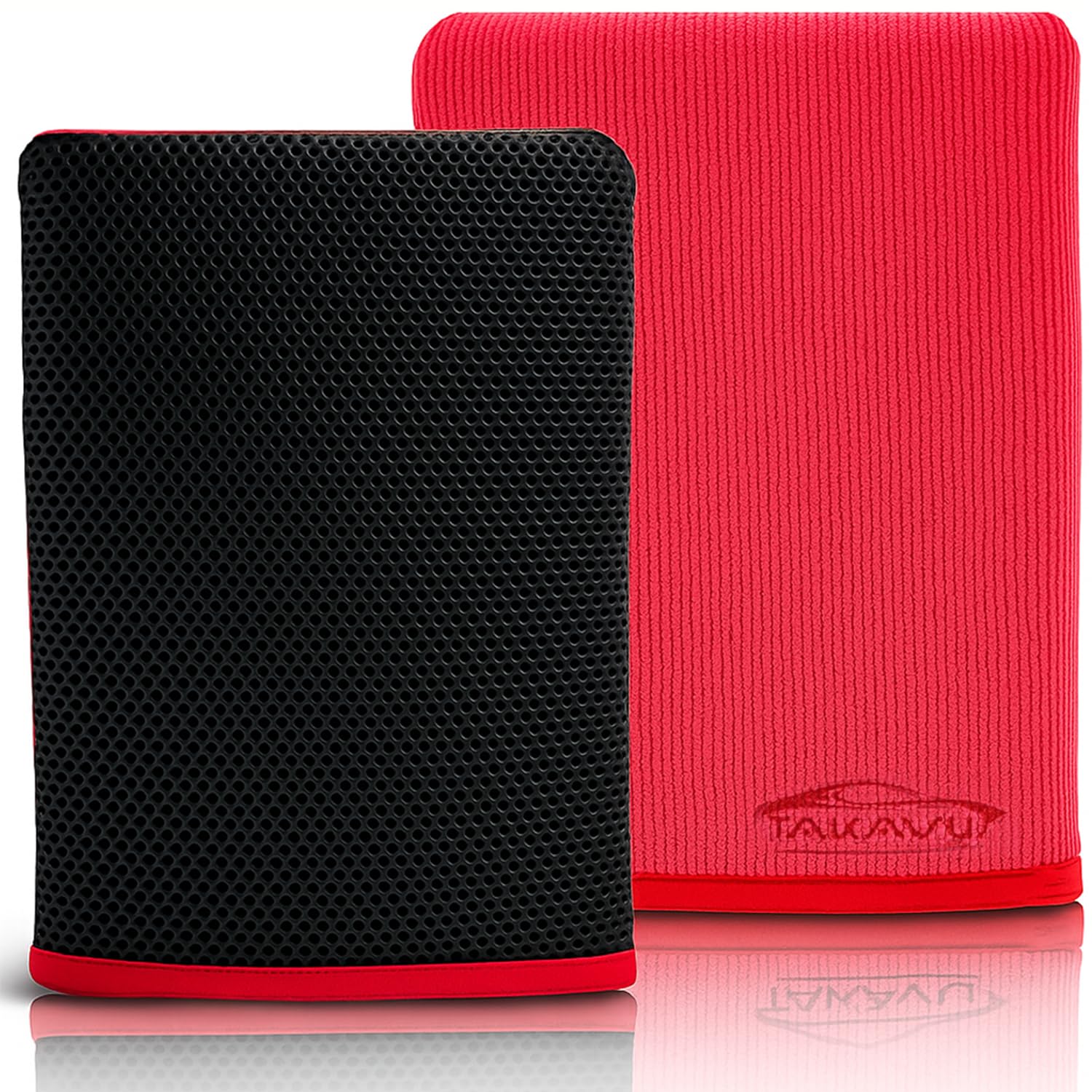
3. TAKAVU Clay Mitt (Dual-Sided Mesh & Microfiber)
The widest mitt in the lineup, purpose-built for slashing time on large trucks and SUVs.
At 9.7 inches long by 6.3 inches wide, the TAKAVU is the largest clay mitt in this guide — at 9.7 x 6.3 inches compared to the SPTA’s 8.5 x 5.7 inches and over an inch longer than the Nanoskin. That extra surface area means you make fewer passes across a hood, roof, or tailgate. The mitt is dual-sided: one side uses a fine clay mesh to pull bonded grime off the paint, and the microfiber towel side wipes the residue away. Owners say this two-step-in-one approach saves serious time. Functionality gets the most praise, with build quality close behind.
There is a white powder coating on the clay side from the start to prevent sticking — that is normal and rinses off. The mitt is glove-style, so it fits most hand sizes securely, and the manufacturer says it outlasts many single-use clay bars because it rinses clean after every session. The honest note from the review room is mixed feedback on durability: a few buyers report issues with the rubber side peeling after repeated use. Treat the mitt gently — rinse after every panel, store it dry, and do not twist or wrench it when cleaning, and it should hold up well. One owner compared it favorably to the Adam’s clay mitt in both performance and long-term durability, calling it better value unless the Adam’s is on sale.
The trade-off for the large size is precision. In tight spots like door handles, mirror housings, and grille slats, the mitt feels bulky. You will likely need a smaller mitt or a traditional clay bar for the nooks and crannies.
Your time-saver verdict: If you drive a full-size truck, SUV, or van, the TAKAVU’s extra width shaves real minutes off the job. Keep it for the big panels and use something smaller for the details.
The honest caveat: The mixed durability feedback means you should inspect the seam after each use and avoid aggressive wringing or twisting.
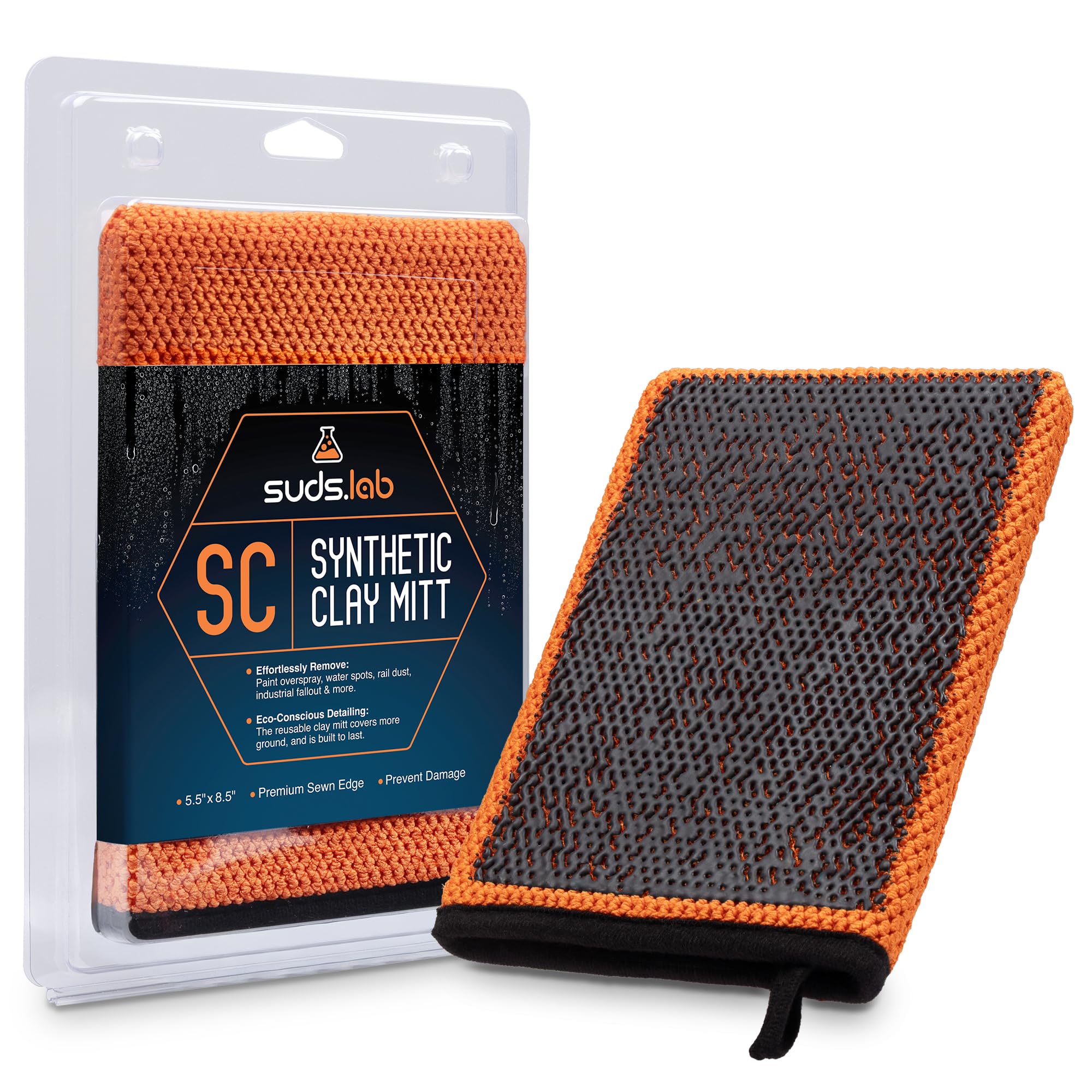
4. Suds Lab SC Synthetic Clay Mitt
A medium-grade mitt that the manufacturer says is reusable up to 40 times — and owners mostly agree.
The Suds Lab mitt steps up to a medium-grade synthetic clay, which means it is formulated for more heavily contaminated paint surfaces. It measures 10 inches by 6 inches, making it the longest mitt in the list, and weighs just 1.6 ounces. The core is a tightly woven microfiber wrapped in a grid-textured clay surface, with a double-stitched wrist cuff and a dual-sided structure for comfort. The manufacturer claims it can be reused up to 40 times and that it rinses clean if dropped — no reshaping required. Functionality and quality are the two most-praised aspects, and cleanliness (how well it leaves the surface) comes in third.
The honest sticking point here is durability — it gets mixed feedback. A few owners mention that the clay surface can scratch if not used with enough lubricant, and one owner on a black car noted black smearing on a white vehicle that required brake cleaner to remove. The consensus advice from the review pages is: foam the car with soap as lubricant, rinse the mitt after every single panel, and use moderate pressure to avoid streaks. If you follow that routine, owners say this mitt preps paint for polish or wax beautifully. One owner reported they did four vehicles in a single afternoon, which speaks to the speed advantage of the medium-grade over a traditional clay bar.
The Suds Lab sits between the budget SPTA and the premium Adam’s on price, giving you medium-grade bite without the mid-range cost.
Best for budget-conscious heavy lifters: If you are prepping a neglected vehicle for ceramic coating or a full paint correction, the medium-grade Suds Lab saves money upfront while still handling heavy contamination.
The one thing to watch: Rinse after every panel to avoid dragging grit across the paint — the medium grade is more aggressive, so lube discipline is critical.
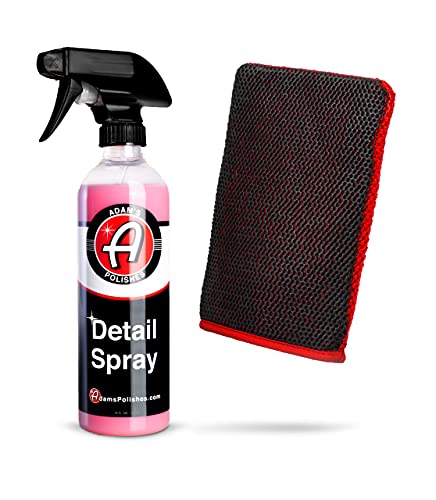
5. Adam’s Clay Mitt Combo
The brand-name combo that hands a first-timer everything but the bucket of water.
Adam’s Polishes is a household name in detailing, and this clay mitt combo is their answer to the “I want to try claying but do not know where to start” buyer. It is a medium-grade mitt made from Moya and microfiber, and the kit includes a bottle of Adam’s Detail Spray to use as lubricant. The manufacturer says a traditional clay bar takes about 2 hours, while this mitt cuts that down dramatically. Owners confirm the speed — one reported claying a white Tesla in about 20 minutes. Effectiveness is the overwhelmingly most-praised aspect, with quality and ease of use trailing close behind. The package weighs 0.69 kilograms, which is noticeably heavier than the Suds Lab, but that includes the spray bottle.
The honest perspective from the owner reviews is that this mitt is essentially the same product as some cheaper no-name mitts in terms of materials and performance. One owner called it “identical to a cheaper non-Adam’s mitt” with a slightly different color and deducted a star for the premium pricing. If you trust the Adam’s brand and want the guarantee that comes with it, this is a great pick. If you are purely value-focused, the Suds Lab or SPTA do the same job for less. The medium-grade material is more aggressive than the Adam’s Visco Clay Bar, so it can leave micro-marring that you will polish out. That is normal, but worth knowing before you start.
A few owners used it on body shop overspray on windows and restored them to about 98% normal, leaving only minor sparkle residue behind. The message is clear: use plenty of spray, keep the surface wet, and the Adam’s delivers a slick, shiny finish.
What makes it popular
- Comes with detail spray so you do not have to buy a separate lubricant
- Medium grade tackles overspray, water stains, and ferrous powder effectively
- Brand reputation with a satisfaction guarantee
The honest downside
- Premium price for what is essentially the same material as cheaper mitts
- Medium grade can leave light micro-marring that requires polishing afterward
- Combo is bulky — the spray bottle adds weight and packaging
Reach for this if: you are new to claying and want a ready-to-go kit from a trusted brand with clear instructions and included lubricant.
skip it if: you already have clay lubricant or quick detailer on your shelf — you are paying extra for a bottle you may not need.
6. The Rag Company Ultra Clay Decontamination Mitt
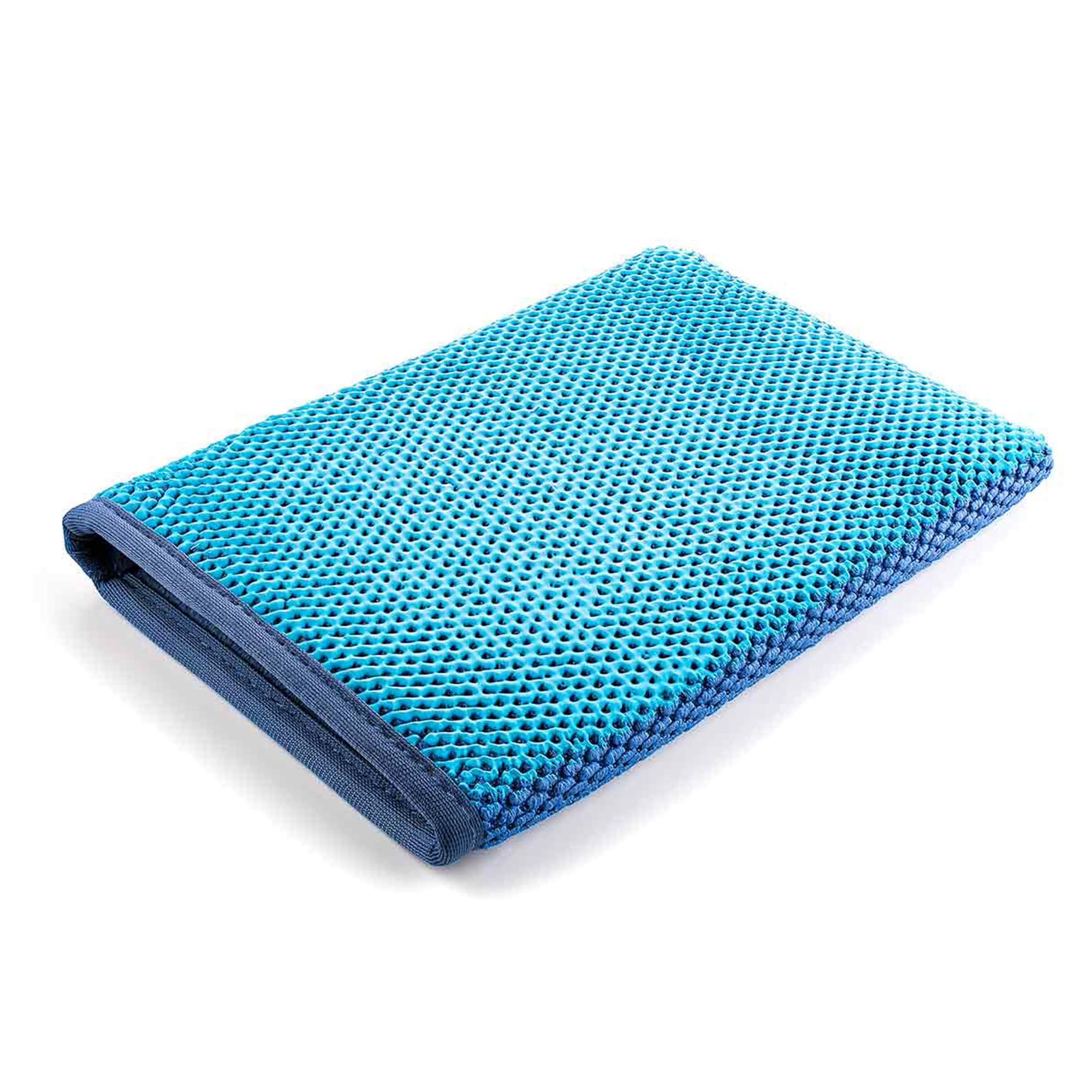
A fine-grade mitt from a microfiber specialist that is gentle enough for garage-kept paint.
The Rag Company has been making premium microfiber and detailing tools since 1999, and this Ultra Clay Mitt is their take on a fine-grade decontamination tool. It measures 8.7 inches by 5.7 inches and weighs about 4.97 ounces — noticeably heavier than the SPTA and Suds Lab, which gives it a more substantial feel in the hand. The synthetic clay face is very fine, designed to minimize paint damage while still lifting embedded contaminants. Effectiveness and quality are the most-praised aspects here, with owners reporting it clears contaminants in just a few swipes.
The honest reality from review data is that this mitt is not for heavy lifting. The fine-grade face struggles with smaller, deeper contaminants that a clay bar or medium-grade mitt would pull out. One owner called it “great for easy contaminants” but kept a traditional clay bar for the leftovers. Another owner found the mitt stuck to the packaging on arrival and solved it by freezing it — a helpful tip if you order one. Scratching feedback is mixed: some owners use it with good lubricant and report no scratches or marring, while others report scratching on painted surfaces. The difference likely depends on how much lubricant and pressure you use. Use a quality clay lube, let the mitt do the work, and do not press hard.
If you own a garage-kept vehicle that you detail regularly, this mitt is a safe, gentle maintenance tool that preserves your clear coat. If you are rescuing a neglected daily driver, go with a medium-grade pick instead.
The gentle touch verdict: Perfect for mild seasonal decontamination on a well-maintained car where you want to avoid any risk of marring.
The honest limitation: Not aggressive enough to replace a clay bar on paint that has never been clayed or has heavy embedded fallout.
7. Nanoskin AUTOSCRUB Medium Grade Surface Prep Mitt (AS-010)
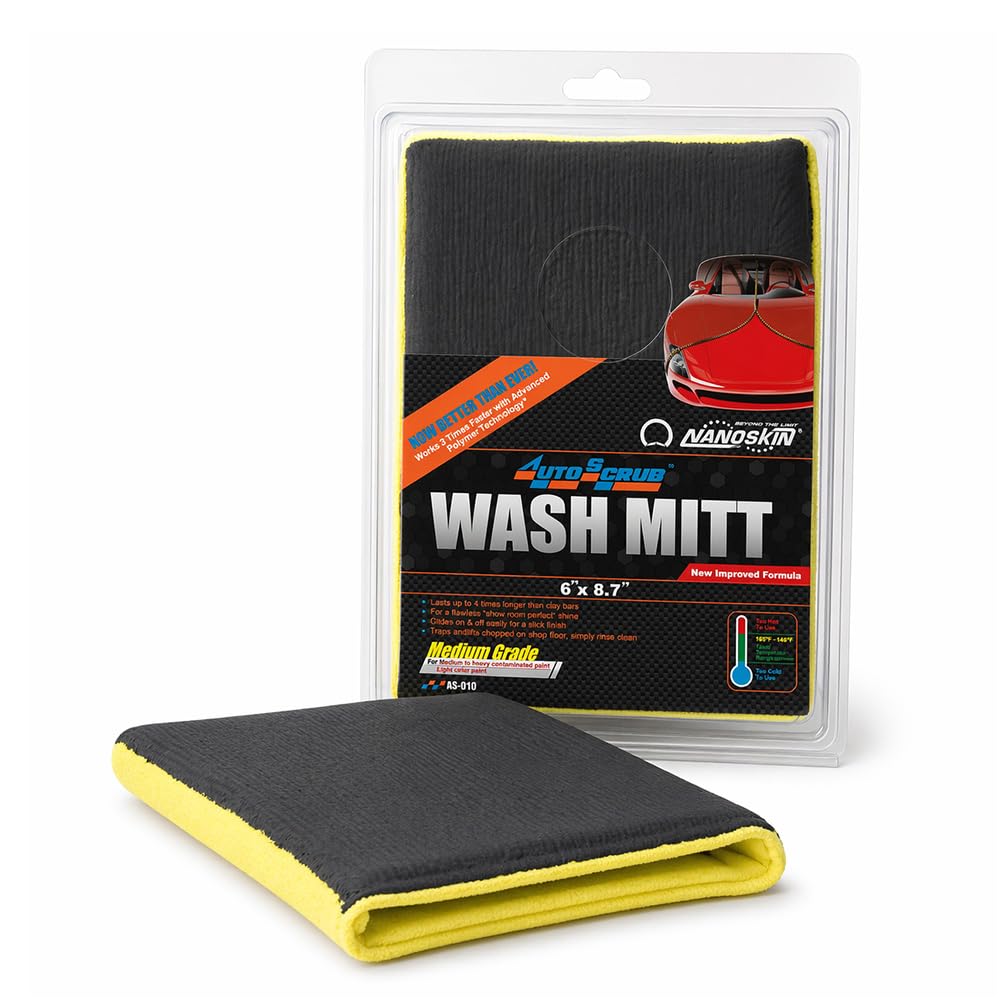
The big brother of the top pick — medium-grade rubber for the jobs that fine grade cannot touch.
If you read about the Nanoskin Fine Grade and thought “that looks perfect but my car needs more bite,” this is the answer. The Nanoskin AUTOSCRUB Medium Grade mitt (model AS-010) shares the same 8.7 x 6 inch dimensions and the same polymerized rubber and weft knitted microfiber construction, but with a grit number of 150 — significantly more aggressive than the fine grade. The manufacturer says it is formulated for heavily contaminated and light-colored painted surfaces. One owner used it on a 2000 Tundra that had never been clayed in 230,000 miles and cleaned the entire truck in about 30 minutes, removing heavy contamination easily. Another owner reported it removed 98% of oil-based overspray that was years old from a truck hood in a single pass.
The honest flip side is that the medium-grade aggressiveness leaves marring that will need paint correction afterward. The same owner who loved the overspray removal noted the medium grade left marring that required polishing. That is the trade-off: speed and cutting power versus a finish that is not ready for wax right out of the mitt. The medium grit is excellent for tackling heavy jobs, but you should budget time for a polishing step afterward. Effectiveness is the most-praised aspect by a wide margin, with quality second. There is also some mixed feedback on smoothness and a few reports of the polyside of the mitt starting to peel after several uses.
Compared to the Fine Grade Nanoskin, this medium-grade version is the one to reach for when you are dealing with a neglected vehicle, heavy industrial fallout, or old overspray. Use it with extra lubricant, and treat it as a prep step before a full paint correction.
Where it excels
- Removes years-old overspray and heavy contamination in one or two passes
- Same faster performance and durability claims as the fine-grade version
- Covers a full truck in about 30 minutes according to owners
The trade-offs
- Leaves micro-marring that requires polishing — not a one-step solution
- Needs more lubricant than fine grade to avoid excessive scratching
- Polyside peeling reported by a small number of owners after repeated use
Reach for this if: your car has never been clayed, has visible overspray, or you are prepping for a full paint correction anyway.
Think twice if: you want a “wash, clay, wax” one-afternoon project — the fine grade Nanoskin (Product 1) skips the polish step.
Understanding the Specs
Fine vs. Medium Grade — What Is the Difference?
Every clay mitt has a grade rating that tells you how aggressively it removes contamination. Fine grade mitts are formulated for lightly contaminated and dark-colored painted surfaces. They are less likely to leave micro-marring (tiny surface scratches) on your clear coat, making them a safer choice for maintenance details and dark paint that shows every imperfection. Medium grade mitts are formulated for heavily contaminated and light-colored painted surfaces. They cut faster and handle tougher deposits like old overspray and years of industrial fallout, but they may leave light marring that you need to polish out afterward. If you are not sure, start with fine and upgrade if the first pass leaves contamination behind.
How the Grit Number Relates to Aggressiveness
Some clay mitts include a grit number alongside their grade. A lower grit number (like 150 on the Nanoskin Medium Grade) means the clay surface is coarser and more aggressive at cutting contamination. A higher grit number (like 320 on the Adam’s Clay Mitt) means a finer, less aggressive surface. Think of it like sandpaper — lower numbers cut faster but leave a rougher finish that needs refinement. For general maintenance decontamination, a grit number above 200 is a safer bet for your clear coat. For heavy restoration work where you plan to polish anyway, a grit number below 200 saves time on the initial cut.
FAQ
Can I use a clay mitt without a lubricant spray?
How many times can I reuse a clay mitt before throwing it away?
Will a clay mitt scratch my car’s paint?
What is the difference between a clay mitt and a traditional clay bar?
Should I clay my car before applying ceramic coating?
Can I use a clay mitt on glass, wheels, and plastic trim?
How do I clean and store a clay mitt after use?
Is a fine-grade or medium-grade clay mitt better for a first-time user?
How long does it take to clay a full car with a mitt vs. a clay bar?
Can I use car soap as a clay mitt lubricant instead of buying a dedicated spray?
Final Thoughts: The Verdict
For most people, the clay mitt winner is the Nanoskin AUTOSCRUB Fine Grade because it balances speed, safety on dark paint, and the durability to survive a drop without a trip to the trash. If you want the medium-grade bite for heavy contamination at a budget-friendly price, grab the Suds Lab SC Synthetic Clay Mitt. And for first-timers who want a complete kit with lubricant included, the Adam’s Clay Mitt Combo is the one to reach for.
How We Picked
We do not accept paid placement. Every pick is matched to a real buyer and a real use-case; we do not hands-on test units.
Sources & Methodology
Specifications: manufacturer listings and product documentation. Review insights: verified customer reviews, as of July 2026. Pricing: not shown on this page (it changes often); check the current price via the retailer link.
As an Amazon Associate, WellFizz earns from qualifying purchases. This does not affect which products we feature.
Related Guides

Mo Maruf
I created WellFizz to bridge the gap between vague wellness advice and actionable solutions. My mission is simple: to decode the research and give you practical tools you can actually use.
Beyond the data, I am a passionate traveler. I believe that stepping away from the screen to explore new environments is essential for mental clarity and physical vitality.