Our readers keep the lights on and my smoothie glass nicely filled. As an Amazon Associate, I earn from qualifying purchases.
A character’s arm droops mid-pose. The face you just spent an hour detailing sags into a blob. That is the reality of using the wrong material for stop-motion animation. Claymation demands a clay that holds every finger-press, resists gravity under hot lights, and never hardens between takes. The wrong choice ruins entire shoots.
I’m Mohammad Maruf — the founder and writer behind WellFizz. I’ve spent countless hours analyzing the plasticity, oil content, sulfur levels, and long-term reusability of modeling clays to help animators skip the trial-and-error phase.
This guide compares the five leading non-drying clays on firmness, color range, safety certifications, and detail retention to identify the best clay for claymation projects of any scale.
How To Choose The Best Clay For Claymation
Claymation rigors are unique. The clay must endure constant manipulation, bright set lighting, and extended shooting sessions without cracking or collapsing. Selecting the right plastilina hinges on a few critical factors that directly affect your workflow.
Oil Base vs. Water Base
Water-based clays dry out within hours, shrinking and cracking your puppet’s surface. Only oil-based, non-drying plastilina remains permanently pliable, allowing you to adjust armatures weeks later without rebuilding. This is the single non-negotiable spec for any serious claymation project.
Sulfur Content and Mold Compatibility
If you plan to cast replacement puppet parts or duplicate armatures, sulfur-free clay is mandatory. Sulfur inhibits the cure of platinum-cure silicone rubbers, ruining molds and wasting material. Check the label for “sulfur-free” if your workflow includes silicone casting.
Firmness and Detail Retention
Clay that is too soft fails to hold fine facial expressions or sharp edges under continuous handling. A medium-firm plastilina that softens slightly with hand heat but firms back up at rest provides the best balance for detail work that must stay sharp across hundreds of frames.
Color Range and Mixability
Single-color white or gray blocks allow custom color mixing but require painting finished puppets. Multi-color sets containing pre-colored bars speed up armature dressing and reduce painting steps, ideal for projects with multiple characters or vibrant backgrounds.
Quick Comparison
On smaller screens, swipe sideways to see the full table.
| Model | Category | Best For | Key Spec | Amazon |
|---|---|---|---|---|
| MODOH Gray Professional | Oil-Based Plastilina | Professional sculptors & silicone mold makers | EN71 & ASTM Certified, Sulfur-Free | Amazon |
| Jovi 24-Color Set | Vegetable-Based Plastilina | Classrooms & young animators | 1.75 oz per bar, 24 vibrant colors | Amazon |
| Pepy Plastilina Gift Set | Vegetable-Based Plastilina | Color variety & non-staining work | 24 bars, 12 colors, vegetable-based | Amazon |
| ReArt Oil-Based White | Oil-Based Plastilina | Budget-friendly bulk sculpting | 2.6 lbs, includes sculpting tools | Amazon |
| Pepy Plasticine White | Oil-Based Plastilina | Entry-level non-drying sculpting | 2 lbs, CPSIA-certified non-toxic | Amazon |
In‑Depth Reviews
1. MODOH Gray Professional Plastilina
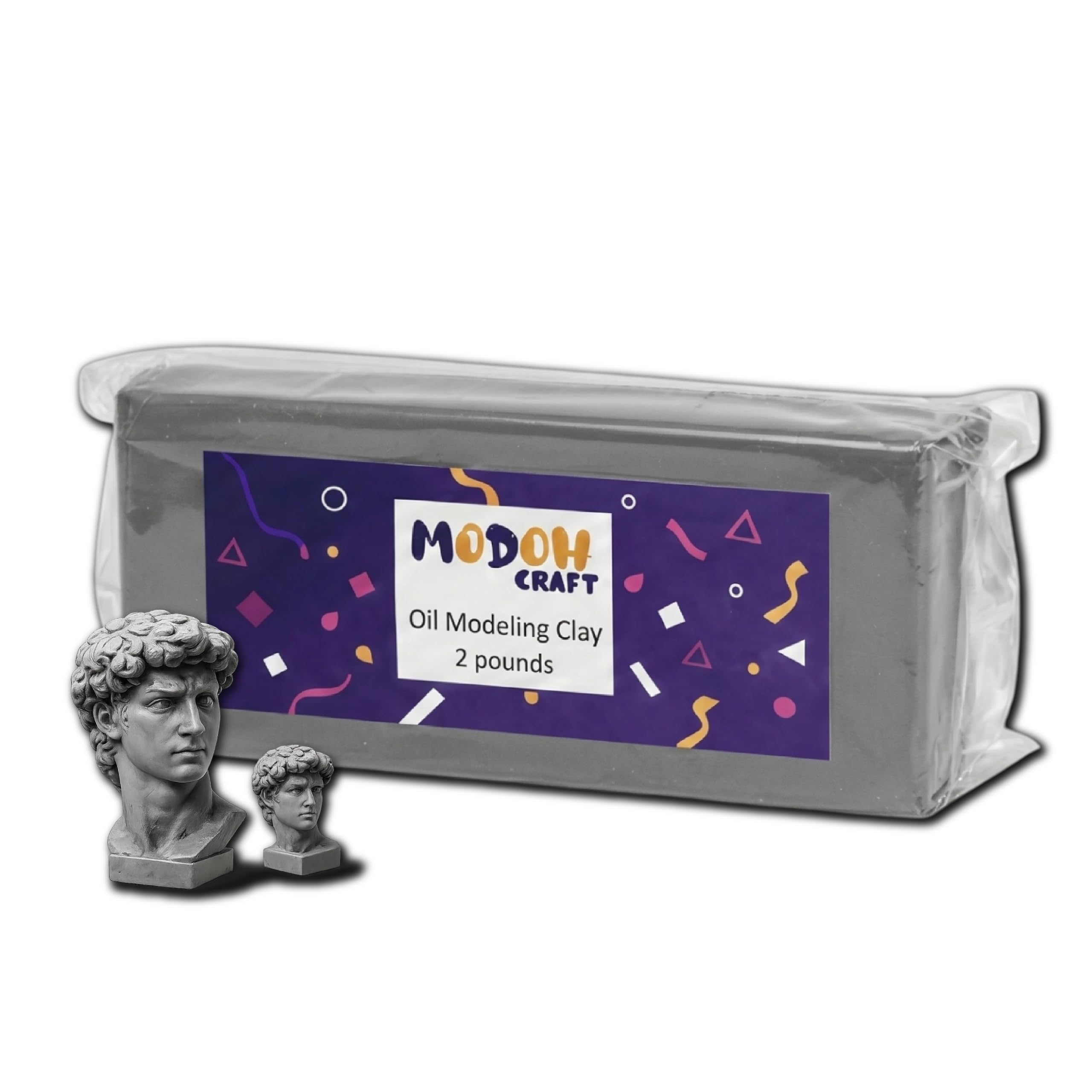
MODOH’s gray plastilina hits the ideal firmness for stop-motion armatures. It requires hand heat to soften but firms back up at room temperature, meaning facial details and sharp edges stay put frame after frame. The 2-pound block is dense enough for larger puppet heads and body segments without collapsing under their own weight.
The sulfur-free formula is a critical advantage for animators who cast replacement hands or facial expressions using platinum-cure silicone. Users report successful mold making without cure inhibition, saving hours of rework. The clay also carries dual EN71 and ASTM safety certifications, making it suitable for shared studio spaces and educational settings.
Cold shipping can stiffen the block temporarily, but a few minutes of hand warming or a low-heat hairdryer restores full plasticity. The included 2-year warranty provides confidence for repeat purchases. For serious claymation artists who need reliable performance under set lights, this is the most technically refined option tested.
Why it’s great
- Ideal medium-firmness holds fine detail without sagging
- Sulfur-free formula works with platinum silicone molds
- EN71 and ASTM certified for studio safety
Good to know
- Stiff when cold; requires hand warming before use
- Single gray color requires painting finished puppets
2. Jovi Plastilina 24-Color Set

Jovi’s 24-color pack is a rare find for animators who want a pre-mixed palette straight out of the box. Each 1.75-ounce bar covers a distinct hue including pastels and UV-reactive neon shades, eliminating the need to custom-mix colors for background elements or secondary characters. The vegetable-based formula feels slightly softer than traditional oil clay but remains non-drying indefinitely.
Classroom teachers and workshop leaders praise the non-staining surface — cleanup requires only soap and water, and the clay leaves no oily residue on desks or hands. The bars are individually wrapped, preserving color purity and preventing cross-contamination between hues during storage. European manufacturing quality is evident in the consistent texture across all 24 bars.
Some users note a faint plant-based odor that differs from conventional plastilina, though most find it pleasant or neutral. The softness works well for younger animators or claymation projects requiring quick character reshaping, but may be too pliable for ultra-fine facial detail work under hot lights. For stop-motion beginners, educational settings, or multi-character color coding, this set delivers exceptional value per bar.
Why it’s great
- 24 pre-mixed colors reduce painting time
- Non-staining and easy to clean
- Individually wrapped bars preserve color purity
Good to know
- Softer consistency may not hold ultra-fine details
- Vegetable-based scent noticeable out of the package
3. Pepy Plastilina Gift Set (24 Bars)

Pepy’s vegetable-based plastilina set includes two bars each of twelve different colors, providing 2.12 pounds total. The texture lands between soft and medium, smoothing easily onto armatures without excessive stickiness. Users report that the clay holds shape when cool but softens enough for fine adjustments under hand heat, a useful property for frame-by-frame character tweaks.
The non-staining formula is a standout for animators working on light-colored surfaces or fabric backgrounds. Traditional oil clays often leave grease marks that require setup replacement; Pepy’s plant-based composition avoids this entirely. The range includes both warm and cool primaries plus brown and black, covering most base puppet colors without mixing.
A handful of users note that the clay melts at slightly lower temperatures than oil-based alternatives, so set lighting should be monitored during long shoots. The bars also compress more easily than denser plastilinas, making them ideal for younger animators or quick prototyping. For projects prioritizing clean workspace and broad color availability, this set streamlines the pre-production phase.
Why it’s great
- Non-staining formula protects light-colored sets
- Two bars per color for extended use
- Smooths easily without excessive oiliness
Good to know
- Softer consistency may sag under hot studio lights
- Not sulfur-free; avoid with platinum-cure silicone
4. ReArt Non-Drying Oil-Based Modeling Clay

ReArt provides 2.6 pounds of white oil-based clay plus a set of sculpting tools, making it the highest-volume option in this roundup. The clay arrives in four bars that can be blended together or used separately for different puppet components. Users describe the consistency as slightly stiffer than average out of the package, requiring thorough kneading before it reaches working plasticity.
Once warmed, the clay holds pressed textures and sharp edges well, suitable for detailed facial features and costume folds. The non-drying property holds up across multiple sessions — animators report leaving projects for days and returning to clay that re-softens with hand warmth. The included tools cover basic shaping, smoothing, and carving functions, reducing the initial investment for newcomers.
A few users note that the clay can feel sticky when first worked, and that it may dry on the surface if left exposed for two days, though the mass re-plasticizes with manipulation. The white color serves as a neutral base for painting or for mixing custom pigments. For budget-conscious animators who need maximum material for large builds or repeated sculpting practice, this kit offers the most clay per unit.
Why it’s great
- Highest volume at 2.6 pounds for large projects
- Includes basic sculpting tools
- Holds fine detail after warming
Good to know
- Sticky when first worked; requires warm-up
- Surface may dry slightly after prolonged exposure
5. Pepy Reusable Plasticine Modeling Clay (White)

Pepy’s white plasticine block offers an affordable entry point into non-drying claymation material. The 2-pound slab arrives pliable out of the package and softens quickly with minimal hand warmth, reducing startup fatigue for beginners. CPSIA certification confirms non-toxic composition, suitable for animators of all ages.
Users consistently report that the clay remains reusable for six months or more when stored properly, and that it holds shape well for basic sculpting and mold making. The sulfur-free formula is a welcome bonus for hobbyists who may experiment with silicone casting later. The white color accepts pigment mixing effectively, allowing custom skin tones and character colors.
The main trade-off is the strong petroleum-based odor that transfers to hands during extended sessions. Some users also find the initial stiffness surprising, though this resolves with kneading. The clay lacks the firm snap-back of premium plastilinas, making ultra-fine details harder to maintain on complex puppets. For first-time claymation artists, classroom projects, or low-stakes prototyping, it provides reliable performance at a very accessible investment.
Why it’s great
- Affordable non-drying plastilina for beginners
- CPSIA-certified non-toxic and sulfur-free
- White base accepts pigment mixing
Good to know
- Strong petroleum odor transfers to hands
- Initial stiffness requires thorough kneading
FAQ
Can I use air-dry clay for claymation?
How do I prevent my clay from melting under studio lights?
Why does my silicone mold not cure when I use clay masters?
How many times can I reuse non-drying clay?
Is colored clay better than white or gray for claymation?
Final Thoughts: The Verdict
For most users, the best clay for claymation winner is the MODOH Gray Professional Plastilina because its medium-firm consistency, sulfur-free formula, and dual safety certifications provide the technical foundation every serious stop-motion project needs. If you want pre-mixed colors for faster character builds, grab the Jovi 24-Color Set. And for the highest raw volume at a budget-friendly entry point, nothing beats the ReArt 2.6-Pound Kit.

Mo Maruf
I created WellFizz to bridge the gap between vague wellness advice and actionable solutions. My mission is simple: to decode the research and give you practical tools you can actually use.
Beyond the data, I am a passionate traveler. I believe that stepping away from the screen to explore new environments is essential for mental clarity and physical vitality.