Our readers keep the lights on and my smoothie glass nicely filled. As an Amazon Associate, I earn from qualifying purchases.
Legs that feel heavy, throb at the end of a shift, or swell during a long flight are rarely just tired — they are signaling sluggish circulation. Compression socks apply graduated pressure to push blood back toward your heart, reducing fluid buildup, muscle fatigue, and the risk of deep vein clots.
I’m Mohammad Maruf — the founder and writer behind WellFizz. My analysis of this guide focused on verifying real-world compression integrity, fabric breathability, and seam placement across dozens of customer reports to separate medical-grade efficacy from marketing hype.
Whether you are a nurse logging twelve-hour shifts, a runner chasing recovery, or a traveler crossing time zones, the right socks make a measurable difference in how your legs feel by the end of the day — and this guide ranks the best circulation socks that consistently deliver on that promise.
How To Choose The Best Circulation Socks
Circulation socks are medical devices in disguise — picking the wrong pair means either zero therapeutic benefit or painful constriction. The three variables that define success are compression gradient, material durability, and anatomical fit.
Compression Gradient and mmHg Rating
Graduated compression means the greatest pressure sits at the ankle and decreases as the sock rises. Mild 15–20 mmHg works well for daily travel and prolonged sitting. Firm 20–30 mmHg is better for nursing shifts, pregnancy swelling, and chronic venous issues. Going too low wastes your money; going too high without medical need can restrict arterial flow.
Fabric and Breathability
Synthetic blends with spandex or elastane hold compression longer but trap sweat. Natural options like bamboo viscose wick moisture and feel softer on sensitive skin but may lose elasticity sooner. Copper-infused yarns add antimicrobial properties and help control odor during long wear cycles.
Anatomical Fit and Seam Design
A sock that bunches behind the knee or digs into the toe seam will ruin any compression benefit. Look for a wide, non-rolling top band and a seamless toe closure — especially if you have neuropathy or wear the socks inside shoes for hours. Calf height must stop roughly two fingers below the knee bend to avoid skin grooves.
Quick Comparison
On smaller screens, swipe sideways to see the full table.
| Model | Category | Best For | Key Spec | Amazon |
|---|---|---|---|---|
| Physix Gear 20-30 mmHg | Premium | All-day standing & recovery | 20–30 mmHg gradient | Amazon |
| Wellow Knee High | Premium | Travel & sensitive skin | Bamboo viscose fabric | Amazon |
| JOBST Relief 15-20 mmHg | Premium | Medical & daily office wear | Physician-recommended brand | Amazon |
| Bluemaple Copper 6-Pack | Mid-Range | Budget multi-pack rotation | Copper-infused graduated | Amazon |
| XZD 15-20 mmHg 3-Pairs | Mid-Range | Nursing & food service | Butter-soft fabric | Amazon |
In‑Depth Reviews
1. Physix Gear Compression Socks 20-30 mmHg

This is the pair that earns the top spot because it delivers true 20–30 mmHg graduated pressure without the fabric digging into your calf or bunching behind the knee. Users with severe knee osteoarthritis and post-injury swelling reported seeing ankle bones reappear after a single twelve-hour nursing shift — a strong indicator that the compression profile is correctly calibrated from toe to top.
The knit includes a cushioned sole and noticeable arch support, which helps prevent the sock from sliding down inside a work boot or athletic shoe. The floral design is woven directly into the fabric rather than printed, so it holds up through repeated washes and even through curious dogs without fraying.
Some users with longer legs found the sock reached too high, causing a wrinkle at the ankle and deep skin grooves. The toe box also runs narrow — the seam may leave the pinky toe exposed on wider feet. But for the combination of therapeutic compression, arch reinforcement, and durability, these remain the most consistent performer in this list.
Why it’s great
- Genuine 20-30 mmHg gradient eliminates swelling after long shifts
- Cushioned sole and arch support prevent sliding
- High-density knit survives machine washing without losing elasticity
Good to know
- May be too long for shorter legs, causing fabric bunching
- Toe area runs narrow, exposing pinky toe on wide feet
- Firm compression makes morning application necessary before swelling starts
2. Wellow Knee High Compression Socks 18–25 mmHg
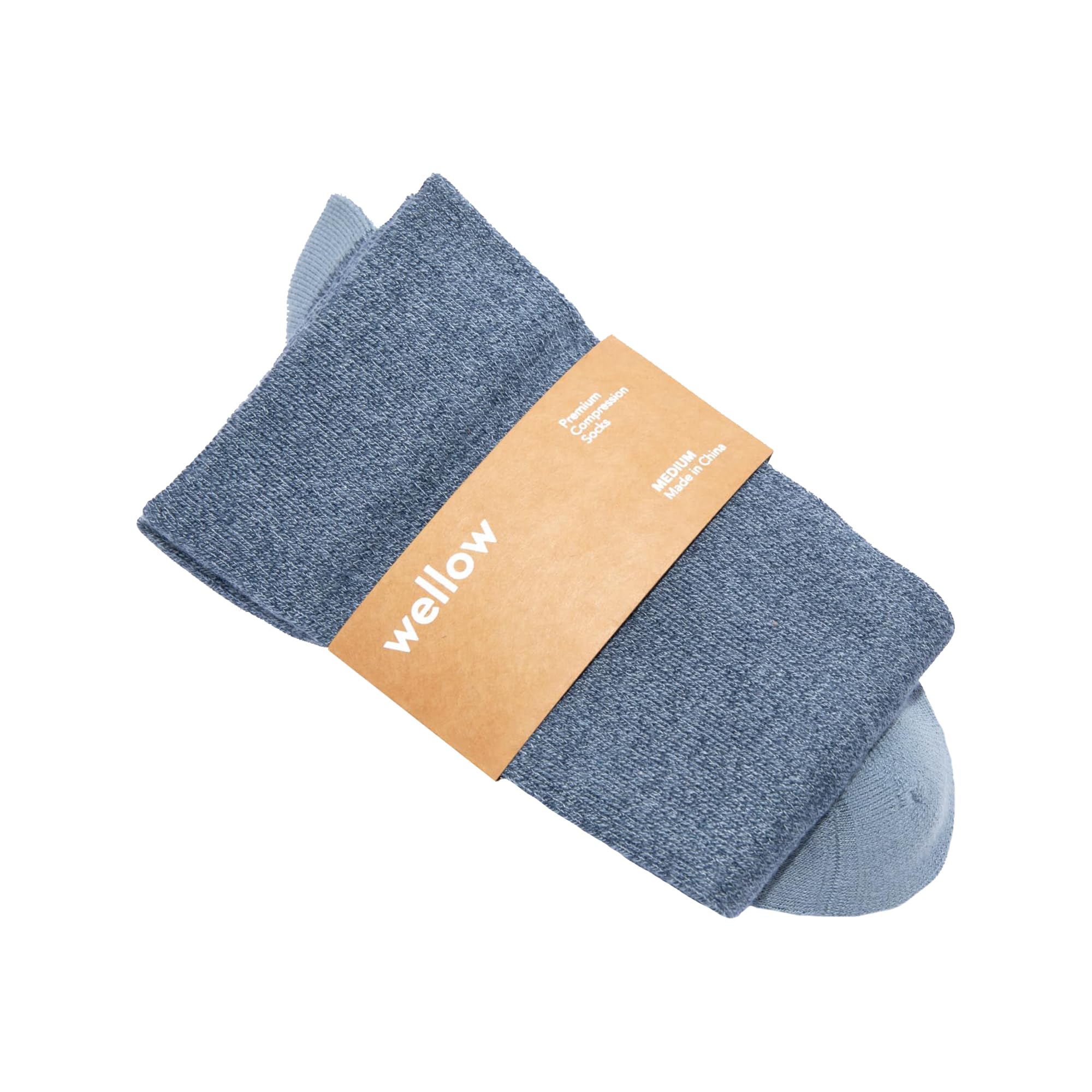
Wellow stands out because it uses bamboo viscose as the primary fiber, which gives the sock a noticeably thicker, softer hand feel than the standard nylon-spandex blends dominating this category. The compression sits at 18–25 mmHg — slightly gentler than the Physix Gear pair — making it the best option for travelers who want comfort during a twelve-hour flight without feeling like their legs are in a vice.
Multiple users confirmed that after long-haul travel, swelling was absent despite the sock feeling less restrictive to put on and remove. The wool-blend variant adds warmth, which is appreciated in cold airplane cabins but may be too insulating for summer wear. The color palette is limited compared to other brands, but the trade-off is fabric that breathes better than most synthetic competitors.
Because the material is thicker, these may not fit seamlessly into dress shoes or tight-fitting sneakers. The medium size accommodates a women’s size 10 well, but users with very slender calves reported the top band feeling loose. If you prioritize skin comfort and easy on-off over maximum compression, this is the pair to grab.
Why it’s great
- Bamboo viscose fabric is noticeably softer and less irritating than nylon blends
- Gentler compression makes application and removal easier for arthritic hands
- Effectively prevents travel-related swelling without feeling restrictive
Good to know
- Thicker knit runs warm in hot weather or during intense activity
- Top band may slip on very narrow calves
- Limited color and pattern options compared to competitors
3. JOBST Relief Knee High 15-20 mmHg
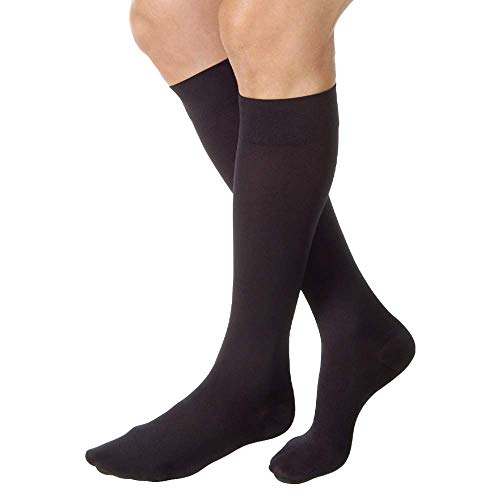
JOBST is the number-one physician-recommended compression brand in the United States, and the Relief model justifies that reputation through consistent sizing and predictable 15–20 mmHg pressure. The sheer knit is thinner than most competitors, which makes it the most practical choice for wearing under dress slacks, business casual attire, or inside uniform shoes without visible bulk.
The ankle-to-calf gradient is reliable — multiple reviews from frequent flyers noted that this was their constant companion for long-haul flights, holding its shape trip after trip. The unisex design accommodates both men and women, and the wide sizing chart helps match calf circumference without guesswork.
The main drawback is the toe seam placement: rather than sitting across the top of the toes, the seam lands directly on the tips, which some users find irritating during extended wear. The socks are also notoriously difficult to pull on — the sheer fabric lacks the grip of thicker blends. But for medical-grade compression with a brand name that insurance and podiatrists trust, JOBST remains a reliable pick.
Why it’s great
- Physician-recommended brand with proven medical-grade compression integrity
- Sheer knit fits discreetly under dress pants and office attire
- Durable fibers resist pilling and maintain pressure profile after repeated wear
Good to know
- Toe seam sits at the tips rather than on top, causing discomfort for some users
- Very difficult to pull on without a donning aid due to thin, slick fabric
- Higher price point compared to commodity-tier alternatives
4. Bluemaple 6-Pack Copper Compression Socks

The Bluemaple six-pack solves the most practical problem with compression socks: laundry frequency. Six pairs mean you can rotate through a full work week plus backup without needing to wash every night. The copper-infused yarn adds antimicrobial properties that help control odor, and the graduated compression profile starts strongest at the ankle before tapering up the calf.
Users consistently noted that these stay in place through full shifts and long flights without rolling down or bunching. The wide top band distributes pressure evenly, so there is no pinching behind the knee. The patterns are varied enough to match different outfits, and the fabric is breathable enough to prevent sweat buildup during active wear.
The compression level is moderate — it works well for mild swelling and general fatigue but does not reach the 20–30 mmHg range needed for chronic venous issues. A few users reported a mild chemical smell out of the package that dissipated after the first wash. The sizing runs slightly small, so measure carefully before ordering.
Why it’s great
- Six-pair bundle eliminates daily washing and extends sock lifespan
- Copper infusion reduces odor during long wear periods
- Wide top band stays put without rolling or pinching
Good to know
- Compression is moderate, not strong enough for severe edema
- Initial chemical smell requires first-wash treatment
- Sizing runs slightly small — measure calf and ankle carefully
5. XZD Compression Socks 15-20 mmHg 3-Pairs
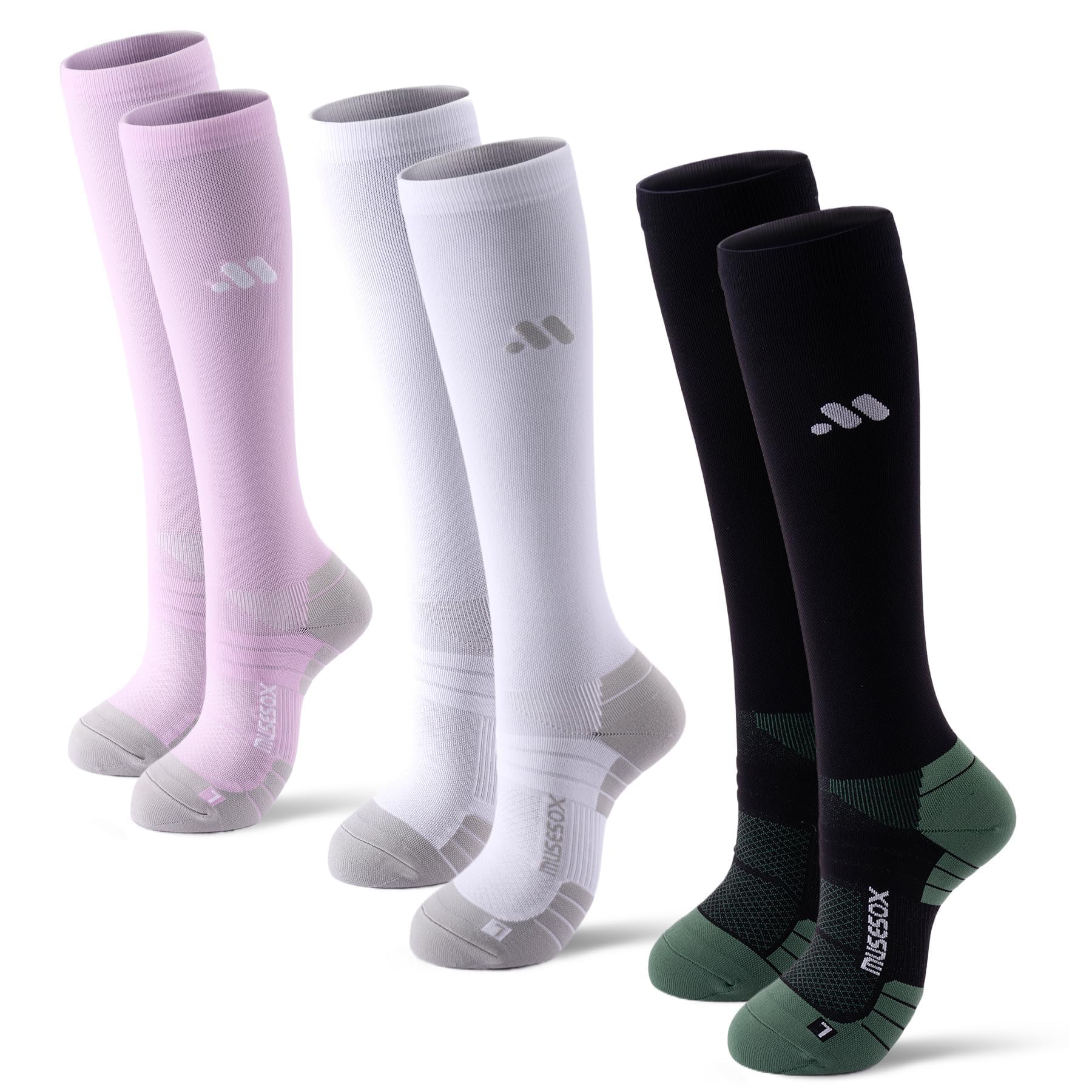
The XZD three-pack is marketed as a unisex option for nurses, pregnant women, and travelers, and the customer feedback validates that range. The 15–20 mmHg compression is effective enough to relieve calf pain after eight-hour food service shifts, yet the fabric is described as buttery soft — a texture that stands out against the rougher synthetic knits common at this tier.
One thoughtful design detail is the left-foot and right-foot markings printed inside the sock, which ensure the anatomical arch and heel pocket align correctly for maximum gradient effectiveness. The fit accommodates a twelve-inch calf circumference in medium without excessive stretching, and the fabric does not irritate the skin even after twelve straight hours of wear.
The trade-off is limited pattern variety — the color options are basic, and the aesthetic leans purely functional. The compression rating sits on the lower end of the therapeutic range, so it is not suitable for advanced venous conditions. But for anyone who needs a reliably comfortable, well-fitting sock for daily standing work, this three-pack delivers consistent value.
Why it’s great
- Buttery-soft fabric prevents itching and irritation during extended shifts
- Left/right foot markings ensure correct anatomical alignment
- True-to-size fit with accurate calf measurement guidance
Good to know
- Limited to basic colors and solid patterns only
- Compression at 15-20 mmHg not sufficient for chronic or severe swelling
- Elastic may loosen faster than premium brands with daily use
FAQ
How tight should circulation socks feel when worn correctly?
Can I wear compression socks overnight for circulation?
How do I know if my calf measurement requires medium or large sizing?
Final Thoughts: The Verdict
For most users, the circulation socks winner is the Physix Gear 20-30 mmHg because it delivers the highest therapeutic compression grade in a durable knit with arch support that stays put through grueling shifts. If you want gentler pressure with a bamboo-soft feel that is perfect for long-haul travel, grab the Wellow Knee High. And for a budget-friendly rotation that keeps odor under control, nothing beats the Bluemaple Copper 6-Pack.

Mo Maruf
I created WellFizz to bridge the gap between vague wellness advice and actionable solutions. My mission is simple: to decode the research and give you practical tools you can actually use.
Beyond the data, I am a passionate traveler. I believe that stepping away from the screen to explore new environments is essential for mental clarity and physical vitality.