Our readers keep the lights on and my smoothie glass nicely filled. As an Amazon Associate, I earn from qualifying purchases.
A flimsy board that slides, warps, and dulls your knives after a few months isn’t a tool — it’s a liability. The right chopping block is a thick, heavy slab of hardwood that stays planted, absorbs impact, and treats your cutlery with respect. Whether you’re breaking down a whole chicken or prepping a week’s worth of vegetables, the surface you cut on directly determines your knife’s lifespan, your prep speed, and the final quality of your food.
I’m Mohammad Maruf — the founder and writer behind WellFizz. I’ve spent hours combing through technical specifications, customer verification data, and construction methods so you don’t have to guess which boards are built to last and which are just eye candy.
This guide breaks down the seven best contenders on the market, comparing wood species, thickness, grain orientation, and real-world wear patterns to help you find the best chopping block for your kitchen.
How To Choose The Best Chopping Block
Not all slabs of wood are created equal. Picking a chopping block comes down to understanding the interaction between grain direction, wood density, board thickness, and your own cutting habits. A thin board made of soft wood will cup, crack, and dull your knives fast. A thick premium block made of hard maple or acacia can serve your kitchen for decades.
Grain Orientation: End-Grain vs. Edge-Grain
End-grain construction is the professional standard. The wood fibers are oriented vertically, so a knife blade passes between the fibers rather than slicing across them. This makes the surface self-healing — cuts close up after use — and much gentler on knife edges. Edge-grain boards are more affordable and easier to maintain, but they show cuts more readily and are slightly harder on knives. End-grain boards require more oiling because the fibers absorb and release moisture more easily.
Wood Species and Hardness
Hard maple is the benchmark. It’s dense enough to resist deep gouging yet porous enough to be easy on steel. Acacia is another strong option, offering natural water resistance and rich color variation, though it can be slightly more prone to checking on the ends if not properly sealed. Avoid softer woods like pine or rubberwood for heavy daily chopping — they dent and wear out fast.
Thickness and Weight
A minimum of 1.5 inches is necessary for a board to stay flat and resist warping over years of use. Premium blocks often hit 1.75 or even 2.25 inches. Heavier boards also stay put on the counter without needing a towel or silicone mat underneath. A 10 to 20-pound board will not slide when you’re bearing down on a butternut squash.
Juice Grooves and Handles
A juice groove is a must if you frequently cut meat or high-moisture produce like tomatoes and melons. Recessed finger grips or side handles make moving a heavy block safer and easier, especially when transferring a carved roast to a serving platter. Boards without handles are awkward to lift when wet.
Quick Comparison
On smaller screens, swipe sideways to see the full table.
| Model | Category | Best For | Key Spec | Amazon |
|---|---|---|---|---|
| Bevel & Bond Maple End-Grain | Premium End-Grain | Knife preservation & daily use | 1.75″ Thick End-Grain Maple | Amazon |
| John Boos CCB End-Grain | Heirloom End-Grain | Professional-grade endurance | 2.25″ Thick End-Grain Maple | Amazon |
| John Boos Platinum Edge-Grain | Commercial Edge-Grain | Heavy commercial prep | 1.75″ Thick 21-lb Maple | Amazon |
| QUELLUXE Acacia End-Grain | Extra-Large End-Grain | Stove cover & massive prep | 30″ x 20″ x 1.2″ Acacia | Amazon |
| WoodForChef Maple Edge-Grain | Premium Edge-Grain | Balanced value & performance | 24″ x 18″ x 1.5″ FSC Maple | Amazon |
| Winco WCB-1824 | Mid-Range Edge-Grain | Budget-friendly heavy duty | 1.75″ Thick Rubberwood | Amazon |
| BEZIA Bamboo Board | Entry-Level XL | Stove cover & charcuterie | 36″ x 24″ x 0.8″ Bamboo | Amazon |
In‑Depth Reviews
1. Bevel & Bond Maple End-Grain Cutting Board
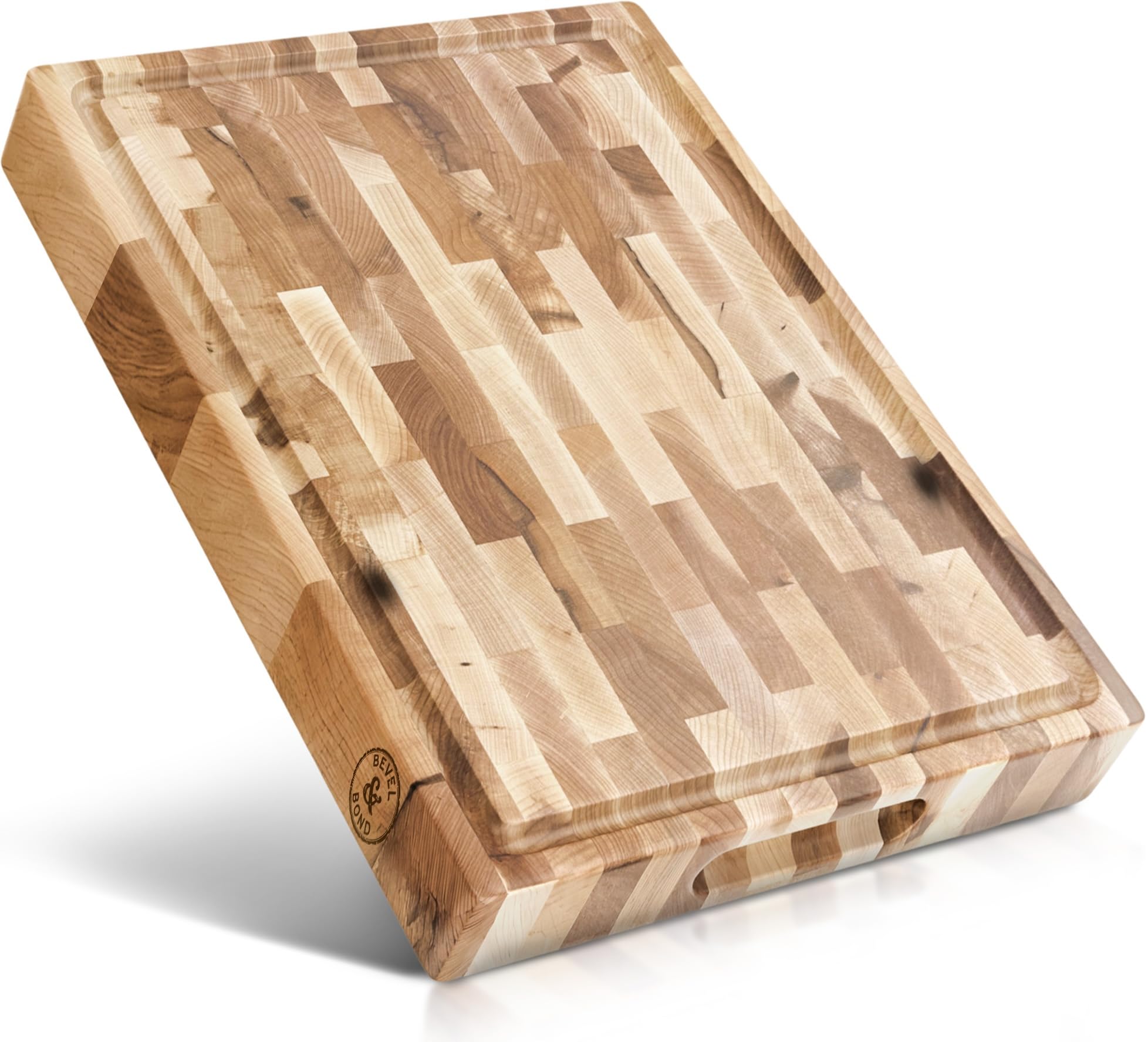
This is the board that checks every box for serious home cooks. Handcrafted in the USA from North American hard maple, the full 1.75-inch end-grain construction is thick enough to absorb heavy cleaver work without transferring shock to your counters. The self-healing surface means knife marks close up after each wash, keeping the board looking fresh for years. Pre-seasoned with food-safe mineral oil, it arrives ready to use right out of the premium gift box.
The rubber non-slip feet keep the board planted firmly during aggressive chopping, and the deep juice groove captures runoff from large cuts of meat effectively. At ten pounds, it is heavy enough to feel substantial without being a burden to move. Early users report no odor absorption from garlic or onion after a month of daily use — a strong indicator of the tight maple grain’s resistance to staining.
The main trade-off is that end-grain requires regular monthly conditioning with board balm to maintain its moisture balance and prevent the wood from drying out. Hand washing and immediate towel drying are mandatory. The 5-year warranty against manufacturing defects, plus the complimentary board balm upon registration, make this an easy long-term investment.
Why it’s great
- Self-healing end-grain surface is exceptionally gentle on knife edges
- Made in the USA with premium hard maple
- 5-year warranty with free board balm
Good to know
- Requires monthly conditioning with mineral oil or balm
- Heavy at 10 lbs, may be too large for small counters
2. John Boos CCB Series End-Grain Chopping Block

The CCB series from John Boos is an heirloom-grade butcher block. The 2.25-inch thickness is noticeably more substantial than almost any competitor, providing a rock-solid base that will never wobble or slide under heavy cuts. The end-grain construction features vertical maple fibers that self-heal over time, and the recessed finger grips on both sides make it manageable despite its weight. Made in the USA with nearly 140 years of manufacturing history behind it.
Reversible sides mean you can flip it to spread wear evenly, effectively doubling the surface lifespan. The oil finish arrives dry, so expect to apply several coats of mineral oil or Boos Mystery Oil before first use — some users report needing six or more applications. Once seasoned properly, the board resists deep cuts and bacterial absorption better than any plastic alternative. The 21-pound weight is a serious anchor on the counter.
The main concern is consistency. Several verified reviews mention glue joint separation or cracking within months, and others note rough surfaces on arrival. Quality control appears to vary, which is disappointing at this price point. Returns are straightforward through Amazon, but the risk of receiving a flawed unit is higher than with the Bevel & Bond board.
Why it’s great
- Extremely thick 2.25″ end-grain construction for decades of use
- Reversible design doubles the usable surface life
- Iconic American brand trusted by professional chefs
Good to know
- Inconsistent quality control with some units arriving cracked
- Requires heavy initial oiling before first use
3. John Boos Platinum Edge-Grain Cutting Board
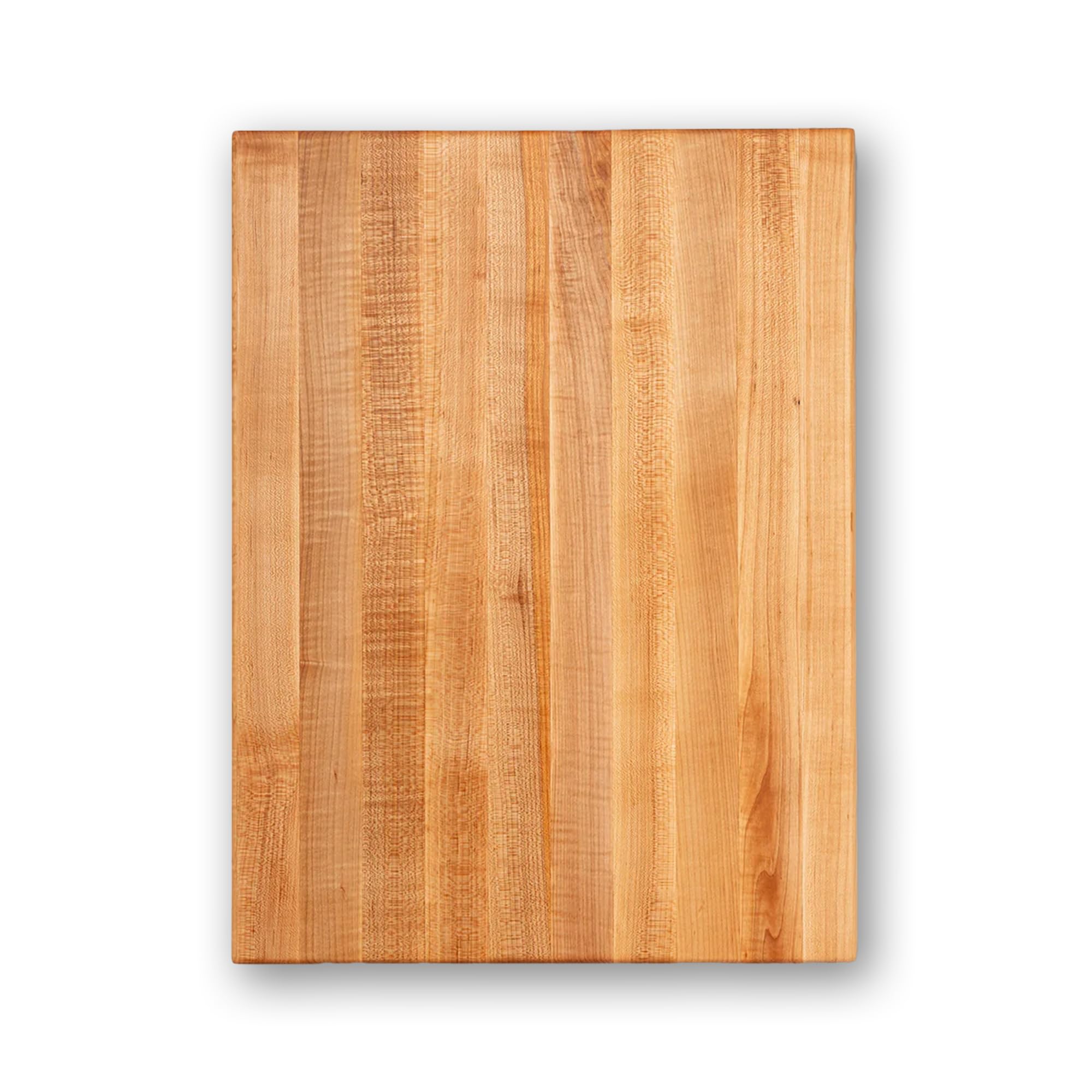
The Platinum series from John Boos uses edge-grain maple in a massive 24×18-inch format. At 1.75 inches thick and weighing nearly 19 pounds, this board is a commercial workhorse designed for high-volume kitchens. The edge-grain construction offers a smooth, tight surface that is easier to maintain than end-grain — less oil absorption, less tendency to dry out. The reversible design and 1/4-inch radius edges prevent chipping over years of daily abuse.
Recessed finger grips on both sides are essential for handling this slab. The board is pre-seasoned with an oil finish, but many users still recommend applying additional coats before heavy use. Hard maple is naturally antimicrobial and scratch-resistant, though edge-grain does show knife marks more visibly than end-grain. The FSC certification means the wood is responsibly sourced.
Some users report the board arriving with a rough or splintered surface, and others note minor warping. For the price, quality control should be tighter. Still, when you get a good unit, this board will outlast almost any other edge-grain option on the market. The 21-pound weight demands dedicated counter space and makes frequent moving impractical.
Why it’s great
- Massive 24×18 surface for high-volume meal prep
- Edge-grain requires less maintenance than end-grain
- Reversible with radius edges for durability
Good to know
- Quality control issues with rough surfaces reported
- Very heavy at 19 lbs, not easy to move or store
4. QUELLUXE Acacia Wood End-Grain Cutting Board

When you need a board that doubles as a stove cover or pasta rolling surface, the QUELLUXE delivers in a big way. The 30×20-inch footprint is enormous, made from solid acacia wood in an end-grain construction that resists deep cuts and scratches better than bamboo or thin edge-grain boards. The 1.2-inch thickness is lighter than the premium maple blocks, making it easier to lift on and off the stove, while still providing enough weight for stability.
Deep juice grooves around the perimeter capture liquid from carving turkeys or slicing watermelons. Recessed handles on the sides make carrying this large slab manageable. Acacia wood has natural water resistance and a rich dark brown grain that looks stunning on a countertop or dining table for charcuterie service. Initial reviewers note the board arrives with a thin layer of sealant that may need sanding and refinishing for best long-term performance.
The biggest caveat is the thickness — at 1.2 inches, it is thinner than the premium end-grain blocks and may warp if exposed to uneven moisture or heat. Some units arrived cracked, though replacements were provided. The acacia surface will show knife marks more quickly than maple end-grain, and the board requires regular oiling to maintain its appearance. Great as a multi-surface tool, but not the best primary chopping block for heavy daily use.
Why it’s great
- Extra-large surface doubles as a stove cover or pasta board
- End-grain acacia resists deep cuts and scratches
- Juice groove and handles for easy serving
Good to know
- Thinner profile may warp over time
- Some units arrive cracked or with uneven sealant
5. WoodForChef Maple Edge-Grain Cutting Board

WoodForChef delivers a FSC-certified hard maple board that hits the sweet spot between price and performance. The 1.5-inch edge-grain construction is substantial enough for heavy daily chopping, and the 24×18-inch surface provides ample room for multi-ingredient prep. Pre-seasoned with mineral oil and beeswax, this board arrives ready for immediate use — a rare convenience in the maple category where most boards arrive dry.
The deep juice groove runs along one side and effectively channels liquid away from your prep area. The edge-grain surface is smooth and tight, making it easier to clean and less prone to absorbing smells than end-grain boards. The wood is noticeably heavy at around 19 pounds, which keeps it planted firmly on the counter. Being reversible adds versatility, allowing you to reserve one side for raw meat and the other for produce.
Edge-grain does show knife marks over time, and some users reported the board felt dry despite the pre-seasoning, requiring additional oil coats before first use. The lack of rubber feet means the board can slide on smooth quartz or granite countertops. Not ideal for raw meat due to the porous nature of wood, but with diligent cleaning, it holds up well for vegetable and bread prep.
Why it’s great
- FSC-certified hard maple at a competitive price point
- Pre-seasoned with mineral oil and beeswax for immediate use
- Generous 24×18 surface for large-scale prep
Good to know
- No non-slip feet, slides on smooth countertops
- Edge-grain shows knife marks more than end-grain
6. Winco WCB-1824 Wooden Cutting Board

Winco’s WCB-1824 is a no-frills commercial workhorse that punches above its price tier. At 1.75 inches thick and 17.8 pounds, this rubberwood board offers thickness and weight typically found in boards costing more than double. The two recessed handles on the edges make it easy to maneuver despite the heft. The natural finish gives it an upscale look suitable for both prep and presentation.
Rubberwood is a dense hardwood that resists warping and cracking better than bamboo or poplar. The edge-grain construction provides a firm cutting surface that minimizes knife dulling compared to glass or plastic boards. Multiple five-star reviews confirm it holds up under daily cleaver hacking and rough cutting without splitting. The large 18×24-inch surface is ideal for restaurant-style prep, fitting over most sinks or stovetops temporarily.
The main downsides are shipping damage — boards frequently arrive with dented corners or minor cracks from handling. The light tan color shows dirt and stains more readily than darker maple or acacia boards. Rubberwood is not as hard as maple, so it will show deeper knife marks over time. It is also not reversible, limiting its usable lifespan to one side. Hand wash only; dishwashers will destroy it.
Why it’s great
- Excellent thickness and weight-to-price ratio
- Durable rubberwood resists warping under heavy use
- Recessed handles for easy transport
Good to know
- Light color stains and shows dirt easily
- Shipping often causes minor corner damage
7. BEZIA Extra Large Bamboo Cutting Board

The BEZIA board is all about surface area. At 36 by 24 inches, it covers almost an entire standard kitchen counter or sits perfectly over a glass stovetop to create an instant prep island. The alpine bamboo construction is hard and smooth, providing a decent cutting surface that won’t dull knives as quickly as glass. The juice groove on one side is strategically placed to catch liquids from carving a turkey or slicing ripe melons.
The 0.8-inch thickness keeps the board lightweight enough at 19 pounds for one person to move on and off the stove. Users in small apartments absolutely love using it as a stove cover to reclaim counter space. The bamboo is also reversible, giving you two usable sides. It works well as a charcuterie board for parties or a noodle board for rolling pasta dough.
Bamboo is harder than most domestic hardwoods, which means it’s actually harder on knife edges — the silica content in bamboo can dull blades faster than maple or acacia. At only 0.8 inches thick, the board is prone to warping if exposed to heat from a stovetop or uneven moisture. Some units arrived with visible smudges or dirt that didn’t fully clean off. Not suitable for heavy cleaver work or as a primary daily chopping board, but excellent as a secondary surface for large-format tasks.
Why it’s great
- Massive 36×24 surface perfect for stove covers or turkey carving
- Lightweight and reversible for versatile use
- Juice groove keeps counters clean during large cuts
Good to know
- Bamboo’s silica content dulls knives faster than wood
- Thin profile prone to warping over time
FAQ
How often should I oil my end-grain chopping block?
Can I put a thick chopping block in the dishwasher?
Is bamboo actually better than maple for a chopping block?
What size chopping block do I actually need for a home kitchen?
How do I prevent my wood chopping block from warping?
Final Thoughts: The Verdict
For most users, the best chopping block winner is the Bevel & Bond Maple End-Grain because it combines genuine end-grain self-healing construction, an ideal 1.75-inch thickness, and the best quality control in its class — all backed by a 5-year warranty. If you want a massive surface that doubles as a multi-purpose kitchen tool, grab the QUELLUXE Acacia End-Grain. And for a budget-friendly option that still delivers serious weight and thickness, nothing beats the Winco WCB-1824.

Mo Maruf
I created WellFizz to bridge the gap between vague wellness advice and actionable solutions. My mission is simple: to decode the research and give you practical tools you can actually use.
Beyond the data, I am a passionate traveler. I believe that stepping away from the screen to explore new environments is essential for mental clarity and physical vitality.