Our readers keep the lights on and my smoothie glass nicely filled. As an Amazon Associate, I earn from qualifying purchases.
Specs are compiled from manufacturer listings and verified buyer reviews and can change over time — please confirm the key details on the product page before buying.
Your watercolor wash needs to lay down flat and even, and that starts with the brush, not the paint. Goat hair is the traditional choice because it drinks up water and releases it in a smooth, controlled flood — exactly what you need for skies, backgrounds, and soft blends. The catch is that not every goat hair brush handles the same, and the biggest headache buyers report is bristle shedding that ruins a wet-in-wet layer.
I’m Mohammad Maruf — the founder and writer behind WellFizz. This guide is built by comparing the manufacturers’ published specifications and the patterns across verified customer reviews, so you get each pick’s real strengths and trade-offs instead of marketing spin.
Laying down a graduated wash or softening the edge of a petal depends on how width, hair quality, and handle shape change your stroke. The Silver Brush Limited Silver Mop at 2.09 inches is the best chinese goat hair brush for watercolor for most people because it blends without streaking, the natural goat hair keeps its shape after drying, and the shedding stops after a quick break-in — the combination of softness and reliability that makes it the top pick.
Our Picks at a Glance

How To Choose The Best Chinese Goat Hair Brush For Watercolor
Goat hair brushes stand apart from synthetic or sable options because the hair is hollow at the core, making it unusually absorbent and soft. That softness lets you lay down a wash with almost no brush stroke visible — but it also means the bristles are delicate and can shed if the ferrule (the metal band that holds the hairs) is crimped too loosely or too tightly. The three factors that matter most are brush width, bristle security, and handle style.
Width and what it does to your wash
A wider brush holds more water and paint in a single dip, which is why a 3-inch hake can cover a quarter-sheet of paper in one pass. Width is the single fastest way to change how your wash behaves — a 2-inch brush gives you control for smaller areas, while an 8-inch brush is for soaking an entire sheet before you even touch pigment. The trade-off is that very wide brushes shed more noticeably if the bristles are not properly secured.
Why bristle shedding is the top complaint
No matter the price, pure goat hair brushes tend to release a few loose hairs on the first several uses — this is a natural characteristic of the hair, not necessarily a defect. The key difference is whether the shedding stops after an initial break-in or continues indefinitely. A quality brush will lose some hairs the first two or three washes and then settle. Cheaper construction often leaves hairs unevenly cut, which prevents the tip from forming a clean chisel edge and causes ongoing shedding.
Handle shape and your painting position
A short handle (typically under eight inches) is best for tabletop work because it gives you precision control from the wrist. A longer paddle-style handle, common on traditional hake brushes, pushes your hand away from the paper and encourages loose, arm-driven strokes that suit large washes and Sumi-e techniques. The right handle is the one that matches whether you sit or stand while you paint.
Quick Comparison
| Model | Best For | Brush Width | Bristle Type | Unit Count | Amazon |
|---|---|---|---|---|---|
| Silver Brush Limited Silver Mop Size 20★ Best Overall | Precision blending & softening | 2.09 Inches | Premium Goat Hair | 1 Brush | Amazon |
| XDT#2805 Hake Brush 5Pc Set | Budget multi-size washes | Various (5 brushes) | Natural Goat Hair | 5 Brushes | Amazon |
| Creative Mark Mandalay Hake Brush | Large paper wetting & wide washes | 8 Inches | Professional Goat Hair | 1 Brush | Amazon |
In‑Depth Reviews
1. Silver Brush Limited 5518S-20 Silver Mop White Round Paintbrush
Our pick — 4.5★ from 500+ verified ratings; the strongest balance of quality and price.
Blends color so softly that owners call it “blending magic,” and the bristles spring back after every wash.
This brush is about precision and softness above raw width. At 2.09 inches, the round mop head holds a surprising amount of water for its size — enough to cover a mid-size wash area in one dip — but the real strength is how the bristles spring back to their original form after drying. That bounce-back is rare in goat hair brushes, where soggier bristles often stay flattened. Owners mention that the brush is “super soft,” blends color beautifully, and cleans up easily without losing its shape. The one adjustment needed is a break-in period: owners note it sheds a little on first use, but after an initial wash or two, the shedding stops completely. That pattern puts it ahead of the XDT set below, where customers note some brushes keep dropping hairs indefinitely.
The short lacquered handle and nickel-plated brass ferrule are built for tabletop painting — you keep your wrist close to the paper for controlled strokes. Unlike the 8-inch paddle-handled Creative Mark Mandalay below, this one is not for soaking a full sheet of paper; it is for softening edges, blending two wet colors together, or applying a smooth translucent glaze. Quality is what owners praise most, followed closely by its blending performance. The caveat is that beginners who hit heavy initial shedding may panic — as one experienced buyer put it, “I suggest washing it with warm water multiple time, and trimming before use.” That is standard preparation for pure goat hair, not a defect.
Why It Wins
- Blends color softly without leaving streaks — owners call it “blending magic.”
- Goat hair stays ultra-soft when wet and reforms after drying, unlike cheaper brushes that flatten out.
- Nickel-plated ferrule resists rust and keeps bristles secure once initial loose hairs are shed.
Know Before You Buy
- Initial shedding is expected on first few uses; needs a warm-water wash and trim before it settles.
- Round mop shape is less suited for covering large, flat areas than a flat hake brush like the Creative Mark Mandalay.
Grab It For: Artists who spend most of their time blending, softening edges, and laying down controlled washes from a seated tabletop position.
Think Twice If: You need a wide brush for wetting a full sheet of paper or covering large backgrounds in as few passes as possible.
2. Creative Mark Mandalay Professional Goat Hair Hake Brush – 8″ Wide
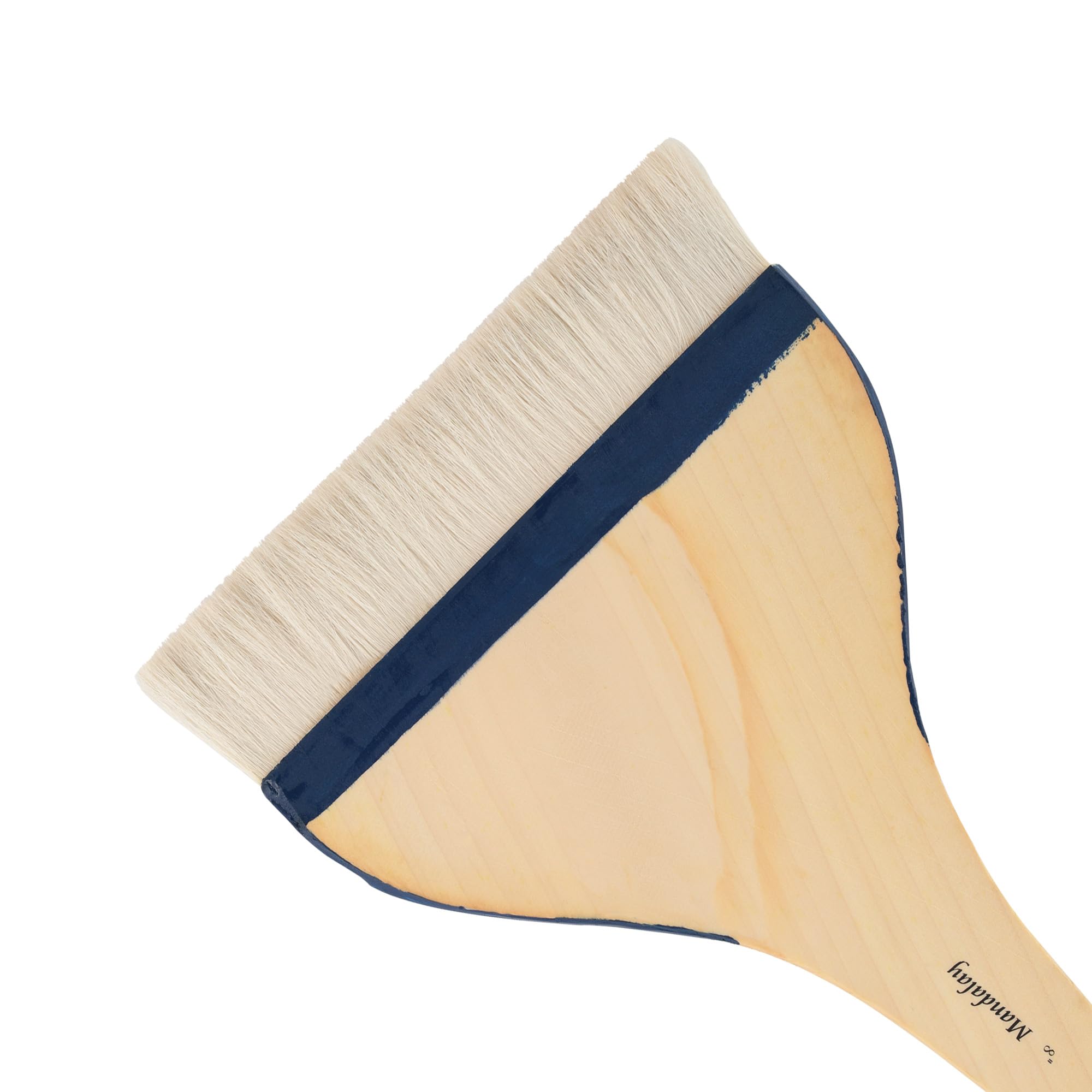
An 8-inch wall of goat hair that holds a river of water and releases it in a single, sweeping pass — nearly four times the width of the Silver Mop round.
This is the brush you reach for when you want to wet an entire sheet of watercolor paper before you even touch pigment. The 8-inch width holds more water than any smaller brush — nearly four times the width of the Silver Mop round above — and the super-soft goat hair bristles release that water smoothly, so you get an even coating across the paper without puddles. Owners who use it for ceramic glazes, platinum prints, and kiln washes confirm it applies an amazingly even layer every time. The traditional paddle handle shifts your grip away from the paper, encouraging the loose, full-arm motion that gives washes that fluid, natural look.
The honest trade-off is shedding: reviewers point out that the brush sheds heavily on the first use, and without combing out the loose hairs beforehand, those strays can ruin a finished print or wash. One owner who works with platinum prints noted the brush “sheds heavily initially, ruining first prints; requires combing out loose hairs before use.” That initial prep is common with all goat hair hake brushes at this width, but the 8-inch head has more hair to lose. Once the loose hairs are gone, owners say the brush performs beautifully for watercolor washes, Sumi-e, and paper sizing.
The Real Performance: Owners love the soft, absorbent bristles that hold “a lot of water” and the even coatings it delivers. The setup step of combing out loose hair is non-negotiable — skip it and the brush will drop hairs into your work. For the price, it is a studio-grade tool for anyone who regularly paints large backgrounds or soaks paper.
Pick This For: Watercolorists who work on full sheets of paper and need one clean sweep to lay down a wash or wet the surface evenly.
Look Elsewhere If: You paint small details or tabletop pieces where a brush this wide would feel clumsy, or you prefer not to spend time prepping bristles out of the package.
3. XDT#2805 Hake Brush 5Pc Set – Flat Watercolor Brush with Goat Hair
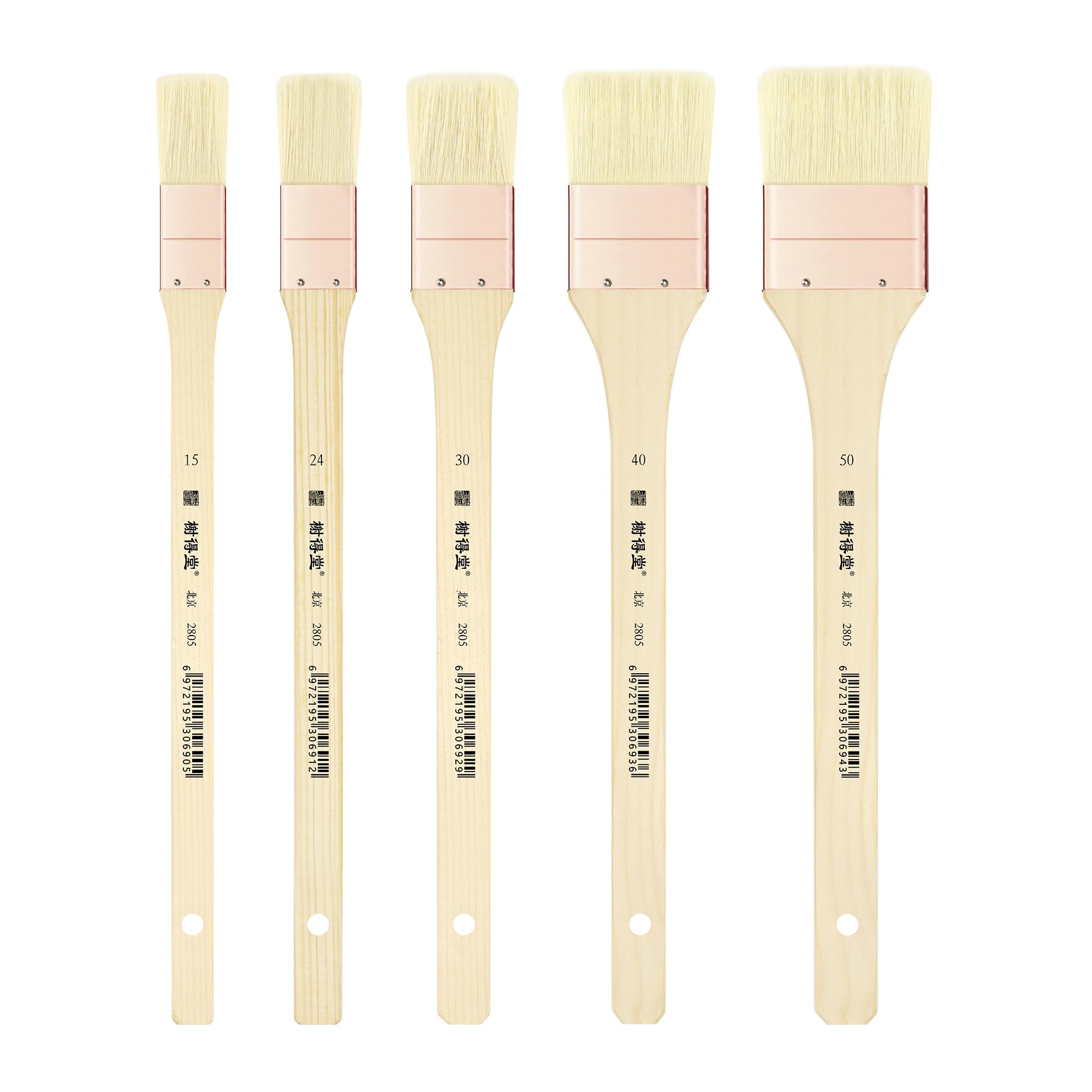
Five flat hake brushes at a price that undercuts most singles — but consistency varies more than the Silver Mop or the Mandalay.
This set gives you five brushes across different widths, which means you get a range of wash sizes for the cost of roughly half of what the 8-inch Creative Mark alone runs. The natural goat hair bristles are absorbent and the flat design suits broad strokes, skies, and backgrounds. Some owners have had great luck: they report the brushes keep their shape, clean up easily, and “don’t shed at all.” The brushed nickel ferrules (the metal bands holding the hairs) are reinforced to reduce loosening, and the lightweight tapered handle cuts down on fatigue during long painting sessions.
The inconsistent reality is that quality control varies. While “durability” is the most commonly praised aspect, a meaningful number of owners describe the quality as poor and point out ongoing bristle retention issues. As one buyer put it, “the hairs fall out and it is impossible to get them to form a chiseled edge with them as the hairs are not all the same length.” That uneven hair length means the tip cannot hold a clean shape for controlled strokes — fine for wet-on-wet or loose washes, but frustrating if you need a precise edge. The shedding issue here is more persistent than on the Silver Brush round mop above; where that brush sheds briefly and stops, some of these brushes keep dropping hairs. For the price, it is a low-risk way to try goat hair hake shapes, but plan on using these mainly for broad, unrestrained washes where an occasional loose bristle is less noticeable.
What Works
- Five brushes for one low price — a chance to try several hake widths at once.
- Many buyers find them durable, easy to clean, and shed-free out of the package.
- Tapered wooden handle reduces arm fatigue during large wash strokes.
What You Risk
- Uneven hair lengths prevent some brushes from forming a sharp chisel edge for controlled strokes.
- Quality is split: some units shed persistently while others perform fine — no reliable way to tell before opening.
Best For: Beginners who want to experiment with hake brushes across multiple sizes without a big investment, or painters who stick to loose wet-in-wet techniques where minor shedding is not a disaster.
Not Ideal For: Artists who need crisp edges or rely on a brush tip for detail work — the uneven bristle lengths here will fight you.
Understanding the Specs
Brush Width
This is the single most important number for a goat hair wash brush. Width determines how much water and paint the bristles can hold in one dip. A brush around 2 inches, like the Silver Mop, is for controlled blending and smaller areas. An 8-inch brush, like the Mandalay hake, can wet or wash a full sheet of paper in one pass. Wider is not automatically better — it depends on whether you work large or small.
Bristle Shedding and Preparation
Pure goat hair is hollow at the core, which makes it wonderfully absorbent but also means loose hairs are common on a new brush. The difference between a good brush and a frustrating one is whether the shedding stops after an initial wash-and-trim routine. Plan on rinsing a new goat hair brush in warm water, combing out any loose hairs, and optionally trimming a few strays before first use — this is standard care, not a sign of a bad brush.
FAQ
Why does my new goat hair brush shed so much?
What is the difference between a hake brush and a round mop brush?
Can I use a goat hair brush with oil or acrylic paint?
How do I clean a goat hair watercolor brush without damaging it?
Is a wider brush always better for watercolor washes?
Will a 5-piece hake set cover all the widths I need?
Should I trim the bristles on a new goat hair brush?
Can a round mop brush replace a flat hake for large backgrounds?
How do I know if the goat hair in my brush is high quality?
Final Thoughts: The Verdict
For most buyers, the chinese goat hair brush for watercolor winner is the Silver Brush Limited Silver Mop because it blends and softens color without streaking, keeps its shape after drying, and the shedding stops after a quick break-in — the combination of softness and reliability that makes it a favorite among literally hundreds of owners. If you need to wet a full sheet of paper or paint giant backgrounds in one sweep, grab the Creative Mark Mandalay 8-Inch Hake. And for dipping into goat hair on a budget with a range of sizes, the XDT 5-Piece Hake Set is the low-risk entry point, as long as you plan for the occasional uneven hair and accept some preparation work.
How We Picked
We do not accept paid placement. Every pick is matched to a real buyer and a real use-case; we do not hands-on test units.
Sources & Methodology
Specifications: manufacturer listings and product documentation. Review insights: verified customer reviews, as of July 2026. Pricing: not shown on this page (it changes often); check the current price via the retailer link.
As an Amazon Associate, WellFizz earns from qualifying purchases. This does not affect which products we feature.
Related Guides

Mo Maruf
I created WellFizz to bridge the gap between vague wellness advice and actionable solutions. My mission is simple: to decode the research and give you practical tools you can actually use.
Beyond the data, I am a passionate traveler. I believe that stepping away from the screen to explore new environments is essential for mental clarity and physical vitality.