Our readers keep the lights on and my smoothie glass nicely filled. As an Amazon Associate, I earn from qualifying purchases.
Specs are compiled from manufacturer listings and verified buyer reviews and can change over time — please confirm the key details on the product page before buying.
Walking down the pet food aisle can feel like a minefield — bags labeled “small animal” are often packed with seeds, nuts, and dried fruit that can wreck a chinchilla’s sensitive digestive system. The real key is finding a food that delivers a consistent, high-fiber pellet without the sugary extras. This guide cuts through the confusion to show you the five foods that actually meet a chinchilla’s strict nutritional needs.
I’m Mohammad Maruf — the founder and writer behind WellFizz. This guide is built by comparing the manufacturers’ published specifications and the patterns across verified customer reviews, so you get each pick’s real strengths and trade-offs instead of marketing spin.
Whether you are a first-time owner or have cared for chinchillas for years, the right diet makes all the difference. Here is what you need to know before you pick the best chinchilla food for your pet’s health and happiness.
Our Picks at a Glance


How To Choose The Best Chinchilla Food
A chinchilla’s digestive system is built for a steady stream of high-fiber forage, not sugary treats. The wrong food — especially mixes packed with dried fruit, corn, or nuts — can lead to obesity, dental disease, and gastrointestinal stasis, a serious condition. Here is what separates a solid daily staple from a risky option.
Look for Pellets, Not Mixes
Uniform pellets force your chinchilla to eat a balanced bite every time instead of picking out the tasty, sugary bits and leaving the rest. A good chinchilla food is a plain pellet with no seeds, nuts, dried fruit, or colored pieces mixed in. That “foraging mix” packaging is a red flag, not a premium feature.
Timothy Hay as the First Ingredient
The foundation of any chinchilla diet is grass hay, and Timothy hay is the gold standard for adult chinchillas. It is high in fiber and lower in calcium and protein than alfalfa, which matters because too much calcium can lead to bladder stones in adult chinchillas. Alfalfa hay is best reserved for growing juveniles, pregnant or nursing females, or underweight seniors.
Guaranteed Analysis: Fiber and Protein
Check the guaranteed analysis on the bag. A healthy chinchilla pellet should have a minimum crude fiber content of around 18-20% and a crude protein level between 14-16%. Anything significantly higher in protein or lower in fiber is not a good fit for a chinchilla’s slow digestive system.
Quick Comparison
| Model | Best For | Item Form | Weight | Key Ingredient | Amazon |
|---|---|---|---|---|---|
| Kaytee Timothy Hay★ Best Overall | Daily forage & fiber supplement | Straw | 3 lb | Timothy Hay | Amazon |
| Oxbow Garden SelectAlso Great | Picky eaters & uniform nutrition | Pellet | 3 lb | Timothy Hay | Amazon |
| Supreme Science Selective | Senior or underweight chinchillas | Pellet | 4.4 lb | Vegetable blend | Amazon |
| Mazuri Chinchilla Food | Vet-recommended nutrition | Pellet | 2.5 lb | Timothy Hay | Amazon |
| Gold Buckle Co Alfalfa Hay | Baby or recovering chinchillas | Hay | 9 lb | Alfalfa Hay | Amazon |
In‑Depth Reviews
1. Kaytee Timothy Hay
Our pick — over 4.5★ from 14,000+ verified ratings; the strongest balance of quality and price.
The timeless bulk hay that keeps a chinchilla’s digestive system grinding all day long.
Remember that chinchillas need unlimited hay alongside their pellets. This is not a complete food on its own, but it is a non-negotiable part of the diet. Kaytee’s Timothy hay is hand-selected, grown without pesticides, and not genetically engineered. The 3-pound bag delivers long fiber strands that are crucial for dental health — chewing hay wears down ever-growing teeth — and gut motility. Buyers consistently describe it as “great value, fresh, soft green hay with clean scent.”
Compared to the Gold Buckle Co alfalfa hay that follows, this is a lighter bag — 3 pounds versus 9 pounds — and is made from Timothy hay instead of alfalfa. That makes it the better choice for daily maintenance of an adult chinchilla. The main consistency issue is that some bags have more broken pieces and dust near the bottom, which can irritate sensitive noses. It is a minor trade-off for a product that has been a trusted name for over 150 years in the small animal world.
Pair this with one of the pellet options above — the Oxbow Garden Select or the Mazuri — and you have a complete, balanced diet. One rabbit owner noted their pets “eat fast and the cost is great,” and the same applies to a hungry chinchilla who needs a constant supply of clean hay.
Key Benefits
- Hand-selected Timothy hay grown without pesticides or genetic engineering
- Long fiber strands support dental health and digestive motility
- Trusted brand for over 150 years with consistent quality reported by buyers
What to Watch For
- Bottom of the bag can contain more dust and broken pieces than the top layer
- Hay is a supplement, not a complete diet — must be paired with a pellet food
Use it as: Your chinchilla’s unlimited daily hay alongside a high-quality pellet to ensure complete nutrition.
Switch if: Your chinchilla has a very sensitive respiratory system and reacts to the dusty bits at the bottom of the bag.
2. Oxbow Animal Health Garden Select Chinchilla Food
The nutritionally complete pellet that stops picky eaters from cherry-picking their dinner.
This food tackles the biggest headache with chinchilla feeding head-on: selective eating. Every pellet is exactly the same, so your chinchilla cannot sort through for tastier, less healthy bits and leave the rest. That matters because an unbalanced diet is the fast track to nutritional deficiencies. Each uniform bite is packed with a garden-inspired recipe that is fortified with vitamins and minerals for chinchillas of all ages, free of soy and wheat.
The bag weighs 3 pounds, which gives it a clear size advantage over the 2.5-pound Mazuri bag below for a similar price tier. Buyers report their chinchillas “absolutely love these pellets” and that the brand is trustworthy — one owner noted it is “the first chinchilla-specific food with Timothy grass as first ingredient.” Oxbow has been in the small animal nutrition game for over 30 years, partnering with leading veterinarians and nutritionists to formulate these diets.
If you are coming from a seed mix, expect a smooth transition. The pellets have a natural herbal aroma that seems to win over even the fussiest chinchillas. One reviewer summed it up: “It keeps my chinchilla alive and he doesn’t have any health issues other than being 20 years old.”
Why It Stands Out
- 100% uniform pellets prevent selective eating and ensure balanced nutrition
- Formulated without soy, wheat, or GMOs — Project Non-GMO verified
- Timothy hay is the first ingredient, supporting healthy digestion with high fiber
The Trade-off
- The 3-pound bag is a modest size for multi-chinchilla households
- Some owners on a budget may find it pricier than basic grocery store options
Reach for this if: You want a no-nonsense pellet that forces your chinchilla to eat a complete, vet-formulated diet without picking out the goodies.
Consider something else if: You are feeding a chinchilla that needs to gain weight quickly and may benefit from a higher-calorie supplement like alfalfa hay.
3. Supreme Petfoods Science Selective Chinchilla Food

The dense, crunchy pellet that rescued senior chinchillas when nothing else worked.
This 4.4-pound bag is the biggest pellet offering in this roundup, and it earns its premium reputation through real-world results — especially for aging or underweight chinchillas. The pellets are large, crunchy, and easy for a chinchilla to hold and gnaw, which helps with dental wear. It is fortified with prebiotics for digestive health and has a balanced calcium-to-phosphorus ratio that supports older kidneys.
Owners mention some genuinely dramatic turnarounds with this food. One owner described how their emaciated senior chinchilla, who was given a comfortable end-of-life prognosis by a vet, gained healthy weight within 4 months of switching to this food — plus their fur grew fluffier and energy returned. Another reviewer, who runs a chinchilla rescue and has cared for over 700 chinchillas, switched from Oxbow to Supreme on veterinary advice, finding it easier for senior and dental-challenged chinchillas to digest.
Unlike the Oxbow Garden Select, which is bred to prevent selective feeding, this food relies on its palatability to win over picky eaters. One owner noted that it is the “only food owner’s 13-year-old chinchilla will eat,” proof of its appeal. There is no added sugar either, so that enthusiastic eating habit is purely taste-based nutrition, not a sugar addiction.
Key Strengths
- Proven track record with senior and emaciated chinchillas for weight gain and recovery
- Large, crunchy pellets are easy for older chinchillas to hold and chew
- Zero added sugar, high fiber, and prebiotics support digestive health
Real Limitation
- Heavier bag (4.4 lb) means a higher upfront cost than the 3-lb options
- Rescue owners wish the bags were even bigger for multi-chinchilla bulk feeding
Ideal for: Owners of senior chinchillas, underweight pets, or any chinchilla that has rejected other brands.
Hold back if: Your chinchilla is a healthy adult on a budget, and the larger bag cost does not fit your feed cycle.
4. Mazuri Chinchilla Food

The 2.5-pound bag with a massive reputation that punchy inches above its weight class.
At 2.5 pounds, this is the smallest bag in the lineup, but do not let the size fool you. Mazuri is a brand backed by Land O’ Lakes and is widely recommended by exotic veterinarians. The formula includes live probiotics for gut health and flaxseed for omega-3 fatty acids, which support a shiny coat and overall energy. One reviewer noted that “we made the switch to this food for our chinchilla a few years back and her fur is healthy, she is energetic, and she’s getting the nutrition that she needs.”
The pellets are Timothy hay-based, making them a good match for the Oxbow Garden Select in terms of foundational ingredients. However, where the Oxbow focuses on preventing selective eating, Mazuri leans into digestive support. The sweet smell and high palatability are a plus for picky eaters, and the 4.8-star rating across 409 reviews speaks for itself. Several buyers mentioned their vet explicitly approved this food, which adds a layer of confidence for a nervous new owner.
If you compare it to the Supreme Science Selective, the Mazuri bag is noticeably smaller — 2.5 lb versus 4.4 lb — and that makes it a less economical buy for multi-chinchilla homes. But for a single pet, its compact size means you rarely risk the food going stale before you finish the bag.
What Makes It Great
- Contains live probiotics for digestive health and flaxseed for omega-3 fatty acids
- No artificial colors or flavors — a clean, vet-approved formula
- Highly palatable with a sweet smell that picky chinchillas find irresistible
The Catch
- Smaller bag size (2.5 lb) means more frequent repurchases for larger households
- Some buyers felt the price per pound was higher than buying direct from the source
Best matched for: First-time owners who want a vet-endorsed, probiotic-rich pellet for a single chinchilla.
skip it if: You are managing multiple chinchillas and need a bigger bag to keep costs down.
5. 9lb Farm Fresh Alfalfa Hay by Gold Buckle Co
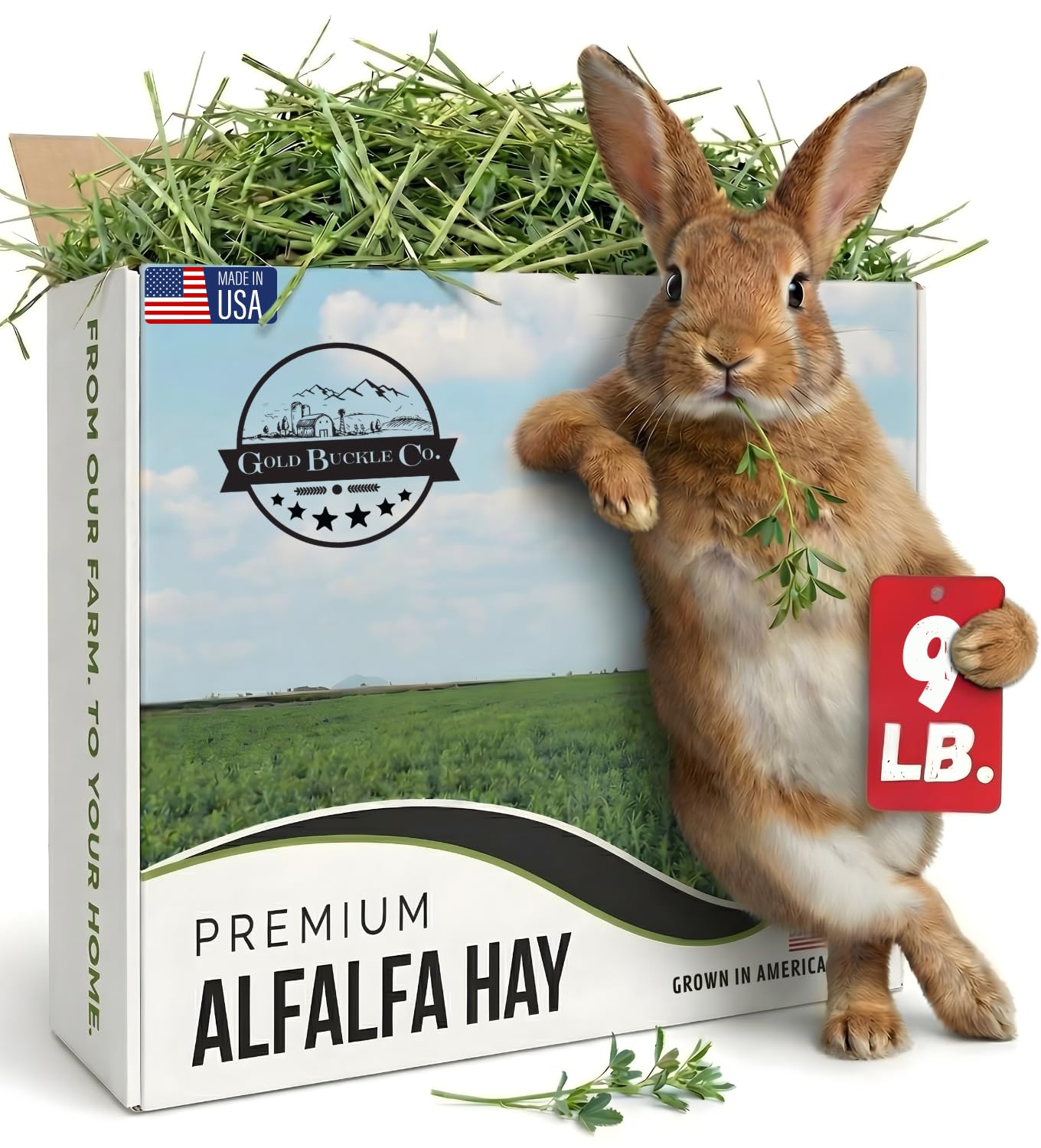
The 9-pound bulk hay for chinchillas that need a protein and calcium boost.
Alfalfa hay is richer in protein and calcium than Timothy hay, which makes it an excellent choice for specific situations — growing juvenile chinchillas, pregnant or nursing females, or underweight seniors recovering from illness. This 9-pound box from Gold Buckle Co is hand-picked from a 4th-generation family farm in the High Desert of Utah. The long, crunchy stems are described by buyers as “beautifully fragrant” and so fresh that one rabbit owner’s bunny “smelled through box.”
The sheer size of the box — 9 pounds — puts it miles ahead of the 3-pound Kaytee Timothy Hay box. It is a bulk buy that will last much longer, especially if you are rotating it with a Timothy hay offering. However, for an adult chinchilla with no special dietary needs, alfalfa should be a treat or supplement, not the primary hay, due to the higher calcium content, which can contribute to bladder stones. One buyer mentioned it is “great for baby guinea pigs, chinchillas, or rabbits” but acknowledged the calcium consideration.
If your chinchilla is a healthy adult on a standard pellet diet, the Kaytee Timothy hay above is the safer day-to-day choice. But if you have a young chinchilla or one that needs to gain weight, this alfalfa hay is a nutrient-dense powerhouse that your pet will genuinely get excited about.
Why Pick This
- 9-pound bulk box offers excellent value per pound for multi-pet or heavy-use households
- Hand-picked, USA-grown, additive-free, and harvested fresh from a family farm
- High protein and calcium content supports growing, nursing, or recovering animals
Important To Know
- Alfalfa is too rich for daily adult chinchilla maintenance — use it as a supplement, not a staple
- High calcium content may pose a bladder stone risk for adult chinchillas prone to urinary issues
Reach for this if: You have a baby chinchilla, a pregnant or nursing female, or an older chinchilla that needs to pack on weight.
Look elsewhere if: You have a healthy adult chinchilla on a standard diet — stick with a Timothy hay-based pellet and Timothy hay to keep calcium intake in check.
Understanding the Specs
Pellet vs. Hay
A pellet is a complete, balanced food that provides all the essential nutrients your chinchilla needs in a uniform bite. Hay — either Timothy or alfalfa — is a forage that must be available at all times for dental wear and digestive health. A good diet uses a quality pellet as the base and offers unlimited hay as the roughage component.
Timothy Hay vs. Alfalfa Hay
Timothy hay is a grass hay that is lower in calcium and protein, making it the safe daily option for adult chinchillas. Alfalfa hay is a legume hay that is richer in both, which is excellent for growing babies, nursing mothers, or underweight seniors but can cause urinary issues in healthy adults if fed as the only hay. Check the bag label to know which is inside.
Fiber Content
Crude fiber is the measure of indigestible plant material that keeps a chinchilla’s gut moving properly. A healthy pellet should have at least 18-20% crude fiber. Hay is naturally high in fiber and provides the long strands that pellets cannot replicate, which is why a chinchilla needs both food forms to stay healthy.
No Seeds, Nuts, or Dried Fruit
Chinchillas have a strict dietary requirement for high fiber and low sugar and fat. Commercial mixes that include seeds, nuts, corn, and dried fruit are designed to look appealing to owners but can cause obesity, diabetes, and gastrointestinal upset in chinchillas. A bag without any of these extras is a sign of a proper chinchilla food.
FAQ
Can I feed my chinchilla only pellets and skip the hay?
How much pellet food should I give my chinchilla each day?
Is alfalfa hay safe for adult chinchillas?
What does “selective feeding” mean for chinchillas?
How long does an opened bag of chinchilla food stay fresh?
Can I switch my chinchilla’s food cold turkey?
What should I do if my chinchilla stops eating?
Are treats like dried fruit okay for chinchillas?
My chinchilla is a picky eater and rejects pellets. What should I try?
Does the price of chinchilla food affect its quality?
Final Thoughts: The Verdict
For the majority of shoppers, the best chinchilla food winner is the Oxbow Garden Select Chinchilla Food because its uniform pellets prevent selective eating, it is formulated without soy or wheat, and Timothy hay is the first ingredient — a complete package for a healthy adult chinchilla. If you are caring for a senior or underweight chinchilla, grab the Supreme Science Selective for its proven track record with weight gain and easy-to-chew pellets. And for a budget-friendly vet-recommended option, the Mazuri Chinchilla Food delivers reliable nutrition in a smaller bag that is perfect for a single pet.
How We Picked
We do not accept paid placement. Every pick is matched to a real buyer and a real use-case; we do not hands-on test units.
Sources & Methodology
Specifications: manufacturer listings and product documentation. Review insights: verified customer reviews, as of July 2026. Pricing: not shown on this page (it changes often); check the current price via the retailer link.
As an Amazon Associate, WellFizz earns from qualifying purchases. This does not affect which products we feature.
Related Guides

Mo Maruf
I created WellFizz to bridge the gap between vague wellness advice and actionable solutions. My mission is simple: to decode the research and give you practical tools you can actually use.
Beyond the data, I am a passionate traveler. I believe that stepping away from the screen to explore new environments is essential for mental clarity and physical vitality.