Our readers keep the lights on and my smoothie glass nicely filled. As an Amazon Associate, I earn from qualifying purchases.
Specs are compiled from manufacturer listings and verified buyer reviews and can change over time — please confirm the key details on the product page before buying.
A flashing leak is one of those roof problems that drives you crazy — water shows up in places you cannot reach, and every ropey caulk tube fails within months. The right chimney flashing sealant is basically a rubberized paint-on shield that stays flexible, bonds tight to metal and brick, and actually outlasts the weather. The tricky part is picking between a heavy-duty brushable gallon for the whole base versus a small high-temperature tube for the flue collar, so this guide lines up the best options with real coverage numbers and honest buyer reports.
I’m Mohammad Maruf — the founder and writer behind WellFizz. This guide is built by comparing the manufacturers’ published specifications and the patterns across verified customer reviews, so you get each pick’s real strengths and trade-offs instead of marketing spin.
Below you will find four different approaches to sealing chimney flashing, from an elastomeric gallon that handles 14 pounds of material to a compact 10.1-ounce high-heat paste — each one matched to a specific job. The goal is to help you choose the right chimney flashing sealant for your specific repair, if you need broad waterproof coverage or extreme heat resistance.
Our Picks at a Glance

How To Choose The Best Chimney Flashing Sealant
Chimney flashing is the metal strip where the chimney meets the roofline — it is the most common leak point on a roof. The sealant you put on top has to handle extreme temperature swings, UV exposure, and heavy rain without turning brittle. Here is what to check before you buy.
Temperature Rating vs. Location
If you are sealing the base of the chimney at the roofline, a standard elastomeric sealant (a flexible, rubber-like coating rated for outdoor weather, not flame) is fine. If you are sealing the flue collar (the metal ring around the chimney pipe) or the joint where the metal meets the firebox, you need a paste or caulk rated for extreme heat — look for 2000°F or higher, like the 2732°F rating you see on some options.
Brushable vs. Tube vs. Paste
Brushable liquid sealants (usually one-gallon or half-gallon cans) let you coat the entire flashing area in one go, filling hairline cracks that a caulk gun would miss. Tube-style caulk is better for a single crack or a tight joint. High-temperature pastes in squeeze tubes are specific to fireplace and stove collars — they are thick, non-sagging, and cure hard.
Coverage and Thickness
Manufacturers usually specify coverage at a given thickness — for example, 14 square feet per half-gallon at 1/16 inch, or 10 square feet at 1/8 inch. Thicker application reduces coverage but gives a more durable barrier. Always buy a little more than you think you need; running out mid-job is annoying and the leftover can be stored for touch-ups.
Flexibility After Cure
A sealant that cures rock-hard will crack the first time the roof expands or a gust of wind shifts the flashing. Look for words like “elastomeric,” “flexible,” or “rubberized” in the product data — these stay pliable over time and move with the structure without leaking.
Quick Comparison
| Model | Best For | Item Weight | Volume | Temp Range | Amazon |
|---|---|---|---|---|---|
| ChimneySaver FlashSeal★ Best Overall | Broad roof-line leak coverage | 14 Pounds | 128 fl oz (1 gallon) | Not specified | Amazon |
| Kraken Bond High Temp | Fireplace collar / stove joints | 1.44 Pounds | 10.1 fl oz | 2732°F | Amazon |
| ChimneyRx 300054 | Brush-on flashing repair | — | 1/2 Gallon | Not specified | Amazon |
| MasonryDefender Flashing Sealer | Full chimney base waterproofing | 5.3 pounds | ~1/2 Gallon | Not specified | Amazon |
In‑Depth Reviews
1. ChimneySaver FlashSeal Elastomeric Roof Chimney Flashing Sealant
Our pick — over 4.5★ from 250+ verified ratings; the strongest balance of quality and price.
A full gallon of flexible rubberized sealant built for the whole chimney base and then some.
This is the heavyweight option at 14 pounds per can, and it is the one you grab when you want to paint the entire flashing area in one smooth coat instead of chasing individual cracks. The synthetic rubber formula stays flexible — buyers report it “fixed chimney leak after roofing caulk failed,” which is exactly the scenario where standard caulk lets you down. It bonds permanently to asphalt shingles, metal flashing, and brick, so you can brush it on around vents, skylights, and stacks without worrying about adhesion. The item dimensions are a sizeable 36 x 6 x 24 inches, a 3.0x size gap compared to some other options, meaning a single can goes a long way.
Apply at about 1/8 inch thickness with a bristle brush (foam brushes tend to shred into the sticky liquid), and clean up with soap and water before it cures. One reviewer noted it survived a severe Dallas storm with high winds and copious rain, which backs up the claim of long-lasting flexibility. The catch is that for a simple crack near the flue, a full gallon is overkill — you are buying more material than a single repair needs. The manufacturer backs it with a 7-year warranty when used with their fabric tape (sold separately), which tells you they expect this to last.
Why it stands out
- 128 fluid ounces gives you enough for the whole chimney base plus roof vents and skylights
- Won’t crack, chip, or become brittle — stays flexible as the roof expands and contracts
- Backed by a 7-year warranty when used with FlashSeal Fabric
The trade-off
- Heavy at 14 pounds — not a quick grab-and-dab product for small jobs
- Requires a separate purchase of reinforcement fabric for best results on larger gaps
Go-to for full coverage: If your flashing is a patchwork of old caulk and you want a single, reliable application that covers everything, this gallon is the best investment.
Not for minor touch-ups: For a single hairline crack at the flue collar, a smaller tube will be less messy and less expensive.
2. Kraken Bond High Temperature Black Fireplace Sealant 2732°F
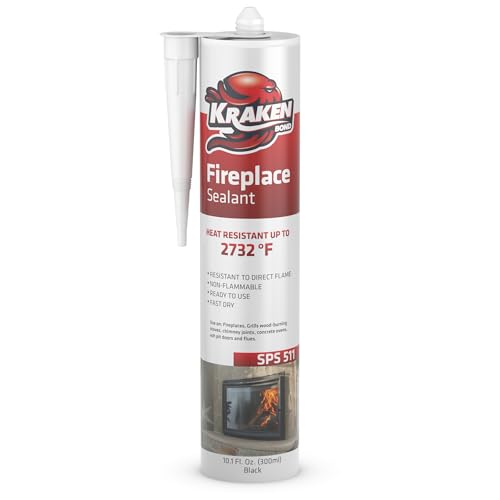
A high-temp paste that handles 2732°F — for stove collars, not the roof line.
This is the opposite of the ChimneySaver gallon above: a compact 1.44-pound tube (a 9.7x weight gap versus the ChimneySaver) designed for one specific job — sealing joints and cracks where temperatures are extreme. It is Class-A fire rated and withstands 2732 degrees Fahrenheit, so it belongs on fireplace flue collars, wood stove door frames, and oven ducts, not on the shingle-to-flashing junction where heat is low. Owners mention it held at temperatures as high as 900°C (that is about 1652°F), well within its rating, with one user noting it sealed a fire compartment for experiments and “it still held.”
The paste consistency means you apply it with a putty knife or rubber scraper rather than a brush, and uncured residue cleans up with water. Full cure takes about 4 hours, and the manufacturer says it won’t fragment or crack after curing. The liquid volume is only 10.1 fluid ounces, so measure your joint length first — for a standard wood stove collar you will have enough, but for a full chimney base you would run out fast. Unlike the brushable sealants below, this is non-sagging in vertical applications, which matters when the joint is on the side of a flue.
Why it works
- Rated to 2732°F — one of the highest heat tolerances you will find in a tube sealant
- Class-A fire rated for certified reliability in extreme conditions
- Adheres to brick, stone, concrete, and metal without sagging
The limitation
- 10.1 oz tube is too small for flashing repairs at the roofline
- Not elastomeric — once cured it is hard, not flexible like a rubberized coating
Reach for this if: You need to seal a fireplace collar, stove joint, or oven duct where standard caulk would burn away.
Look elsewhere if: Your leak is at the roofline flashing — you want a brushable elastomeric sealer for that job, not a high-temp paste.
3. ChimneyRx 300054 Brushable Flashing Repair Sealant – Black Elastomeric 1/2 Gallon

A brushable elastomeric half-gallon that delivers the flexibility of a rubber membrane without the tar mess.
This one splits the difference between the heavy gallon and the tiny high-temp tube — a half-gallon of brushable liquid that covers about 14 square feet according to the label. The elastomeric formula (a flexible, rubber-like coating) stays pliable over time, unlike tar-based sealants that become brittle and crack. One buyer described it as “effective for coating entire chimney flashing to avoid missed gaps; applied easily with brush; coverage about 10 sq ft at 1/16″ thickness using half of 1/2 gallon,” which gives you a real-world reference: if you apply it thicker than recommended, you will get less coverage than the stated 14 square feet, so plan accordingly.
It bonds permanently to asphalt shingles, aluminum flashing, and brick, and cleanup is just soap and water while it is wet. The dry time is about 12 hours in dry weather between 45 and 90 degrees Fahrenheit. Unlike the Kraken Bond paste, this is for the roofline, not the firebox — it has no high-temperature rating. The item dimensions are 12 x 12 x 12 inches, a compact cube compared to the ChimneySaver’s 36 x 6 x 24 inches. Buyers have noted that the listing coverage claims had a discrepancy versus actual application, so buy with a little margin.
What makes it a solid pick
- Elastomeric formula stays flexible — won’t crack like tar-based alternatives
- Easy brush-on application with water cleanup saves time on the roof
- Half-gallon size is a practical middle ground for most chimney flashing repairs
What to watch for
- Actual coverage may be closer to 10 sq ft than the claimed 14 sq ft at a reasonable thickness
- 12-hour dry time means you need a stretch of dry weather to apply
Smart buy for mid-size jobs: A half-gallon is enough for the average chimney base without the excess of a full gallon.
Not for high-heat: Keep this away from the firebox collar — it is not rated for flame-level temperatures.
4. MasonryDefender Chimney Flashing Sealer – Flexible Chimney Sealant

A water-based sealer that goes on like paint but dries into a tough, flexible rubber-like coating.
This one stands out for how easy the application feels — it is water-based, so you can paint it on without the heavy solvent smell, and if you clean the brush promptly it washes out with water. A buyer in Colorado reported it “sealed chimney base against heavy rain in Colorado; very easy water-based application dries strong like oil-based; brush washes out with prompt cleaning.” That is a real-world endorsement for a product that behaves like thick paint but cures into a weather-resistant shield that won’t crack or chip.
At 5.3 pounds per container, it is much lighter than the ChimneySaver gallon, and it covers up to 14 square feet per half gallon — the same stated coverage as the ChimneyRx. The black finish blends well with most roof and flashing surfaces. The trade-off is packaging: several buyers mentioned that the unsealed lid can leak during shipping if the container is tilted in the box, so inspect your shipment immediately. Also, because it is water-based, it needs dry weather during cure — much like the ChimneyRx, plan for a day without rain.
Strong points
- Water-based formula means easy cleanup and low odor during application
- Covers up to 14 sq ft per half gallon — good for the average chimney base
- Dries strong and flexible, resisting brittleness over time
Potential issues
- Packaging can leak during shipping — the lid is not sealed tight
- Not a high-temperature product; keep it to the roofline and masonry areas
Best for easy application: If you hate the smell of solvent-based sealants and want a simple brush-and-forget application, this is the cleanest option.
Watch the shipping: The leaking-lid issue means you may want to open the box over a tarp, just in case.
Understanding the Specs
Item Weight
This tells you how much material you are actually getting. A 14-pound gallon like the ChimneySaver holds significantly more sealant than a 1.44-pound tube like the Kraken Bond. For a full chimney base, a heavier container means fewer trips up the ladder and less chance of running out mid-coat. For a single joint repair, a lighter tube saves you from storing leftover goo.
Volume (Fluid Ounces)
Volume is the actual liquid measure — 128 fluid ounces in a full gallon versus 10.1 fluid ounces in a tube. A full gallon is overkill for a single crack but perfect for coating the entire flashing perimeter. Half-gallon options (about 64 fl oz) split the difference. Always estimate your area first: 10 to 14 square feet per half gallon at typical brush-on thickness is the real-world range.
Temperature Range
This is the make-or-break spec for high-heat applications. If you are sealing a fireplace flue collar or a wood stove joint, you need a product rated for extreme heat — look for ratings of 2000°F or higher, such as the Kraken Bond’s 2732°F. For roofline flashing, a standard elastomeric sealant has no high-temp rating, which is fine because those areas never see direct flame.
Flexibility / Elastomeric
An “elastomeric” or “flexible” sealant means the cured material can stretch and contract as the roof expands and contracts with temperature changes. Non-flexible sealants (including high-temp pastes) cure hard and will crack under movement. For flashing at the roofline, always choose an elastomeric product. For firebox joints, you trade flexibility for heat resistance, and that is the right trade.
FAQ
Can I use a standard silicone caulk on chimney flashing?
What is the difference between a high-temperature sealant and an elastomeric roof sealant?
How much chimney flashing sealant do I need for a typical chimney?
Can I apply a brushable sealant in cold weather?
How long does a chimney flashing sealant last after application?
Can I paint over a cured chimney flashing sealant?
Will a chimney flashing sealant work on a metal roof around the chimney?
How do I clean up a brushable chimney sealant after application?
Can I use a high-temperature fireplace sealant on the roof flashing?
Final Thoughts: The Verdict
For most buyers, the best chimney flashing sealant is the ChimneySaver FlashSeal because its 128-ounce, 14-pound gallon of elastomeric rubber covers the entire chimney base and roof penetrations in one application, backed by a 7-year warranty. If you need a high-temperature fix for a fireplace collar or stove joint, grab the Kraken Bond High Temp with its 2732°F rating. And for a mid-size repair that balances coverage with easy brush-on application, the MasonryDefender Flashing Sealer is a clean, water-based option that dries tough and flexible.
How We Picked
We do not accept paid placement. Every pick is matched to a real buyer and a real use-case; we do not hands-on test units.
Sources & Methodology
Specifications: manufacturer listings and product documentation. Review insights: verified customer reviews, as of July 2026. Pricing: not shown on this page (it changes often); check the current price via the retailer link.
As an Amazon Associate, WellFizz earns from qualifying purchases. This does not affect which products we feature.
Related Guides

Mo Maruf
I created WellFizz to bridge the gap between vague wellness advice and actionable solutions. My mission is simple: to decode the research and give you practical tools you can actually use.
Beyond the data, I am a passionate traveler. I believe that stepping away from the screen to explore new environments is essential for mental clarity and physical vitality.