Our readers keep the lights on and my smoothie glass nicely filled. As an Amazon Associate, I earn from qualifying purchases.
Specs are compiled from manufacturer listings and verified buyer reviews and can change over time — please confirm the key details on the product page before buying.
Handing a real smartphone to a toddler or young child usually ends one of two ways: a smashed screen or hours of unsupervised internet access. A children’s phone solves both problems at once — it gives your kid that grown-up feel they crave without the risks or the repair bills. The key is picking one that actually holds their attention, survives drops, and keeps them learning instead of just tapping.
I’m Mohammad Maruf — the founder and writer behind WellFizz. This guide is built by comparing the manufacturers’ published specifications and the patterns across verified customer reviews, so you get each pick’s real strengths and trade-offs instead of marketing spin.
if you need a first device for car rides or a way to build healthy screen habits at home, the right children’s phone balances durability, educational value, and just enough fun to keep little hands busy without the worries of an internet-connected device.
Quick Picks
- NINE CUBE Kids Smart Phone — Best Overall
- MOMILLA Kids Toys Smart Phone — Premium Pick
- Joyjam 3.5” Touchscreen Kids Smart Phone — Best Value
- GOCINA Kids Smart Phone — Compact Pick
- Dylanto Kids Phone — Budget Choice
- Learning Resources Teaching Telephone — Educational Classic
- Sesame Street Elmo’s Sing & Learn 17.5 Inch — Toddler Fun
How To Choose The Best Children’s Phone
Not all toy phones are created equal. The cheap ones frustrate kids with tiny or non-responsive screens, while the best ones pack enough battery and games to survive a long car ride. Here is what actually matters when you shop.
Screen Size and Durability
A bigger screen means less eye strain for your child and easier navigation for small fingers. Look for at least a 3.5-inch touchscreen. Pair that with a soft silicone case — most good options come with one — because drops are not a question of if, but when.
Battery That Lasts Through the Day
A phone that dies after an hour is useless for quiet time. A battery around 1000mAh to 1200mAh gives you a few hours of mixed play, which is enough for a restaurant meal or a car trip without needing a charge. Avoid models that require constant recharging.
Educational Content vs. Mindless Tapping
The best children’s phones double as learning tools. Look for preloaded ABC learning, puzzle games, fables, and habit trackers that encourage brushing teeth or doing homework. Skip models that only offer simple beeps and lights — they bore kids fast.
Parental Controls
An anti-addiction mode or study mode lets you set daily time limits so your child does not spend all day staring at the screen. Some models let you password-protect settings, which is a huge win when your little one gets curious.
Quick Comparison
| Model | Best For | Screen Size | Battery | Built-in Games | Amazon |
|---|---|---|---|---|---|
| NINE CUBE | Best Overall | 3.97-inch | 1200mAh | 200+ | Amazon |
| MOMILLA | Premium Pick | 3.97-inch | 1500mAh | 220+ | Amazon |
| Joyjam | Best Value | 3.5-inch | 1000mAh | 26 | Amazon |
| GOCINA | Compact Pick | 3.1-inch (est) | Not listed | Not listed | Amazon |
| Dylanto | Budget Choice | 3.5-inch | 1000mAh | 26 | Amazon |
| Learning Resources | Educational Classic | N/A (button) | 3x AA | 0 | Amazon |
| Sesame Street | Toddler Fun | N/A (button) | Not listed | 0 | Amazon |
In‑Depth Reviews
1. NINE CUBE Kids Smart Phone
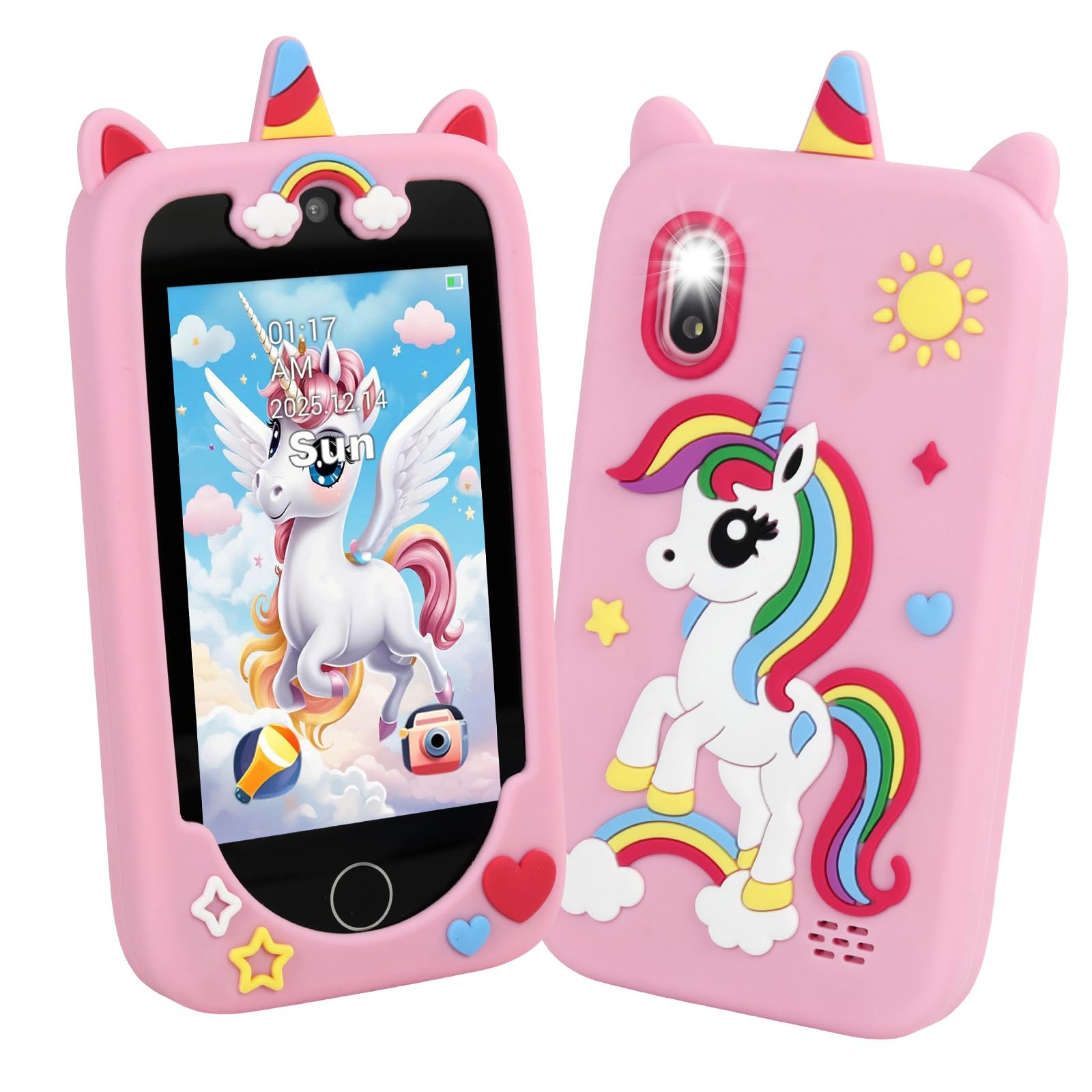
The one with the largest screen and the biggest game library at a mid-range price.
Your child gets a real smartphone feel without any internet risk. The 3.97-inch touchscreen is larger than the 3.5-inch screens on the Joyjam and Dylanto — that extra room helps small fingers land on the right puzzle piece. A 1200mAh battery lets you get through a day trip without hunting for an outlet. The dual 200W pixel cameras use AI auto-face detection and 6 filter effects so your kid can take selfies and record videos just like a real phone. You get 8GB of built-in storage to hold all those pictures without buying a separate memory card.
Buyers report this phone is sturdy and a good size for a 6-year-old. One reviewer noted the picture quality is great for a toy. Unlike the Joyjam and Dylanto, which have 26 games each, the NINE CUBE packs 200+ titles — ABCs, numbers, racing, drawing, and puzzles — so your child will not outgrow it quickly. The included silicone case helps protect the phone when it hits the floor.
The one trade-off to know: it does not have a built-in timer or automatic bedtime lockout like the MOMILLA. Owners mention you will need to manage screen time yourself.
What stands out
- Largest screen in the group at 3.97 inches — easier on young eyes.
- 200+ games vs. 26 on budget models — much more variety.
- 8GB built-in storage, no extra SD card purchase needed.
The catch
- No automatic bedtime or screen-time limit setting.
- Dual cameras are low-resolution (200W pixels), typical for this tier.
Why it wins: For the price, you get the biggest screen, the most games, and enough battery for a day out — the smartest all-around pick for ages 3-10.
skip it if: You need a phone with built-in parental time limits; you will have to enforce those yourself.
2. MOMILLA Kids Toys Smart Phone
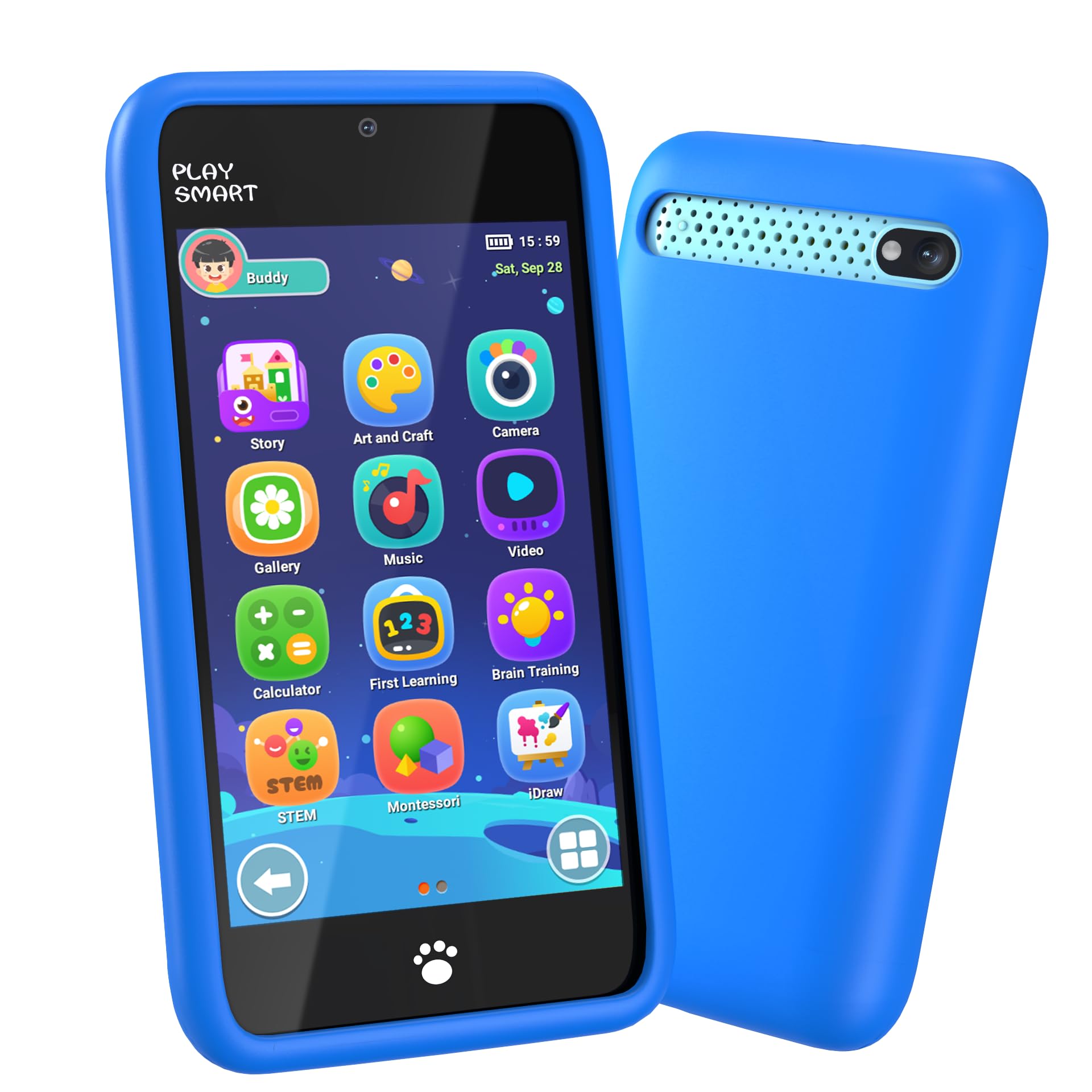
The one with the biggest battery and real parental controls for setting screen time.
You get the longest runtime between charges of any pick here — a 1500mAh battery beats the NINE CUBE’s 1200mAh by 25%. That means more full-day use without recharging. The MOMILLA also includes actual anti-addiction mode and password-protected app management, which the NINE CUBE lacks.
Customers note the 220+ games are organized into smart clusters like educational, puzzles, science, memory, and logic. One buyer shared that their 3-year-old became obsessed with the camera and video features right away. You get 16GB of storage — double the NINE CUBE’s 8GB — plus 49 stickers for photos and 21 soothing songs for bedtime.
The major downside is durability. A reviewer noted the phone stopped turning on after a few weeks, and replacements had the same glitch. You also need to use a standard non-fast-charging adapter to avoid charging problems, per buyer reports.
Top features
- Largest battery at 1500mAh — longest runtime of any pick here.
- Real parental controls with time management and password lock.
- 16GB storage and 49 photo stickers for creative play.
Watch out for
- Some units have durability issues — random shutdowns reported.
- Requires a standard (non-fast) charger to avoid problems.
Best for: Parents who want the most battery life and the ability to set automatic screen-time limits from the device itself.
Not for: Families who need bulletproof durability — consider a model with more drop-test reliability.
3. Joyjam 3.5” Touchscreen Kids Smart Phone
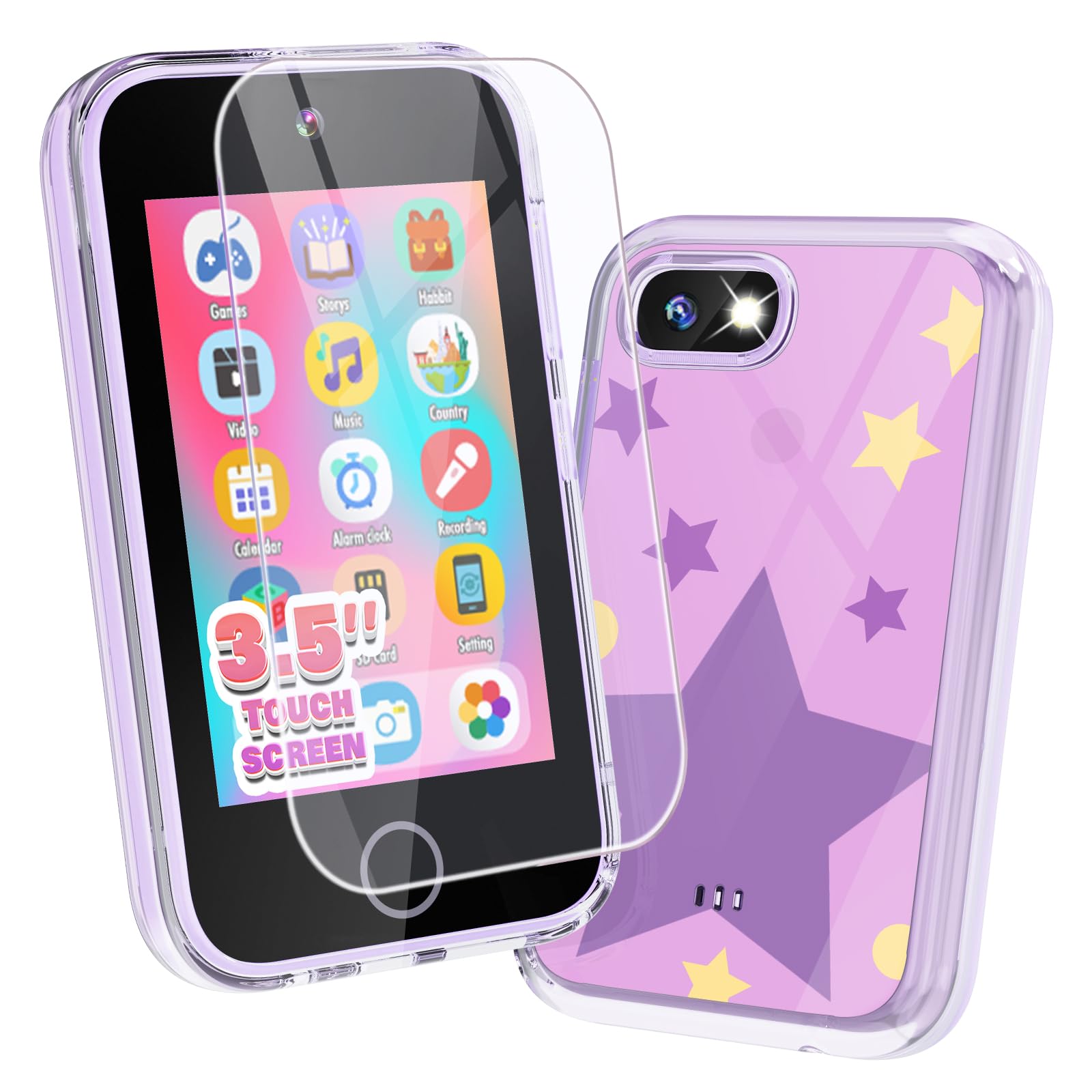
The one that adds a habit tracker you will not find on most other toy phones.
This Joyjam phone does something extra that the Dylanto skips: a built-in habit tracker that reminds your child to brush teeth, eat, do homework, and go to bed on time. That turns a toy into a gentle parenting assistant. The 3.5-inch IPS HD touchscreen delivers smooth visuals, and the device comes with a pre-installed screen protector for added drop protection. With a 1000mAh battery, it matches the Dylanto’s capacity for a couple hours of daily play.
Reviewers point out this phone has been in daily use since Christmas and is still running strong, calling it durable and kid-friendly. One buyer mentioned it does freeze occasionally but recovers on its own. The 8GB SD card is included for storing photos and videos, and the dual cameras with 20 stickers let kids decorate their selfies. Unlike the cheaper Dylanto, the Joyjam includes an anti-addiction mode that lets parents set daily time limits.
It runs 26 puzzle games and includes ABC learning, world landmarks, and fables — the same core content as the Dylanto but with a slightly better screen and that habit tracker. The 3.5-inch screen is noticeably smaller than the 3.97-inch displays on the NINE CUBE and MOMILLA.
Why it works
- Unique habit tracker — reminds kids of daily routines.
- Includes 8GB SD card, screen protector, and shockproof case.
- Anti-addiction mode for setting screen time limits.
Trade-offs
- Screen is 3.5 inches — smaller than premium picks.
- Occasional freezing, though it recovers on its own.
Reach for this if: You want a habit-building tool plus a toy phone — the routine reminders are genuinely useful for parents of 3 to 8 year olds.
Consider the upgrade if: You need a larger screen and a bigger game library — the NINE CUBE offers both.
4. GOCINA Kids Smart Phone
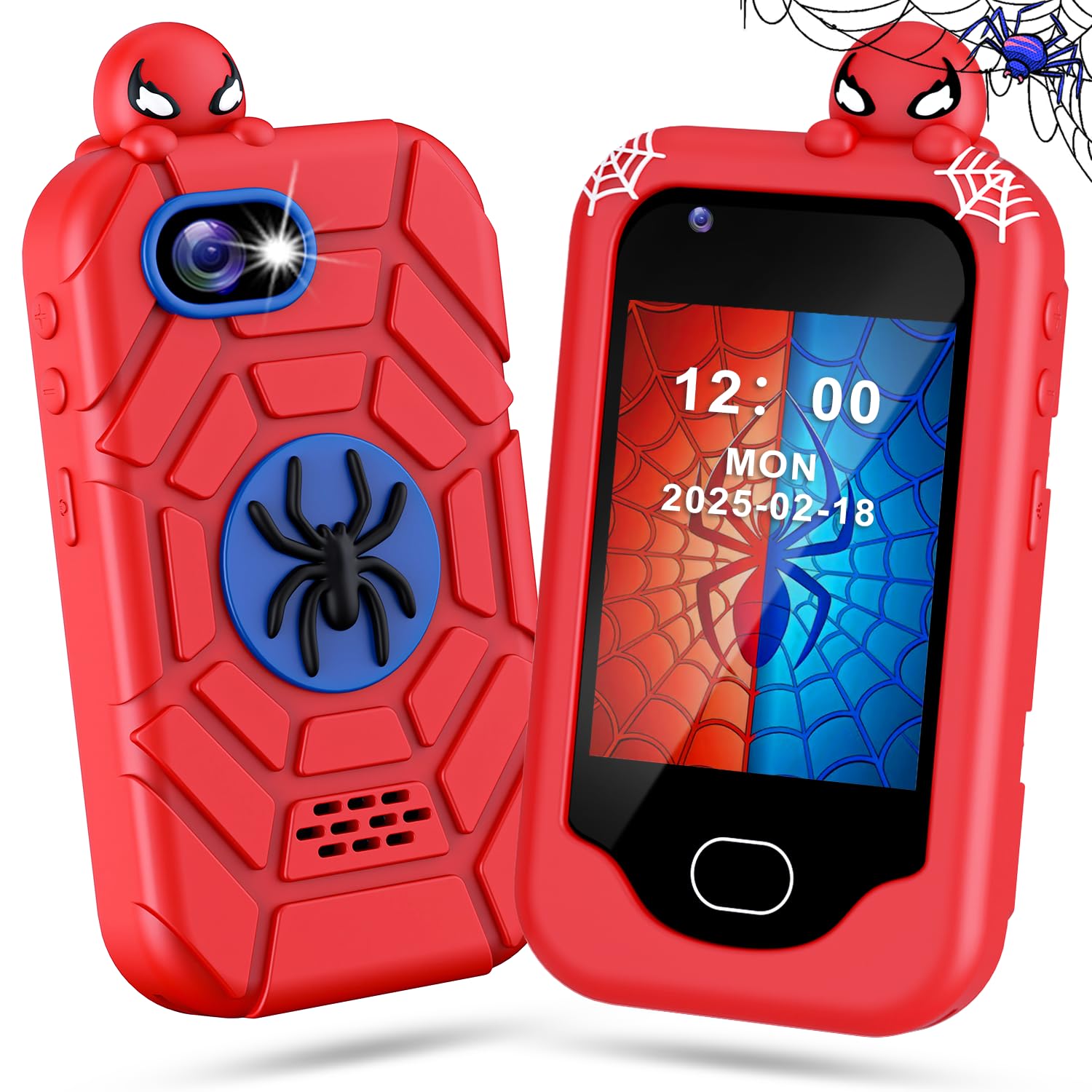
The teeniest phone in the lineup — made for tiny hands that need something truly pocketable.
At just 3.38 x 1.53 x 6.53 inches, the GOCINA is the most compact children’s phone here — much smaller than the Sesame Street playphone, which measures 8 x 5.5 x 17.5 inches. That makes it the best choice for preschoolers who want to carry their “phone” everywhere, in a pocket or a small bag. The chunky design and soft silicone shell make it easy to grip, and the 32GB SD card included is the largest storage capacity of any model on this list, outclassing the 8GB cards that come with others.
The 2025 model comes preloaded with essential apps, a front and rear camera with 23 cartoon frames, music, and games — all without any SIM card or internet access, so it is a fully safe digital space. The red color and princess theme will appeal to some kids, though the limited game library and smaller screen mean it is less engaging for older children compared to the 200+ game options on the NINE CUBE or MOMILLA.
Shoppers say it is ideal for kids ages 3-8 who just want to mimic adults safely. The trade-off is that with a smaller screen and fewer built-in games, it does not offer the same long-term educational value as the Joyjam or Dylanto, which both include habit trackers and 26 puzzle games.
Pros at a glance
- Most compact design — easy for toddlers to hold and carry.
- 32GB SD card included — biggest storage of any pick here.
- Durable silicone shell with grippy texture for drop protection.
What it lacks
- Smaller screen limits game and video viewing experience.
- Fewer preloaded games compared to the competition.
Perfect for: A 3 or 4 year old’s first “phone” — small, safe, and simple enough for them to handle on their own.
Look elsewhere for: A child over 6 who needs more games and a larger screen to stay engaged.
5. Dylanto Kids Phone
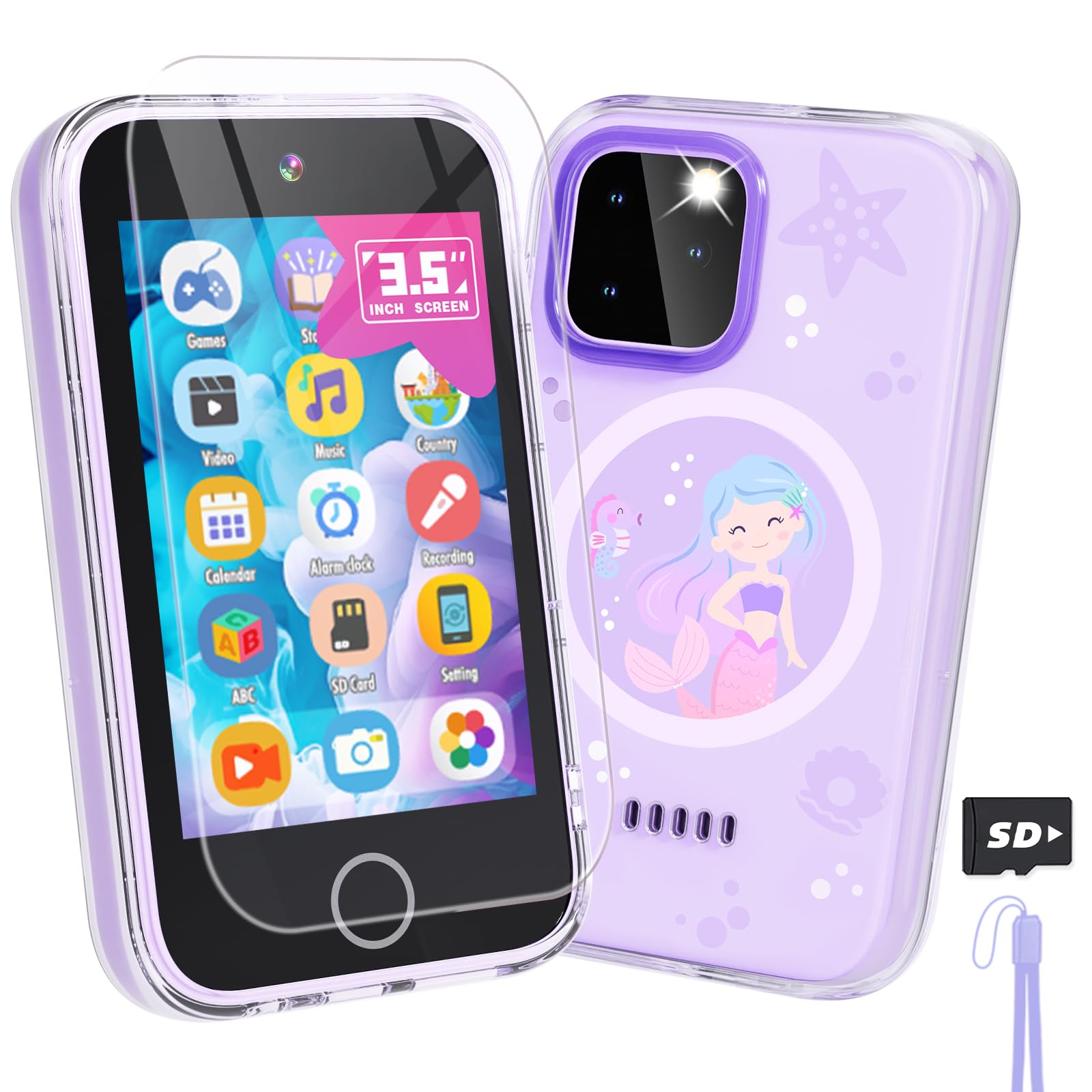
The cheapest touchscreen option that still includes a camera and a protective case.
If you are on a tight budget but want a real touchscreen experience for your child, the Dylanto delivers the essentials without cutting corners on durability. It packs the same 3.5-inch screen as the Joyjam and a matching 1000mAh battery, plus dual cameras for selfies and videos. Unlike the MOMILLA, which has had durability complaints, buyers report the Dylanto holds up well — one owner reported their grandkid loved it and it was a smart choice for keeping a child away from the internet. The included protective case and tempered screen film add drop protection right from the start.
The phone comes preloaded with 26 puzzle games, ABC learning, 10 classic fables, and 23 famous world landmarks, plus a flashlight, calculator, and MP3/MP4 player with a 3.5mm headphone jack. The “Study Mode” lets you limit playtime to encourage a balance between learning and fun. One customer observed the voice sounds “kinda robotic,” which is a common compromise at this price tier.
Like the Joyjam, it is made by Shenzhen Aobaisen Electronic Technology and shares a similar feature set, but the Joyjam offers a slightly better screen (IPS HD vs. standard) and that useful habit tracker. If those extras do not matter to you, the Dylanto saves you a few dollars.
Where it delivers
- 3.5-inch touchscreen with dual cameras at the lowest price.
- Comes with protective case and screen film included.
- Study Mode helps manage screen time.
The corners cut
- Voice sounds robotic per buyer reports.
- No habit tracker like the similar-priced Joyjam.
Grab this for: A cost-effective first phone that still has a touchscreen, camera, and educational games — great for a 3 to 9 year old.
Pay a little more for: The Joyjam if you want the habit tracker and a slightly nicer screen.
6. Learning Resources Teaching Telephone

The only phone here that teaches your child how to actually dial a real number.
This is not a touchscreen toy. The Learning Resources Teaching Telephone is a sturdy, corded office-style phone designed for one very specific job: teaching kids how to call home and, more importantly, how to dial 911 in an emergency. You program one number into the speed dial, and your child presses the large buttons to call it. The phone plays a realistic ring and lets you record a custom message, so your child hears your actual voice answering. No Wi-Fi, no apps, no distractions — just the fundamental skill of using a telephone.
Buyers with kids ages 3-6 consistently praise this as an excellent learning tool. One reviewer called it the best interactive phone toy they had found, noting the volume adjuster works well and the sound quality is sharp. The phone requires 3 AA batteries, which are included. It measures 12 x 11.9 x 3.4 inches — much larger than a toy smartphone, so it is best kept on a desk or play table rather than in a pocket.
The limitation is that you can only program one number and record one message at a time, despite the phone having multiple pre-recorded greetings from the manufacturer. That means you cannot easily swap between grandparents’ numbers and mom’s number without reprogramming. It is also pricier than many touchscreen toy phones, but you are paying for the educational value rather than screen size.
Unique strengths
- Teaches real telephone and 911-dialing skills — safety first.
- Programmable number with custom voice recording.
- Large, easy-to-press buttons for small fingers.
Limitations
- Only one number can be programmed at a time.
- No screen, no games, no camera — pure education, not entertainment.
Best pick for: Parents who prioritize teaching emergency and home phone skills over entertainment. Ideal for ages 3-5.
Not for: Kids who want a smartphone-style device with games and a camera — this is a pure learning tool.
7. Sesame Street Elmo’s Sing & Learn 17.5 Inch Playphone
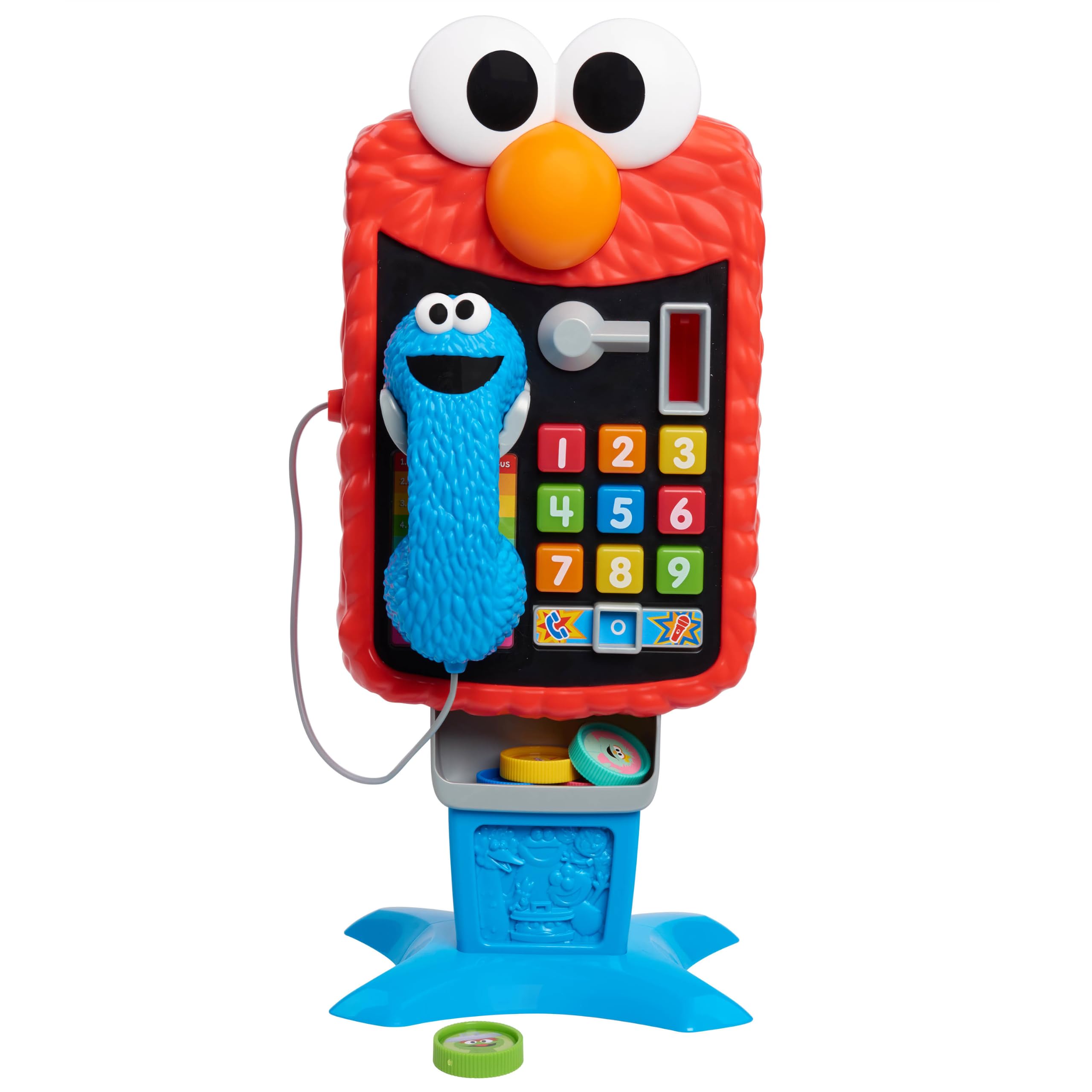
The huge, colorful payphone that turns playtime into a Sesame Street sing-along.
This is less a phone and more of a floor-standing toy that towers over a toddler at 17.5 inches tall. It is designed for the youngest kids — recommended for ages 2 and up — and focuses entirely on number and color recognition through Elmo’s voice and songs. The Cookie Monster-shaped receiver is easy for little hands to hold, and the light-up keypad rewards button presses with Elmo saying phrases like “Let’s count to two! One, two!” It also features a payphone mode where kids can slide a switch to “call” Cookie Monster, Abby Cadabby, or Oscar. Five character coins are included for pretend play.
At 2.4 pounds, this is the heaviest and most stationary pick. It is not something a child carries around — it belongs in a playroom or nursery corner. Unlike every other phone on this list, it has no touchscreen, no camera, no games, and no battery to recharge. It takes regular batteries (not specified in the data) and is purely a push-button learning toy. The large 8 x 5.5 x 17.5 inch dimensions make it much larger than the GOCINA (3.38 x 1.53 x 6.53 inches), so consider floor space before buying.
The educational objective is cognitive skill development for toddlers. The age range of 24 to 24 months is narrow, so this is specifically for very young children who love Elmo, not for a 5-year-old ready for puzzle games.
Why toddlers love it
- Large, colorful design with Elmo and Sesame Street friends.
- Light-up keypad teaches numbers and colors through song.
- Payphone mode with character coins adds pretend-play depth.
The adult perspective
- Huge and heavy — not portable, needs floor space.
- Very limited age range: best for 2 year olds only.
- No screen, games, or interactive learning beyond basic counting.
The perfect fit: A Sesame Street-loving 2-year-old who wants a colorful, musical floor toy, not a smartphone experience.
Pass on this: If you need a portable, touchscreen-based toy for a child over 3 — even the budget Dylanto offers far more play value.
Understanding the Specs
Battery Capacity (mAh)
This number tells you how long the phone will run between charges. A 1000mAh battery typically gives you a couple of hours of mixed play, enough for a restaurant meal or a short car trip. Bump up to 1200mAh or 1500mAh for longer outings. A phone with a small battery that dies fast frustrates kids and parents alike — always check this number before buying.
Screen Size and Type
A 3.5-inch touchscreen is the minimum for small fingers to navigate comfortably. A 3.97-inch screen like the NINE CUBE and MOMILLA offers more room for games and video, which reduces eye strain. IPS HD screens (like the Joyjam) offer better viewing angles and clarity than basic LCD panels. Touchscreens that are responsive and smooth prevent kids from getting frustrated.
Preloaded Games and Content
This is what keeps the phone interesting beyond the first week. Some phones offer just 26 puzzle games, while premium models pack 200+. Look for a mix of educational content (ABCs, numbers, logic puzzles) and creative tools (camera stickers, music players). A phone with too few games will bore a child quickly, and you will be back shopping for the next device.
Parental Controls and Safety
No internet or SIM card means your child cannot accidentally browse or call strangers. That is the baseline. The real differentiator is whether the phone lets you set daily time limits, a “study mode” that locks games after a set period, or password-protected settings. These features turn a toy into a tool for building healthy screen habits, rather than just another glowing rectangle demanding attention.
FAQ
Can a children’s phone connect to the internet or make real calls?
What age is appropriate for a children’s phone?
Are the cameras on these phones any good?
How long does the battery last on a typical play session?
Can I add my own music or stories to these phones?
What does the “Study Mode” or “Anti-Addiction Mode” actually do?
Are these phones durable enough for a toddler?
Which phone has the most educational content?
Do I need to buy extra accessories like a memory card or case?
Can a child break the touchscreen by tapping too hard?
Final Thoughts: The Verdict
For the majority of shoppers, the children’s phone winner is the NINE CUBE Kids Smart Phone because it combines the largest 3.97-inch screen, 200+ educational games, and a 1200mAh battery at a mid-range price that beats the budget options on features and the premium options on value. If you want maximum battery life and real parental controls with time management, grab the MOMILLA Kids Toys Smart Phone. And for a toddler’s first device that teaches real telephone skills rather than offering a screen, the Learning Resources Teaching Telephone is in a class of its own.
How We Picked
We do not accept paid placement. Every pick is matched to a real buyer and a real use-case; we do not hands-on test units.
Sources & Methodology
Specifications: manufacturer listings and product documentation. Review insights: verified customer reviews, as of July 2026. Pricing: not shown on this page (it changes often); check the current price via the retailer link.
As an Amazon Associate, WellFizz earns from qualifying purchases. This does not affect which products we feature.
Related Guides

Mo Maruf
I created WellFizz to bridge the gap between vague wellness advice and actionable solutions. My mission is simple: to decode the research and give you practical tools you can actually use.
Beyond the data, I am a passionate traveler. I believe that stepping away from the screen to explore new environments is essential for mental clarity and physical vitality.