Our readers keep the lights on and my smoothie glass nicely filled. As an Amazon Associate, I earn from qualifying purchases.
Keeping a flock hydrated without daily scrubbing, spills, or constant refills is the single most time-consuming chore for any backyard chicken keeper. The wrong waterer breeds algae, invites debris, and forces you to haul heavy containers multiple times a day, while the right system turns hydration into a hands-off, sanitary process that supports healthier birds.
I’m Mohammad Maruf — the founder and writer behind WellFizz. I’ve spent hundreds of hours researching poultry hydration systems, analyzing valve mechanisms, material durability, and capacity specs to separate the setups that genuinely simplify coop maintenance from those that create more problems than they solve.
This guide breaks down the best options available today, from gravity-driven dispensers to plumbed-in auto-fill bowls, so you can choose a chicken waterer system that matches your flock size, coop layout, and tolerance for maintenance.
How To Choose The Best Chicken Waterer System
The right waterer for your coop depends on a few critical decisions. Prioritizing the delivery mechanism, the material, and the capacity will save you headaches down the road.
Valve Type: Nipple vs. Cup vs. Float
The valve is the heart of any waterer. Nipple-style valves release a droplet only when pecked, keeping bedding dry but requiring birds to learn the motion. Cup-style valves fill a small basin when the bird pushes a paddle, offering a familiar drinking experience with slightly more spill risk. Float valves, found in plumbed systems, maintain a constant water level in a bowl — ideal for high-traffic coops but dependent on a consistent water supply.
Material & Build Quality
Most gravity waterers use polyethylene or polypropylene plastic, which is lightweight and affordable but can become brittle under prolonged UV exposure and may crack in freeze-thaw cycles. Stainless steel bowls resist corrosion and are easier to sanitize, but they come at a higher cost. Look for BPA-free certifications in plastic units and 304-grade stainless for metal options.
Capacity & Refill Frequency
A general rule is 1 gallon per 5-6 adult chickens per day. A 2-gallon unit will need daily attention for a small flock, while 3.5-gallon or larger options extend the window between refills. The trade-off is weight: a full 3.6-gallon waterer weighs nearly 30 pounds and can be difficult to carry, so consider placement and whether a hanging or wheeled setup is practical.
Quick Comparison
On smaller screens, swipe sideways to see the full table.
| Model | Category | Best For | Key Spec | Amazon |
|---|---|---|---|---|
| ZenxyHoC 3.6 Gal | Nipple | Larger flocks | 3.6 gal, 4 side-mounted horizontal nipples | Amazon |
| EAPIKON 304 SS | Float Valve | Auto-fill convenience | 304 stainless steel bowl, float valve | Amazon |
| Lilyang Auto Waterer | Float Cup | Hanging or standing flexibility | 2 gal, float valve, 60in stainless hose | Amazon |
| Essilnn DIY Kit | DIY Cup | Custom bucket conversions | 6 water cups, 1/8-in NPT thread | Amazon |
| Hen’s Choice 8L | Gravity Tray | Entry-level simplicity | 2.1 gal (8L), 3 adjustable leg heights | Amazon |
In‑Depth Reviews
1. ZenxyHoC 3.6 Gal Chicken Waterer
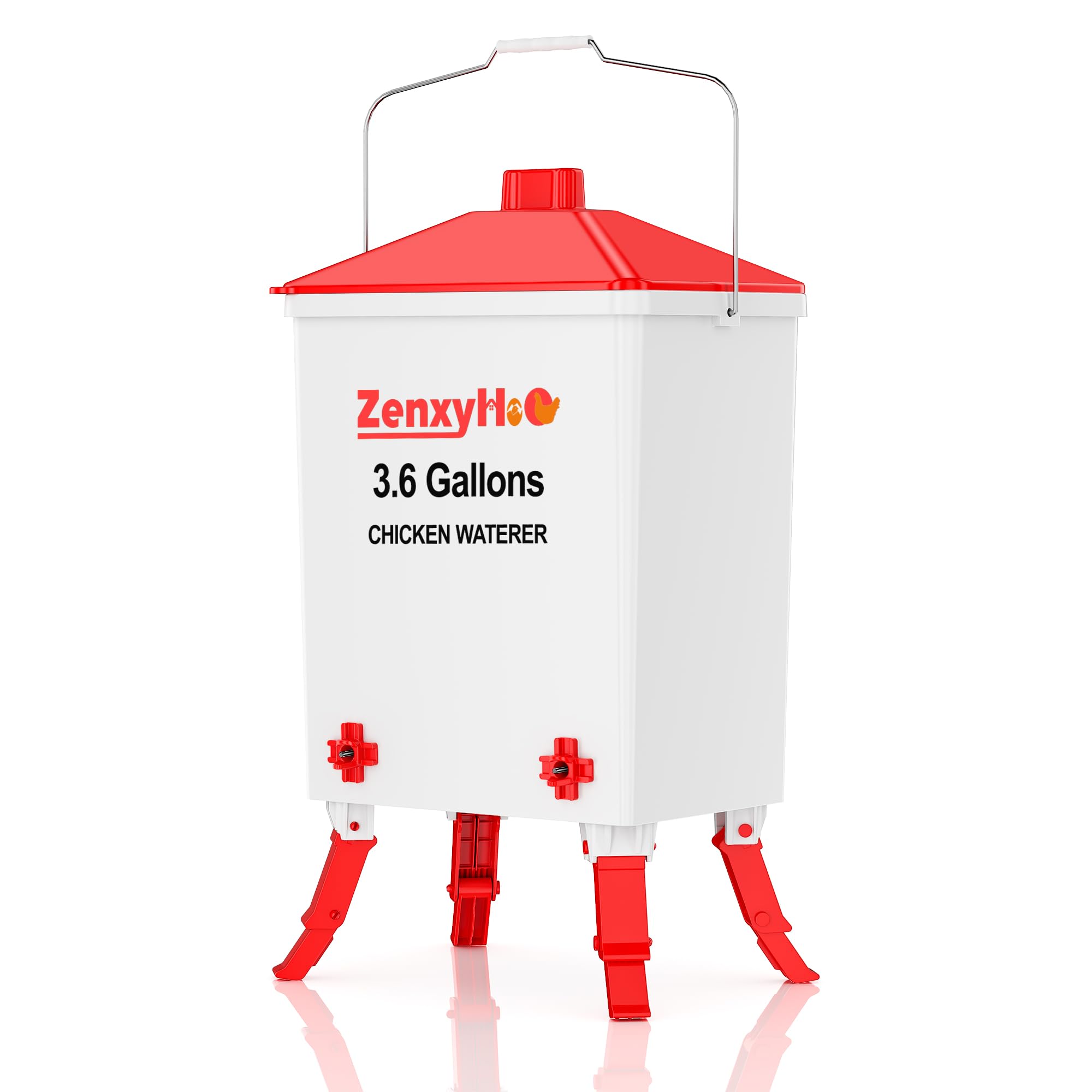
This 3.6-gallon bucket-style waterer uses four side-mounted horizontal nipples that release water only when pecked, which keeps litter dry and drastically reduces evaporation compared to open-trough designs. The translucent bucket wall lets you check the water level at a glance without lifting the lid, a feature that saves time during morning rounds.
The three-stage foldable legs lock securely and adjust to three heights, accommodating chicks, growing pullets, and full-grown hens. The steep anti-roost cone lid prevents chickens from perching and fouling the top, while the airtight seal blocks debris and slows algae growth in the tank itself. Reviewers note that the nipples can be tricky to seat perfectly during assembly, but once installed, they stay watertight.
At 3.6 gallons, this unit supports a medium flock of roughly 18-20 chickens for a full day between refills. It is also lightweight enough (3.1 pounds empty) to hang if you prefer not to use the legs, giving you flexible placement options inside the coop or run.
Why it’s great
- Large capacity extends time between refills.
- Visible water level saves lifting the lid.
- Anti-roost cone keeps the top clean.
Good to know
- Nipple installation requires precise alignment to avoid leaks.
- Leg locks are not very heavy-duty; hanging avoids this issue.
2. EAPIKON 304 Stainless Steel Auto Water Bowl
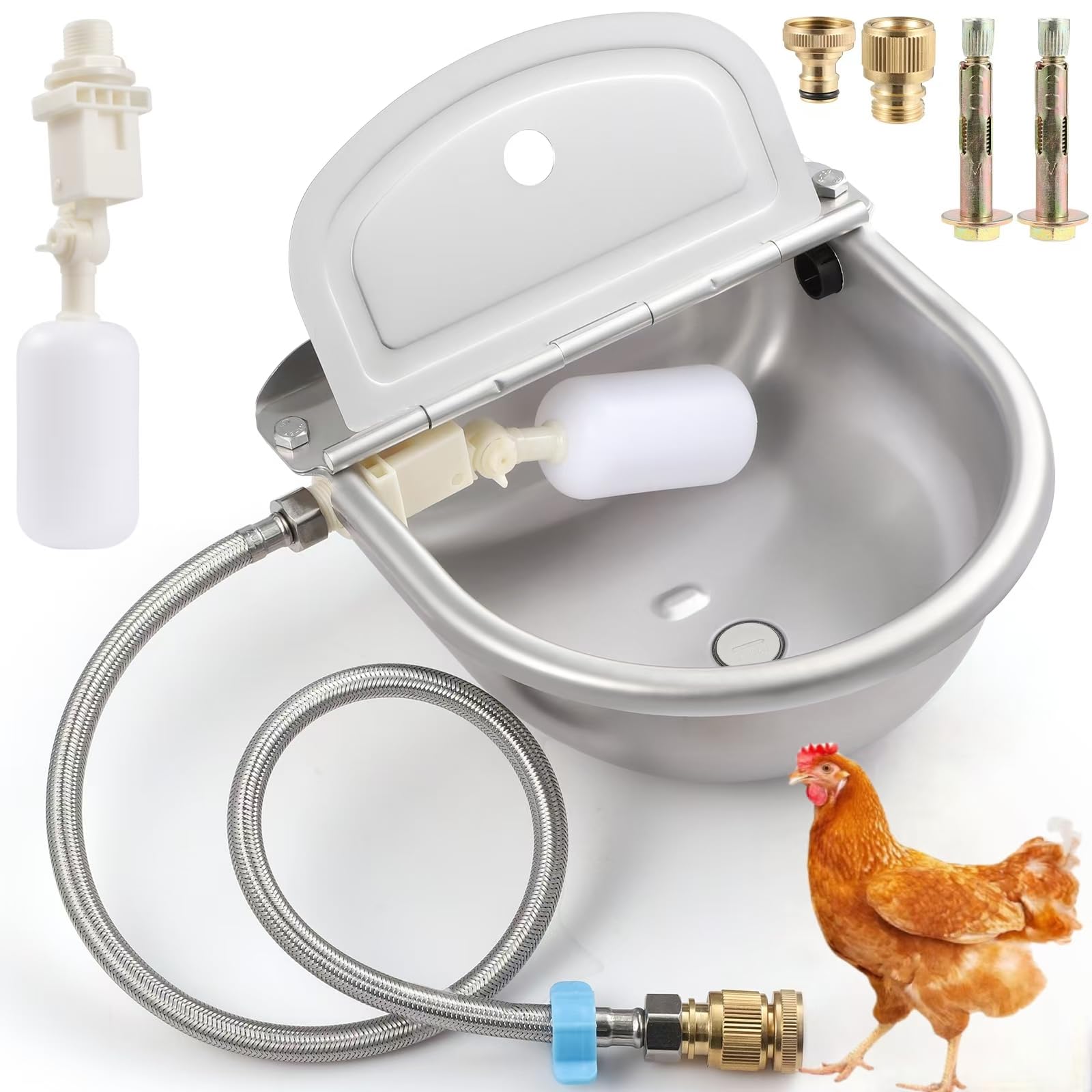
This is a fundamentally different approach: a plumbed-in 304 stainless steel bowl that connects directly to a garden hose via a 31.5-inch stainless pipe with quick-connect ends. The float valve mechanism automatically refills the bowl as birds drink, providing continuous fresh water without any manual topping off — ideal for keepers with multiple coops or large flocks.
The stainless steel construction resists rust, is dishwasher-safe, and stands up to years of outdoor exposure. A built-in drainage outlet lets you flush the bowl clean without tipping the whole unit, a major convenience for preventing biofilm buildup. The system includes two float valves as spares, though some users have reported that the plastic internal components can fail after several months in direct sun.
Because it requires a hose connection, this unit is best suited for coops near an outdoor spigot or a permanent water line. Once installed, it eliminates the refill chore entirely, making it a strong choice for anyone who prioritizes hands-off hydration over portability.
Why it’s great
- Continuous auto-refill eliminates daily carrying.
- Stainless steel bowl is easy to clean and rust-proof.
- Drainage outlet simplifies flushing.
Good to know
- Requires a garden hose connection; not portable.
- Plastic float assembly is the weak point in an otherwise metal unit.
3. Lilyang Automatic Chicken Waterer
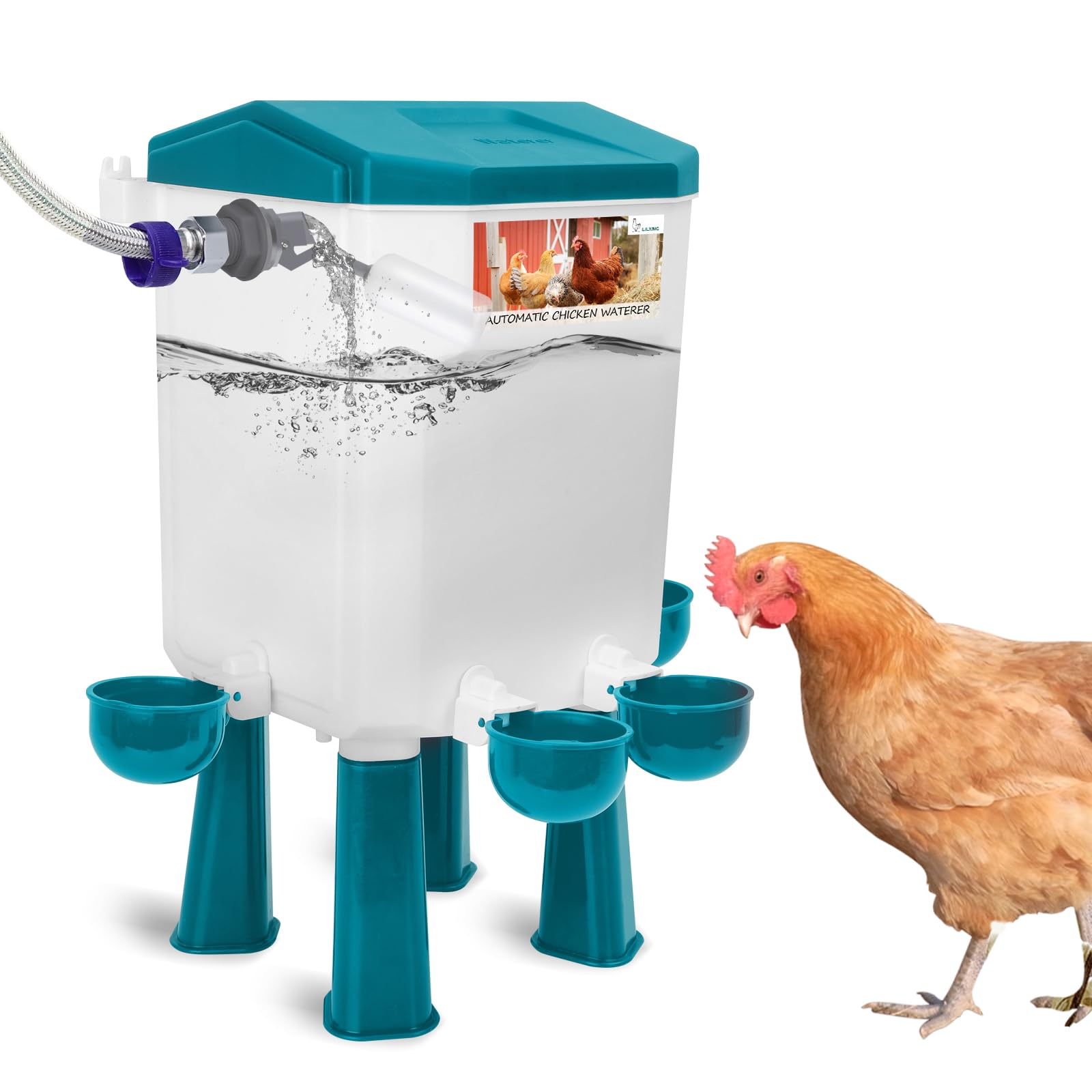
The Lilyang system uses a 2-gallon bucket with a float valve and a connected watering cup — a hybrid design that keeps the main reservoir sealed (reducing algae growth) while offering the familiarity of an open drinking basin. The opaque bucket blocks sunlight, which reviewers consistently cite as a key advantage for preventing mildew.
Setup is flexible: the included support legs allow ground placement, or you can hang the bucket using the supplied brackets. A 60-inch stainless steel hose with 3/4-inch threaded ends connects to standard garden faucets, and the system can be used as a gravity waterer if you prefer not to hook it up to constant pressure. The cup design accommodates chickens, ducks, geese, and turkeys.
Some users note that the legs are a friction fit and can fall off when lifting the unit, and the lid is also friction-fit rather than latched, which could blow off in high winds. The water cups may develop minor leaks at the valve seat, though many owners report that tightening or adjusting the float resolves the issue.
Why it’s great
- Opaque bucket suppresses algae and mold growth.
- Can be used standing or hanging to suit your coop.
- Works with multiple bird species beyond chickens.
Good to know
- Friction-fit legs and lid may loosen over time.
- Valve seats need occasional adjustment to prevent drips.
4. Essilnn DIY Chicken Feeder and Waterer Kit
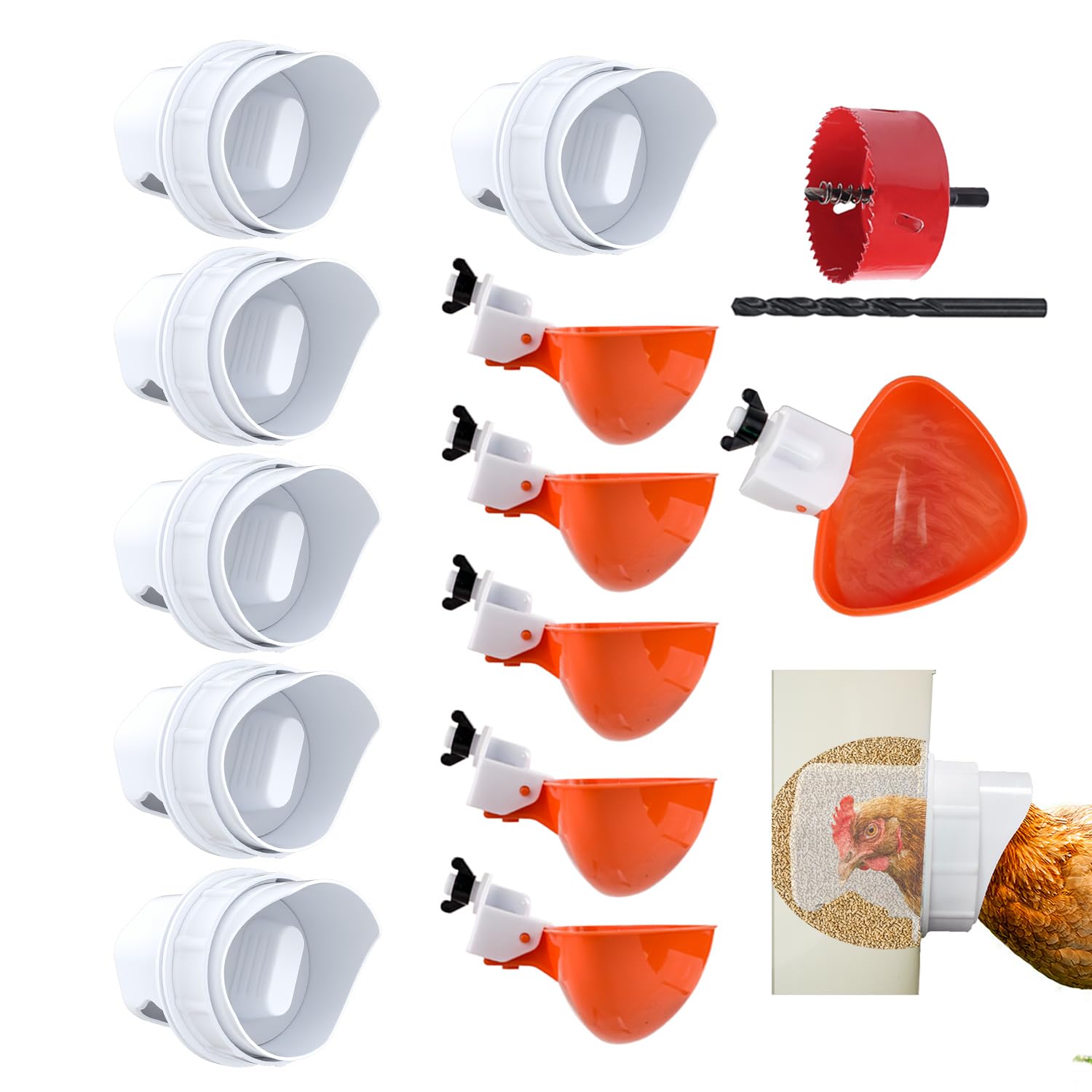
This kit is for keepers who already have a 5-gallon bucket or a larger container and want to build a custom waterer and feeder system at a low cost. It includes six watering cups with 1/8-inch NPT threads, six feeder ports with stoppers, and a drill bit — everything you need to turn a standard bucket into a gravity-fed hydrator and feeder.
The water cups use a paddle mechanism: when a bird pushes the paddle, the cup fills; when released, it seals shut. This design keeps the water clean because only a small basin is exposed at a time, and the cup lifts to refill rather than relying on a nipple. The feeder ports are best suited for mash or pellets, though some reviewers note they are too small for large-breed chickens to eat comfortably.
Critical installation tip: drill the holes high enough on the bucket so that the cups sit above the ground when the bucket is placed on the floor, preventing the ground from pushing the paddle open and draining the entire reservoir. The included rubber gaskets seal well, and the kit represents excellent value if you are comfortable with basic DIY.
Why it’s great
- Transforms any bucket into a custom-size system.
- Paddle cups keep water clean and restrict exposure.
- Extremely affordable way to build multiple stations.
Good to know
- Feeder ports may be undersized for large roosters.
- Must drill holes at the correct height to avoid leaks.
5. Hen’s Choice 8L/2.1 Gal Chicken Waterer
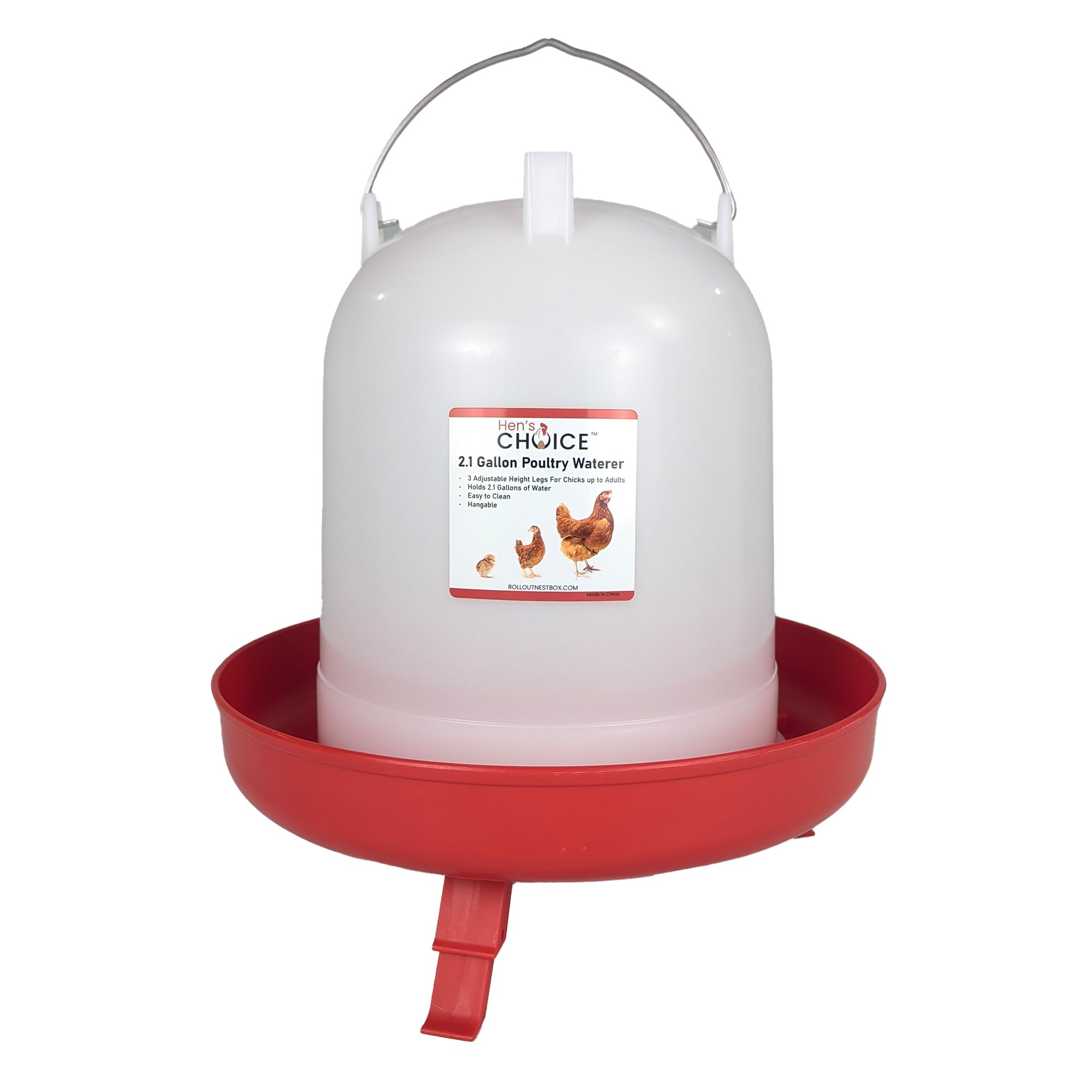
The Hen’s Choice waterer is a straightforward gravity-fed tray system with a 2.1-gallon tank and adjustable legs that offer three height settings, allowing it to grow with your flock from chick to adult. The plastic body is easy to clean, and the wide tray provides familiar access for birds that may be hesitant to try nipples or cups.
Reviewers appreciate the lighter weight of the plastic compared to galvanized metal waterers, which can rust over time and become difficult to carry when full. The anti-roost top prevents chickens from standing on the lid and dropping debris into the reservoir. However, the adjustable legs are a known weak point — several users report that one of the legs snapped during normal use, which can make the unit unstable on uneven ground.
This is a budget-friendly entry point for a small backyard flock of 4-6 birds. The open tray design means more evaporation and a higher chance of debris contamination than nipple or cup systems, but the simplicity and low maintenance make it a common first waterer for new chicken keepers.
Why it’s great
- Adjustable legs allow use from chick to adult.
- Lightweight plastic is easier to carry than metal.
- Anti-roost lid reduces top-side mess.
Good to know
- Leg attachments are prone to breaking.
- Open tray exposes water to dust and evaporation.
FAQ
How often should I clean a chicken waterer system?
Can I leave a chicken waterer system outside in winter?
How do I transition my chickens from a tray to a nipple waterer?
Final Thoughts: The Verdict
For most users, the chicken waterer system winner is the ZenxyHoC 3.6 Gal because it combines a generous 3.6-gallon capacity with clean-dispensing horizontal nipples and a visible water-level window — a practical balance of capacity, hygiene, and convenience. If you want continuous auto-fill without ever carrying a bucket, grab the EAPIKON 304 Stainless Steel Bowl. And for the budget-conscious DIYer who already has a bucket, nothing beats the Essilnn kit for turning it into a functional water station at minimal cost.

Mo Maruf
I created WellFizz to bridge the gap between vague wellness advice and actionable solutions. My mission is simple: to decode the research and give you practical tools you can actually use.
Beyond the data, I am a passionate traveler. I believe that stepping away from the screen to explore new environments is essential for mental clarity and physical vitality.