Our readers keep the lights on and my smoothie glass nicely filled. As an Amazon Associate, I earn from qualifying purchases.
Specs are compiled from manufacturer listings and verified buyer reviews and can change over time — please confirm the key details on the product page before buying.
Every winter morning the same chore: chip ice out of the waterer, haul fresh water, and hope your chickens are not thirsty. The right heated waterer makes that disappear. This guide compares seven options by their real specs and what buyers actually say, so you know which one will keep water liquid through a polar vortex without wasting your time.
I’m Mohammad Maruf — the founder and writer behind WellFizz. This guide is built by comparing the manufacturers’ published specifications and the patterns across verified customer reviews, so you get each pick’s real strengths and trade-offs instead of marketing spin.
The right chicken waterer for winter keeps your birds hydrated when the temperature drops below zero, without wasting your time on daily ice duty or risking a fire in your coop.
Our Picks at a Glance
How To Choose The Best Chicken Waterer For Winter
Not every “heated” waterer handles the same cold. Three specs decide if yours will work all season or leave you with a block of ice and a dead plug.
Wattage vs. Ambient Temperature
A 100-watt heater works fine in a mild winter above 0°F, but if you regularly see -10°F or lower, you need at least 125W to 250W. Higher wattage melts ice faster and keeps the water temperature stable when the coop is drafty.
Thermostat On/Off Range
The ideal thermostat (a device that senses temperature and switches the heater on or off) kicks on near freezing (around 35°F) and shuts off well above freezing (around 70°F to 77°F). A big gap between on and off means the heater runs less often, saving energy without letting the water freeze.
Material and Water Compatibility
Some heating bases work with both plastic and metal waterers, but plastic needs water in it before you place it on the heater. A dry plastic waterer on a hot plate can warp or melt. Galvanized steel (steel coated with zinc to resist rust) bases resist rust, while cast aluminum conducts heat most evenly.
Quick Comparison
| Model | Best For | Wattage | Capacity | Thermostat Off | Amazon |
|---|---|---|---|---|---|
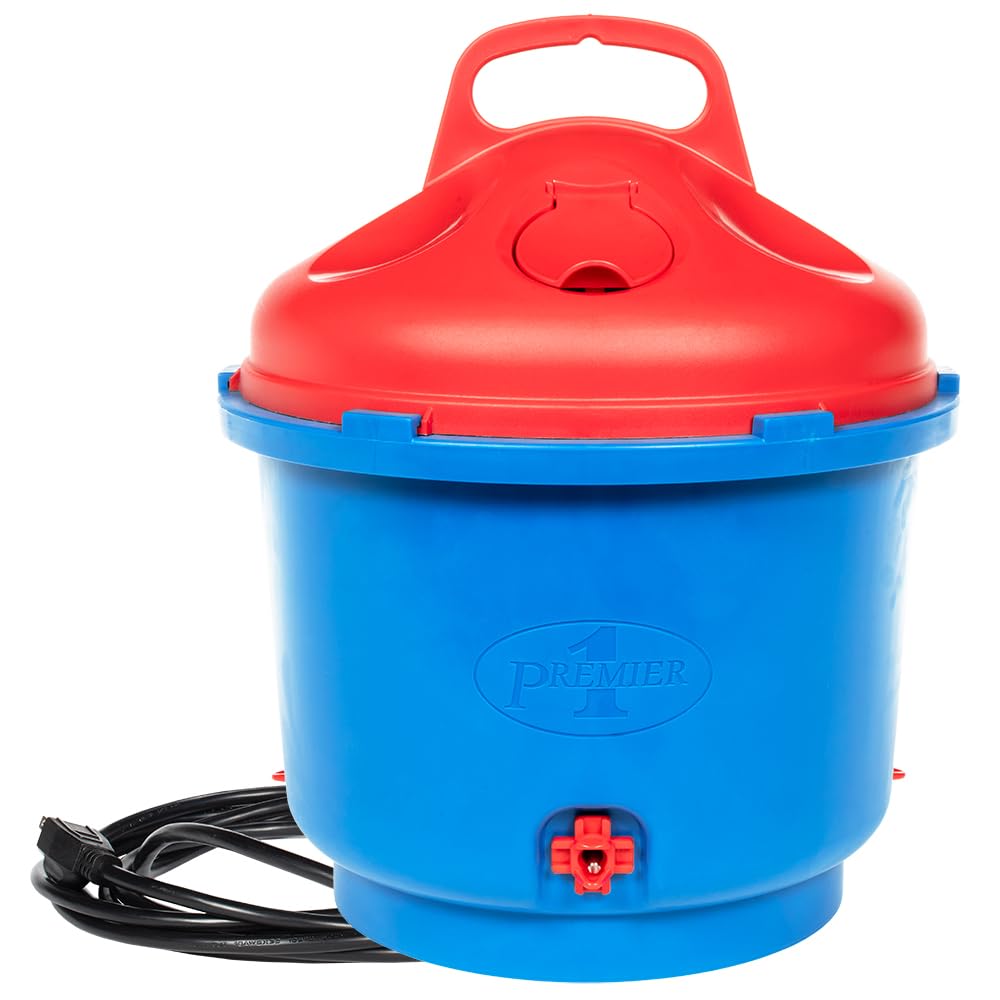
| Premier 1 All-Season 3 Gal★ Best Overall | Nipple drinker with heated base | 100W | 3 gallons | 60°F | Amazon |
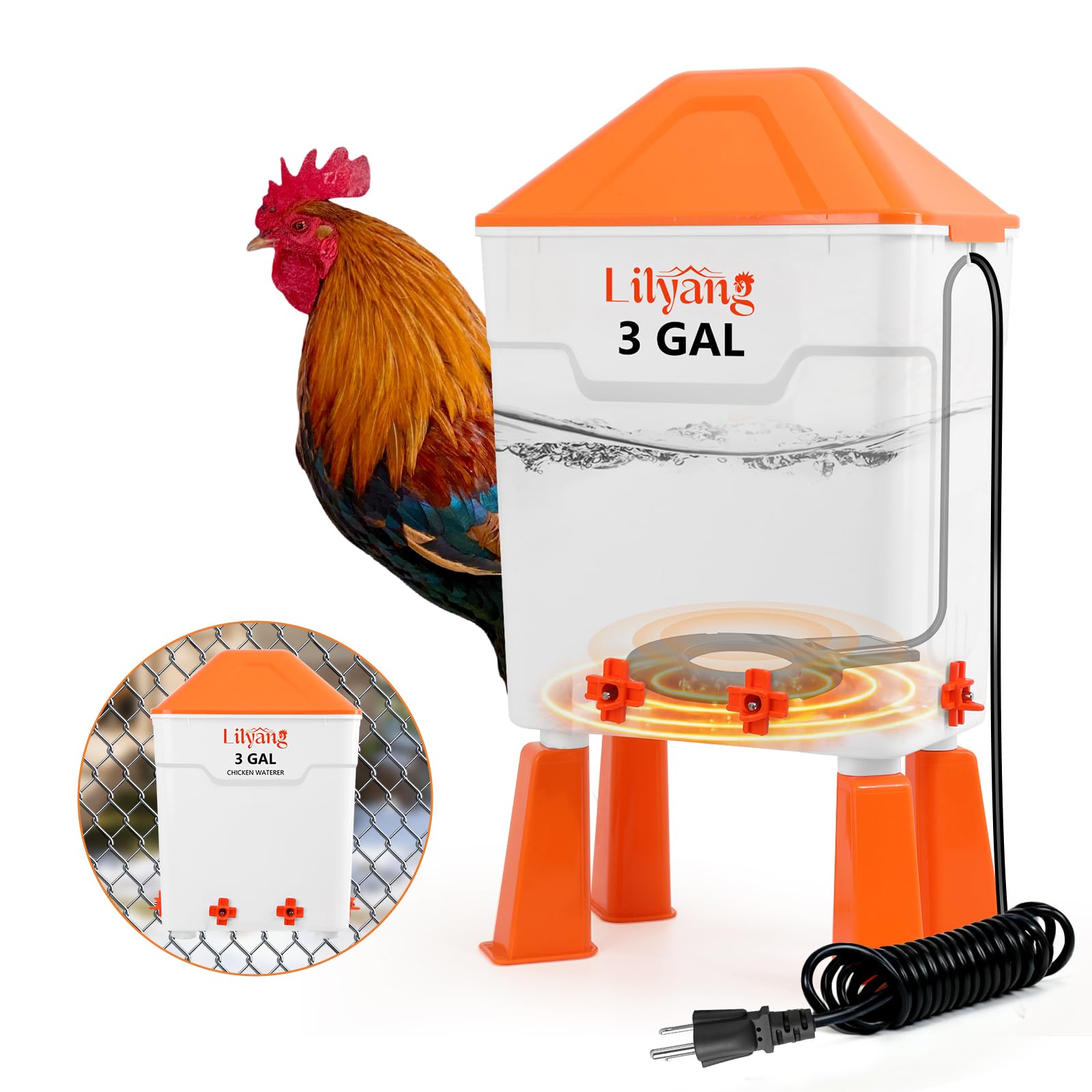
| Lilyang Heated Chicken Waterer 3 GalAlso Great | All-in-one winter system | 250W | 3 gallons | 70°F | Amazon |
| Lil’Clucker Heated Base 11″ | High-watt base for extreme cold | 125W | 5 gallons | 77°F | Amazon |
| COICOTTC Heated Base 11″ | Budget-friendly heated base | 110W | 5 gallons | 77°F | Amazon |
| GUEOQTC 2-Pack Heated Base | Multiple coops or backup | 110W | Up to 5 gallons | 77°F | Amazon |
| AFDUV Heated Water Bowl 3.7L | Small flocks, ducks, or pets | 35W | 0.98 gallons | Automatic | Amazon |
| Eggluuz Heated Base 11″ | Budget entry-level base | 110W | Up to 5 gallons | 77°F | Amazon |
In‑Depth Reviews
1. Premier 1 All-Season Heated Poultry Waterer 3 Gallon
Our pick — over 4★ from 800+ verified ratings; the strongest balance of quality and price.
A rugged nipple drinker that keeps water clean and ice-free without getting hot.
Premier 1 is the brand serious poultry keepers trust, and this 3-gallon unit justifies that reputation with a smart design. Its 100W heating element (a device that converts electricity into heat) turns on at 40°F and off at 60°F — that 20°F thermostat gap is significantly narrower than the 42°F gap on the Lil’Clucker (which stays on until 77°F), meaning the Premier 1 cycles less and uses less energy. The water stays above freezing but never gets even lukewarm, so your birds are not put off by warm water.
Three recessed nipples (small metal pins that release water when pecked) keep the water clean, and the hinged quick-fill cap lets you refill with a hose without removing the lid — a big help when the lid is iced shut. The 16-foot detachable cord is 63% longer than the cord on the COICOTTC model, so you can reach a distant outlet easily. Owners mention it is “durable, easy to carry, and insulating,” noting it froze once at 17°F (well below its rated range). One tip: you must hang it for airflow — sitting flat on a solid surface traps moisture and can trip a GFCI (a safety breaker that cuts power if it detects a ground fault).
Why It Stands Out
- 16 ft detachable cord — the longest on this list for flexible outlet placement
- Nipple system keeps water clean and algae-free
- Quick-fill cap lets you refill without removing the frozen lid
Know Before You Buy
- Must be hung for proper airflow — not for flat-surface use
- One review noted water froze at 17°F, below the -20°F claim
Choose this for: a low-watt, high-thermostat-efficiency drinker that keeps water clean through nipples and is easy to maintain.
skip it if: you need a standing unit or want the heater to produce warm water — this one only keeps ice away.
2. Lilyang Heated Chicken Waterer 3 Gallon
The all-in-one heated waterer that handles -20°F without breaking a sweat.
This is not a separate base that you hope fits your bucket — it is a complete 3-gallon gravity waterer (a waterer that uses gravity to refill the drinking trough as birds drink) with a built-in, detachable 250W heating plate. That 250-watt power is the highest on this list, and it matters when the thermometer hits -20°F. The thermostat (a control that senses temperature) clicks on at 35°F and shuts off at 70°F, so it runs only when needed. Buyers report it “kept their water from freezing in one of the coldest winters in years,” though one critical review warns the heater overheated and caused a fire in their shavings. That review is a minority, but it means you should keep the base clear of flammable bedding.
You can use it standing on flat ground (the included legs keep the unit improve) or hang it from a hook — both setups work. The detachable heater plate means you unscrew it in the spring and use the same waterer as a summer feeder, no need for a second piece of gear. This 250W model heats water faster than the 100W Premier 1 in extreme cold, so your flock gets ice-free water even during a polar vortex.
Standout Strengths
- Highest wattage (250W) on this list — built for deep cold down to -20°F
- Heater plate detaches for summer use as a regular waterer
- Hanging or standing setup with included legs and brackets
Watch Out For
- One reviewer noted the heater ignited bedding — keep the base clear of flammable material.
- Cannot see water level from outside; you must lift the lid to check
Reach for this if: you want one waterer that works year-round and has enough heating power for brutal winter nights.
Look elsewhere if: you prefer a separate heating base so you can keep your existing waterer, or you want an absolutely simple to use safety track record.
3. Lil’Clucker Heated Base for Chicken Waterer 11″
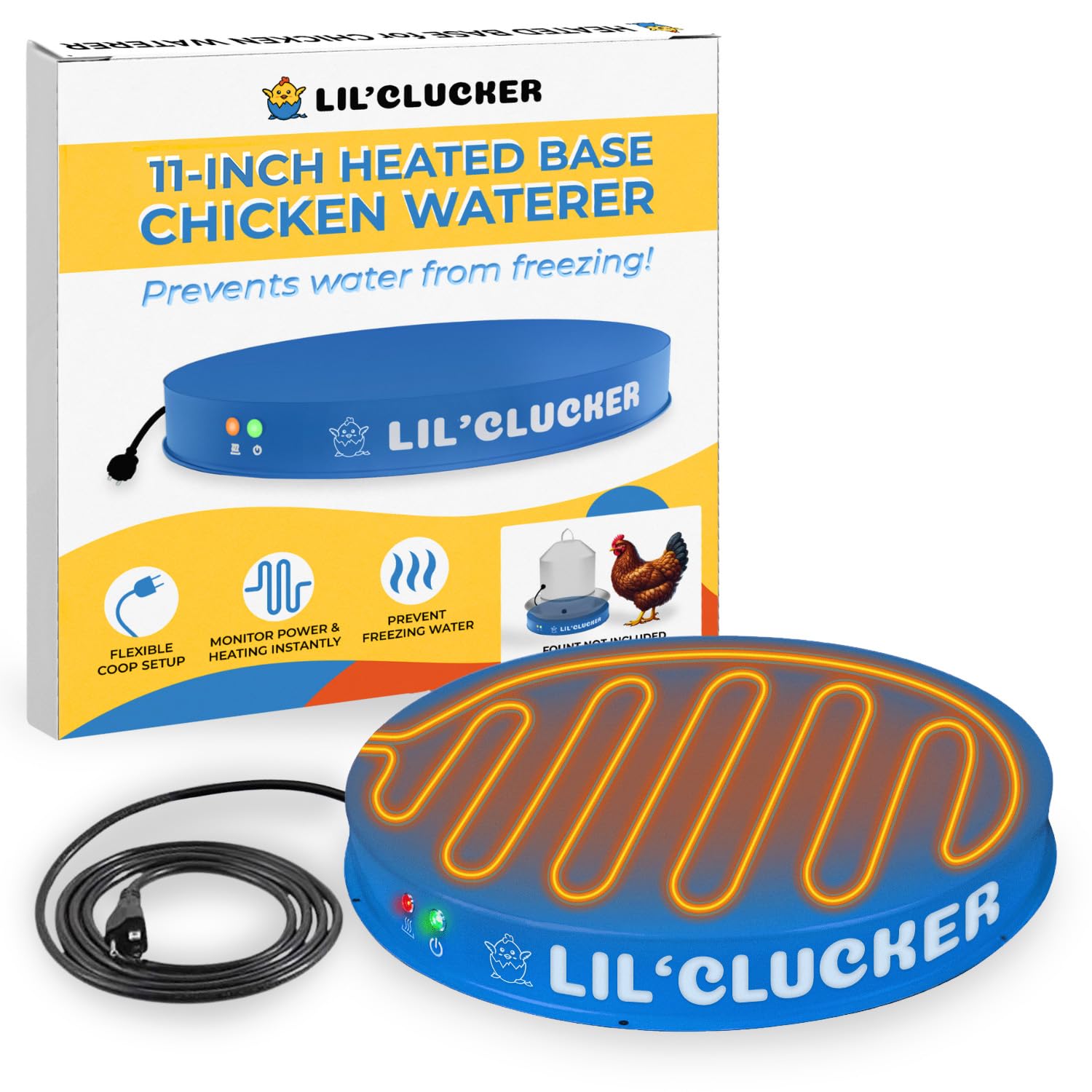
A powerful 125W heating base with LED indicators that tell you it is actually working.
When the wind picks up and the coop gets drafty, you want more wattage — and this base delivers a full 125W, which is 25% more heating power than the Premier 1 unit’s 100W. The thermostat (a temperature-sensitive switch) kicks on at 35°F and shuts off at 77°F, which is a 28% wider temperature gap at the high end than the Premier 1’s 60°F shutoff. That means it stays on longer in milder cold to keep your 5-gallon waterer ice-free all the way down to below-zero temps.
Two LED indicator lights (light-emitting diodes that glow to show status) — one for power, one for heating — let you see at a glance whether the base is working. Customers note it “works great for two winters in a row” with a plastic 5-gallon waterer, and they appreciate the long 10-foot cord. The catch: the manufacturer warns the base is not waterproof, so one reviewer suggests giving it moisture protection in a damp coop. It also comes in a 2-pack option if you have multiple coops.
Why It Is Worth It
- 125W — highest wattage of any separate base on this list
- LED power and heating indicators take the guesswork out
- 10 ft cord offers flexible placement
Consider This
- Not fully waterproof — reviewers suggest protection from direct moisture
- Fits up to 5 gallons, but check if your bucket has a flat base
Buy it when: deep cold is routine and you want visual confirmation that the heater is running, plus extra wattage headroom.
Steer clear if: your coop is damp — you would need a fully sealed base or waterproof housing.
4. COICOTTC Chicken Water Heater for Winter 11″ Base
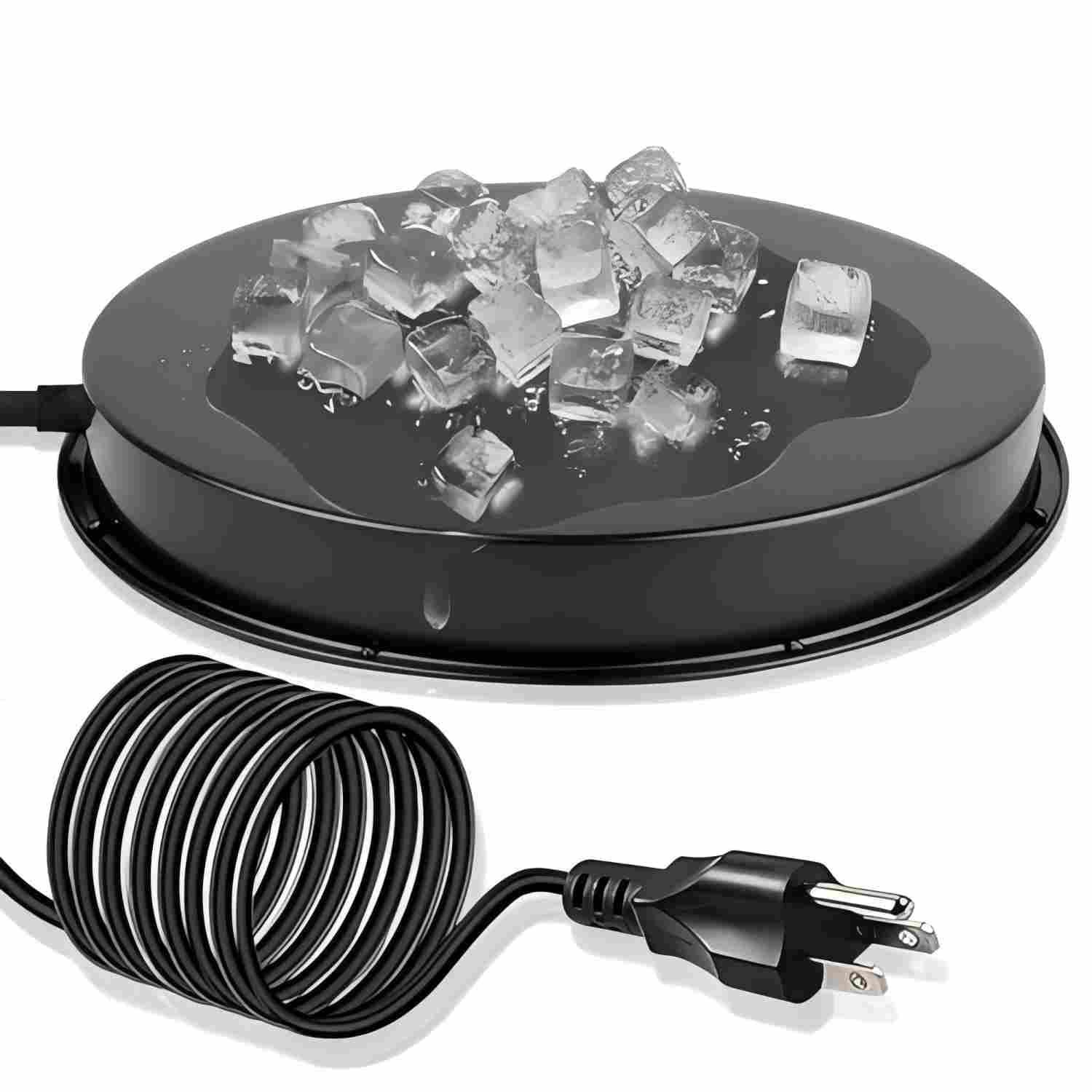
A 5-gallon-ready heating base that survived a winter near the Canadian border.
This 110W base from COICOTTC is built for plastic or metal waterers up to 5 gallons, and its 9.8-foot cord gives you enough reach to find a power source. The thermostat (a temperature controller) turns on when the water drops below 32°F and shuts off at 77°F. That means you get a 45°F heating window compared to the Premier 1’s 20°F window, so the COICOTTC runs longer — but it also ensures deep-freeze protection.
The 11-inch diameter fits most standard water buckets, and the galvanized steel (steel coated with zinc to prevent rust) finish resists rust. Reviewers point out it “kept a 5-gallon watering can from freezing all winter near the Canadian border,” and another review says it works down to -1°F. The honest caveat from a customer: when temps stay below 25°F for multiple days, they had to chip ice out of their 3-gallon plastic waterer — so this base works best in milder winters or with a larger thermal mass like a 5-gallon bucket.
What Works
- Compatible with both plastic and metal waterers up to 5 gallons
- 9.8 ft power cord with a three-prong plug for safety
- Galvanized steel resists rust in damp coop environments
What to Expect
- Struggles in sustained cold below 25°F with a 3-gallon waterer
- Plastic waterer must contain water before placing on the base
Best for: moderate-winter climates where temps rarely stay in the teens for days at a time and you want a base that fits most buckets.
Not for: extreme northern winters or if you have a small waterer with less thermal mass.
5. GUEOQTC 2-Pack Chicken Water Heater 11″ Base
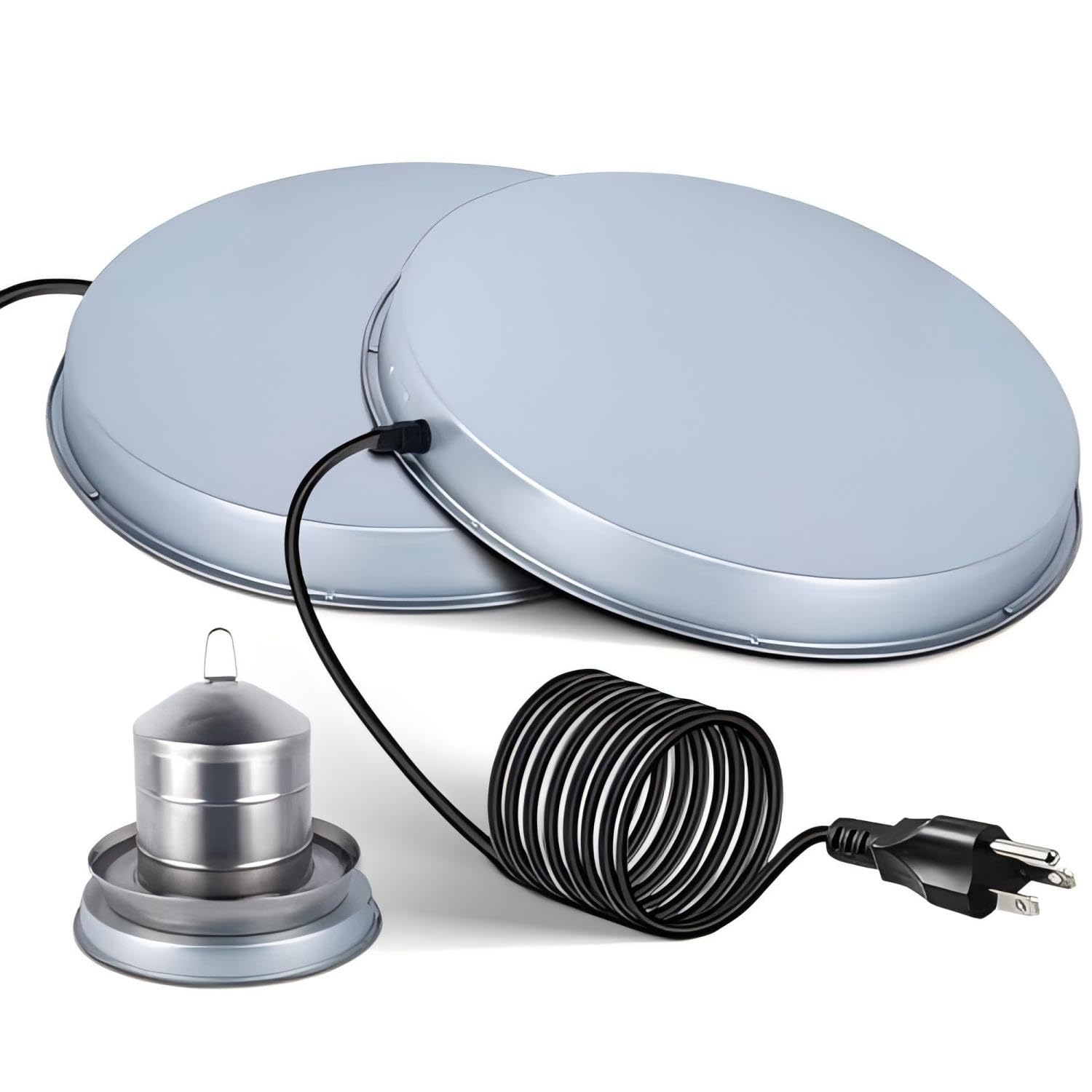
Two heating bases that keep water ice-free down to 16°F at a price that makes sense for multiple coops.
This bundle gives you two 110W heating bases with identical thermostatic control (on at 35°F, off at 77°F) and a 9.8-foot three-prong cord each — all at a better per-unit price than buying singles. Shoppers say these keep both 1-gallon and 5-gallon plastic waterers ice-free down to 16°F, and the plate stays cool to the touch while still preventing freezing. One reviewer with a large setup says it gives “real confidence.”
The same review notes the unit was in a covered coop with no water spillage. This is a minority report (524 ratings, mostly positive), but it is a real safety flag. If you buy these, inspect the cord and base regularly and use on a GFCI-protected circuit (a ground fault circuit interrupter outlet that shuts off power if electricity leaks).
Best Features
- Two bases for the price of one from many competitors
- Works with plastic and metal waterers up to 5 gallons
- Thermostat prevents over-heating and saves energy
One Big Concern
- One buyer mentioned an electrical shock hazard — always use on a GFCI-protected circuit.
- Not as powerful as the Lil’Clucker or Lilyang in extreme deep cold
Ideal for: chicken keepers with two coops or a main coop plus a brooder who want a cost-effective heating solution for moderate winters.
Skip if: safety is your absolute first priority or you regularly see temps below 0°F — consider a single higher-watt base instead.
6. AFDUV Heated Water Bowl for Dogs, Cats & Poultry 3.7L
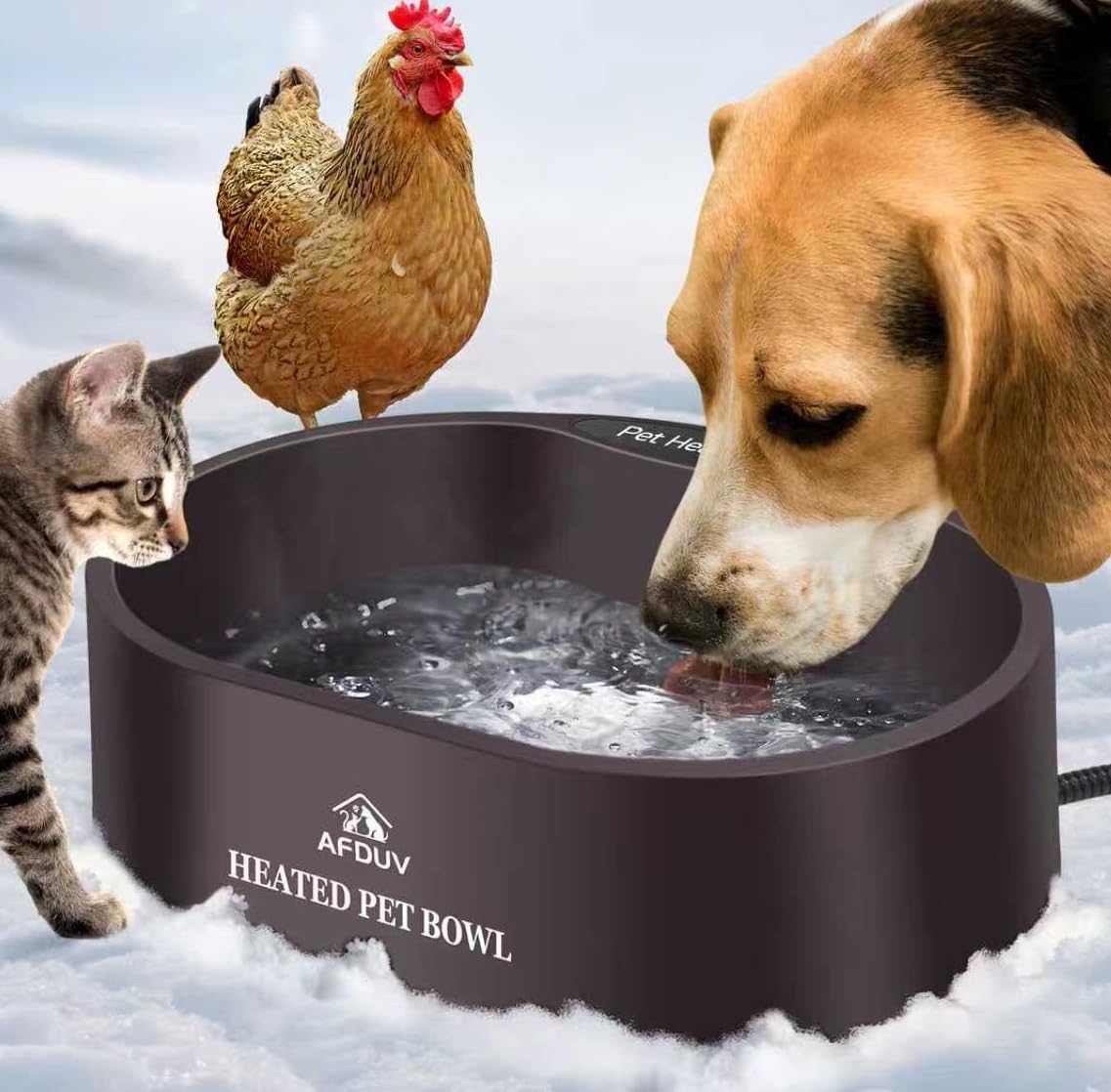
A low-watt heated bowl that keeps ducks, chickens, and outdoor cats drinking through negative temps.
This 3.7-liter (0.98-gallon) heated bowl draws just 35W, which is a fraction of the power of the full-size bases — but it still holds the water at 77°F to 95°F, so it stays drinkable even in subzero weather. The automatic thermostat (a device that turns off the heater if the bowl runs dry) shuts off if the bowl runs dry, preventing damage, and the steel-twisted anti-chew power cord is 6.5 feet long. The bottom has nonslip foam pads to keep it in place.
Buyers report it “keeps duck water from freezing in negative temps” and that it is “not hot enough for a fire hazard.” The low capacity (under one gallon) means you will refill it daily for a flock of 10 chickens or ducks — one reviewer specifically wished for a larger size. It also sits very low to the ground (3.5 inches tall), which works well for ducks and small breeds but may be less convenient for taller birds.
Small but Mighty
- ETL-certified power cord and BPA-free plastic for safety
- Anti-chew cord and nonslip pads keep it in place
- Auto-shutoff on dry bowl prevents overheating
Size Constraints
- 0.98-gallon capacity is too small for larger flocks
- Open bowl design lets debris and bedding get in the water
Perfect for: duck owners, small backyard flocks, or anyone who also keeps outdoor cats or dogs and wants one heated bowl for all.
Probably not for: a flock of more than 5 birds or anyone who wants a closed, nipple-style waterer that keeps bedding out.
7. Eggluuz Chicken Water Heater 11″ Base
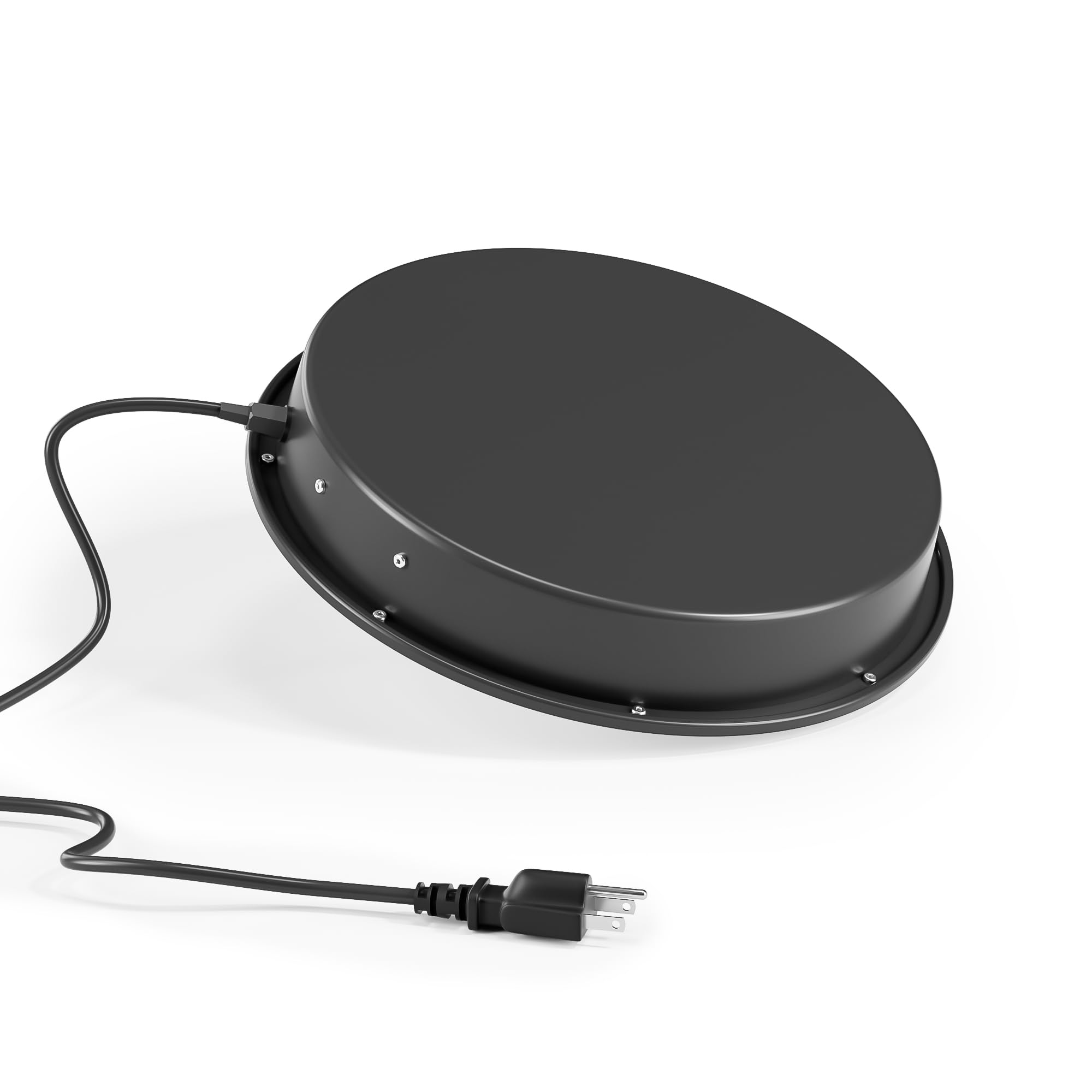
An affordable 110W base with a thermostat that keeps water liquid through a 0°F winter.
Eggluuz’s entry-level base offers the same core function as pricier models: 110W of heating power, an automatic thermostat (a built-in switch) that kicks on at 35°F and shuts off at 77°F, and a galvanized steel plate that resists rust. At just 1.57 inches tall, it sits under almost any waterer without raising the bucket too high. The 11-inch diameter fits most 3-gallon and 5-gallon plastic or metal waterers.
The 3-month warranty is shorter than what you get from more established brands, which tells you the expected lifespan is modest. Owners mention it kept water liquid “down around 0°f” and that it “stays warm to the touch” even in 10°F weather. One practical tip from a reviewer: use a rubberized pad between the heating element and the water container to stop the bucket from sliding off the smooth metal surface. This base is a simpler choice than the Lilyang, which includes a full waterer, but it costs less.
What You Get
- Same 35°F-on / 77°F-off thermostat as more expensive bases
- Galvanized steel construction resists rust
- Low profile (1.57″) fits under most waterers without changing height
Cut Corners
- Only 3-month warranty — shorter than most competitors
- Smooth surface may let waterer slide; a pad is recommended
Best for: the chicken keeper on a tight budget who needs a functional heating base for a mild-to-moderate winter and does not plan to use it year after year.
Not for: buyers who expect a multi-season product or want a longer warranty period.
Understanding the Specs
Wattage
Wattage (a measurement of electrical power used) tells you how much heat the base produces. A higher wattage (125W or 250W) means more heat output — useful when temps drop below 0°F. A lower wattage (35W or 100W) works fine for mild winters but may struggle to keep a large bucket ice-free during a polar vortex.
Thermostat Control
The thermostat (a heat-sensitive switch) decides when the heater turns on and off. A good thermostat kicks on just above freezing (around 35°F) and shuts off well above it (at least 60°F to 77°F). A narrower on/off gap (like 40°F on / 60°F off) cycles less often and uses less energy but provides a narrower margin in extreme cold.
Capacity and Flock Size
Capacity (the total volume of water the unit holds) tells you how much water it holds before refill. A 0.98-gallon bowl works for 3-5 birds for a day, while a 3-gallon waterer supports up to 35 adult chickens for 2-3 days. Matching capacity to your flock size reduces daily refills in freezing weather.
Material and Durability
Heated bases made of galvanized steel (steel coated with zinc to prevent rust) resist rust in the constant damp of a winter coop. All-in-one waterers use plastic components that must withstand the heater’s heat without melting — some designs use cast aluminum heating plates to prevent the plastic base from warping.
FAQ
Will a heated waterer for chickens work in subzero temperatures?
How hot does the water get in a heated chicken waterer?
Can I use a metal dog bowl on a heated poultry base?
What safety features should I look for in a heated chicken waterer?
How long does a heated chicken waterer base last?
Is a 35W heated bowl enough for chickens in winter?
Do nipple waterers freeze differently than open bowls?
Can I hang a heated chicken waterer or does it need to stand?
How many chickens can a 3-gallon heated waterer support in winter?
Is it safe to leave a heated chicken waterer plugged in all winter?
Final Thoughts: The Verdict
If you want one dependable pick, the chicken waterer for winter winner is the Lilyang Heated Chicken Waterer 3 Gallon because its 250W heater gives you the deepest freeze protection on this list, and the detachable plate means one waterer does double duty across all four seasons. If you want a separate heating base that fits your existing bucket, grab the Lil’Clucker Heated Base 11″ for its 125W power and handy LED indicators. And for the budget-conscious with a moderate winter, the COICOTTC Chicken Water Heater Base keeps a 5-gallon waterer ice-free while staying affordable.
How We Picked
We do not accept paid placement. Every pick is matched to a real buyer and a real use-case; we do not hands-on test units.
Sources & Methodology
Specifications: manufacturer listings and product documentation. Review insights: verified customer reviews, as of July 2026. Pricing: not shown on this page (it changes often); check the current price via the retailer link.
As an Amazon Associate, WellFizz earns from qualifying purchases. This does not affect which products we feature.
Related Guides

Mo Maruf
I created WellFizz to bridge the gap between vague wellness advice and actionable solutions. My mission is simple: to decode the research and give you practical tools you can actually use.
Beyond the data, I am a passionate traveler. I believe that stepping away from the screen to explore new environments is essential for mental clarity and physical vitality.