Our readers keep the lights on and my smoothie glass nicely filled. As an Amazon Associate, I earn from qualifying purchases.
Specs are compiled from manufacturer listings and verified buyer reviews and can change over time — please confirm the key details on the product page before buying.
You see a chicken coop online that looks roomy in the photo. But when it arrives, the “4-6 chicken” run barely fits two hens. Cramped, flimsy, or rotting after one season — that is the real gamble. You want the safest, most comfortable home for your flock without getting tricked by misleading dimensions or cheap materials. This guide cuts through the noise, focusing on the specs and real owner reviews that reveal what each coop is actually like to live with.
I’m Mohammad Maruf — the founder and writer behind WellFizz. This guide is built by comparing the manufacturers’ published specifications and the patterns across verified customer reviews, so you get each pick’s real strengths and trade-offs instead of marketing spin.
After comparing eight different models, I’ve sorted out which chicken coop kits give you the most genuinely useful space per dollar, which ones need immediate predator-proofing upgrades, and which premium models are built to last through multiple seasons of weather and daily use.
Quick Picks
- PetsCosset 116″ L Large Chicken Coop and Run — Best Overall
- MEDEHOO Large Chicken Coop for 6-8 Chickens — Premium Pick
- Aivituvin Large Chicken Coop with Wheels (4-6 Chickens) — Smart Expand
- Formex Snap Lock Large Chicken Coop — Set & Forget
- PETSFIT Wooden Chicken Coop with 71″ Run (4-6 Chickens) — Best Starter
- PETSFIT Wooden Chicken Coop for 2-4 Chickens — Budget Buy
- CSQOO Plastic Chicken Coop with Run — Compact Plastic
- Aivituvin Expandable Mobile Chicken House — Entry Level
How To Choose The Best Chicken Coop Kits
Before you click “add to cart,” you need to see past the marketing numbers. A coop that says it holds 6 chickens might only comfortably fit 2 full-sized hens. Your priorities depend on your flock size, your local weather, and the predators in your area.
Real Capacity vs. Listed Capacity
Manufacturers often list the absolute maximum number of bantam or very small birds the coop can physically cram inside. A realistic rule of thumb from experienced owners: divide the stated capacity number in half for standard breeds like Rhode Island Reds or Barred Rocks. Check the internal floor dimensions — each hen needs about 4 square feet inside the coop and 8-10 square feet in the run for healthy, stress-free living.
Material: Wood vs. Plastic vs. HDPE
Wooden coops (usually fir or cedar) look classic and breathe well, but they can rot, warp, or splinter over time if not sealed. High-density polyethylene (HDPE) and other plastic builds are rot-proof and crack-resistant, making them lower maintenance, but they can sometimes feel flimsy and may not insulate as well in extreme temperatures. Snap-lock plastic coops, like the Formex, offer easy tool-free assembly but come at a premium price.
Built-in Security Features
Look beyond just “predator-proof” in the title. Real security comes from heavy-duty metal latches (not flimsy plastic slides), a solid floor that can’t be popped out from underneath, and ½-inch hardware cloth over any openings, not just chicken wire which raccoons can tear. Ground stakes or “L” nails help prevent tipping and digging.
Quick Comparison
| Model | Best For | Realistic Capacity | Material | Dimensions (L x W x H) | Amazon |
|---|---|---|---|---|---|
| PetsCosset 116″ L | Large flocks & expandable setups | 3-4 hens | Fir Wood | 116″ x 56″ x 44″ | Amazon |
| MEDEHOO 6-8 Chicken | Large flocks with easy mobility | 5-6 hens | Fir + Metal Frame | 76.65″ x 53.81″ x 36.81″ | Amazon |
| Aivituvin Large Mobile | Mid-size mobile coop | 3-4 hens | Wood + Metal | 80.7″ x 22″ x 44.1″ | Amazon |
| Formex SnapLock | Maintenance-free permanent coop | 4-5 hens | Polyethylene (PE) | 64″ x 39″ x 42″ | Amazon |
| Petsfit 71″ Run | Starter coop with swing | 2-3 hens | Fir Wood | 71″ x 42″ x 45″ | Amazon |
| Petsfit 2-4 Chicken | Budget-friendly starter coop | 2 hens | Fir Wood | 80.5″ x 30″ x 41.5″ | Amazon |
| CSQOO Plastic Coop | Rot-proof & easy clean | 2 small hens | HDPE | 60.6″ x 41″ x 20.3″ | Amazon |
| Aivituvin Expandable Mobile | Entry-level mobile coop | 2-3 hens | Wood | 80.7″ x 22″ x 44.1″ | Amazon |
In-Depth Reviews
1. PetsCosset 116″ L Large Chicken Coop and Run
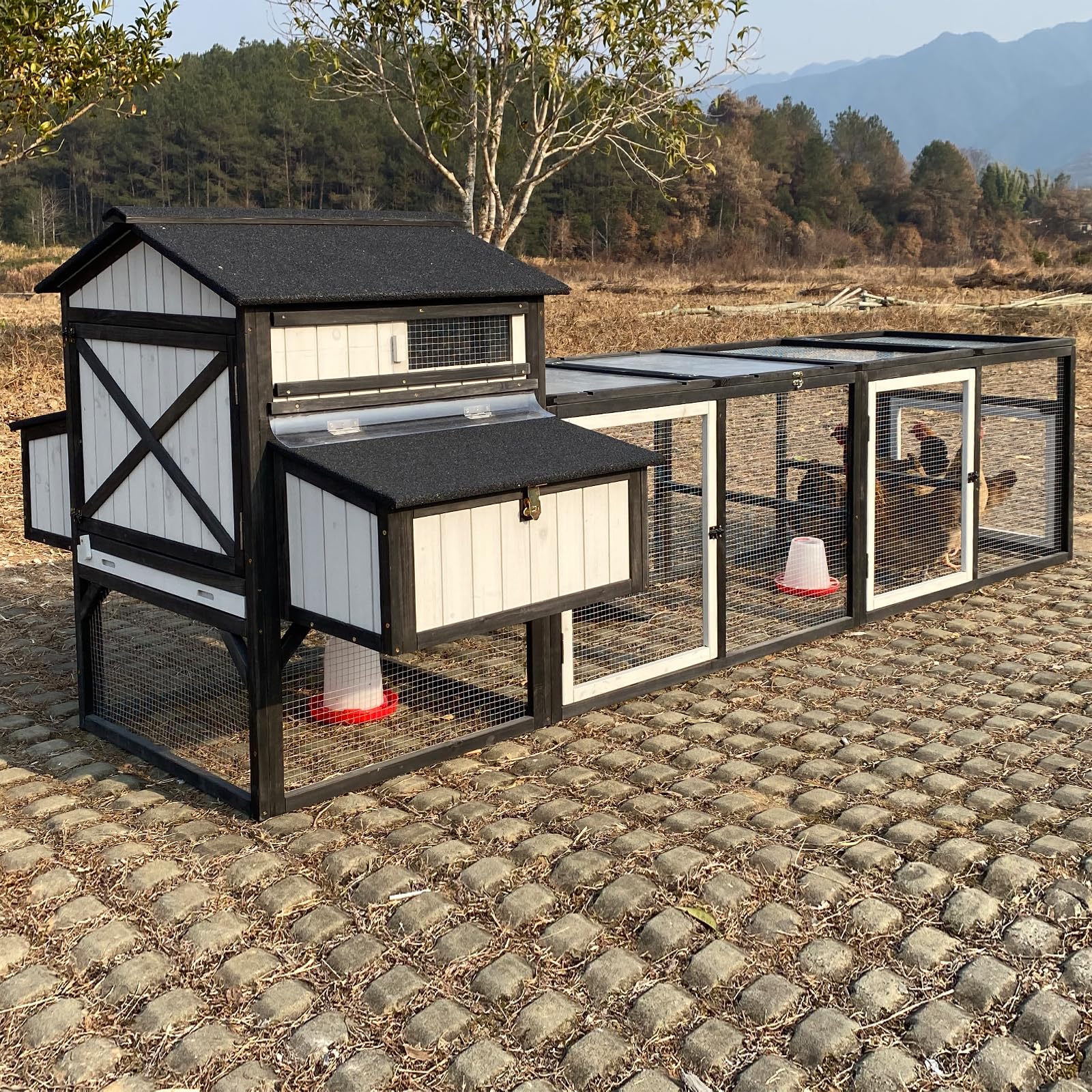
The longest run on the list, giving your flock room to truly stretch out.
If you have the yard space, this 116-inch long fir coop is the most spacious kit we looked at. It provides a total area of 28.41 ft², split into 8.61 ft² on the upper level and 19.8 ft² in the run. That extra legroom makes a real difference — you can comfortably house 3-4 standard hens instead of constantly worrying about overcrowding.
Buyers report it was “easy to build, sturdy,” though they note the stated capacity of 6 chickens is optimistic. One reviewer who used it for an XL breed rabbit said “she loves it,” highlighting its versatility. The waterproof asphalt roof and 100% UV-proof run panel are a smart pairing, keeping the interior dry and shaded during hot summer days. The four nesting boxes with a PVC cover over the connections help prevent leakage into the egg-laying area.
The catch, as some owners found, is that the run’s hard plastic may not hold up under heavy snow loads, and the main coop body measures 22.25 inches wide, not the full 26 inches some expect. This means it fits 2 full-grown hens comfortably, not the 4-6 stated. Still, for the price, you’re getting more genuine run space than almost any other kit in this roundup.
Why It Leads
- Largest overall footprint at 116″ x 56″ x 44″
- 4 nesting boxes for multiple egg layers
- Can be linked with a second unit for even more space
Trade-Offs
- Run plastic may buckle under heavy snow
- Coop body is only 22.25″ wide inside
- Heavy at 97 pounds; not easily moved once placed
Who it fits: Backyard keepers with space to spare who want the longest run possible for 2-3 hens and don’t mind a stationary coop.
Consider this: The run is spacious, but the inner coop is narrow — verify your largest hen can pass through the 22.25″ width before buying.
2. MEDEHOO Large Chicken Coop for 6-8 Chickens
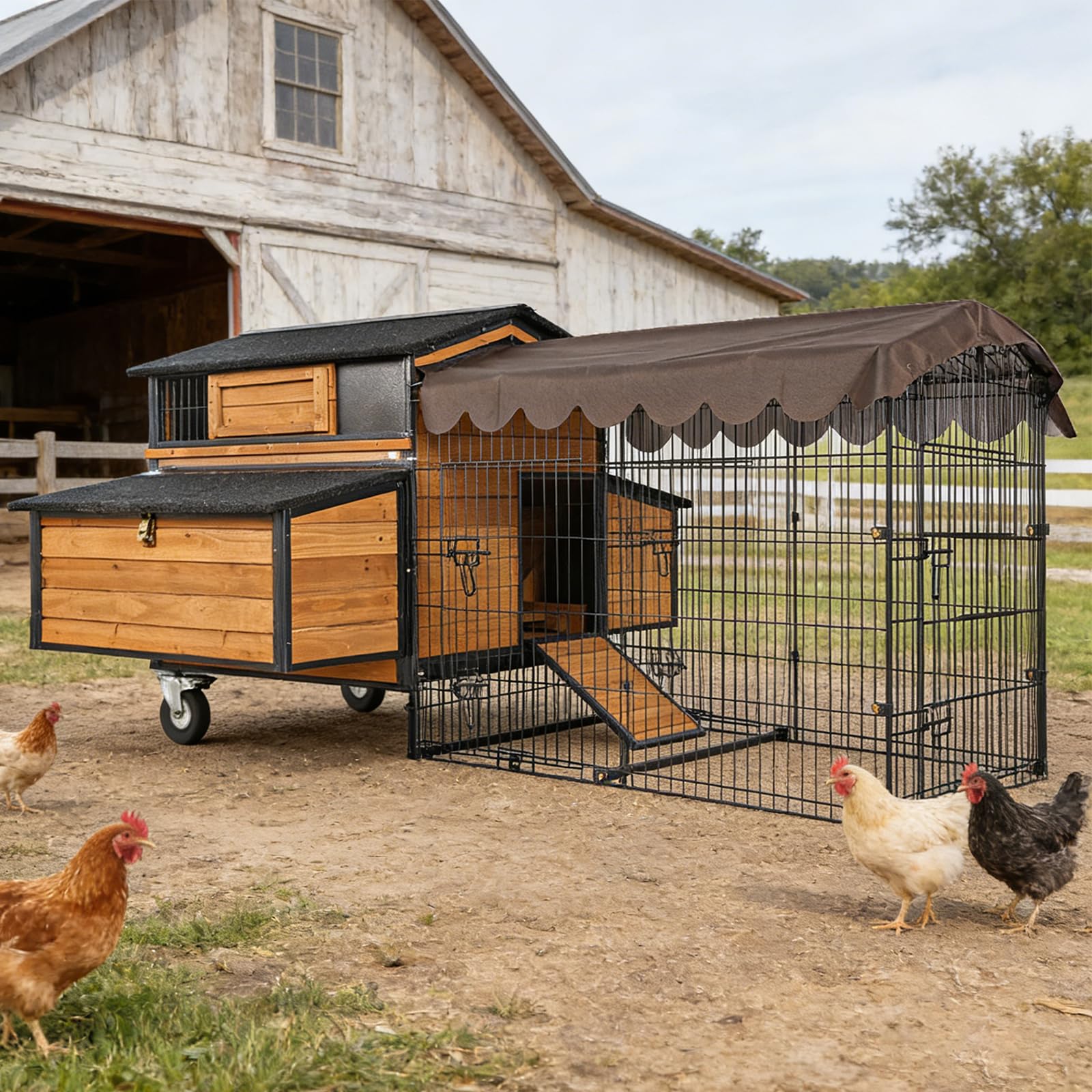
A hybrid build that marries wood warmth with metal muscle for serious durability.
Most wooden coops flex and sag over time, but this MEDEHOO model reinforces its solid fir wood with a square iron tube and U-shaped iron frame. That extra support means it resists warping better than standard all-wood designs. It’s built for 6-8 chickens, making it one of the larger options here, with dimensions of 76.65″ x 53.81″ x 36.81″.
Mobility is a standout feature here. It rolls on durable metal casters rather than the usual plastic ones, so you can rotate it to fresh grass without worrying about wheels cracking. The asphalt roof and waterproof fabric cover work together to keep the flock dry, while the stainless steel lock on the nesting box provides a more secure barrier against raccoons than the basic latches on cheaper kits.
The multi-compartment nesting box with removable dividers lets you adjust the layout for your hens’ preferences. One potential downside: at over 53 inches wide, it takes up a noticeable footprint in your yard. The wire run provides good visibility, but you may want to add a tarp over part of it for extra shade during the peak of summer.
Built Tough
- Reinforced metal frame adds structural rigidity
- Metal casters (not plastic) for reliable movement
- Stainless steel lock resists predator prying
Heads Up
- Wide footprint needs more yard space
- No customer reviews available yet to verify long-term use
Best suited for: Owners of medium-to-large flocks (5-6 standard hens) who want a mobile coop that won’t wobble apart.
Think twice if: You have a very small yard or need a kit with a proven track record from buyer feedback.
3. Aivituvin Large Chicken Coop with Wheels (4-6 Chickens)
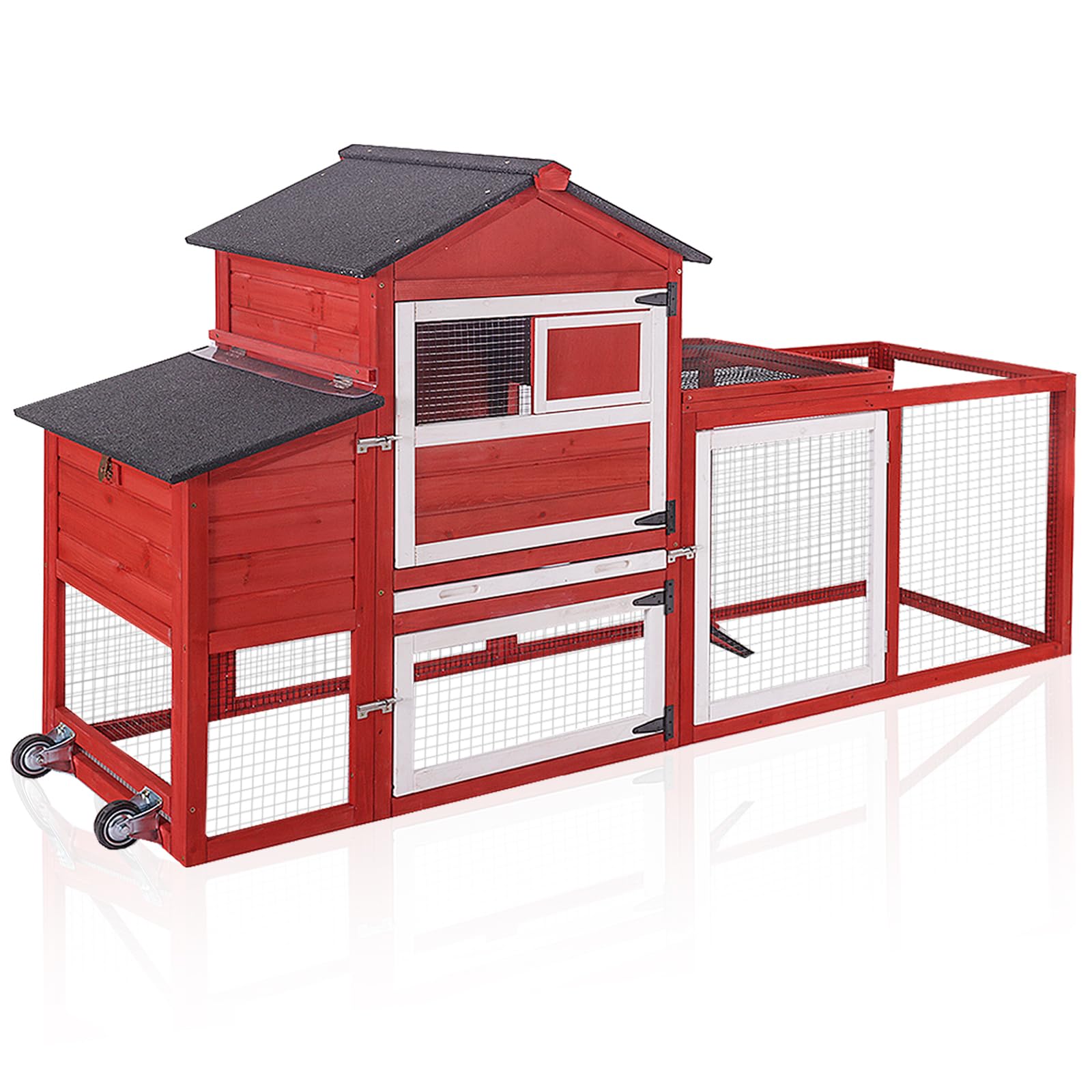
A mobile coop that grows with your flock — buy two to link them together.
This Aivituvin model lands right in the balance of the mid-range category. At 80.7″ long, 22″ wide, and 44.1″ tall, it shares the same exterior dimensions as the Aivituvin Expandable Mobile Chicken House below, though they are presented as different models. The key difference described here is the fully waterproof roof and reinforced PVC covers over the nesting boxes, which provide better all-weather protection than the UV-resistant roof panel on the entry-level version.
Mobility comes from two built-in wheels and a handle — you can roll it to fresh grass, shade, or shelter without disassembling anything. The expandable design is a clever touch: remove the side door and link two coops together to create a super large habitat. The removable leakproof tray and 5 access areas make cleaning much less of a chore, so you can hose everything out without crawling inside.
The nesting box has heavy-duty custom locks and an extra-large protective guard underneath to block rodents. Assembly is rated at under 45 minutes with pre-drilled holes. Since there are no customer reviews yet, rely on Aivituvin’s general build reputation — earlier models from the brand had flimsy latches and rusted trays after a season, so inspect those areas on delivery.
Why It Wins
- Wheeled design for easy yard rotation
- Expandable — link two units together
- 5 access points and leakproof pull-out tray
Watch For
- Narrow 22″ width limits space per bird
- No customer reviews yet to confirm build quality
Ideal for: Keepers who want to start with a moderate flock and have the option to double their coop size later without buying a whole new system.
Not ideal for: Anyone needing more than 22 inches of interior width for larger breeds like Orpingtons.
4. Formex Snap Lock Large Chicken Coop
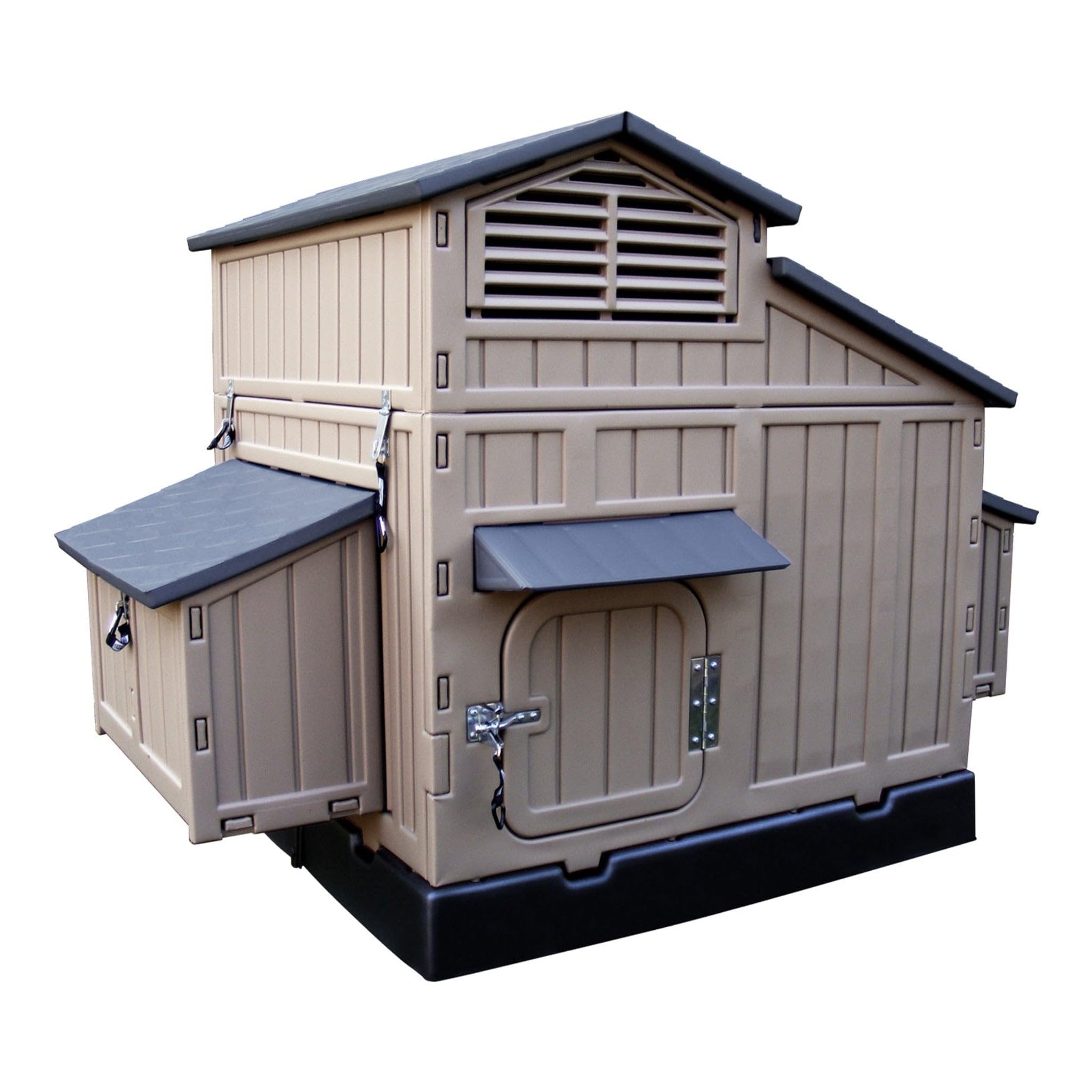
Snap-together assembly and weatherproof plastic that outlasts any wooden coop.
This is the buy-it-for-life option. The Formex SnapLock is built in the USA from impact-resistant polyethylene, so it will never rot, splinter, warp, or rust. Assembly requires zero tools — the panels literally snap together, making setup a 10-minute job. It measures 64″ x 39″ x 42″ and is rated for 4-6 large chickens or 6-12 bantams.
The double-wall insulated design helps moderate temperature swings inside, keeping the coop cooler in summer and warmer in winter compared to thin wood or metal panels. It comes with 4 nesting spots with removable dividers and three 36-inch roosts. The pull-out litter tray makes cleaning quick: just slide it out and dump it instead of scraping corners. At 65 pounds, it’s lighter than many wooden coops of similar capacity, making it easier to reposition if needed.
Some owners also find the beige color shows marks more readily than darker finishes. But if you are tired of replacing rotted coops every two years, this plastic build genuinely lasts. One potential downside: the solid plastic walls don’t breathe as naturally as wood, so ventilation management is more important in humid climates.
Built to Last
- No-rot, no-rust polyethylene body
- Tool-free snap assembly
- Pull-out tray for easy cleaning
The Cost of Quality
- Highest price in the roundup
- Limited ventilation if not positioned carefully
- Beige color shows dirt
Worth it for: Anyone who wants a permanent, maintenance-free coop and has the budget to buy once and never replace.
skip it if: You are on a tight budget or prefer the natural look and breathability of a wooden coop.
5. PETSFIT Wooden Chicken Coop with 71″ Run (4-6 Chickens)
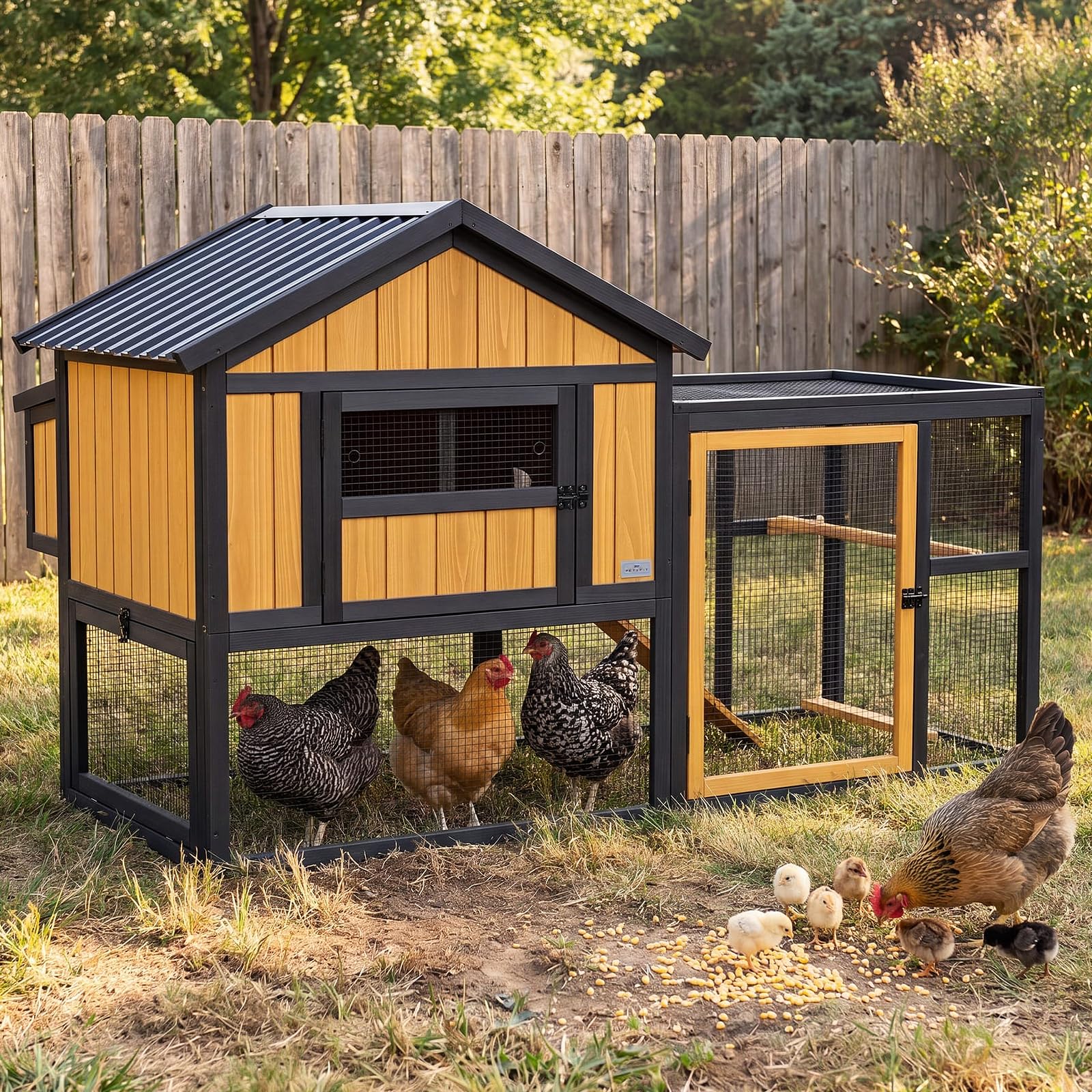
The multi-level coop that packs in a swing, perches, and a solid predator-defense system.
This PETSFIT model is a step up from the basic starter coops. It has a 6.07 sq.ft elevated inner nesting area and a 12.56 sq.ft outdoor wire run, for a total footprint of 71″ x 42″ x 45″. It’s listed for 4-6 chickens, but experienced owners are more realistic: owners mention it is “too small for more than 2 birds.” The gap between marketing and reality is wide here, so treat it as a 2-3 hen coop for standard breeds.
Predator-proofing gets serious attention on this model. It includes 6 heavy-duty ground anchors that secure the fir wood frame into the soil to prevent foxes and raccoons from tipping or digging under. The 3-door access system — an 18.5″ x 16″ front door, a lower clean-out door, and a side mesh door — makes daily chores manageable. The removable plastic floor panel slides out so you can hose it clean in seconds.
The chicken swing is a fun bonus that encourages natural pecking and perching behavior, and the 3-section nesting box has an easy-open top lid for egg collection. That said, one reviewer found the coop lasted about 1 year before needing replacement, noting the roof couldn’t handle chickens perching on it. The hinges also bent quickly for some users, so plan to upgrade those early.
Features That Shine
- 6 ground anchors for solid predator defense
- Washable plastic floor panel slides out
- Includes chicken swing for enrichment
Honest Limitations
- Realistically fits only 2-3 standard hens
- Latch and hinge quality needs upgrading
- Starter-level durability — about 1 year of use
Reach for this if: You’re starting with 2-3 hens and want a feature-packed coop with a swing and easy-clean tray at a fair price.
Look elsewhere if: You plan to keep 4+ standard-sized hens or need a coop that will stand up to heavy daily use for years.
6. PETSFIT Wooden Chicken Coop for 2-4 Chickens
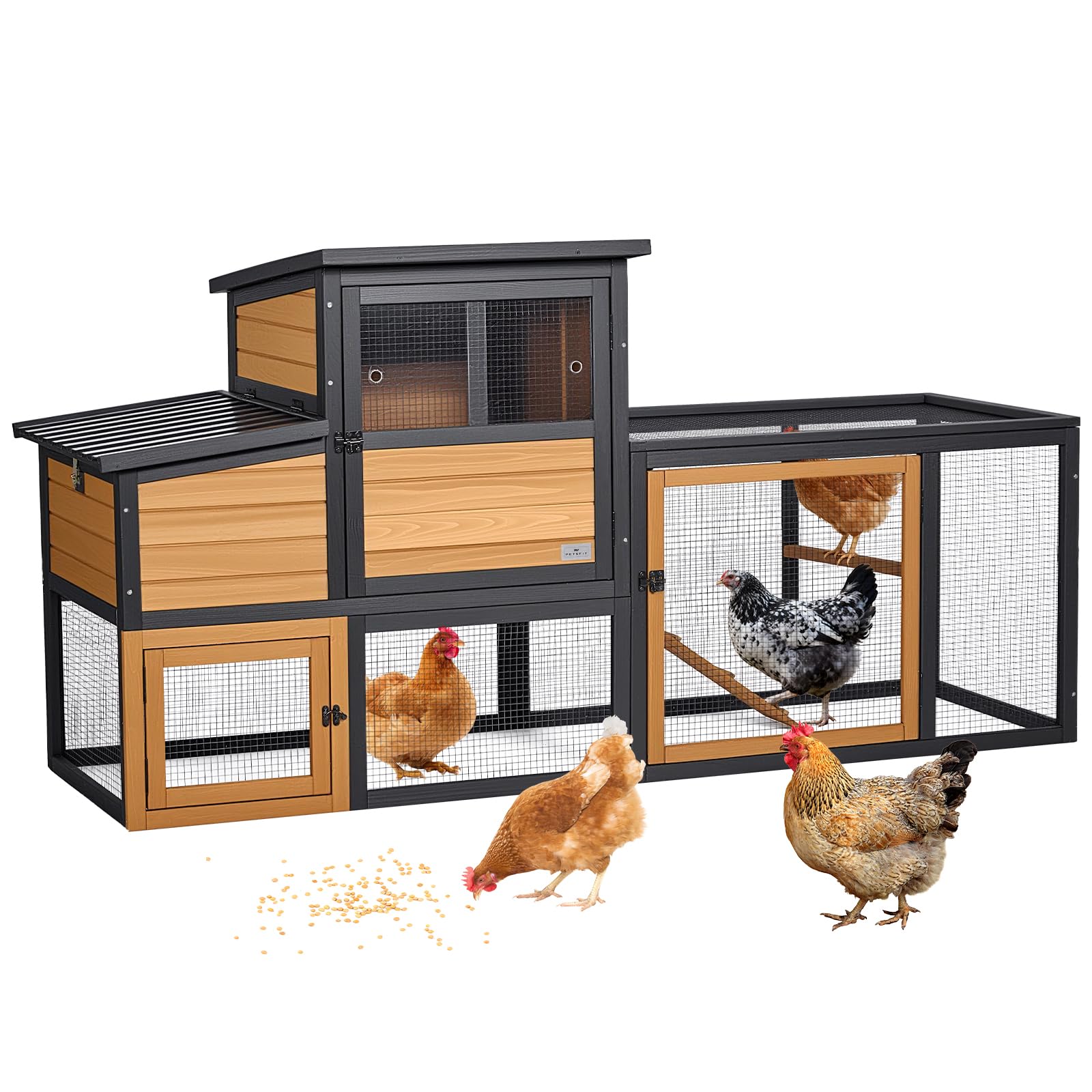
A charming little coop that wins on looks but will test your DIY skills.
This PETSFIT model is undeniably cute, with a heart-shaped door latch and a smooth cedar-like finish. It measures 80.5″ x 30″ x 41.5″ (coop + run combined) and is listed for 2-4 chickens. However, real-world feedback tells a different story: one experienced reviewer called it “a good starter coop, but has issues,” noting you’ll need to make adjustments to truly predator-proof it. The latches are weak and the floor panels pop in and out too easily.
The weather-resistant PVC roof and sliding transparent window help with airflow and light, which reduces moisture buildup inside. The 3-door access system includes a full-width front door (18 x 23 inches) and a lower clean-out door for bottom cleanup. One owner completed assembly in 30 minutes, while others took about an hour. The included 6 ground stakes add some stability, but the overall build feels flimsy when moved.
Reviewers recommend mounting the coop on a plywood base to prevent rodents from burrowing underneath. The roosting bars are rounded and sit too close to the nest boxes, which several buyers changed out for 2x4s. Skip this model if you want something that’s secure from the start — budget for extra hardware cloth and better latches.
What Works
- Easy assembly (30-60 minutes)
- Sliding window improves ventilation
- PVC roof resists cracking and UV damage
What Needs Work
- Weak latches and floor panels — not predator-proof as-is
- Unstable roosting bars; better replaced with 2x4s
- Hinges bent quickly for some owners
Best for: Beginners on a budget who enjoy tinkering and don’t mind spending a weekend reinforcing latches and floors.
Consider carefully: If you want a predator-proof coop straight from the start, the extra cost of upgrades pushes this closer to mid-range models.
7. CSQOO Plastic Chicken Coop with Run
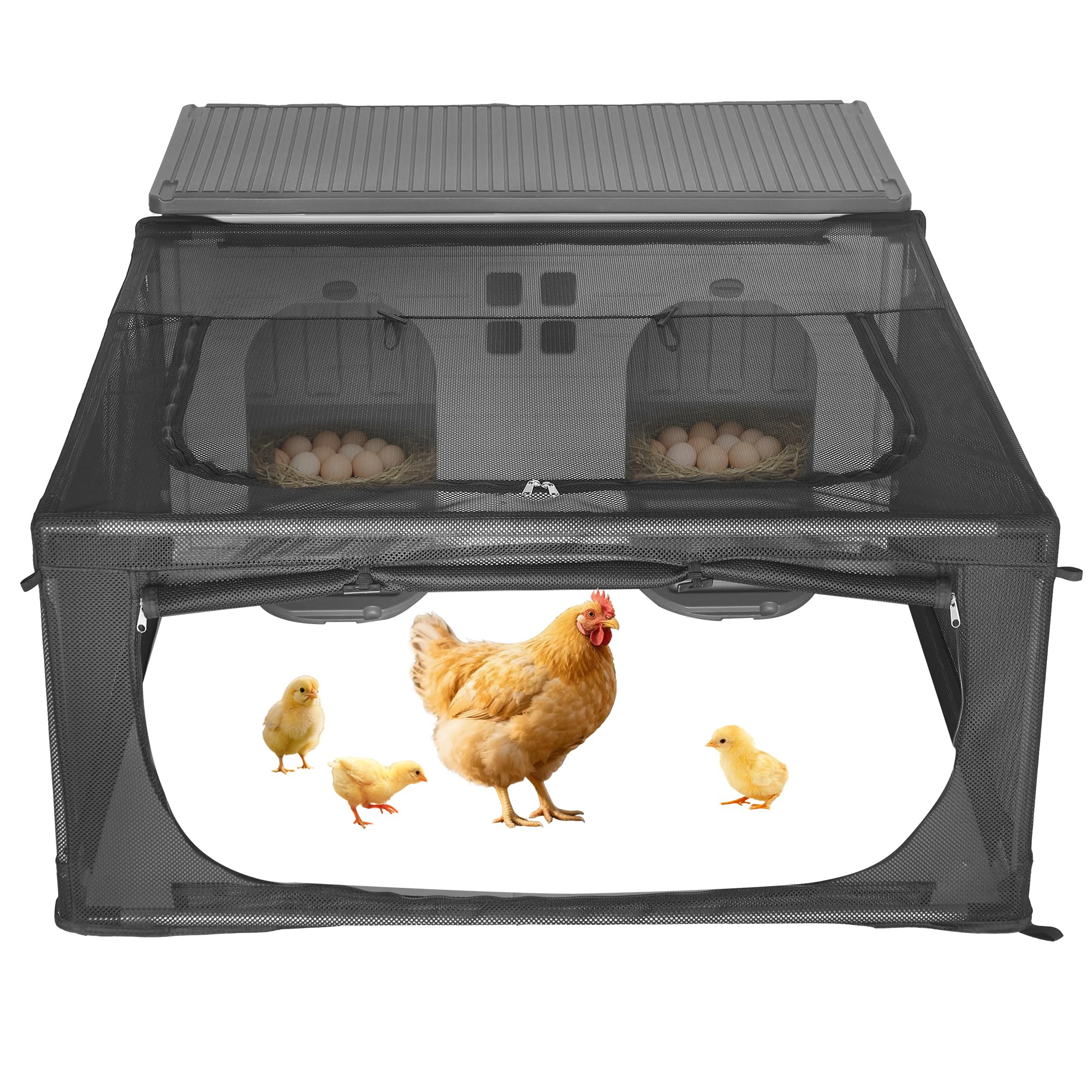
A rot-proof plastic coop that’s ideal for a single hen or two small bantams.
If you have just one or two pet chickens and you’re tired of wooden coops rotting after a single rainy season, this CSQOO model is worth a look. It’s made from high-density polyethylene (HDPE), which is crack-resistant and will never rot. The run features premium nylon mesh and thickened metal pipes, with ground “L” nails for added stability. At 60.6″ x 41″ x 20.3″, it’s compact — best suited for smaller breeds, not large hens like Barred Rocks.
Buyers confirm the size limitations: one reviewer noted it was “smaller than expected; unsuitable for larger breeds like Barred Rock or Orpington.” Another owner uses it for a single house chicken in an XL dog crate. The lockable doors on the plastic coop help keep out raccoons and foxes, and the removable flat roof makes cleaning straightforward — just wipe or hose it down.
Assembly is easy and can be done by one person, which is a big plus over some of the more complex wooden kits. The waterproof plastic roof shields from rain, snow, and sun. Keep in mind that at 20.3 inches tall, this is not a walk-in coop — your birds will have limited headroom. It’s a solid choice for a small flock kept mostly in a larger run, using this as the secure night shelter.
Why It Works
- Rot-proof HDPE won’t crack or decay
- Easy one-person assembly
- Removable roof for quick hose-down cleaning
Space Constraints
- Only 20.3″ tall — limited headroom
- Too small for standard-sized breeds
- Fits 2 small hens maximum
Perfect for: Owners of one or two bantam hens or rabbits who want a low-maintenance, rot-proof shelter.
Not for: Anyone keeping larger standard breeds like Orpingtons or a flock of more than 2 birds.
8. Aivituvin Expandable Mobile Chicken House
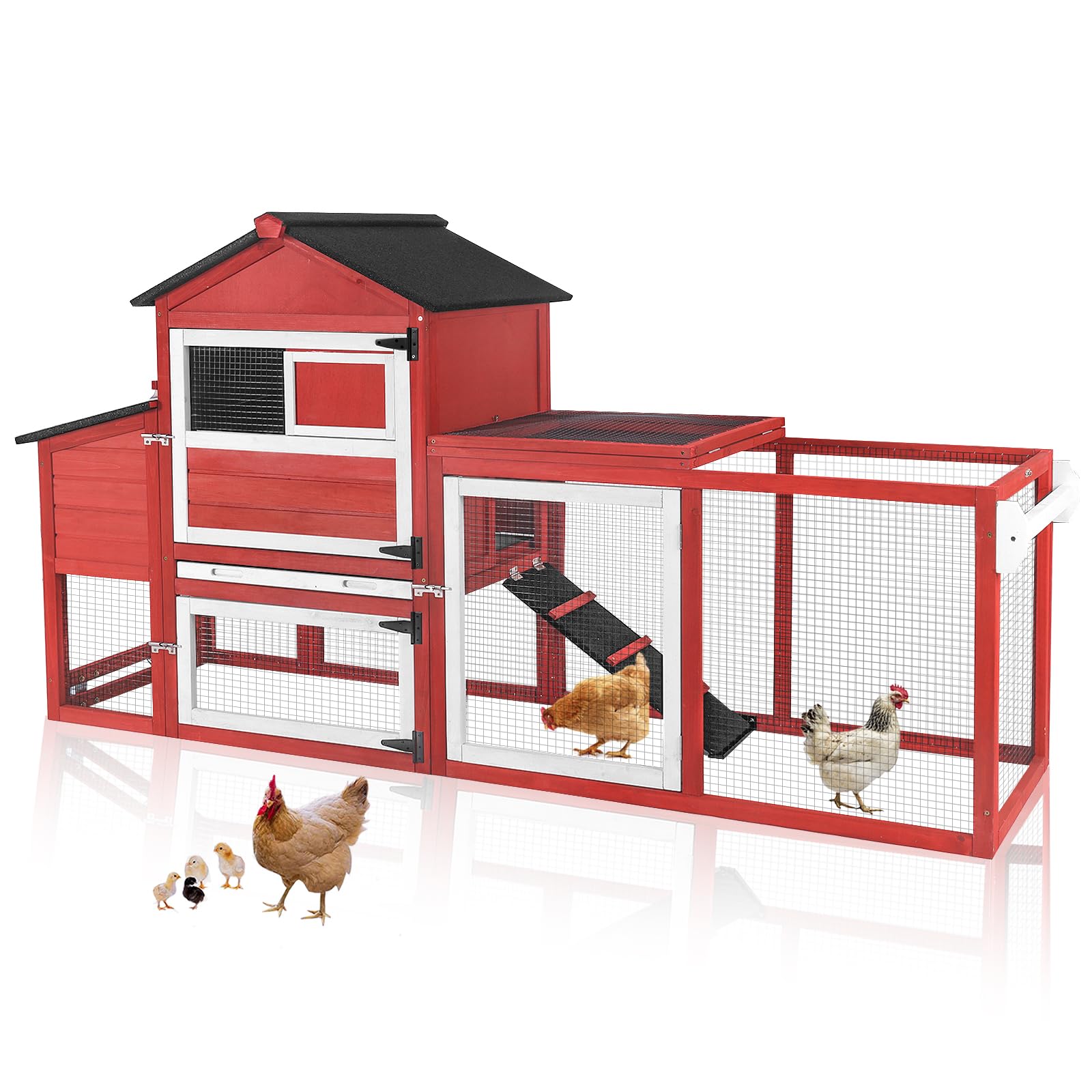
A budget wheeled coop that makes a decent brooder but won’t house full-grown hens comfortably.
This entry-level Aivituvin coop is designed to be mobile and expandable — you can buy two and connect them for a larger space. It measures 80.7″ x 22″ x 44.1″ and the manufacturer says it holds 2-3 adult chickens. But the reviews are brutally honest: “Too small for full-grown hens (max 2-3),” one buyer mentioned. The 22-inch width is the bottleneck — larger breeds simply don’t have enough lateral space to move and roost comfortably.
The positives are the two quality wheels and long handle, making it easy to roll around the yard for fresh grass access. The removable leakproof tray and 4 access areas do make cleaning simpler than in many coops at this price point. The nesting box and round-edge perch are designed for basic comfort, and the UV-resistant roof panel adds some protection against sun damage.
Where this coop falls short is materials. Customers note that the “locks are flimsy,” the sliding doors warp after a season, and the removable tray rusted through. One reviewer called it a “second-stage brooder for young hens” — a great use for it, but not a long-term home for full-grown layers. It’s a fine starter coop if you plan to upgrade in a year, but don’t expect it to stand up to heavy weather or determined predators without modifications.
Good Points
- Easy to roll with handle and wheels
- Expandable — connect two units
- Removable tray simplifies cleaning
Weaknesses
- Too small for full-grown standard hens
- Flimsy latches; sliding doors warp
- Tray rusted through after one season
Good for: Raising young chicks or bantams where you need a portable, easy-to-clean enclosure for a season or two.
pass on it if: You want a permanent home for full-sized laying hens — the narrow width and flimsy hardware won’t satisfy them or keep them safe long-term.
Understanding the Specs
Dimensions & Real Capacity
The single most misleading number in any chicken coop listing is the “capacity.” A manufacturer might say 4-6 chickens, but that often means 4-6 bantams (small breeds) crammed together with no room for a feeder. For standard hens, a good rule is 4 square feet per bird inside the coop and 8-10 square feet in the run. Always measure the internal floor area yourself — a 22-inch wide coop simply cannot comfortably fit a full-grown Rhode Island Red, no matter what the label says.
Materials: Fir, HDPE, or Polyethylene
Fir wood is the most common material in this price range. It looks classic and breathes naturally, but it needs a good seal to resist rain rot and warping. High-density polyethylene (HDPE) is crack-resistant and rot-proof, making it near maintenance-free, though it may not insulate as well in extreme cold. Snap-lock polyethylene (used by Formex) is impact-resistant and double-wall insulated, but it comes at a premium price that can be 3-4x higher than a wooden coop of similar size.
Predator-Proofing Features
Not all “predator-proof” claims are equal. The minimum you need: heavy-duty metal latches (not plastic hooks), a solid floor that can’t be pushed up from underneath, and hardware cloth (½-inch galvanized mesh) over any ventilation openings. Ground stakes or “L” nails prevent raccoons from tipping the coop over. A coop that relies on simple chicken wire for the run will not stop a determined raccoon — they can tear through it in seconds.
Wheeled vs. Stationary Coops
Wheeled coops let you rotate your flock to fresh grass, which naturally reduces parasite buildup and keeps the ground from turning into mud. The trade-off is that mobile coops often have a narrower footprint (22 inches is common) and may feel less solid than a stationary unit planted on a concrete block base. If you choose a wheeled coop, check that the wheels are metal casters, not plastic, which can crack under the combined weight of the coop and birds.
FAQ
How many chickens will a “4-6 chicken” coop actually hold?
Is a wooden coop or a plastic coop better for outdoor use?
Do I need to assemble the coop myself and how long does it take?
What should I do to make my coop truly predator-proof?
Can I keep other animals like rabbits or ducks in a chicken coop kit?
How do I clean a chicken coop with a removable tray?
Will the wheels on a mobile coop support the weight of the coop and chickens?
What is the difference between an asphalt roof and a PVC roof?
Can I expand a coop after I buy it?
How long does a typical wooden chicken coop last outdoors?
Final Thoughts: The Verdict
For most people, the best chicken coop kits winner is the PetsCosset 116″ L because it offers the most genuinely usable run space for 3-4 hens at a fair price, with easy assembly and a durable fir wood frame. If you want a mobile coop that’s easy to roll to fresh grass, grab the MEDEHOO for its reinforced metal frame and heavy-duty wheels. And for a maintenance-free coop that will never rot, the standout is the Formex SnapLock — just be ready for the premium price tag.
How We Picked
We do not accept paid placement. Every pick is matched to a real buyer and a real use-case; we do not hands-on test units.
Sources & Methodology
Specifications: manufacturer listings and product documentation. Review insights: verified customer reviews, as of July 2026. Pricing: not shown on this page (it changes often); check the current price via the retailer link.
As an Amazon Associate, WellFizz earns from qualifying purchases. This does not affect which products we feature.

Mo Maruf
I created WellFizz to bridge the gap between vague wellness advice and actionable solutions. My mission is simple: to decode the research and give you practical tools you can actually use.
Beyond the data, I am a passionate traveler. I believe that stepping away from the screen to explore new environments is essential for mental clarity and physical vitality.