Our readers keep the lights on and my smoothie glass nicely filled. As an Amazon Associate, I earn from qualifying purchases.
Specs are compiled from manufacturer listings and verified buyer reviews and can change over time — please confirm the key details on the product page before buying.
Winter is tough enough on a flock without worrying whether your coop heater will start a fire. The real question isn’t which heater gets hottest — it’s which one keeps your chickens warm without burning your coop down, and that depends on picking the right type of radiant panel for your setup and flock size.
I’m Mohammad Maruf — the founder and writer behind WellFizz. This guide is built by comparing the manufacturers’ published specifications and the patterns across verified customer reviews, so you get each pick’s real strengths and trade-offs instead of marketing spin.
Whether you are raising a handful of chicks in a brooder or keeping a full flock cozy through a freeze, you need a safe, energy-efficient source of radiant warmth. Read on for a practical breakdown of the best chicken coop heater options and which one fits your birds best.
Quick Picks
- Farm Innovators 2-In-1 Radiant 200-Watt Chicken — Best Overall
- Chickcozy Smart Coop Heater, 200W — High-Tech Pick
- EconoHome Safe Chicken Coop Heater, 150W — Solid Mid-Range
- Shaledig Chick Brooder Heater Plate, 12″x16″ 30W — Large Brooder Value
- ZenxyHoC Brooder Plate, 12″x12″ — Compact Brooder Pick
How To Choose The Best Chicken Coop Heater
Picking the right heater for your coop is less about chasing the highest temperature and more about matching the heat source to your space, your birds’ age, and your safety standards. A few key specs will tell you everything you need to know.
Safety Certifications Are Non-Negotiable
Fire risk is the #1 worry with any coop heater. Look for units that are ETL listed or UL compliant — these marks mean the heater passed independent safety testing for things like tip-over shutoff and fire-resistant materials. A heater without one of these is a gamble you do not want to take near straw and wood shavings.
Wattage Determines Coverage and Cost
Wattage tells you how much heat the unit produces and how much electricity it uses. A 30-watt brooder plate is fine for a small brooder box of chicks, but a full-sized coop in winter will need 150 to 200 watts to keep the chill off. Remember: higher wattage also means more energy use, so factor in your electricity costs if the heater will run 24/7.
Radiant Panels vs. Heat Lamps
Radiant panel heaters warm the birds directly rather than the air. They have no glowing elements, produce no light, and run at much lower surface temperatures than a heat lamp. This makes them safer and better for the birds’ sleep cycles. The trade-off is that they don’t raise the ambient air temperature much — the birds must be able to get under or near the panel to feel the warmth.
Quick Comparison
| Model | Best For | Wattage | Dimensions | Special Feature | Amazon |
|---|---|---|---|---|---|
| Farm Innovators PH-200 | Versatile, multi-stage flocks | 200W / 50W | 19″ x 13″ x 7″ | Convertible 2-in-1 design | Amazon |
| Chickcozy Smart Heater | Tech-savvy, low-maintenance care | 200W | 16″ x 11″ x 1.2″ | Smart temperature sensor | Amazon |
| EconoHome Safe Heater | Small-to-medium coops | 150W | 4.5 lbs (weight) | ETL certified, ceramic element | Amazon |
| Shaledig Brooder Plate | Large brooder boxes | 30W | 16.3″ x 12″ x 3″ | Covers up to 40 chicks | Amazon |
| ZenxyHoC Brooder Plate | Small flocks and starter brooders | 30W | 12″ x 12″ x 8.8″ | Anti-roost cone included | Amazon |
In‑Depth Reviews
1. Farm Innovators 2-In-1 Radiant 200-Watt Chicken Coop Panel Heater
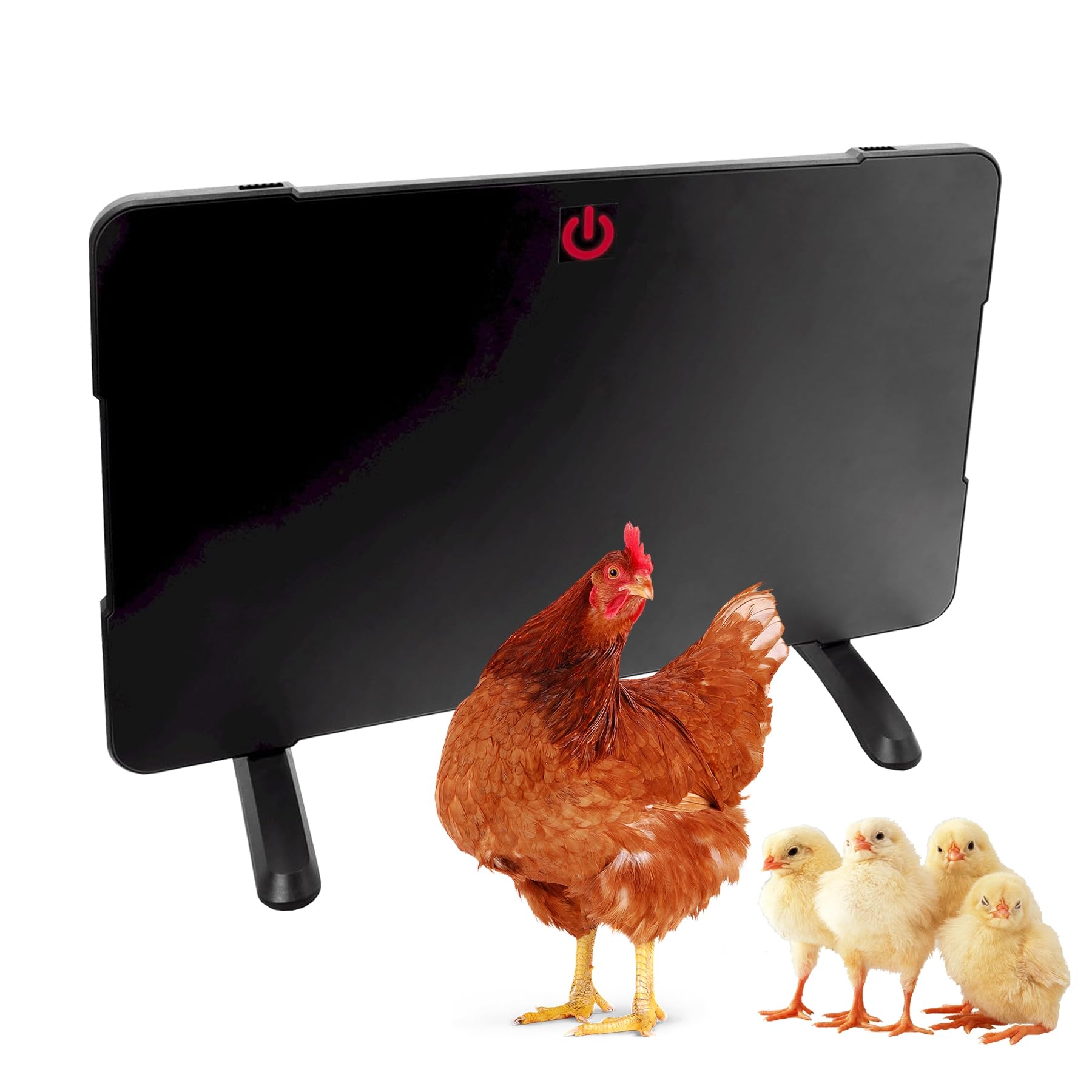
A single unit that works as a 200W coop heater for adults and flips to a 50W brooder plate for chicks.
This is the most versatile unit on the list because it genuinely tackles two different jobs with a single device. You can use it as a 200W wall-mounted or free-standing heater for your adult flock in winter, or flip it horizontal and switch to 50W mode (a low-power setting) — it then becomes a brooder heater for baby chicks with three height options (3.5, 5, or 6 inches). Buyers report that one device covering both stages saves shelf space and avoids buying a separate brooder later.
At 200 watts, it delivers more heat than the EconoHome model’s 150 watts — a 33% difference that matters for larger coops. The brand claims it uses 87% less electricity than a standard 1500W heat lamp (a traditional bulb-type heater), which directly addresses the worry of running a heater all night. It is ETL listed (independently tested for electrical safety) and has a built-in thermal protector, so you get verified safety rather than just a marketing promise. The unit measures 19 inches wide by 13 inches tall, so check your wall space before you buy.
The trade-off: this is a radiant panel, not a convection heater. Your coop’s ambient air temperature won’t shoot up — your birds must cluster near or under the panel to feel the warmth. That is normal for this heater type, but it is worth knowing if you expected the feel of a space heater.
Why It Wins
- Dual 200W/50W modes let you use it for chicks and adults in one device
- ETL listed with a thermal protector for verified fire and electrical safety
- Multiple mounting options: free-standing, wall, hung, or horizontal
- The brand claims it uses 87% less energy than a standard 1500W heat lamp
What To Know
- Radiant heat warms birds directly, not the entire coop air
- At 19 inches wide, check your wall or floor space before buying
Best for: Anyone who wants one device that grows with the flock — chicks to full-grown hens — without buying two separate heaters.
One real limit: If your coop is drafty and far bigger than a standard backyard unit, 200 watts of radiant heat may not be enough on the coldest nights.
2. Chickcozy Smart Coop Heater, 200W

A 200-watt plate with a built-in sensor that adjusts heat as the weather changes to save energy.
What makes this one different is the built-in smart temperature sensor. Unlike a basic on/off heater, this unit adjusts its power in real-time based on the surrounding temperature to maintain your preset level. That means it does not blast full 200W when the coop is already 50°F — it dials back, which saves electricity and prevents your birds from overheating. It is also UL and FCC certified (independently tested for electrical and radio safety), adding an extra safety check beyond what some competitors carry.
The panel is slim at 16 inches by 11 inches by just 1.2 inches thick, so it fits into tighter spots than the bulkier Farm Innovators unit. Like the Farm Innovators, it puts out 200 watts, but the Chickcozy beats the ZenxyHoC and Shaledig brooder plates by a huge margin on heat output — those are 30W units, a 6.7x wattage gap that makes this far more suitable for a full-sized coop rather than a brooder box. Owners mention the included anti-dirt top cover and tool-free setup make installation feel simple.
The catch: the “smart” timer and temperature controller features require separate devices you buy yourself — they are not included in the box. Also, it is listed for indoor use, so you will want to keep it out of direct rain or snow exposure inside the coop.
Standout Features
- Built-in sensor adjusts power based on real-time temperature to save energy
- UL and FCC certified for tested electrical and radio safety
- Slim 1.2-inch profile fits tight wall or floor spots
- Wall-mounted, standing, and flat brooder modes
Watch For
- Timer and thermostat controllers are sold separately
- “Indoor” use label means protect it from direct weather inside the coop
Reach for this if: You want automated temperature management without constantly checking the coop, and you are comfortable buying your own external timer or controller.
Look elsewhere if: You prefer a single box with everything included and no need for extra gadgets to make it “smart.”
3. EconoHome Safe Chicken Coop Heater, 150W

A no-fuss 150-watt radiant heater with a ceramic element and ETL safety certification.
This is a straightforward heater that uses a ceramic heating element (a durable type that heats up fast) and a metal body. The surface reaches up to 175°F, which is warm enough to keep birds cozy without getting dangerously hot. It is ETL certified, meaning the electrical parts and fire-resistant materials passed an independent safety lab — a real peace-of-mind feature when your coop is full of dry bedding.
Compared to the Farm Innovators, the EconoHome uses 150 watts versus 200 watts — a 33% lower heat output. For a smaller coop or milder climate, that 150W is plenty, and the lower wattage keeps your electricity bill in check. Buyers mention it also works as a desk heater, which shows the warmth is directional and localized. At 4.5 pounds, it is easy to move or mount, though the floor mounting hardware included is basic.
The honest trade-off: this is a one-mode heater — no chick brooder conversion like the Farm Innovators, and no smart sensor like the Chickcozy. It is a simple plug-and-heat device, which is exactly what some people want, but not if you need multi-stage flexibility.
What Works
- ETL certified with fire-retardant materials and a ceramic element
- 150 watts is energy efficient — less than half the power of a conventional space heater
- Sturdy metal build at 4.5 pounds
- Max surface temp of 175°F balances warmth and safety
What It Lacks
- No dual-mode brooder function for chicks
- No smart sensor or temperature automation
Perfect for: A small-to-medium coop in a cold climate where you want verified ETL safety and do not need bells and whistles.
skip it if: You plan to raise chicks and adults with the same unit — the convertible Farm Innovators is the better fit for that.
4. Shaledig Chick Brooder Heater Plate, 12″x16″ 30W
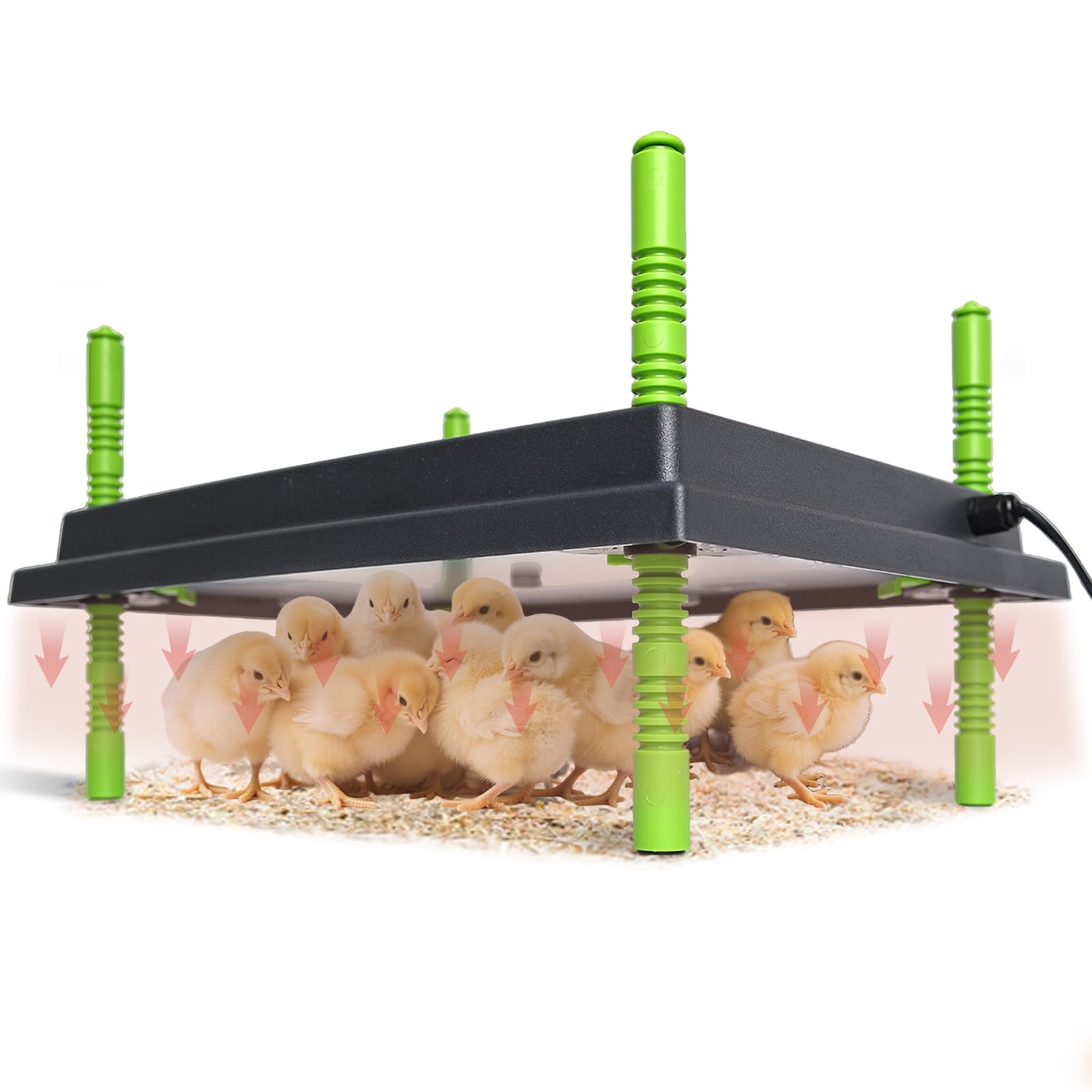
A 16.3-by-12-inch brooder plate that warms up to 40 chicks on just 30 watts of power.
This one is for the brooder box, not the adult coop. The heating surface measures 16.3 inches long by 12 inches wide — that is 36% more surface area than the 12×12-inch ZenxyHoC plate below — so it covers a larger area for bigger batches of chicks. It maintains a constant panel temperature between 122°F and 149°F depending on room conditions, which mimics the steady warmth a mother hen provides.
At just 30 watts, it uses a fraction of the electricity of the 150W or 200W coop panels above. That makes it ideal for running 24/7 during the brooding period without shocking your electric bill. The height adjusts from 2.56 inches up to 7.09 inches, so you can raise it as the chicks grow. Buyers like the lack of light — there is no glow to disturb the chicks’ night rest, unlike a heat lamp that can disrupt sleep cycles.
The down side: at only 3 inches tall (legs not counted), the legs need to hold the weight stably. Some customers note that the plate itself is light and can shift if chicks bump it hard, though the four legs do provide a stable base.
Why Choose It
- Large 12×16-inch surface warms up to 40 chicks
- Only 30 watts — very energy efficient for long brooding periods
- Height adjustable from 2.56 to 7.09 inches to match chick growth
- No visible light to disturb sleep
Considerations
- Not suitable for adult chickens or full coop use
- Lightweight build may shift with active chicks
Best for: Raising batches of 20 to 40 chicks in a brooder with minimal energy use and a dark, sleep-friendly environment.
One real limit: Do not expect this 30W plate to warm an adult coop in winter — it is strictly a brooder tool.
5. ZenxyHoC Brooder Plate, 12″x12″ with Anti-Roost Cone
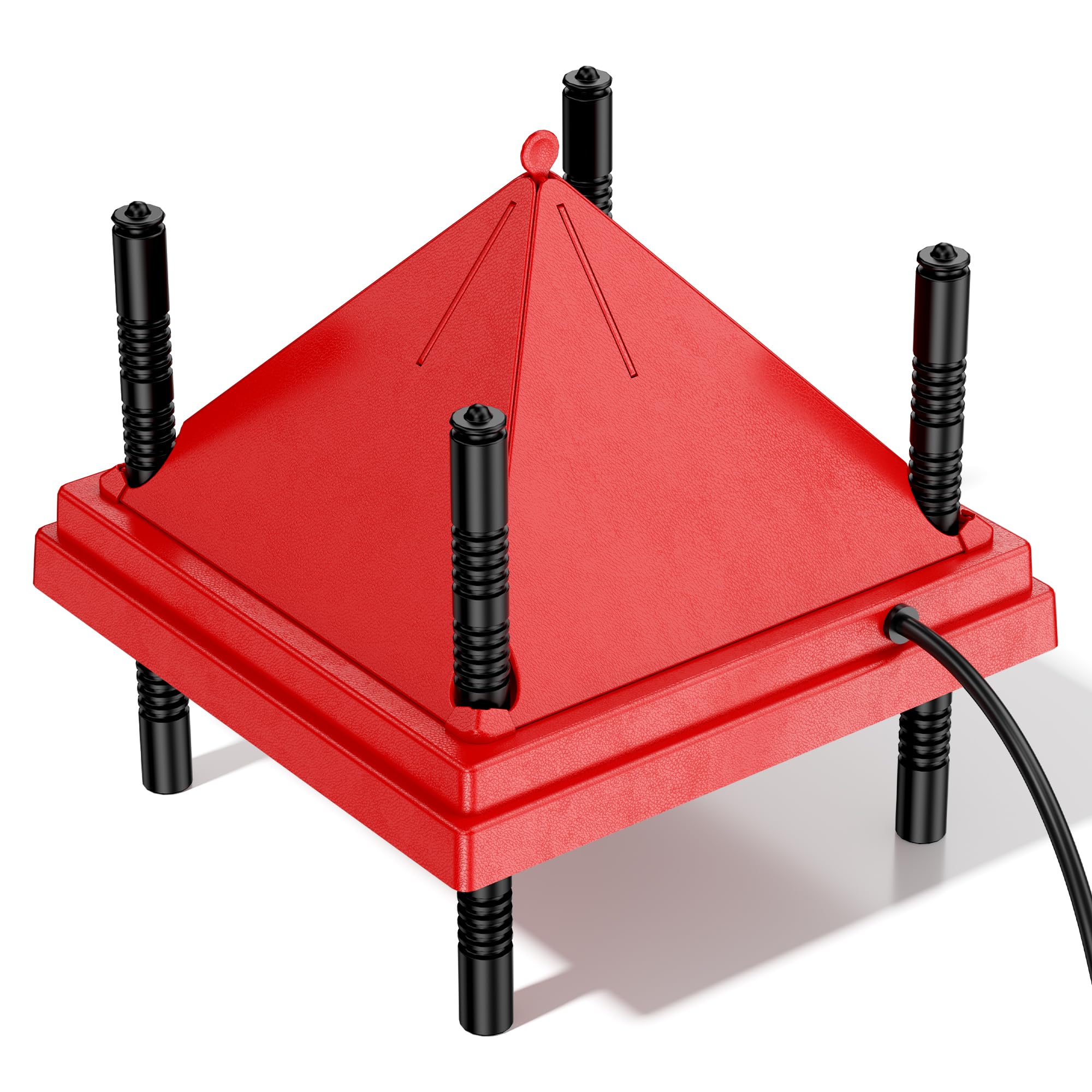
A 12-inch square brooder plate with a clever top cone that stops chicks from perching on it.
The standout feature here is the included anti-roost cone — a specially shaped top attached above the heating plate to prevent chicks from sitting on it. That keeps the surface clean and avoids droppings building up on the heater. For anyone who has dealt with a brooder plate that becomes a perch, this is a genuinely useful design tweak.
The plate itself is 12 inches by 12 inches with a total height of 8.8 inches including the legs and cone. It runs at low wattage (30W), making it as energy efficient as the Shaledig plate but with a smaller footprint — ideal for starter brooders or small flocks of up to 20 to 25 chicks. The 4-leg support system is stable and tip-resistant, so active chicks bumping around underneath won’t knock it over. Reviewers point out that the constant temperature across the surface creates a comfortable microclimate without the hot and cold spots typical of heat lamps.
The trade-off: this is a dedicated chick brooder heater only. At 30 watts, it has no place in an adult coop during winter, so you will need a separate 150W or 200W unit for your grown birds. Also, the ABS plastic construction feels less rugged than the metal-bodied EconoHome heater.
Smart Details
- Anti-roost cone keeps the top clean and prevents chicks perching on it
- Energy-efficient 30W operation for low running costs
- Stable 4-leg base resists tipping from active chicks
- Adjustable height settings as chicks grow
Limitations
- 12×12-inch size is smaller than the Shaledig plate — holds 20-25 chicks vs 40
- ABS plastic body is lighter than metal alternatives
- Only for brooder use, not for adult coops
Reach for this if: You have a small brooder and want the anti-roost cone to save you daily cleanup time on top of the heater.
Look elsewhere if: You need to warm up to 40 chicks — the Shaledig’s larger 12×16-inch surface is a better fit for bigger batches.
Understanding the Specs
Wattage and Heat Output
Wattage is the spec that tells you how much electricity the heater uses and roughly how much heat it produces. Lower wattage units like 30W brooder plates are very cheap to run but only work for small enclosed brooder boxes. Higher wattage units (150W to 200W) create more warmth for larger coop spaces. Do not assume higher wattage is always better — match the wattage to your coop size so you are not overheating a small space or under-heating a large one.
Safety Certifications — ETL vs. UL
Both ETL listed and UL compliant mean the heater has been independently tested for electrical and fire safety. ETL and UL are both Nationally Recognized Testing Laboratories in the US. If a heater carries either mark, it has passed checks for things like tip-over shutoff, fire-resistant materials, and safe electrical components. If a heater has neither, it has not been independently verified — avoid it for a wood-and-straw coop environment.
Radiant Heat vs. Convection Heat
Radiant panel heaters warm objects and birds directly, not the air itself. That means your chickens need to be near or under the panel to feel the heat. Convection heaters warm the air, which can dry out a coop and cost more to run. For coops, radiant is the safer, more energy-efficient choice because it doesn’t create a fire risk from blowing hot air around dusty bedding and doesn’t disturb the birds’ natural sleep cycle with bright light.
Brooder Plate vs. Coop Heater
A brooder plate is designed for chicks — it sits low to the ground, has adjustable leg heights, and runs at low wattage (usually 15W to 30W) to provide gentle under-body warmth. A coop heater is for adult chickens and mounts on a wall or sits on the floor, running at 150W to 200W to radiate warmth across a larger area. Some convertible models like the Farm Innovators do both jobs, which saves money and storage space if you raise chicks seasonally.
FAQ
Will a 30W brooder plate keep my chicks warm enough in a cold garage?
Can I leave a chicken coop heater on all night?
Is a 200W chicken coop heater safe for a small coop?
What is the difference between a brooder heater and a heat lamp?
How do I clean a chicken coop heater?
Which heater is better for a mixed flock of chicks and adult chickens?
What does “ETL listed” mean for a coop heater?
Can I use a brooder plate for ducks or other poultry?
Final Thoughts: The Verdict
For most people, the chicken coop heater winner is the Farm Innovators 2-in-1 Radiant Panel Heater because it handles both chicks and adult hens in one convertible unit with ETL-verified safety. If you want automated temperature adjustment without constant checking, go for the Chickcozy Smart Heater. And for a budget-friendly, safe brooder plate that keeps up to 40 chicks warm on just 30 watts, the Shaledig Brooder Heater Plate is the top pick for that job.
How We Picked
We do not accept paid placement. Every pick is matched to a real buyer and a real use-case; we do not hands-on test units.
Sources & Methodology
Specifications: manufacturer listings and product documentation. Review insights: verified customer reviews, as of July 2026. Pricing: not shown on this page (it changes often); check the current price via the retailer link.
As an Amazon Associate, WellFizz earns from qualifying purchases. This does not affect which products we feature.
Related Guides

Mo Maruf
I created WellFizz to bridge the gap between vague wellness advice and actionable solutions. My mission is simple: to decode the research and give you practical tools you can actually use.
Beyond the data, I am a passionate traveler. I believe that stepping away from the screen to explore new environments is essential for mental clarity and physical vitality.