Our readers keep the lights on and my smoothie glass nicely filled. As an Amazon Associate, I earn from qualifying purchases.
Specs are compiled from manufacturer listings and verified buyer reviews and can change over time — please confirm the key details on the product page before buying.
If you’ve ever finished a meal only to feel uncomfortably full, gassy, or hit by sudden heartburn, the real issue might not be stomach acid — it could be a lack of enzymes. Chewable digestive enzymes are designed to break down the proteins, carbs, and fats in your food before they cause trouble, making bloating and indigestion a thing of the past without swallowing a single pill.
I’m Mohammad Maruf — the founder and writer behind WellFizz. This guide is built by comparing the manufacturers’ published specifications and the patterns across verified customer reviews, so you get each pick’s real strengths and trade-offs instead of marketing spin.
Whether you deal with occasional heartburn, lactose intolerance, or just want faster digestion after a heavy meal, knowing which enzyme blend, potency, and chewable flavor actually work will save you time and discomfort. Here is your straight-to-the-point take on the best chewable digestive enzymes to match your gut’s needs.
Quick Picks
- Enzymedica Acid Soothe Chewable — Best Overall
- Enzymedica Papaya Gold Chewable — Pro Formula
- Spring Valley Papaya Enzyme Complex — Best Value
- Lactaid Fast Act Chewables — Specialty Pick
- Nature’s Sunshine Papaya Mint Chewable — Best for Breath
- American Health Papaya Enzyme 600 Tablets — Budget Champion
How To Choose The Best Chewable Digestive Enzymes
The world of chewable enzymes can feel like a maze of papaya, peppermint, and alphabet-soup blends. The smart shopper checks these four things first.
Enzyme Variety — Is It a One‑Trick or a Broad‑Spectrum Formula?
A single enzyme like papain helps with protein digestion but does nothing for the lasagna’s carbs or the garlic bread’s fat. Look for blends that include protease, amylase (for starches), lipase (for fats), and cellulase (for fiber) so the whole meal gets broken down. Some formulas — like those using Thera‑blend enzymes — claim to work across the entire digestive system’s pH range, meaning they keep working from your mouth through your small intestine.
Potency & Unit Count — The Numbers That Actually Matter
For lactase (the enzyme that attacks dairy), the unit measure is FCC — Food Chemical Codex. A standard tablet might give you 3,000 FCC, but some premium chewables pack 9,000 FCC per tablet. Buyers report that higher potency means you can eat a full pizza without panic. For general papaya enzymes, you want a count that fits your lifestyle: 60 tablets works for occasional use, while 600 tablets per bottle is a six‑month supply for daily after‑meal takers.
Extra Ingredients — Zinc vs. Mint vs. Plain
Some chewables add zinc‑carnosine (like PepZinGI) specifically to support the stomach’s mucosal lining, which matters if heartburn is your main complaint. Others add peppermint leaf or oil for breath‑freshening and an extra soothing layer. Plain papaya with no additives might be the cleanest option if you just need quick breakdown without any flavor or mineral fuss.
Dietary Filters — Vegan, Gluten‑Free, and Allergen‑Safe
Most enzyme supplements are derived from plants, fungi, or fermentation, but not all are certified vegan. A few contain lactose or soy as excipients. If you have celiac disease, a “gluten‑free” label on the bottle means the manufacturer tested for cross‑contamination. Buyers with multiple food sensitivities should check for “dairy free,” “soy free,” and “gluten free” on the same label to avoid triggering the very symptoms they’re trying to prevent.
Quick Comparison
| Model | Best For | Count / Servings | Weight | Key Enzyme / Potency | Amazon |
|---|---|---|---|---|---|
| Enzymedica Acid Soothe | Heartburn & gut lining repair | 60 tablets | 0.48 oz | Thera‑blend + Zinc‑Carnosine | Amazon |
| Enzymedica Papaya Gold | Fast multi‑enzyme relief | 120 tablets | 4.66 oz | Thera‑blend + Bromelain & Papain | Amazon |
| Spring Valley Papaya Complex | Budget daily digestive aid | 180 tablets (2‑pack) | 7.84 oz | Papaya enzyme complex | Amazon |
| Lactaid Fast Act Chewables | Lactose intolerance on the go | 60 tablets | 2.8 oz | 9,000 FCC lactase | Amazon |
| Nature’s Sunshine Papaya Mint | Digestion + breath freshening | 70 tablets | 3.84 oz | Papain + Peppermint | Amazon |
| American Health Papaya Enzyme | Long‑term bulk supply | 600 tablets (2‑pack) | 13.12 oz | Papain, Amylase, Protease | Amazon |
In‑Depth Reviews
1. Enzymedica Acid Soothe Chewable

The only chewable that repairs your stomach lining while it calms the burn.
If occasional heartburn is your main enemy, this formula goes further than plain papaya by adding PepZinGI zinc‑carnosine — a compound owners mention “relieves esophagitis pain and aids healing” rather than just masking the fire. The Thera‑blend enzymes inside also break down carbs, fats, and fiber across your entire gut’s pH range, so the root cause of the burn gets addressed before it starts.
At 60 tablets and just 0.48 ounces, this bottle is significantly lighter and smaller than the Spring Valley two‑pack (7.84 ounces), which means you can keep one in a jacket pocket without weighing you down. One reviewer noted that chewing one tablet before each meal “cured severe GERD/stomach burning after 6‑8 months” but that symptoms returned when they stopped — so consistency matters. The mixed berry flavor isn’t universally loved (some buyers called it passable), but for the dual action of enzyme plus zinc, it is a trade‑off worth taking.
Gut‑healing edge: The only pick here that directly supports the stomach’s mucosal lining with zinc‑carnosine — data shows it targets the lining rather than just the food.
Bottle‑size reality: 60 tablets run out in a month if used before every meal (which is the protocol many buyers follow), so factor that into your reorder rhythm.
Reach for this if: you want an enzyme that doubles as a gut‑lining repair tool for occasional heartburn, not just a digestion helper.
Look elsewhere if: you need a low‑cost daily supply for the whole family — the smaller count and premium price make it better as a targeted tool than a pantry staple.
2. Enzymedica Papaya Gold Chewable
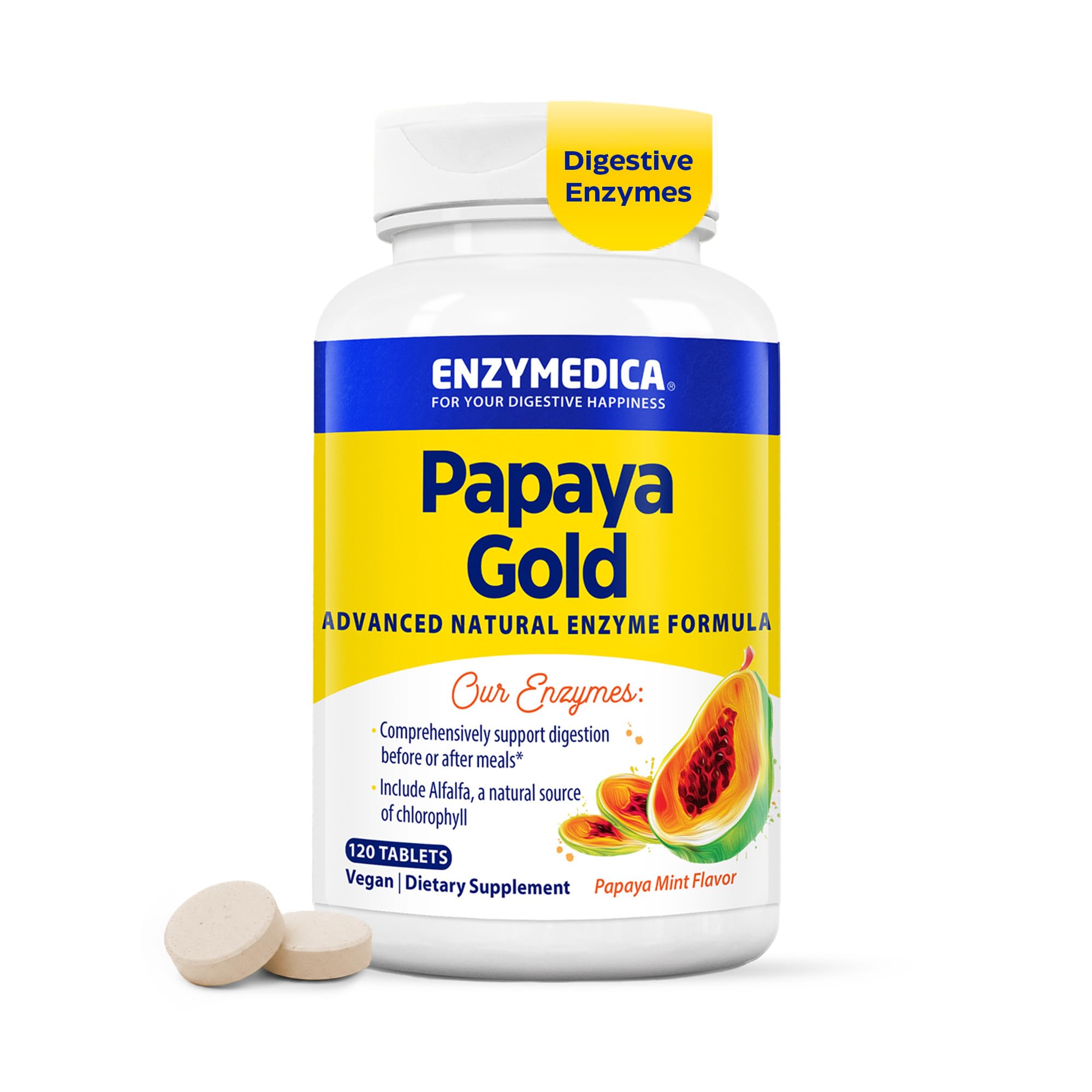
One tablet that digests your whole plate before you feel a thing.
Unlike the Acid Soothe above, which focuses on zinc‑carnosine for heartburn, Papaya Gold is a straight‑up multi‑enzyme bomb. It packs Thera‑blend protease, amylase, cellulase, and lipase plus high‑potency bromelain and papain from real organic papaya juice powder. That means a single mint‑flavored chewable attacks protein, carbs, fiber, and fat at once — not just one food group. Customers note it “works with only one chewable” but that the taste “doesn’t taste as good as some,” though most agree it is far from bad.
Because each bottle holds 120 tablets, you get double the servings of the Acid Soothe bottle (60) at a similar price point, making it the better value for regular after‑meal use. One user raves that these “taste like tropical fruit with a touch of mint and are actually enjoyable to take,” and a doctor even recommended it to another reviewer. If you need a broad‑spectrum enzyme that kicks in fast after a heavy meal, this is the pick that does it all in one little chewable.
Enzyme diversity edge: Four Thera‑blend strains plus bromelain and papain make it the most complete one‑pill solution in the list — no other chewable covers all four macronutrient types plus fiber.
Flavor split: About a third of buyers find the minty‑tropical mix just okay; the rest love it. If you are picky, the Spring Valley plain sweet option might taste safer.
Best for: anyone who wants a single chewable after meals that handles protein, carbs, and fats without needing a second bottle — pure multitasking.
Skip if: you specifically need zinc‑carnosine for gut lining repair; this formula is for food breakdown only, not healing existing irritation.
3. Spring Valley Papaya Enzyme Complex
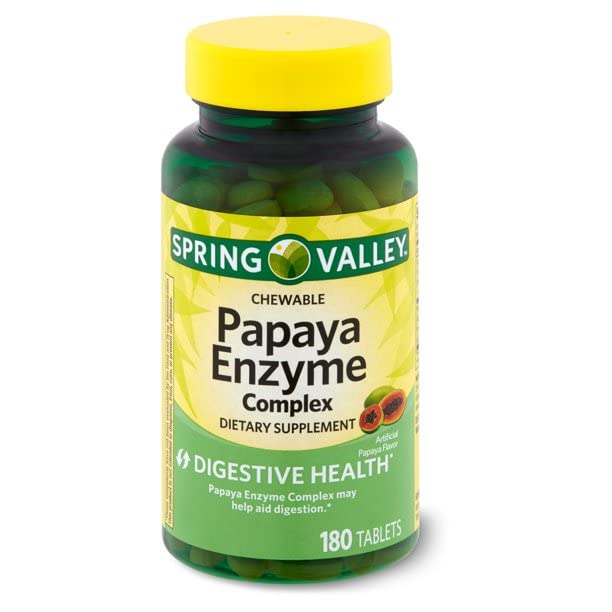
A two‑pack that lasts three months — and actually tames the bloat.
At 7.84 ounces for the bundle, this is the heaviest general‑use bottle you will buy, but the bulk is the point. You get 360 chewables total across the two bottles — more than enough for a family or for someone who takes 4 tablets per day as the label recommends. Reviewers point out that “when taken after a meal, this product does help with the digestion of said meal” and that it replaces the need for Tums or antacids entirely. One especially enthusiastic user said, “having GERD and a flare up this immediately will take care of it.”
The simple papaya‑flavor formula has no extra enzymes beyond the complex itself — it is not as broad‑spectrum as the Enzymedica Papaya Gold — but for plain, reliable post‑meal digestion at a price that works, it hits hard. The sweet taste with no bad aftertaste is a recurring point in reviews. The main catch: you need 4 tablets per serving versus the 1‑tablet approach of the premium picks, so the habit is different.
Bulk advantage: 360 tablets total means you can stash one bottle at work and one at home — or share without worrying about running out for months.
Dose volume: Four tablets per serving is four times the pill‑load of the Enzymedica Papaya Gold; if your goal is minimal chewing, the single‑tablet options win.
Grab these if: you need a budget‑friendly, no‑fuss papaya enzyme for everyday fullness and heartburn — the quantity is class-leading.
Pass if: you want a powerful multi‑enzyme formula that attacks fat and fiber; this complex sticks to basic protein and carb digestion.
4. Lactaid Fast Act Chewables
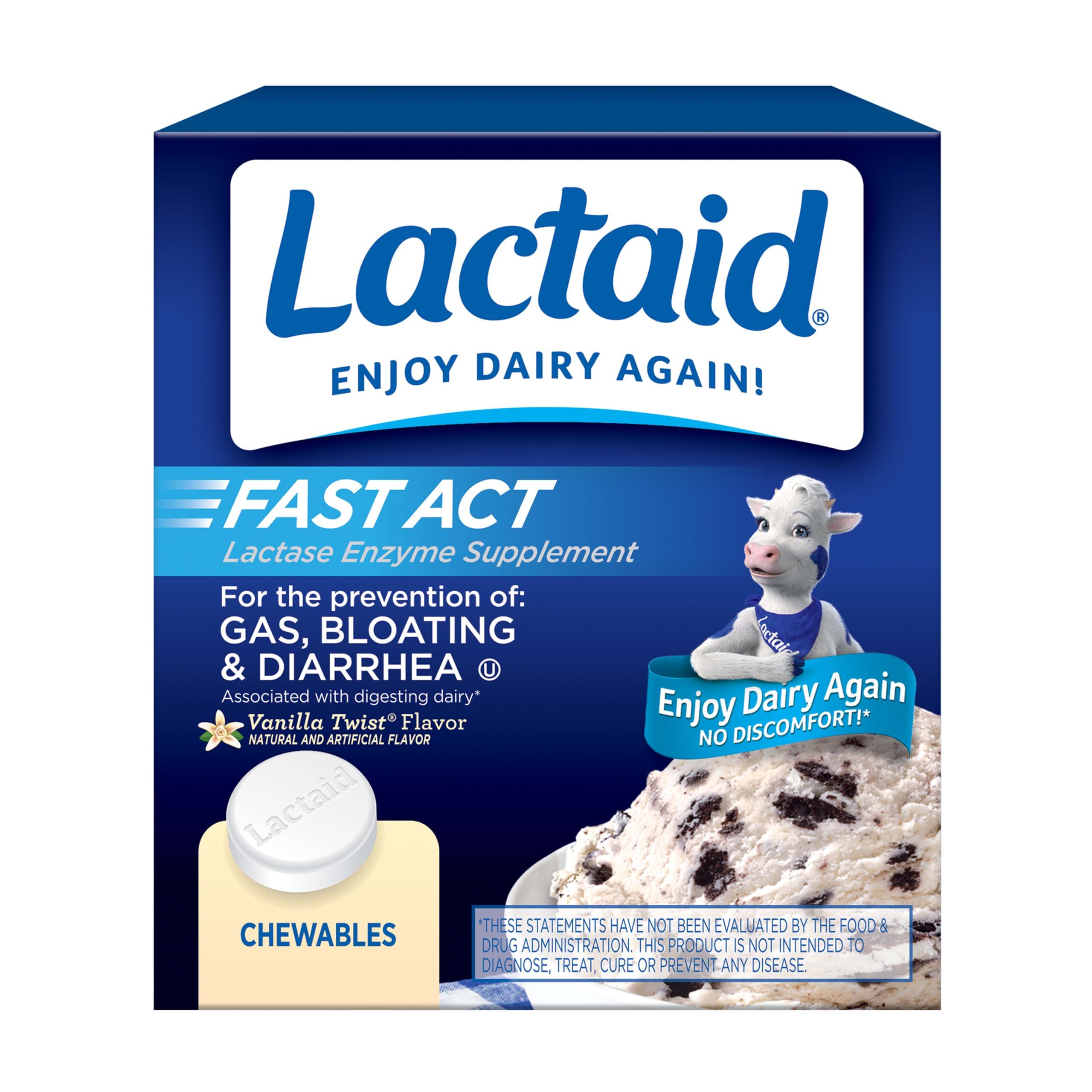
Stops 95% of dairy disasters with one vanilla‑flavored chewable.
If you are lactose intolerant, this is the only pick on the list that delivers a targeted 9,000 FCC (Food Chemical Codex units, a standard measure of enzyme activity) of lactase per tablet — which is three times stronger than many basic lactase pills on the shelf. Shoppers say it is “more effective than other lactase pills” and that 9,000 FCC units per chewable “prevents 95% of breakouts” associated with dairy. The vanilla twist flavor makes it easy to chew without water, and one buyer mentioned it requires up to 36,000 units for heavy dairy — meaning you can take 4 tablets for a cheese‑laden meal and still be fine.
Compared to the general papaya enzymes above, Lactaid serves a different purpose — it only tackles milk sugar (lactose), not all food groups. Its 60‑count bottle is compact at 2.8 ounces and fits in a purse or gym bag easily. One clever buyer uses it for dairy‑related skin issues: “more effective than other lactase pills… 9,000 FCC units per chewable prevents 95% of breakouts.” Just note that this product is not intended to diagnose, treat, or cure any disease — it is purely for lactase enzyme support.
Potency crown: 9,000 FCC per chewable is the highest lactase strength in this roundup — no other product here even lists an FCC number for lactase.
Narrow focus: Great if dairy is your only trigger, but useless for general indigestion from carbs, fats, or fiber — you would still need a broad enzyme for pizza nights.
Perfect if: you know dairy is the culprit — one chewable with the first bite lets you eat ice cream, pizza, and cereal without the usual cramps.
Not for you if: your bloating comes from heavy meals, not just lactose — you need a broader enzyme blend for that.
5. Nature’s Sunshine Papaya Mint Chewable

Chew one for digestion, and walk away with fresher breath too.
Nature’s Sunshine pairs papaya enzyme (papain) with peppermint leaf and peppermint oil, creating a dual‑action tablet that supports digestion on the way down and leaves your mouth feeling clean. Buyers report “these tablets work quickly for me!” and that even though they are chewable, letting them dissolve a bit before chewing makes the experience better. The 70‑count bottle is small enough to toss in a bag, and the mint flavor is strong enough to mask any residual food smell — people have even used them during pregnancy when nausea made standard antacids taste awful.
In terms of output, Nature’s Sunshine offers 70 tablets versus Lactaid’s 60 tablets, though the enzymes are narrower (papain for protein only, not a broad blend). One owner reported it “helps my kids go” — referring to gentle constipation relief — which separates it from the other picks in this list. The company has been around since 1972, which adds a long‑evity factor some buyers appreciate, but the formula is minimalist compared to the multi‑strain Enzymedica products.
Mint clarity edge: The only chewable here using actual peppermint oil for breath‑freshening — buyers mention it as a go‑to for post‑onion or garlic meals.
Limited enzyme range: Papain alone handles protein breakdown, but does nothing for the fat or carbs in your meal, so it is best for light snacks, not heavy dinners.
Reach for this if: you want a two‑in‑one tablet that freshens breath while gently digesting your meal — great for restaurants or after coffee.
Look elsewhere if: your meals are carb‑ or fat‑heavy and you need a broad‑spectrum enzyme like the Papaya Gold for full coverage.
6. American Health Papaya Enzyme 600 Tablets

600 tablets per bottle — a year’s supply of after‑meal digestion insurance.
American Health brings the biggest count in this lineup: 600 tablets per bottle in a pack of 2, totaling 1,200 servings at 13.12 ounces. This is the no‑brainer bulk buy for anyone who uses enzymes daily after every meal. The formula blends freshly ripened papaya with papain, amylase, and protease enzymes, meaning it targets both proteins and carbohydrates — a step up from the Nature’s Sunshine papain‑only approach above. One reviewer who had gastric bypass surgery uses 3–4 after meals to resolve food “stuck” feelings, calling it “life‑changing.”
Compared to the Spring Valley two‑pack (360 total tablets), this one delivers more than double the servings. The trade‑off is flavor depth — owners mention it tastes good and “works for me,” but without the minty or berry complexity of the more premium brands. The sheer volume means this bottle will sit on your counter for months, so if you prefer a fresh bottle more often, a smaller count might suit you better. For households with multiple users, however, this is the most cost‑effective and practical choice.
Volume king: 600 tablets per bottle is class-leading in this list — enough for one person taking 4/day for 150 days, or a couple sharing for 75 days.
Enzyme limitation: Includes papain, amylase, and protease but no lipase for fat digestion — a gap if your diet includes fried foods or oily dressings.
Best for: big families or daily users who want to buy once and forget about reordering for half a year — class-leading quantity per dollar.
Skip if: you need lipase for fat digestion or a compact portable bottle; the massive container is not pocket‑friendly.
Understanding the Specs
Thera‑blend Enzymes vs. Single Strain
Some brands rely on a single enzyme like papain (from papaya) to handle all digestion. Thera‑blend is a proprietary mix of multiple enzyme strains that work across different pH levels in your digestive tract. Your stomach is highly acidic, but your small intestine is more neutral — a single strain may fizzle out before reaching the food. A Thera‑blend formula keeps working throughout your entire system, breaking down food from the moment you chew until it reaches your colon. If you eat varied meals, a multi‑strain blend prevents the “digestion stopped halfway” feeling that single‑enzyme pills sometimes leave you with.
FCC Units — The Power Rating for Lactase
FCC stands for Food Chemical Codex, and it is the standard way to measure enzyme activity in supplements — specifically how much milk sugar one unit can break down per minute. A higher FCC number means each chewable is stronger. For lactose intolerance, 3,000 FCC might cover a glass of milk, but 9,000 FCC (like the Lactaid delivers) can handle a full cheesy pasta dish. The number on the label directly predicts whether you will feel relief or still reach for the antacids. Always match the FCC level to the size of your dairy load.
FAQ
Can I take chewable digestive enzymes every day?
Will chewable enzymes help with bloating from beans or vegetables?
Are there any side effects from chewing too many enzyme tablets?
Can I give chewable digestive enzymes to my kids?
How long does it take for a chewable enzyme to start working?
What is the difference between papain and bromelain?
Do I need to store chewable enzymes in the refrigerator?
Can these enzymes help with acid reflux (GERD) specifically?
How many tablets should I take with a large meal like Thanksgiving dinner?
Are these chewable enzymes vegan and gluten-free?
Final Thoughts: The Verdict
Across the board, the chewable digestive enzymes winner is the Enzymedica Acid Soothe because it is the only pick that combines Thera‑blend enzymes with zinc‑carnosine to both digest food and repair the stomach lining — buyers see it as both a remedy and a long‑term gut‑support tool. If you want a fast, broad‑spectrum enzyme that covers all food types in one minty tablet, grab the Enzymedica Papaya Gold. And for dairy‑specific relief that lets you enjoy cheese and ice cream without panic, the standout is the Lactaid Fast Act Chewables.
How We Picked
We do not accept paid placement. Every pick is matched to a real buyer and a real use-case; we do not hands-on test units.
Sources & Methodology
Specifications: manufacturer listings and product documentation. Review insights: verified customer reviews, as of July 2026. Pricing: not shown on this page (it changes often); check the current price via the retailer link.
As an Amazon Associate, WellFizz earns from qualifying purchases. This does not affect which products we feature.
Related Guides

Mo Maruf
I created WellFizz to bridge the gap between vague wellness advice and actionable solutions. My mission is simple: to decode the research and give you practical tools you can actually use.
Beyond the data, I am a passionate traveler. I believe that stepping away from the screen to explore new environments is essential for mental clarity and physical vitality.