Our readers keep the lights on and my smoothie glass nicely filled. As an Amazon Associate, I earn from qualifying purchases.
You want a cherry tree that will live — not just survive the shipping box — but the real trick is finding one that matches your yard and your patience. Spring flowers or summer fruit? A 3-foot start or a tiny stick? This guide skips the catalog hype and helps you pick a live cherry tree that is healthy, well-rooted, and a solid fit for your space and climate.
I’m Mohammad Maruf — the co-founder and writer behind WellFizz. This guide is built by comparing the manufacturers’ published specifications and the patterns across verified customer reviews, so you get each pick’s real strengths and trade-offs instead of marketing spin.
Whether you want a cloud of pink blossoms or a crop of dark cherries, the right pick depends on quick decisions about size, flowering habit, and hardiness. This article on the best cherry trees walks you through five proven choices for any home garden.
How To Choose The Best Cherry Trees
Picking a cherry tree starts with one simple question: do you want ornamental flowers in spring or edible fruit in summer? Ornamental varieties like Kwanzan and Yoshino burst with double-pink or white blossoms but never produce cherries you can eat. Fruiting trees like the Black Cherry deliver sweet fruit in late June but their spring flowers are more modest. Your climate zone (usually 4 through 8 for these picks), the amount of full sun your yard gets, and the shipping restrictions for your state all narrow the field fast. The sections below break down the specs that matter most.
Ornamental vs. Fruiting: What you actually get
Ornamental cherry trees (also called flowering cherries) are bred for their showy blooms — think double-pink Kwanzan blossoms or cascading white weeping flowers. They rarely grow taller than 20 feet and do not produce fruit. Fruiting cherry trees, like the Black Cherry, grow taller and need full sun to produce a harvest, but their spring display is more subtle. If your goal is curb appeal and spring color, go ornamental. If you want to pick cherries from your own tree, go fruiting.
Shipping restrictions and bare-root basics
Several states — including California, Arizona, and Oregon — have agricultural laws that restrict shipping live cherry trees to prevent the spread of pests. Many sellers clearly state they cannot ship to CA, AZ, AK, or HI, and some also exclude CO, ID, WA, and OR. Always check the shipping policy before you order. Bare-root trees (dormant plants with no soil around the roots) are lighter to ship and often establish faster when planted in early spring, but they arrive looking like sticks and need immediate planting.
Quick Comparison
On smaller screens, swipe sideways to see the full table.
| Model | Category | Best For | Key Spec | Amazon |
|---|---|---|---|---|
| Brighter Blooms Snow Fountains Weeping Cherry | Premium Ornamental | Instant cascading garden impact | 3-4 ft. tall at shipping | Amazon |
| Generic Yoshino Cherry 5 gal. | Premium Ornamental | Large, fast privacy showpiece | 15 lbs. / 5 gal. pot | Amazon |
| AKTRD 2 Black Cherry Trees | Fruiting Trees | Growing sweet cherries in zones 4-8 | 1-1.5 ft. bare root (2 pack) | Amazon |
| UIOTER Kwanzan Cherry Blossom | Entry Ornamental | Budget-friendly double-pink blooms | 8-12 in. tall in pot | Amazon |
| UIOTER Weeping White Cherry | Entry Ornamental | Compact weeping white flowers | 8-12 in. tall in pot | Amazon |
In‑Depth Reviews
1. Brighter Blooms – Snow Fountains® Weeping Cherry Tree, 3-4 ft.
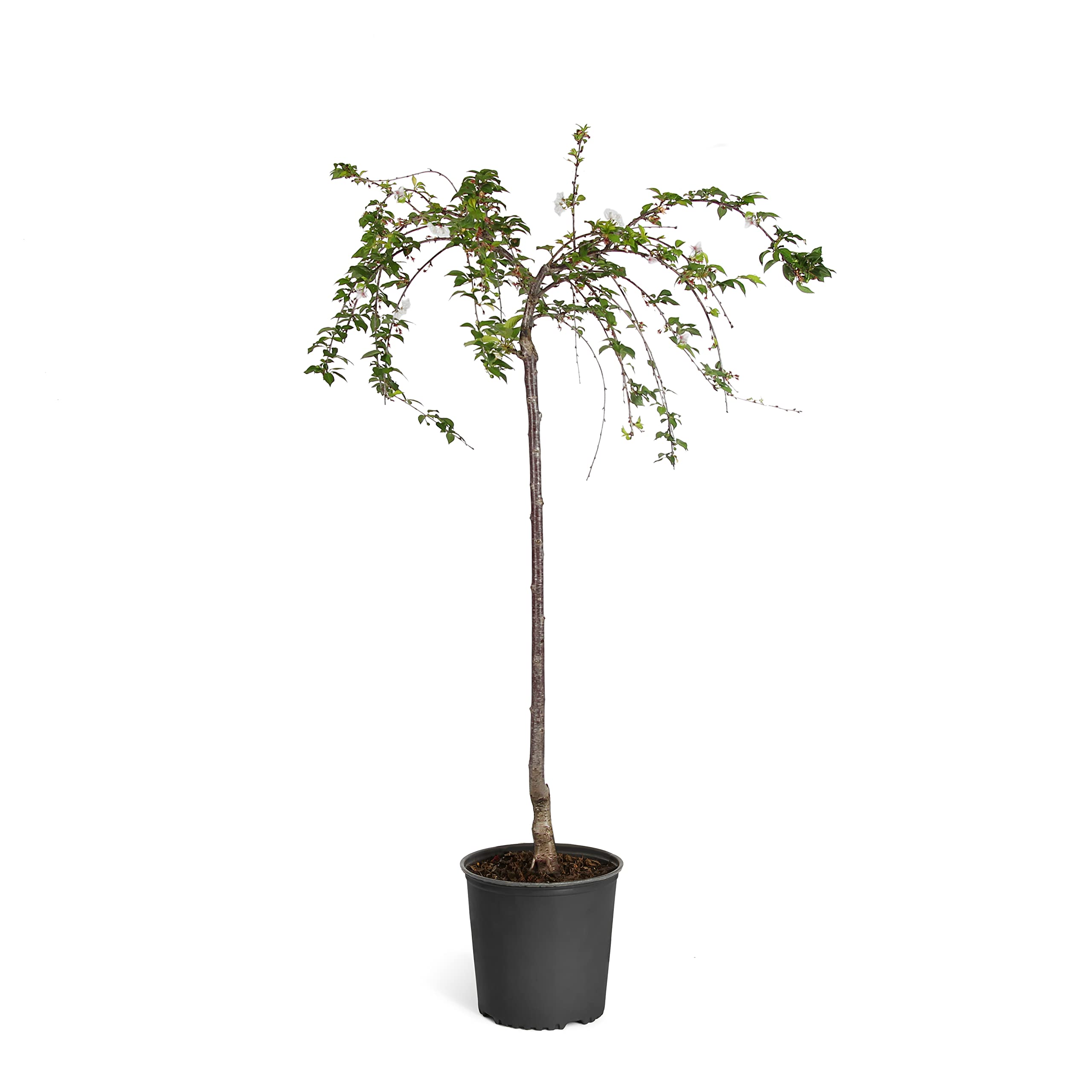
You get an instant waterfall of white flowers because this weeping cherry ships at 3 to 4 feet tall — way bigger than the 8- to 12-inch saplings from other sellers. Buyers report it “arrived exactly as pictured, even better with flowers; planted and thriving.” One reviewer noted it attracted a hummingbird moth right after planting, which tells you the blooms are genuinely vibrant from day one.
The long-term trade-off is that Brighter Blooms cannot ship to AZ, CA, CO, HI, ID, OR, WA, or AK due to federal agricultural restrictions — a much longer list than other sellers. That cuts out the entire West Coast and several mountain states, so check your location before you get your hopes up. Also, the company warranty covers the tree being true to type and arriving healthy, but leaf damage from shipping (which is normal) is not covered, so do not expect perfection on every branch.
For gardeners in eligible states who want a weeping cherry that looks like an established tree in its first season, the Snow Fountains is the clear standout for instant show-stopping impact.
Why it’s great
- Shipping size of 3-4 ft. gives you a tree that looks established fast
- Customers consistently describe it as healthy, full, and in bloom on arrival
- Detailed planting instructions and a coupon included in the box
Good to know
- Cannot ship to a long list of states (AZ, CA, CO, HI, ID, OR, WA, AK)
- Leaf damage from shipping is not covered under the warranty
- You are buying a young plant, not a fully mature tree
2. Generic Yoshino Cherry Tree, 5 gal. Pot

Compared to the top pick’s 3-gallon container, this Yoshino arrives in a 5-gallon pot and weighs 15 pounds — a root ball that gives it a serious head start. It also reaches 20 feet at maturity, making it a full-sized landscape anchor rather than a compact accent.
Owners mention that “the tree came packaged well and looked healthy upon arrival” and it has survived and even thrived during drought conditions. One detailed review mentioned that the tree had some encircling roots that needed correction and a few insect holes on the leaves, but that the tree was healthy overall and doing well after planting — a typical and manageable reality for a container-grown tree.
The shipping restriction is also narrower than the Snow Fountains: this one only cannot ship to CA, AZ, AK, and HI. If you live in hardiness zones 5-8 and want the classic Yoshino cloud of white-pink blossoms that defines the Washington D.C. cherry blossom scene, choose this 5-gallon tree over the top pick for the most reliable path to that look in your own yard.
Where it shines
- Substantial 5-gallon pot with a 15 lb. root ball for a strong start
- Customers note trees arriving 6 ft. tall and healthy despite drought
- Classic Yoshino shape and bloom — the true cherry blossom experience
Worth noting
- Cannot ship to CA, AZ, AK, or HI
- Some trees arrive with minor leaf damage or encircling roots
- Shot-hole disease (common in cherries) was noted by one buyer
3. AKTRD 2 Black Cherry Trees Live Plant, 1-1.5 ft. Bare Root
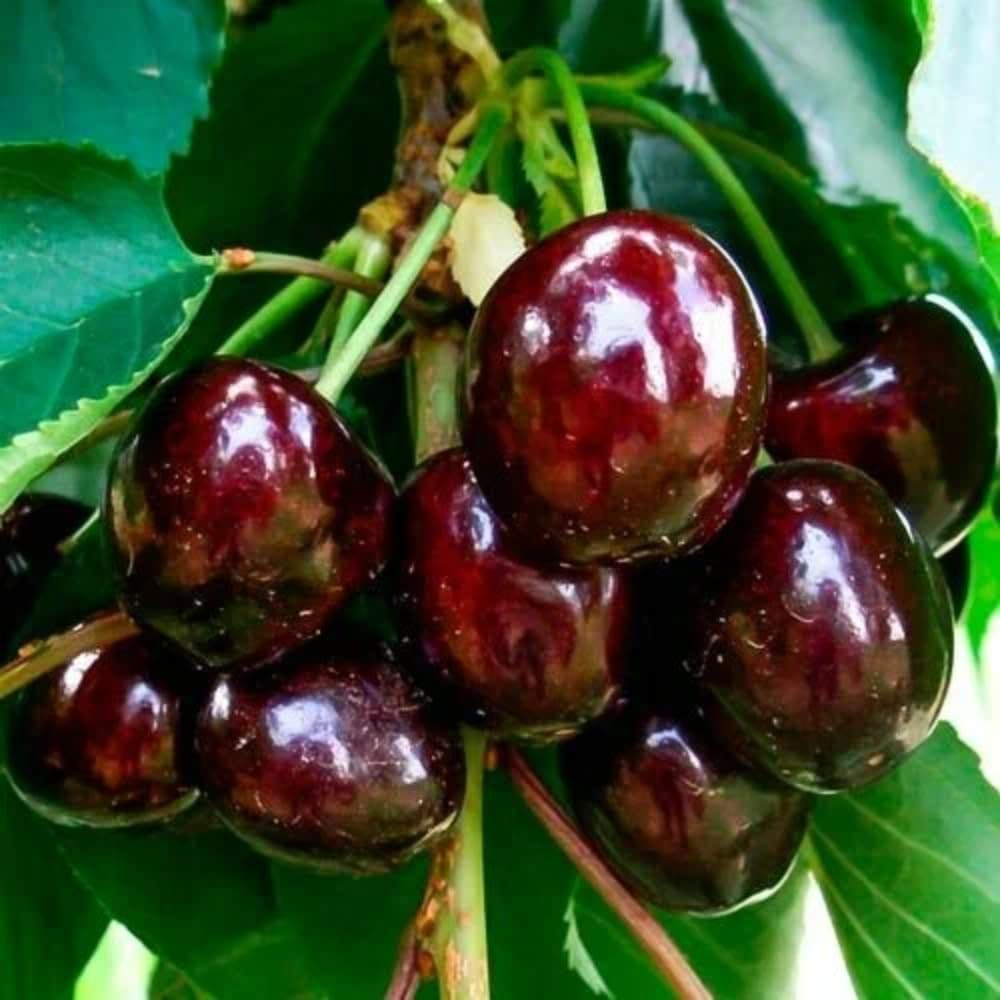
If you want sweet cherries but only have room for one planting spot, this two-pack solves the pollination problem by giving you two trees from the start. The Black Cherry produces medium-sized purple-black sweet cherries that ripen in late June, and it grows well in zones 4 through 8 — one of the widest hardiness ranges here. Reviewers point out that “two small ‘stick-like’ starter trees arrived safely with roots wrapped” and that they planted immediately and adjusted well.
Because these are bare-root dormant trees, they arrive looking like dead sticks, which can be alarming if you have never planted bare-root stock before. One buyer mentioned that theirs arrived “completely dried up” and they were trying to revive it. That is a genuine risk with bare-root shipping: the trees need to stay moist during transit, and if the packaging fails, the plant can dry out. However, other buyers said the plants were “well protected and wet” and “already starting to bloom.”
The key spec here is that each tree is 1 to 1.5 feet tall, and you get two for a very accessible entry point into fruiting cherries. If you have the patience to nurture bare-root sticks into full trees and want sweet cherries without waiting for a partner tree, this two-pack is the best value play on the list.
What stands out
- Two trees for pollination means a better chance of fruit production
- Ripens sweet black cherries in late June in zones 4-8
- Good value for the money compared to single container trees
The trade-offs
- Bare-root sticks can arrive dried out if packaging fails
- Requires patience — these are young trees that need years to fruit
- Loam soil and full sun are essential for healthy growth
4. UIOTER Kwanzan Cherry Blossom Tree, 8 to 12 Inch

The single number that matters most here is 8 to 12 inches — the smallest sapling in the guide, but also the lowest price for a double-pink Kwanzan. Kwanzan is famous for its deep pink, ruffled, fully double blossoms that appear in mid-spring, and those blooms last longer than single-flowered varieties. Shoppers say it “arrived faster than expected, healthy” and that “new growth emerging” made it ideal for bonsai or houseplant projects.
You trade size for that low entry price: one owner reported “price a bit high for that size,” and another reported the tree died despite following instructions. At just 8-12 inches, this is a very young sapling that needs careful watering (moderate moisture, loam soil) and protection from extreme weather in its first season. It is not a plug-and-play tree — it needs attention.
For the price, you get a well-rooted perennial sapling with the heirloom-quality genetics of a Kwanzan. If you enjoy the process of growing a tree from a young stage and want the most dramatic double-pink blossoms possible at a budget-friendly price, this is your pick.
The upsides
- Genuine Kwanzan with fully double pink blossoms — the most showy flowers
- Well-rooted in a pot and ready to plant in your garden
- Fragrant flowers add an extra sensory layer to your spring garden
Keep in mind
- Only 8-12 inches tall at shipping — a very young sapling
- Some buyers reported the tree died despite following care instructions
- Cannot ship to CA
5. UIOTER Weeping White Cherry Blossom Tree, 8 to 12 Inch

You get the weeping form (the graceful cascading branches) in a compact, budget-friendly package. If the Snow Fountains cannot ship to your state or is out of your budget, this white weeping cherry from UIOTER is the same price as the Kwanzan and offers the same 8- to 12-inch potted sapling format. It is a dwarf ornamental that produces white flowers in spring and stays compact, making it a natural fit for smaller yards, patios, or even container growing. Buyers report “arrived faster than expected, healthy” with “new growth emerging” and “no issues.”
Like the Kwanzan, this is an ornamental tree that will not produce fruit, and its small size at shipping means you will wait a couple of years before you see the signature weeping cascade. One customer observed “price a bit high for that size,” and another said their tree died. The same care risks apply: moderate watering, loam soil, full sun exposure, and no shipping to California.
The one clear reason to pick this over the Kwanzan is the white weeping form — if you prefer the delicate, elegant look of white cascading branches over the bold pink double-blooms, this is the most affordable way to get a weeping cherry sapling into the ground, making it perfect for the budget buyer who wants a white weeping cherry without paying for a larger, more established tree.
Why we’d pick it
- Weeping form in a compact, budget-friendly starter sapling
- White blossoms offer a soft, elegant alternative to bold pink flowers
- Well-rooted in a pot and ready to plant in your garden
A few caveats
- Same small size as the Kwanzan: 8-12 inches at shipping
- Some buyers reported the tree died despite following care instructions
- Cannot ship to CA
Understanding the Specs
Ornamental vs. Fruiting
This is the first decision. Ornamental cherry trees (Kwanzan, Yoshino, Weeping) are bred for flower color and form — they produce stunning spring blossoms but zero fruit. Fruiting cherry trees (Black Cherry) produce edible cherries that ripen in late June, but their spring flowers are more modest. If you want a flowering landscape tree, go ornamental. If you want to eat cherries from your own tree, go fruiting. They serve completely different purposes.
Shipping Restrictions
Several states have agricultural laws that restrict shipping live cherry trees. California, Arizona, Alaska, and Hawaii are commonly restricted. Some sellers also exclude Colorado, Idaho, Oregon, and Washington. The premium Brighter Blooms tree has the longest restriction list, while most UIOTER trees only exclude California. Always check the seller’s shipping policy before ordering — if your state is restricted, your order will be cancelled.
FAQ
Is a bare-root cherry tree better than a potted one?
Why can’t some sellers ship cherry trees to California?
How long until a cherry tree produces fruit or flowers?
Final Thoughts: The Verdict
If you want one dependable pick, the best cherry trees winner is the Generic Yoshino Cherry in the 5-Gallon Pot because it delivers the classic cherry blossom look in a large, well-rooted package that survives shipping and adapts to zones 5-8. If you want a cascading weeping tree with instant garden impact, grab the Brighter Blooms Snow Fountains Weeping Cherry. And for a budget-friendly start to growing sweet cherries, the standout is the value of the AKTRD 2 Black Cherry Trees.

Mo Maruf
I created WellFizz to bridge the gap between vague wellness advice and actionable solutions. My mission is simple: to decode the research and give you practical tools you can actually use.
Beyond the data, I am a passionate traveler. I believe that stepping away from the screen to explore new environments is essential for mental clarity and physical vitality.