Our readers keep the lights on and my smoothie glass nicely filled. As an Amazon Associate, I earn from qualifying purchases.
When a prized oak, maple, or citrus tree begins showing pale, yellowing leaves with dark green veins, you are witnessing iron chlorosis — a condition where the tree cannot access enough iron from alkaline or compacted soil. Without correction, the tree weakens, growth stalls, and foliage drops prematurely. The right chelated iron formulation delivers the mineral in a form roots can absorb, restoring deep green vigor and photosynthetic power.
I’m Mohammad Maruf — the founder and writer behind WellFizz. I have spent hundreds of hours analyzing soil chemistry, chelation agents, and application methods to identify which iron supplements actually reverse leaf yellowing in trees without staining patios or burning roots.
Whether you need a fast-acting liquid concentrate, a soil acidifier that unlocks locked-up iron, or systemic trunk implants for stubborn cases, this guide breaks down the top formulations for your specific situation. After extensive research, I have identified the best chelated iron for trees to match every tree size, soil type, and gardener skill level.
How To Choose The Best Chelated Iron For Trees
Not all iron supplements work the same way on trees. The chelation type, iron percentage, application method, and your soil pH all determine whether the treatment will green up your tree or just wash through the ground. Here are the key factors to weigh before buying.
Chelation type determines soil pH tolerance
EDDHA chelated iron remains available in alkaline soils up to pH 9, making it the standard for trees growing in high-pH conditions like limestone bedrock or concrete-adjacent plantings. DTPA chelates work well in slightly acidic to neutral soils but lose effectiveness above pH 7.5. Check the label for the chelating agent used — if you have clay or alkaline soil, EDDHA or a blended formulation is essential.
Iron concentration and companion nutrients
Look for products with at least 0.1% iron in liquid form or up to 22% iron in granular supplements. Some formulations include zinc, sulfur, or magnesium, which address multiple deficiencies at once — especially useful when chlorosis appears alongside stunted leaf size or pale new growth. Higher iron percentages mean smaller doses per application, but require careful measuring to avoid over-application.
Application method matters for tree size
Small to medium trees under 15 feet respond well to soil drenches or foliar sprays applied in spring and fall. Larger specimen trees with trunks over 8 inches in diameter benefit more from systemic trunk implants, which deliver iron directly into the vascular system and bypass soil pH issues entirely. Granular products work best when tilled into the root zone and watered in, but require consistent soil moisture to release iron.
Staining and safety considerations
Traditional iron sulfate stains concrete, stone, and wood surfaces permanently. Non-staining formulations use iron chelates that do not leave rust-colored marks on hardscapes, making them better for trees near driveways, patios, or walkways. For organic gardens, OMRI listed products ensure compliance with organic growing standards.
Quick Comparison
On smaller screens, swipe sideways to see the full table.
| Model | Category | Best For | Key Spec | Amazon |
|---|---|---|---|---|
| Monterey Dr. Iron 22% | Granular Supplement | Bulk soil application without staining | 22% iron, 55% sulfur, OMRI listed | Amazon |
| Fertilome Soil Acidifier Plus Iron | Soil Acidifier Liquid | Lowering pH while providing iron | 1 gallon liquid with iron, zinc, sulfur | Amazon |
| Fertilome Chelated Liquid Iron | Liquid Concentrate | Quick greening for trees and lawns | 1 gallon, mixes at 1 tbsp per gallon | Amazon |
| Liquinox Iron Zinc Chelated Solution | Liquid Dual Chelate | Correcting iron and zinc deficiency together | 32 oz, 0.2% iron, 0.2% zinc | Amazon |
| MediCap FE SUPER Systemic Iron Implants | Trunk Implants | Large trees with stubborn chlorosis | 25 implants, 1/2-inch, 2-year release | Amazon |
In‑Depth Reviews
1. Monterey Dr. Iron 22% Iron Supplement
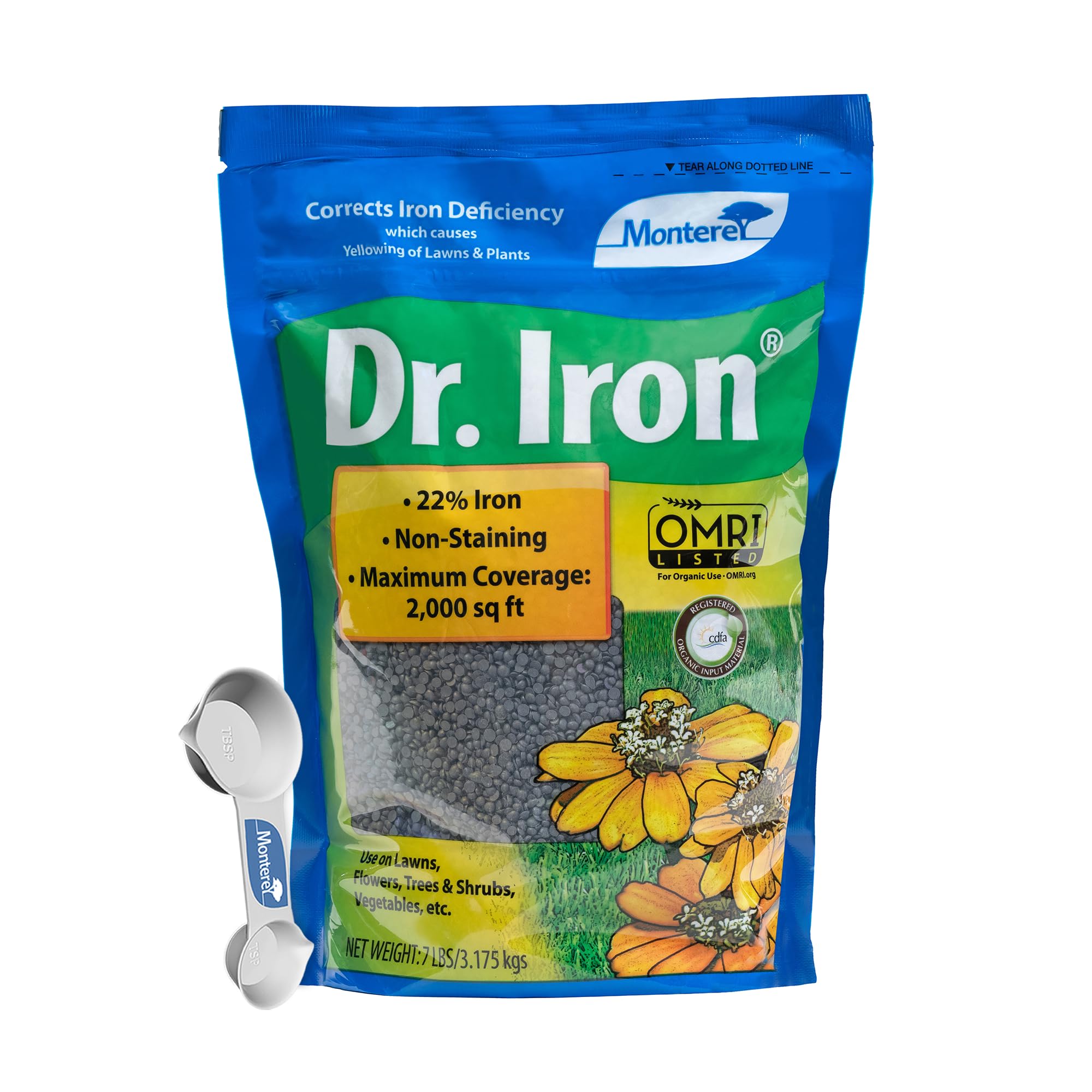
Monterey Dr. Iron delivers a market-leading 22% iron content combined with 55% sulfur, making it one of the most concentrated granular iron supplements available for trees. The non-staining formula is a significant advantage over traditional iron sulfate products that leave rust-colored marks on concrete, patios, and stone pathways — a common frustration when treating trees near hardscapes. Each 7-pound bag covers up to 2,000 square feet, providing ample supply for multiple large trees or an entire landscape.
The uniform particle size ensures even distribution through a rotary spreader without creating the irritating iron dust cloud that often occurs with competing granular products. User reports from Central Florida’s sandy soils confirm the formula counteracts rapid nutrient leaching from heavy rain, while gardeners in alkaline regions note the sulfur component gradually lowers soil pH to improve long-term iron availability. The OMRI listed certification makes this suitable for organic orchards and edible landscapes.
Tree owners treating chlorotic fruit trees, particularly lemon and peach, have reported visible greening within two weeks of application, with new growth emerging a deeper shade of green than existing foliage. The granules dissolve slowly after watering in, providing sustained iron release rather than a quick flush that washes through the root zone. Apply up to four times per year for season-long protection against chlorosis recurrence.
Why it’s great
- 22% iron content provides high concentration for fewer applications
- Non-staining formula protects hardscapes and concrete
- OMRI listed for organic gardening compliance
- Uniform particle size enables even spreader distribution
Good to know
- Requires watering in after application to activate iron release
- Sulfur component can lower soil pH too fast if over-applied in small areas
2. Fertilome Soil Acidifier Plus Iron (10665)
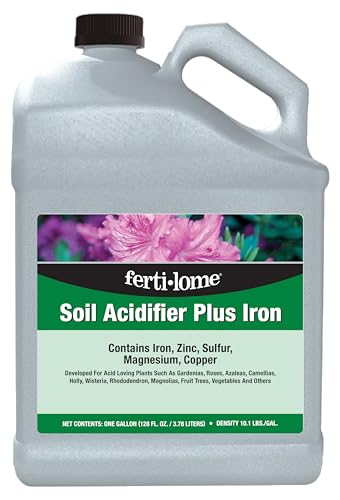
Fertilome Soil Acidifier Plus Iron takes a dual-action approach by lowering soil pH while simultaneously supplying chelated iron, zinc, sulfur, magnesium, and copper. This makes it particularly effective for trees growing in alkaline soils where iron is chemically locked and unavailable to roots — a common scenario in arid regions, near concrete foundations, or in areas with limestone subsoil. The 1-gallon liquid concentrate dilutes at a rate of 2 tablespoons per gallon of water, offering significant coverage from a single bottle.
The formula works faster than bagged granular acidifiers like elemental sulfur, which can take months to break down in soil. Gardeners treating lemon trees, hydrangeas, and blueberries report visible improvement in leaf color and overall plant vigor after just two applications. The gentle formulation is designed to be safe on root systems when applied at recommended dilution rates, though users should test soil pH before application — rapid acidification in containers or small planting beds can shock roots if applied too aggressively.
Reviews consistently highlight the product’s ability to correct iron chlorosis in citrus and shade trees where standard liquid iron supplements alone failed. The included trace elements address multiple deficiencies simultaneously, helping trees that show yellowing combined with stunted leaf development. For best results on in-ground trees, combine this acidifier with a separate high-iron supplement to address both pH and iron content in one treatment cycle.
Why it’s great
- Dual action lowers soil pH and supplies chelated iron simultaneously
- Includes zinc, sulfur, magnesium, and copper for comprehensive nutrition
- Faster acting than granular soil acidifiers
- Gentle on roots when diluted according to instructions
Good to know
- Can lower pH too quickly if over-applied in container plantings
- Requires soil pH testing before use for precise dosing
3. Fertilome Chelated Liquid Iron, 1 Gallon

Fertilome Chelated Liquid Iron offers a straightforward liquid concentrate designed for quick correction of iron chlorosis across a wide range of trees, shrubs, and lawns. The 1-gallon container mixes at a rate of just 1 tablespoon per gallon of water, making it highly economical — a single gallon of concentrate yields many full sprayer loads for large properties. Users treating St. Augustine and Bermuda grass report noticeable greening within 48 hours of foliar application, while tree owners see results in 7 to 14 days with soil drench methods.
The liquid formulation provides excellent uptake in both foliar and soil applications, outperforming granular iron in dry conditions where moisture is needed to dissolve solid particles. The chelated iron remains stable in solution and does not oxidize or precipitate out when stored properly. For tree owners, soil drenching around the drip line during active growth periods delivers iron directly to feeder roots without the need for digging or tilling. The same bottle can service lawns, ornamentals, and garden vegetables, reducing the number of separate products needed.
Compared to competing liquid brands, this formula stands out for its value per application and consistent results reported by users with acid-loving citrus, shade trees, and oak varieties. The low mixing ratio means even small-scale gardeners get many treatments from a single purchase. St. Augustine lawn users in full sun climates report the product greens turf without stimulating excessive growth — a clear advantage over nitrogen-heavy fertilizers that cause frequent mowing.
Why it’s great
- High dilution ratio provides exceptional value per application
- Works for both foliar spray and soil drench methods
- Visible greening results within 2 days on lawns, 2 weeks on trees
- Versatile for trees, shrubs, lawns, and garden plants
Good to know
- Does not include soil acidifiers for pH correction
- Requires consistent soil moisture for optimal root uptake
4. Liquinox 3032 Iron Zinc Chelated Solution

Liquinox 3032 addresses a specific tree nutrition gap by providing both chelated iron and chelated zinc in a single 32-ounce solution. This dual-mineral approach is particularly valuable when chlorosis appears alongside stunted new growth or rosetted leaves — classic signs of zinc deficiency that often accompany iron chlorosis in high-pH soils. The fully chelated formulation ensures both minerals remain plant-available whether applied as a foliar spray or soil drench, giving tree owners flexibility in application timing and method.
The 0.2% iron and 0.2% zinc concentrations make this a lower-dose product compared to standalone iron supplements, which can be an advantage for sensitive trees or when treating young saplings that could be burned by higher concentrations. Users treating Indian laurel trees in Arizona full sun report visible new growth turning bright green within one week of application, with existing leaves darkening noticeably. Jasmine vines and rose bushes also show rapid recovery from yellowing foliage when treated with this dual-chelate solution.
While the low concentration limits soil-drench effectiveness on large trees with deep root systems, the product excels as a foliar spray for smaller specimens or as a root-zone drench for trees in raised beds and containers. The 32-ounce bottle provides enough concentrate for multiple foliar treatments on a typical residential landscape. For persistent chlorosis in large shade trees, consider using this product as a supplement alongside a higher-concentration iron source to cover both deficiency types.
Why it’s great
- Dual chelated iron and zinc addresses two common deficiencies
- Suitable for foliar and soil application methods
- Gentle low concentration safe for young trees and sensitive plants
- Quick visible results on jasmine, roses, and ornamental trees
Good to know
- Low iron concentration limits effectiveness on large, deep-rooted trees
- Does not contain soil acidifiers to address alkaline pH issues
5. MediCap FE SUPER Systemic Iron Tree Implants

MediCap FE SUPER Systemic Iron Implants represent the most direct approach to treating iron chlorosis in mature trees where soil treatments have repeatedly failed. Each 1/2-inch capsule is inserted into pre-drilled holes in the tree trunk, delivering iron directly into the vascular system and bypassing soil pH, compaction, and root health issues entirely. The 25-count pack is sized for trees with a minimum trunk diameter of 8 inches, with larger specimens requiring multiple packs to achieve sufficient coverage across the canopy.
The systemic delivery mechanism releases iron gradually over a period of up to two years from each application, making this a maintenance-friendly solution for large specimen trees. Users treating central Texas oaks and river birch trees report deep green foliage returning within 3 to 6 weeks after implantation, even on trees that had shown yellowing leaves for years despite regular liquid iron applications. Aspen and birch owners note that combined with increased watering after implantation, the implants restore both color and overall tree vigor, reducing dead limb development.
Installation requires a drill with a properly sized bit, but the included depth marker ensures consistent hole depth for effective capsule placement. The implants are low-toxicity and environmentally friendly, with no runoff concerns that accompany soil-applied treatments. For trees where soil iron is perpetually locked due to extreme alkalinity or heavy clay content, these implants offer the only reliable long-term correction without excavation or soil replacement. One treatment can green up a tree for multiple growing seasons.
Why it’s great
- Delivers iron directly into tree vascular system, bypassing soil issues
- Gradual release provides up to 2 years of iron from a single treatment
- Works when liquid and granular iron supplements have failed
- Low toxicity and environmentally friendly with no runoff
Good to know
- Requires drilling into tree trunk, unsuitable for very small trees
- Higher upfront investment compared to liquid or granular products
FAQ
How soon after applying chelated iron will my tree turn green again?
Can I use chelated iron on trees that are already planted in acidic soil?
What tree species respond best to trunk implants versus soil drenches?
Should I apply chelated iron in spring, summer, or fall?
Final Thoughts: The Verdict
For most tree owners, the best chelated iron for trees winner is the Monterey Dr. Iron 22% because its high iron content, non-staining formula, and organic certification cover the broadest range of tree types and garden settings. If you need to lower soil pH while correcting chlorosis, grab the Fertilome Soil Acidifier Plus Iron. And for large trees where soil treatments have failed year after year, nothing beats the MediCap FE SUPER Systemic Iron Implants for guaranteed direct-to-tree iron delivery.

Mo Maruf
I created WellFizz to bridge the gap between vague wellness advice and actionable solutions. My mission is simple: to decode the research and give you practical tools you can actually use.
Beyond the data, I am a passionate traveler. I believe that stepping away from the screen to explore new environments is essential for mental clarity and physical vitality.