Our readers keep the lights on and my smoothie glass nicely filled. As an Amazon Associate, I earn from qualifying purchases.
The difference between a frustrating chop and a smooth, effortless slice often comes down to one thing: the edge on your chef’s knife. A dull blade is not just slow—it’s dangerous, requiring more force that can lead to slips and injuries. A proper sharpener brings that razor edge back, transforming your time in the kitchen.
I’m Mohammad Maruf — the founder and writer behind WellFizz. I’ve spent countless hours analyzing the grit ratings, motor specs, and material science behind every major sharpening system to find what actually delivers a lasting, professional-grade edge.
Whether you are a home cook or a professional, this guide breaks down the top contenders to help you find the best chef knife sharpener for your specific needs and skill level.
How To Choose The Best Chef Knife Sharpener
Choosing the right sharpener depends on your steel type, how much time you want to spend, and the edge finish you expect. Here are the critical factors to weigh before you buy.
Grit Rating and Progression
Grit defines how coarse or fine the abrasive surface is. Lower numbers (100–400 grit) are for repairing damaged edges or reprofiling. Mid-range grits (800–2000) refine the edge, while high grits (3000–8000) polish to a mirror-like, hair-whittling sharpness. A good system lets you move through a progression for the best result.
Abrasive Material
Three main materials dominate: corundum (aluminum oxide) is common in water stones and offers good cutting speed for the price. Diamond abrasives cut the hardest modern super steels (like M390 or CPM-S30V) quickly and stay flat, but cost more. Natural oil stones like Norton’s are durable and forgiving, ideal for carbon steel blades.
Angle Control
Consistency of angle is what separates a sharp knife from a perfectly sharp one. Built-in angle guides (14°–25° options) remove guesswork for beginners. Freehand sharpening offers flexibility but requires practice. If you want repeatable results, look for a system with fixed or adjustable angle stops.
Manual vs. Electric
Manual stones and systems give you complete control and remove less metal, making them better for high-end knives you want to last. Electric sharpeners are faster and easier for everyday touch-ups, but can remove more material per session. The trade-off is speed versus precision and blade life.
Quick Comparison
On smaller screens, swipe sideways to see the full table.
| Model | Category | Best For | Key Spec | Amazon |
|---|---|---|---|---|
| Chef’sChoice 15XV | Electric | Speed & convenience | 3-stage diamond abrasives | Amazon |
| Work Sharp Ken Onion | Belt-driven | Versatility & speed | Adjustable speed belts | Amazon |
| Goodjob Whetstone Kit | Water Stone Set | Complete starter bundle | 400/1000 & 3000/8000 stones | Amazon |
| Work Sharp Benchtop Whetstone | Water Stone | Consistent edge on kitchen knives | 1000/6000 grit water stone | Amazon |
| SHARPAL 168H | Diamond Plate | Hard super steels | 325/1000 diamond grit | Amazon |
| Warthog V-Sharp A4 | Manual V-System | Consistent dual-side sharpening | 325 diamond + hardened steel | Amazon |
| Norton Oil Stone | Oil Stone | Budget-friendly durability | 100/280 grit combination | Amazon |
In‑Depth Reviews
1. Chef’sChoice 15XV

The Chef’sChoice 15XV is the fastest path to a razor edge without skill. Its 3-stage system uses 100-percent diamond abrasives to reprofile, hone, and polish in under a minute. The flexible spring guides automatically adjust, making it almost impossible to mess up the angle on straight or serrated blades.
The metal housing feels solid at 5 pounds, and the 15-degree Trizor XV edge it creates rivals much more expensive systems. Users report transforming completely dull knives into hair-splitting sharpness in just a few passes. The third stage uses a patented flexible abrasive for a polished, durable finish.
This unit is best for cooks who sharpen multiple knives regularly and want speed. It removes material faster than manual stones, so it is not ideal for ultra-expensive Japanese knives, but for daily kitchen use, it is unmatched in efficiency.
Why it’s great
- Incredibly fast—resharpens in about 10 seconds
- Consistent 15-degree edge every time with zero guesswork
- Durable metal housing built for daily use
Good to know
- Not suitable for single-bevel or ultra-thin Japanese blades
- Removes more metal than whetstones over time
2. Work Sharp Ken Onion

The Work Sharp Ken Onion Edition Mk.2 is a belt-driven sharpener co-designed by legendary knifemaker Ken Onion. Its variable speed motor (15°–30° adjustable angle) and flexible abrasive belts handle knives, scissors, serrated blades, and even axes. The belt system cuts fast and leaves a consistent edge.
Users praise its ability to reprofile a damaged blade in minutes, something that would take an hour on a stone. The learning curve is shallow, but you can experiment with different grit belts (extra 800 and 1000 grit belts are recommended for kitchen knives) to dial in the finish you want.
The 3-year warranty and Oregon engineering give confidence. Its size is compact enough for a cabinet, though the belt costs add up over time. This is the pick for anyone who wants one machine that sharpens everything from a fillet knife to a hatchet.
Why it’s great
- Extremely versatile—handles knives, scissors, and tools
- Variable speed gives fine control over material removal
- Fast belt changes for grit progression
Good to know
- Belt replacement adds ongoing cost
- Large footprint takes up counter space
3. Goodjob Whetstone Kit

The Goodjob kit delivers an incredible amount of hardware for the money. You get two dual-grit whetstones (400/1000 and 3000/8000), a silicone non-slip bamboo base, a honing guide, angle guide, cut-resistant gloves, leather strop, and green compound. This is everything a beginner needs to go from dull to mirror-polished.
The stones are fired using Japanese Osaka production technology at 2000°F for 48 hours, making them durable and consistent. The 400 grit side repairs edge damage quickly, the 1000 grit refines, and the 3000/8000 sides produce a polished, razor-sharp finish that slices paper effortlessly.
User feedback notes the logo on the stone surface can be slightly rough, but a quick sanding solves it. For the price, this is the best entry-level all-in-one set that gives you room to grow into advanced sharpening techniques without needing extra purchases.
Why it’s great
- Complete set includes strop, gloves, and angle guides
- Four grit levels cover repair to polishing
- Bamboo base with silicone keeps stone stable
Good to know
- Logo on stone surface may need light sanding
- No spray bottle included for misting stones
4. Work Sharp Benchtop Whetstone

Work Sharp’s benchtop whetstone combines a premium 1000/6000 corundum water stone with a clever water control base. The base collects runoff and includes a storage tray, making it much less messy than traditional water stone setups. The included angle guides lock in at 15° or 17° for repeatable, consistent edges.
The 1000 grit side sharpens quickly without excessive material removal, and the 6000 grit side polishes to a keen, almost mirrored edge. Users who follow the manufacturer’s video tutorials report achieving professional-level sharpness within minutes, even on their first try.
Some users felt the stone is smaller than expected and the plastic base feels lighter than the rest of the Work Sharp lineup. But for anyone who wants the control of a whetstone with the convenience of a guided system, this is a smart mid-range buy.
Why it’s great
- Water control base reduces mess and stores the stone
- Magnetic 15° and 17° angle guides for consistency
- 6000 grit produces a polished, razor-sharp finish
Good to know
- Stone surface area is smaller than some competitors
- Plastic base feels less premium than the stone
5. SHARPAL 168H
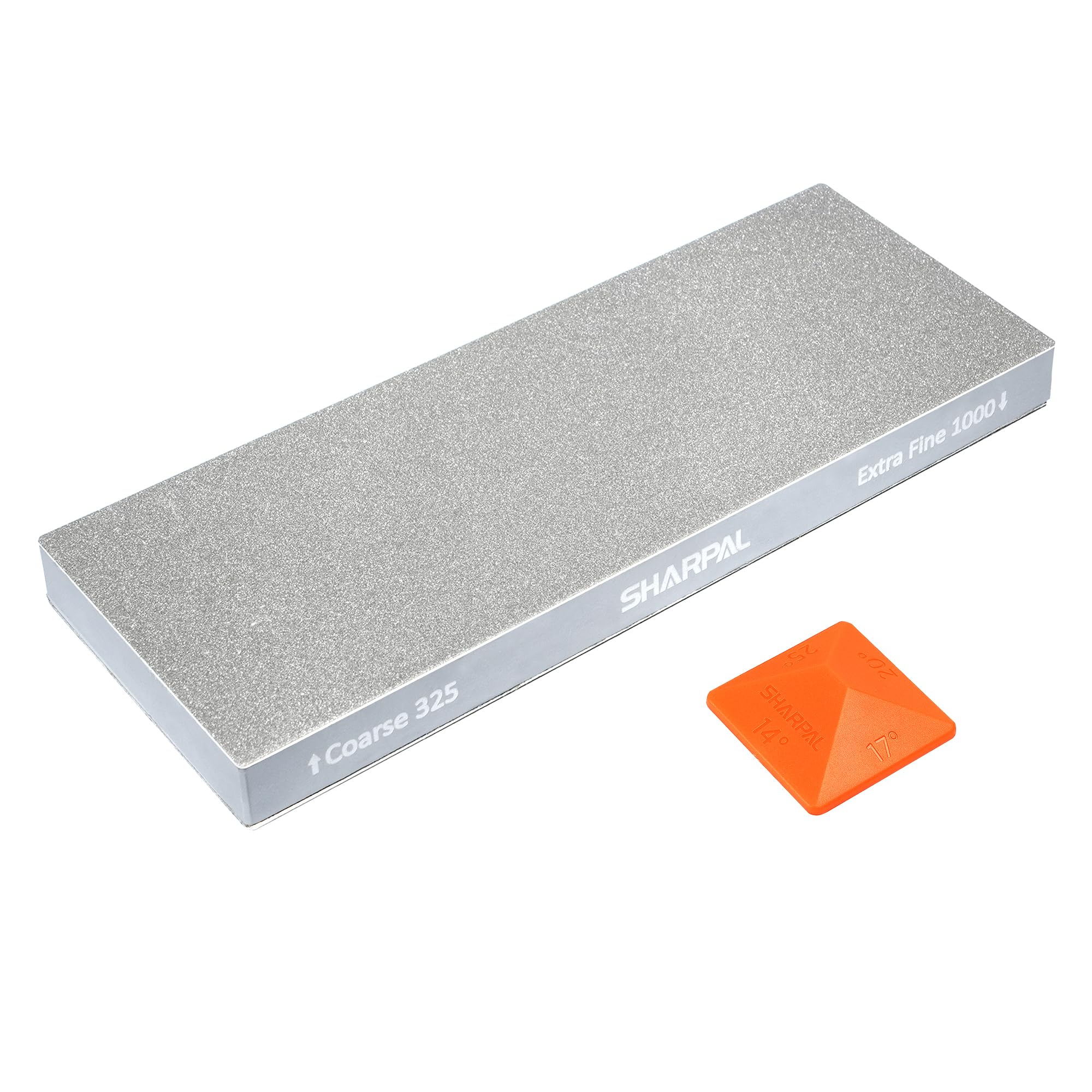
The SHARPAL 168H is a dual-grit monocrystalline diamond plate engineered for the hardest super steels that whetstones struggle to cut. With a coarse 325 grit (45 micron) and extra-fine 1000 grit (15 micron) side, it handles everything from reprofiling a chipped blade to honing a razor edge. The MirrorFlat technology guarantees flatness within ±0.002 inches.
Unlike water stones, diamond plates stay flat without lapping and work dry with no mess. The included angle guide offers 14°, 17°, 20°, and 25° settings, and the non-slip rubber pad keeps the stone stable during heavy pressure. Users report no diamond loss after dozens of sharpenings.
The plate is large at 8 x 3 inches, though it is relatively thin and may need a 2×4 holder for comfort. This is by far the best value diamond stone for anyone who owns powdered metallurgy knives like M390 or CPM-S90V.
Why it’s great
- Diamond grit cuts the hardest super steels quickly
- Stays perfectly flat with zero lapping needed
- Includes multi-angle guide and non-slip pad
Good to know
- Thin profile may need a wooden holder for comfort
- 1000 grit is fine but may need stropping for a mirror finish
6. Warthog V-Sharp A4

The Warthog V-Sharp A4 uses a patented V-Sharp mechanism with spring-loaded diamond rods that sharpen both sides of the blade simultaneously. This ensures perfect edge centering and consistent angle every pass. The metal frame and rubber base make it rock-solid on any countertop.
It comes with a 325 grit natural diamond hone for coarse work and a hardened steel hone for finishing. The adjustable settings (15°, 20°, 25°, 30°) cover everything from delicate sushi knives to thick bushcraft knives. Users who upgrade to the 600/1000 grit combo rods report achieving hair-whittling sharpness.
The system is highly addictive; once you get the hang of it, you will want to sharpen every blade in the house. The main drawback is the price of additional hone rods, but the base unit is so effective that many find the 325/steel combo sufficient for most kitchen tasks.
Why it’s great
- Sharpens both sides simultaneously for perfect symmetry
- Four angle settings cover kitchen and outdoor knives
- Metal frame with rubber base eliminates movement
Good to know
- Additional hone rods required for finer grit finishing
- Higher upfront investment than manual stones
7. Norton Oil Stone

The Norton Combination Oil Stone is a classic, no-fuss sharpener that has been trusted for generations. The 100 grit side aggressively reprofiles damaged edges, while the 280 grit side refines them into a functional working edge. It is made from corundum and prefilled with oil so you can start sharpening immediately.
This stone is more durable than water stones and does not require soaking or flattening. Users report excellent results using it with WD-40 or honing oil on carbon steel kitchen knives and hunting blades. The 8 x 2 inch size is compact enough to store in a drawer but large enough for most chef knives.
The 280 grit side is more of a medium grit than true fine, so you will want a finer stone or strop to achieve a polished, hair-shaving edge. But for the price, this is a fantastic entry point for learning freehand sharpening without worrying about damaging an expensive stone.
Why it’s great
- Extremely durable—harder than whetstones
- No soaking or flattening required
- Prefilled with oil for immediate use
Good to know
- 280 grit side is medium, not fine enough for a polished edge
- Requires oil (not water) for proper lubrication
FAQ
What grit should I use to sharpen my chef’s knife?
Can I use an electric sharpener on my Japanese chef’s knife?
How often should I sharpen my chef’s knife?
Final Thoughts: The Verdict
For most users, the best chef knife sharpener winner is the Chef’sChoice 15XV because it delivers a fast, consistent, foolproof edge with zero learning curve. If you want the control and polish of a guided manual system, grab the Goodjob Whetstone Kit. And for handling the hardest super steels without breaking the bank, nothing beats the SHARPAL 168H diamond plate.

Mo Maruf
I created WellFizz to bridge the gap between vague wellness advice and actionable solutions. My mission is simple: to decode the research and give you practical tools you can actually use.
Beyond the data, I am a passionate traveler. I believe that stepping away from the screen to explore new environments is essential for mental clarity and physical vitality.