Our readers keep the lights on and my smoothie glass nicely filled. As an Amazon Associate, I earn from qualifying purchases.
The promise of home security often comes with a hidden monthly anchor — a subscription that sinks your budget year after year. Cutting that cord doesn’t mean sacrificing clarity, coverage, or intelligence; it means choosing a system engineered to stand alone. The market is now flush with wireless camera systems that pair local storage with smart detection, letting you own your footage and your peace of mind outright.
I’m Mohammad Maruf — the founder and writer behind WellFizz. I’ve spent countless hours parsing technical specifications, comparing battery chemistries, and analyzing the real-world trade-offs between solar panels, base station storage, and AI detection tiers to find the systems that truly deliver without a recurring bill.
Every system reviewed here stores video locally — no forced cloud subscriptions, no hidden monthly fees, just a single upfront investment. This is the definitive guide to buying the cheapest wireless security camera system without subscription that still holds its own against premium, fee-laden alternatives.
How To Choose The Best Cheapest Wireless Security Camera System Without Subscription
Cutting the subscription cord is liberating, but it shifts the burden of storage and intelligence from a cloud server onto your own hardware. You’re not just buying cameras — you’re buying a self-contained recording ecosystem. Here’s what separates a reliable system from one that leaves you with blind spots.
Storage Architecture: Where Your Footage Lives
Without a cloud subscription, the camera’s onboard or base-station storage is your only evidence vault. Look for base stations with removable microSD slots (32GB minimum, ideally expandable to 256GB or 512GB) or internal eMMC memory. Systems that store footage in a hardwired indoor hub protect your clips even if a camera is stolen or destroyed — a critical advantage over cameras that store clips solely on an internal microSD card.
Power Source: Battery Life and Solar Compatibility
Wireless cameras without subscription fees are almost always battery-powered. The key metric is not just the claimed standby days (often 180–210 days under lab conditions), but how the camera handles high-traffic zones. A camera recording 50+ events per day will drain far faster. Solar panels offset this, but check if the panel is integrated, detachable with a long cable for sun-facing placement, or sold separately. For shaded eaves or north-facing walls, a camera that supports DC wired charging as a backup is essential.
Video Resolution and Night Vision Quality
A 2K (4MP) sensor is the sweet spot for identifying faces and license plates without the storage bloat of 4K. True color night vision — using a white spotlight or a large-aperture lens paired with a sensitive CMOS sensor — beats generic infrared black-and-white imaging. Pay attention to the lens focal length: a 3.3mm to 3.6mm lens offers a wide field of view (130–145°) without excessive barrel distortion.
Motion Detection That Doesn’t Drive You Mad
PIR (passive infrared) sensors detect heat changes and are the battery-friendly standard, but they can miss slow-moving subjects or trigger on warm car exhaust. Pixel-based motion detection can be more precise but consumes more power. The best systems combine PIR with AI person/vehicle/pet classification processed locally on the base station — this cuts false alerts from swaying trees and passing headlights to near zero, and it doesn’t cost a monthly fee.
Quick Comparison
On smaller screens, swipe sideways to see the full table.
| Model | Category | Best For | Key Spec | Amazon |
|---|---|---|---|---|
| eufy Security eufyCam C35 4-Cam Kit | Premium | Facial recognition and expandable local storage | HomeBase Mini with 8GB eMMC (expandable to 1TB) | Amazon |
| SOLIOM 5MP 4-Cam Pack | Premium | 360° auto motion tracking | 5MP resolution + base station 32GB storage | Amazon |
| ARCCTV Solar 4-Cam Kit | Mid-Range | Solar-powered whole-home coverage | Wi-Fi 6 base station + 32GB SD (expandable to 512GB) | Amazon |
| Baseus N1 4-Cam Kit | Mid-Range | Ultra-long battery span with HomeStation storage | 16GB eMMC (expandable to 16TB) + 7,800mAh battery | Amazon |
| ARCCTV Solar 2-Cam Kit | Mid-Range | Compact, targeted coverage for townhomes | Base station 32GB SD (expandable to 512GB) + solar | Amazon |
| Blink Outdoor 4 – 5 Camera System | Mid-Range | Ecosystem integration with Alexa | 1080p HD + Sync Module 2 with USB local storage | Amazon |
| GMK Security Cameras 4 Pack | Budget | Entry-level 2K video on a tight budget | 2K 3MP + microSD local storage (up to 128GB) | Amazon |
In‑Depth Reviews
1. eufy Security eufyCam C35 4-Cam Kit
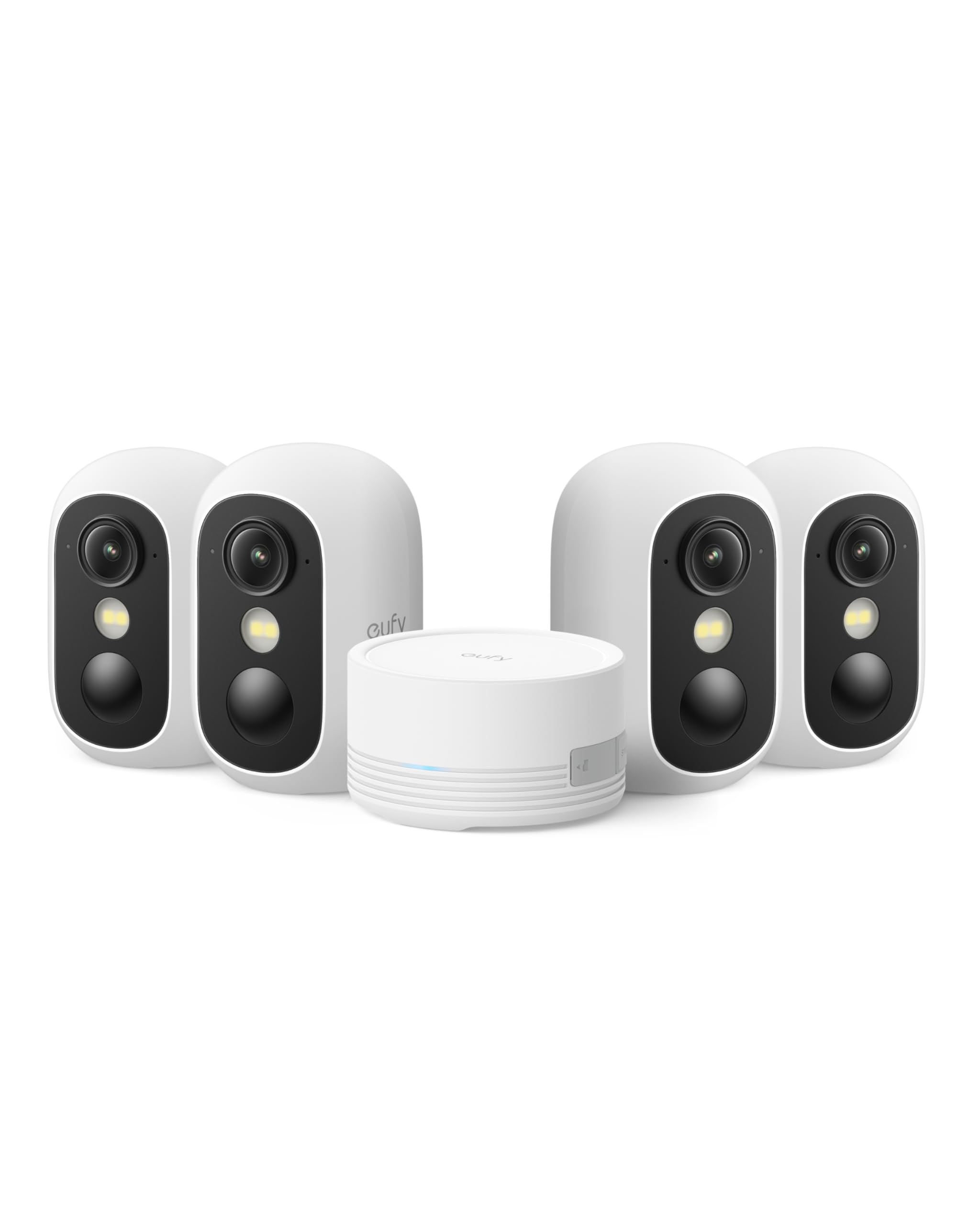
The eufyCam C35 kit is the smartest subscription-free system on this list, thanks to its HomeBase Mini hub that runs on-device AI for facial recognition, person/vehicle/pet detection, and cross-camera tracking — all without a monthly bill. The cameras themselves are bullet-style units with magnetic mounts that snap onto metal surfaces in seconds, eliminating drill-and-screw installation for most users. The 2.4 GHz Wi-Fi connection keeps the video stream stable, and the spotlight-free color night vision reveals faces and license plates using only the ambient light and a sensitive sensor.
Each camera has a microSD slot (32GB minimum recommended, up to 256GB) for direct local recording, while the HomeBase Mini stores footage centrally on 8GB of internal eMMC memory expandable up to 1TB. This dual-layer storage is a significant advantage: even if a camera is stolen, the clip history remains safe inside the hub. The 5,200mAh internal battery delivers roughly three months of real-world life under moderate activity, and the cameras are compatible with eufy’s solar panels for top-off charging. The magnetic mount is clever, but if you don’t have metal surfaces, the included multi-functional stands still require screws.
The AI features are genuinely useful. Facial recognition lets the system differentiate between family members, frequent visitors, and strangers, sending specific alerts for each. The app is clean and responsive, though the commercial offers for optional cloud storage are mildly distracting. At this price point, the eufyCam C35 kit represents the most complete no-subscription wireless camera system — it doesn’t cut corners on intelligence or storage just to hit a low price.
Why it’s great
- Local facial recognition and AI detection without any subscription
- Expandable storage from 8GB eMMC to 1TB via HomeBase Mini
- Spotlight-free color night vision captures clear evidence without disturbance
Good to know
- Magnetic mount requires a metal surface or alternative stand
- No 5 GHz Wi-Fi band support; 2.4 GHz only
2. SOLIOM 5MP Security Cameras Wireless Outdoor 4-Cam Pack

The SOLIOM 5MP kit is the only system here with motorized pan, tilt, and 360° auto motion tracking on each camera — a feature normally reserved for wired PTZ cameras. When motion is detected, the camera physically rotates to follow the subject, and the included Soliom Base coordinates multi-camera tracking so the subject is handed off seamlessly across units. The 5MP (3K) sensor delivers the highest native resolution on this list, and the Magnifier Zoom lets you tap to enlarge a specific area up to 30 feet away in real time while tracking it across the frame.
Storage is handled by the Soliom Base, which includes a 32GB microSD card (expandable to 128GB) for encrypted local storage. The encryption means the footage cannot be accessed if the base is stolen — a double-edged sword that protects privacy but also means you can’t plug the card into a computer to recover files. Each camera has a detachable solar panel with a 10-foot cable, allowing you to place the panel in full sun while the camera stays mounted in shade. Dual-band Wi-Fi (2.4GHz and 5GHz) ensures a stable connection even on congested home networks.
The auto-tracking is genuinely effective for covering driveways and backyards, but the system is limited to four cameras per hub — you cannot expand beyond the included four. The app is functional but occasionally requires a manual refresh after changing scene settings. For buyers who need active tracking of moving subjects — delivery drivers, pets, or wildlife — without a subscription, this kit is the clear specialist. The price is the highest here, but the PTZ hardware justifies the premium.
Why it’s great
- True 360° auto motion tracking with multi-camera handoff
- 5MP 3K sensor with digital magnifier zoom for detailed close-ups
- Detachable solar panels with 10-ft cable for flexible placement
Good to know
- Hub is hard-limited to four cameras — no expansion possible
- Encrypted storage means card cannot be read outside the base
3. ARCCTV Solar Security Cameras Wireless Outdoor 4-Cam Kit
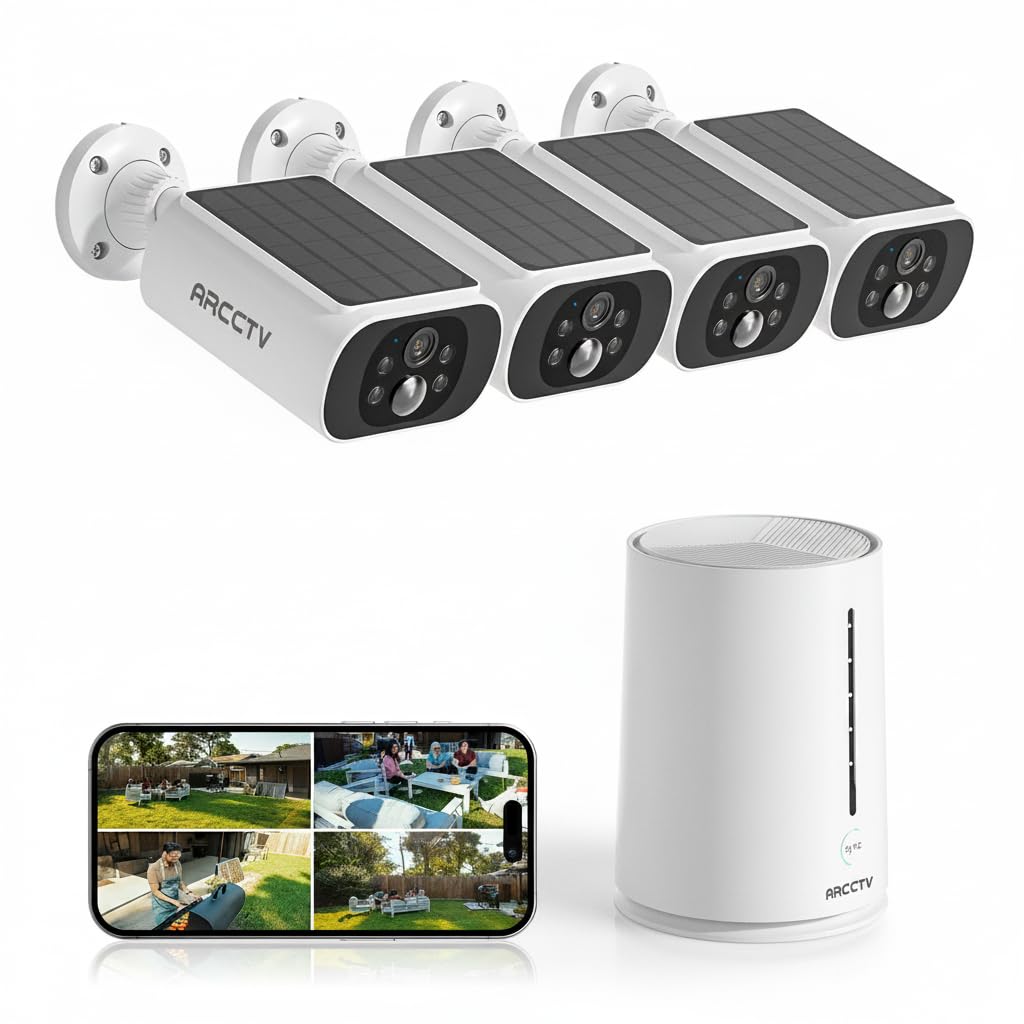
The ARCCTV 4-cam kit brings whole-home coverage that doesn’t nickel-and-dime you on storage or power. The indoor base station features a Wi-Fi 6 dual-band radio (5GHz and 2.4GHz) that creates a dedicated network for the cameras, reducing interference from your home router and improving multi-camera streaming. A 32GB microSD card is pre-installed in the base station, expandable to 512GB, and even if a camera is damaged or stolen, the footage stays safe inside the house.
Each camera has an integrated solar panel on top, paired with a 5,200mAh battery. Real-world battery life varies heavily with sun exposure — reviewers report 4 days to half drain in shaded spots, but full sun keeps the cameras topped off indefinitely. The cameras also support DC 5V/1A wired charging via USB-C for shaded eaves or winter months, a flexible backup that cheaper solar cameras omit. Video quality is sharp 2K with color night vision enabled by white spotlights and infrared LEDs. The siren and spotlight can be triggered manually or on motion, though some users note the alarm settings lack scheduling granularity.
Setup is straightforward: plug the base into your router via Ethernet, pair the cameras via the ARCCTV app. The system supports Alexa for voice commands and live view on Echo Show devices. The primary limitation is the 4-camera cap per base — you cannot add a fifth camera without a second hub. For the price, this is the most complete solar-powered, subscription-free package for covering a standard suburban property.
Why it’s great
- Wi-Fi 6 base station for stable multi-camera performance
- Pre-installed 32GB SD card with 512GB expansion in the indoor hub
- Solar plus USB-C wired charging for shaded or winter installations
Good to know
- Alarm and spotlight scheduling is limited to always-on or always-off
- Base station maxes out at four cameras; no add-on support
4. Baseus N1 4-Cam Kit

The Baseus N1 kit is built around an exceptional 7,800mAh battery in each camera — nearly 50% larger than most competitors — paired with the H1 HomeStation that stores footage. The HomeStation comes with 16GB of eMMC memory, expandable to a massive 16TB via an external hard drive (not included), making this the most storage-flexible system here for users who want to keep years of recordings without rotation. The cameras capture 2K video through a 145° ultra-wide lens with 8X digital zoom, and color night vision is supported by white LED spotlights.
Battery life is the headline: under the standard lab test (10-second clips, 30 events per day), Baseus claims 210 days. Real-world users report months of operation without charging, even with moderate activity. The cameras are IP67-rated, meaning they can survive dust, rain, and submersion in up to 1 meter of water. The HomeStation supports up to eight cameras total, so you can add N1 add-on cameras later without buying a second hub. The app (“baseus Security”) is intuitive and includes human tracking alerts with snapshot previews.
The trade-off is that the N1 system does not support continuous 24/7 recording — it’s an event-triggered system by design, preserving battery. Motion detection sensitivity is adjustable, but one reviewer noted it sometimes misses vehicles and large animals. The two-way audio is functional but the speaker volume is weaker than some rivals. For buyers who prioritize infrequent charging cycles and massive storage expansion over raw motion sensitivity, the Baseus N1 is a compelling mid-range choice.
Why it’s great
- 7,800mAh battery with 210-day standby in low-traffic conditions
- HomeStation supports up to 16TB external storage for archival recording
- IP67 weatherproof rating suitable for exposed outdoor mounting
Good to know
- No 24/7 continuous recording mode — event-triggered only
- Motion sensitivity may miss slow-moving subjects or animals
5. ARCCTV Solar Security Cameras Wireless Outdoor 2-Cam Kit
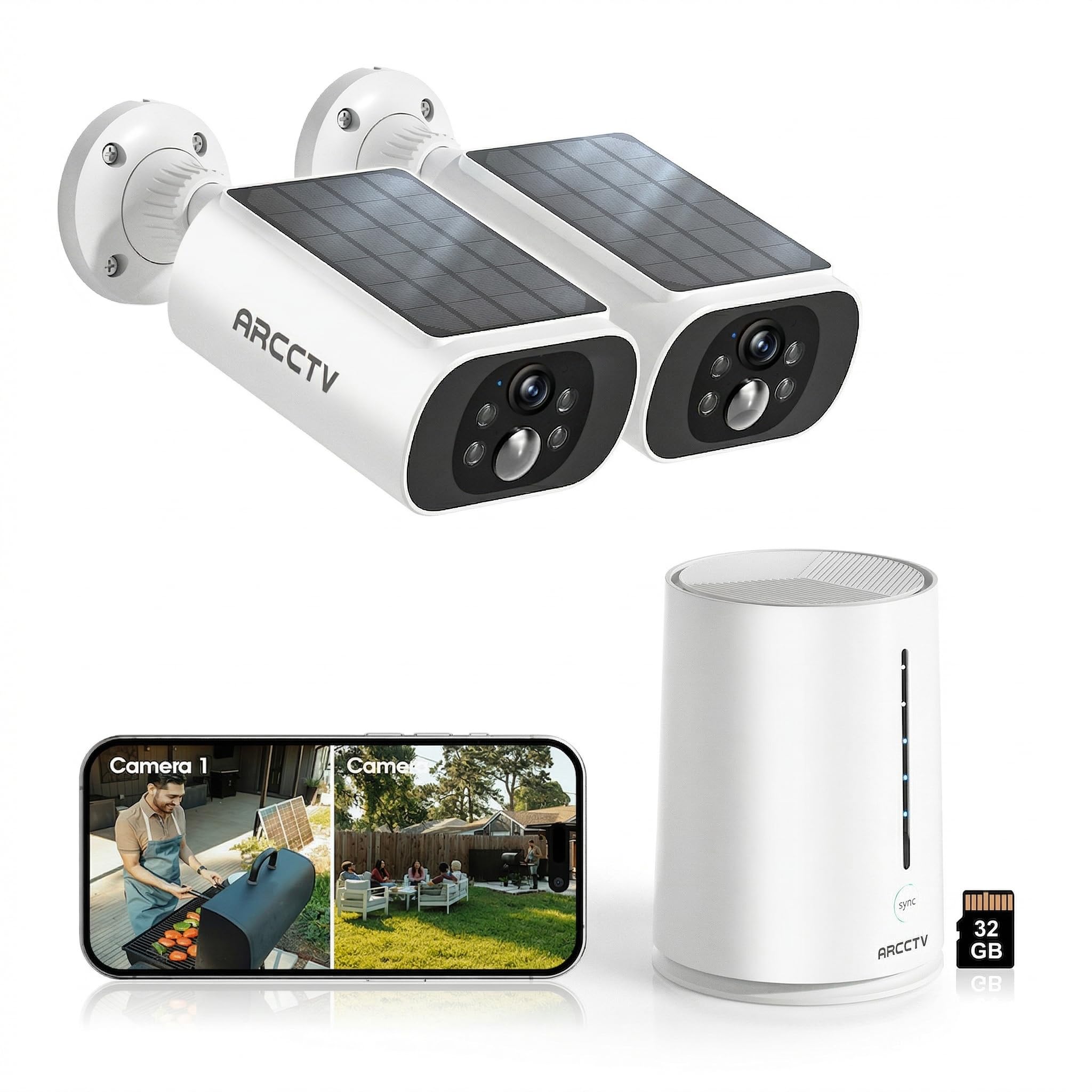
The 2-cam version of ARCCTV’s solar system is tailored for smaller homes, townhouses, or targeted coverage of a front door and driveway. It shares the same robust indoor base station design with a pre-installed 32GB SD card (expandable to 512GB) and Wi-Fi 6 dual-band support, but ships with two cameras instead of four. The base station creates a dedicated connection that reduces interference from busy home Wi-Fi networks. Video is 2K resolution with color night vision via white spotlights and IR LEDs, and the siren and two-way audio are identical to the larger kit.
Each camera has an integrated solar panel and supports DC 5V/1A wired charging for shaded spots. Real-world battery performance mirrors the 4-cam version: reviewers report good battery life with adequate sun, but the 2-cam setup is easier to maintain since there are fewer units to track. Setup is remarkably fast — one reviewer installed both cameras and connected to the base station in under 30 minutes. The ARCCTV app is straightforward, and the system works with Alexa for voice-arm/disarm and live view.
The limitation is clear: you’re capped at two cameras unless you buy the larger kit. There’s no option to add a third camera to this base station unless you purchase a separate hub. For apartment dwellers or homeowners who only need coverage of two critical entry points, this kit offers excellent value without the excess hardware of a 4-pack. The solar panels are effective, but users in Pacific Northwest climates or heavily shaded lots should plan on periodic USB-C charging during winter.
Why it’s great
- Same powerful base station and solar tech as the 4-cam kit, fewer units
- Quick 30-minute setup with intuitive app pairing
- 32GB pre-installed SD card with 512GB expansion in the indoor hub
Good to know
- Limited to two cameras — cannot expand this specific hub
- Solar performance drops significantly in low-sunlight climates
6. Blink Outdoor 4 – 5 Camera System

The Blink Outdoor 4 is the most ecosystem-friendly entry here, offering deep Alexa integration (stream on Echo Show, voice control arming, instant alerts) and the longest claimed battery life: up to two years on the included AA lithium cells. The 5-camera kit includes a Sync Module 2 hub that enables local storage via a USB drive (sold separately) — bypassing Blink’s optional cloud subscription. The cameras capture 1080p HD video with infrared night vision, and the fourth-generation sensor improves on earlier models with better low-light performance and dual-zone motion detection.
Setup is famously easy: screw in the mount, insert the AA batteries, and pair through the Blink app. The Sync Module 2 placement is critical — it uses a proprietary low-frequency radio (LFR) to communicate with cameras, so range and signal penetration are excellent through brick walls and multiple floors. The app offers good customization: activity zones, privacy schedules, and arm/disarm scheduling. The lack of 5 GHz Wi-Fi doesn’t matter here since the Sync Module creates its own dedicated link. Person detection requires a Blink Subscription Plan, but standard motion alerts and local USB storage work entirely without fees.
The main complaint is that the 1080p resolution is soft compared to the 2K+ cameras on this list — detail on license plates or distant faces can be muddy. Some users report connectivity dropouts with multiple cameras, and the included AA lithium batteries can drain faster than expected on high-traffic units (one reviewer reported under a month on a single camera). The mount is also slightly wobbly. For existing Alexa households that want a 5-camera setup with the simplest possible user experience, the Blink Outdoor 4 is the most polished option, but it compromises video sharpness to hit its mid-range price.
Why it’s great
- Up to two years of battery life from AA lithium cells
- Sync Module 2 enables local USB storage for true subscription-free use
- Deep Alexa integration with voice control and Echo Show live view
Good to know
- 1080p resolution is noticeably softer than 2K or 5MP competitors
- Person detection requires a paid Blink Subscription Plan
7. GMK Security Cameras Wireless Outdoor 4 Pack

The GMK 4-pack is the most affordable route to multi-camera coverage without a subscription, offering 2K (3MP) video, color night vision from white LEDs, and PIR motion detection that triggers instant phone alerts. The cameras are bullet-style with IP65 weatherproofing and a 3.3mm lens providing a wide-angle view suitable for front porches, backyards, and garages. Setup is genuinely fast — one reviewer installed all four in under an hour — and the VicoHome app consolidates all feeds into a single dashboard.
Each camera runs on a rechargeable battery that GMK claims delivers 1–6 months of standby or up to 3,000 motion triggers per charge. Real-world battery life sits on the shorter end of that range if the camera records 30+ clips daily, but the cameras support a constant plug-in power option via USB-C, which effectively eliminates recharging for high-traffic spots. Storage is handled by a microSD card (up to 128GB, not included) or optional cloud service. There is no base station here — each camera stores clips independently on its own card, which means footage is lost if the camera is stolen.
The motion detection is PIR-based and impressively responsive, but it generates more false alerts than AI-classified systems — expect notifications from passing cars and swaying branches. The two-way audio is clear for a budget camera, and the intelligent siren can be set to trigger automatically on motion or manually from the app. For the price, the GMK 4-pack delivers excellent raw value: 2K video in a 4-cam configuration. The trade-offs are the lack of a unified base station storage hub and a higher false-alarm rate, but if your primary goal is maximum camera count for minimal upfront cost, this kit is hard to beat.
Why it’s great
- Four cameras at a budget-friendly price point with 2K video
- Fast magnetic-mount setup and intuitive VicoHome app
- Supports USB-C constant power for high-traffic zones
Good to know
- No base station — footage is stored on each camera’s individual SD card
- PIR motion detection generates more false alerts than AI-classified systems
FAQ
Can I use a microSD card larger than the supported maximum in a security camera?
You can try, but the camera’s firmware limits the maximum addressable storage. A 256GB camera will not see any space beyond that limit, and may fail to format or record correctly if a larger card is inserted. Always stick to the manufacturer’s stated maximum capacity to avoid file system corruption or lost footage.
How does solar charging perform during winter or overcast weeks?
Solar panel output drops to roughly 10-20% of peak capacity on overcast days and near zero if the panel is covered in snow. Cameras with integrated panels (non-detachable) suffer the most in northern latitudes. Detachable panels with a long USB cable let you mount the solar cell in a sunnier spot, but even then, expect to charge the camera manually from a USB-C wall adapter once or twice during a cloudy winter.
What happens to my footage if the base station loses power?
Most base stations do not contain an internal battery. If the home loses electricity, the hub shuts down and stops recording. Footage already stored on the SD card or hard drive is retained and will be accessible once power is restored. Some systems, like the Blink Sync Module, can be plugged into a UPS (uninterruptible power supply) to continue recording during short outages.
Is 1080p resolution enough to identify a person’s face from 20 feet away?
At 20 feet, a 1080p camera typically captures a face as roughly 80-100 pixels across — enough to recognize someone you know, but often insufficient for police identification or license plate reading. For that level of detail, a 2K (4MP) or 5MP camera with a narrower field of view (90-110°) is strongly recommended. The wider the lens (e.g., 145°), the smaller each object appears in the frame.
Can I set up a subscription-free camera system without a smartphone?
Nearly all consumer wireless security cameras require a smartphone for initial setup — downloading the app, scanning a QR code on the camera, and connecting to Wi-Fi. There is no practical way to configure these systems using only a desktop computer. The app is also required for adjusting detection zones, setting schedules, and viewing playback. If you do not use a smartphone, a wired network-camera (PoE) system is a more appropriate choice.
Final Thoughts: The Verdict
For most users, the cheapest wireless security camera system without subscription winner is the ARCCTV Solar 4-Cam Kit because it bundles solar panels, a Wi-Fi 6 base station with expandable local storage, and 2K color night vision at a mid-range price that undercuts premium rivals while delivering reliable whole-home coverage. If you want advanced AI with facial recognition and expandable storage up to 1TB, grab the eufy Security eufyCam C35 4-Cam Kit. And for active 360° motion tracking that follows intruders across your property, nothing beats the SOLIOM 5MP 4-Cam Pack.

Mo Maruf
I created WellFizz to bridge the gap between vague wellness advice and actionable solutions. My mission is simple: to decode the research and give you practical tools you can actually use.
Beyond the data, I am a passionate traveler. I believe that stepping away from the screen to explore new environments is essential for mental clarity and physical vitality.