Our readers keep the lights on and my smoothie glass nicely filled. As an Amazon Associate, I earn from qualifying purchases.
Specs are compiled from manufacturer listings and verified buyer reviews and can change over time — please confirm the key details on the product page before buying.
You want deep, true blacks and vibrant colors without spending a fortune. The good news: you can now get a genuine 27-inch QD-OLED (Quantum Dot OLED) or WOLED (White OLED) panel for what a decent mid-range IPS (In-Plane Switching) monitor cost a couple of years ago. The trick is knowing which trade-offs are worth it and which ones will annoy you every day.
I’m Mohammad Maruf — the founder and writer behind WellFizz. This guide is built by comparing the manufacturers’ published specifications and the patterns across verified customer reviews, so you get each pick’s real strengths and trade-offs instead of marketing spin.
These five screens prove you do not need a four-figure budget to enjoy per-pixel lighting and infinite contrast. Here is what matters when shopping for the best cheapest oled monitor, and exactly where each of these value-driven contenders stands on the specs and real-world use that count.
Our Picks at a Glance
How To Choose The Cheapest OLED Monitor
Even the cheapest OLED panels beat traditional LED-backlit screens on contrast (the difference between the darkest black and brightest white) and color depth (how many shades of each color the screen can show). The balancing act depends on connectivity, brightness, and stand quality.
Panel Type Matters: QD-OLED vs. WOLED
Most budget OLED monitors use a QD-OLED (Quantum Dot OLED) panel, which uses a blue OLED layer with quantum dots to create red and green light. These deliver extremely wide color coverage — often hitting 99% DCI-P3 — and handle bright-room reflections reasonably well. The alternative is WOLED (White OLED), which uses a white OLED light source with color filters. WOLED panels like the one found in the LG UltraGear lineup tend to have better peak brightness for HDR highlights and are slightly less prone to the magenta-tint reflection that some QD-OLED screens show. Both are excellent; the choice is mostly about whether you prefer color volume (QD-OLED) or brightness headroom (WOLED).
Refresh Rate and Response Time for Gaming
Every OLED monitor here runs at 240Hz or 280Hz with a 0.03ms response time. For competitive gaming, that 240Hz floor is outstanding — movements stay blur-free and input feels instant. The higher refresh rate of a 280Hz model (like the INNOCN) is a small bonus, but the real-world difference between 240Hz and 280Hz is marginal. What matters more is having an HDMI 2.1 port if you own a PS5 or Xbox Series X, because HDMI 2.0 caps out at lower refresh rates at 1440p. Check each monitor’s port spec before buying for console use.
Stand, Build, and Burn-In Protection
On budget OLED monitors, the stand is often the first place corners are cut. You will see plastic builds and smaller, wobblier bases. Several buyers report that a simple VESA monitor arm solves this instantly. Also look for built-in pixel refresh or pixel shift features — these are the automatic tools that prevent image retention (burn-in) over years of use. Every monitor here includes some form of OLED care, but the implementation and ease of access vary.
Quick Comparison
| Model | Best For | Panel Type | Refresh Rate | Stand Adjustability | Amazon |
|---|---|---|---|---|---|
| Acer Predator X27U★ Best Overall | All-around value with premium adjustability | QD-OLED | 240Hz | Height, pivot, swivel, tilt | Amazon |
| AOC Q27GAZDVTop Performer | Polished mid-range with USB hub | QD-OLED | 240Hz | Height, tilt, swivel, pivot | Amazon |
| AOC Q27GAZD | Entry-level OLED for arm users | QD-OLED | 240Hz | Tilt only (use VESA arm) | Amazon |
| LG 27GX704A-B | Brightness and console compatibility | WOLED | 240Hz | Height, pivot, swivel, tilt | Amazon |
| INNOCN 2780s | High refresh on a tight budget | QD-OLED | 280Hz | Height, tilt, pivot | Amazon |
In‑Depth Reviews
1. Acer Predator X27U W1bmiipprx
The rare cheap OLED that also feels like a premium purchase
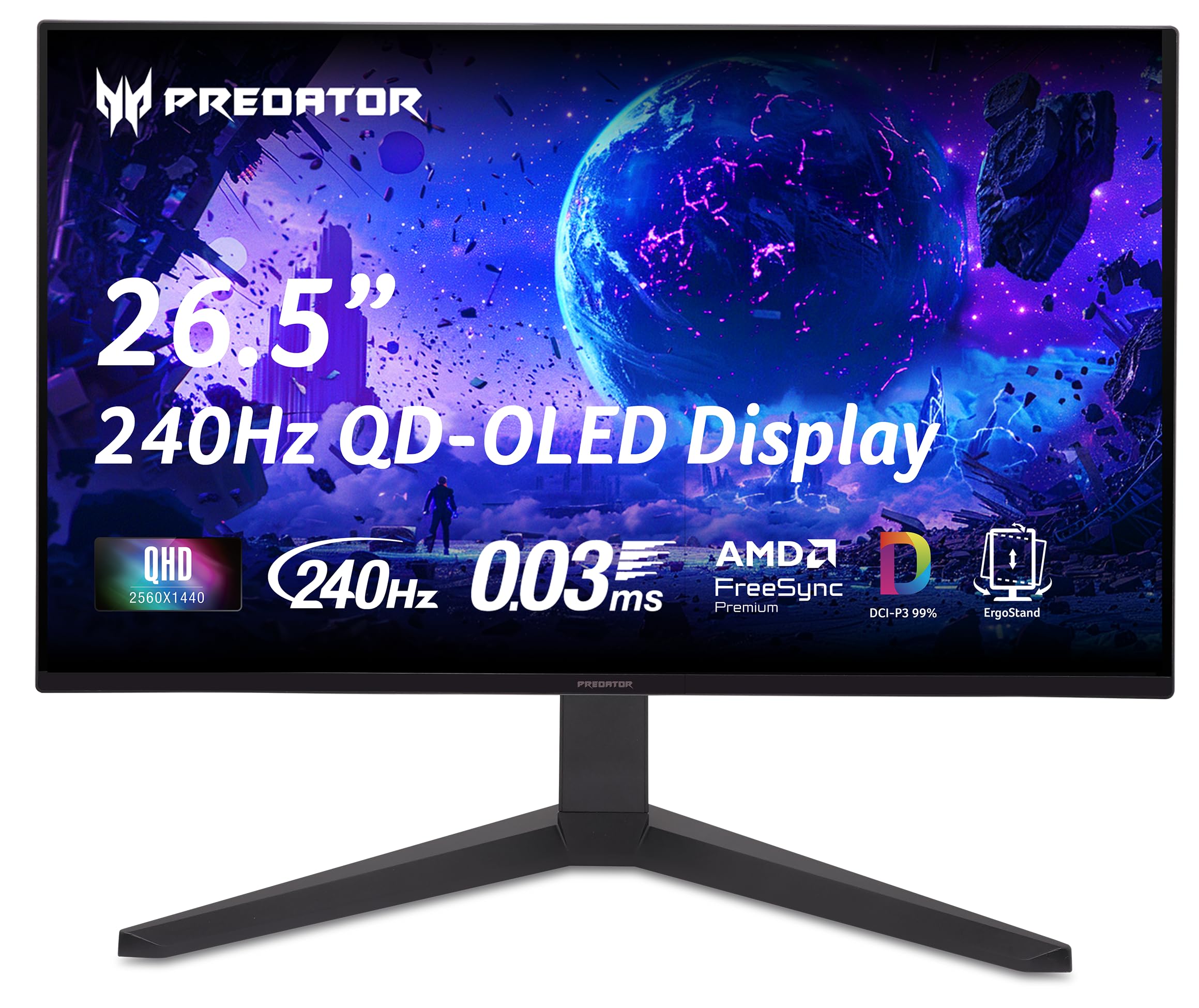
You get a 26.5-inch WQHD 2560×1440 QD-OLED display with a 240Hz refresh rate, a 0.03ms response time, and DCI-P3 99% color gamut plus Delta E<2 accuracy. That combination of specs alone would have been unthinkable at this tier just a year ago. The Alienware OLED alternative costs significantly more, and reviewers consistently call this the budget OLED that checks every box. The panel delivers the signature OLED magic — per-pixel lighting, absolutely no grey wash, and colors that look alive — and buyers describe the picture quality as absurdly good for the money. What wins people over is the appearance and build quality: the monitor looks and feels like a much more expensive product, with a tool-less, sturdy stand that offers height, pivot, swivel, and tilt adjustment. The built-in speakers are decent enough for casual use, and the ZeroFrame bezel design boost the 26.5-inch viewing area.
The catch: review data describes this as a cheaper variant of the premium X27U model, using a less elaborate panel construction and a plastic build rather than metal. Peak brightness is dimmer than pricier OLEDs — some owners run it at 100% brightness and find it merely acceptable rather than dazzling — and the stand on one unit arrived cracked in a minority of cases. For console players, the dual HDMI 2.1 ports and DisplayPort 1.4 deliver full 240Hz support on PC and handle PS5 VRR (Variable Refresh Rate, which matches the screen’s refresh to the console’s output) and HDR (High Dynamic Range, for brighter highlights and deeper shadows) without fuss, with buyers confirming G-Sync (NVIDIA’s anti-tearing tech) compatibility runs flawlessly. The 3-year burn-in coverage and Pixel Shift technology (which moves the image slightly to prevent permanent ghosting) give confidence rare at this price.
What impresses
- Stunning QD-OLED color and contrast that demolishes any IPS panel
- Full ergonomic stand with height, pivot, swivel, and tilt
- True 240Hz at 1440p with both HDMI 2.1 and DisplayPort 1.4
- Buyers praise the premium feel and appearance
Know before buying
- Brightness is lower than premium OLED models (runs at 100% for some)
- Plastic build, not metal
- Occasional reports of a cracked stand in transit
Best suited for: The buyer who wants a premium-feeling OLED with full ergonomic adjustability and top-tier color accuracy, without paying Alienware or Asus prices. The 26.5-inch size is perfect for competitive gaming and the 240Hz refresh rate keeps motion blur-free.
skip it if: You need maximum HDR brightness in a very bright room, or if absolute peak nits matter more than color richness.
2. AOC 27″ Gaming Monitor Q27GAZDV
The most polished sub- QD-OLED with a built-in USB hub
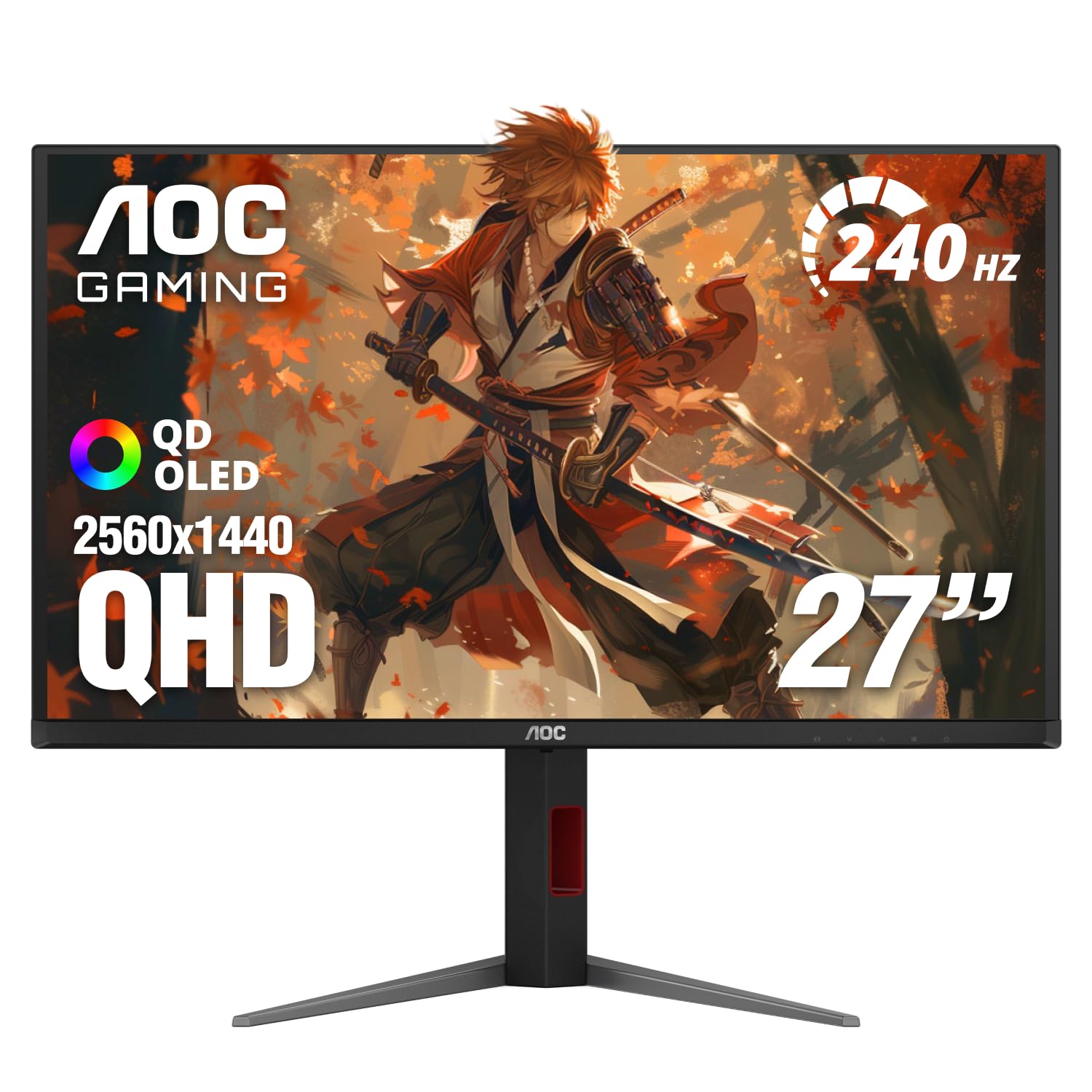
This 27-inch QHD (2560×1440) QD-OLED monitor takes everything good about the Acer Predator X27U and adds a USB 3.2 hub plus G-Sync Compatible certification. The 240Hz refresh rate and 0.03ms response time are identical to the Acer, and the 1500000:1 contrast ratio delivers the same infinite-black performance. What sets the Q27GAZDV apart is the connectivity: you get HDMI 2.1, DisplayPort 1.4, *and* a built-in USB 3.2 hub, which makes cable management much cleaner if you have a mouse, keyboard, or headset dongle. Buyers consistently call it great value and describe the blacks as truly deep and the image as sharp. The HDR content looks fantastic according to owners, making movies and games more rich. The ergonomic stand offers height, tilt, swivel, and pivot adjustment — the full array. The 27-inch size is the balance that owners who have tried 24-inch and 32-inch monitors prefer.
A few owners note that the glossy finish has a slight purple hue reflection when viewed from an angle with direct light, and the color quality can feel oversaturated from the start for some tastes — a quick adjustment in the on-screen display menu solves it. There are no built-in speakers, so you will need headphones or external speakers for audio. The V-shaped stand is functional but takes up desk space. For console gamers, the DP 1.4 connection handles the full 240Hz on PC, but HDMI 2.1 on some titles may need specific settings. The adaptive sync technology (which matches the monitor’s refresh rate to your graphics card’s frame output) keeps gameplay tear-free, and owners confirm the monitor works well with both G-Sync and FreeSync (AMD’s version of adaptive sync).
Value equation: You pay a small premium over the entry-level AOC Q27GAZD for the USB hub, full ergonomic stand, and G-Sync Compatible certification — all of which make daily desktop use notably better. The 27-inch QD-OLED panel itself is the same high-quality core.
Trade-off to note: No built-in speakers and a glossy finish that shows reflections in bright rooms. Owners who prefer a matte display or need audio without a separate setup should look at the LG or Acer Predator instead.
Reach for this if: You want the most fully featured budget OLED — the USB hub makes a real difference for desk cable management, and the height-adjustable stand is rock-solid.
Look elsewhere if: You need built-in speakers or prefer a matte screen finish that handles bright-room reflections better.
3. AOC 27″ Gaming Monitor Q27GAZD
The purest value proposition for the arm-mount crowd
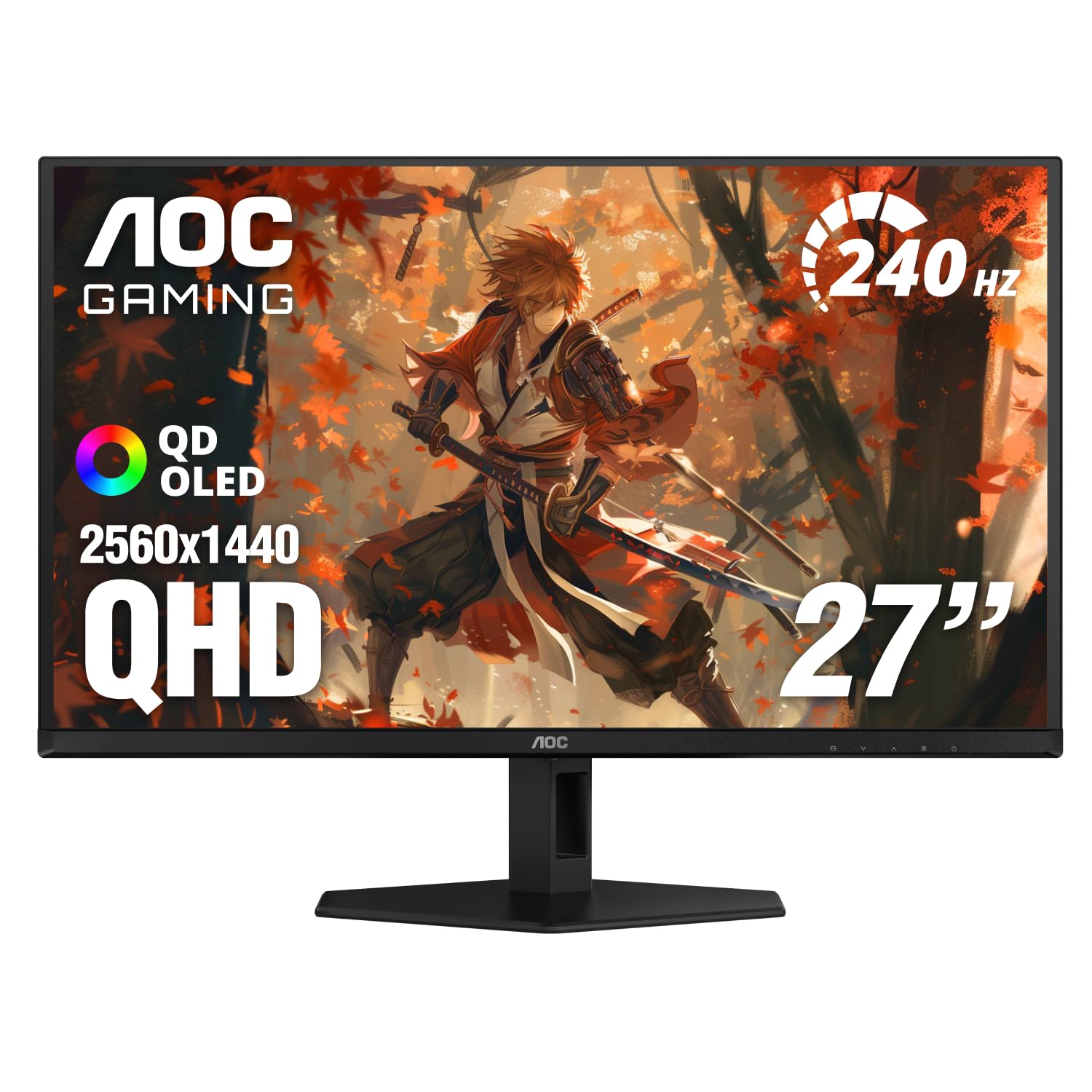
This is the entry-level version of the AOC Q27GAZDV above, and the price difference comes from two specific cuts: the HDMI ports are 2.0 (not 2.1) and the stand offers tilt-only adjustability with no height or swivel. The core OLED experience is identical — you still get the 27-inch QD-OLED panel with 2560×1440 resolution, 240Hz refresh rate, 0.03ms response time, and HDR400 True Black certification that delivers deeper blacks and brighter highlights than standard HDR. The color gamut covers 147.6% sRGB and 110.2% DCI-P3, which is the same wide coverage as the more expensive AOC. For PC gamers who already own a VESA monitor arm, the weak tilt-only stand is irrelevant — you mount the screen and never think about it again. Several buyers highly recommend exactly this approach, noting the lightweight frame is easy to install on arms. The overall picture quality and color accuracy are described as matching a Asus monitor by some owners, which speaks to the core value here.
The biggest limitation is connectivity. With HDMI 2.0, the monitor caps at 165Hz over HDMI — you need DisplayPort to open up the full 240Hz. That is fine for most PC users, but PS5 and Xbox Series X owners who rely on HDMI for high refresh rates will hit a ceiling. The HDR performance is considered mediocre by several buyers, and the stock color settings need adjustment to remove a brownish tint. A few owners note the thin upper panel feels fragile, and the glossy screen shows reflections in bright rooms. The Adaptive-Sync compatibility eliminates screen tearing once configured correctly, and owners mention there is no text fringing or eye strain during long sessions.
Smartest setup: Buy this only if you already have a VESA monitor arm or are willing to buy one (they cost a fraction of the price difference to the Q27GAZDV). The tilt-only stand is genuinely poor, but the OLED panel itself beats pricier monitors from Samsung and Dell on image quality.
Console note: HDMI 2.0 limits 1440p to 165Hz, which is still very smooth but not the monitor’s full potential. PC users with DisplayPort get the full 240Hz experience.
Who this fits: PC gamers on a strict budget who use a monitor arm and DisplayPort. The panel quality is the same as the more expensive models.
Who should skip: Console gamers needing HDMI 2.1 for full 1440p 120Hz, or anyone who needs a good stand from the start.
4. LG 27GX704A-B UltraGear
The brightest budget OLED with true console-ready HDMI 2.1
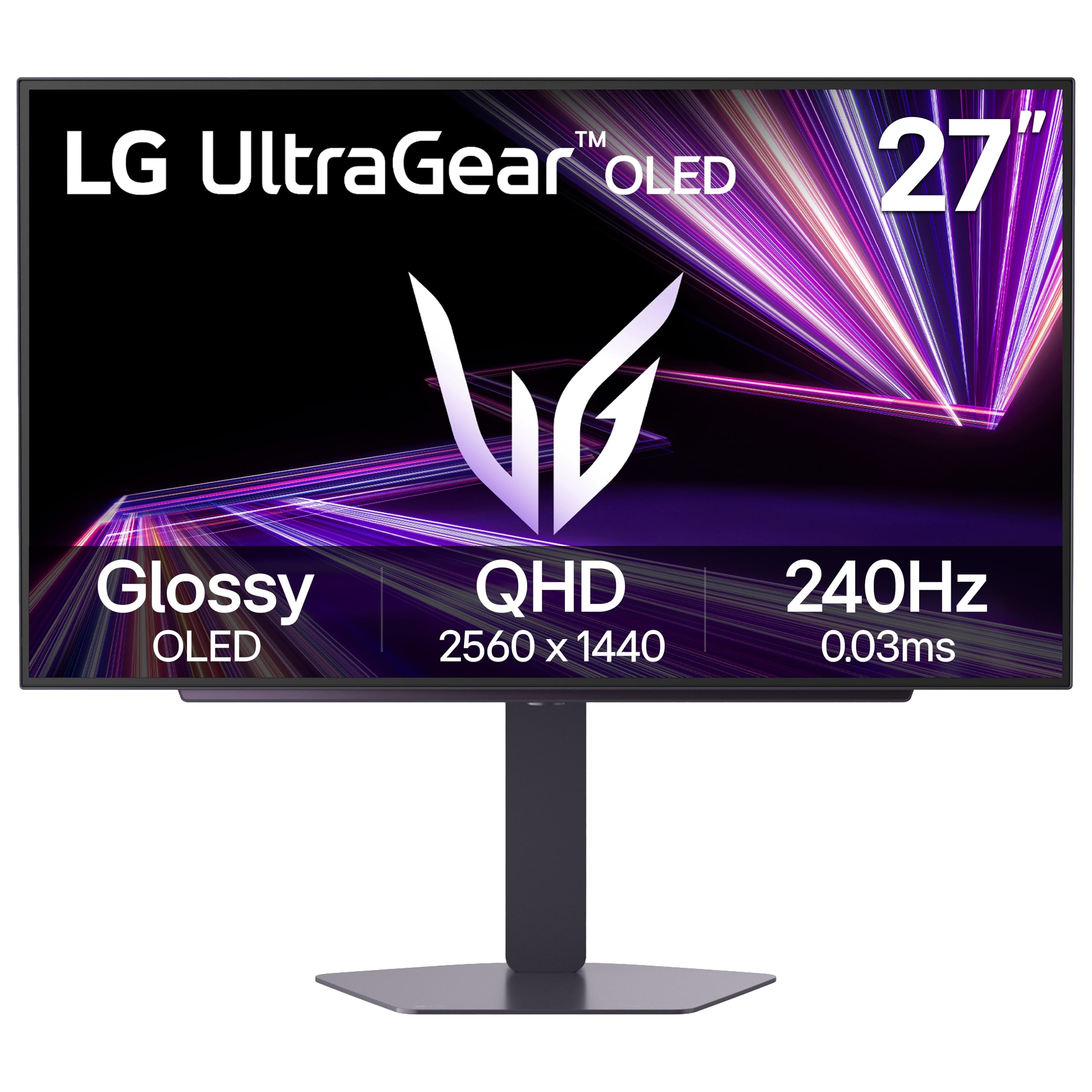
This is the WOLED contender in the roundup, and it stands out where QD-OLED monitors tend to be weaker: brightness. The LG UltraGear delivers a standard 275 nits of brightness and peaks at 1300 nits for HDR highlights, which is significantly more headroom than the QD-OLED models here. The VESA DisplayHDR True Black 400 certification and 1.5M:1 contrast ratio mean dark scenes stay inky while explosions and bright elements pop with real intensity. The 27-inch glossy WOLED display covers up to 98.5% DCI-P3 color, and owners say the colors are vibrant without being overdone — more accurate and easier on the eyes than some QD-OLED panels. The connectivity is the best in class for this price: dual HDMI 2.1 ports, DisplayPort 1.4, a USB 3.2 upstream port, and two USB 3.2 downstream ports. That means PS5 and Xbox Series X owners can run full 1440p at 120Hz VRR without any workarounds. The monitor is also NVIDIA G-Sync Compatible and AMD FreeSync Premium Pro certified, covering every GPU ecosystem. The fully adjustable stand — height, pivot, swivel, and tilt — plus Hexagon lighting and a virtually borderless design make this a premium-looking setup.
The main trade-off reported by owners is that dark scenes on some content can flicker when using variable refresh rate (VRR), and the glossy finish, while brighter than QD-OLED, will show reflections in direct lighting. A few customers note that the monitor is very thin and can feel delicate when handling, though it is fine once mounted or placed on the stand. The single control knob makes menu navigation easy, but you will need to adjust the Black Level and Black Stabilizer settings from the start to get the best picture. For competitive gamers, the 240Hz refresh rate and 0.03ms response time are identical to the QD-OLED competition, and owners confirm the motion clarity is outstanding. PS5 connection sometimes requires a power-off cycle to wake properly, a minor HDMI handshake quirk.
Brightness advantage
- 1300 nits peak HDR brightness destroys every other monitor on this list
- Dual HDMI 2.1 ports for full console compatibility
- Three UL certifications for low blue light, flicker-free, and anti-glare
- Buyers call the color accuracy superior to comparable QD-OLED monitors
Known quirks
- Dark scene VRR flickering reported by some owners
- Glossy finish reflects bright room lighting
- Feels thin and delicate during setup handling
Reach for this if: HDR brightness and console compatibility matter most — the dual HDMI 2.1 and 1300-nit peak make this the best pick for a mixed PC and PS5/Xbox setup. The color accuracy is also praised as more natural than QD-OLED alternatives.
Consider the trade-off: VRR flicker in dark scenes is a documented quirk. If you play many dark horror or atmospheric games, test this monitor thoroughly during the return window.
5. INNOCN 2780s
An eager underdog that outpaces the pack at 280Hz
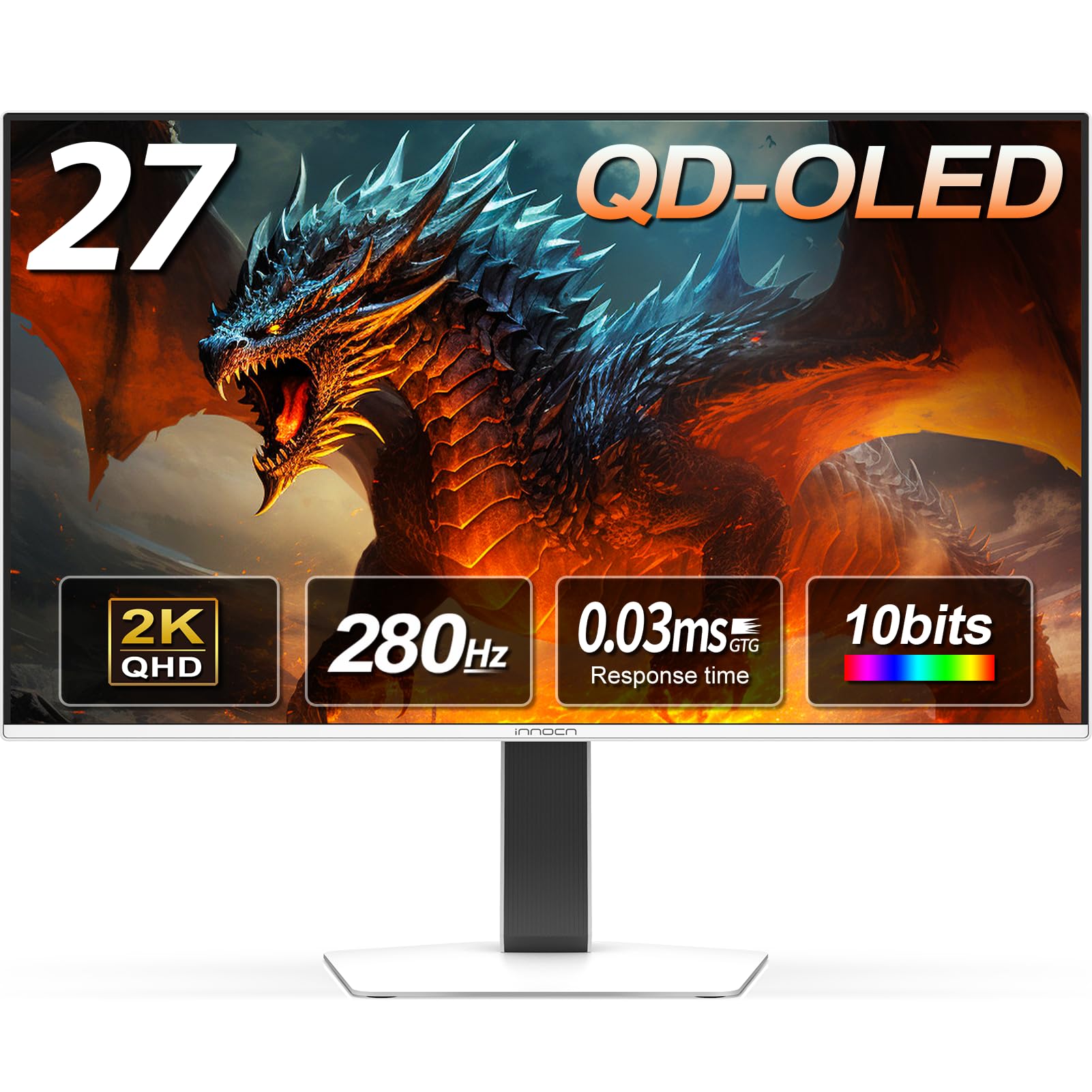
This is the only monitor on the list that goes beyond 240Hz, offering a blistering 280Hz refresh rate on its 27-inch QD-OLED panel. The 2560×1440 resolution, 0.03ms response time, and 1500000:1 contrast ratio match the competition, but the extra 40Hz of headroom is a genuine differentiator for esports players who want every possible frame. The panel is glossy and owners describe the colors as basically exploding off the screen, with bright, vibrant images that are a clear improvement over VA and IPS panels. The HDR400 support handles compatible content well, and the built-in speakers are a nice bonus that the AOC Q27GAZDV lacks. The fully adjustable stand offers height, tilt, and pivot adjustment — good flexibility for a budget model. The white color scheme is a distinctive look that stands out from the sea of black monitors. The HDMI 2.1 port ensures full support for high-refresh-rate gaming from next-gen consoles and PCs, and FreeSync and G-Sync Compatible certification cover both GPU ecosystems.
The smaller review pool makes it harder to assess long-term reliability, but early owners are very satisfied, calling the picture quality insane value and describing the monitor as smooth, sharp, and color-rich. The downsides from buyer feedback include a stand that is decent but not the best, and on-screen display controls that are not intuitive to navigate. There is no ambient light sensor for automatic brightness adjustment, and the HDR peak brightness does not match the LG’s 1300-nit output. The 280Hz refresh rate is a genuine advantage, but the difference from 240Hz is small — you will notice it more in competitive shooters than in single-player games. INNOCN offers lifetime technical support and a free replacement warranty within 30 days, which adds some assurance for a newer brand.
The freshest option: INNOCN is not yet a household name like LG or AOC, but the 2780s delivers the highest refresh rate on this list at 280Hz. The reviews are uniformly positive, with owners calling it the best monitor they have ever owned. The white finish is a nice change of pace for gamers tired of the black box aesthetic.
Reality check: The OSD menu is clunky, and you lose the USB hub and full ergonomic stand adjustability of the pricier AOC Q27GAZDV. For the pure panel quality and that extra 40Hz, though, the value is hard to argue with.
The glossy QD-OLED image is described as stunning by owners.
Worth noting: The brand is newer and the review count is lower, but early adopters are overwhelmingly positive.
Understanding the Specs
QD-OLED vs. WOLED
QD-OLED (Quantum Dot OLED) uses a blue OLED light layer and quantum-dot nanoparticles to create red and green subpixels. This delivers very wide color coverage (often 99% DCI-P3) and handles reflections better in bright rooms. WOLED (White OLED) starts with a white OLED light source and uses color filters. WOLED screens tend to have higher peak brightness for HDR — like the LG UltraGear hitting 1300 nits — and are less prone to the slight purple reflection that some QD-OLED panels show in direct sunlight. Both technologies produce the same core OLED benefit: true blacks, infinite contrast, and per-pixel lighting that LCDs cannot match.
Adaptive Sync: G-Sync Compatible vs. FreeSync Premium
Adaptive Sync matches your monitor’s refresh rate to your graphics card’s frame output, eliminating screen tearing without the input lag of V-Sync (Vertical Synchronization, which can cause stutter). G-Sync Compatible means the monitor works with NVIDIA graphics cards using the DisplayPort Adaptive-Sync standard. FreeSync Premium is AMD’s implementation, often with a wider VRR range and lower frame-rate compensation. Most modern OLED monitors support both, but the certification matters if you plan to use specific GPU features — the LG UltraGear carries both G-Sync Compatible and FreeSync Premium Pro, while the Acer Predator is officially FreeSync Premium but runs G-Sync flawlessly according to owner reports.
FAQ
Will a cheap OLED monitor burn in over time?
Can I use these OLED monitors with a PS5 or Xbox Series X?
Is 240Hz really necessary for a cheap OLED monitor?
How does HDR400 True Black compare to standard HDR?
Do I need a monitor arm for these budget OLED screens?
Will text look blurry on a QD-OLED monitor?
What is the difference between the AOC Q27GAZD and Q27GAZDV?
How bright are these budget OLED monitors in a sunlit room?
Final Thoughts: The Verdict
Across the board, the best cheapest oled monitor winner is the Acer Predator X27U because it combines stunning QD-OLED color and contrast with a genuinely premium-feeling stand and full HDMI 2.1 connectivity — all at a price that leaves the competition scrambling. The 26.5-inch size is the esports balance, the 240Hz 0.03ms response is flawless, and buyers consistently call it absurdly good for the money. If you want the maximum HDR brightness for a mixed console-and-PC setup, grab the LG 27GX704A-B — its 1300-nit peak and dual HDMI 2.1 ports make it the brightest and most console-friendly budget OLED on the market. And for the competitive gamer who wants every extra frame, the INNOCN 2780s delivers a 280Hz QD-OLED experience that early adopters are raving about, proving the value OLED segment still has room to surprise.
How We Picked
We do not accept paid placement. Every pick is matched to a real buyer and a real use-case; we do not hands-on test units.
Sources & Methodology
Specifications: manufacturer listings and product documentation. Review insights: verified customer reviews, as of July 2026. Pricing: not shown on this page (it changes often); check the current price via the retailer link.
As an Amazon Associate, WellFizz earns from qualifying purchases. This does not affect which products we feature.
Related Guides

Mo Maruf
I created WellFizz to bridge the gap between vague wellness advice and actionable solutions. My mission is simple: to decode the research and give you practical tools you can actually use.
Beyond the data, I am a passionate traveler. I believe that stepping away from the screen to explore new environments is essential for mental clarity and physical vitality.