Our readers keep the lights on and my smoothie glass nicely filled. As an Amazon Associate, I earn from qualifying purchases.
Specs are compiled from manufacturer listings and verified buyer reviews and can change over time — please confirm the key details on the product page before buying.
You want a cheap laser printer that saves you money on toner from day one, not one that fails after a few months or forces you into a subscription. The real challenge is finding a machine that prints reliably for years without hidden costs — and this guide sorts out which ones actually deliver. I’ve lined up seven of the most affordable monochrome laser printers on the market, matched their published specs against patterns in hundreds of customer reviews, and identified the handful that earn their keep.
I’m Mohammad Maruf — the founder and writer behind WellFizz. This guide is built by comparing the manufacturers’ published specifications and the patterns across verified customer reviews, so you get each pick’s real strengths and trade-offs instead of marketing spin.
If you need a backup printer for the home office, a workhorse for a small team, or a no-fuss mono machine for basic documents, this breakdown of the absolute cheapest laser printer options will help you spend your money where it counts and avoid the models that waste your time.
Quick Picks
- Canon imageCLASS LBP172dw — Best Overall
- Brother HL-L2460DW — Wireless Workhorse
- Xerox B230/DNI Printer — Small Biz Choice
- HP LaserJet M209d — Wired Budget Value
- Brother HL-L2405W — Compact Wireless Value
- HP Laserjet M209dw (Renewed) — Renewed Wireless Option
- Visioneer Rabbit PC30dwn — Budget Champion
How To Choose The Best Cheapest Laser Printer
A low upfront price can fool you into a machine that costs double in toner within a year. Before you click buy, think about these three things to make sure your cheap laser printer stays cheap to run.
Print speed and your daily volume
Pages per minute (ppm) measures how fast a laser prints. Most budget models land between 30 and 36 ppm — that is about one page every two seconds. If you print a few letters a week, 30 ppm is plenty. If you regularly churn through 50-page reports, a 36 ppm model shaves several minutes off each job. The gap between 30 and 36 ppm adds up fast in a busy home office.
Paper handling and the tray size trap
A 150-sheet input tray (common on budget HP models) runs out fast if you print more than a handful of pages a day. A 250-sheet tray, found on Canon and Brother models, gives you 250 sheets versus 150 sheets — meaning you refill it less often. If you do not want to babysit the paper tray, make 250 sheets your minimum.
Duplex: automatic is the only option worth having
Manual duplex means you flip the paper yourself — a chore that gets old after the third page. Automatic duplex (auto 2-sided printing) uses both sides of the sheet automatically and keeps multi-page documents neat. On a budget printer, automatic duplex is the feature that separates a modern office machine from a relic.
Quick Comparison
| Model | Best For | Print Speed | Paper Tray | Duplex | Amazon |
|---|---|---|---|---|---|
| Canon imageCLASS LBP172dw | Speed & Capacity | 35 ppm | 250-sheet | Automatic | Amazon |
| Brother HL-L2460DW | Wireless Office Workhorse | 36 ppm | 250-sheet | Automatic | Amazon |
| Xerox B230/DNI | Small Business Reliability | 36 ppm | 250-sheet | Automatic | Amazon |
| HP LaserJet M209d | Wired Budget Pick | 30 ppm | 150-sheet | Automatic | Amazon |
| Brother HL-L2405W | Compact Wireless Value | 30 ppm | 250-sheet | Manual | Amazon |
| HP Laserjet M209dw (Renewed) | Renewed Wireless Option | 30 ppm | 150-sheet | Automatic | Amazon |
| Visioneer Rabbit PC30dwn | Absolute Lowest Entry Cost | 30 ppm | 250-sheet | Automatic | Amazon |
In‑Depth Reviews
1. Canon imageCLASS LBP172dw

The Canon LBP172dw prints 35 pages per minute versus the 30-ppm HP M209d, and it has a 250-sheet tray versus 150 sheets on the HP M209d.
You get a true 35-ppm print engine, noticeably quicker than the 30-ppm machines in the same price bracket. The 250-sheet input tray holds 250 sheets versus 150 sheets on the HP LaserJet M209d, so you refill it less often during a busy work day. Automatic duplex (two-sided printing without you flipping the paper) is built in.
Buyers report that duplex printing works well, and the Canon Mastersetupv220 app installed drivers flawlessly on a Windows 11 machine. The catch, according to several reviews, is that the initial setup requires a USB cable (not included), and you must pay close attention to which USB port you use. A few owners also note that the bundled Canon app collects user data, though uninstalling it did not affect printer operation. For the speed and paper capacity at this price, those setup quirks are a minor trade-off.
If you regularly print multi-page documents and want a machine that keeps pace, this is the best choice among the cheapest laser printers available right now — the Canon LBP172dw delivers 35-ppm speed and a 250-sheet tray that beats the HP M209d’s 30 ppm and 150-sheet tray for nearly the same money.
Speed and Capacity
- 35 ppm print speed (fastest in its price class)
- 250-sheet paper tray with automatic duplex
- Strong wireless support (Canon PRINT app, AirPrint, Mopria)
Setup Quirks
- Setup requires a USB cable (not included)
- Bundled app collects data (can be uninstalled)
- Wireless setup can be finicky according to some reviewers
Best for: Anyone who prioritizes raw speed and a large paper tray in a budget-friendly laser printer.
Keep in mind: The initial wired setup step may annoy you if you expect true out-of-the-box wireless.
2. Brother HL-L2460DW

At 36 ppm, the Brother HL-L2460DW ties the Xerox B230/DNI for the top speed in this guide — it is also the only model here with Ethernet for a wired network connection.
That speed, paired with automatic duplex and a 250-sheet paper tray, makes it a legitimate small-team printer at a home-office price. Unlike many budget models, it includes Ethernet alongside dual-band wireless and USB, so you can drop it on a wired network for rock-solid reliability.
Brother’s reputation for toner value helps here — the machine uses TN830 or TN830XL cartridges, and the Refresh subscription promises savings of up to 50% on genuine toner. You also get a 1-year limited warranty and free support for the life of the printer. The only real drawback is the lack of a scan or copy function; this is a print-only device. For a home office or small team that just needs fast, reliable black-and-white printing, this is a top contender — it is faster than the Canon LBP172dw’s 35 ppm and adds Ethernet that the Canon lacks.
Speed and Connectivity
- 36 ppm print speed (tops in this list, tied with Xerox)
- Automatic duplex and 250-sheet input tray
- Ethernet + dual-band wireless for flexible networking
Print Only
- No scan, copy, or fax functions
- Manual feed slot is limited to envelopes and specialty paper
Grab this for: A reliable workhorse for a home office or a small team that needs fast, wired-or-wireless printing.
Look elsewhere if: You need a multifunction device that also scans and copies — this is print-only.
3. Xerox B230/DNI Printer
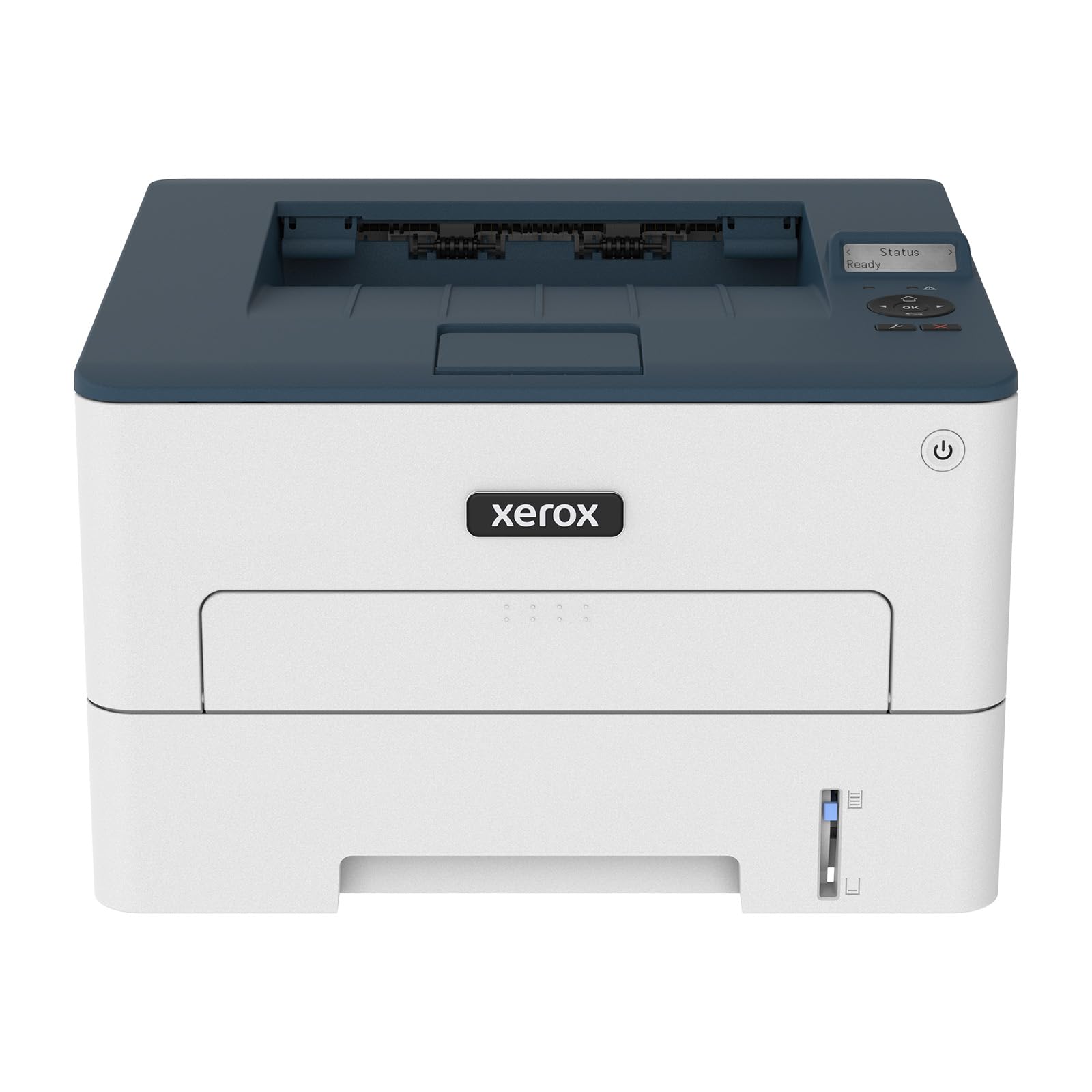
The Xerox B230 matches the Brother HL-L2460DW at 36 ppm, but owners mention that its tiny screen makes entering a Wi-Fi password a chore while still offering strong mobile print support.
The 36-ppm engine runs at 36 ppm versus 30 ppm on the Visioneer and HP models. It features built-in Wi-Fi with support for Apple AirPrint, Mopria Print Service, and Chromebook printing, so it plays well with almost any device. Automatic duplex is standard, which cuts paper waste.
One reviewer noted that after setup, it handled a 200-page document with no problems and was remarkably easy to connect in an iPhone environment. On the flip side, another reviewer described the setup as complex, noting many hidden tape tabs and a tiny screen that requires scrolling through the alphabet just to enter a Wi-Fi password. A few also reported it is noisy with a hot air exhaust. If you can power through the initial configuration, the print speed and reliability are tough to top at this price point — the Xerox B230 offers the same 36-ppm speed as the Brother HL-L2460DW but adds mobile-friendly AirPrint for iPhone users.
Speed and Security
- 36 ppm print speed (top of the class)
- Great mobile support (AirPrint, Mopria, Chromebook)
- Comprehensive security features
Setup and Noise
- Setup is more complex than average with a tiny screen
- Noisy during operation with hot air exhaust
- Some reviewers report frequent disconnection issues
Best suited for: A small business user who values print speed and mobile compatibility and does not mind a slightly fussy setup.
Watch out for: The intricate initial setup and the noise level if you need a silent machine for a shared space.
4. HP LaserJet M209d
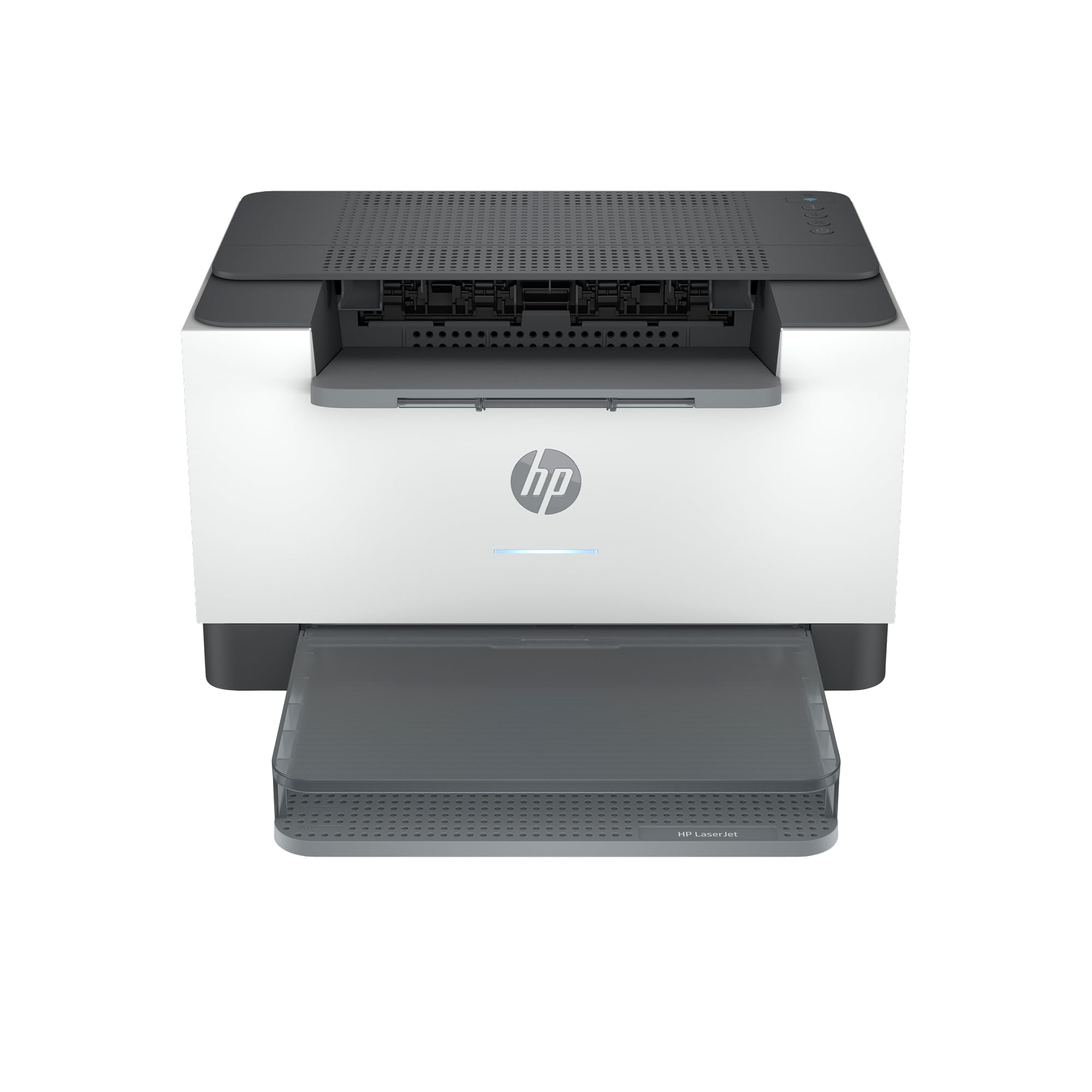
The HP LaserJet M209d skips Wi-Fi to stay cheap, but it has a 150-sheet tray versus 250 sheets on the Canon LBP172dw or Brother HL-L2460DW.
The M209d is a stripped-down, no-frills printer that does one thing well: print black-and-white documents quickly and reliably. It churns out 30 pages per minute with automatic 2-sided printing, and HP claims it has the fastest in-class two-sided printing speed. The wired USB connection (cable included) means you will never have to troubleshoot a Wi-Fi dropout, but it also means every computer must be physically connected or on the same local network via a USB-share setup.
The 150-sheet input tray is smaller than the 250-sheet trays on the Canon and Brother models, so you will refill it more often. It also uses HP’s chip-locked cartridges, which means you cannot use cheaper third-party toner. This is a solid pick if wireless is not important to you and you want a simple, fast, print-only machine — but its 150-sheet tray and 30-ppm speed are below the Canon LBP172dw’s 250-sheet tray and 35-ppm speed.
Speed and Simplicity
- Fast automatic duplex printing with 30 ppm output
- USB cable included for simple wired setup
- Compact design saves desk space (8.07″W x 11″H)
Wired Limits
- No wireless connectivity at all
- 150-sheet input tray is small (needs frequent refills)
- HP chip-locked cartridges block third-party toner
Reach for this if: You need a fast, no-drama wired printer and you never use Wi-Fi for printing.
Pass if: You want wireless convenience or a larger paper tray — the Canon or Brother models offer much more capacity.
5. Brother HL-L2405W

The Brother HL-L2405W gives you a 250-sheet tray and wireless at a bargain price, but you flip pages yourself for double-sided printing since it lacks automatic duplex.
The HL-L2405W hits a balance: it is a wireless, compact monochrome laser with a 250-sheet paper tray at a price that undercuts most competitors. It prints at 30 ppm and the first page comes out in just 8.5 seconds, which is fast enough for most home and small-office jobs. Dual-band wireless (2.4GHz and 5GHz) means you can pick the cleaner band, and the Brother Mobile Connect app lets you manage and print from your phone from anywhere.
The major trade-off here is manual duplex. Unlike the pricier Brother HL-L2460DW, this model does not automatically flip pages for two-sided printing — you have to feed the paper manually. That saves you money upfront but costs you time on every multi-page document you want to print on both sides. If you rarely need duplex, this is a smart way to save. If you print two-sided documents regularly, spend the extra cash for the L2460DW — which offers automatic duplex and 36-ppm speed for a small price jump.
Value and Capacity
- 250-sheet paper tray at a very low price
- Dual-band wireless with mobile app support
- First page out in 8.5 seconds
Manual Duplex
- Manual duplex only (you flip the paper yourself)
- Print-only device — no scan or copy functions
Go for it if: You want a super-affordable wireless laser with a big paper tray and you do not print double-sided often.
skip it if: Automatic duplex is a must-have for your workflow — the L2460DW is a much better fit for a small price jump.
6. HP Laserjet M209dw (Renewed)

The renewed HP M209dw adds Wi-Fi to the M209d design, but its 150-sheet tray and chip-locked HP cartridges mean you refill often and cannot use third-party toner.
This is the wireless version of the M209d, adding dual-band Wi-Fi with a self-reset feature that automatically detects and resolves connectivity issues — a clever fix for among the most common printer headaches. It prints at 30 ppm with automatic duplex, and one buyer called it “a veritable work horse” and admitted they did not even realize it printed double-sided until after they bought it. Multiple customers note that the setup is quick and easy from both a phone and a laptop.
The 150-sheet input tray is the same limitation as the M209d, and it still uses HP’s chip-locked cartridges (HP 134A toner). Some users on MacOS needed a support call to get the setup working, though the support team was reportedly helpful. As a renewed unit, the condition can vary, but the price is tough to top for a wireless, auto-duplex laser from a major brand — though the Canon LBP172dw offers a larger 250-sheet tray for not much more.
Wireless and Duplex
- Automatic duplex with wireless connectivity
- Self-reset Wi-Fi that fixes connection issues
- Highly praised by buyers as a reliable, fast printer
Renewed Caveats
- 150-sheet tray is on the smaller side
- Uses chip-locked HP cartridges (no third-party toner)
- Renewed condition may vary; setup can require a support call on MacOS
A smart pick if: You want an automatic-duplex wireless laser for the lowest possible cost and are comfortable buying renewed.
Proceed with caution if: You need a large paper tray or want the ability to use inexpensive third-party toner.
7. Visioneer Rabbit PC30dwn

The Visioneer Rabbit PC30dwn is the only budget laser here that also copies, but reviewers point out defective units and a “rock tumbler” noise — making it a gamble.
At the lowest entry price in the list, the Rabbit PC30dwn is a true multifunction device: it prints and copies in black and white at 30 ppm, with a 250-sheet input tray and automatic duplex. It also includes a sheetfed ADF (automatic document feeder that pulls in stacks of pages by itself) with a 250-page capacity, which is generous for the price. The connectivity options — USB, Gigabit Ethernet, and WiFi — are solid, and it works with Windows and Mac via AirPrint.
The problem is reliability. Shoppers say that “two units failed to connect to PC; customer service couldn’t resolve,” and several others describe defective units that print blank pages or make a “horrible sound like it was broken before we got it.” Another reviewer calls it “obstinately not plug and play” and says it sounds “like a rock tumbler while printing.” For the absolute lowest price, you get a lot of features on paper, but the risk of getting a lemon is real. This is strictly a “if you are willing to gamble on setup” pick — unlike the Canon LBP172dw, which buyers consistently praise for reliability.
Features vs. Price
- Multifunction — prints and copies with a 250-page ADF
- 250-sheet input tray with automatic duplex
- USB, Ethernet, and WiFi connectivity included
Reliability Concerns
- Multiple buyer reports of defective units and failed PC connections
- Very noisy during operation (described as a rock tumbler)
- Not plug-and-play; setup can be extremely frustrating
Only consider if: Your budget is extremely tight and you absolutely need a copier along with the printer — and you are prepared for a possible return process.
Steer clear if: You need a reliable, low-maintenance printer that works from the start — the Canon or Brother models are far safer.
Understanding the Specs
Pages Per Minute (ppm)
This is how many single-sided pages the printer can produce in 60 seconds of continuous printing. A 30-ppm printer prints one page every two seconds; a 36-ppm printer prints one page every 1.7 seconds. For occasional home use, the difference is minimal. For a busy office running 50-page reports, a 36-ppm machine will finish a 1,000-page job sooner than a 30-ppm model.
Automatic vs. Manual Duplex
Automatic duplex means the printer grabs the paper, flips it, and prints the second side without you touching anything. Manual duplex means you get a prompt to take the stack, flip it over, and feed it back in. If you ever print anything longer than a single page, automatic duplex is the single feature that will save you the most time and paper.
Input Tray Capacity
This tells you how many blank sheets the printer holds in its main paper tray. A 150-sheet tray is fine for a few letters a day; a 250-sheet tray lets you print about 250 single-sided pages before refilling, versus 150 sheets for a smaller tray. If you hate running out of paper mid-job, go for 250 sheets.
Duty Cycle
Duty cycle is the maximum number of pages the manufacturer says the printer can handle in a month without wearing out. For budget lasers, you will see numbers like 5,000 or 10,000 impressions per month. The real-world guideline is to keep your average monthly volume below 25% of that number to keep the machine running reliably for years.
FAQ
Will a cheap laser printer work with my Mac or iPhone?
How long does a toner cartridge last in a cheap laser printer?
Can I use third-party toner in an HP laser printer?
Is a wired-only laser printer a good idea in 2025?
What is the difference between a laser printer and an LED printer?
Why does the Canon LBP172dw need a USB cable for setup?
Do cheap laser printers come with a starter toner cartridge?
What is the duty cycle on a budget laser printer and why does it matter?
Final Thoughts: The Verdict
For most buyers, the absolute cheapest laser printer that balances speed, capacity, and reliability is the Canon imageCLASS LBP172dw because it delivers 35-ppm speed with a 250-sheet tray and automatic duplex at a price that undercuts most rivals. If you want a wireless workhorse for a small team, grab the Brother HL-L2460DW for its 36-ppm engine and Ethernet connectivity. And for the absolute lowest entry cost with a copier built in, the Visioneer Rabbit PC30dwn is the gamble that pays off only if you get a good unit — proceed with caution.
How We Picked
We do not accept paid placement. Every pick is matched to a real buyer and a real use-case; we do not hands-on test units.
Sources & Methodology
Specifications: manufacturer listings and product documentation. Review insights: verified customer reviews, as of July 2026. Pricing: not shown on this page (it changes often); check the current price via the retailer link.
As an Amazon Associate, WellFizz earns from qualifying purchases. This does not affect which products we feature.

Mo Maruf
I created WellFizz to bridge the gap between vague wellness advice and actionable solutions. My mission is simple: to decode the research and give you practical tools you can actually use.
Beyond the data, I am a passionate traveler. I believe that stepping away from the screen to explore new environments is essential for mental clarity and physical vitality.