Our readers keep the lights on and my smoothie glass nicely filled. As an Amazon Associate, I earn from qualifying purchases.
The temptation to grab the cheapest bag off the shelf is real, but a lawn full of weeds, bare patches, and washouts is a far higher price than any sticker shock. The secret isn’t finding rock-bottom pricing—it’s finding the seed that delivers real density and resilience per dollar spent, which means looking closer at the mix composition, weed content guarantees, and coverage area before you buy.
I’m Mohammad Maruf — the founder and writer behind WellFizz. I’ve spent hundreds of hours analyzing seed formulations, germination rates, and customer results to separate the truly budget-smart options from the ones that just look cheap on the surface.
This guide cuts through the noise to surface only the most reliable performers. Whether you’re patching bare spots or starting a new lawn, here is the definitive list of the best cheapest grass seed that won’t let you down.
How To Choose The Best Cheapest Grass Seed
Choosing cheap grass seed is a calculated trade-off, not a race to the lowest number. The cheapest bag can become the most expensive if it’s packed with weed seeds, filler species, or low germination energy. Here’s what matters most when you’re stretching every dollar.
Pure Seed Percentage vs. Inert Matter
Flip the bag and look for the “pure seed” percentage on the analysis tag. A mix with 95% pure seed and low inert matter means nearly every kernel in the bag has the potential to grow. Bargain seed often dilutes this with chaff, hulls, or expensive filler—making the cost-per-growing-seed much higher than a slightly pricier bag with cleaner composition.
Species Choice Defines Long-Term Value
Perennial ryegrass germinates fast (within a week) and is cheap, but it often thins out after one season. Tall fescue is slower to establish but builds deep roots that survive drought and foot traffic, making it a better long-term investment. Annual ryegrass is the absolute cheapest upfront but dies after one growing cycle. Match the species to your willingness to reseed.
Weed Seed Content Is a Hidden Cost
A bag that’s cheaper but contains 0.5% weed seed can introduce hundreds of new weeds into your lawn. Once those weeds establish, removing them costs time, money, and herbicide—or a full re-sodding. Spending a few extra cents on a “99.9% weed-free” guarantee is almost always the smarter financial move.
Quick Comparison
On smaller screens, swipe sideways to see the full table.
| Model | Category | Best For | Key Spec | Amazon |
|---|---|---|---|---|
| Pennington Annual Ryegrass | Annual Ryegrass | Fast winter green, temporary cover | Germination in 3–7 days | Amazon |
| GreenView Tall Fescue Blend | Tall Fescue | Sun & shade versatility, drought resistance | 99.9% weed-free | Amazon |
| Jonathan Green Heavy Traffic | Tall Fescue / Rye Mix | High-traffic lawns, pets & kids | Roots up to 4 ft deep | Amazon |
| Pennington Smart Seed Northeast | Ky Blue / Fescue / Rye Mix | Cool-season lawns, disease resistance | Pre-mixed fertilizer included | Amazon |
| Scotts Strawberry Clover | Clover | Low-maintenance, drought-tolerant lawns | 1,000 sq. ft. coverage | Amazon |
In‑Depth Reviews
1. Pennington Annual Ryegrass Seed, 10 Lb

For sheer speed and raw square-foot value, this 10-pound bag of Pennington Annual Ryegrass is tough to beat. It germinates in as little as three days, giving you visible green coverage almost immediately after sowing. Customers consistently report seeing sprouts within 48 to 72 hours, making it the fastest option in this roundup for anyone who needs a quick lawn fix or winter overseeding in southern zones.
The annual designation is the key trade-off here—this grass lives hard for one season then dies, requiring reseeding each year. That makes it a poor choice for permanent northern lawns, but a brilliant budget move for temporary winter color, erosion control on bare patches, or filling in thin spots while slower perennial seed establishes. The 10-pound weight gives massive coverage per bag, driving down your per-square-foot cost dramatically.
Foot traffic tolerance is decent for an annual, and the disease resistance helps it hold up through wet winter conditions. Users in Oklahoma and similar transitional zones praise its dark green color from November through early spring. Just keep in mind that by mid-summer it will fade and die out, so plan to overseed in the fall to repeat the cycle.
Why it’s great
- Very fast 3–7 day germination
- Large 10-pound bag maximizes coverage per dollar
- Dark green color through winter dormancy
Good to know
- Annual grass dies after one season
- Not suitable for permanent northern lawns
2. GreenView Turf Type Tall Fescue Sun & Shade Blend, 3 lb

GreenView’s Turf Type Tall Fescue blend represents the smartest mid-range option for budget-conscious buyers who refuse to compromise on quality. The headline stat here is 99.9% weed-free, backed by third-party testing—no filler, no noxious weed seeds hiding in the mix. Customers confirm this repeatedly, with multiple reviewers stating they saw zero weed germination even in previously weedy lawns.
The blend is formulated specifically to handle both sun and shade, which matters if your lawn has variable light conditions. Tall fescue develops deep roots that push drought tolerance and disease resistance once established, so this bag invests in long-term lawn health rather than a quick cosmetic fix. Germination lands around 10–14 days with adequate moisture, and the dark green color with medium-coarse texture provides a dense, durable turf that looks intentional.
Coverage is 750 sq. ft. for overseeding—slightly less than some competitors per pound—but the high pure seed percentage means you’re not paying for chaff. One reviewer noted it grew “thick and strong” and filled bare spots completely. If you want the lowest total cost of ownership over two growing seasons, this is the strongest contender in the group.
Why it’s great
- 99.9% weed-free, virtually no filler
- Thrives in sun and partial shade
- Strong drought and disease tolerance once established
Good to know
- Germination is slower than ryegrass (10–14 days)
- Coverage per bag is smaller than some budget options
3. Jonathan Green Black Beauty Heavy Traffic Grass Seed, 3 lb

Jonathan Green’s Black Beauty Heavy Traffic is engineered for the most punishing yard conditions—dog runs, soccer goals, kid zones, and curb strips where other seed gets trampled into oblivion. The secret is the root system: the tall fescue and perennial ryegrass varieties in this mix send roots as deep as 4 feet, anchoring the turf against wear and drought simultaneously. Customers with high-energy dogs confirm it survives where other seeds failed.
Germination is steady at 10–14 days, and the dark green color holds up well even in partial shade. This mix is a cool-season performer, meaning spring and fall planting yields the best results. The 3-pound bag covers 600 sq. ft. for new lawns or 1,200 sq. ft. for overseeding, which is a solid coverage-to-cost ratio given the traffic-specific genetics in the blend.
One notable caution from the label: keep pets and livestock away from freshly seeded areas until germination completes, as the seed coating can be harmful if ingested in quantity. That’s standard for many coated seeds, but worth flagging if you have chickens or curious dogs with access to the seeding zone. Overall, this is the best budget pick if your primary lawn problem is literal foot traffic.
Why it’s great
- Extremely deep root system for high-traffic durability
- Uniform texture great for sports or play areas
- Excellent germination in both sun and light shade
Good to know
- Not pet-safe until fully germinated
- Requires consistent watering in hot weather
4. Pennington Smart Seed Northeast Mix, 3 lb

Pennington’s Smart Seed Northeast Mix is a region-specific blend of Kentucky Bluegrass, Fine Fescues, and Perennial Ryegrass—a combination built for surviving harsh northern winters and humid summers. The inclusion of Kentucky Bluegrass is notable because it spreads via rhizomes, naturally filling in thin spots over time without requiring annual reseeding. For anyone in USDA zones that see real snow and freeze-thaw cycles, this is a budget-friendly long-term solution.
A unique feature here is the pre-mixed fertilizer included in the bag. This starter charge helps seedlings establish faster, effectively cutting one product off your shopping list. Germination shows in 8 to 14 days with consistent moisture, and customers report seeing sprouts within a week during fall planting. The blend’s disease resistance is above average, reducing the risk of brown patch or dollar spot in wet springs.
Where this seed saves you money is in the multi-year arc: the bluegrass rhizome spread means you overseed less frequently than with bunch-type grasses like tall fescue alone. Users note that after two months the lawn “thickened” and required mowing, indicating strong establishment. If you live in the Northeast or upper Midwest and want the cheapest long-term lawn investment, this mix should be on your shortlist.
Why it’s great
- Kentucky Bluegrass spreads via rhizomes for self-repair
- Comes with starter fertilizer included
- Excellent disease resistance for cool, wet climates
Good to know
- 3 lb bag covers less area than larger-value bags
- Best for Northeast-specific climates only
5. O.M. Scott & Sons Strawberry Clover Seed, 2 lb
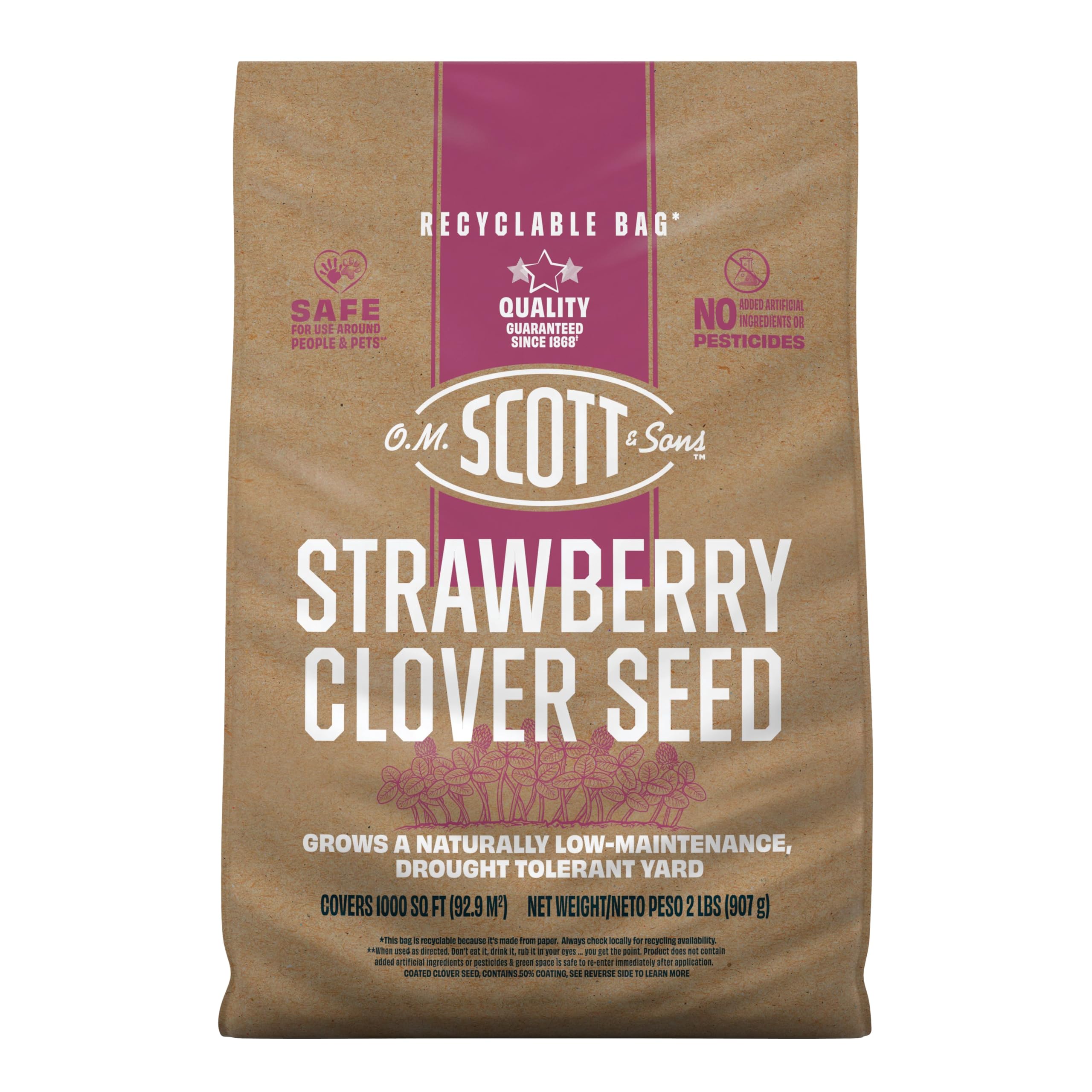
If you’re open to ditching traditional turf grass entirely, Scotts’ Strawberry Clover Seed is the cheapest way to establish a living, green ground cover that actually enriches your soil. Clover is a nitrogen-fixing legume—it pulls nitrogen from the air and deposits it in the soil, feeding itself and any surrounding grass for free. That eliminates the need for synthetic fertilizer, which dramatically reduces your lawn’s annual operating cost.
The 2-pound bag covers up to 1,000 sq. ft., making it exceptionally efficient per dollar. Strawberry clover produces small pink flowers that add visual interest, and it stays greener during drought than most traditional grass species. It is also safe for kids and pets with no added pesticides or artificial ingredients—a major plus for families who want a chemical-free yard. The recyclable paper bag packaging is a nice sustainable touch.
That said, clover is not grass. It has a different texture, a lower growth habit, and the pink flowers mean your lawn won’t look like a classic monoculture. Some customers report slower germination in wet or shaded spots, and a few had no visible germination due to poor seed-to-soil contact. For the price, though, this is an outstanding budget option for anyone seeking a low-maintenance, eco-friendly lawn alternative that saves money on water and fertilizer season after season.
Why it’s great
- Nitrogen-fixing eliminates need for fertilizer
- Drought tolerant and stays green longer
- 100% pet-safe with no chemicals
Good to know
- Not a traditional grass—different texture and flowers
- Slower germination in shaded or wet areas
FAQ
Is cheap grass seed a waste of money?
What kind of grass seed is the cheapest per square foot?
How can I make cheap grass seed grow better?
Final Thoughts: The Verdict
For most users, the best cheapest grass seed winner is the GreenView Turf Type Tall Fescue Blend because it delivers 99.9% weed-free purity, strong drought tolerance, and versatile sun/shade performance at a middle-of-the-pack price—eliminating the need for costly reseeding next year. If you need ultra-fast winter coverage or temporary green, grab the Pennington Annual Ryegrass for its ridiculous 3-day germination and massive 10-pound coverage. And for an eco-friendly, self-fertilizing lawn that significantly reduces long-term water and fertilizer costs, nothing beats the Scotts Strawberry Clover Seed.

Mo Maruf
I created WellFizz to bridge the gap between vague wellness advice and actionable solutions. My mission is simple: to decode the research and give you practical tools you can actually use.
Beyond the data, I am a passionate traveler. I believe that stepping away from the screen to explore new environments is essential for mental clarity and physical vitality.